Dalian
Dalian, People's Republic of China
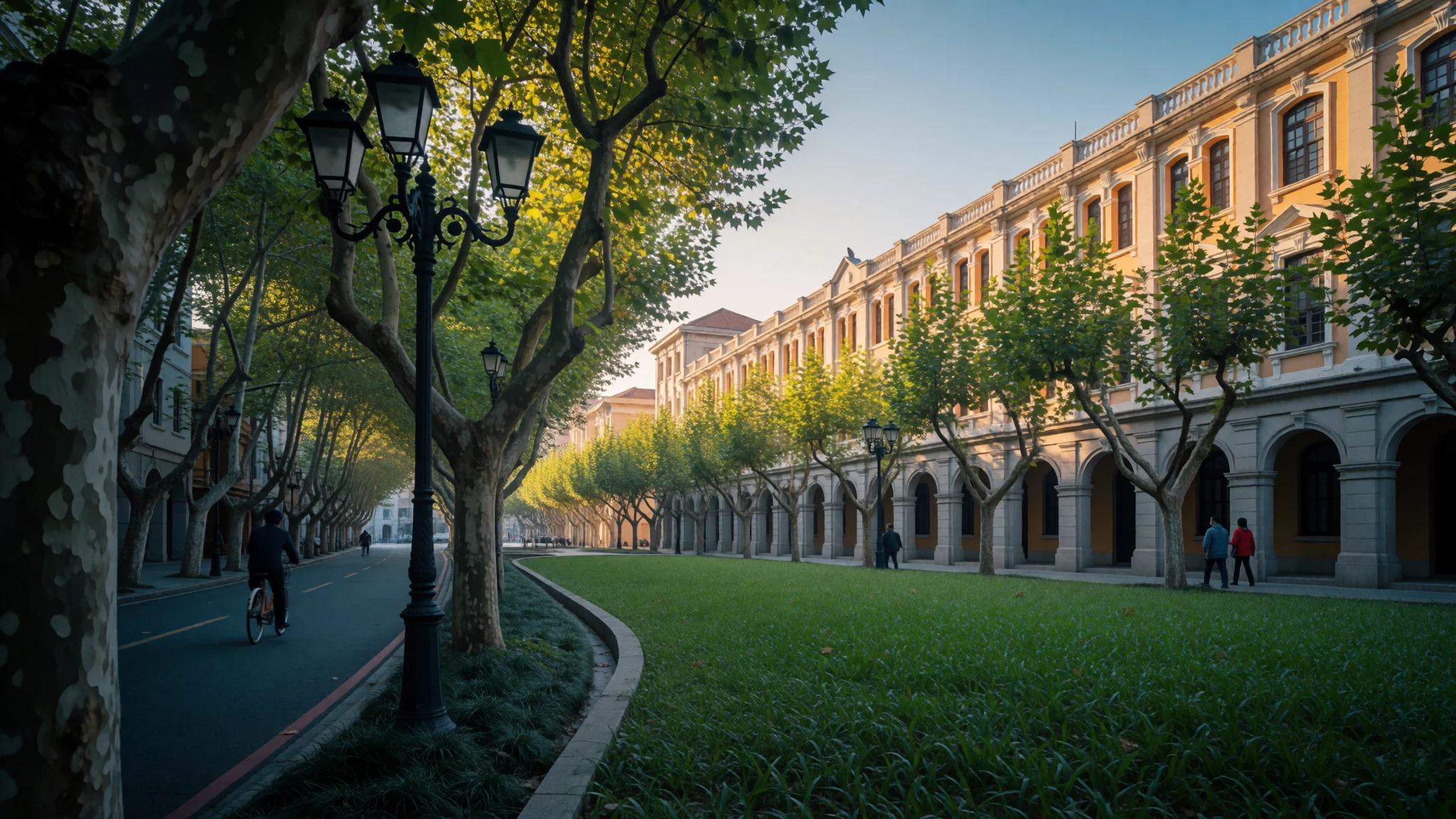
Dalian is a breezy port city where Russian- and Japanese-era streets, big public squares and fresh seafood meet a long, walkable coastline.
The place
Dalian sits at the southern tip of the Liaodong peninsula in Liaoning province, a port city of about 7.45 million people on ground that averages only 29 metres above sea level. Water surrounds it on three sides: Liaodong Bay to the west, the Bohai Strait to the south and Korea Bay to the east. Shenyang, the provincial capital, is larger, but Dalian is the northeastern city that actually faces the open sea, and that shapes everything from its weather to its menus. Today it works as a shipping, finance and logistics hub for East Asia. Container cranes and shipyards line parts of the harbour, while the older centre spreads out from round, tree-lined squares laid out when the city was founded in 1904. The city has worn several names: Dalniy under Russia, Dairen under Japan, Lüda for a spell, and Dalian now. Port Arthur, the old naval name, survives in the Lüshun district at the very tip of the peninsula. Most of the built-up area lies in the urban districts, while Pulandian, further out, has not yet been absorbed. Domestic tourists treat Dalian as a seaside break, which explains the long promenades, the hillside parks and the beaches that fill at weekends in summer. Winters are cold and windy, summers are warm and damp with sea fog, and spring and autumn are the easy seasons. It feels greener and calmer than most Chinese cities of its size, though traffic in the centre is still dense.
Its story
Dalian has a long, layered past but a short life as a city. The peninsula passed between Chinese dynasties and the Korean kingdom of Goguryeo over many centuries, and the area carried different names in different eras, among them Sanshan and, later, Qingniwa. By the Qing period the walled town of Jinzhou, north of today's centre, was the local hub of trade and politics, and the government fortified the peninsula. A small town grew from mining camps along the north shore of the bay, close to where the modern downtown stands. British forces held Qingniwa for a short time during the Second Opium War, then handed it back to Qing control. Port Arthur, at the peninsula's tip, was named by the British after a naval officer, William Arthur, though Chinese sources had long called it Lüshun. The modern city dates from 1904, when the site was developed as a planned port, first under Russia, which called it Dalniy, and then under Japan, whose administration called it Dairen. Those decades left a street plan of radiating avenues and circular squares, and buildings in several European and Japanese styles. They also coincided with a large movement of farmers and fishermen from Shandong across the water, which is why local speech and cooking lean towards Shandong. After the foreign occupations ended, the city was renamed and rebuilt as a Chinese port, and it kept much of its colonial-era centre intact.
What to see
- Zhongshan Square — Zhongshan district, city centre
Zhongshan Square is the circular heart of old Dalian, where avenues meet around a lawned centre. Banks and offices still occupy the grand early buildings, several in a Japanese-era style, so it doubles as a finance district and an open-air architecture lesson. Go in the morning, walk the full circle slowly and look up at the cornices.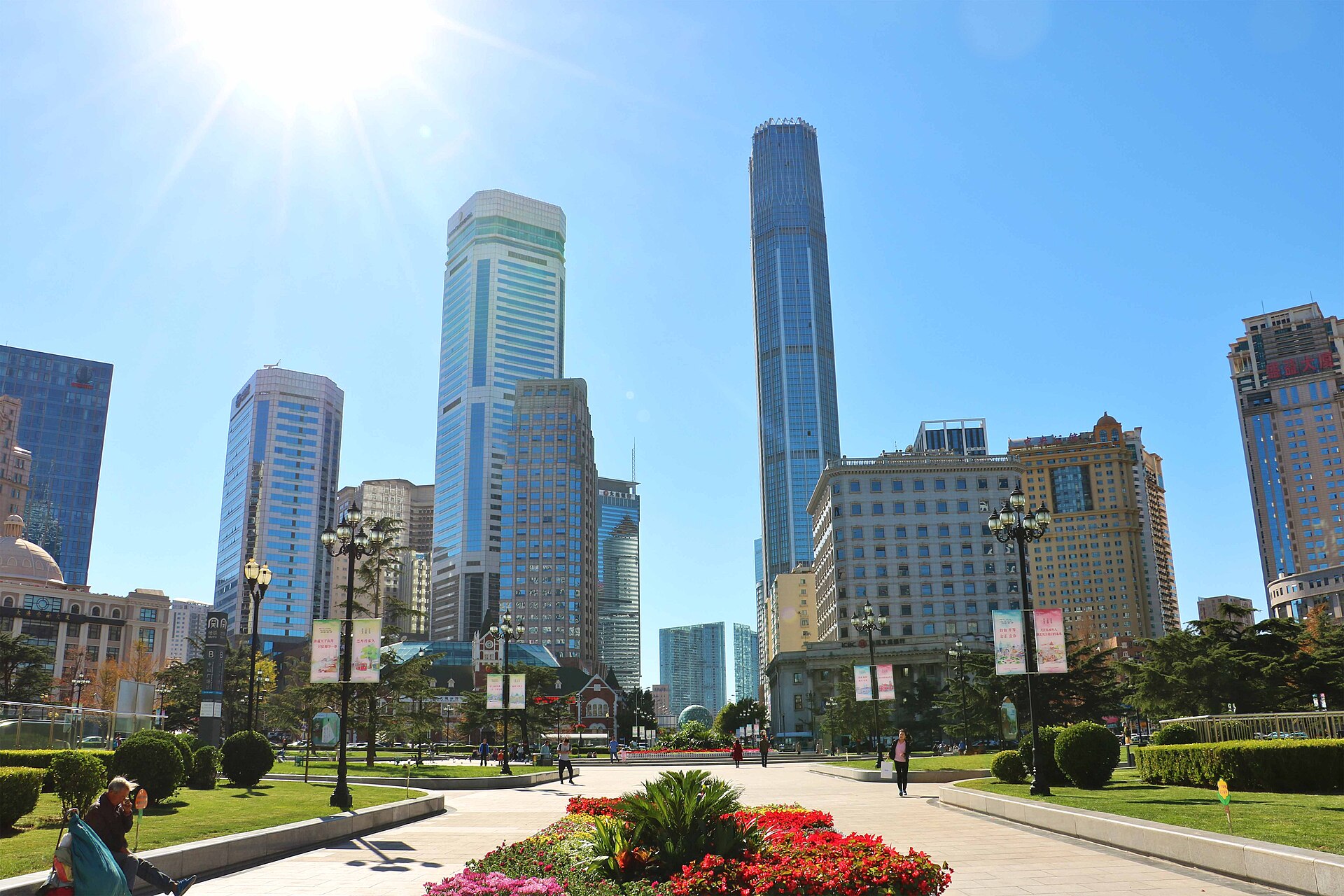
- Xinghai Square and Xinghai Bay — Shahekou district, south coast
Xinghai Square is a vast paved plaza on the south coast, set beside a bay and a seawater bathing beach in the Shahekou district. The surrounding area is a business zone, but evenings bring families, kites and sea air. The scale is huge and shade is scarce, so choose early or late hours and bring a hat in summer.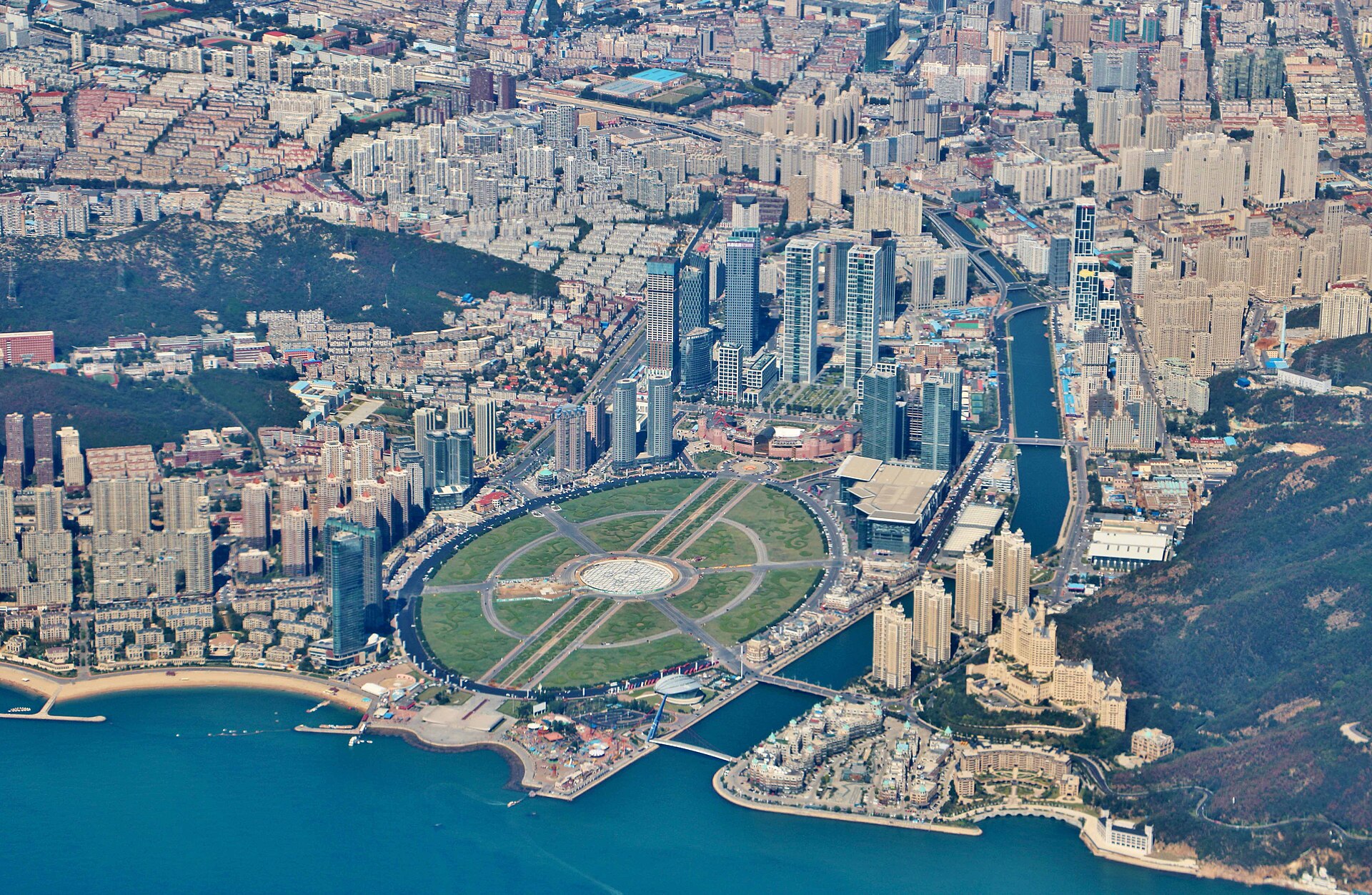
- Labour Park — Central Dalian, hillside park
Labour Park (Láodòng Gōngyuán) climbs a hill close to the centre. A footpath or a seat-lift reaches the summit, where a sightseeing tower adds extra height. The reward is a wide view over rooftops, harbour and sea. Clear days after rain give the sharpest outlook; haze or sea fog can blank it out completely. - Lüshun, the old Port Arthur — Lüshunkou district, peninsula tip
Lüshun, once Port Arthur, lies at the far tip of the peninsula and is now a district of Dalian. Its sheltered naval harbour, best seen from the hill known as Gold Hill, carries layers of Russian, Japanese and Chinese military history. Allow a half day, and check museum and fort opening details before going.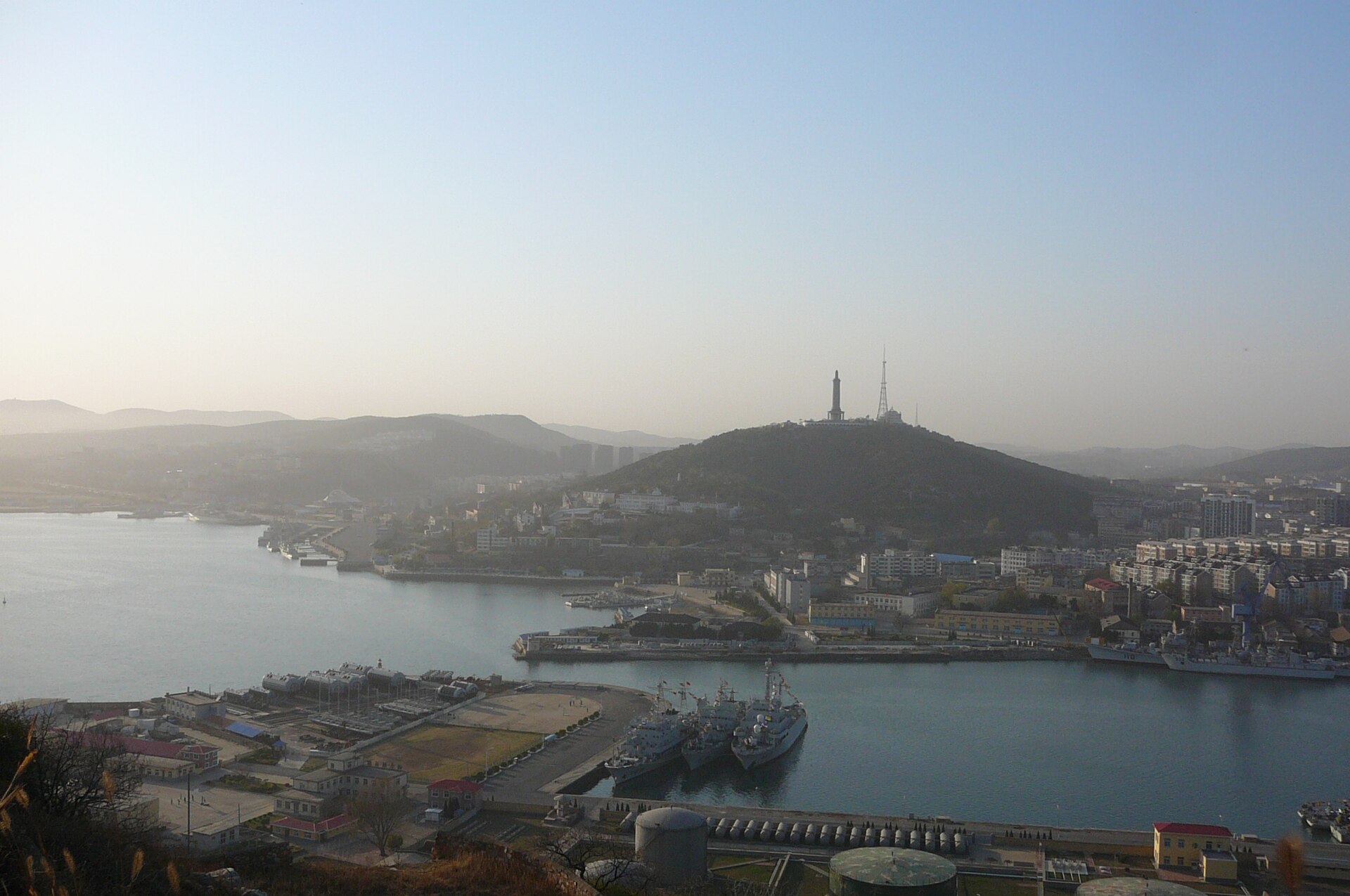
- Old colonial buildings — Older centre around Zhongshan Square
Dalian's Russian- and Japanese-era buildings are scattered around the older centre rather than gathered in one museum. Expect stone banks, former administrative offices and villa streets in mixed styles. A loose walk outward from Zhongshan Square, with a map and no fixed list, works well. Many are still in use, so most are enjoyed from outside.
Culture
Dalian's culture is Chinese at the root, with a coastal, outward-looking streak. Most families trace their ancestry to farmers and fishermen who crossed from Shandong during the decades of Japanese administration, and the local Mandarin belongs to the Jiaoliao group rather than the Northeastern Mandarin spoken inland. It carries a handful of Japanese and Russian loanwords, which is unusual in Chinese, and locals joke that it sounds 'oyster-flavoured'. Public life happens outdoors. The squares and parks are used for morning exercise, evening dancing, kite-flying and card games, and the seafront fills at weekends. Beer is part of local identity, and the summer beer festival draws large crowds for food, live music and drinking late into the night; check the dates before planning around it. Foreign influence shows in the architecture and in a relaxed attitude towards outsiders, and many younger residents are curious about visitors. English is limited outside tourist sites and larger places to stay, so a translation app and addresses written in Chinese characters help a great deal. Seafood is central to hospitality, with hosts ordering generously and urging guests to try more. The years of foreign occupation remain a sensitive subject, and local museums present them from a firmly Chinese standpoint. When a local host orders for the table, accept at least a taste of each dish, and ask before photographing people exercising or dancing in the squares.
What to wear
Dalian has no distinctive regional costume of its own; the traditional dress here is the wider Han Chinese wardrobe. The qipao (cheongsam), cut from silk or brocade, and the Tang-style jacket appear at weddings, festivals and photo shoots, while cotton-padded jackets and fur-trimmed hats belong to the cold northeastern winter. The Shandong roots of many families show more in food and speech than in clothes. Day to day, people dress casually and practically: trainers, windproof jackets, jeans and sportswear, with a fashionable edge among younger residents in the business districts. In winter, long down coats, hats and scarves are universal. Visitors should plan around the sea climate. In summer, light cotton or linen, a sun hat and sunglasses suit the open squares, but pack a thin windproof layer for breezy evenings on the waterfront. In winter, bring thermal layers, a proper down coat, gloves and shoes with non-slip soles for icy pavements. Comfortable walking shoes matter all year because squares are large and parks are hilly. There is no strict dress code, though shoulders and knees covered is a sensible default at any temple or memorial. Swimwear belongs on the beach and bathing areas only.
What to eat
- Steamed or braised whole fish — Seafood restaurants near the harbour
Fresh fish is a Dalian staple, steamed with ginger or braised in a savoury sauce. It arrives whole and full of small bones, so locals pick carefully or crunch through them. Order by pointing at the tank in a seafood restaurant. - Seafood dumplings (jiaozi) — Neighbourhood dumpling eateries
Dumplings are a staple here, ahead of rice or noodles, and coastal versions are stuffed with minced fish, prawn or other shellfish. They are boiled or pan-fried and eaten with vinegar and garlic. A plate makes a filling, inexpensive meal. - Grilled oysters and shellfish — Barbecue stalls and night food streets
Oysters, scallops and clams are grilled on the shell with garlic or chilli, a coastal evening habit that matches the local joke about an oyster-flavoured accent. Expect smoke, plastic stools and cold beer nearby. - Steamed buns and pancakes — Breakfast stalls and neighbourhood bakeries
Buns (baozi) and filled or plain pancakes anchor breakfast and quick lunches, reflecting Dongbei habits. Fillings range from pork and cabbage to vegetables and egg. They are cheap, portable and good fuel for a day of walking. - Dongbei-style braises and stews — Family-style Dongbei restaurants
Northeastern cooking leans towards generous portions, with meat and vegetable stews served in large dishes for sharing. The flavours are plain and hearty rather than spicy, which suits cold weather and big groups.
Plan it
Best time. May–June and September–October are the comfortable months, with mild days and sea air. July and August are warm, humid and busy with domestic holidaymakers, and sea fog can hide views. Winter, from December to February, is cold and windy.
How long. 2–3
Getting there. Dalian's airport is linked to the city by a metro line that runs to Zhongshan Square, and an airport bus serves the main railway station. Trains arrive at the main station in the centre. From either, the last leg to most sights is a short metro or taxi ride.
Budget. mid
Tips
- Buy rail tickets only at stations or through official channels, as unofficial sellers can leave you with invalid tickets
- Use the official taxi queue at the airport rather than touts
- Carry a translation app and addresses in Chinese characters
- Visit the large squares early or late, as shade is scarce in summer
- Check the official website for current opening details before visiting: https://www.dlhitech.gov.cn/yqgk/index.html
Etiquette
- Accept a taste of each dish when a host orders for the table
- Ask before photographing people exercising or dancing in public squares
- Keep voices low and dress modestly at memorials and temples
Nearby
Sources
- Wikidata Q74881 (CC0)
- Wikipedia: Dalian (rev 1375012995) (CC BY-SA 4.0)
- Wikivoyage: Dalian (rev 5400764) (CC BY-SA 4.0)
- Dalian Skyline Enhanced, Michael Saechang (CC BY-SA 2.0)
- Xigang, Dalian, Liaoning, China, Fumihiko Ueno (CC BY 3.0)
- Zhongshan Square, HSJ233 (CC BY-SA 4.0)
- 黄金山より望む旅順軍港全景。, Nihongarden (CC BY 3.0)
- 27220-Dalian, xiquinhosilva (CC BY 2.5)
- Donggang Dalian, HSJ233 (CC BY-SA 4.0)
- Xinghai Square, HSJ233 (CC BY-SA 4.0)
- Dalian International Conference Center, Forgemind ArchiMedia (CC BY 2.5)


