Dakhla
Dakhla, Western Sahara
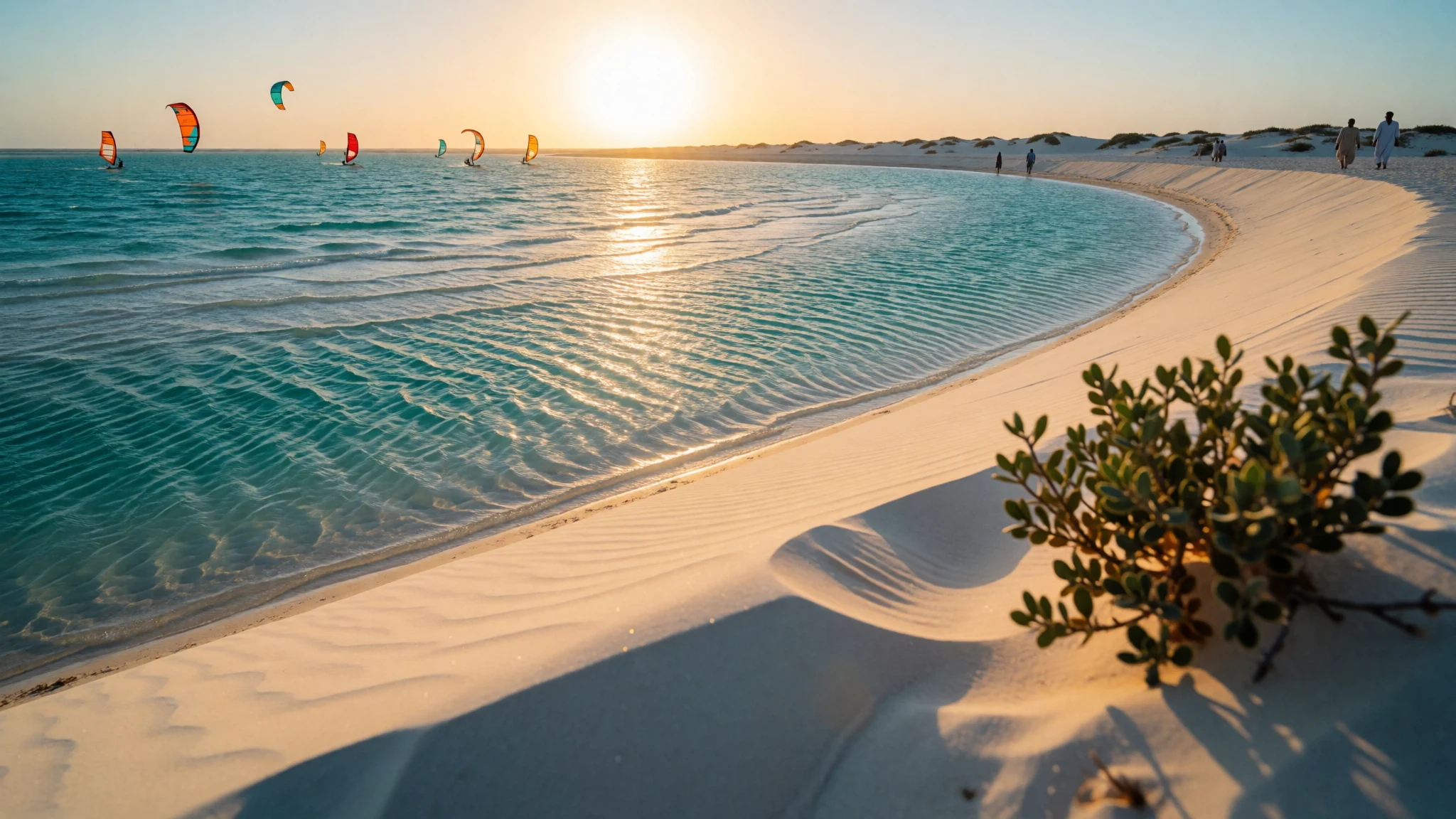
Dakhla is a desert town on a thin Atlantic peninsula, where a calm lagoon, steady wind and empty sand draw kitesurfers and quiet-seekers.
The place
Dakhla sits at the tip of a long, narrow peninsula, the Río de Oro, which pushes out into the Atlantic from the coast of Western Sahara. Its Arabic name means roughly 'the peninsula', and the Spanish who founded the town called it Villa Cisneros. Ocean lies on one side, a sheltered lagoon on the other and open desert behind, so the whole place is organised around water and wind. About 165,000 people live here, and the town is the administrative centre of a region that Morocco claims as its own. Western Sahara's status is disputed, and Morocco has controlled Dakhla since 1979. That context matters for planning, because it explains the military presence, the checkpoints on the approach roads and the care people take when talking politics. The land is flat and low, only about 10 metres above sea level, so the sky does most of the work. The town itself is a low-rise grid of sand-coloured buildings with a waterfront, patisseries, small eateries and budget lodgings clustered near the centre. Daytime streets can look almost empty, and activity picks up after sunset. Most visitors come for the water: windsurfing and kitesurfing happen on both the ocean and lagoon sides. Beyond town the main road runs through very long stretches with little in them, so fuel, water and patience count for more than sightseeing lists.
Its story
Dakhla's recorded story starts with people rather than ships. From the twelfth century the Oulad Delim, a Bedouin tribe of Arab descent whose origins are traced to Yemen, held the land around the Río de Oro and moved their herds across it. Long before any town stood here, the coast was known to fishing crews sailing from the Canary Islands, who came for fish and later for seals and whales. Spanish interest grew partly from that trade and partly from worry about pirates along the African shore. In 1881 a floating dock was moored off the peninsula to serve the Canarian boats. Spain formally founded the settlement in 1884 and named it Villa Cisneros, with promotion from the Spanish Society of Africanists and money from the government in Madrid. The welcome was hostile: that same year the Oulad Delim raided the trading post and emptied its stores. Spain answered with a royal decree claiming the coast between Cape Bojador and Cape Blanc, and its authority soon reached inland. Villa Cisneros remained a small Spanish outpost for fishing and trade on a bare shore. Morocco has administered the town since 1979, though the territory's status is still disputed. The fishing legacy has a darker side too, because generations of hunting along this coast harmed seal, whale and seabird populations. Engravings from 1885 in Spanish magazines show the first camp on the peninsula and are easy to find online.
What to see
- Our Lady of Mount Carmel Church — Town centre
Dakhla's Roman Catholic church was built by the Spanish colonial administration in the 1950s. It is a small, plain reminder of the town's Villa Cisneros years and sits among ordinary streets rather than in a heritage quarter. Admire it from outside, and ask locally before assuming it is open for visits.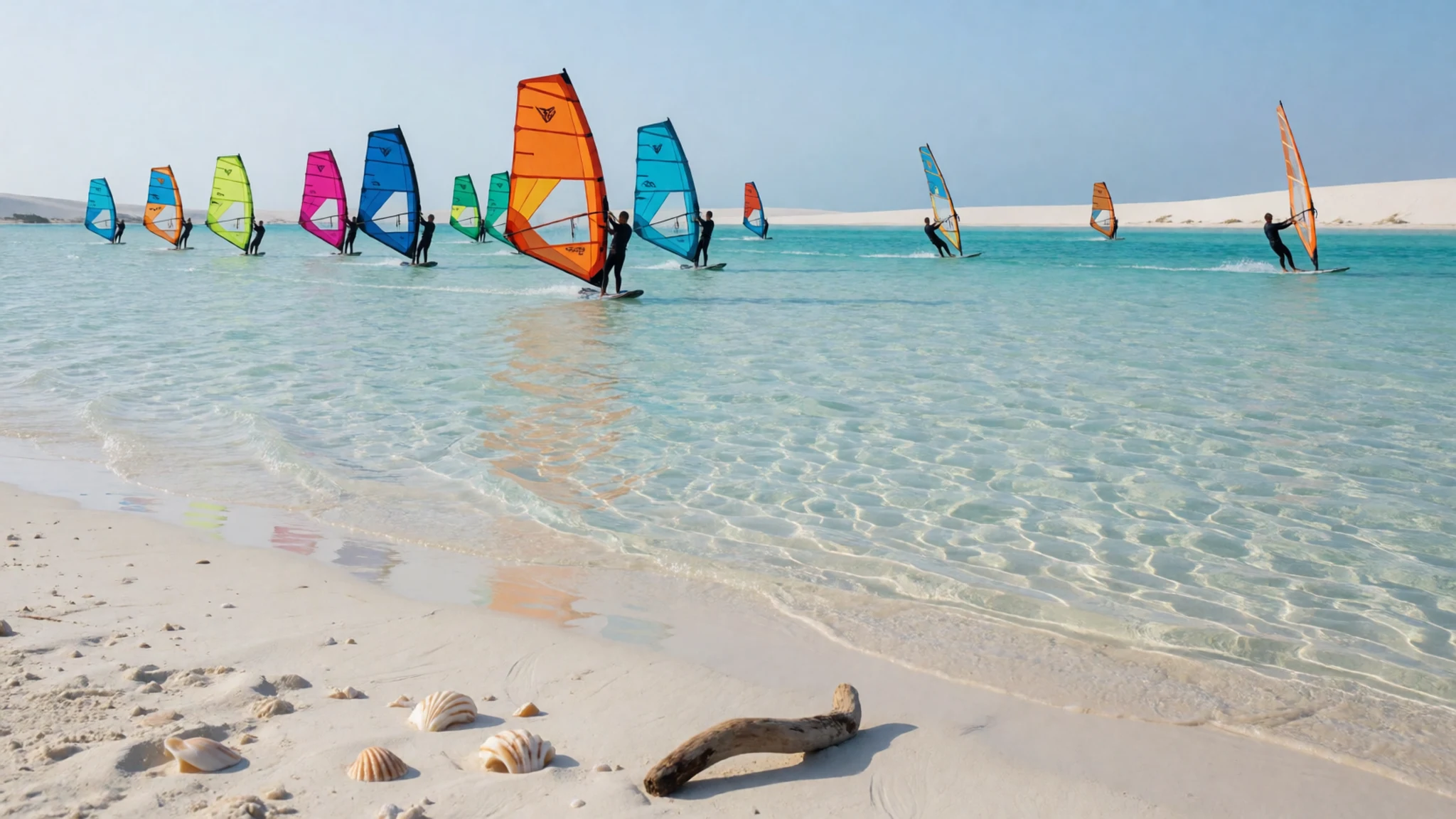
- The black-and-white lighthouse — Western side of the peninsula
West of the town stands the old lighthouse, whose black-and-white rings make it one of the most recognisable landmarks in Western Sahara. Climbing it was stopped in 2014, so the visit is about the exterior, the wind and the empty coastal scrub. Go by car or taxi, and take water.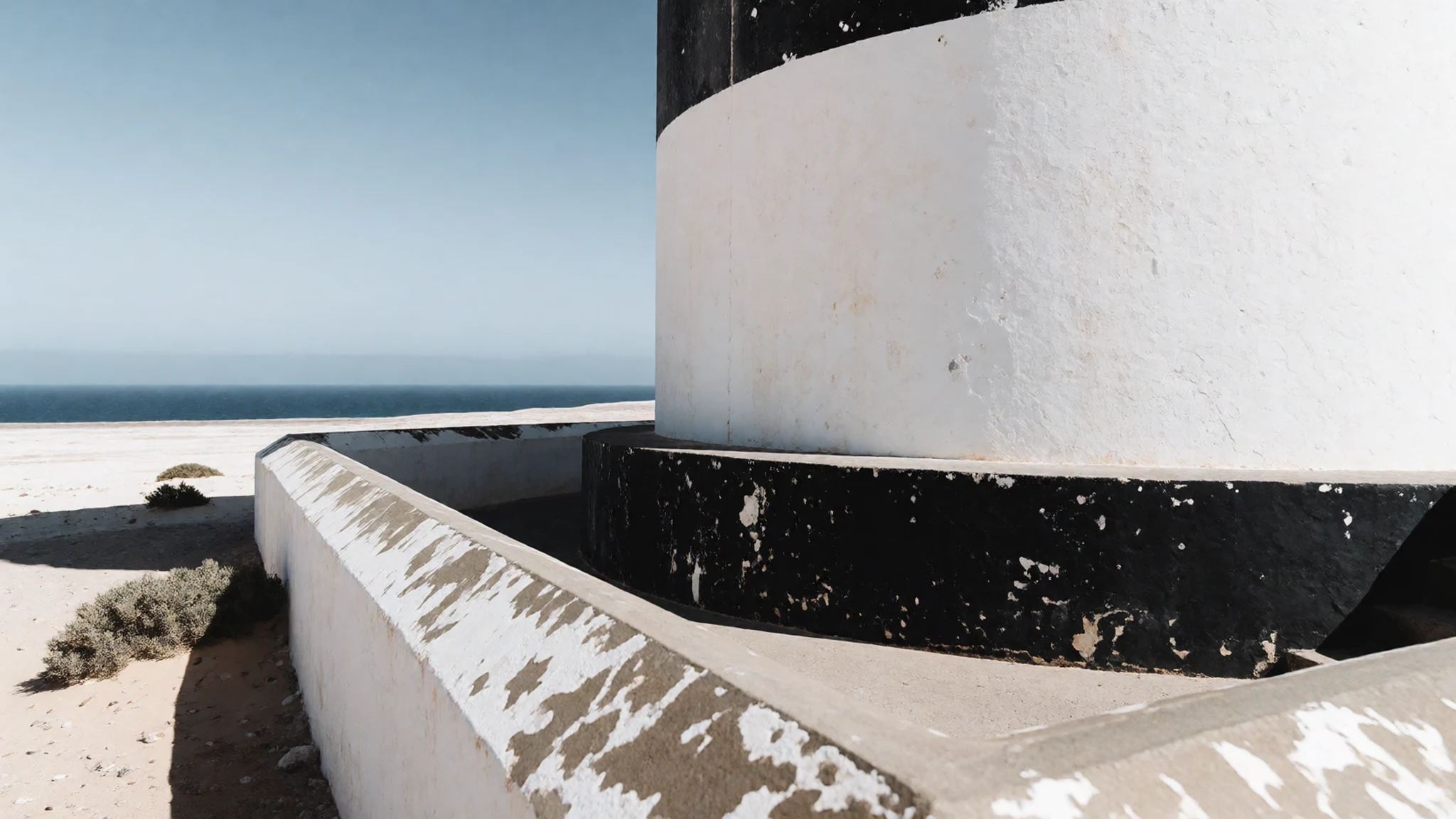
- The lagoon and its kitesurfers — Eastern (lagoon) side of the peninsula
The sheltered eastern side of the peninsula is where kitesurfers gather, and watching them from the shore is enough of an outing. The sport is so common that road signs warn drivers about riders who occasionally land on the tarmac. Kite shops near the waterfront can explain conditions and lessons.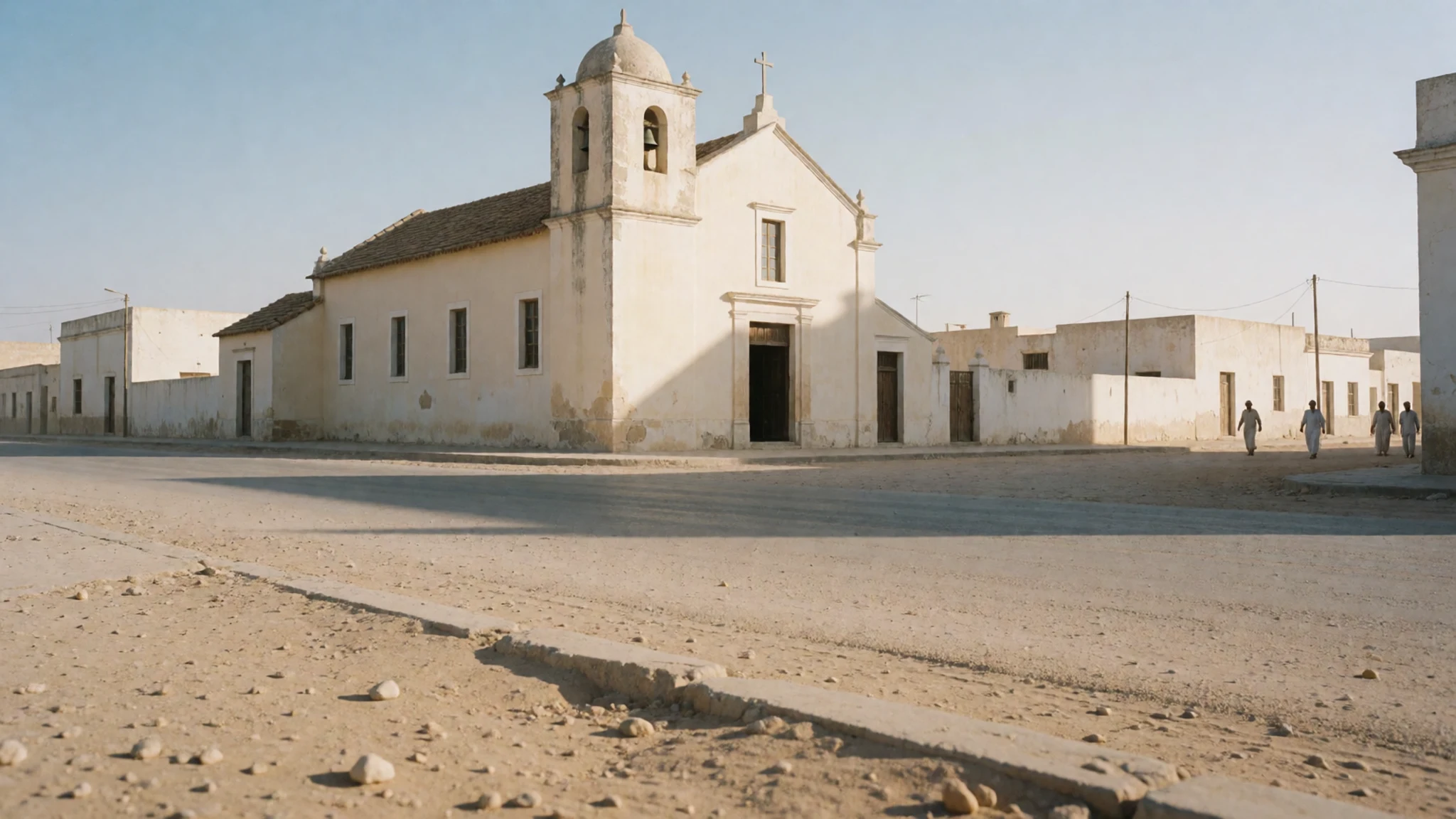
- Dragon Island — Dakhla lagoon
A low island in the lagoon that appears in many photographs of Dakhla, usually with a windsurfer crossing flat water in front of it. Conditions suit both windsurfing and kitesurfing. Ask locally or at a kite shop about access and tides before heading out, as arrangements change.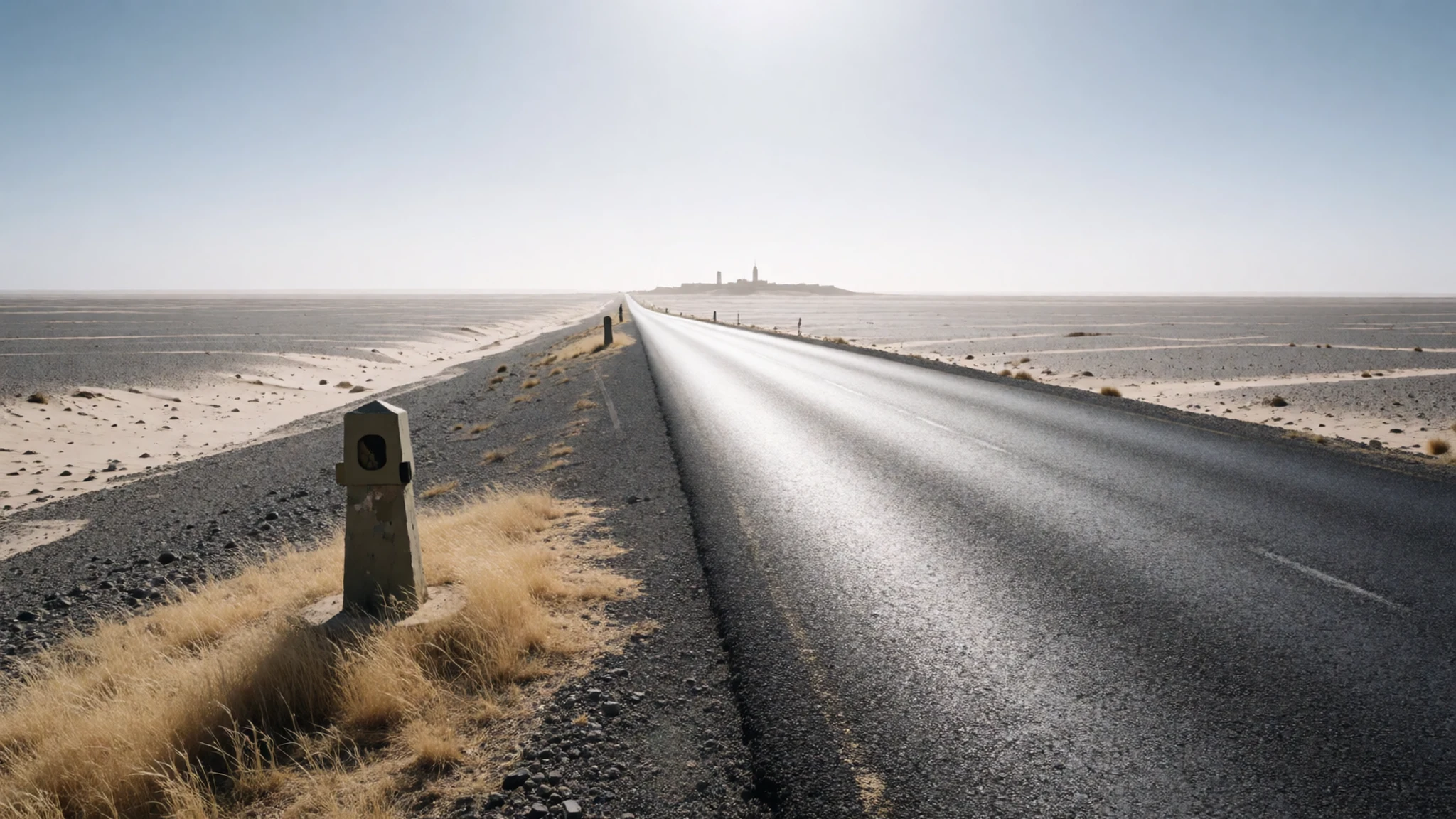
- The waterfront and the road to Aoussard — Waterfront, with the Aoussard road leading inland
The town's waterfront is the place for tour and bus offices, kite shops and evening walks. From here an unpaved-feeling road trip runs inland towards Aoussard, passing a UN base, a mined area and a Moroccan army post. It is a long, hot drive, so carry plenty of water and fuel.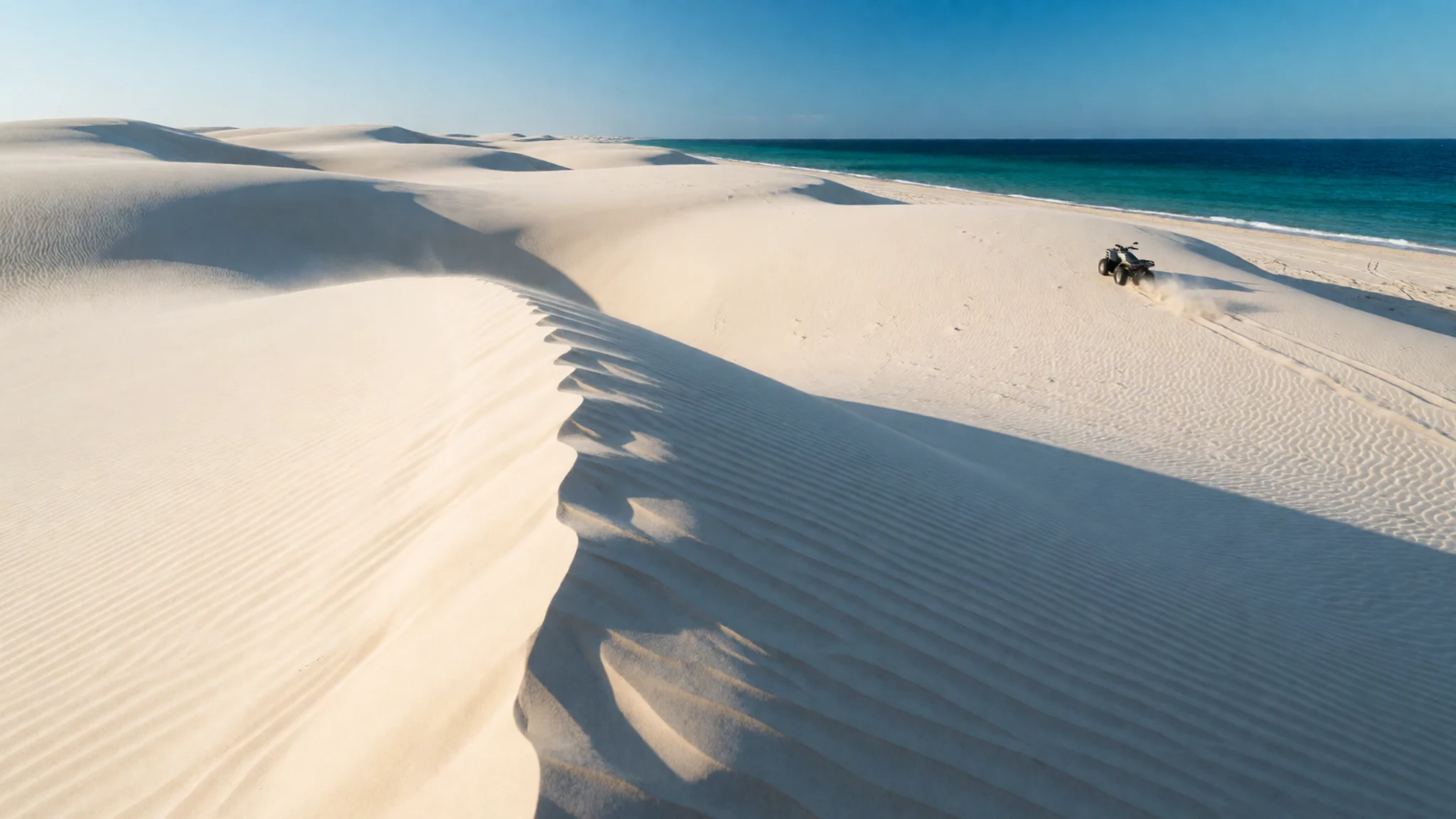
Culture
Dakhla's culture is Sahrawi and Hassaniya-speaking, shaped by Bedouin herding, Atlantic fishing and a Muslim way of life, with Moroccan and Spanish layers laid over it. Hassaniya is the Arabic dialect of the region, and Spanish words still turn up in everyday speech. Tea is the centre of hospitality. It is poured in small glasses, usually in rounds, and an invitation to sit and drink is a real welcome rather than a sales pitch. Family and tribal ties matter, and visitors will notice that people greet each other at length and ask after relatives before getting to business. Daily rhythm follows heat and prayer: mornings are slow, the middle of the day is quiet, and the town comes alive after sunset, when families, young people and fishermen fill the waterfront and the cafés. Politics deserves tact. Western Sahara's status is disputed, Morocco administers the town, and opinions are strongly held on every side, so visitors do best to listen rather than debate. Military and police posts are common, and photographing them or their equipment can cause trouble. Kitesurfing has added a cosmopolitan crowd of foreign visitors, but outside the camps and the waterfront the town remains conservative and local. Ask before photographing any person, and avoid pointing a camera at soldiers, checkpoints or military buildings.
What to wear
Traditional dress in Dakhla is Sahrawi. Women wear the melhfa, a long, light wrapped cloth, often cotton or a similar thin fabric, draped over the head and body and chosen in bright or patterned colours. It is worn daily and for family occasions, and it suits the heat and the wind. Men wear the daraa, a wide, flowing robe, commonly in blue or white, sometimes with a cheche, a long scarf wound around the head and face against sun and sand. Indigo-dyed cloth is strongly associated with the Sahara, although the shades in the shops vary. Day to day, many people mix these garments with jeans, trousers, shirts, tracksuits and trainers, particularly younger residents and those who work in fishing or on the waterfront. Wind, sun and sand shape every choice. Visitors should wear loose, light, long-sleeved clothing that covers shoulders and knees, as dress is conservative outside the kite camps. A scarf or cap protects against sun and blown sand, and sunglasses help a lot. Evenings are cooler by the Atlantic, so bring a windproof layer. Closed shoes or sturdy sandals are better than flip-flops for stony tracks and the road to the lighthouse. Women may feel more comfortable with a light scarf for the head or shoulders in the old town, though it is not usually required.
What to eat
- Grilled Atlantic fish — Small fish eateries near the port and waterfront
Fresh fish from the local fleet, grilled and served with bread, salad and lemon, is the simplest and most reliable meal in town. Order whatever the kitchen says came in that day, and expect plain seasoning rather than elaborate sauces.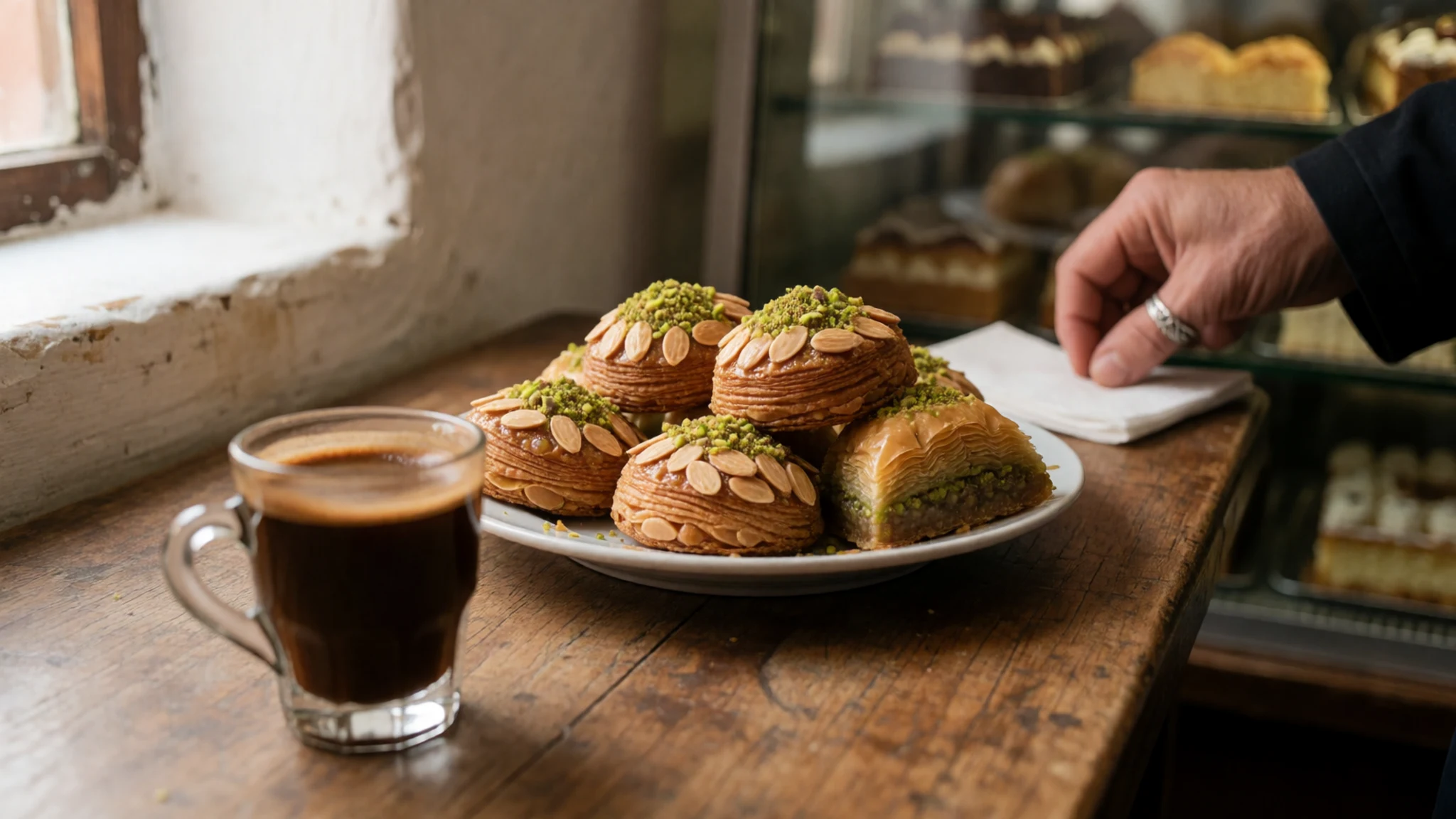
- Local oysters — Seafood restaurants and stalls around the lagoon and waterfront
Oysters are farmed in the sheltered waters of the bay and eaten raw with lemon. They are a reason some visitors plan a stop in Dakhla. Choose a busy place with fast turnover and eat them soon after they are opened.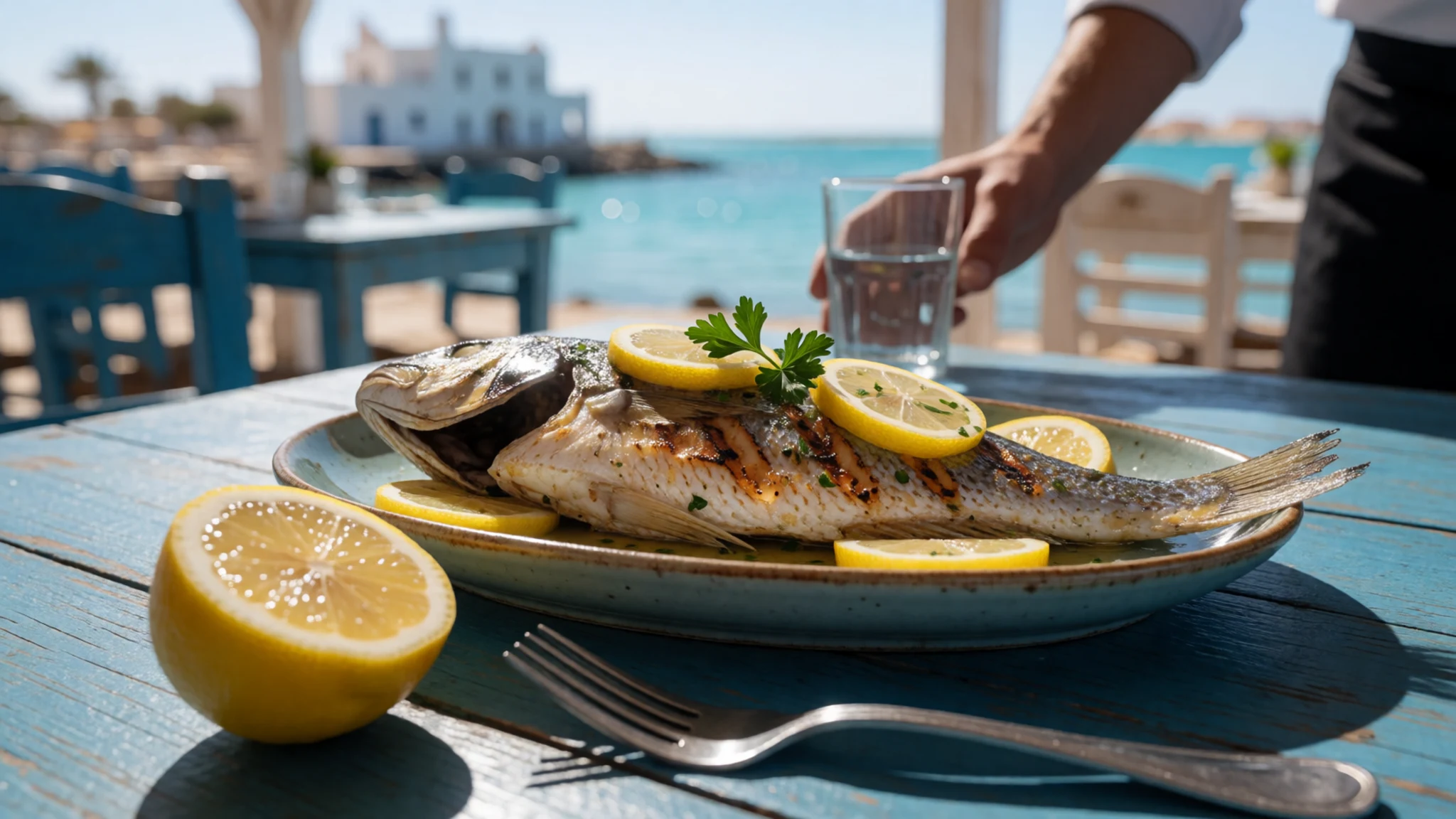
- Fish or meat tagine — Family-run eateries in the town centre
A slow-cooked stew in a conical clay pot, with vegetables and either fish or lamb, is common across Morocco and appears here with a coastal slant. It is usually shared and eaten with bread rather than cutlery. - Mint tea — Any café, home or shop where you are invited to sit
Sweet green tea with mint is served in small glasses and is part of hospitality as much as a drink. Expect more than one glass, and accept the second if it is offered. Refusing the first without good reason can seem curt. - Pastries and sweet breads — Patisseries in the town centre
Patisseries around town sell cheap, freshly made pastries, biscuits and sweet breads, useful for breakfast or a quick snack before a long drive. Buy a few small items and eat them while still fresh.
Plan it
Best time. March–April and October–November are the most comfortable months: the climate is a mild desert one, the Canary Current keeps temperatures moderate, and rain is rare, averaging only about 30.8 mm a year. January is the coolest month at around 18.4 °C and September the warmest at around 23.2 °C. Wind, which kitesurfers prize, can make mornings and evenings chilly.
How long. 3–4
Getting there. Dakhla has its own airport; check airline routes and schedules, as services change. Long-distance buses from cities such as Agadir and Laayoune reach the town and are run by CTM and Supratours, with many hours on the road and several checkpoints. By car, National Route 1 is the main road, in good condition but with long gaps between fuel stops.
Budget. mid
Tips
- Carry your passport and ID at all times, as checkpoints are frequent on the roads into town
- Fill the fuel tank whenever you can on National Route 1, because stations are far apart
- Carry plenty of water, sun protection and a windproof layer for the coast
- Book kite or windsurf lessons and lodging ahead in the main season, and check the official site at http://www.dakhla.ma for local information
- Bring cash for small eateries, patisseries and shops, as cards are not always accepted
Etiquette
- Ask permission before photographing people, and never photograph soldiers, checkpoints or military buildings
- Dress modestly outside kite camps, with shoulders and knees covered
- Accept tea when it is offered and avoid arguing about the political status of Western Sahara
Nearby
Sources
- Wikidata Q345204 (CC0)
- Wikipedia: Dakhla, Western Sahara (rev 1377730936) (CC BY-SA 4.0)
- Wikivoyage: Ad Dakhla (rev 5431929) (CC BY-SA 4.0)
- Photo: Dakhla, Western Sahara (11), YoTuT (CC BY 2.5)
- Photo: Western Sahara relief location map, Sting (CC BY 3.0)
- Photo: Africa relief location map, Eric Gaba (Sting) (CC BY 3.0)
- Engraving: Establecimiento provisional en la Península de Río de Oro, Emilio Bonelli photograph (Public domain)
- Photo: Windsurfer in front of Dragon Island at Dakhla, March 2009, Nomadz (CC BY 3.0)
- Photo: Dakhla, Western Sahara, YoTuT (CC BY 2.5)
- Engraving: La Ilustración Española y Americana, 8 January 1885, p. 4 (cropped) (Public domain)
- Photo: A man in black dress before a shut telephone booth in Dakhla, R0s (dakhlavision.com) (CC BY-SA 1.0)


