Daejeon
Daejeon, South Korea
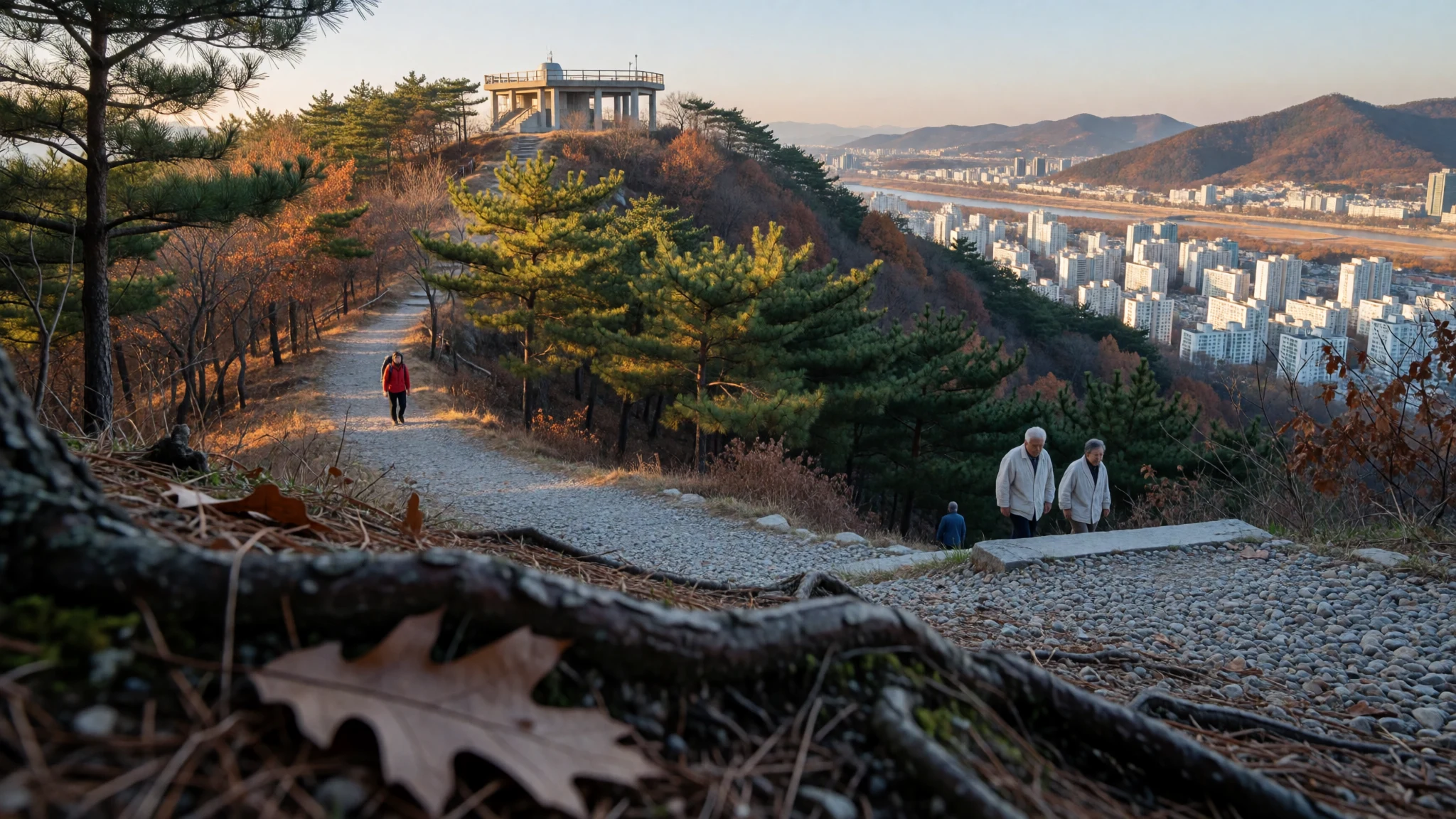
Daejeon is a calm, hilly science city where mountain trails, hot springs and research campuses sit within an hour of Seoul by fast train.
The place
Daejeon sits in a broad lowland valley in the middle of South Korea, with the Sobaek Mountains on one side and the Geum River on the other. About 1.4 million people live here, which makes it a proper city rather than a quiet research village, though it rarely feels hurried. The skyline is mostly apartment blocks and office towers, with a wooded ridge visible at the end of almost every street. Hills ring the centre and are used heavily at weekends, so a short bus ride from a station can put a walker on a forest path.
The city grew up around its railway junction, and that still shapes it. Two main rail lines and two expressways meet here, so Daejeon works as a stopping point between the capital and the south. Seoul is about an hour away by KTX or SRT fast train, which makes a day trip realistic.
Research is what sets Daejeon apart. Government institutes, company laboratories and universities, including KAIST and Chungnam National University, cluster in the Daedeok Innopolis district. Several national offices also moved here from Seoul, and many now work in the Government Complex. The result is a city of science-leaning museums, wide boulevards, university cafés and a younger crowd than most provincial cities have.
There is an honest caveat: Daejeon has few headline monuments. Its appeal lies in the hills, the spa district, the science parks and the food, and it suits travellers who want a low-key city after busier places. Summers are hot and humid; winters are cold and dry.
Its story
Daejeon's recorded past is thinner than its modern reputation suggests. Excavated finds at Yongho-dong, in the city's Daedeok District, and at Seokjang-ri in nearby Gongju point to people living in the region as far back as the Palaeolithic. Bronze objects, house sites and pottery from later periods show that settlement then became continuous.
In the centuries before the Three Kingdoms, the area belonged to Mahan, a loose federation of small states in the south-west of the peninsula. Historians think a small state called Sinheunguk may have stood here, although others place it around Seosan or Yesan, so the question remains open. The Yuseong area is linked with a second Mahan state, Naebiri-guk.
Local legend adds colour to Yuseong. Wounded soldiers of the Baekje kingdom are said to have recovered after bathing in its hot springs, and later rulers, including the first king of the Joseon dynasty, are said to have rested there.
The Daejeon of today is largely a product of the railway age. It developed as a junction town where the lines to the south and the south-west met, and it outgrew the older market towns around it. From the 1980s the government moved several national functions out of crowded Seoul, and the Government Complex became their base. Daejeon was raised to metropolitan-city status in 1989. The international Expo of 1993 then gave it a science-themed showcase, and the grounds survive as a science park that still draws school groups and families.
What to see
- Bomunsan — Jung District, south of the centre
Bomunsan is the hill most residents point to when asked where to get a view. A cable car and an observatory serve those who prefer not to climb, and several marked trails wind through the woods. Springs beside the paths are reputed to give drinkable water; check the signs before filling a bottle.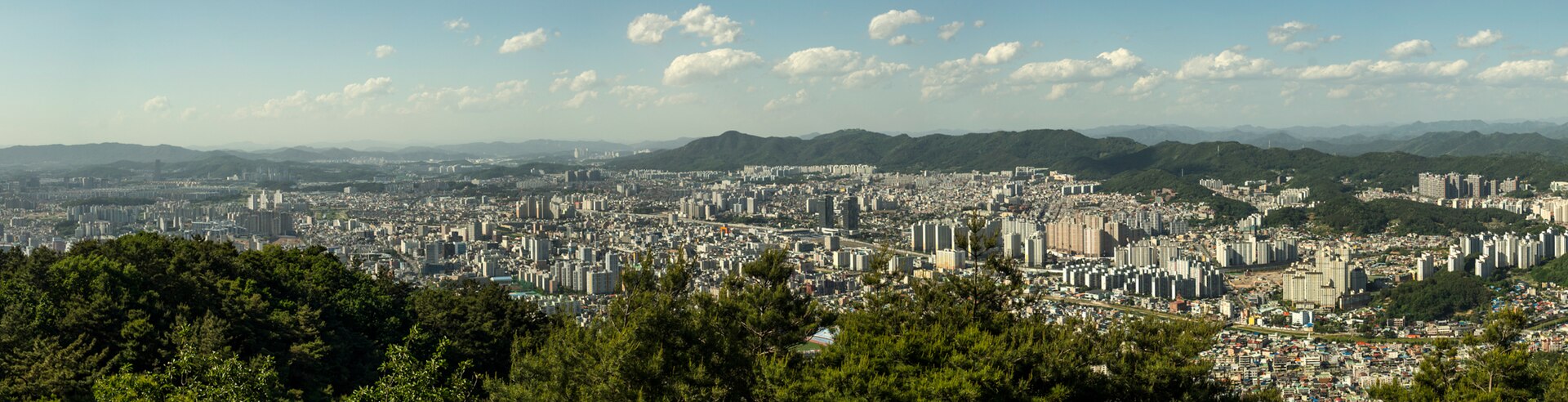
- Yuseong hot springs — Yuseong District
The Yuseong spa district is the city's old bathing quarter, tied to the legend of healed Baekje soldiers. Today it is a mix of hotels with mineral baths, public foot-bathing spots and a riverside promenade. It suits a slow evening after a day on the hills or at the science parks. - Expo Science Park — Daedeok area, Yuseong District
The park occupies the grounds of the 1993 Expo and is the easiest place to see Daejeon's science identity. The national science museum here has halls on natural history, future technology and the living world, plus a children's wing and an observatory. Families fill it at weekends, so weekday mornings are calmer.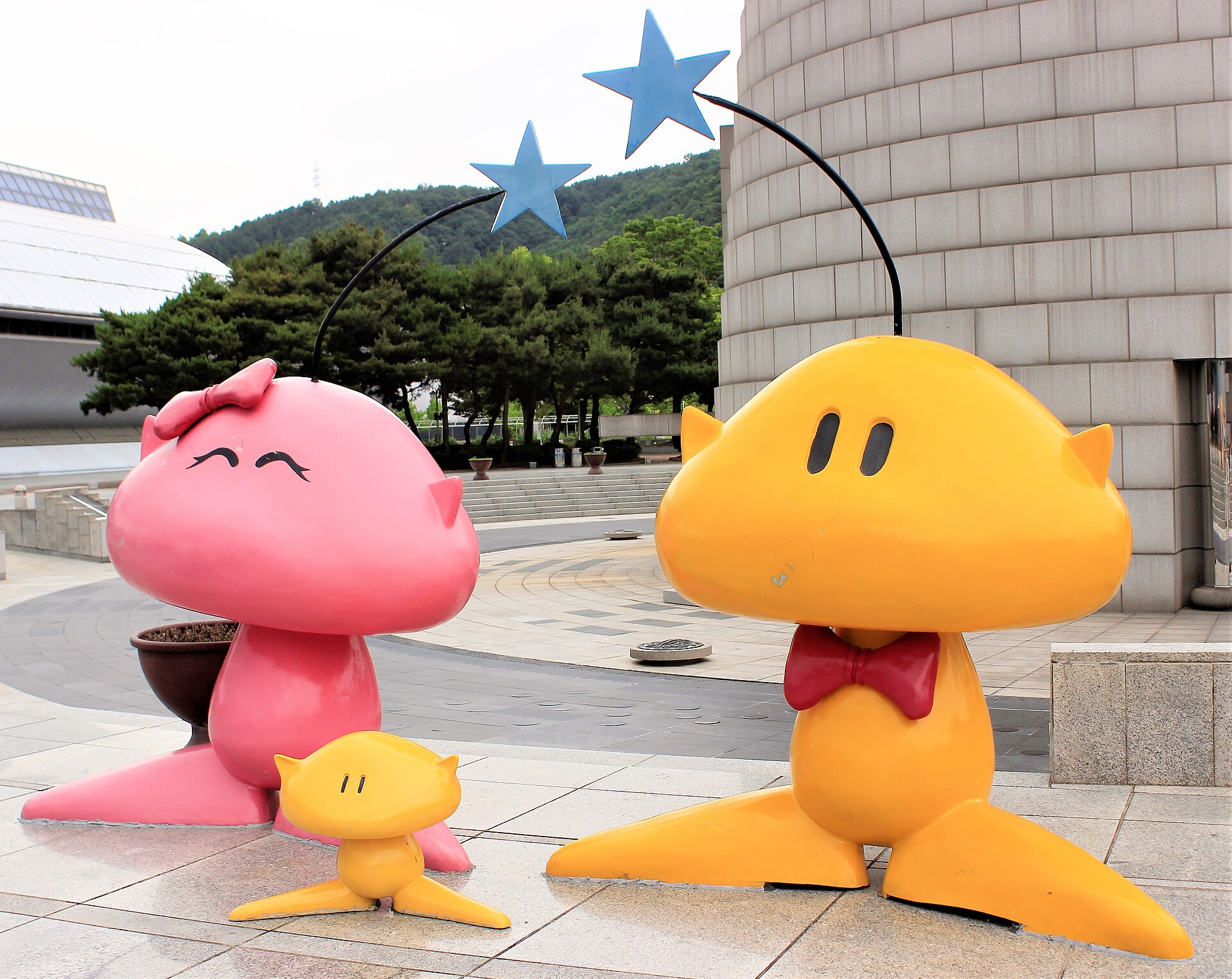
- Jangtaesan — Southern Daejeon
Jangtaesan is a man-made and natural forest on the southern edge of the city, laid out for easy outings. Long trails, small gorges, picnic areas and a sky tower give it variety, and a children's playground makes it popular with families. Shade makes it more bearable than the city in summer. - KAIST campus — Daedeok, Yuseong District
KAIST is South Korea's best-known science and technology university, and its leafy campus is open for a wander. Expect students cycling between labs, small cafés and a quiet, studious mood. It makes a good first stop for anyone curious about what the Daedeok research cluster actually looks like on the ground.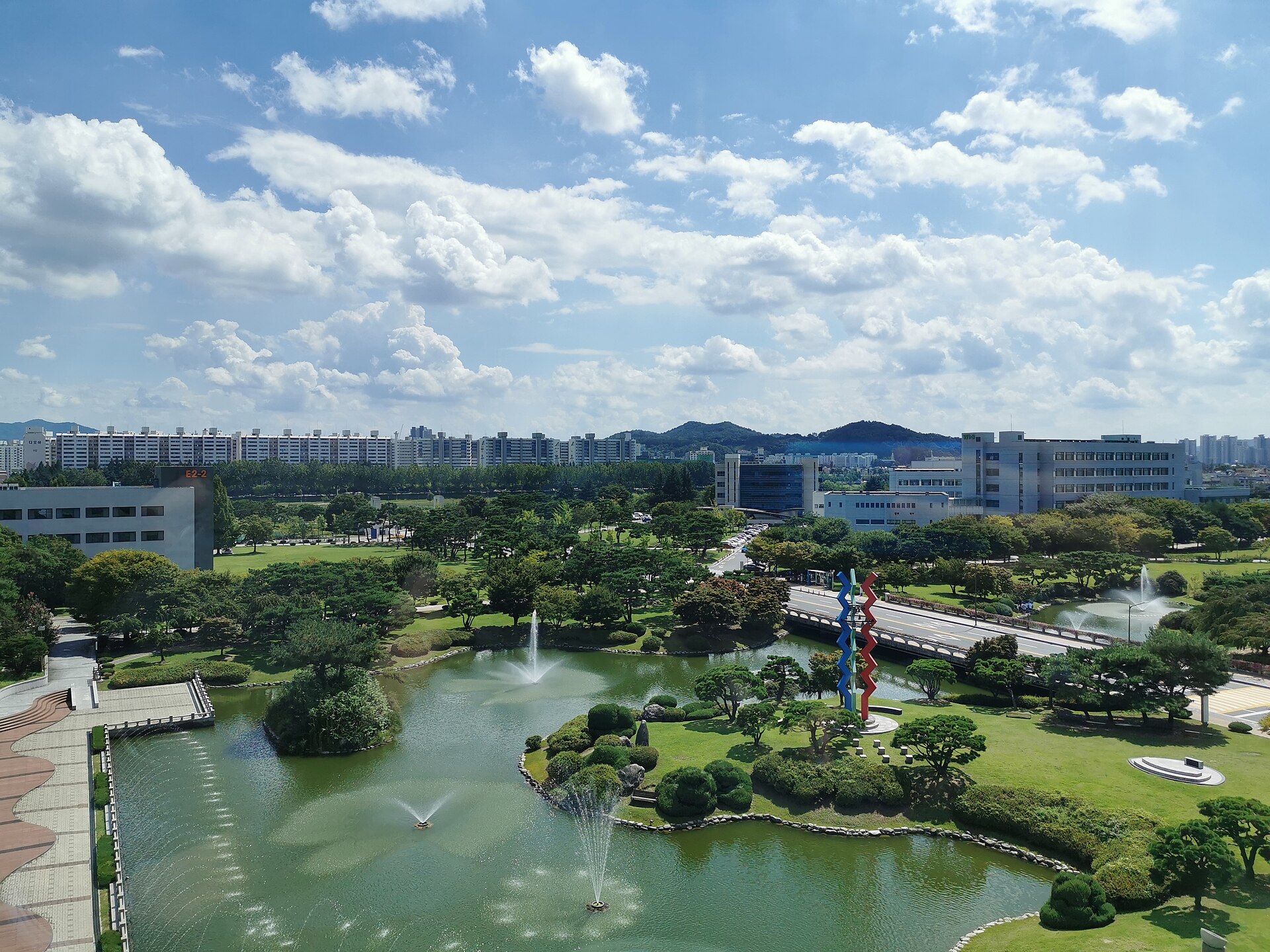
Culture
Daejeon's culture is organised around learning and science more than ancient ritual, and most of its venues cluster in the Daedeok area. The Daejeon Museum of Art leans towards technology-minded modern and contemporary exhibitions, and the Daejeon Arts Centre hosts local music and theatre groups, including the city's philharmonic orchestra. The Lee Ungno Museum, designed by the French architect Laurent Beaudouin, holds a large permanent collection of works by or connected with the Korean artist Lee Ungno.
Everyday culture happens largely outdoors. Hiking is close to a national habit, and Daejeon's hills fill on weekends with walkers in serious gear, who often finish the day with noodles or rice wine. Student life around KAIST and Chungnam National University keeps the cafés and street food lively and affordable. On major family holidays such as Seollal and Chuseok, many residents travel to their home towns, and some small eateries shut for a few days.
Buddhist temples in the surrounding mountains, including those on Sikjangsan, keep a quiet daily routine of chanting and prayer. Visitors are welcome to look around, but these are working places of worship rather than museums.
At temples and in traditional restaurants, take your shoes off where others do, keep your voice low, and ask before photographing monks or worshippers.
What to wear
Daejeon follows the national tradition of hanbok, the Korean dress made of a short jacket (jeogori) worn over a wrapped, full skirt (chima) for women, and a jacket with loose trousers (baji) for men. Fabrics include silk for formal wear, cotton for everyday cloth, and ramie or hemp for cool summer garments. Hanbok appears today at weddings, on Seollal and Chuseok, and at formal family occasions.
Day to day, people in Daejeon dress practically. Office workers and researchers wear smart-casual clothes, students favour sportswear and sneakers, and on weekends the hills are full of walkers in bright technical jackets, trekking poles and proper boots. It is a city where looking outdoorsy is normal rather than eccentric.
Visitors should dress for the season. Summer is hot and humid, so light cotton or quick-dry fabrics and a compact umbrella help during the rainy spell. Winters are cold, so a warm coat, hat and gloves are worth packing. Sturdy shoes with grip are essential for the mountain trails, and slip-on shoes are handy for temples and traditional restaurants where footwear comes off. At temples, cover shoulders and knees, and avoid anything very revealing or covered in slogans.
What to eat
- Kalguksu — Noodle shops and local eateries across the older districts
Knife-cut wheat noodles served in a hot broth, often with courgette and a dab of seasoning on top. It is a comforting, filling bowl, and a reliable lunch after a hike or on a cold day. - Duruchigi — Specialist pork restaurants around the city centre
A stir-fried dish of thinly sliced pork with vegetables in a spicy red sauce, cooked at the table. It is strongly associated with Daejeon and is best shared by a group, with rice and cold side dishes. - Bakery bread and pastries — Neighbourhood bakeries in the downtown streets
Daejeon has a strong bakery culture, with long-established shops turning out filled breads, soft rolls and sweet pastries. Buying a bag to take on a hill walk or onto the train is a local habit. - Grilled pork belly (samgyeopsal) — Barbecue restaurants near the university areas
Thick slices of pork belly are grilled at the table and wrapped in lettuce or perilla leaves with garlic and spicy paste. It is a social meal, often with soju or beer, and usually eaten in a group. - Vegan and temple-style meals — Small vegan restaurants and eateries near temples
Those avoiding meat can find vegetable-based Korean meals, from simple bibimbap to larger sets built on seasonal greens, mushrooms and fermented pastes. Options are fewer than in Seoul, so it helps to look up places beforehand.
Plan it
Best time. April–May and October–November are the best months: mild days, clear air and good colour on the hills. July and August are hot, humid and rainy, and winter is cold and dry.
How long. 1–2
Getting there. Most visitors fly into Incheon International Airport and take the KTX or SRT fast train from Seoul, about an hour to Daejeon Station. Cheongju International Airport is the nearest airport, with an intercity bus for the last leg to the city.
Budget. mid
Tips
- Visit Bomunsan and Jangtaesan early on weekdays to avoid weekend crowds
- Carry a transit card for city buses and the metro
- Check the official site (https://www.daejeon.go.kr/) and museum sites for opening days before heading out
- Bring water and sturdy shoes for the hill trails
- Plan around holidays like Seollal and Chuseok, when some small eateries close
Etiquette
- Take your shoes off where there is a raised floor or a row of shoes by the door
- Keep voices low at temples and on quiet trails
- Offer and receive things with both hands when meeting older people
Nearby
Sources
- Wikidata Q20921 (CC0)
- Wikipedia — Daejeon (rev 1379885470) (CC BY-SA 4.0)
- Wikivoyage — Daejeon (rev 5410702) (CC BY-SA 4.0)
- Pmlydon — Daejeon city panoramic (CC BY-SA 4.0)
- Jo — Korea-Daejeon-Uam Historic Park (CC BY 2.5)
- Pmlydon — Daejeon city Korea (CC BY-SA 4.0)
- Youngjin — Daejeon Station (CC BY 3.0)
- Trainholic — 1993 Daejeon Expo mascot (CC BY-SA 4.0)
- Map Daejeon-gwangyeoksi (CC BY 3.0)
- Deuterium 001 — Chungnam National University Law School Building N12 (CC BY 4.0)
- AhmedAlElq — KAIST, August 2019 (CC BY-SA 4.0)


