Curitiba
Curitiba, Brazil
Curitiba is a cool, green plateau city where immigrant history, careful planning and plentiful parks make for an unhurried stay in southern Brazil.
The place
Curitiba is the capital of Paraná state in southern Brazil, a city of well over a million residents standing on a plateau 935 m above sea level. The height gives it a cooler, crisper climate than the coast, and winter mornings can bring fog thick enough to disrupt flights. It is the largest city in Brazil's South Region and sits at the centre of a metropolitan area made up of many neighbouring municipalities. The port of Paranaguá lies to the east, and Afonso Pena International Airport handles most arrivals by air.
What visitors notice first is order. Dedicated bus lanes run along the main roads, parks are plentiful and well kept, and the old centre is a compact tangle of squares and pedestrian streets. The city has long had a name for planning, and it shows more in everyday function than in grand monuments. This is a place for walking between gardens, museums and cafés rather than ticking off landmarks.
The population is a layered mix. Germans, Italians, Poles and Ukrainians arrived in waves, and their descendants shaped the bakeries, churches, surnames and festivals. Wealthy mate merchants once built mansions in Batel and Alto da Glória, and some still stand. Rain is frequent and the weather turns quickly, so a single day can pass through sun, drizzle and chill. Curitiba suits slow travel, and many people also use it as the starting point for the railway down to the coast.
Its story
Curitiba was founded in 1693, and for its first couple of centuries it was a modest settlement whose farming barely fed itself, with mineral extraction as the main earner. Its position changed that. Cattlemen driving herds north from Rio Grande do Sul toward São Paulo needed somewhere to rest and sell, and Curitiba became a trading post on that route. Cattle money paid for the city's first real expansion.
From the middle of the nineteenth century, European immigrants arrived in numbers: Poles, Italians, Germans, many of them Volga Germans who had come from Russia, and Ukrainians. They farmed, built and traded, and gave the city its mixed character. Timber from the araucaria forests, then yerba mate, coffee and later grain, drove the economy. The mate barons spent their fortunes on mansions, and many of these survive in Batel and Alto da Glória.
Planning came early. Local leaders set building rules that limited tree felling and required tiled roofs instead of wooden ones, a habit of regulation that stuck. In the mid-twentieth century, French urban planner Alfred Agache was brought in to create the city's first master plan, designed around a hub of radiating avenues, central civic services, an industrial area, and proper sanitation. The plan proved too costly to finish, though parts of it were followed. That mix of ambition and partial delivery, and a willingness to keep trying, runs through the whole story of the city.
What to see
- Jardim Botânico — East of the centre
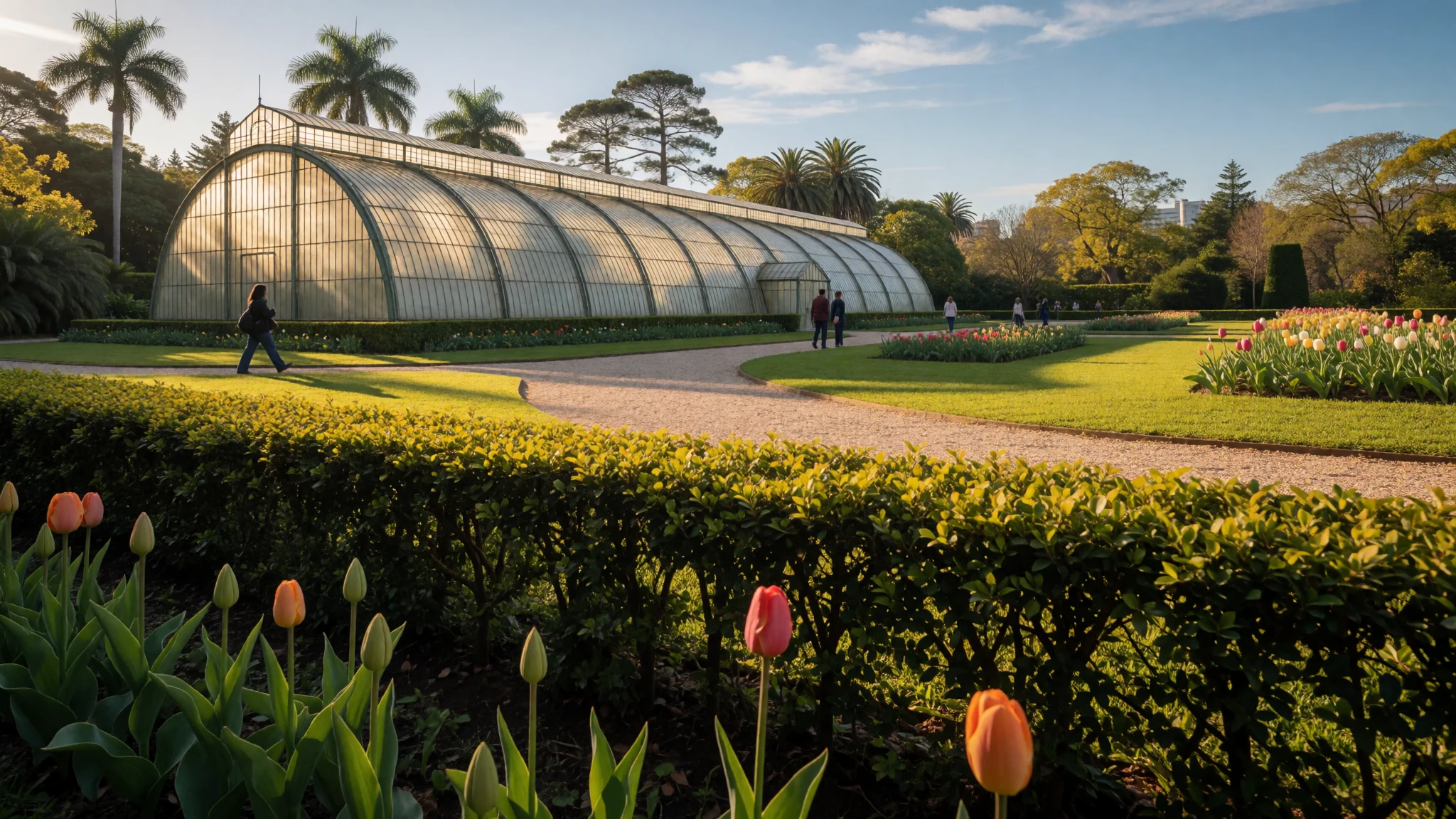
Curitiba's botanical garden is best known for its main glasshouse, a metal-framed greenhouse set among formal flowerbeds and lawns. It makes an easy, calm first stop on a dry morning, and the geometry of the beds photographs well. Check the city website for current opening details before going, as these can change.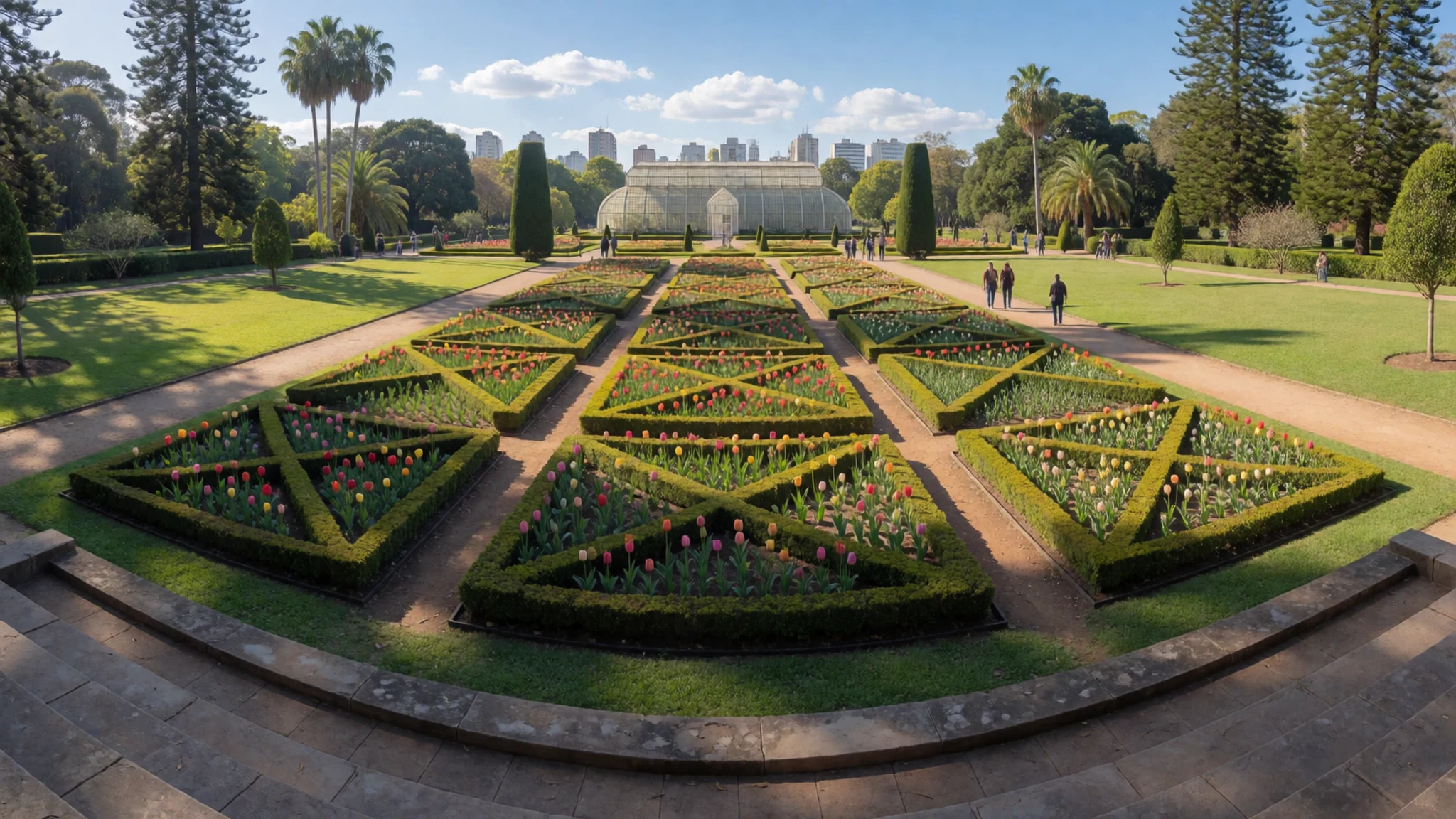
- Parque Tanguá — North of the centre
Parque Tanguá is a city park shaped around old quarry workings, with a lake, lookout points and a waterfall tumbling down a rock face. Paths wind between lawns and viewpoints over the city. It is a pleasant spot for a slow walk, and the grass can be slippery after rain.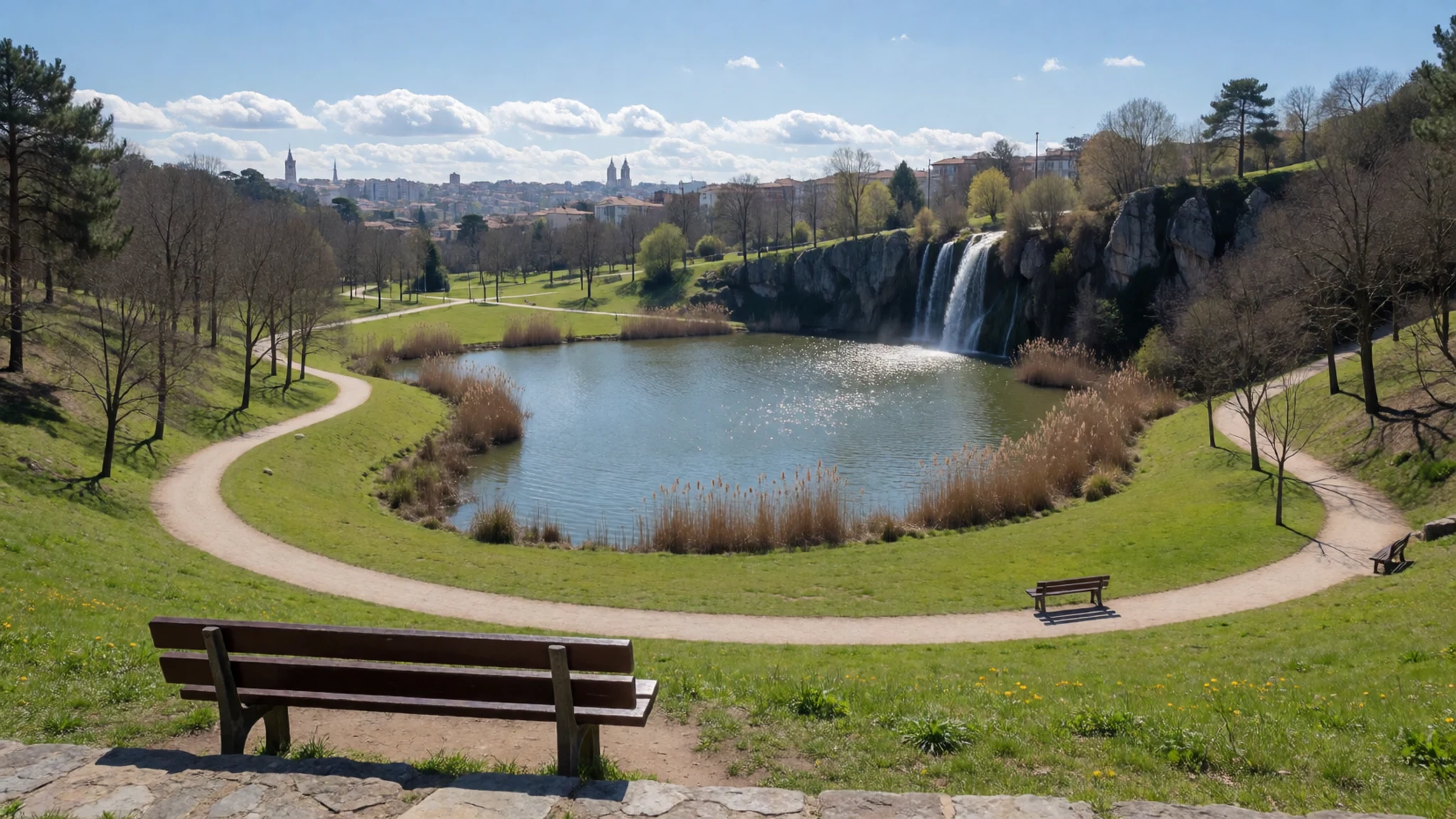
- Memory Fountain and the Old Town — Old Town
The Memory Fountain is topped by a bronze horse's head that honours the immigrant farmers who once drove carts in from outlying smallholdings to sell their produce. It sits in the old centre, among cobbled lanes, cafés and small shops, and works well as the start of a wander through the historic streets.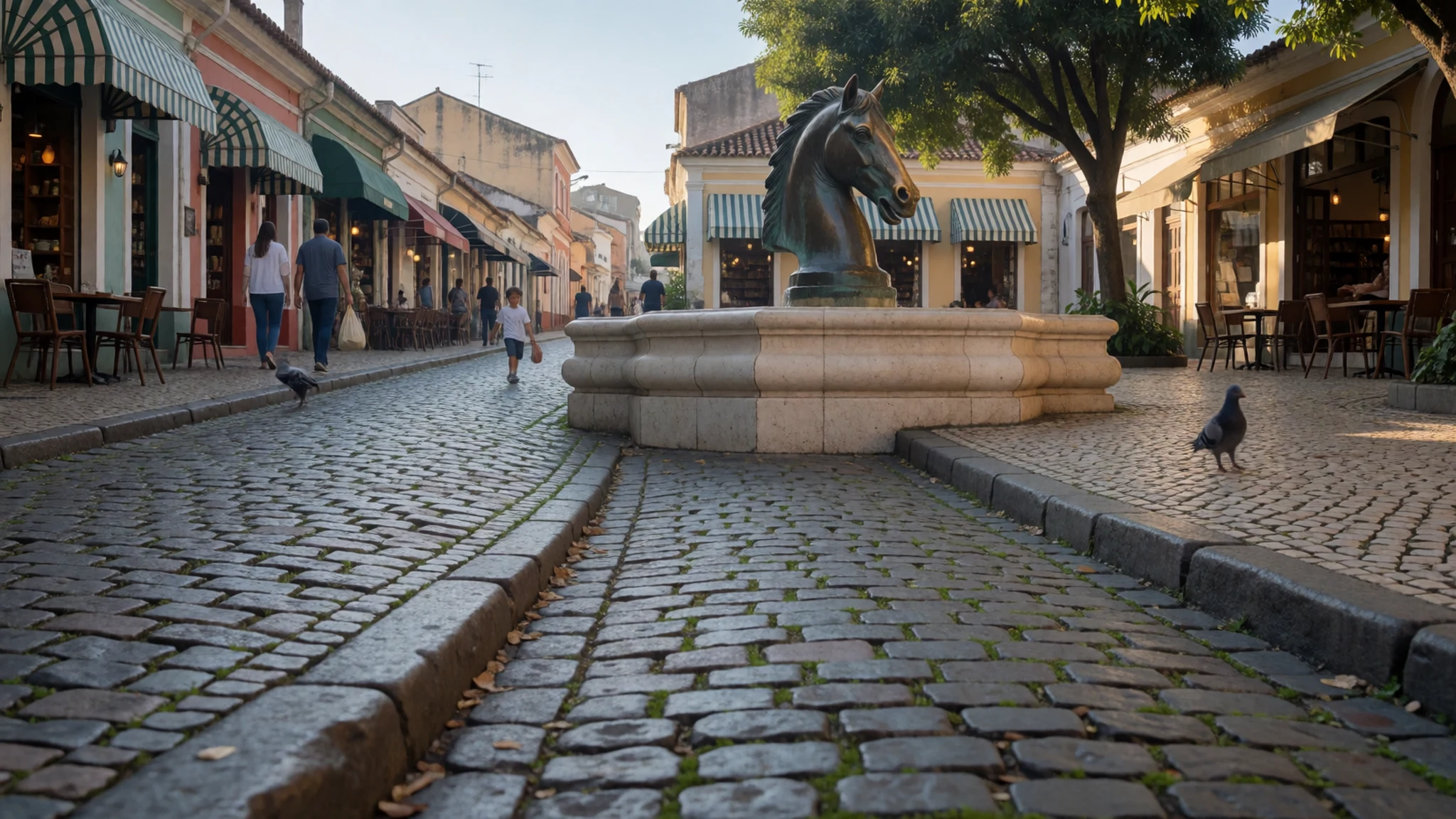
- Arab Memorial — Near the centre
The Arab Memorial honours Middle Eastern communities in the city and works as a specialised library. Its architecture takes cues from Moorish buildings, with vaults, columns and arches around a calm interior. It is a quiet counterpoint to the busier streets nearby and a reminder of how varied Curitiba's settlers were.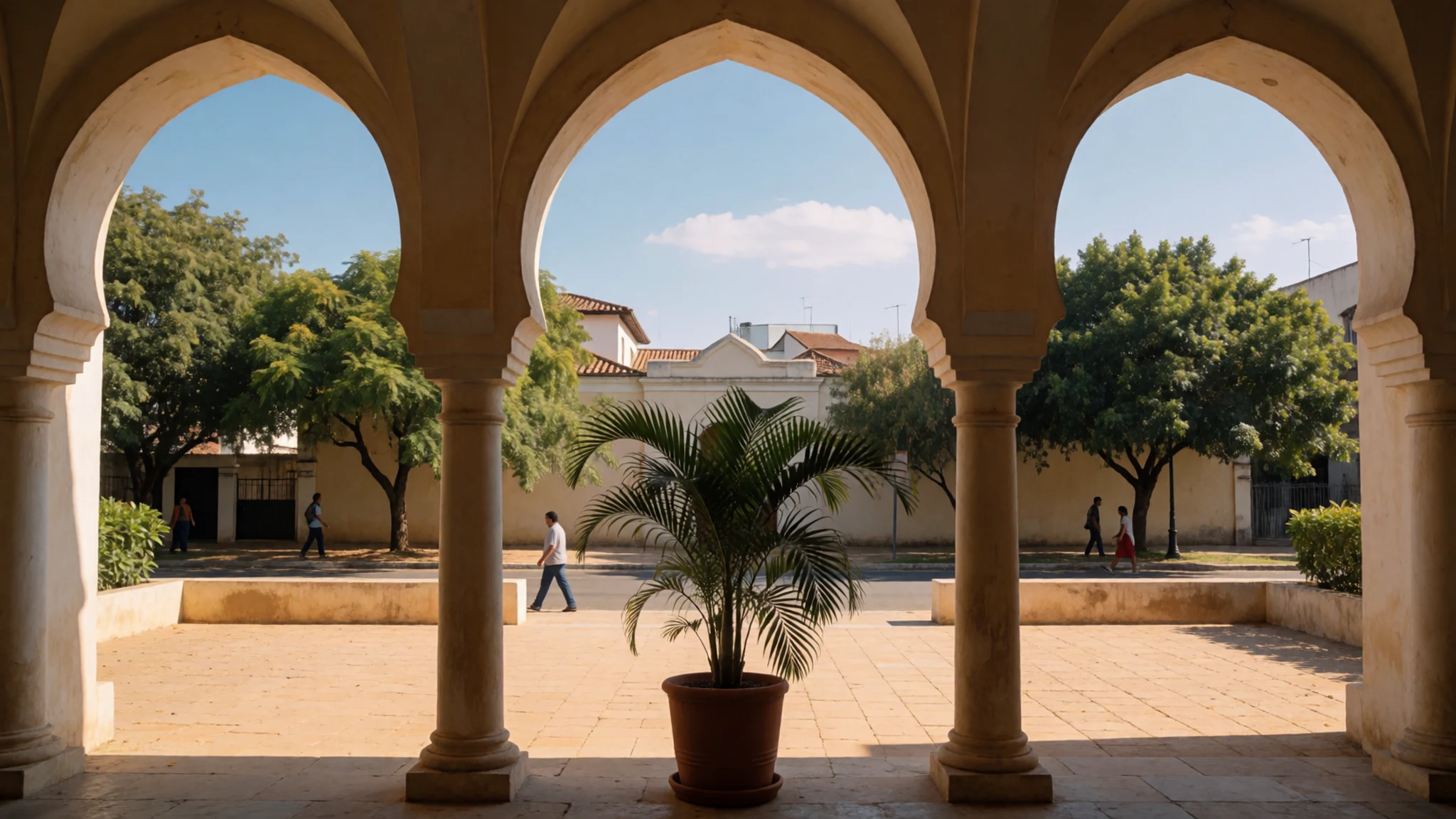
- Curitiba Memorial — Old Town
The Curitiba Memorial is a cultural space mixing art, folklore, information and local memory, looking both backward and forward. It is a sensible place to orient oneself early in a stay, learn how the city sees itself, and pick up ideas for museums and neighbourhoods worth visiting next.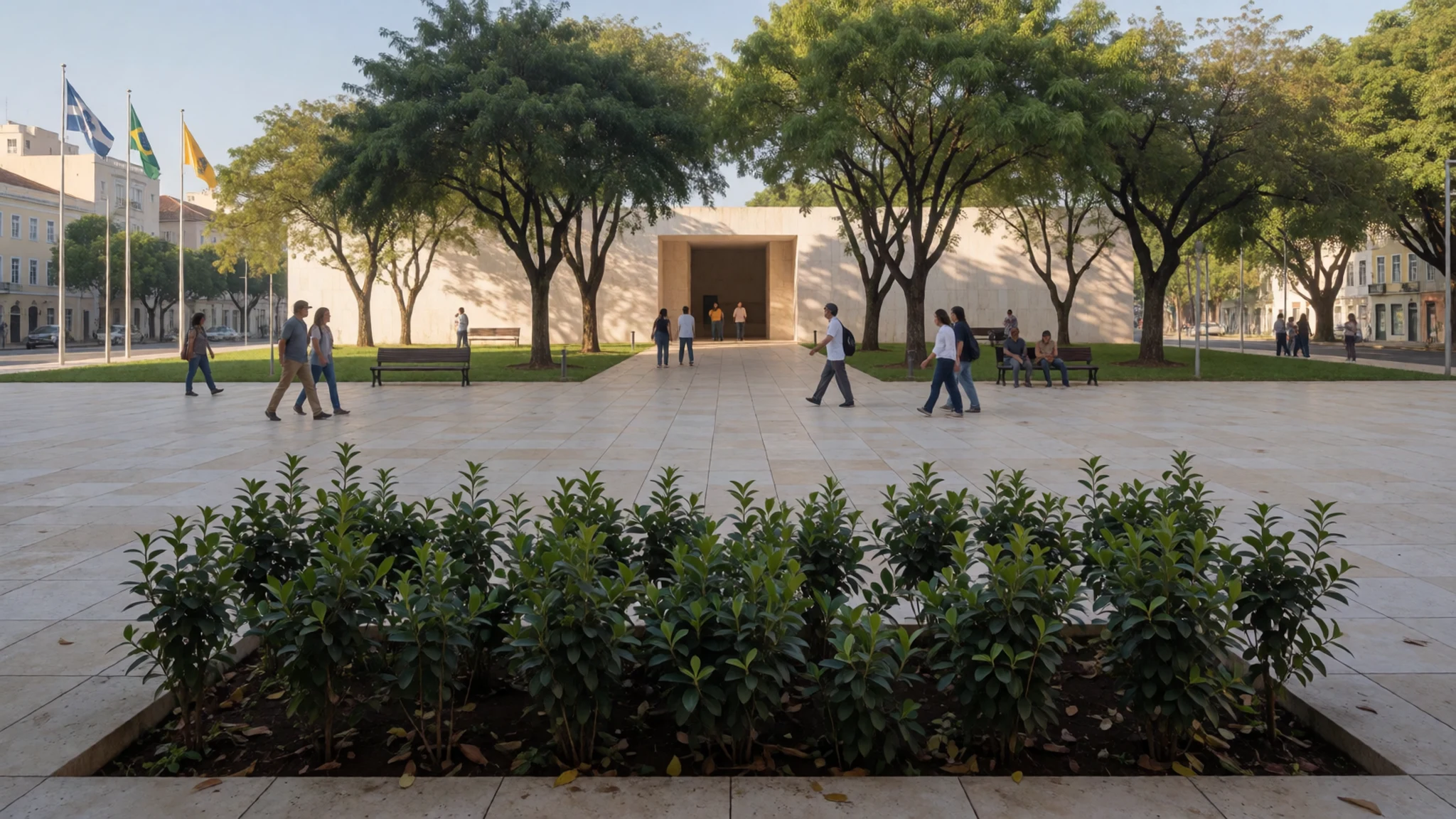
- Bosque do Papa — North of the centre
The Polish Immigrants Memorial, known as the Pope's Woods, is a shaded park of trees with replicas of traditional Polish wooden houses. The first replica was blessed by Pope John Paul II on his visit to the city. It is a gentle, atmospheric stop that shows how deeply Polish settlers shaped Curitiba.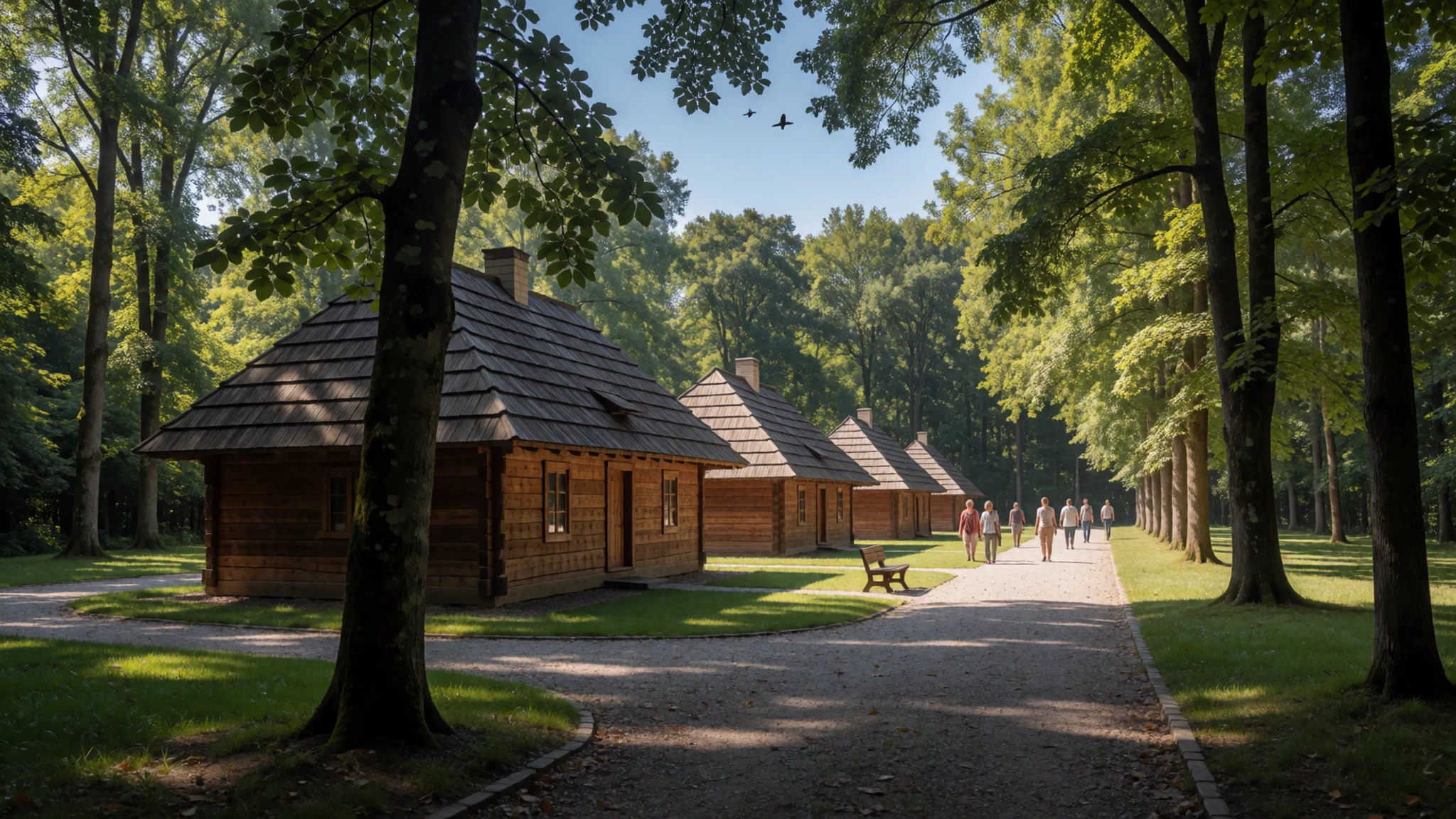
Culture
Curitiba's culture rests on immigration and on a deliberate civic effort to support the arts. A municipal cultural foundation oversees much of it, and the city was once named an American Capital of Culture by the Organization of American States. Museums are spread across the centre: the Solar do Barão complex holds photography, engravings and posters, while MuMA, the Museu Metropolitano de Arte, shows artists from Paraná alongside well-known Brazilian painters such as Pancetti, Guignard and Di Cavalcanti.
Immigrant memory is physical here. The Polish Immigrants Memorial, known as Bosque do Papa, is a wooded park with replicas of traditional Polish houses, the first of them blessed by Pope John Paul II during his visit. The Arab Memorial doubles as a specialised library in Moorish-inspired architecture, and other parks and squares honour Ukrainian, German and Italian communities. Folk dance groups, church fairs and festivals keep these heritages alive, and weekend fairs are a social ritual as much as a place to shop.
Curitibanos have a reputation for being polite and somewhat reserved compared with people on the Brazilian coast. Queues are respected, public transport is orderly, and small courtesies count for a lot.
Greet staff with a friendly "bom dia" or "boa tarde" when entering shops and cafés, and keep your voice low in churches and the memorial woods, where visitors are guests of the communities that made them.
What to wear
Curitiba has no single traditional costume; its dress heritage comes from the immigrant communities. Polish, Ukrainian, German and Italian folk groups wear regional outfits at festivals and church events: embroidered blouses and waistcoats, pleated skirts, aprons and ribbons, usually in linen, cotton and wool, often in red and white or in dense floral patterns. These are worn for performances and celebrations, not for daily life.
Everyday dress is casual, neat and led by the weather. Because the plateau is cool, locals layer: jeans, jackets, knitwear and scarves from autumn through winter, with a light rain jacket close to year-round. Office workers in the centre dress smartly, while sportswear and trainers are common in the parks. Compared with the coast, people dress more conservatively, and beachwear stays at the beach.
Visitors should pack layers whatever the month, since mornings can be cold and afternoons warm. A waterproof jacket or compact umbrella is worth carrying. Comfortable closed shoes with grip suit pavements wet from rain and the uneven stones of the old centre. Churches and memorial sites do not demand special dress, but covered shoulders and knees are the courteous choice when stepping into a church. In winter, add a warm coat, hat and gloves, especially for early starts and foggy mornings.
What to eat
- Slavic plates — Restaurants in the Old Town
Ukrainian and Polish dishes such as dumplings, cabbage rolls and hearty soups reflect the city's Eastern European settlers. Look for them in the Old Town, where several restaurants specialise in Slavic cooking. Portions are generous and the food is warming on a cold day.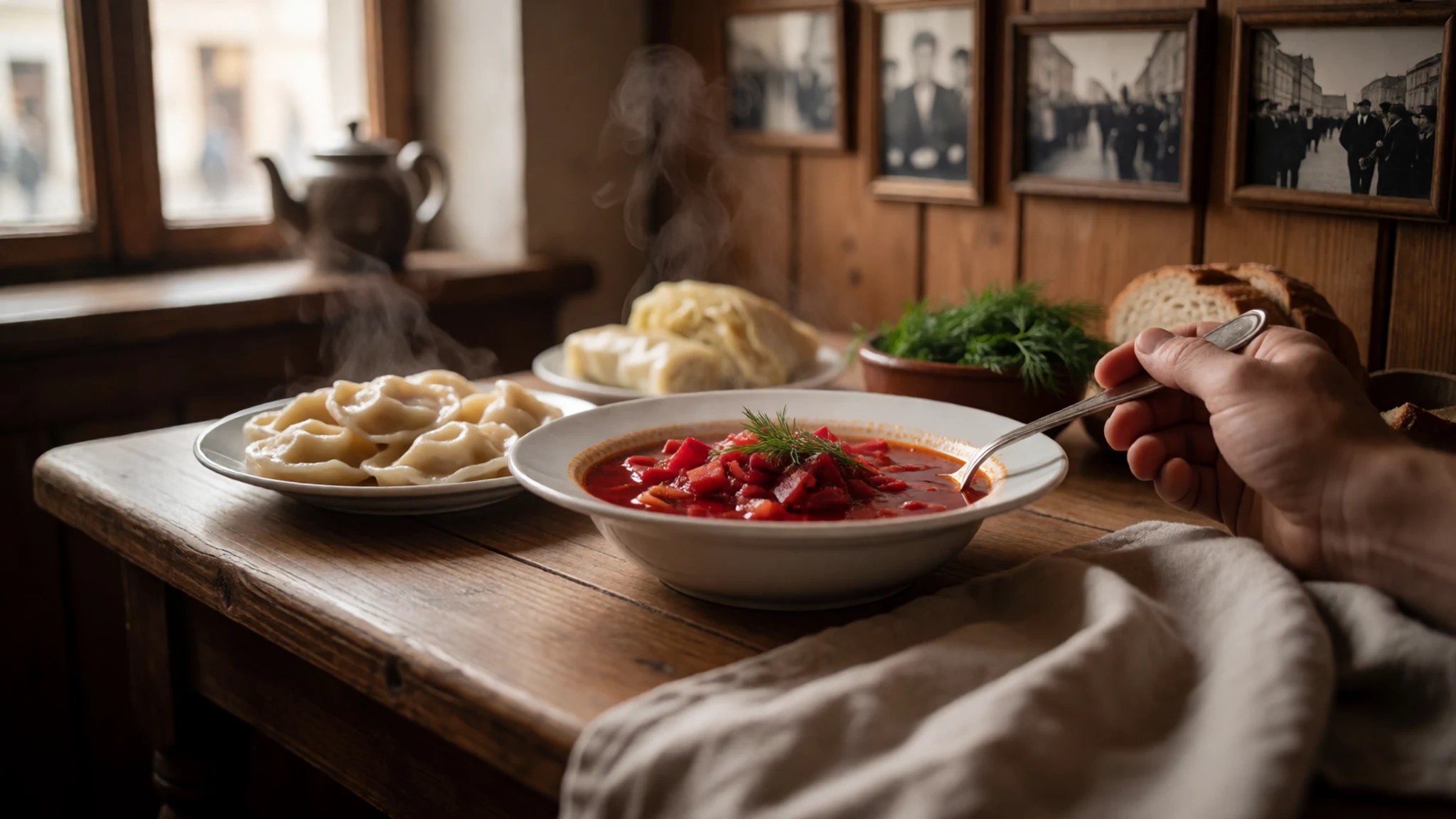
- Churrasco — Churrascarias across the centre and Batel
Grilled meat carved at the table is a staple of southern Brazil, served in a steady stream until you signal to stop. Beef is the centrepiece, with sides of rice, beans and salad. It suits a large appetite and a long lunch.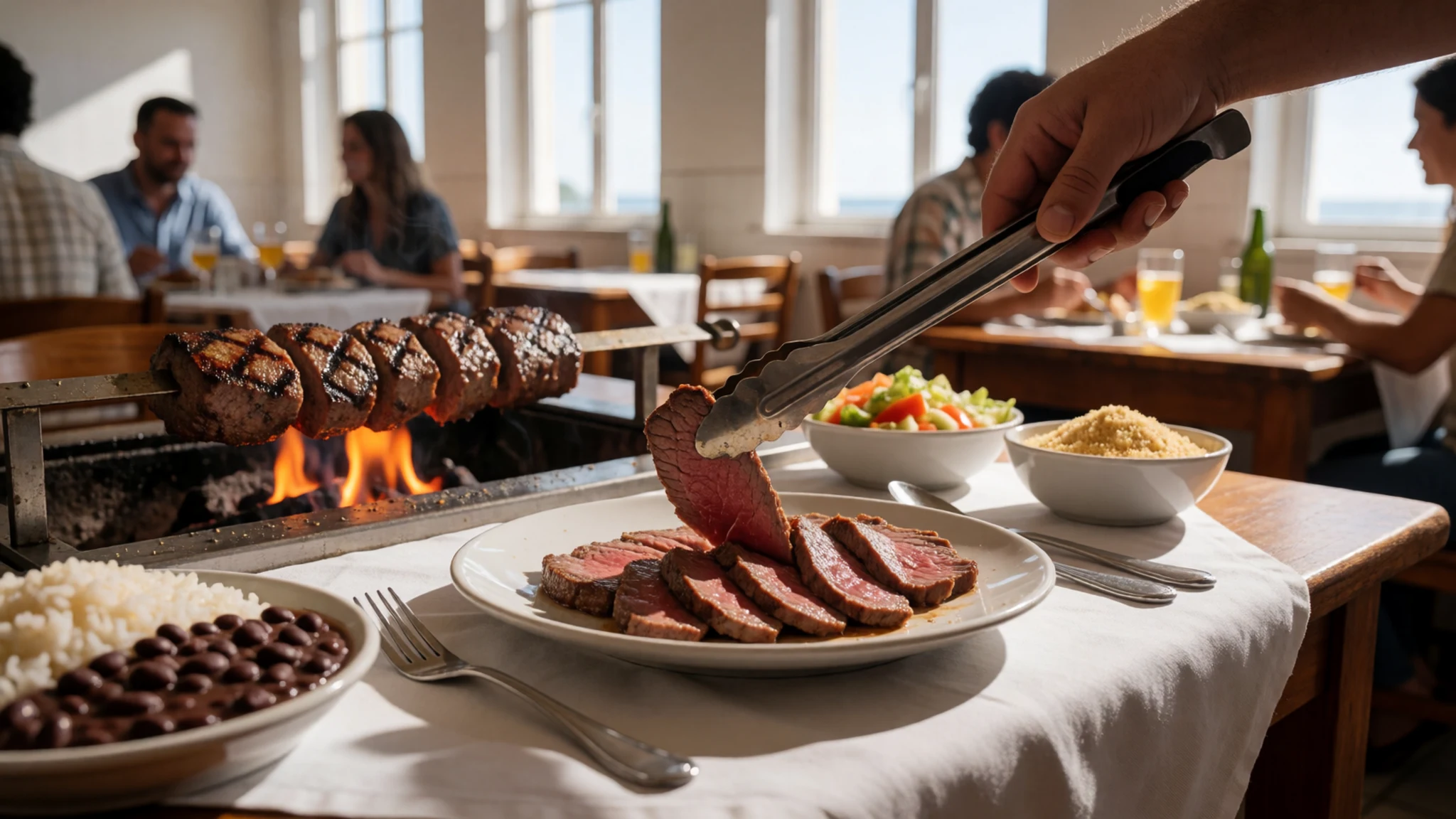
- Pinhão — Street stalls, fairs and bakeries in autumn and winter
Pinhão is the seed of the araucaria tree, boiled or roasted and eaten in the cooler months. It tastes a little like a chestnut, starchy and earthy, and appears in snacks, stews and fillings. It is a good way to taste the regional landscape. - Barreado — Coastal towns such as Morretes, and some city restaurants
Barreado is a slow-cooked beef stew from the Paraná coast, traditionally eaten with manioc flour and banana. It is rich, dark and filling. Most people try it in the coastal towns reached by train or road, though some Curitiba restaurants also serve it. - X-montanha — Bars and sandwich places in the centre
The x-montanha is a towering sandwich that diners build up with layers of bread and meat. It is more of a challenge than a snack, so sharing is sensible. It reflects the casual, hearty side of local eating.
Plan it
Best time. March–May and September–November, when days are mild and the parks are at their best. June to August is cool, with fog that can close the airport in the morning, and summer is warm and often wet.
How long. 2–3
Getting there. Fly to Afonso Pena International Airport, or arrive by long-distance bus or train at the Rodoferroviária, the city's combined bus and rail station. Buses from São Paulo and Florianópolis are frequent, and their terminals are central, which avoids long transfers from distant airports. Check operators for current times.
Budget. mid
Tips
- Carry a light rain jacket in every season, as showers arrive quickly
- In winter, allow slack in flight plans, since morning fog can delay or divert flights
- Use the dedicated bus lanes to cross the city rather than driving into the centre
- Visit parks and gardens on dry mornings and keep museums for wetter afternoons
Etiquette
- Greet staff when entering shops and cafés
- Queue patiently at bus stops and counters
- Ask before photographing people at community festivals
Nearby
Sources
- Wikidata Q4361 (CC0)
- Wikipedia: Curitiba (rev 1382246150) (CC BY-SA 4.0)
- Wikivoyage: Curitiba (rev 5416894) (CC BY-SA 4.0)
- Photo: Curitiba Eixos e densidade 78, mariordo59 (CC BY-SA 2.0)
- Photo: Vista da Torre das Mercês em Curitiba, Marinelson Almeida (CC BY 2.5)
- Photo: Parque Tanguá, Vitor Hirota (CC BY-SA 2.0)
- Photo: Winter skyline in Curitiba, Mauricio Mercer (CC BY 2.5)
- Photo: Estufa principal do Jardim Botânico de Curitiba, Rodrigo.Argenton (CC BY-SA 4.0)
- Photo: Rua 24 Horas, Curitiba, SamirNosteb (CC BY 3.0)
- Photo: Espaço cultural no Centro de Curitiba, Hicham El Banine (CC BY-SA 4.0)
- Photo: Palácio Avenida, HSBC Brazil, Morio (CC BY 3.0)


