Cradle Mountain
Cradle Mountain, Australia
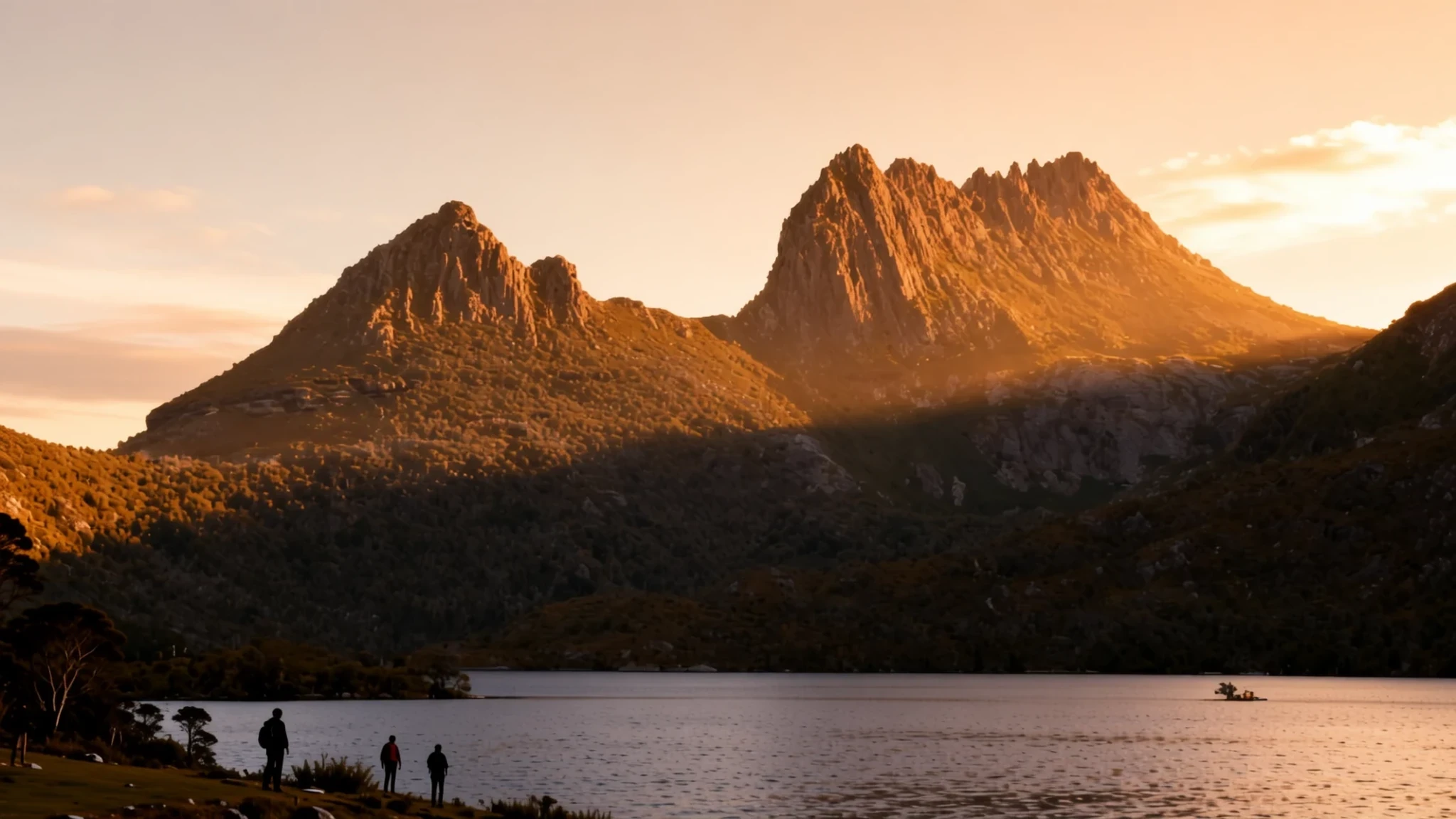
Cradle Mountain is Tasmania's jagged dolerite peak, best reached on foot across lakes, forest and open alpine country.
The place
Cradle Mountain is a mountain and a rural locality in the Central Highlands of Tasmania, the island state off Australia's south-east coast. The peak rises to 1,545 metres and is the sixth-highest mountain in the state. It sits in the north-west corner of Cradle Mountain-Lake St Clair National Park, which takes in the northern half of the wider park. The locality is very thinly populated, and most people who arrive here are heading for the park itself. Access is by Cradle Mountain Road, which runs south from the north and ends at Dove Lake, so the mountain feels like a destination at the end of a long drive. Beyond the lake the land changes quickly, moving from wet forest through heath and button grass to open alpine plains, tarns and rocky ridges. The summit is capped with dolerite, a hard igneous rock that formed when molten material pushed into older sedimentary layers and cooled. Glaciers later stripped away the softer rock around it, leaving a steep, craggy profile that looks more dramatic than its height suggests. Weather is the main variable. Summers are cool, winters are cold and snowy, and rain falls through the whole year. Snow can fall in any month. Layers matter even on a mild day, because cloud can roll over the summit within minutes and hide the view for hours. Most walkers spend a day or two on the lake circuits or the summit track when conditions allow.
Its story
Cradle Mountain stands on country long held by Aboriginal Tasmanians, including the people of the northern part of the island and those associated with the Big River. European settlement brought displacement and violence, and records of the last free Aboriginal people in the district place them just south of the mountain at a time of heavy conflict. European explorers arrived in the late 1820s. Joseph Fossey and Henry Hellyer, surveying for the Van Diemen's Land Company, are recorded as the first Europeans to explore the area and reach the summit. From the mid-nineteenth century, trappers worked the high country. They built simple huts and burned patches of scrub to encourage fresh growth that drew game. The fur trade collapsed in the mid-twentieth century, although hunting inside the park had already been outlawed. Logging of the old King Billy pines went on for decades, and later cutting on private land beside the park provoked a large public protest that brought it to an end. Cattle and sheep also grazed Cradle Valley for a time. Conservation grew out of the love that climbers and walkers felt for the place. Gustav and Kate Cowle, who scaled the peak in the early 1900s, were so moved by the landscape that Gustav declared it ought to become a park set aside for the nation as a whole, and kept that way forever. That idea outlasted the logging and grazing, and today the park draws walkers to a landscape shaped by both ancient and recent human hands.
What to see
- Dove Lake and the boat shed — Dove Lake, at the end of Cradle Mountain Road
The lake is the classic first view of the mountain, with the peak reflected in calm water on still mornings. The old boat shed on the shore is the picture most people photograph. A lake circuit is a gentle walk on a boardwalk and track around the water, and it gives different views of the peak from every side.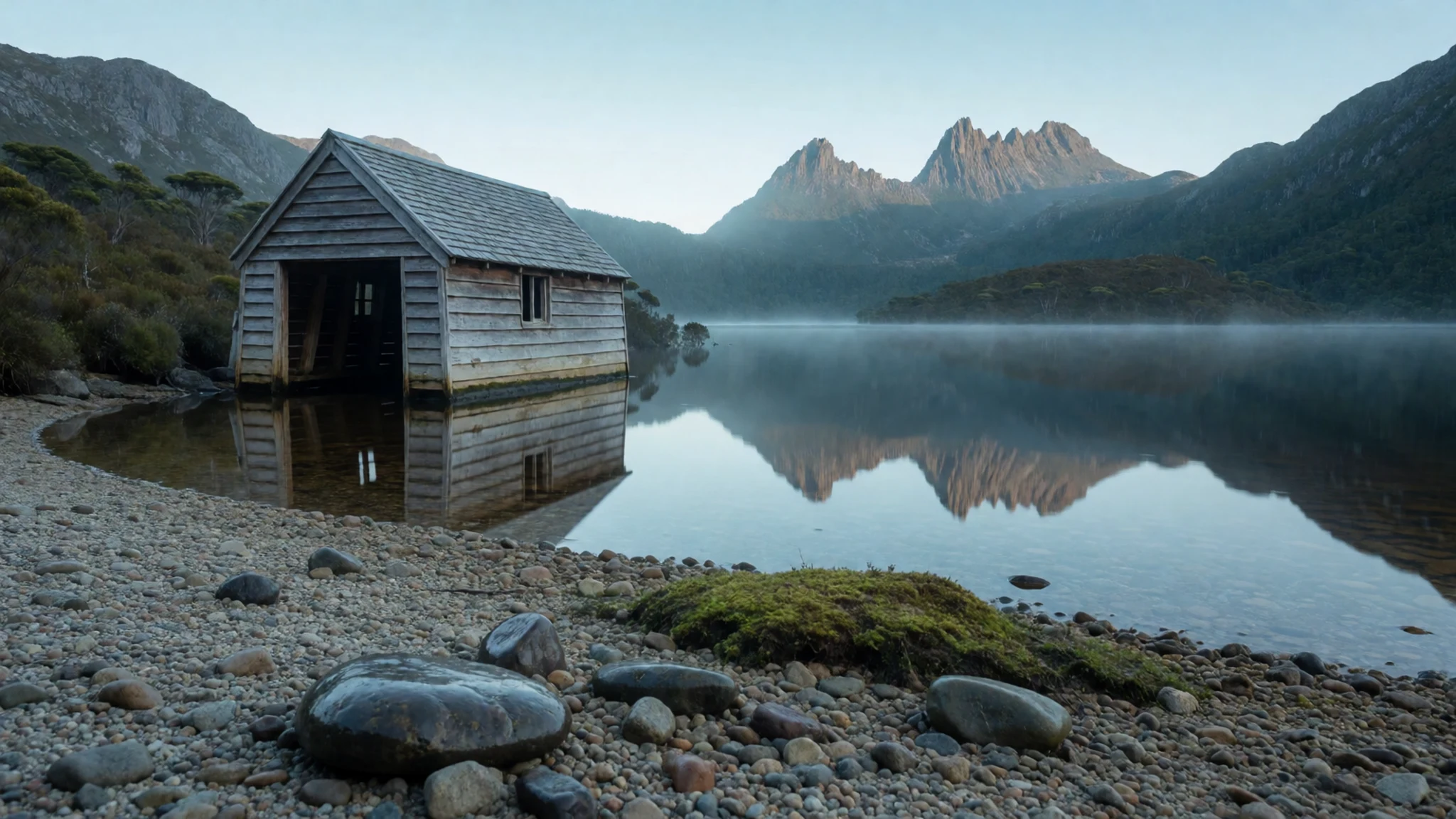
- Cradle Mountain summit track — Climbs from Kitchen Hut above Dove Lake
The steep route climbs from the lake area towards the summit over rock and scree, and it is a full day's effort for most walkers. Conditions change quickly, so the track is best attempted only in settled weather. Cold winds and snow can make the upper section hazardous outside summer.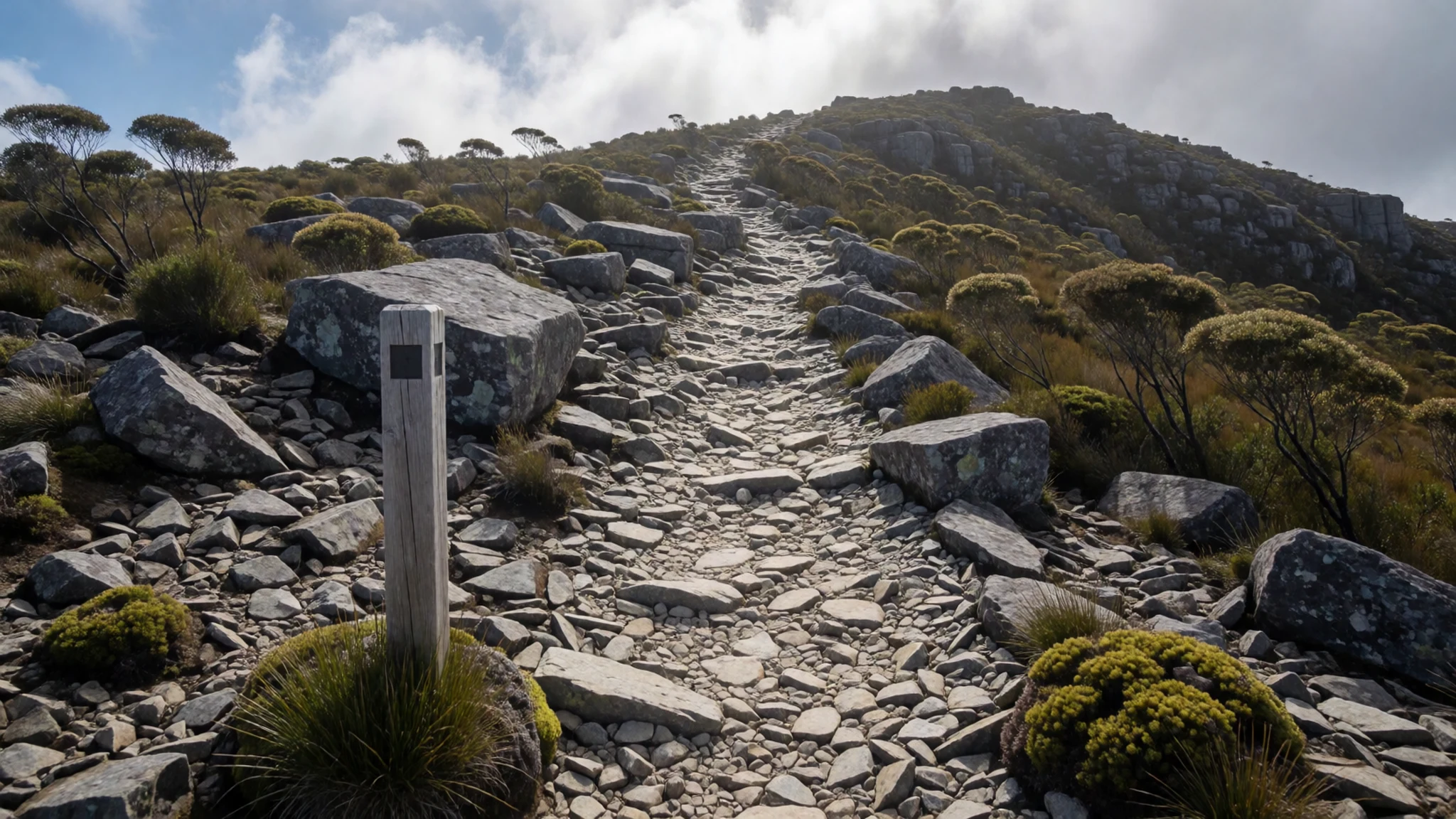
- Barn Bluff — South-west of Cradle Mountain, reached by walking tracks from the lake area
Barn Bluff is a separate peak to the south-west of the main mountain, and its flat-topped profile is a distinct landmark. Walkers often include the bluff for a different angle on Cradle Mountain. From its slopes the summit of the main peak appears across a valley of forest and scree.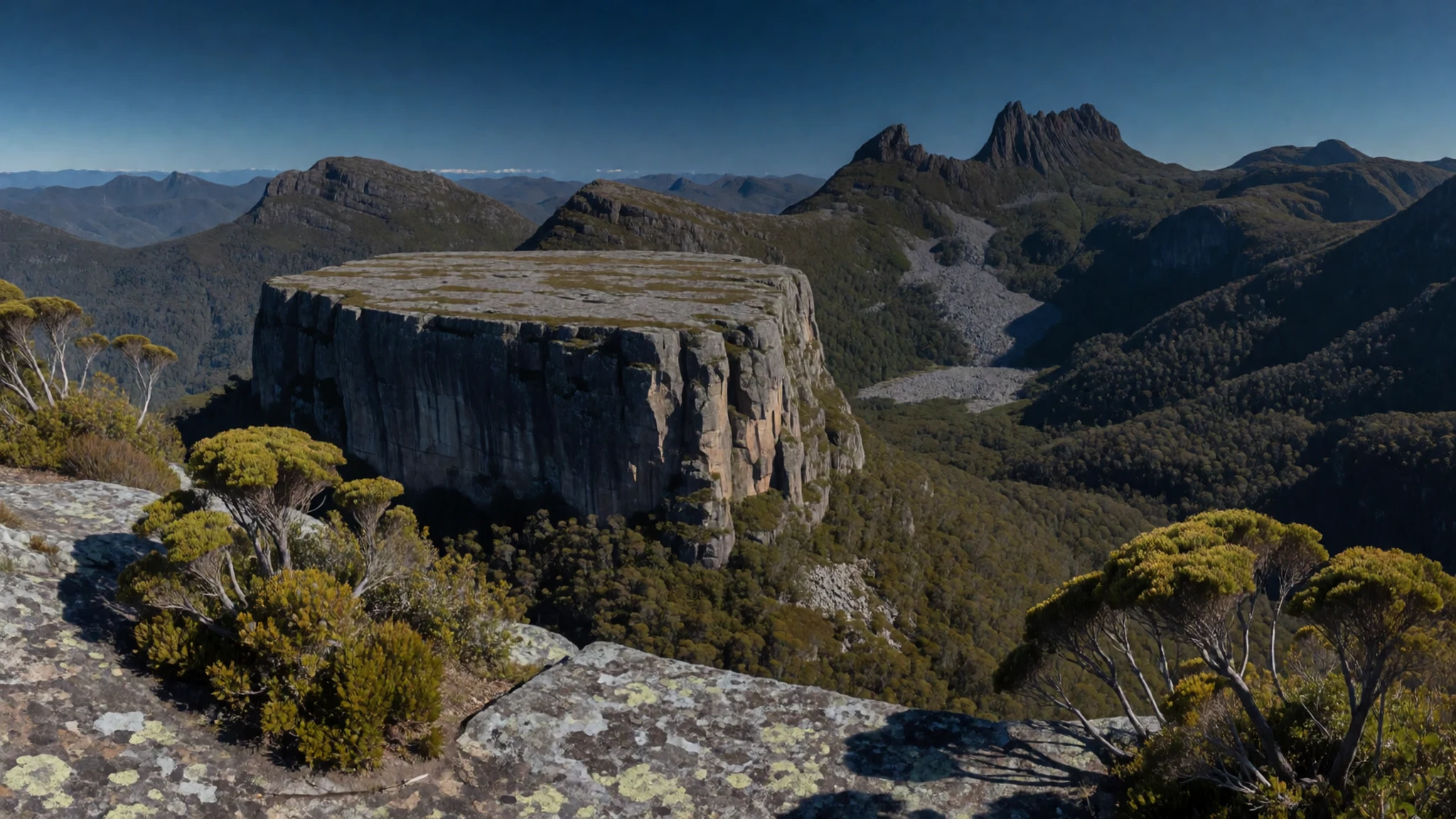
- Wildlife in Cradle Valley — Grasslands and forest edges around the Cradle Valley visitor area
Kangaroos, wallabies and pademelons are common across the valley, especially around the grassy edges at dusk and dawn. Wombats often come out at night, and their burrows can be seen along the paths. Keep a respectful distance and do not feed any animal, because wildlife here is wild even when it appears tame.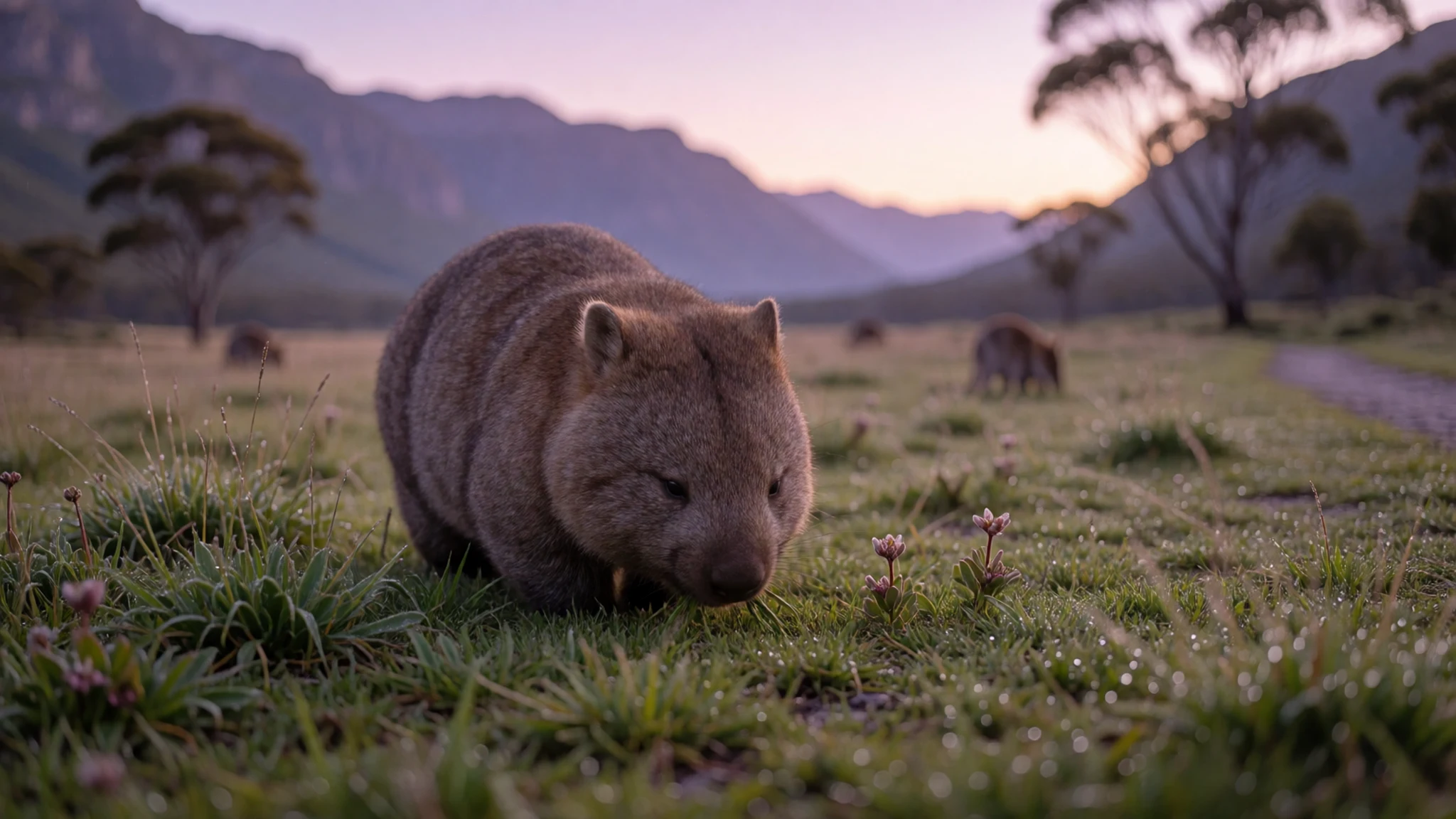
- Lake St Clair — Southern end of Cradle Mountain-Lake St Clair National Park
Lake St Clair sits at the southern end of the national park and is the end point of the long Overland Track. It is much larger and more remote than Dove Lake, with a quieter shoreline and walking tracks through beech forest. The lake is a good choice for those who want to see the park beyond the mountain.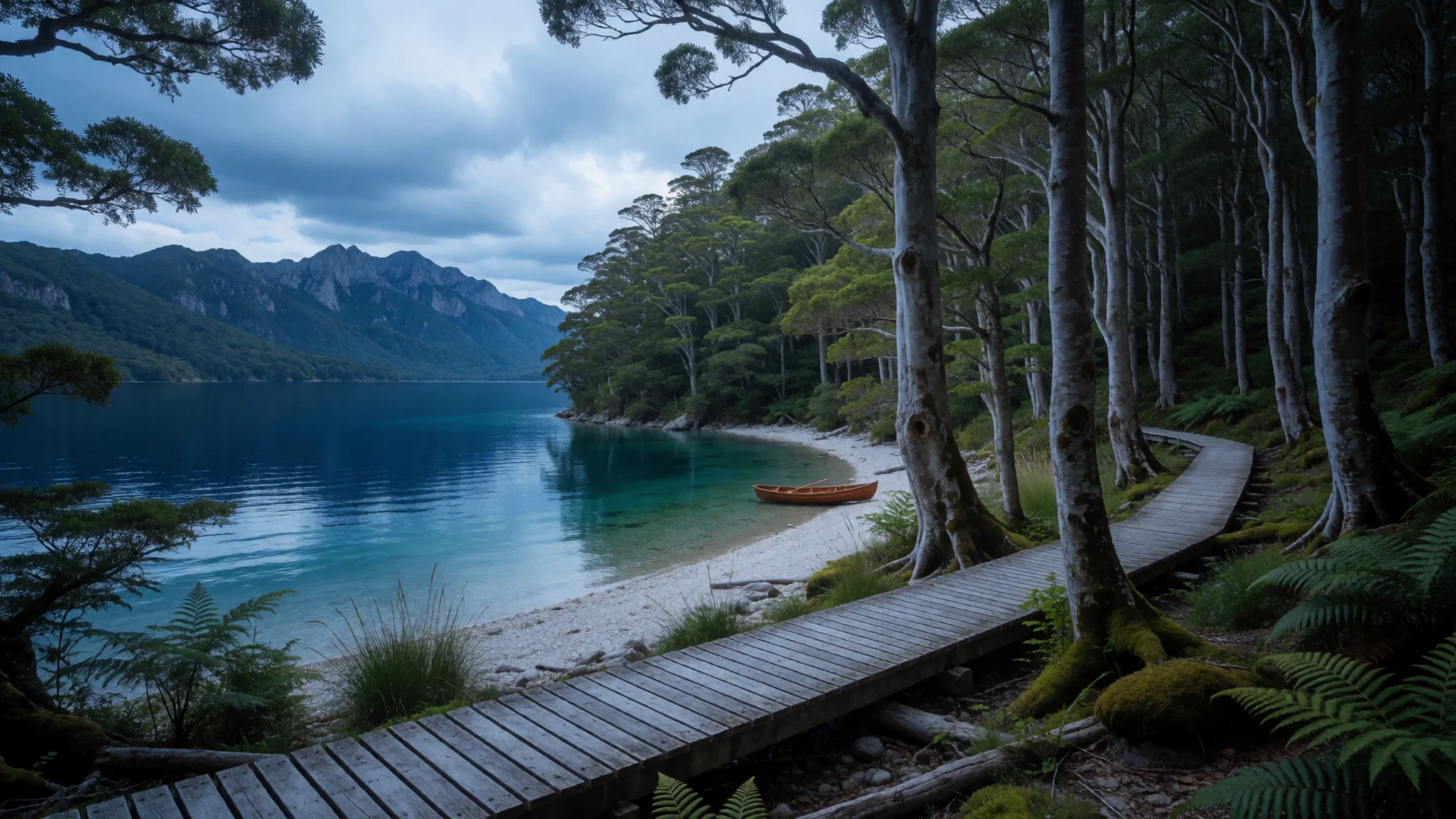
Culture
Residents of the island typically come across as more relaxed and welcoming than people on the mainland, and they usually don't mind stopping to point you the right way or share a local tip when you ask. Convict history is a subject people here discuss openly and without much fuss, because it is part of the island's everyday story. The Aboriginal history of the land is different and deserves care. Cradle Mountain lies on country that Aboriginal Tasmanians have known for thousands of years, so signs, interpretation panels and guides are worth reading and listening to. Tasmanians can also be sensitive about the mass shooting at Port Arthur, which remains painful for many people even if they were not present. Do not raise that event in conversation, even when you are nowhere near the site.
What to wear
Cradle Mountain has no dress of its own, but the Aboriginal communities of Tasmania made distinctive clothing from the land around them. Their traditional cloaks were sewn from possum skins and worn for warmth and ceremony, a skill that is now celebrated in local cultural programmes. Today, people walking in the park wear outdoor clothing built for cold, wet and changeable weather. Merino wool, synthetic thermal layers and waterproof shells are the norm, with warm hats and gloves common even in summer. For a visit, pack in layers that you can add or remove as conditions change. A waterproof jacket is essential, as is a warm mid-layer, and cotton is best avoided because it stays wet and chills the body. Sturdy closed footwear with good grip suits the boardwalks, mud and rocky tracks, and it is worth breaking in boots before you arrive. Sun protection matters too, as high-altitude light is strong even on overcast days.
What to eat
- Curried scallop pie — Bakeries and pie shops in the towns on the drive in
This is a well-known Tasmanian specialty, a flaky pastry pie filled with scallops in a mild, creamy curry sauce. It is a traditional stop for hungry drivers on the long road into the region. The pies are often served hot and eaten straight from the paper bag at roadside bakeries.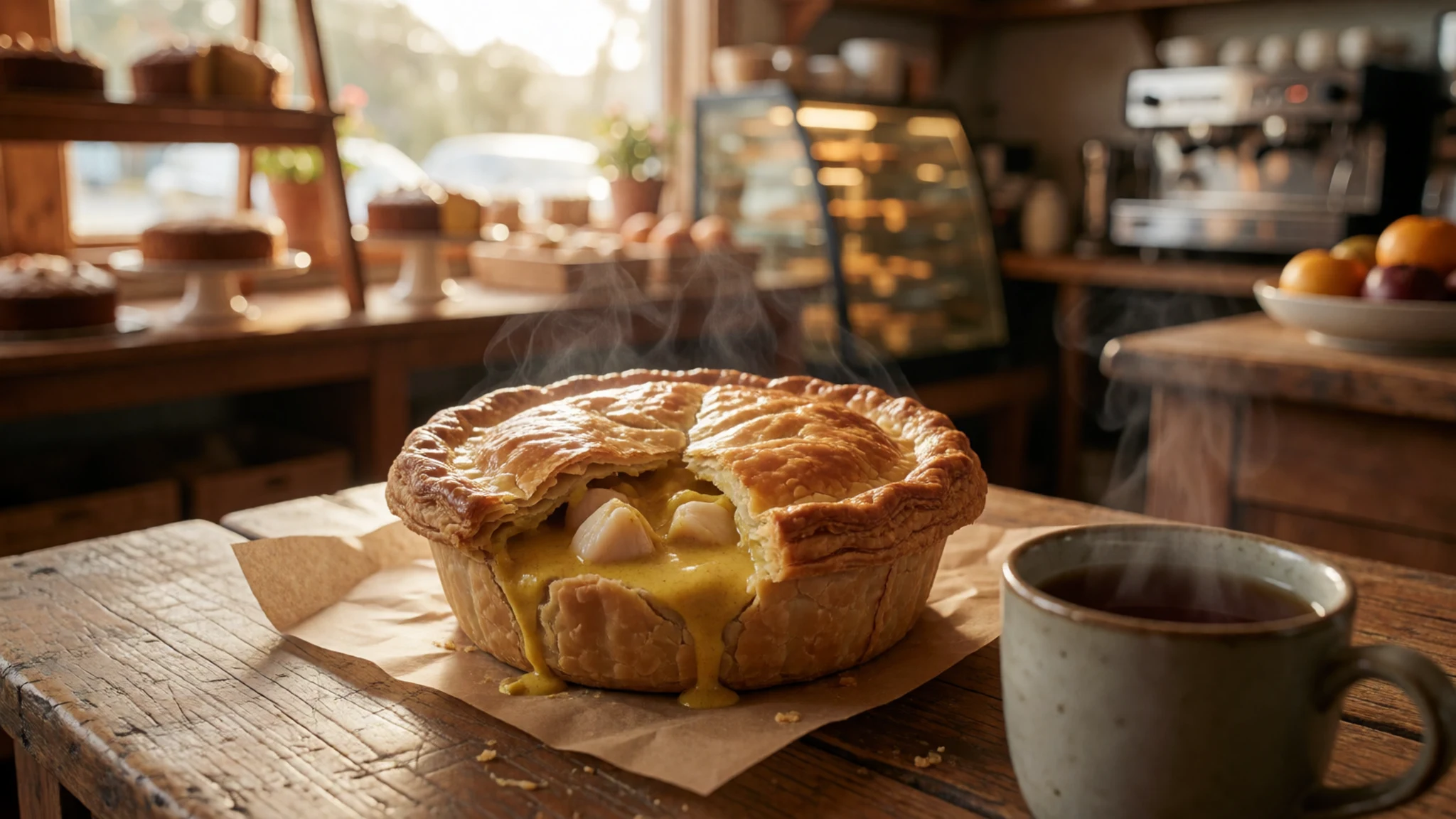
- Fresh seafood — Seafood restaurants in Hobart and along the north coast
Tasmania's cold waters produce excellent salmon, mussels, oysters and crayfish. The best places to eat them are the seafood restaurants along the coast and in Hobart, where catches are often landed the same day. Fish dishes are generally simple, and lightly cooked fish shows off the quality.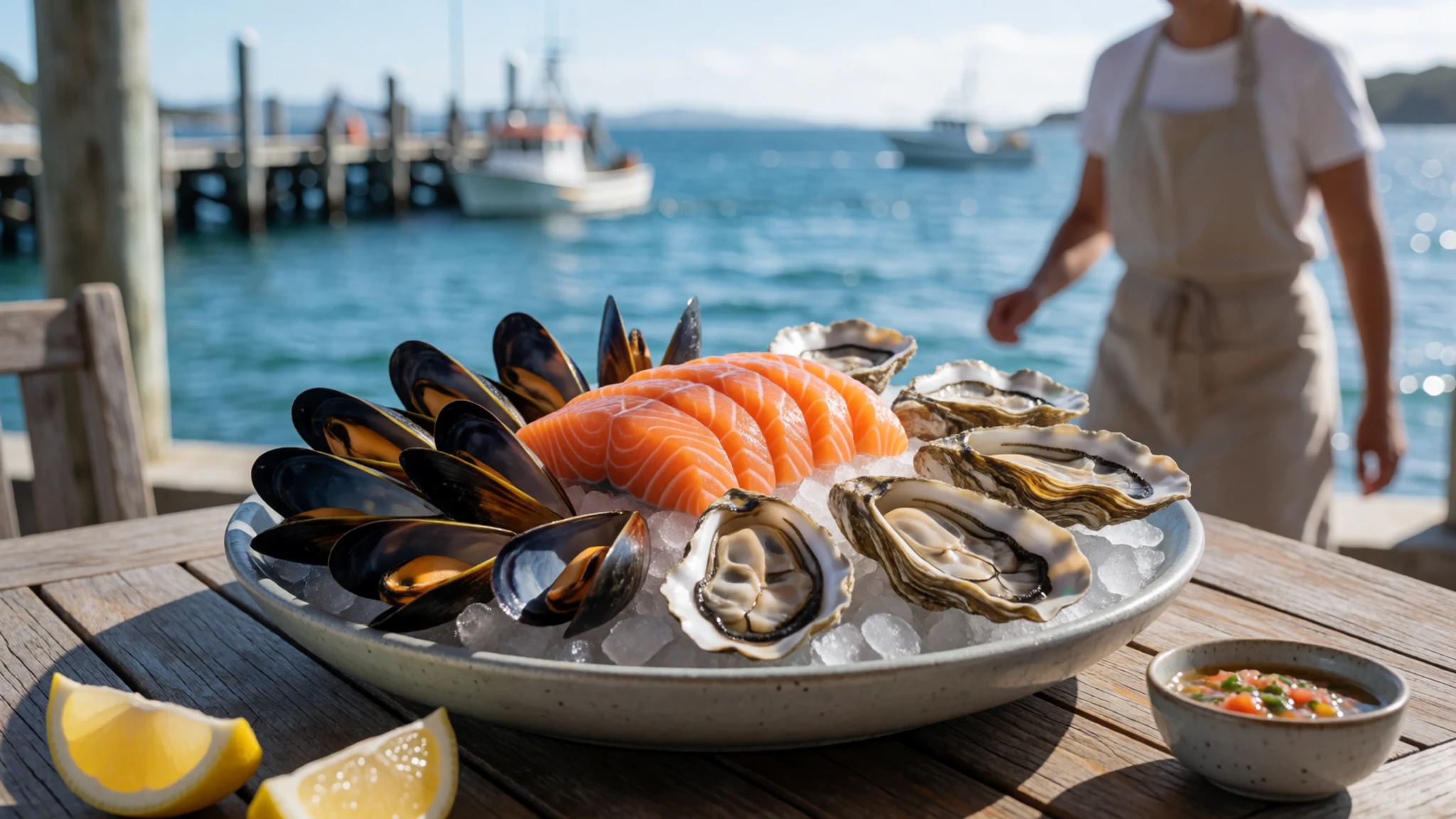
- Abalone and scallops — Harbourside seafood restaurants in Hobart
Abalone and scallops are classic Tasmanian shellfish, often pan-fried with butter or served in a simple sauce. They are a treat rather than a daily meal, and menus in harbourside restaurants feature them more often than inland eateries. Ask what is freshest on the day. - King Island cheese and Huon apples — Cheese counters, farm-gate shops and food stores in the Launceston area
High-quality beef and gourmet cheeses come from King Island, while the Huon Valley is famous for its apples. Cheese counters and farm-gate shops in the Launceston area sell both, and tasting a range of local cheeses makes a good lunch to take on the walk. Apples from the Huon are at their best in the cooler months. - Local saffron, truffles and wasabi — Specialist farm shops and restaurants that buy from local growers
Tasmanian growers produce crops that surprise many visitors, including saffron, truffles and wasabi. These ingredients appear in specialist farm shops and in restaurants that buy from local producers. They are excellent souvenirs and a good way to taste the island's farming range. - Tasmanian wine, beer and whisky — Cellar doors on the wine routes, and brewery tours in Hobart and Launceston
The island has a strong drinks culture, with cool-climate wines, boutique beers and small-batch whiskies. Cellar doors along the wine routes offer tastings, and the two major breweries in Hobart and Launceston run tours. Guided tours are a sensible choice if you plan to drive later.
Plan it
Best time. December to April suits most walkers, when days are longest and the summit track is most often clear. Cool summers keep temperatures comfortable for walking, but cloud is common in every season. Winter brings snow, cold winds and the chance that tracks will be closed or hazardous.
How long. 2–3
Getting there. Fly into Launceston or Hobart from mainland cities, then drive. Cradle Mountain lies about 109 kilometres west of Westbury, and the last stretch is by Cradle Mountain Road to Dove Lake. Hire a car or book a transfer, as public transport to the park is limited.
Budget. mid
Tips
- Book accommodation inside or near the park well ahead, as beds are limited
- Check the weather and track conditions at the visitor centre before setting out
- Carry layers, a waterproof shell and enough water, because there are no shops on the tracks
- Start walks early for wildlife at dusk and dawn and for the clearest views of the peak
- Card payments are widely accepted, but carry some cash for small stops on the drive
Etiquette
- Stay on marked tracks and boardwalks to protect the fragile alpine vegetation
- Take all rubbish out with you and use the toilets provided
- Do not feed or approach wildlife, even when animals seem unbothered
Nearby
Sources
- Wikidata Q1138451 (CC0)
- Wikipedia: Cradle Mountain (rev 1371968678) (CC BY-SA 4.0)
- Wikivoyage: Tasmania (rev 5358751) (CC BY-SA 4.0)
- Cradle Mountain Behind Dove Lake, Bjørn Christian Tørrissen (CC BY 3.0)
- Cradle Mountain And Barn Bluff, Bjørn Christian Tørrissen (CC BY 3.0)
- Cradle Mountain - 5, Stefan Karpiniec (CC BY 2.5)
- Cradle Mountain - 6, Stefan Karpiniec (CC BY 2.5)
- Cradle Mountain Seen From Barn Bluff, Bjørn Christian Tørrissen (CC BY 3.0)
- Cradle Mountain Dove Lake HDR, Stevage (CC BY 3.0)
- 1 cradle mountain aerial panorama 2018, Chensiyuan (CC BY-SA 4.0)
- 'Not a cloud in the sky' Cradle Mountain, TassieGirl (CC BY-SA 4.0)


