Costa Smeralda
Costa Smeralda, Italy
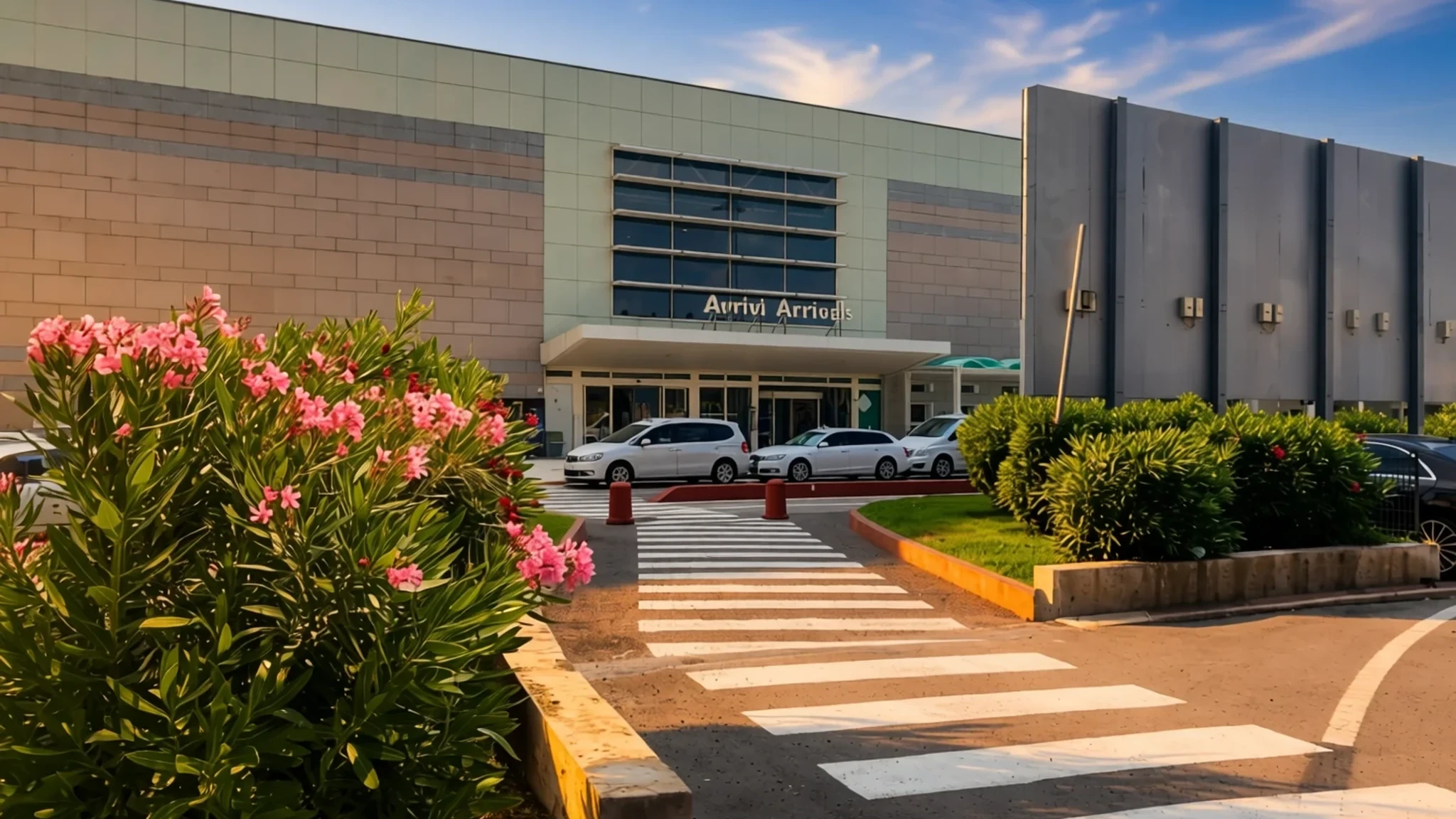
A Sardinian coast of white sand, turquoise water and yacht-filled marinas, where the prices are firmly high.
The place
Costa Smeralda is a coastal area on the northern side of Sardinia, the Italian island in the western Mediterranean. The name was first used for a small stretch of shoreline in the commune of Arzachena, but today it is loosely applied to a strip about 20 km long. Visitors come for the sea first: long bays of pale sand, granite headlands and shallow water that shifts between blue and green depending on the depth and the light. Behind the beaches the land rises into low scrub and cork-oak country, and the air smells of myrtle and wild herbs in the warm months.
The main settlements were laid out to a single plan rather than growing organically. Porto Cervo is the centre of gravity, with its harbour, boutiques, galleries and a marina that fills with large private yachts in summer. Smaller hamlets such as Liscia di Vacca, Baja Sardinia, Capriccioli and Romazzino sit along the coast, each with hotels and villas set back from the water. Golf courses, a polo ground inland near Arzachena and a sailing regatta each September give the area a sporting calendar that runs through the season.
Prices are the first thing most people notice. Property here ranks among the dearest in Europe, and hotel rates reflect the same ambition. Budget travellers will find the most room to manoeuvre by staying in campsite bungalows or a rented villa a little inland, then spending the days on the coast. The area is best understood as a set of distinct places rather than one resort: a marina, a handful of beaches and a wider island that rewards a car.
Its story
The Costa Smeralda was not always a byword for luxury. Before 1961 the north-east of Sardinia was quieter, and the stretch around Arzachena saw little development. That year a consortium of investors began building a planned resort along the shore, led by Prince Karim Aga Khan. The aim was to draw wealthy visitors from the start, rather than adapting an existing village coast to them later.
The architects chose a local design language. The church of Stella Maris in Porto Cervo, designed by Michele Busiri Vici in the 1960s, follows a neo-Sardinian style inspired by Nuragic monuments, and the wider project drew on the island's own forms rather than mainland villa styles. Other architects, including Jacques Couëlle, Savin Couëlle and Vietti, worked on the scheme, and the towns were laid out to a detailed urban plan.
Fame followed. Celebrities and business figures began arriving, and the area's exclusivity grew with each season. Beaches took the names of people and places nearby, and Spiaggia del Principe keeps the prince's name. Sporting life grew alongside the resort: the Sardinia Cup regatta has been held off the coast each September, and polo matches play out inland near Arzachena.
The coast has older roots too. The necropolis of Li Muri shows that people lived here long before the planners arrived, and the Costa Smeralda's modern towns sit on a landscape with a much longer human story. Today's visitor meets the yachts and villas first, but the older layers are never far away.
What to see
- Chiesa di Stella Maris — Porto Cervo
The church of Stella Maris stands as a landmark of Porto Cervo. Michele Busiri Vici designed it in the 1960s in a neo-Sardinian style that takes its cues from Nuragic stone monuments, so its forms look older than they are. Go in the morning when the light is soft, and keep your visit brief and quiet, since it is an active place of worship as well as a sight.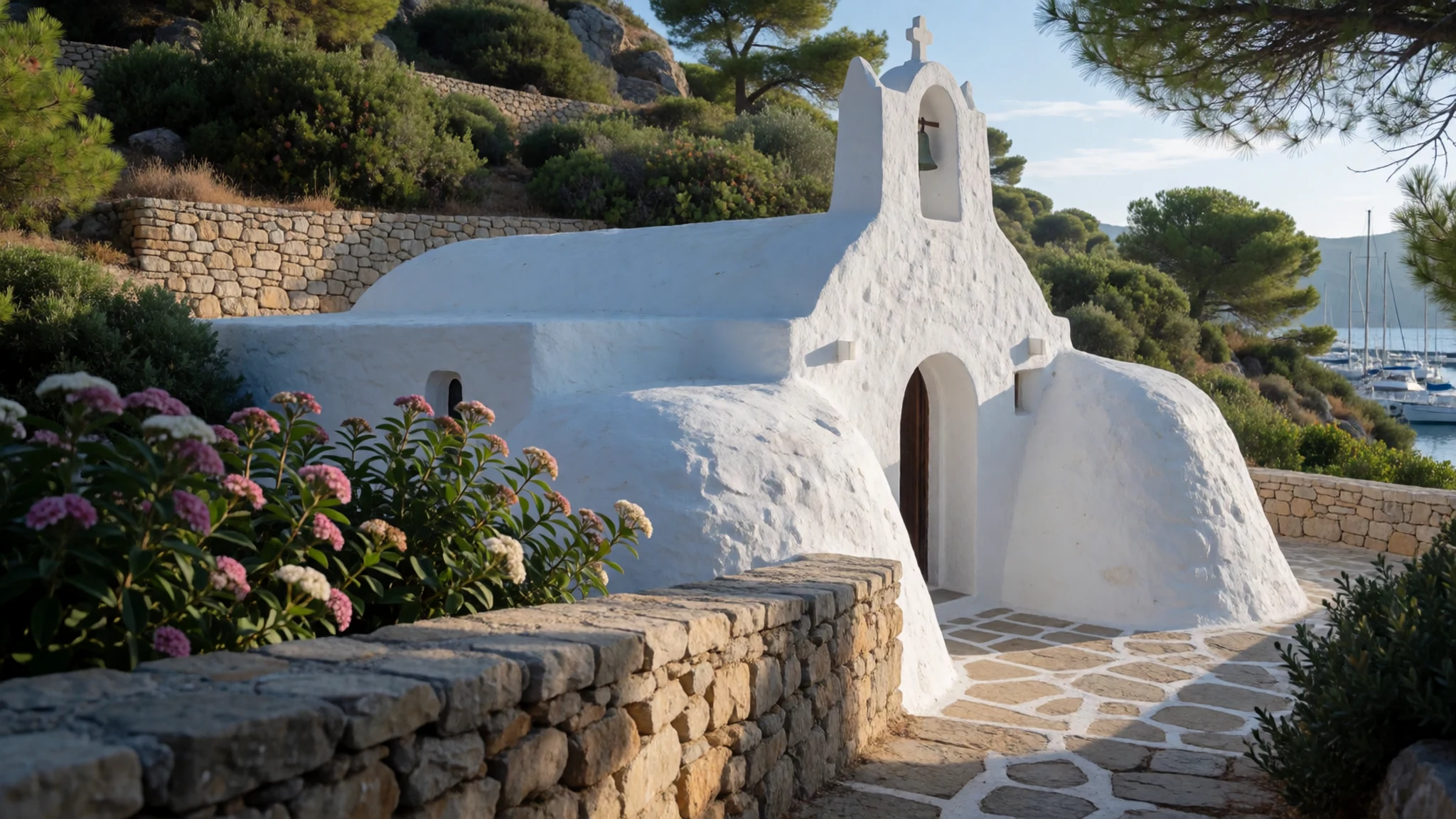
- The yachts at Porto Cervo — Porto Cervo marina
The marina at Porto Cervo is where the large private yachts come in, and in the evening you can walk the quay close enough to see their decks and crews at work. You do not need a ticket to look, but treat the boats as private property: admire from the quay and do not step onto gangways or pontoons.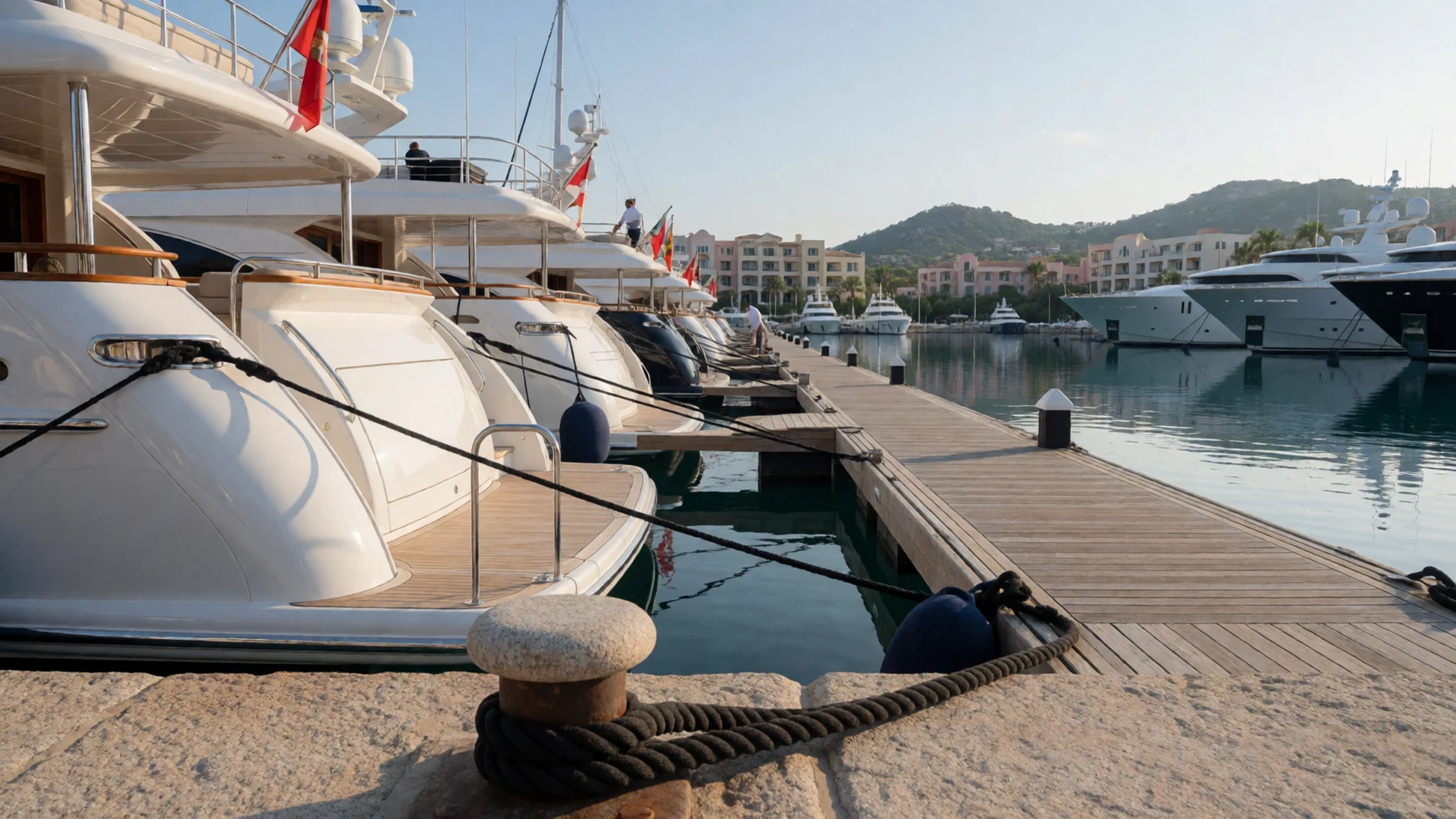
- Capriccioli and Liscia Ruia — Northern coast, near Porto Cervo
Capriccioli is close enough to reach on foot from the road above it, which makes it one of the easier beaches to enjoy in a single afternoon. Liscia Ruia, nearby, is similarly sheltered. Both have soft white sand and water that moves between pale turquoise and deeper green. Arrive by late morning in high season, because the best spots near the water fill quickly and shade is limited.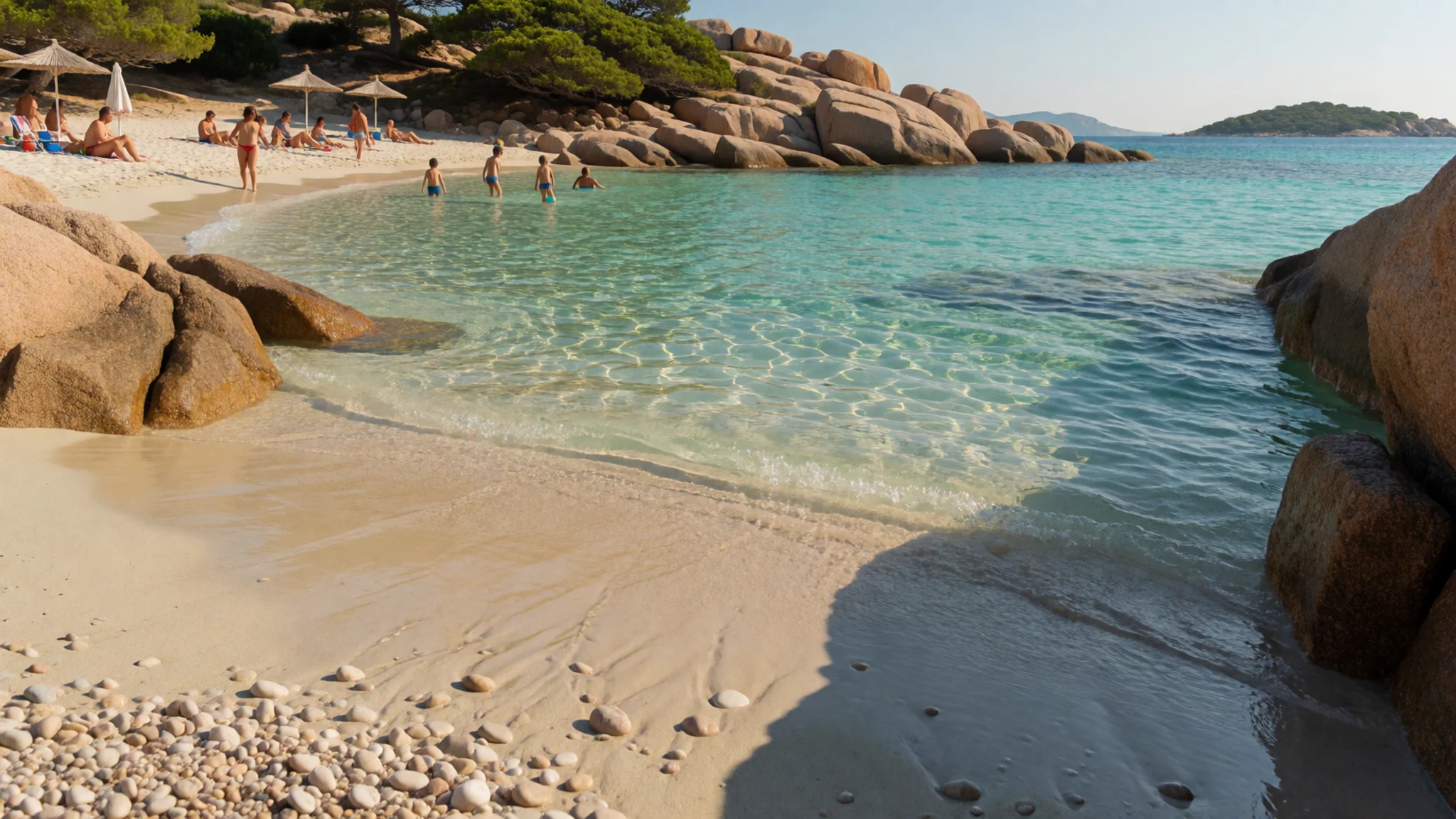
- Cala Petra Ruja — Remote coast, reached by car
Cala Petra Ruja is a more remote beach, and it has no public transport, so you need a car to reach it. Google Maps will guide you there well. Park on the verge only where it is clearly safe, or use a manned car park and pay the hourly rate. Bring water and shade, since there is little of either once you are down on the sand.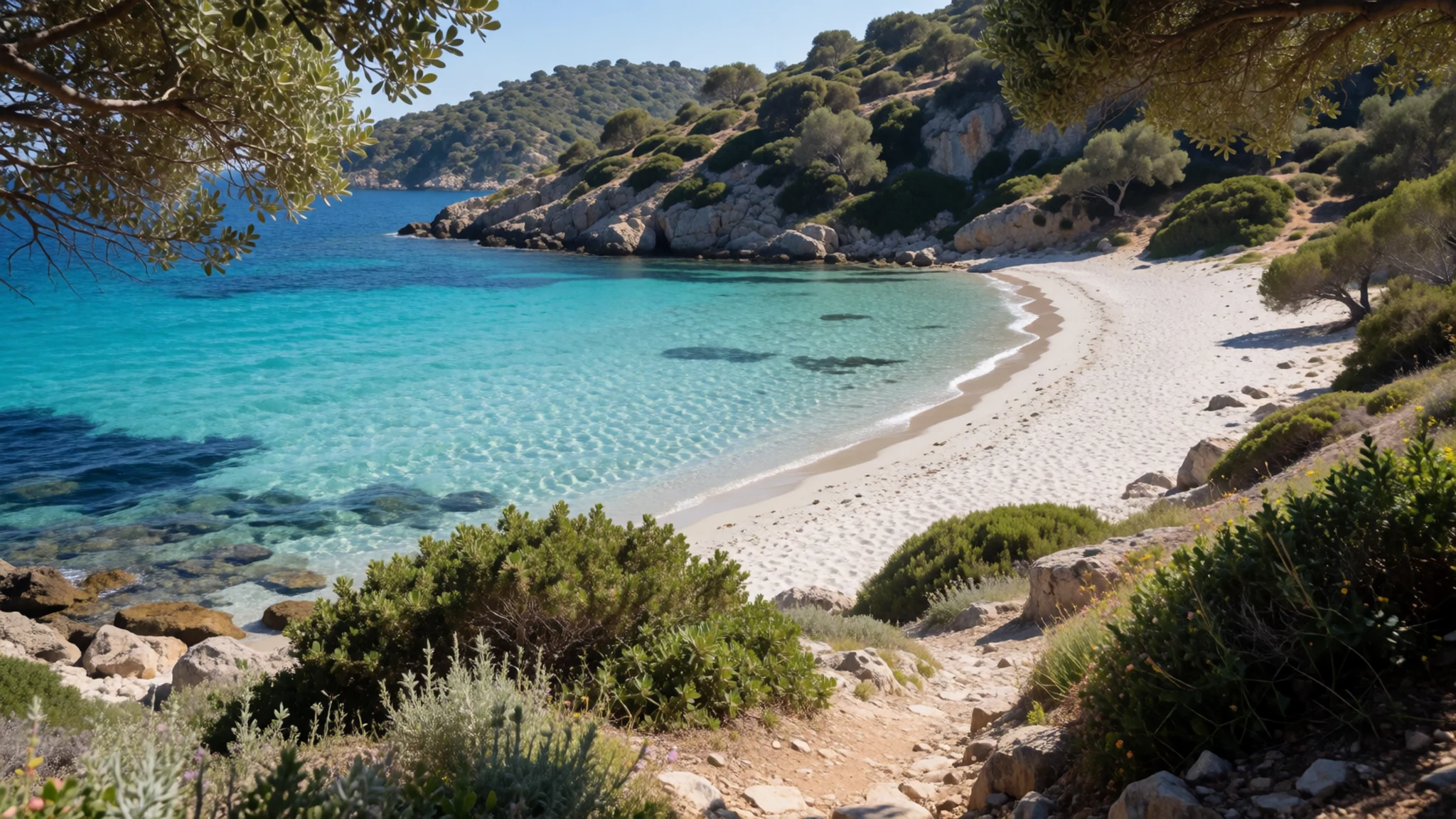
- The Maddalena archipelago — Offshore, reached from Palau
The Maddalena archipelago lies offshore and is most easily reached by boat from the Sardinian port of Palau. Day trips head out across the water to the islands, where the views of granite coves are wide and the snorkelling is good over clear rocky ground. Book a seat in advance in summer, bring your own mask if you have one, and expect departures to shift with the weather.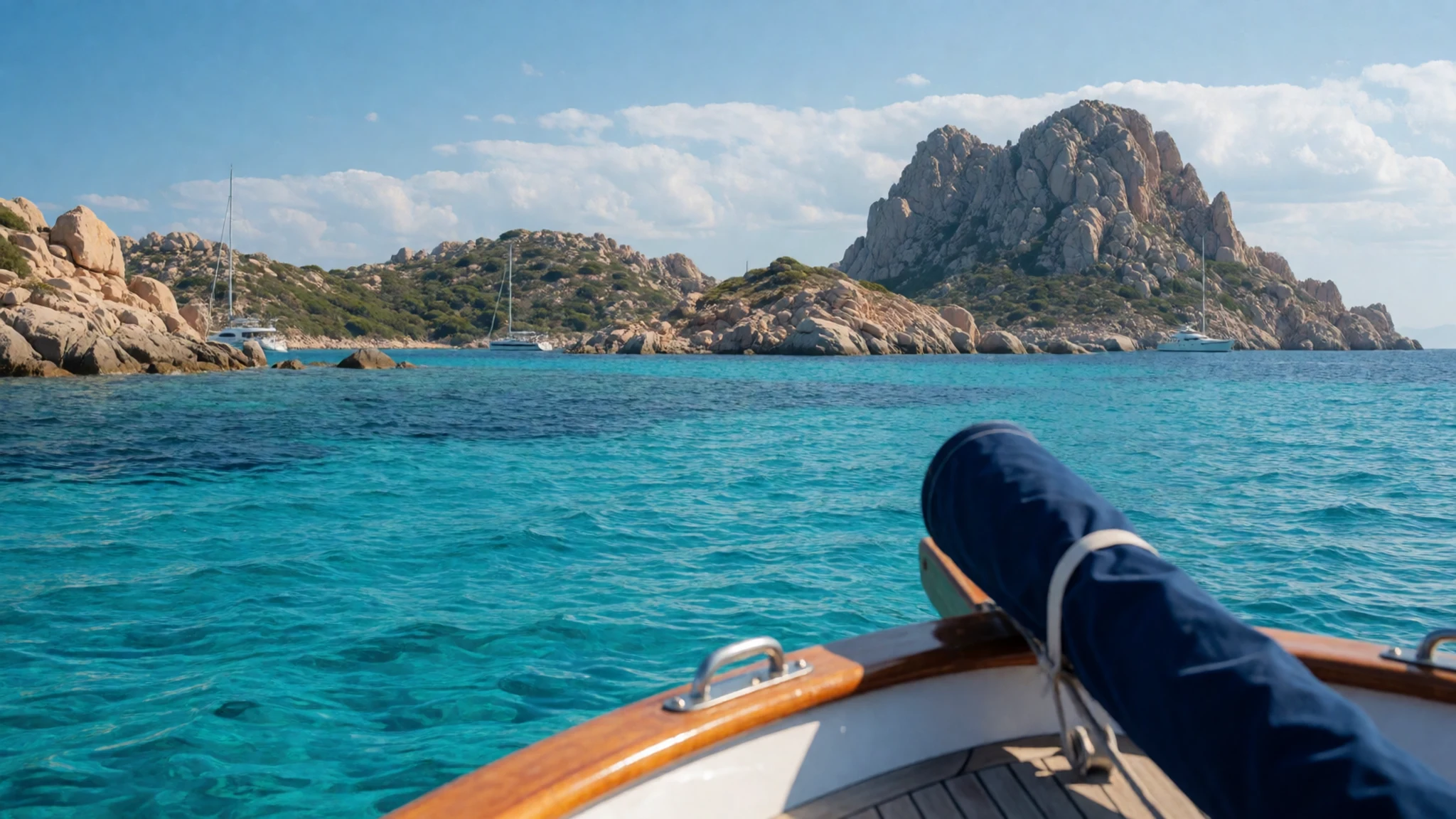
Culture
Costa Smeralda is a place where people come to be seen, but the everyday rules are simple and largely the same as anywhere in Italy. Sardinians are proud of their island's identity, and locals speak their own languages alongside Italian, so a few words of Italian go a long way in shops and bars. Meals run late and are unhurried; sitting over a coffee or an aperitivo is normal, and nobody expects you to leave quickly.
Dress is relaxed on the beaches and around the marina, but it shifts once you step into the village centre of Porto Cervo or into a restaurant in the evening. Many people dress up for dinner. Stella Maris is an active place of worship, so keep voices low and remove sunglasses and hats when you go inside.
Photography needs care. Yachts and their crews are private, and staff at the marina may ask you to move on if you linger on a gangway. Ask before photographing people in the street or at a beach bar, and do not pose with anyone's boat without permission.
Beaches are shared spaces too. Take your rubbish back to the car or a bin, and avoid playing loud music from a phone near families or other sunbathers. Tipping is not expected in bars, though a small amount for good table service is welcome. Keep your voice down near the water at night and cover your shoulders before entering Stella Maris.
What to wear
In Costa Smeralda, the traditional dress you will see is mostly in museums and at village festivals rather than on the marina. Sardinian costume, known as su costumu, varies from town to town across the island, and the Gallura area around Arzachena has its own styles. Women's dress traditionally combined a full skirt, a fitted bodice and an embroidered apron, often in dark wool, with linen underlayers and silk or cotton embroidery. Men wore dark woollen jackets and waistcoats over linen shirts, and festival pieces used richly coloured embroidery and decorative metalwork.
Today most people here dress in summer resort clothes: linen shirts, sundresses, espadrilles, sandals and polished loafers in the evening. In Porto Cervo the look is polished, with plenty of white, navy and gold jewellery, but locals mostly dress for the weather.
What should a visitor wear? Pack light cotton and linen for the heat, which can be strong in summer, and a cover-up for the walk back from the beach. Carry a light layer for evenings on the coast, when a breeze comes off the sea. Churches ask for covered shoulders and knees, so a shawl or lightweight shirt helps. For the terrain, wear closed shoes or sturdy sandals on rocky coves and paths to beaches such as Petra Ruja, and save flip-flops for the sand. A hat and sunglasses are essential at midday.
What to eat
- Porceddu — Farmhouse restaurants and agriturismo lunches a short drive inland
Porceddu is suckling pig slow-roasted over wood until the skin is crisp. It is a festive dish, served at feasts and Sunday lunches. Find it at farmhouse restaurants and agriturismo lunches a short drive inland, where it is usually ordered ahead.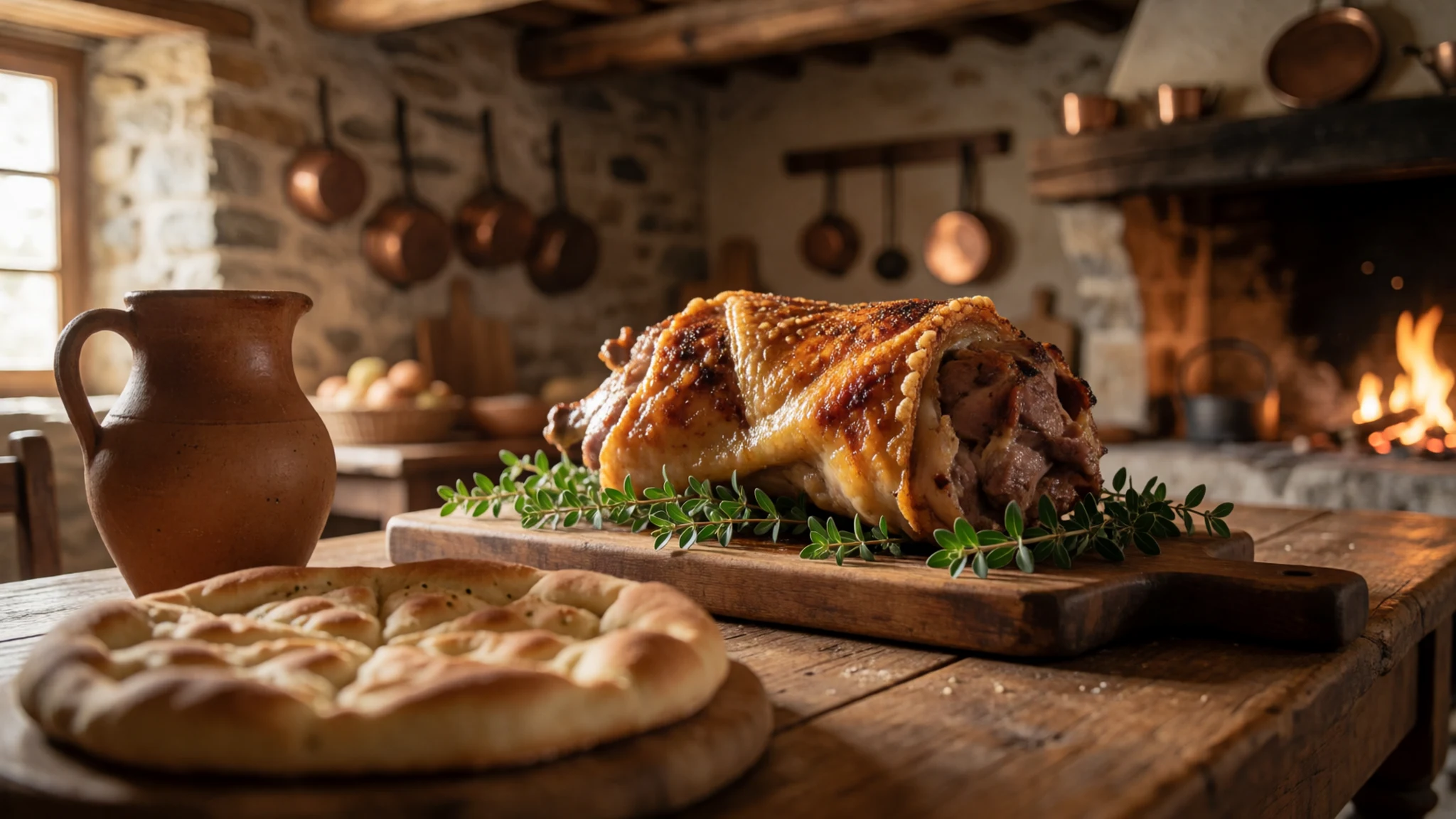
- Culurgiones — Family-run trattorias in Arzachena, away from the marina
Culurgiones are handmade pasta parcels, shaped like small spindles or ears, filled with potato, pecorino and mint. Sauced simply with tomato or butter and sage, they make a satisfying first course. Ask in a family-run trattoria in Arzachena, away from the marina, and expect a plate made by hand.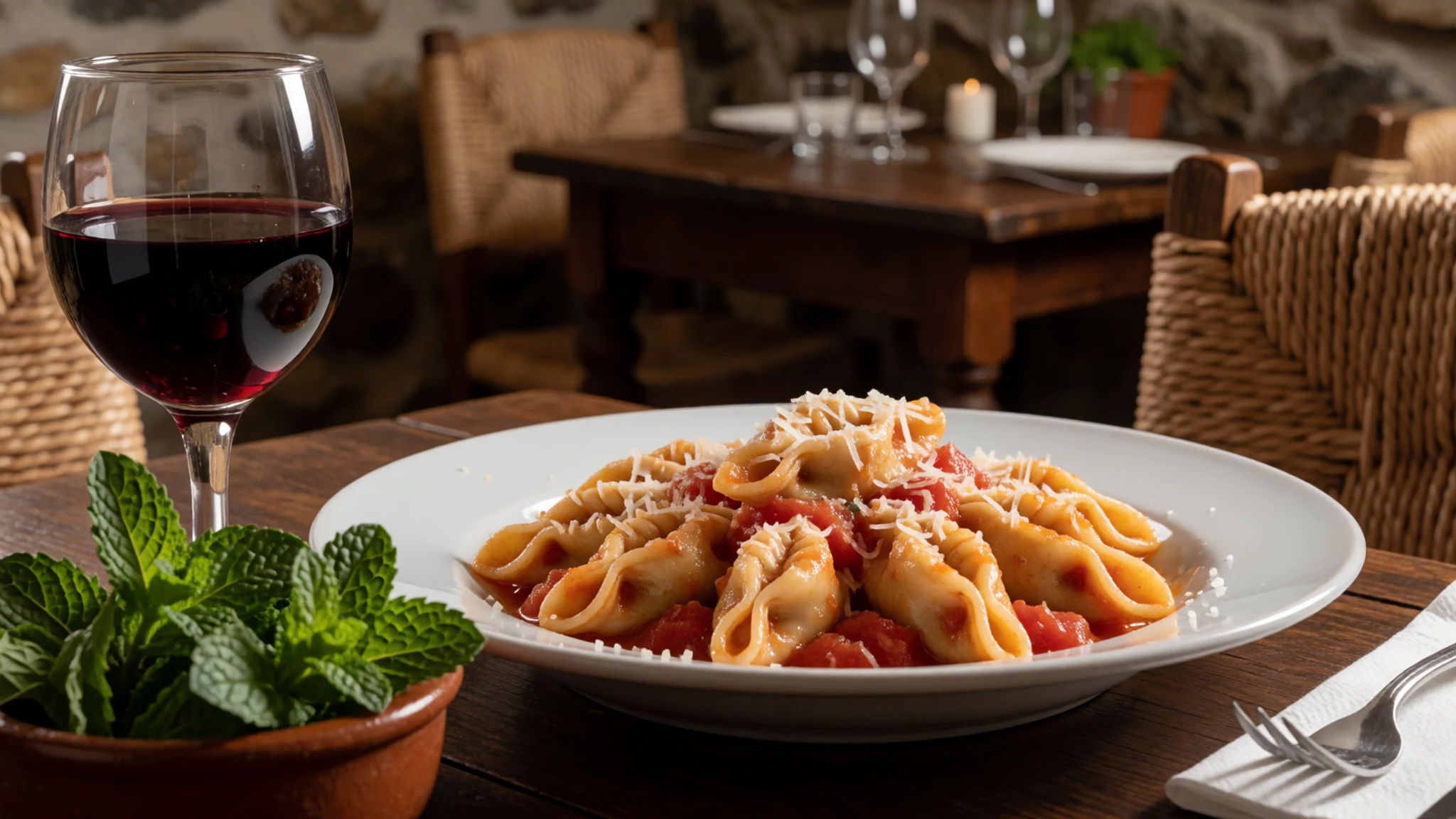
- Seadas — Village pasticcerie inland from the coast
Seadas are small fried pastries filled with fresh pecorino, balancing the salty cheese with honey. They are usually eaten warm for breakfast or as an afternoon snack. Look for them in village pasticcerie inland from the coast, where they are often made fresh and sold by the piece. - Bottarga — Seafood restaurants around Olbia and the harbour towns
Bottarga is cured grey mullet roe, pressed and dried, then grated over pasta or thin-sliced on bread with olive oil. You will see it on menus at seafood restaurants around Olbia and in the harbour towns, and it works well as a starter. - Pane carasau — Village bakeries and shops selling bread by the sheet
Pane carasau is a paper-thin crisp flatbread, baked twice so it keeps for weeks. Tear it into pieces, drizzle with olive oil and salt, or break it into soups. Buy it from village bakeries, where it is sold in sheets, and take a packet home.
Plan it
Best time. May to June and September to October suit most visitors: the sea is warm, the crowds are thinner and the heat is gentler than in July and August. Many hotels and beach restaurants open in spring and close in autumn, so check opening months before you go.
How long. 3–4
Getting there. Fly to Olbia's Aeroporto Costa Smeralda, which has seasonal international flights and a few domestic services outside summer, then take a regional bus or hire a car for the last leg. Ferries run to Olbia from Civitavecchia and Livorno all year, with Genoa and Piombino in summer.
Budget. high
Tips
- Book beach bungalows, villas and restaurant tables well ahead for July and August
- Reach the beaches before late morning to find shade and parking
- Hire a car if you want the remoter coves such as Cala Petra Ruja
- Carry cash for parking meters, small cafés and markets
- Carry sunscreen and water; the midday sun is strong
- Check Maddalena boat times from Palau before you plan the day
Etiquette
- Keep valuables in your accommodation when you swim, not in the car or on the sand.
- Ask before photographing people, especially at beach bars and in the marina.
- Cover shoulders and knees before entering Stella Maris or other churches.
- Stay on the quay and off private gangways around the yachts.
Nearby
Sources
- Wikidata Q1136383 (CC0)
- Wikipedia: Costa Smeralda (rev 1378956923) (CC BY-SA 4.0)
- Wikivoyage: Costa Smeralda (rev 5400573) (CC BY-SA 4.0)
- Photo: Panoramic view of Costa Smeralda (CC BY-SA 4.0)
- Photo: Three luxury yachts, Porto Cervo (CC BY-SA 3.0 de)
- Photo: Cala Sassari (Public domain)
- Photo: Vue panoramique de la Costa Smeralda (CC BY-SA 4.0)
- Photo: Vista panoramica della Costa Smeralda (CC BY-SA 4.0)
- Photo: Blick Richtung Südosten, Costa Smeralda (CC0 1.0)
- Photo: Spiaggia del Principe, Gallura (CC0 1.0)
- Map: Minor settlement 1992, Costa Smeralda (TCI) (CC BY-SA 4.0)


