Córdoba, Spain
Córdoba, Spain, Spain
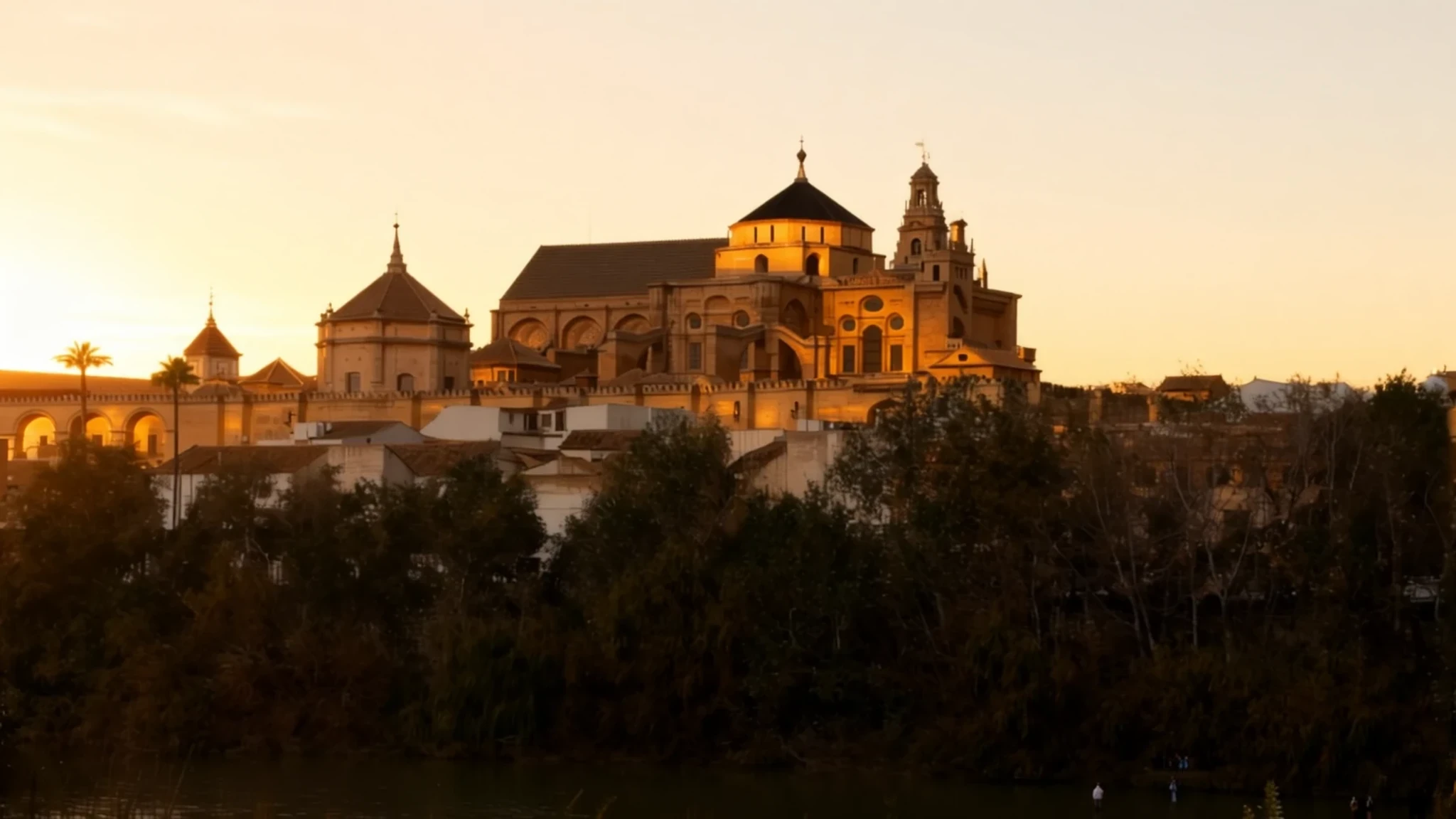
Córdoba packs a Roman-style bridge, a mosque-cathedral from the caliphate era and white courtyards into a compact old town that can be walked in an afternoon.
The place
Córdoba sits on the right bank of the Guadalquivir in southern Spain. It is the capital of its province, in the region of Andalusia, and has about 320,000 inhabitants. That makes it a mid-sized Spanish city, but its historic core is small enough to cross on foot in an hour or so, and most of the interest is packed into that core.
The old town is the main reason to come. The lanes are narrow enough to touch both walls at once, whitewashed façades hide courtyards full of pots and fountains, and the streets bend round to the mosque-cathedral from unexpected angles. The river shapes the city and offers the best first view: from the far bank, the skyline of the old quarter and the mosque's tower come together in one frame.
Heat is the main thing to plan around. Summers are long, dry and very hot, and the city slows sharply in the middle of the day, when shops and many restaurants close for the afternoon. Mornings and evenings are when the streets feel most like themselves. Winter is the easiest season for walking, with mild days and far less heat than summer.
Crowds are real. Day-trippers arrive in the morning, and the Mosque-Cathedral and the Alcázar fill up by late morning. An overnight stay lets visitors see the lanes before the coaches arrive. In May, the festival season makes rooms scarce and expensive, so dates that overlap with it need booking early.
Its story
People have lived around this stretch of the Guadalquivir for a very long time. Remains of a Neanderthal have been found in the area, and settlements near the river mouth existed well before any town was founded. Early inhabitants learned to work copper and silver, and the first written mention of a settlement comes from the period when Carthaginian expansion reached across the river. The Romans took the place in 206 BC.
Around 169 BC, a Roman consul founded a newer town beside the older one, although scholars still argue about the exact date. The settlement grew into a city with a forum, and by the mid-first century BC it had been given colonial status under the name Colonia Patricia. Julius Caesar sacked it in 45 BC for backing the wrong side in the civil wars, and Augustus later resettled it with veterans. The Cordoba Treasure, a hoard of mixed local and Roman metalwork, was buried in the city during this period and is now in the British Museum in London.
The Visigoths took the city in the sixth century, and Muslim armies conquered it in the eighth. It then became the seat of an emirate and later a caliphate, and the Umayyad dynasty ruled al-Andalus from here. Under the Umayyads Córdoba became a centre of learning, and by the tenth century it was the second-largest city in Europe. The mosque was built in this period and grew over generations.
A political crisis in the early eleventh century broke the caliphate apart. Christian forces took the city in 1236, and it became part of the Crown of Castile as the centre of its own kingdom. The mosque was converted into a cathedral, with Christian chapels set within its arches, and the Alcázar was later used as a royal residence by Ferdinand and Isabella.
What to see
- Mezquita-Catedral — Old town, by the river
The Mosque-Cathedral is the reason most visitors come. Its arches are striped in red and white, and the forest of columns inside dates from the caliphate, with a Christian cathedral built into the middle later. The mihrab, the prayer niche, is the highlight of the interior. The site was named a World Heritage Site in 1984. Go early, dress modestly and expect queues at midday.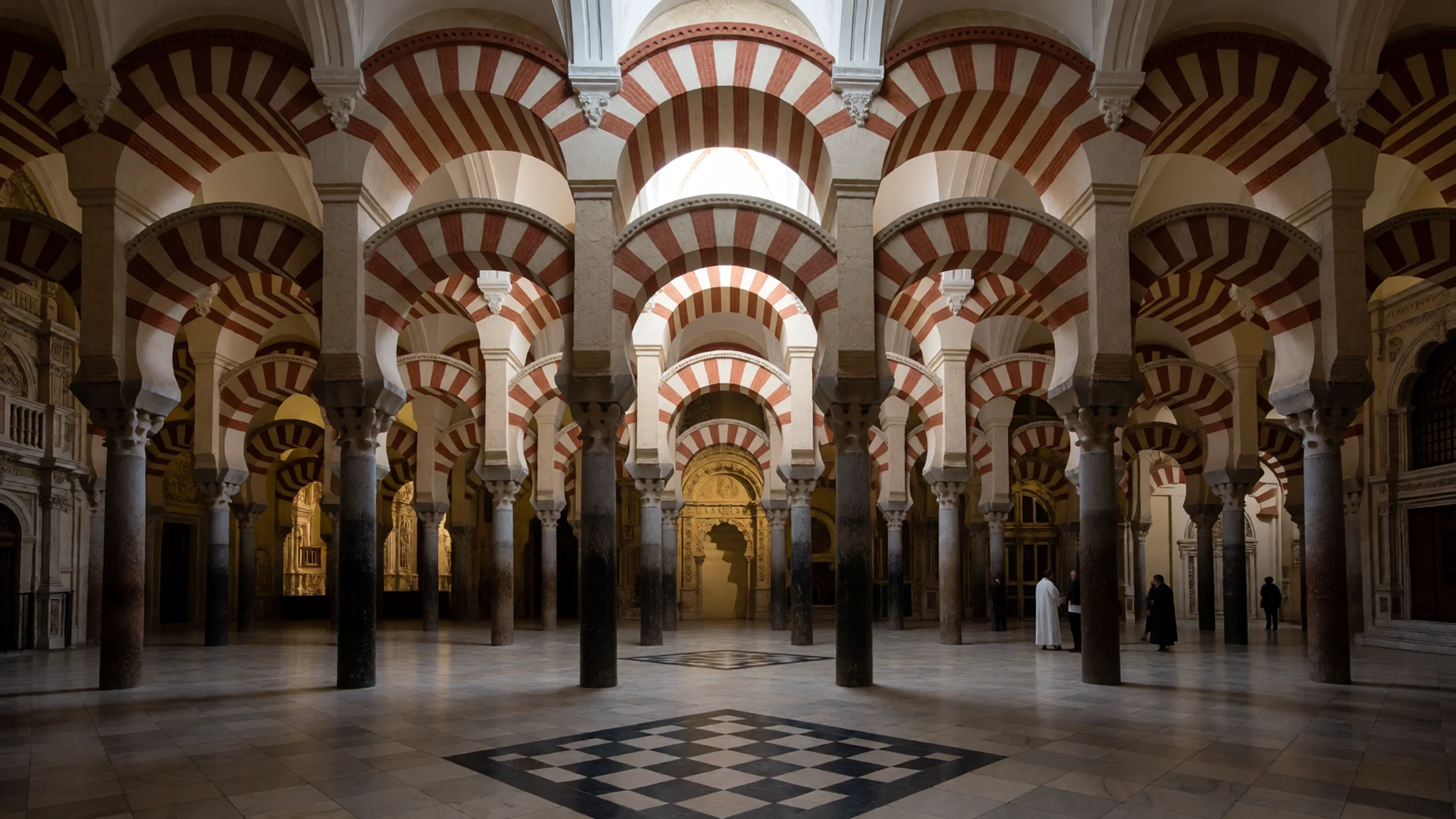
- Roman Bridge — River edge, below the Mosque-Cathedral
A Roman-style bridge crosses the shallow Guadalquivir and was for a long time the main crossing, which explains why the city mattered to the wider region. Walking it in the evening gives the best view back to the old town and the mosque's tower. The riverbank is exposed and very hot at midday in summer, so the evening is the better time.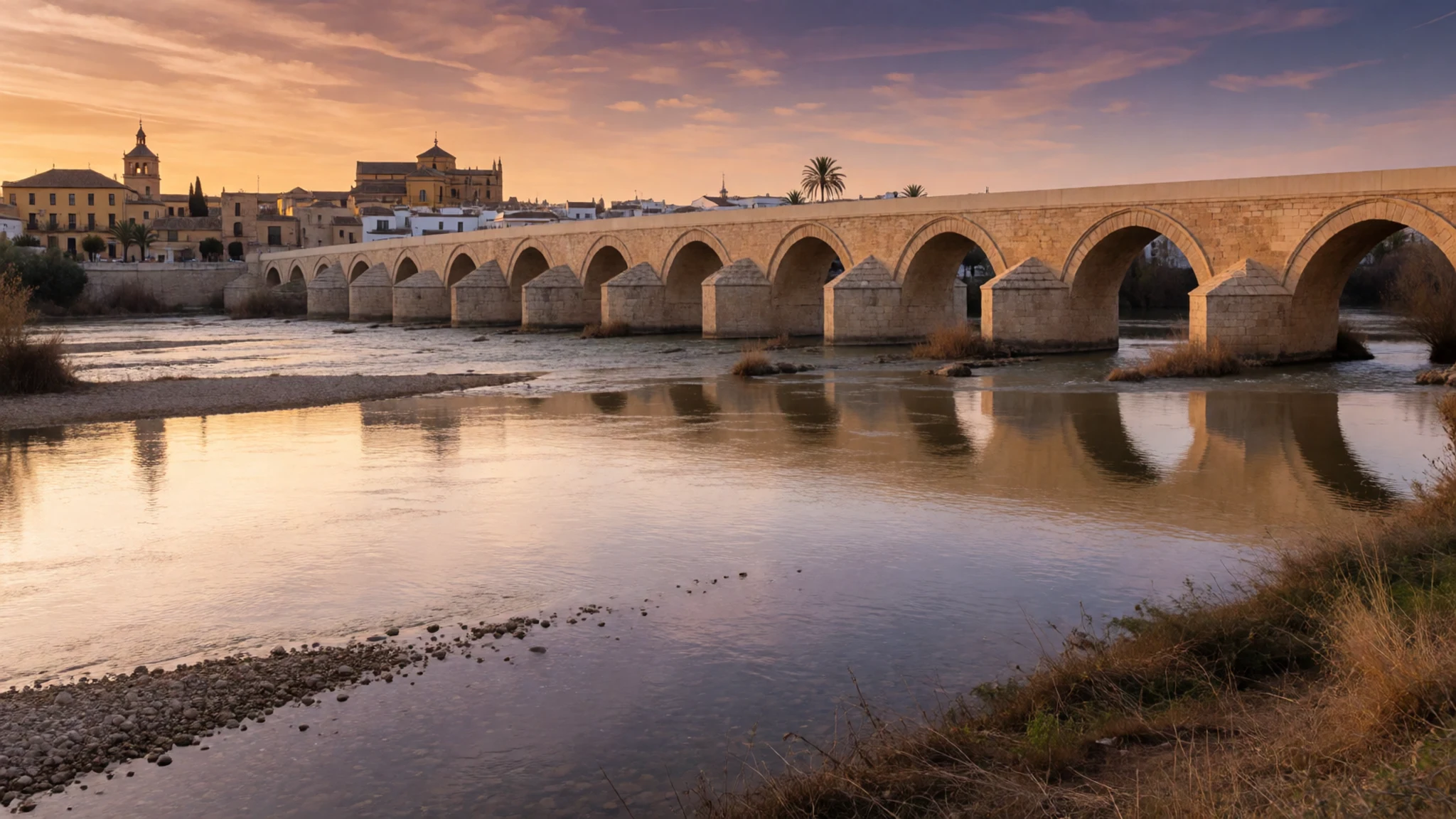
- Museum of Al-Andalus Life — Riverside, at the end of the Roman Bridge
The Torre de la Calahorra was once the fortified gate at the far end of the Roman Bridge. Inside, the Museum of Al-Andalus Life tells the city's story across its Roman, Muslim and Christian periods. Staff greet visitors in good English and fit them with a headset guide. The rooftop views over the river are a good reason to climb the tower.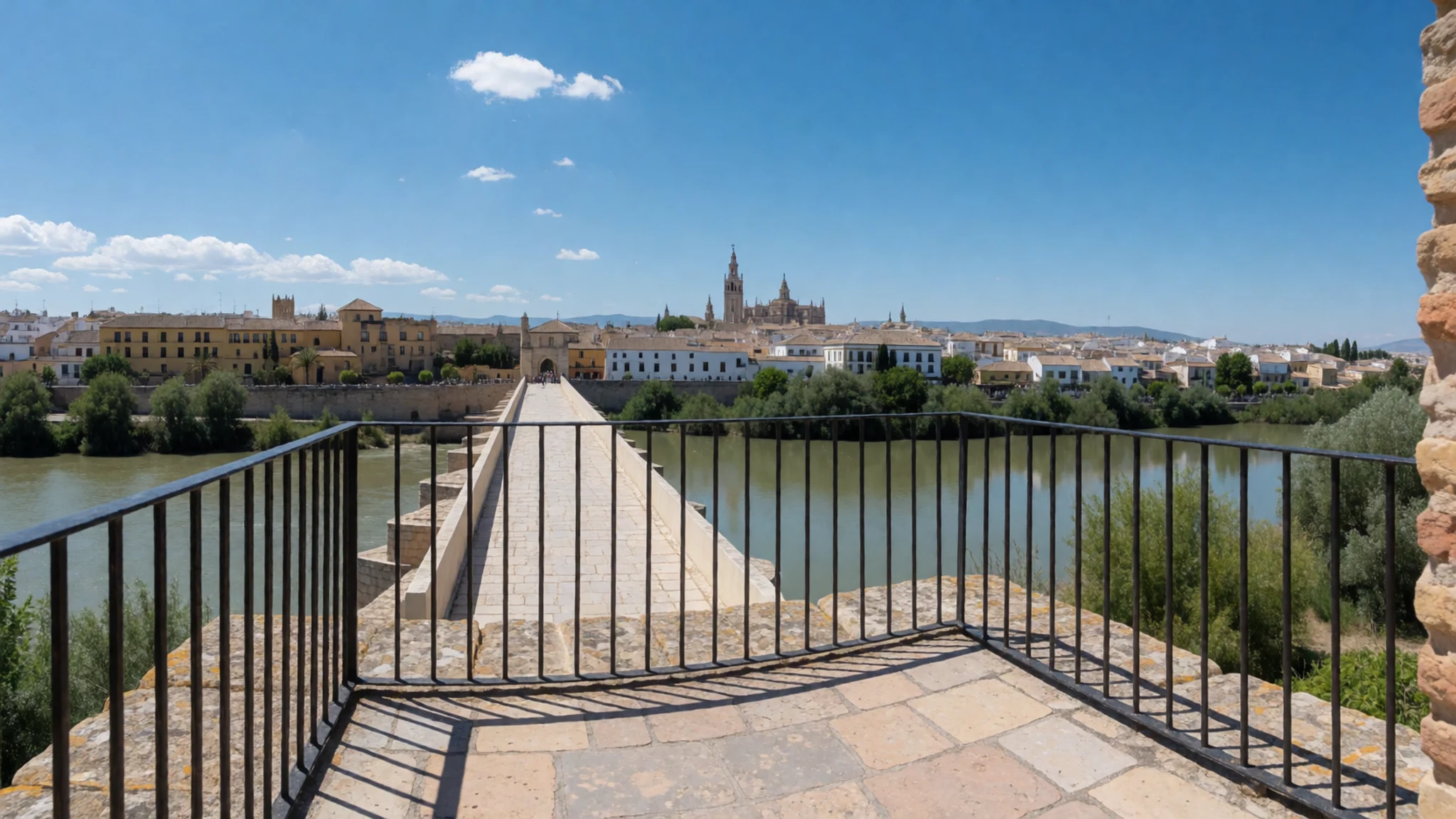
- Alcázar de los Reyes Cristianos — Western edge of the old town
The Alcázar began as a caliphate residence in the eighth century, built on the site of an earlier Visigothic fortress. Later it became the residence and fortress of Ferdinand and Isabella. The gardens, with long pools and orange trees, offer shade and a cool break in summer, and the towers give a useful overview of the old town walls.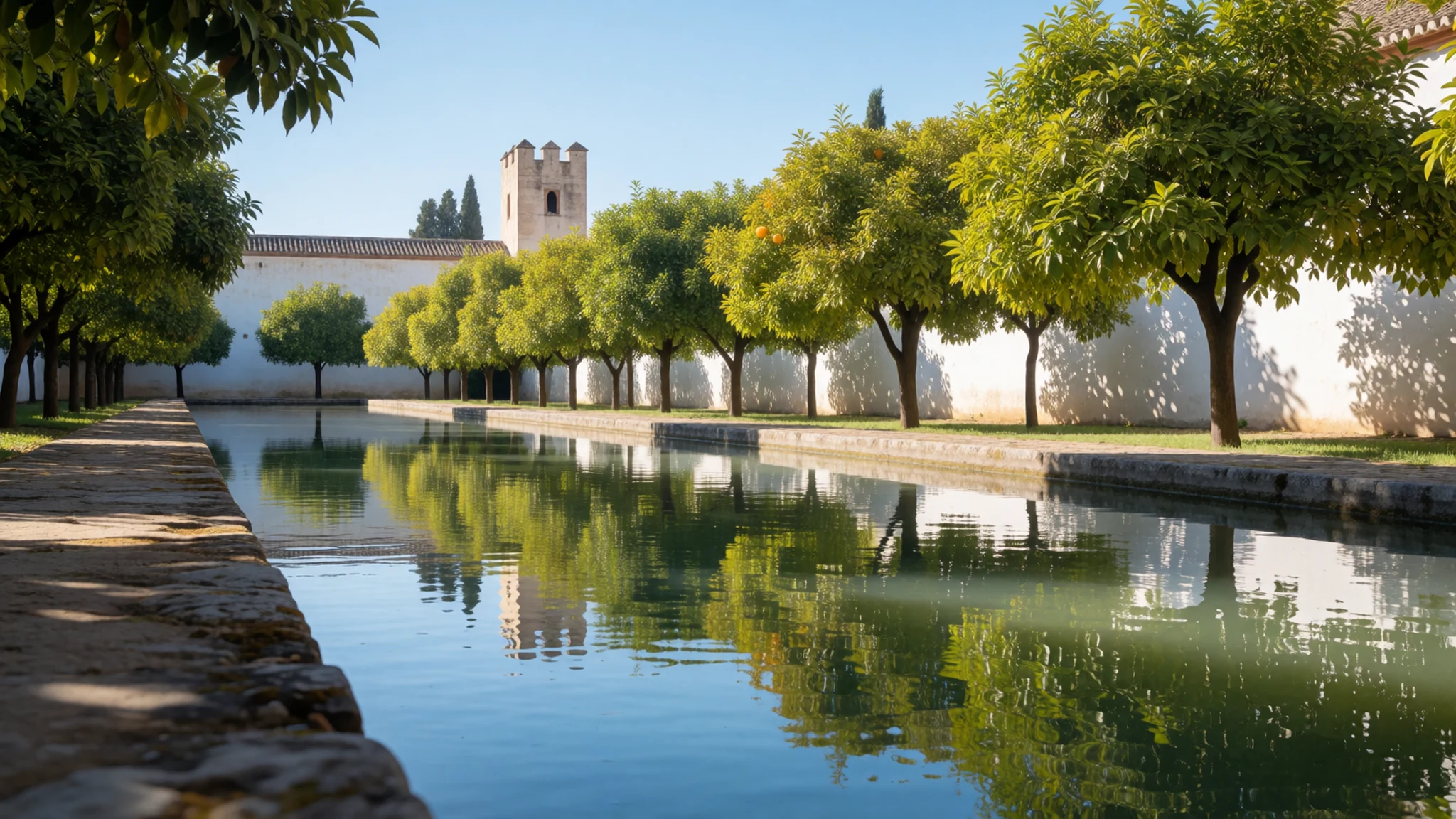
- Calle de las Flores — Judería, close to the Mosque-Cathedral
A narrow street filled with flower pots, ending in a small square with a clear view of the mosque's tower framed between the buildings. It is photographed constantly, so an early visit gives the cleanest picture. Residents live along it, so keep voices down and do not block doorways for photographs.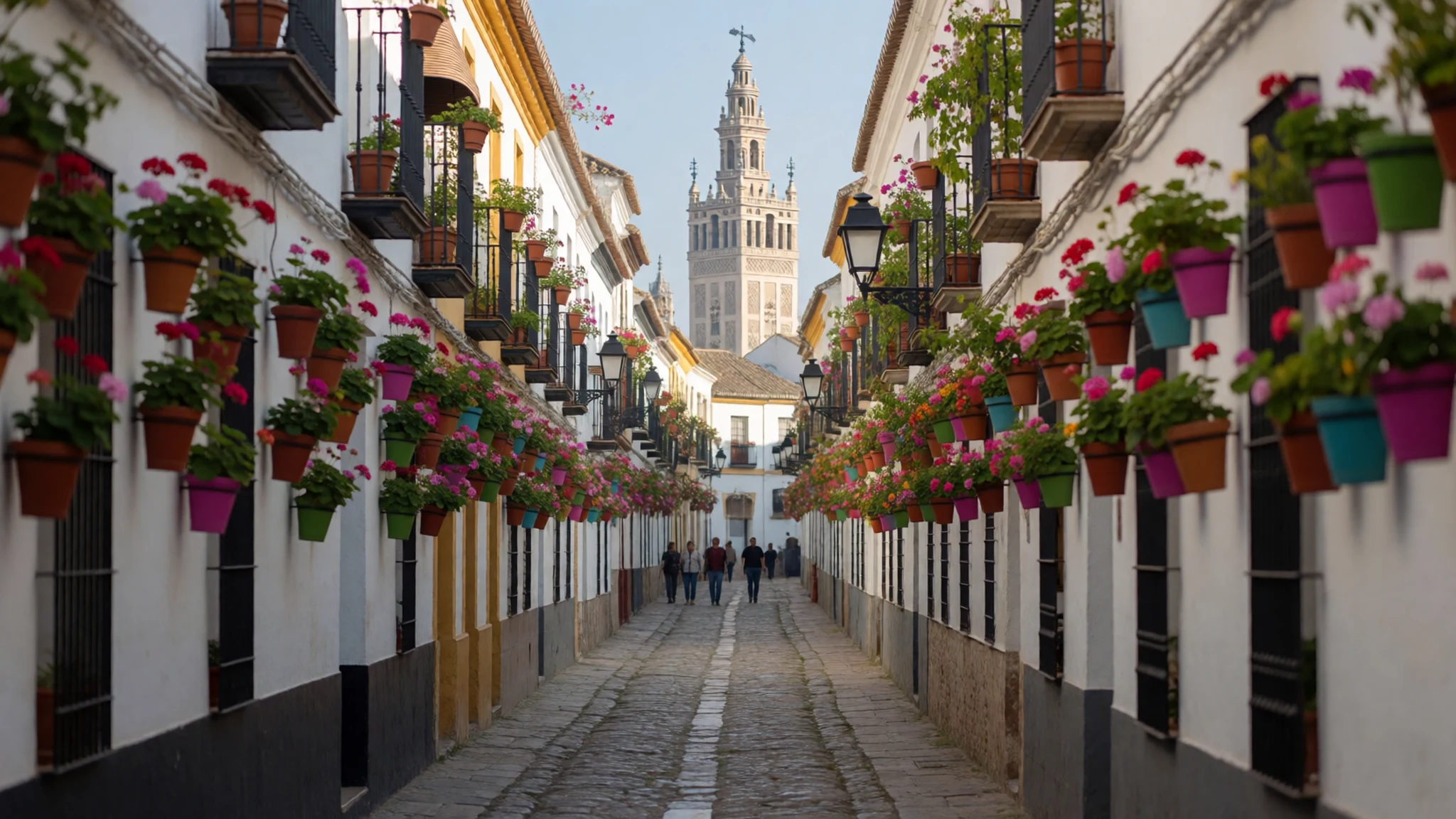
Culture
Córdoba's calendar is built around May, when three major festivals fall in the city and tourism is at its most intense. Las Cruces de Mayo, the May Crosses, opens the month. Over three or four days, decorated crosses go up in squares and streets, and a contest picks the most beautiful. Regional food and music often gather around them.
In the second and third weeks of the month, Los Patios de Córdoba opens private courtyards in the historic centre to the public. Families compete, and judges weigh architecture and floral displays. The courtyards festival carries the World Heritage label in its name, and it is busy, so arriving early on the opening days helps.
La Feria, the city fair, follows with its own tents, music and dancing. Away from the festivals, the city is formal and polite, and many shops close in the afternoon. Near the Mosque-Cathedral, decline palm readers and anyone who offers to tie a bracelet on your wrist, and keep bags closed in crowds. When you visit a patio, ask before you photograph anyone inside it.
What to wear
The traditional dress most associated with Córdoba is the flamenco dress, a fitted bodice with a full, tiered skirt often in polka dots or bold prints, worn at fairs and festivals. Its ruffles are made in cotton or light silk. Women wear it with a fringed silk or embroidered shawl, traditionally a Manila shawl, and the fan and flower in the hair complete the look. Men at the fair often wear dark tailored suits with a hat.
Day to day, Córdobans dress neatly but not formally. Linen, cotton and tailored trousers are common in summer, and people in the old town tend to look put together even when the streets are casual. During the festivals, dress becomes deliberately festive, and many locals wear their best.
For a visitor, the practical answer is light, breathable clothing in summer, with a hat and sunglasses for the midday sun. Shoulders and knees should be covered inside the Mosque-Cathedral and churches, and a light layer helps in cool churches and evenings. Comfortable shoes with good grip matter more than style: the old streets are cobbled, and many have steps and uneven stones underfoot.
What to eat
- Salmorejo — Tapas bars and family restaurants in the old town
A thick, cold soup of tomato, bread, olive oil and garlic, usually finished with chopped egg and ham. It is the classic summer starter, and it is far more substantial than a gazpacho. Ask for it cold on a hot afternoon, and expect to see it on almost every menu in the old town from late spring.
- Flamenquín — Traditional tabernas around the Plaza de la Corredera
A thin pork fillet wrapped around ham and cheese, breaded and fried until golden. It is a local favourite in the traditional tabernas, and it is often served with a simple salad or chips. It is rich, so it suits a long lunch.
- Carne de monte — Old-style taverns near the Mosque-Cathedral
A selection of cured meats that the city's old-style taverns are known for. Locals rate the tabernas near the Mosque-Cathedral for them. Order a platter with bread and a glass of local wine, and let the staff recommend what is best that day. - Berenjenas con miel — Tapas bars in the streets around the Mosque-Cathedral
Fried aubergine strips finished with a drizzle of cane honey, a dish with clear Moorish roots that reflects the city's long history. The sweet and savoury mix is typical of Córdoba's cooking, and it makes a good shared tapa with a drink. - Rabo de toro — Family restaurants on the side streets of the old town
Oxtail braised slowly in red wine until it falls from the bone. It is a winter and autumn dish and a Córdoba favourite, usually served with potatoes. It takes time to cook, so it appears mostly on lunch menus. - A casual lunch at Mercado Victoria — Mercado Victoria, Jardines de la Victoria
The glass-enclosed food hall in the Jardines de la Victoria has several dozen casual eateries and bars. It is a practical choice in the afternoon, because many stalls stay open through the siesta when most restaurants close. It suits a relaxed, varied lunch that is easy on the budget.
Plan it
Best time. November to February are the most comfortable months for walking the old town, with mild days and far less heat than summer, while March and April bring Semana Santa, when dozens of brotherhoods process through the historic centre. July and August are very hot, and the city is at its busiest and most expensive in May, when the festivals run.
How long. 2–3
Getting there. Seville, Málaga and Madrid have the nearest airports. From Madrid Atocha, high-speed trains run hourly, and a short train or bus from Seville or Málaga reaches Córdoba quickly. Trains on the high-speed line run in daytime only, so plan the last leg by day.
Budget. mid
Tips
- Check the official site, cordoba.es, for current opening arrangements and ticket options before you travel
- Visit the Mosque-Cathedral early in the morning or late in the afternoon, when queues are shorter
- Plan a long midday break, because shops and many restaurants close for the afternoon
- Carry water and a hat from late spring to early autumn, and avoid long walks at midday
- Carry some cash for small tabernas and market stalls, although most bars and restaurants take cards
- Book rooms months ahead for May, when festival demand makes accommodation scarce and expensive
Etiquette
- Dress modestly inside the Mosque-Cathedral and churches, with shoulders and knees covered
- Decline palm readers and unsolicited bracelet sellers near the mosque and keep walking
- Ask before photographing people, especially at festivals and in private patios
Nearby
Sources
- Wikidata Q5818 (CC0)
- Wikipedia, Córdoba, Spain (rev 1381257735) (CC BY-SA 4.0)
- Wikivoyage, Córdoba (city, Spain) (rev 5400729) (CC BY-SA 4.0)
- Photo: Centro histórico, Jose María Ligero Loarte (CC BY-SA 4.0)
- Photo: Córdoba aerial, kallerna (CC BY-SA 4.0)
- Photo: Mezquita, Jrr233 (CC BY 3.0)
- Photo: Córdoba, Ajay Suresh (CC BY 2.5)
- Photo: Roman Temple reconstruction, JamesNarmer (CC BY-SA 4.0)
- Photo: Mihrab of Mezquita de Cordoba, Ingo Mehling (CC BY-SA 4.0)
- Photo: Dírham of Abd-ar-Rahman III, Numismática Pliego (CC BY 3.0)
- Photo: Vista de Córdoba (1567), Anton van den Wyngaerde (Public domain)


