Connemara National Park
Connemara National Park, Ireland
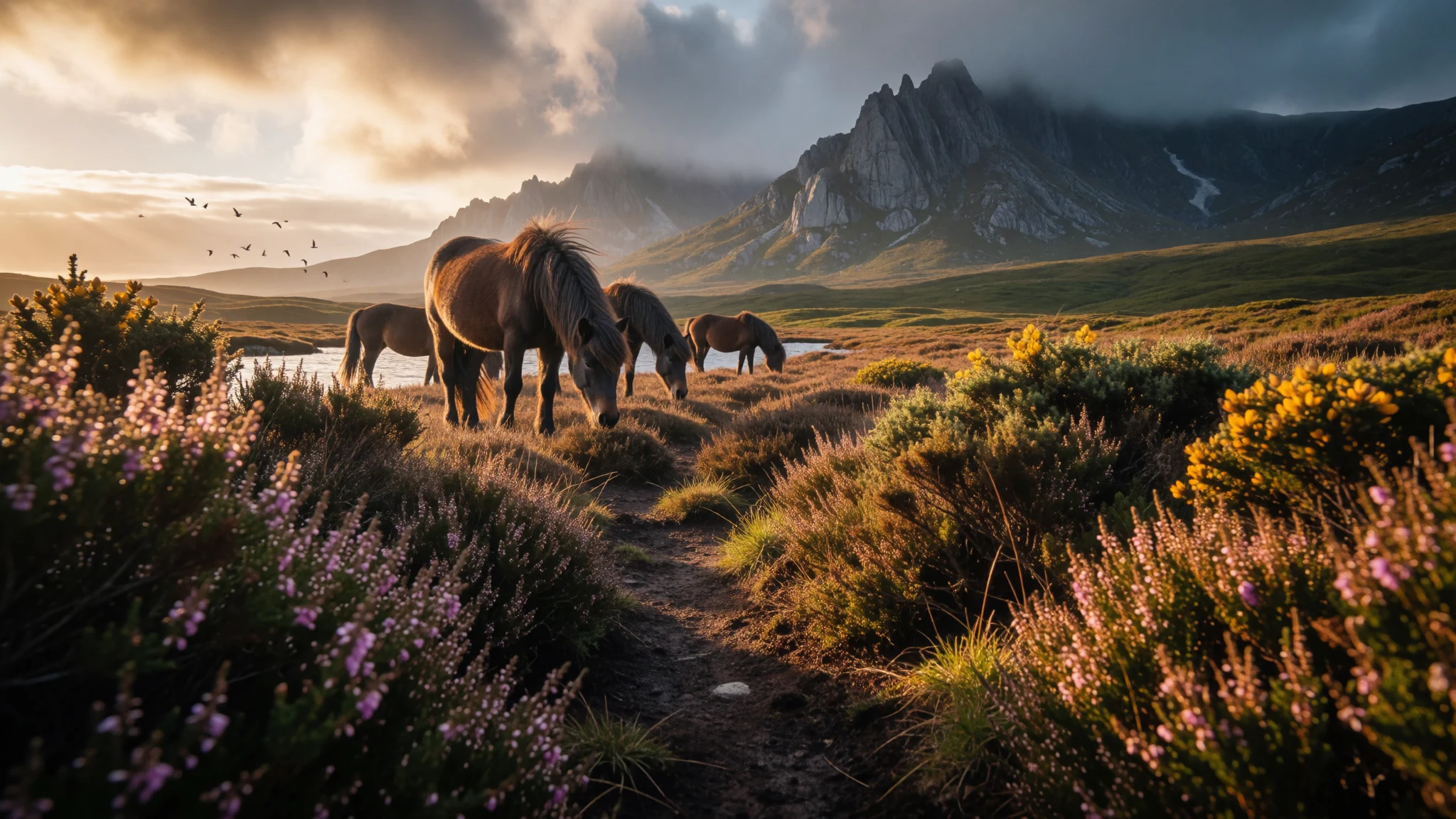
Connemara National Park packs granite peaks, blanket bog and ponies into one compact stretch of Ireland's wild Atlantic west.
The place
Connemara National Park sits in the north-west of Connemara, in County Galway on Ireland's Atlantic coast. It is run by the National Parks and Wildlife Service and is one of eight national parks in the country. The entrance is on the Clifden side of Letterfrack, a small village that works as its gateway. The wider region is a windswept country of grey granite mountains. None is tall, but their profiles are sharp, and rising straight out of bog and lake they look bigger than they are. Glaciers gouged the valleys between them, and the lowlands are draped in blanket bog, a wet, spongy carpet that supports a surprising range of plants. Life here was never easy. Farmers grew potatoes on small holdings where minute fields were separated by stone walls, while fishermen worked a hard Atlantic. The coastline breaks into peninsulas and small islands, some linked to the mainland by road. This is also Gaeltacht country, where Irish is the everyday first language in many communities, so signs and conversations may slip between Irish and English. Galway city is the usual base for the wider county, but Clifden has the most accommodation close to the park. Weather is the real variable: mist, sun and squalls can all pass in a single afternoon, and whole mountains vanish and reappear. The park is only a fraction of Connemara, but it is a compact introduction to the region's mountains, bogs and heath.
Its story
Connemara National Park opened to the public in 1980, but the ground it protects carries a far longer record. Its roughly 2,000 hectares hold mountain, bog, heath, grassland and woodland, and almost every part has been lived on or worked at some point. Court tombs, megalithic burial monuments about 4,000 years old, show that farming communities settled these hills long before written history. A 19th-century graveyard is a much later layer, a reminder of the families who tried to make a living from small fields. The land itself once belonged to the Kylemore Abbey estate, which is why the abbey's lakeside setting is so closely tied to the park in local minds. Geology gave the scene its bones. Ice carved the valleys between the granite peaks, and cool, wet conditions let peat build up across the lowlands. Poor soil and heavy rain made farming a gamble, with potatoes in walled plots and fishing along the shore as the staples. Walls, tombs and old tracks are still easy to spot on a walk, and together they show how thin the margin was for people living here. Today the park is managed for wildlife and visitors rather than farming, though sheep and ponies still graze nearby, and the old field boundaries remain part of the view.
What to see
- The Twelve Bens — Connemara, County Galway
The Twelve Bens are the jagged granite range that dominates the skyline of the park and much of Connemara. They are modest in height but steep and sharply shaped, and they catch cloud constantly. Hillwalkers tackle them seriously, while most visitors are content to watch the light move across the ridges.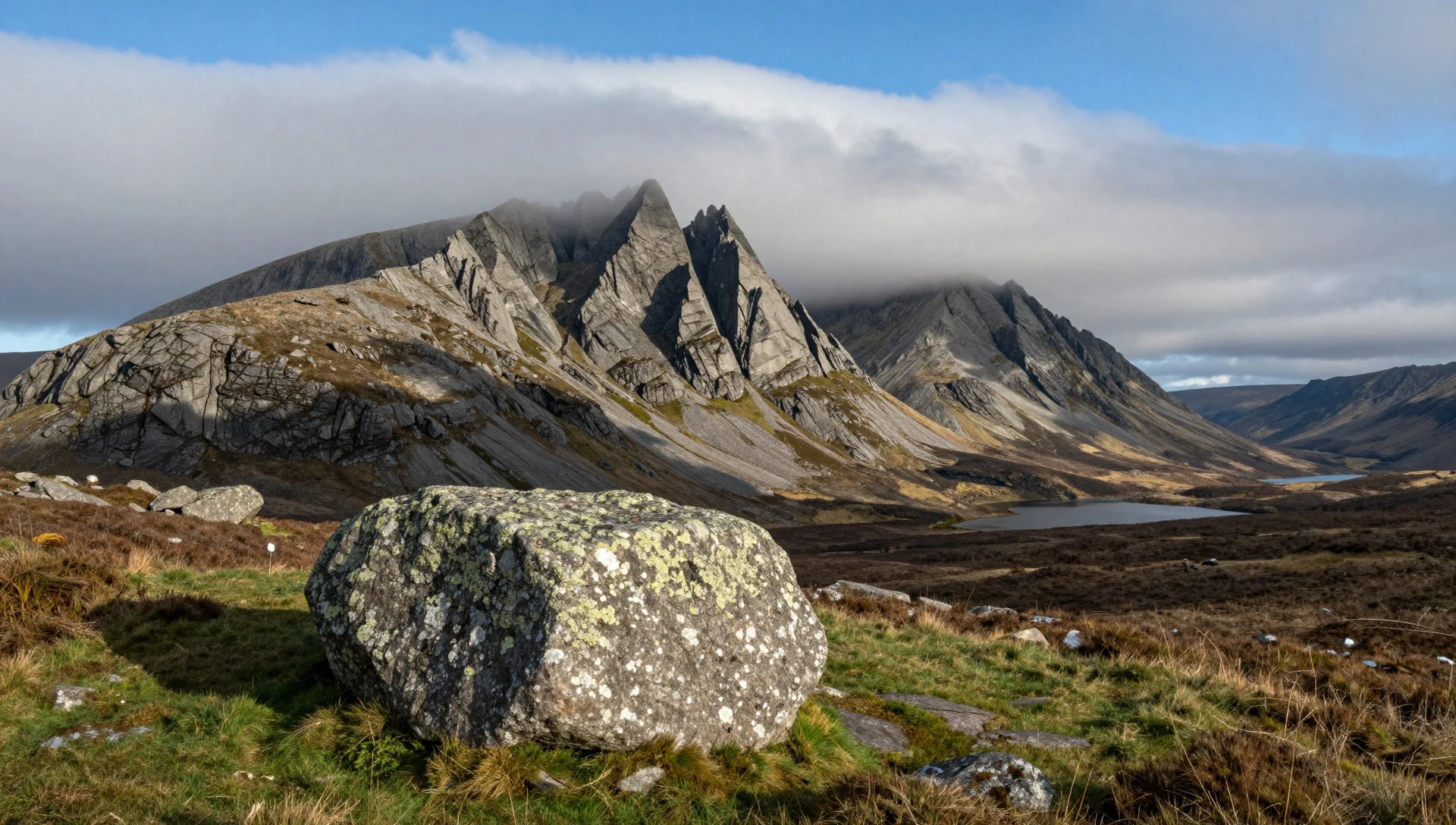
- Pollacappul Lough lakeshore walk — Inside the park, near Letterfrack
A gentle path runs beside Pollacappul Lough through scrubby woodland, with views across the water to bare hills. It suits families and anyone short of time or energy. Cairns of stones stand along the way, and the quiet is broken mainly by birdsong and wind in the trees.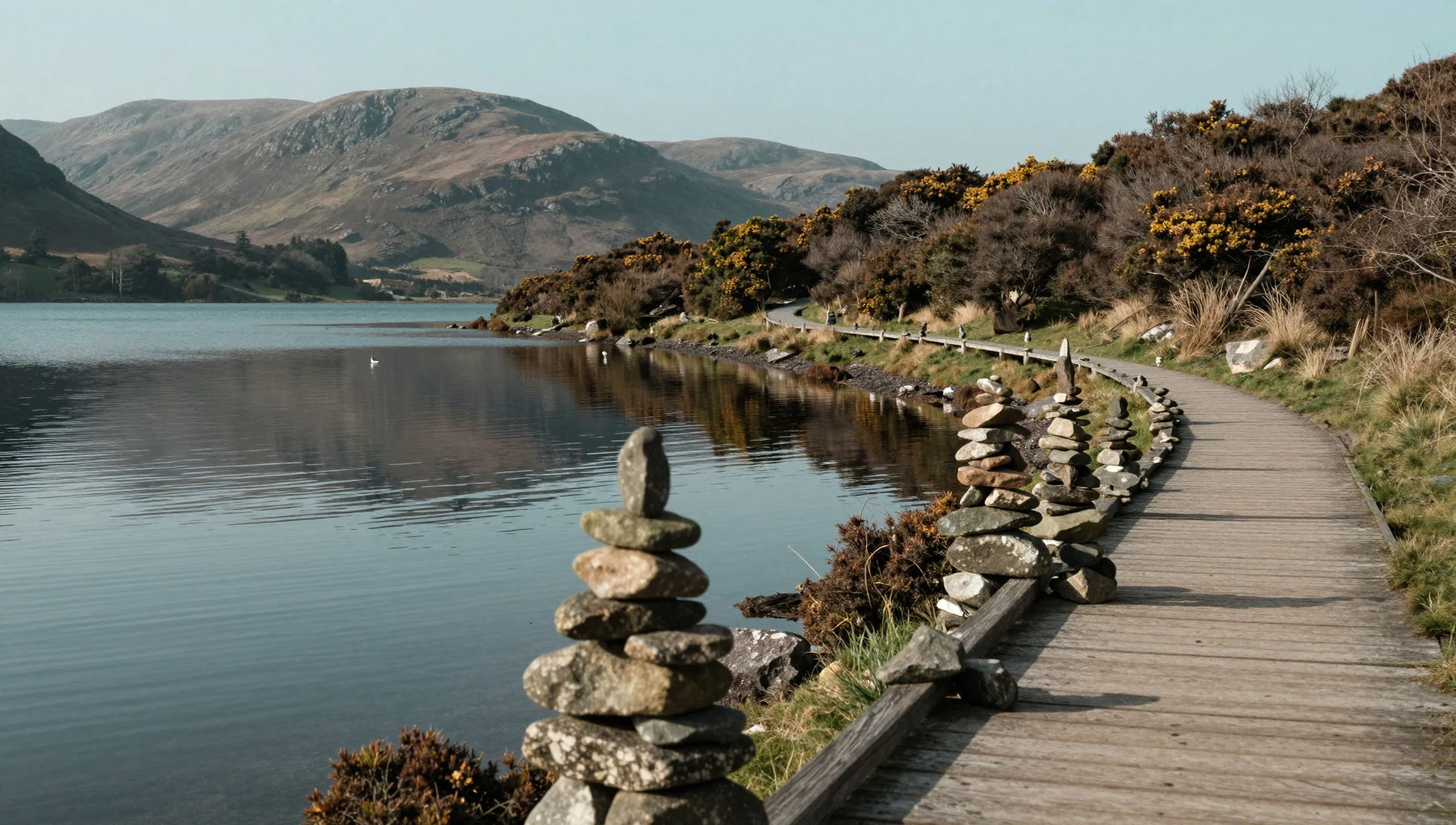
- Diamond Hill and the bog country — Above Letterfrack
Diamond Hill is the park's best-known climb, rising from the woods above the entrance to open, windy ground with wide views over bog, lake and coast. Away from the paths the blanket bog is soft and wet, so sturdy boots matter. Choose a clear day, since cloud can erase the view.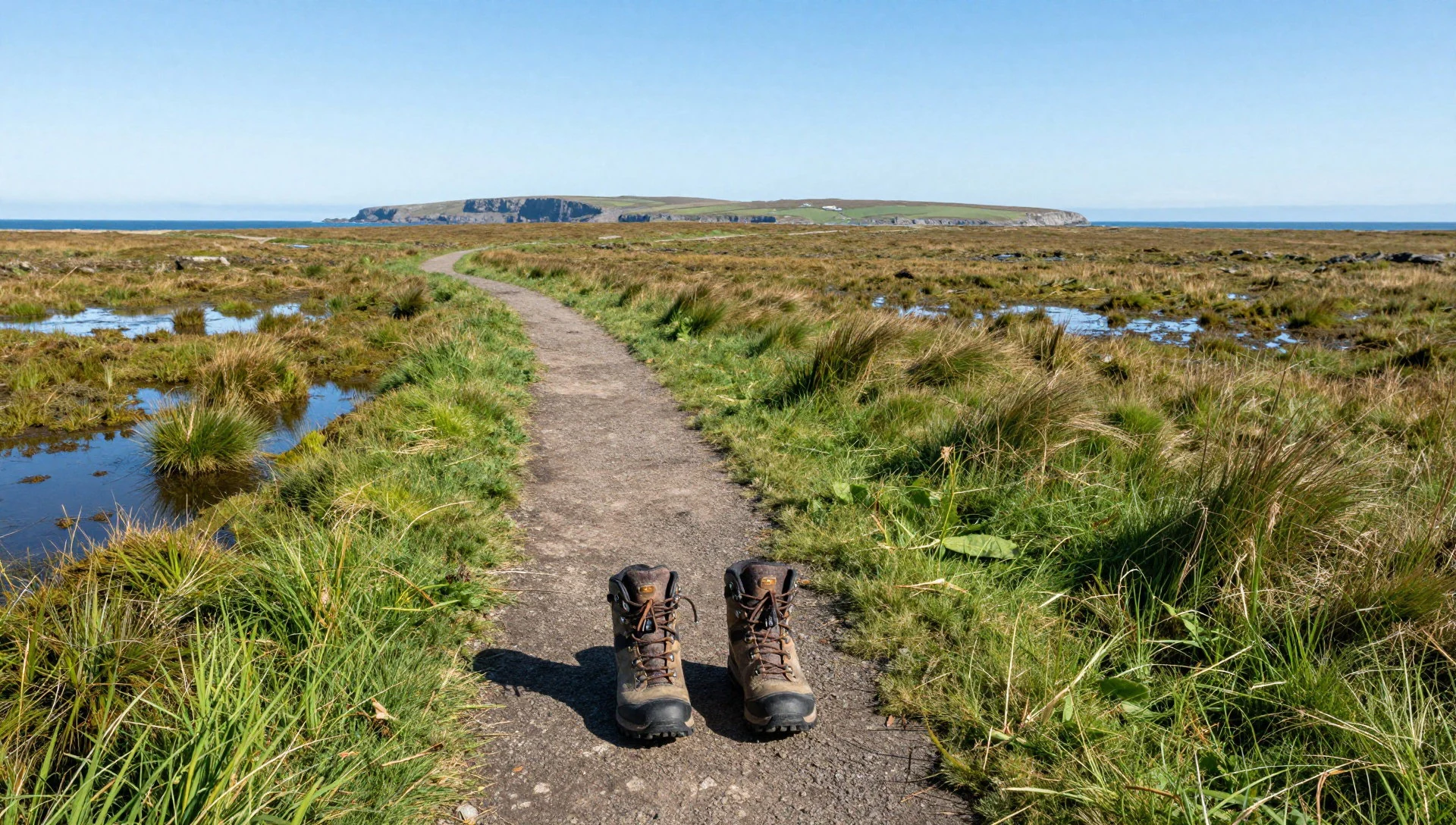
- Kylemore Abbey and its lake — Near Letterfrack
Kylemore Abbey stands on the shore of a still lake backed by wooded hillside, a few kilometres from the park. The park's land was once part of this estate. On calm days the abbey's reflection in the water draws photographers, and the grounds are worth a slower visit than a coach stop allows.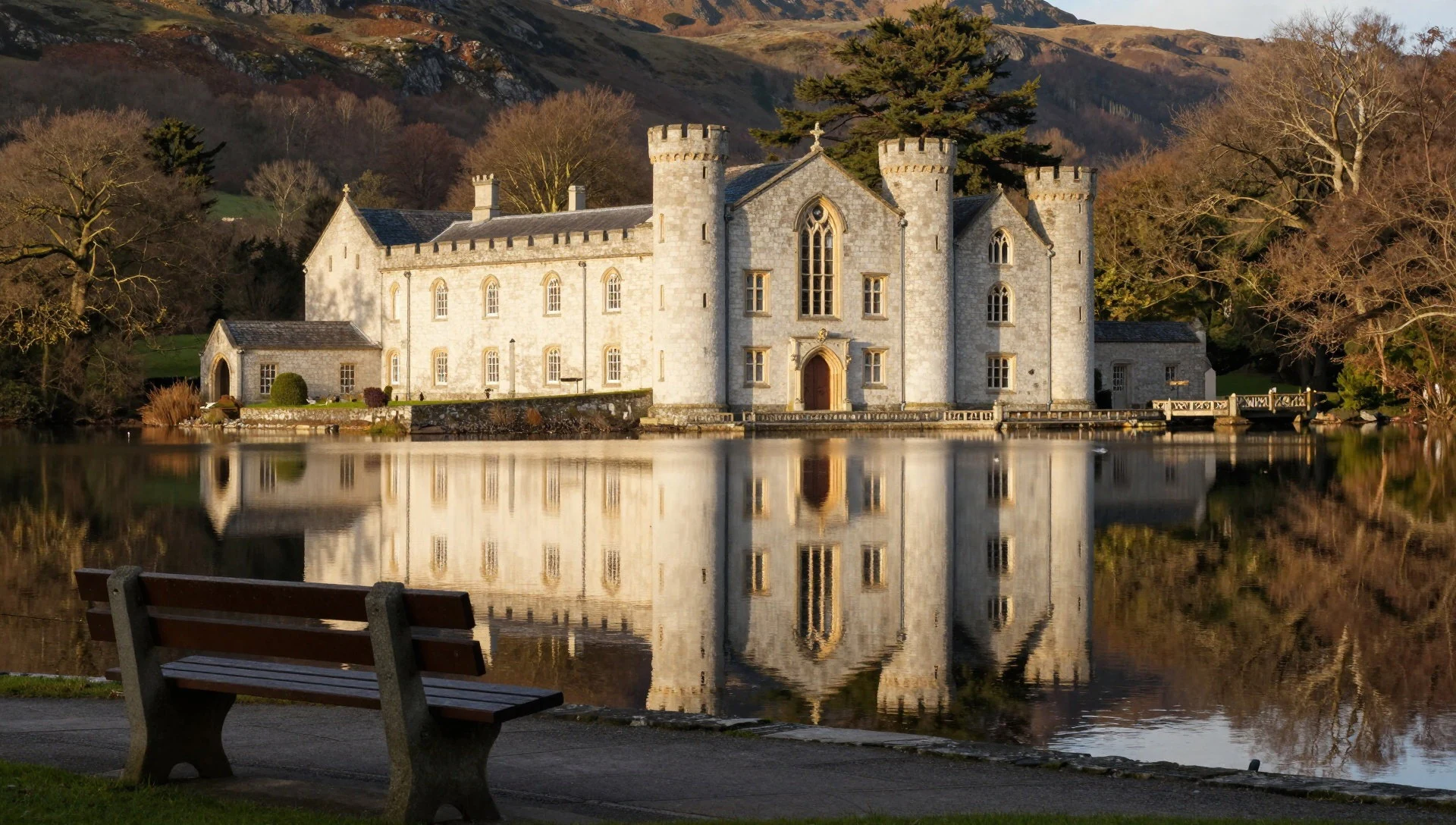
- Connemara ponies — Park edges and nearby lanes
Connemara ponies graze around the park and the surrounding roads, sturdy animals suited to wet, rough ground. Mares with foals are a common sight in spring and summer. They are working animals as much as scenery, so keep a respectful distance, never feed them, and take photos from the roadside.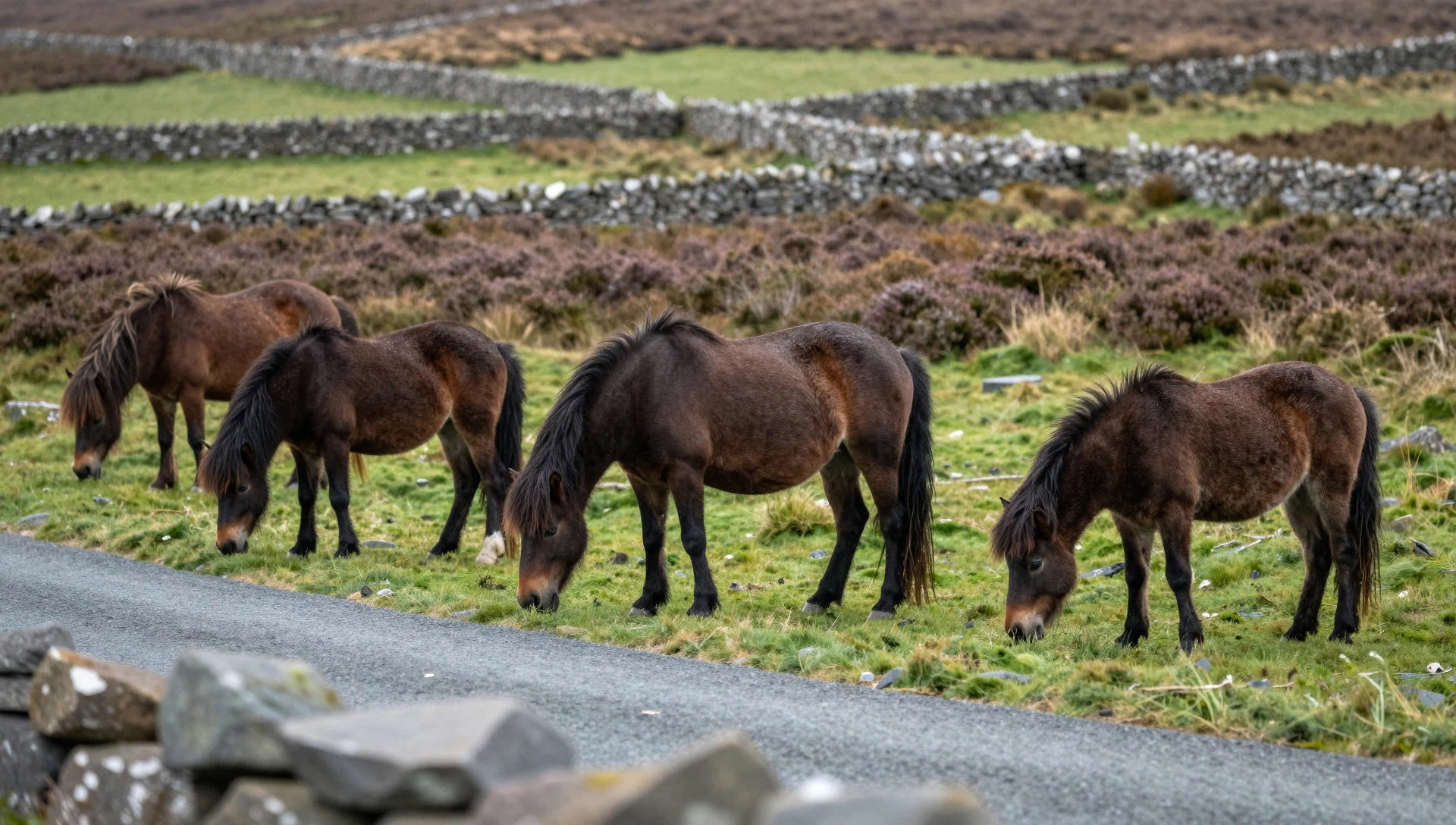
Culture
Connemara National Park lies in a Gaeltacht region, one of the areas where Irish remains a first language, so the park's Irish name, Páirc Naisiúnta Chonamara, is more than decoration. Place names on maps and signs often describe the land itself, and a few words of Irish, even just a greeting, are noticed and appreciated. Rural life here has long rested on sheep, small fields and the sea. The Galway hooker, a black-hulled fishing boat with red-brown sails, is the local emblem of that sea life; hookers are still built to the old designs and raced at regattas around the coast. Evenings revolve around the village pub, which in much of Connemara is also the main place to eat, and live traditional music is common, especially in Galway city. Sessions are informal: musicians play for one another first, and listeners are welcome as long as they stay quiet. Other threads are Gaelic games such as hurling and football, which draw loyal crowds across the county, and the religious heritage visible in Kylemore Abbey and old graveyards. Weather and distance shape manners too: people in remote places tend to stop for a chat, and walkers are expected to greet those they pass on a lane. Leave gates as you find them and keep to the waymarked paths, because the land around the park is still worked by local farmers.
What to wear
Connemara National Park sits in a region whose traditional clothing was shaped by wool, wet weather and hard work. Historically, women wore homespun wool and flannel skirts, often red, with heavy shawls, and men wore tweed and thick knitted jumpers, the fabric spun and woven locally from sheep that grazed the hills. That dress now mostly appears at festivals, dance performances and heritage events rather than daily life. What people actually wear today is practical: waterproof jackets, fleeces, jeans or walking trousers, and wellington boots for farm work. Wool jumpers and tweed caps are still common, partly from habit and partly because they work in the damp. Village life is casual, and nobody dresses up for pubs or restaurants. A visitor should dress for the weather, which can change within the hour. Wear layers, with a proper waterproof jacket and waterproof trousers if hiking, and bring a warm hat even in summer, since wind on open ground is cold. Sturdy walking boots with good grip are essential on wet rock and soft bog; trainers soak through quickly. Carry a spare pair of dry socks. There are no modesty rules for the park itself. If visiting Kylemore Abbey or a church, ordinary tidy clothes are enough, and shoulders and knees need no special covering.
What to eat
- Seafood chowder — Village pubs in Letterfrack and Clifden
A thick, creamy soup of fish and shellfish, served with brown bread. It is the standard warm-up after a wet walk, and quality depends on how fresh the catch was that morning. Order it in a village pub or coastal eatery.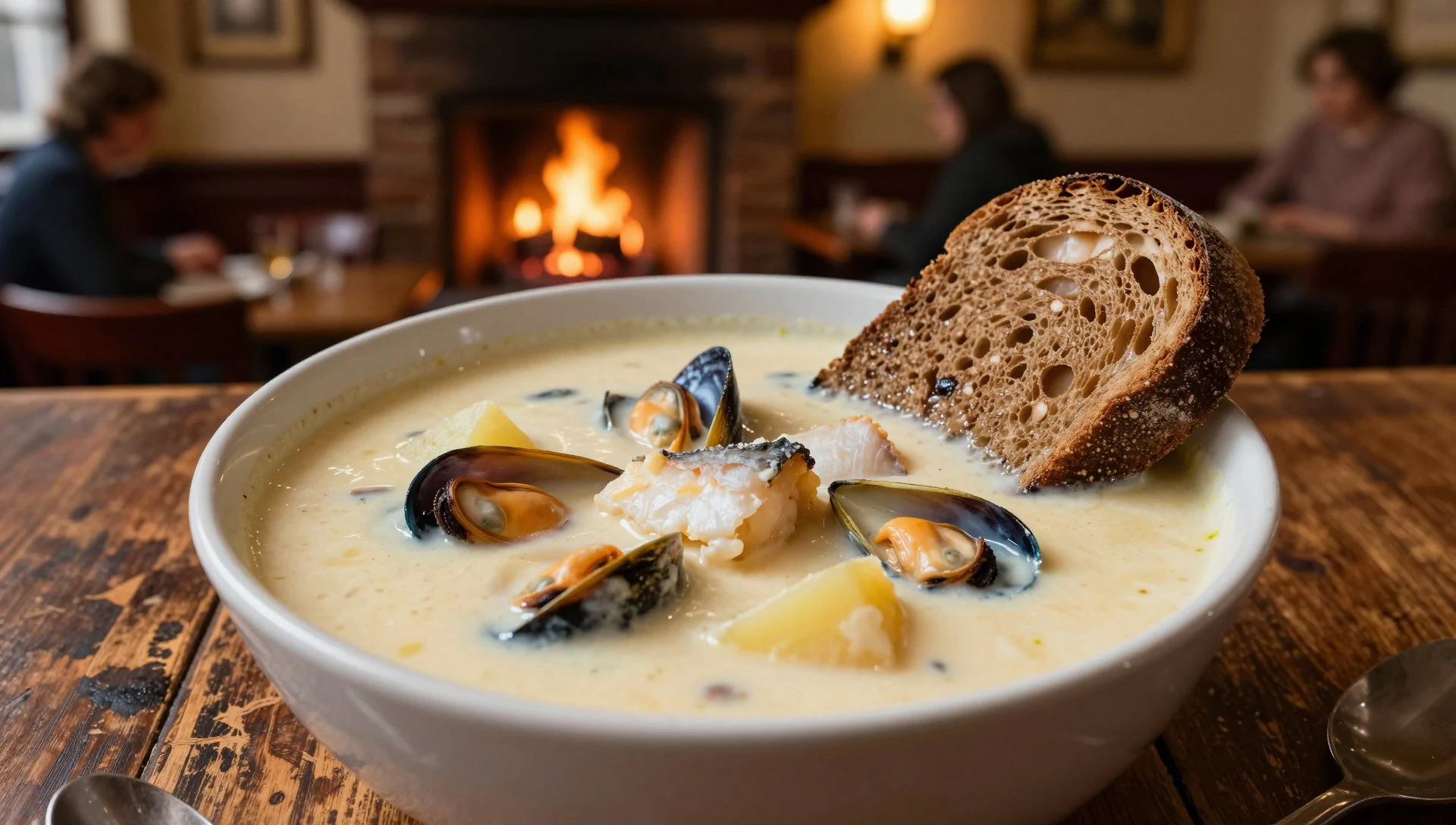
- Connemara lamb — Pubs and family-run restaurants across Connemara
Lamb from hill sheep that graze on heather and bog grasses, usually roasted or slow-cooked into a stew. The meat is lean and well flavoured. Look for it on pub menus and in family-run restaurants rather than anywhere flashy.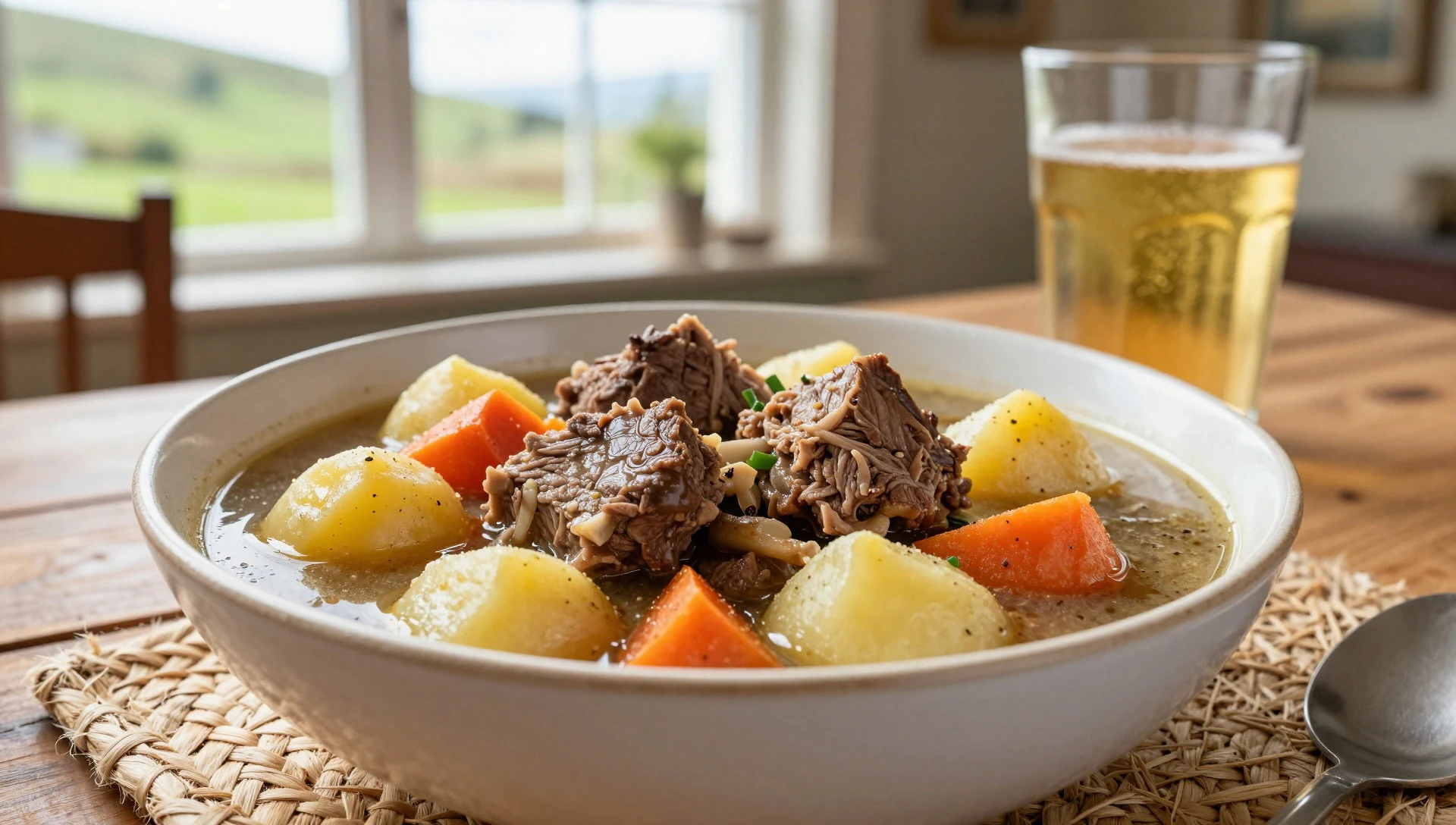
- Irish brown bread with butter — Cafés, guesthouses and village bakeries
Dense, slightly sweet wholemeal soda bread, baked fresh and served with local butter, often alongside soup or smoked fish. It is simple and filling, and a good thing to ask about at a café or guesthouse breakfast table. - Fresh fish and chips — Takeaways and harbour-side eateries on the coast
Whatever came off the boats, fried in batter and served hot with chips, usually eaten from paper on a harbour wall or at a seaside table. It tastes best near the coast and when the weather is not too windy. - Local craft beer — Village pubs across Connemara and Galway city
Connemara Brewing Company, at Carraroe, makes beers for the area, and Galway Hooker is the brewery near Galway city. Both turn up in pubs through the region, and a pint beside a turf fire is hard to beat. The county has no distillery.
Plan it
Best time. Late May to June and September are usually the best compromise, with long daylight and fewer crowds than midsummer. The Atlantic means rain and wind can arrive in any month, so pack for changeable weather whenever you go.
How long. 2–3
Getting there. Galway city is the hub: check its airport options, or take a train from Dublin Heuston or Limerick Colbert, or a bus from Dublin, Limerick or Cork. From Galway the last leg west to Letterfrack and the park entrance is by road, and a car is by far the easiest way to reach it. Check Bus Éireann, CityLink and GoBus for current services, and the official site, https://www.nationalparks.ie/ga/connemara/, for park access.
Budget. mid
Tips
- Check the official park site before you go for opening arrangements and trail conditions
- Start walks early, because weather often turns later in the day and daylight is short outside summer
- Carry water, snacks and a map, as mobile signal can be patchy on the hills
- Book accommodation ahead for summer weekends, especially in Clifden and Letterfrack
- Bring cash as well as a card for small village shops and pubs
Etiquette
- Stay on marked paths to protect fragile bog and heath
- Close farm gates behind you and keep dogs under control near livestock
- Keep a distance from ponies and do not feed them
Nearby
Sources
- Wikidata Q1126279 (CC0)
- Wikipedia: Connemara National Park (rev 1362715957) (CC BY-SA 4.0)
- Wikivoyage: County Galway (rev 5389859) (CC BY-SA 4.0)
- Photo: Twelve Bens in Connemara Ireland — Neo7 (CC BY-SA 1.0)
- Photo: Pollacappul Lough - Lakeshore walk — Stipa Jennifer (CC BY-SA 4.0)
- Photo: Barren landscape in the Connemara national park — Gnu-Bricoleur (CC BY 4.0)
- Photo: Kylemore Abbey in the Connemara National Park — Dieglop (CC BY-SA 4.0)
- Photo: Connemara National Park, Connemara Ponies — Simone (CC BY 2.5)
- Photo: Connemara National Park, Connemara Pony mare and foal — Simone (CC BY 2.5)
- Photo: Connemara - National Park — Sabine Holzmann (CC BY 3.0)
- Photo: Connemara — Dieglop (CC BY-SA 4.0)


