Colca Canyon
Colca Canyon, Peru
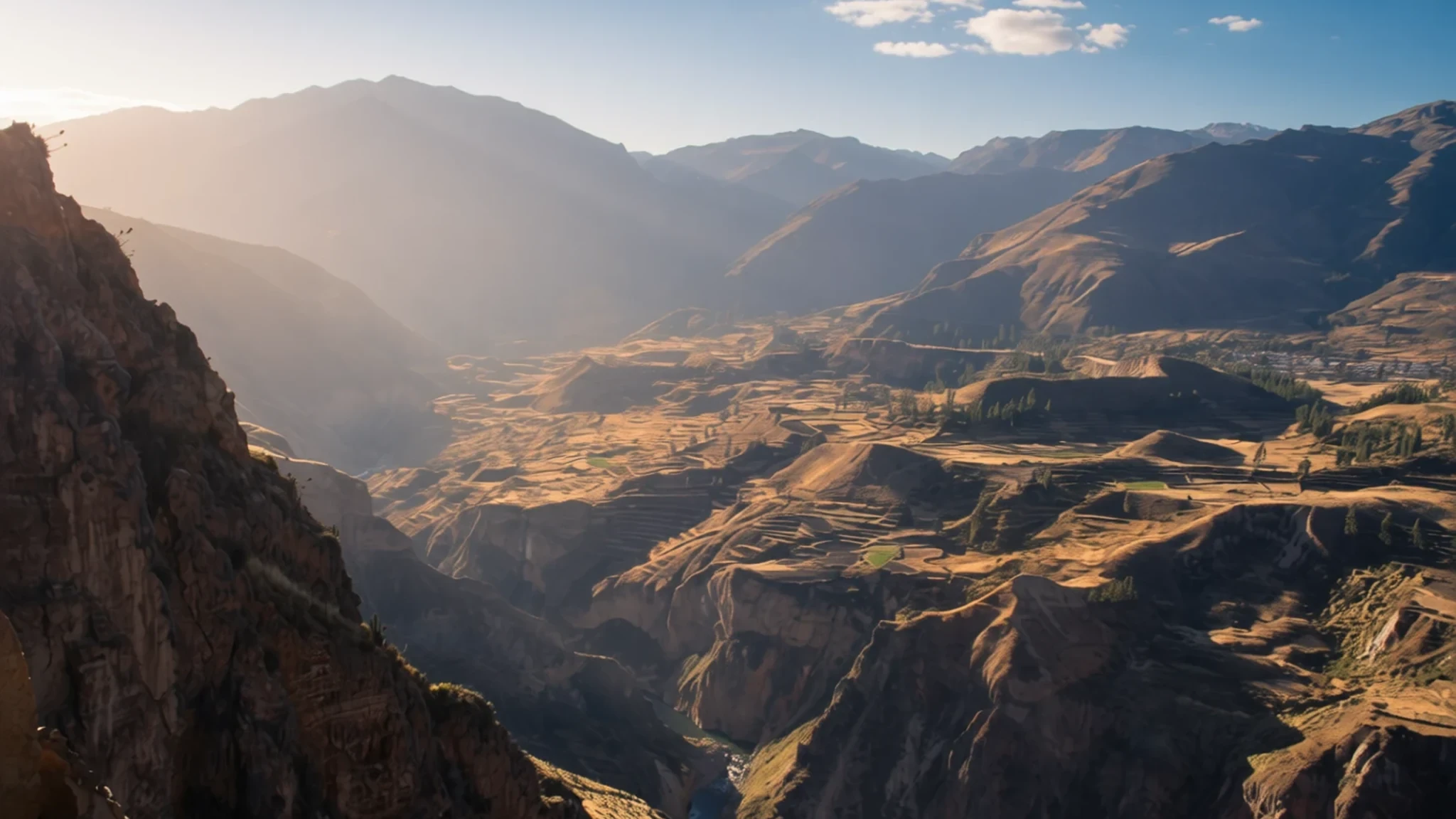
A deep Andean gorge in southern Peru where terraced farming, soaring condors and villages with centuries of history share one long valley.
The place
Colca Canyon cuts through the Andes of southern Peru, roughly 160 kilometres north-west of the city of Arequipa. It is carved by the Colca River, and at a depth of about 3,270 metres it ranks among the deepest canyons in the world. Its length is around 70 kilometres, and it is not one continuous drop. Upstream the river is called the Colca Valley, and only lower down does it take on the name of the canyon.
Travellers arriving from Arequipa climb onto a high plateau before dropping towards the river. The valley floor sits at roughly 2,000 metres, while the rim rises to between 3,000 and 4,000 metres. Terraces cling to the slopes, and the green patch of the Oasis at the bottom looks almost unreal against the bare rock.
Chivay sits near the middle of the valley and is the usual base, with the rim villages of Yanque and Cabanaconde further along. Around 120,000 visitors come each year, which makes Colca Peru's third most-visited destination. That is busy by Andean standards, yet the villages remain working places. Families farm, herd animals and repair their terraces, and the rhythm of the day follows the sun rather than the tour schedule.
Nights are cold, afternoons on the trails are hot, and the altitude is noticeable from the first hour of walking.
Its story
Colca Canyon's history reaches back well before the Incas. In the pre-Inca centuries two peoples shared the valley: the Quechua-speaking Cabanas, who may have descended from the Wari culture, and the Aymara-speaking Collaguas, who had moved north from the Lake Titicaca region. The Incas arrived around 1320 and tended to draw local groups in through marriage rather than conquest.
The Spanish came in 1540 under Gonzalo Pizarro. Within a few decades colonial authorities ordered scattered households to move into a small number of central settlements, a policy known as the Reductions. Those settlements are still the main towns of the valley today. Franciscan missionaries built the first chapel in 1565 and the first church in 1569, and the plazas and churches of the towns still reflect that colonial layer.
One local tradition describes the Collagua burying their dead in holes dug into the steep valley walls and marking each one with red paint. Faint red stains can still be seen from the road that runs along the top of the cliffs, and they remain a reminder of how the high slopes were once used.
Roads arrived late. Before the 1940s, no usable track connected Arequipa with Chivay. A route was finally constructed to support the silver and copper mining in the area. Further roads followed in the 1970s with the Majes hydroelectric project, which diverted water from the Colca River to irrigate fields in the Majes region. In May, a Polish team led by Andrzej Pietowski rafted the river below Cabanaconde for the first time and suggested the valley might be the deepest canyon on Earth.
What to see
- Cruz del Cóndor — Canyon rim, near Cabanaconde
The most popular place to watch Andean condors, which ride the rising warm air above the canyon walls. Sightings are best in the morning, roughly between seven and nine, before the heat builds and the birds settle. Tour coaches arrive in numbers, so expect a crowd at the main lookout. It sits a drive away from Cabanaconde, and you should check the official site for current access arrangements.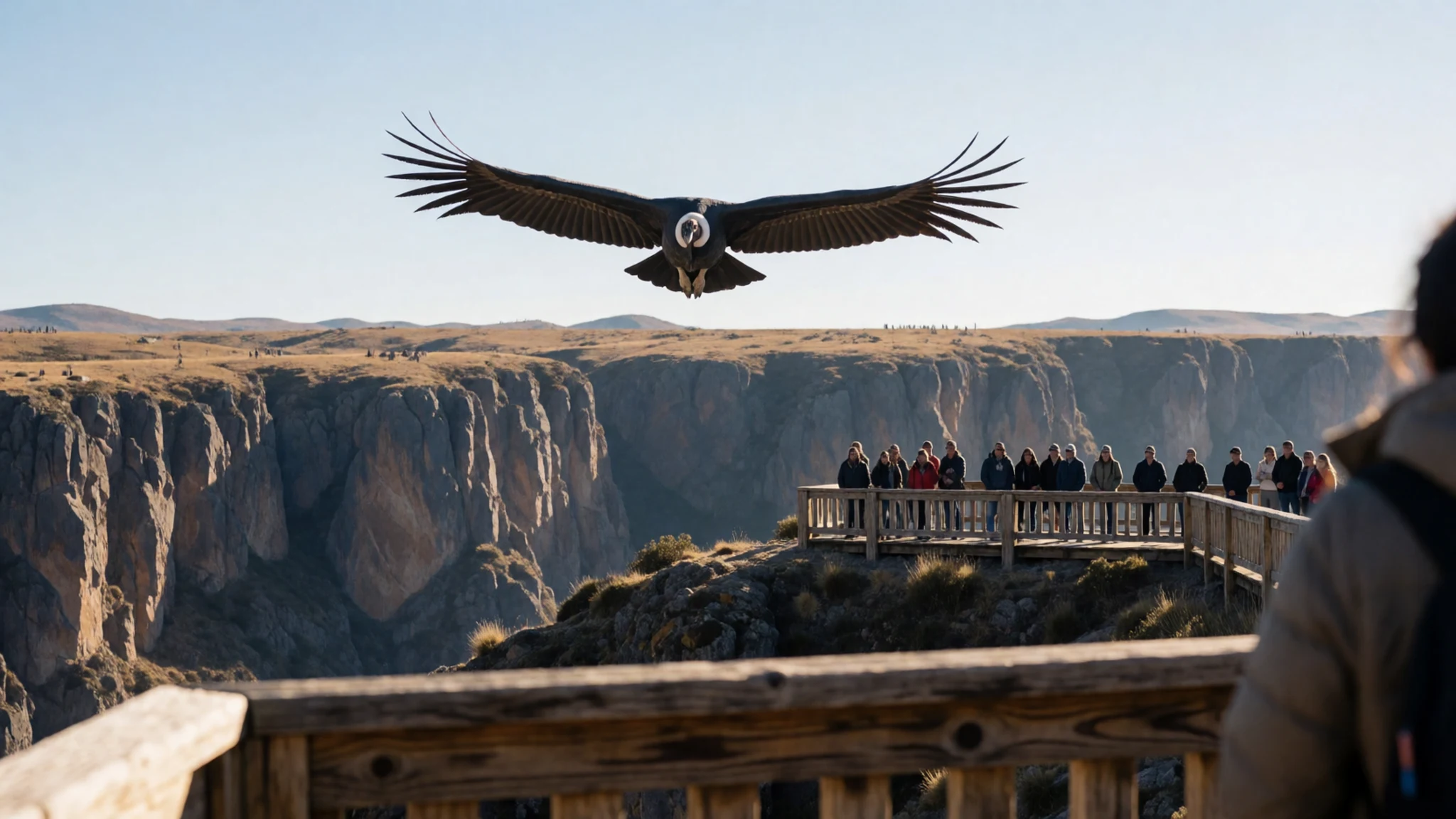
- Rim viewpoints by bicycle — North rim road, Cabanaconde to the condor point
Cycling back to Cabanaconde after the condor lookout lets you stop at several viewpoints that are far quieter than the main one. Plan the ride as a half-day with breaks, carry plenty of water, and keep an eye on the time so you are not caught on the road in the afternoon heat. The views along the north rim are some of the least crowded in the valley.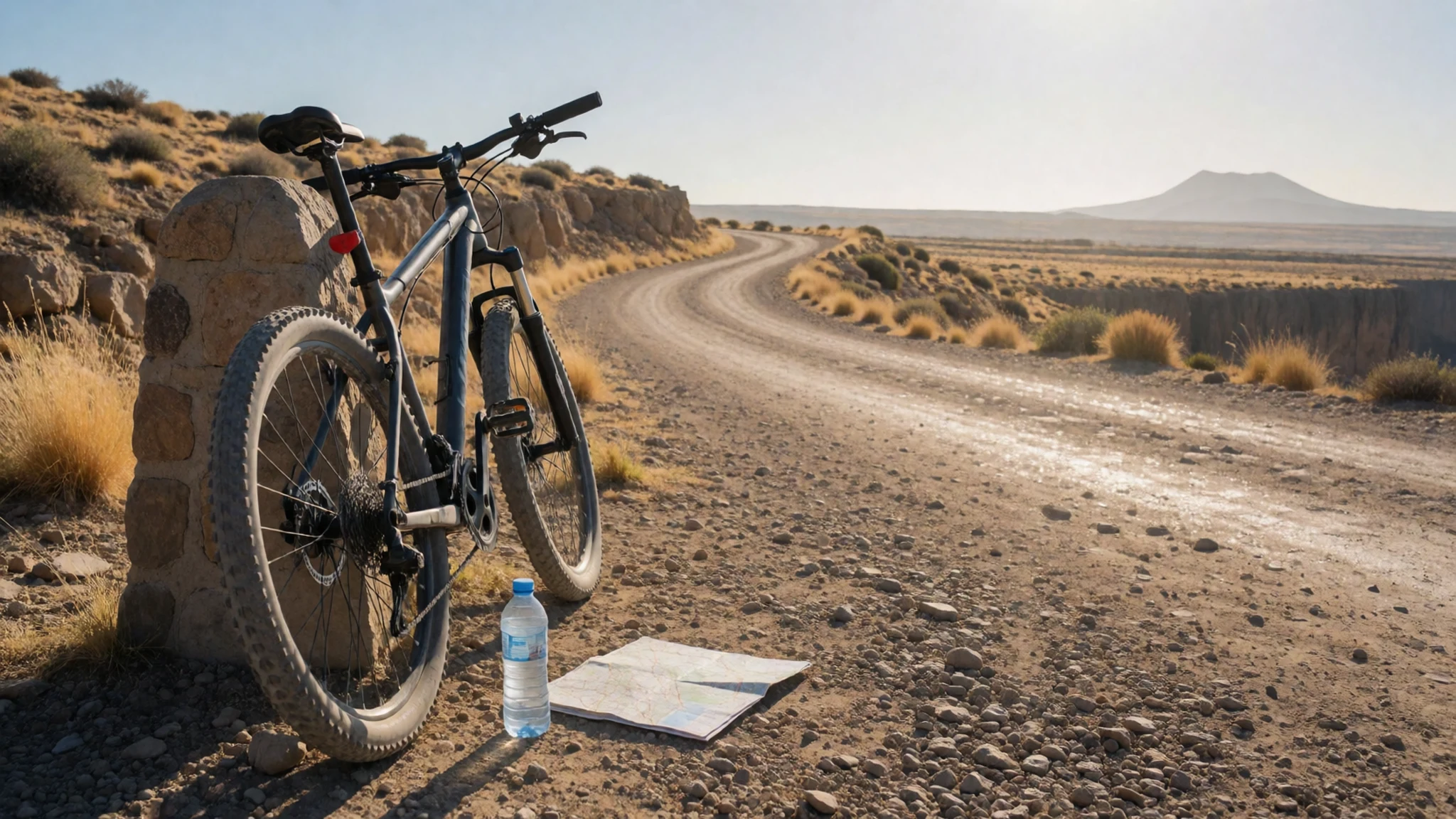
- La Calera Thermals — Near Chivay
Hot spring pools of varying size and temperature make a good end to a day of walking and altitude. Lockers are provided and refreshments are sold on site, so you can leave your gear safely while you soak. Shared minibuses called collectivos leave the main square in Chivay when they are full, which is the usual way to reach the springs. Bring a towel and check the official site for current opening arrangements.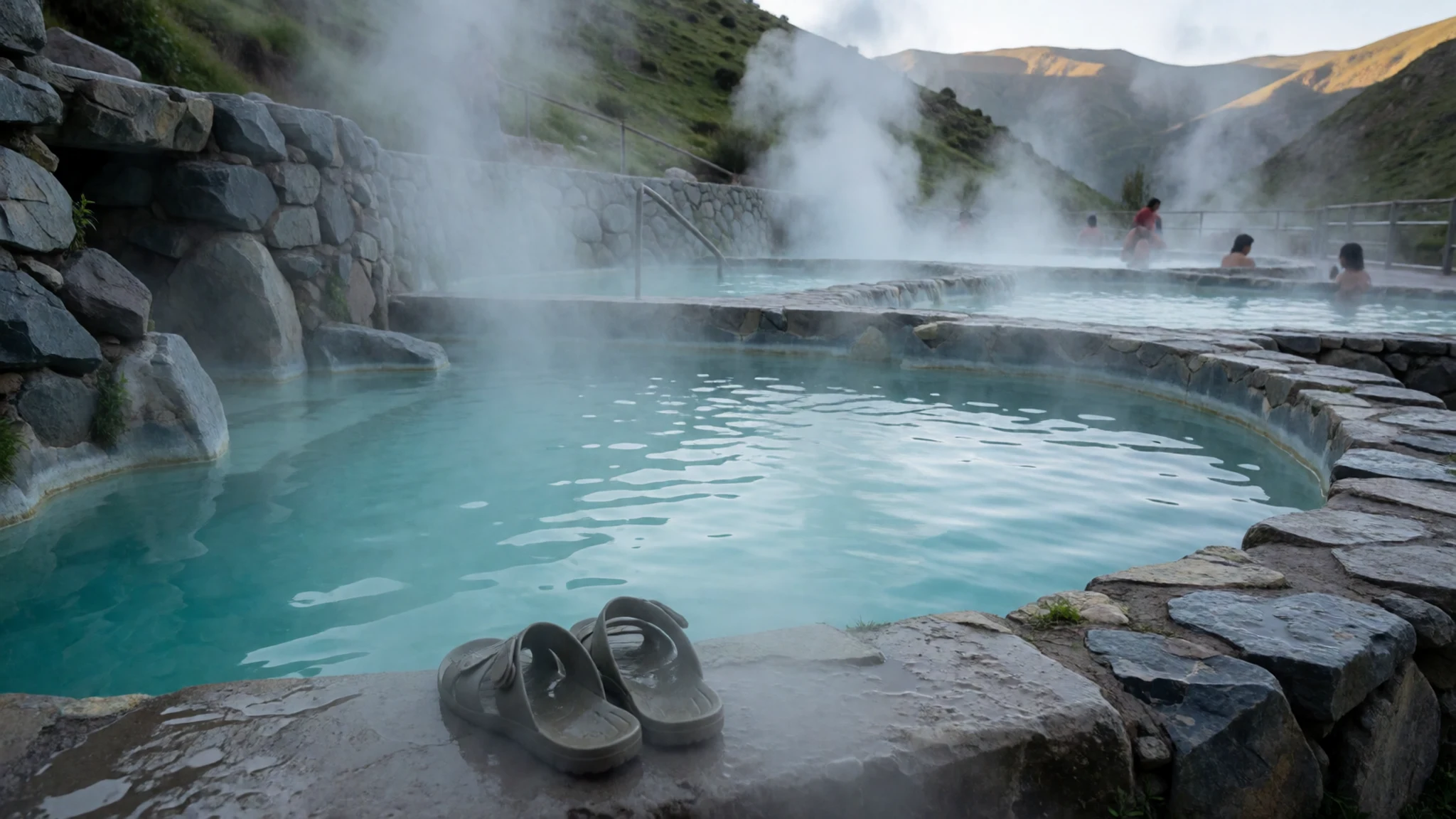
- Yanque museum — Yanque village plaza
A small museum beside Yanque's plaza de armas, run by a Catholic university, that explains the valley's history and cultural heritage. It is compact enough to fit into a short visit and gives useful background before you walk the terraces or visit the villages. Entry is inexpensive, but check the current fee locally before you go.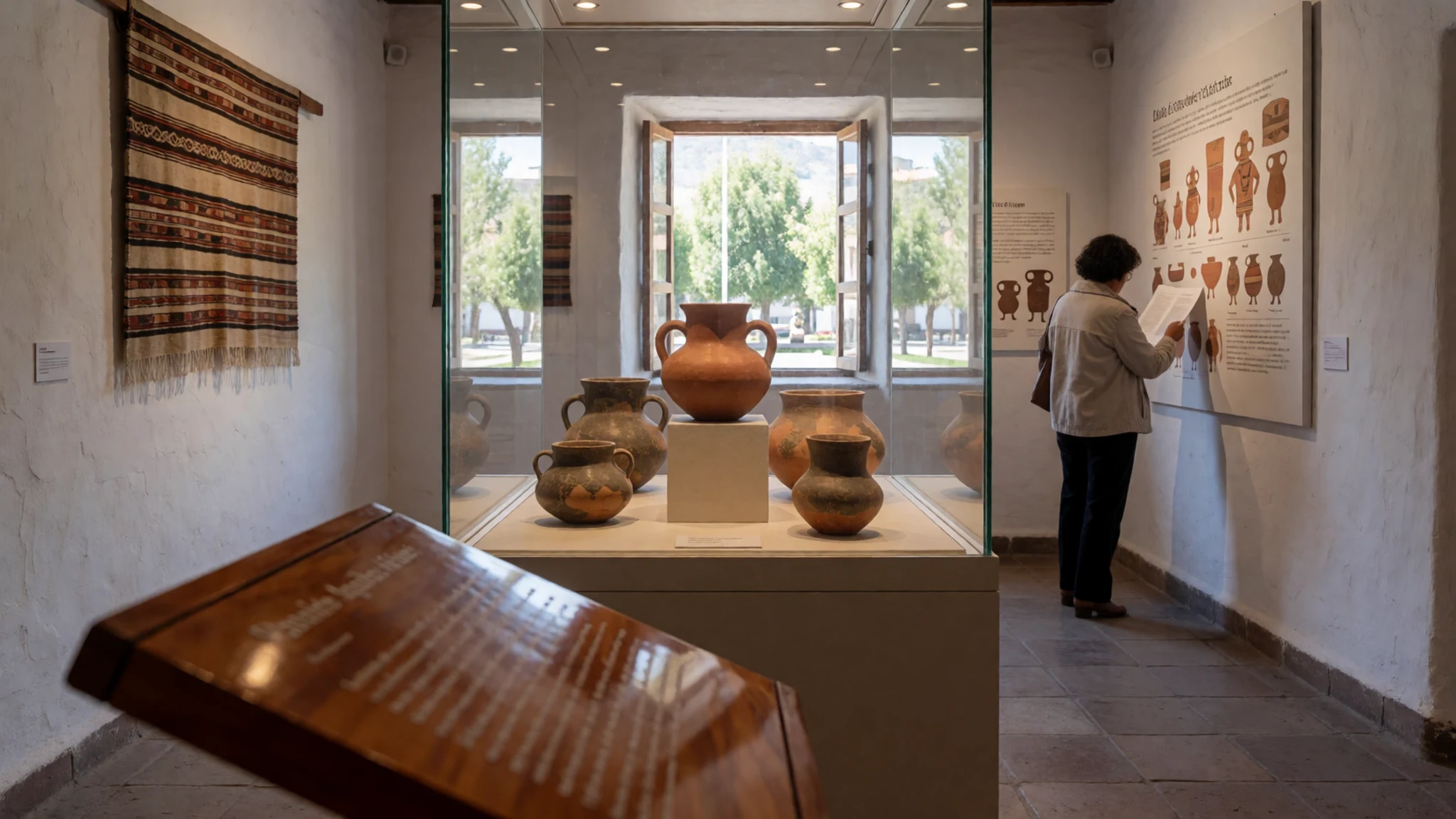
- Oasis de Sangalle — Canyon floor, reached on foot or by mule
The green oasis on the canyon floor is a lush stop after the dry slopes above it. It is also the usual starting point for mules that carry walkers back up the canyon if they are injured or simply tired. Tap water here is high in sulphur and is not safe to drink, even with purification tablets, so buy sealed bottles before you descend.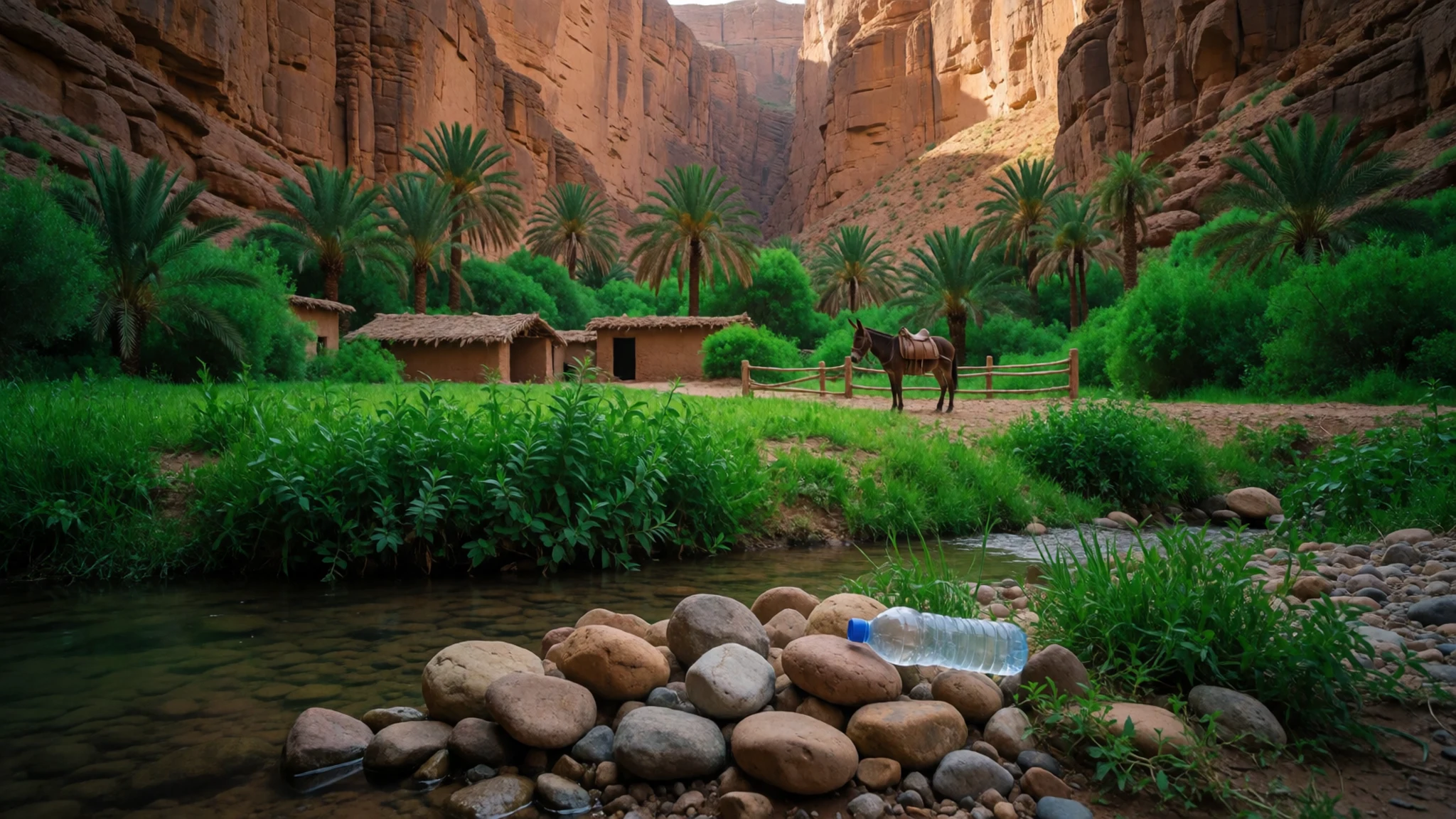
Culture
Colca Canyon is a working landscape as much as a viewpoint. Most people you meet in the villages belong to Collagua or Cabana families who farm the terraces, keep llamas and alpacas, and still speak Quechua or Aymara at home. Older women often wear traditional dress in everyday life, so it is part of village routine rather than a costume staged for visitors.
Community life is closely tied to the Catholic calendar, and the churches and plazas of the towns sit at the centre of local festivals. People generally welcome visitors, but many tire of being treated as a backdrop. Ask before you photograph someone, especially a woman or a child, and accept a polite no without argument. In places, people selling textiles may expect payment for a photograph, so agree the price first.
The markets and plazas in Chivay and Yanque are good places to buy weavings. Bargaining is normal, but keep it good-humoured and do not haggle over small amounts. On the terraces, stay on the paths, keep off the stone walls that hold the soil in place, and leave crops and livestock alone.
Ask before you photograph anyone in the villages, and never pay to photograph a child.
What to wear
Colca Canyon's traditional dress is worn most clearly by women in the Collagua and Cabana communities. Its core is a set of layered, pleated wool skirts, embroidered blouses, a woven shawl and a hat, most often a bowler-style hat of the kind associated with Andean women across the highlands. The textiles are spun and woven from alpaca and sheep wool, and the bright colours and patterned borders signal village identity. You will see the fullest outfits at festivals, market days and church occasions, while daily dress is often simpler.
What people wear now is a mix. Many younger residents wear jeans, fleece jackets and trainers, and keep the traditional outfit for fiestas and formal events. Men are more likely to wear Western clothing every day. Markets sell both machine-made clothing and hand-woven goods, so check the labels if you want genuine textiles.
For a visit, dress in layers. Nights and early mornings are cold, while the trails get hot by midday, so a warm fleece, a sun hat, sunglasses and sunscreen are all useful. Wear sturdy closed shoes with good grip, because the descents into the canyon are steep and loose. In churches and village settings, cover shoulders and knees, and leave very short shorts for the hotel pool.
What to eat
- Trucha — Family restaurants on the Chivay main square and in the rim towns
Trout from the rivers and reservoirs of the highlands, usually grilled or fried whole and served with potatoes and salad. It is a dependable lunch choice in the valley towns, and it is a good way to eat something local without much choice to make.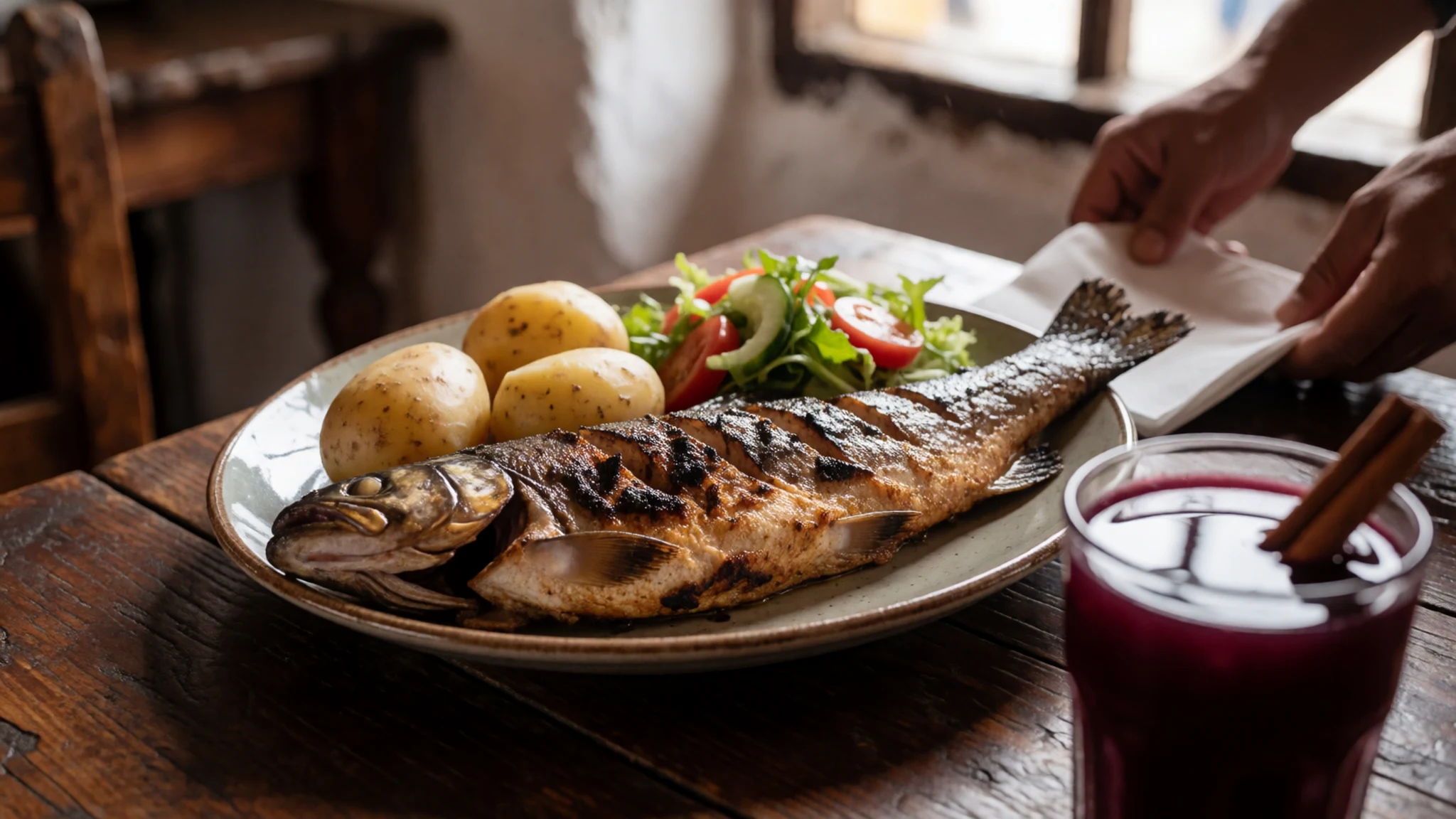
- Rocoto relleno — Lunch menus in Chivay and Cabanaconde eateries
A large, mild-to-hot pepper stuffed with seasoned meat, vegetables and egg, then baked until soft. It is a Peruvian highland classic and is often served with rice. It is worth ordering once in a village eatery, where the recipes tend to be home-style.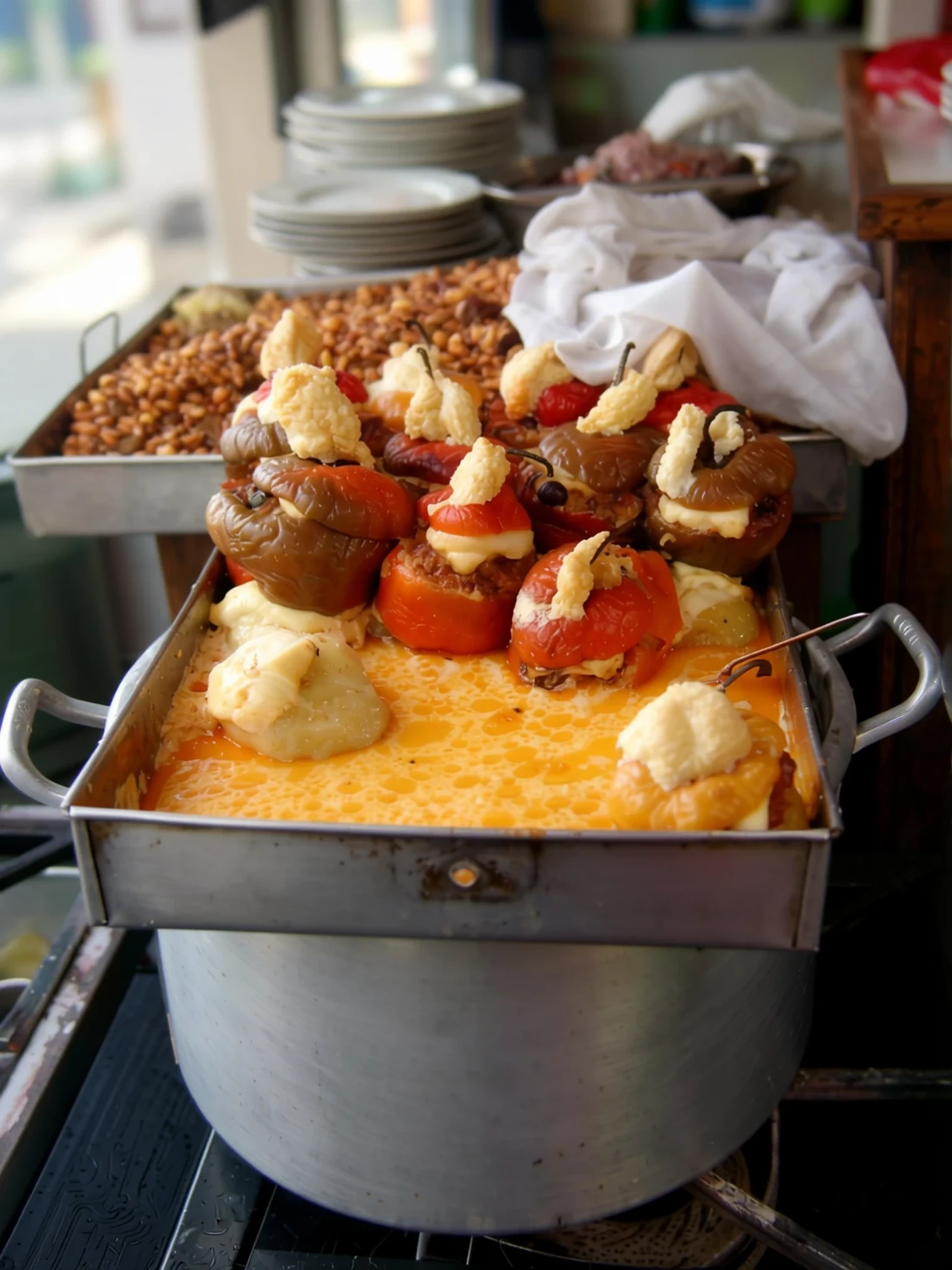
- Chairo — Breakfast and early lunch at small local eateries and market stalls
A warming highland soup of dried potatoes, mutton and vegetables, sometimes thickened with grains. It suits cold mornings after a chilly night, and it is traditionally eaten early in the day. - Alpaca steak — Restaurants around the Chivay plaza
Lean alpaca meat, usually grilled thin and served with potatoes, rice or salad. It is leaner than beef and has a mild flavour, and it is a regional speciality that appears on most tourist-facing menus in the valley. - Pachamanca — Festivals and family events; some guesthouses prepare it with notice
Meat, potatoes and other vegetables cooked underground on hot stones, flavoured with herbs. It is a feast dish, traditionally reserved for celebrations, so ask a host or a guesthouse about a family gathering when you can.
Plan it
Best time. The dry season, roughly May to October, gives the clearest skies and the most reliable walking. The wet months from December to March bring rain and muddy trails, though the valley stays green and quieter. Condors are most active in the morning in any season.
How long. 2–3
Getting there. Fly into Arequipa, then take a bus. The trip to Chivay takes about three and a half hours on a paved road that climbs several high passes, and through buses to Cabanaconde take around six hours, usually with a stop in Chivay. Private buses from Cusco run only on certain days and cost more than the public services.
Budget. mid
Tips
- Go to the condor lookout early in the morning, when the birds are most active and the crowds are smaller.
- Carry more water than you think you need, since the trails are hot in the afternoon and the altitude makes climbing tiring.
- Carry cash for village shops, small museums and markets, and do not count on card payment in the smaller places.
- Book beds in Chivay or Cabanaconde for simple, low-cost rooms, and check the official site for current transport and entry arrangements.
Etiquette
- Ask before you photograph people, especially in villages.
- Stay on marked paths and keep off the terraces and fields.
- Dress modestly when you visit churches.
Nearby
Sources
- Wikidata Q1107685 (CC0)
- Wikipedia: Colca Canyon (CC BY-SA 4.0)
- Wikivoyage: Colca Canyon (CC BY-SA 4.0)
- Colca Canyon Puno (photo 01) (CC BY-SA 2.0)
- Colca canyon panorama (photo 02) (CC BY 3.0)
- Colca Oasis Stevage (photo 03) (CC BY-SA 1.0)
- Colca souvenirs (photo 04) (CC BY-SA 2.5)
- Colca Canyon (photo 05) (CC BY-SA 2.0)
- ValleColca lou (photo 06) (CC BY 3.0)
- Colca Canyon (photo 07) (CC BY 3.0)
- Inca tombs in Colca Canyon (photo 08) (CC BY-SA 4.0)


