CN Tower
CN Tower, Canada
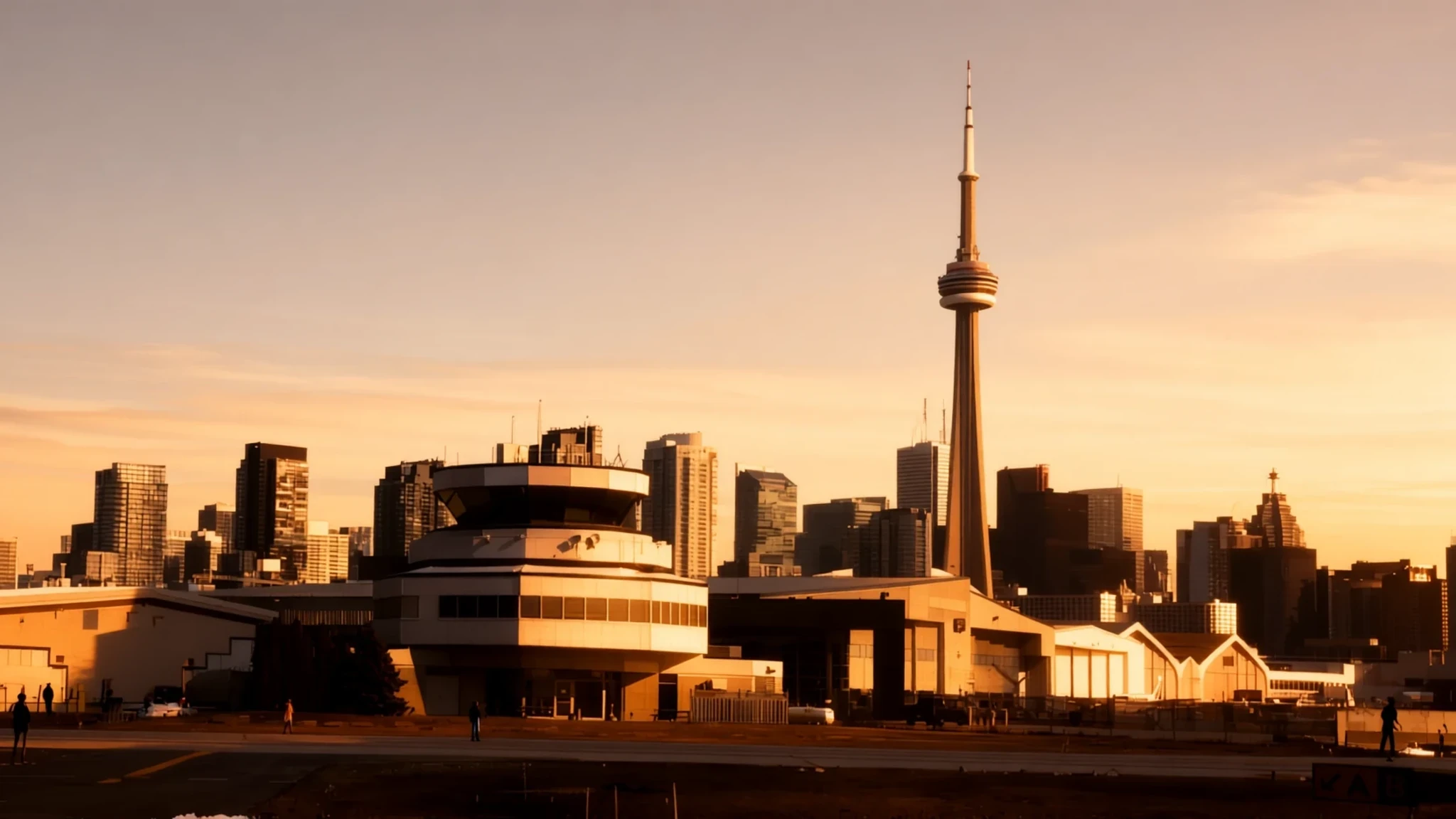
Toronto's skyline icon, with observation decks high above the city and wide views over Lake Ontario.
The place
The CN Tower stands in downtown Toronto, Ontario, on ground that was once the Railway Lands, a stretch of rail sidings south of the city's core. At 553.3 metres (1,815.3 ft) high, it serves as a communications mast and an observation tower, and for decades it has been the image most people carry of Toronto's skyline. Its name recalls Canadian National, the railway company that commissioned it. When the railway prepared for privatisation in 1995, it passed the tower to the Canada Lands Company, a federal Crown corporation that manages government property.
For 32 years, from soon after it opened until 2007, it held the record as the world's tallest free-standing structure. Taller towers have since overtaken it, most famously the Burj Khalifa in Dubai, and a Chinese rival later claimed the title of tallest tower. It still stands above every other free-standing land structure in the Americas and across the wider Western world. In 1995 the American Society of Civil Engineers named it one of the modern Seven Wonders of the World, and it also belongs to the World Federation of Great Towers.
Most of the experience sits in the upper levels. Several observation decks give views over the lake, the islands and the grid of streets, and a revolving restaurant turns at roughly 350 metres. The tower draws more than two million international visitors a year, and an entertainment complex at its base adds attractions beyond the lift ride. Toronto itself has over 3.2 million residents, and its wider metropolitan area holds 7.1 million people, so the tower sits at the heart of a very large city.
Its story
The CN Tower began as an idea from Canadian National Railway, which wanted a large platform for broadcast signals serving the Toronto area. The company also hoped it would show what Canadian industry and engineering could achieve. Over several years the proposal grew from a simple broadcasting mast into a much larger scheme, and it was eventually approved as an official project after a long period of planning.
The site was the Railway Lands, a big switching yard that had become redundant when a newer yard opened north of the city. The tower was meant to form part of a wider development called Metro Centre, the idea behind what later became the CityPlace neighbourhood south of Front Street. A team that included NCK Engineering as structural engineer, John Andrews Architects and several other firms shaped the design and its construction.
The timing mattered. Toronto was growing fast, and its downtown filled with glass-and-steel office towers. Their reflective surfaces scattered broadcast signals, so the city's transmitters needed antennas at least 300 metres tall to reach viewers reliably. The concrete shaft rose in stages, and heavy segments of the upper structure, including the main pod, were lifted into position. Helicopters carried several of those pieces, a dramatic sight over the downtown during construction.
The tower was completed in 1976 and opened to the public soon afterwards. Its role has since shifted from broadcasting to tourism, but the building still carries the story of a railway company that wanted a bold statement for a growing city.
What to see
- The observation deck — The CN Tower, downtown core
Visitors ride a high-speed lift to the main observation level, where windows face in every direction over the lake, the islands and the city grid. One of the decks has a glass floor that lets people look straight down to the street far below, which many find more unsettling than expected. The revolving restaurant sits at roughly 350 metres, so it fills quickly at busy times. Check the official site for current hours and ticket options before going.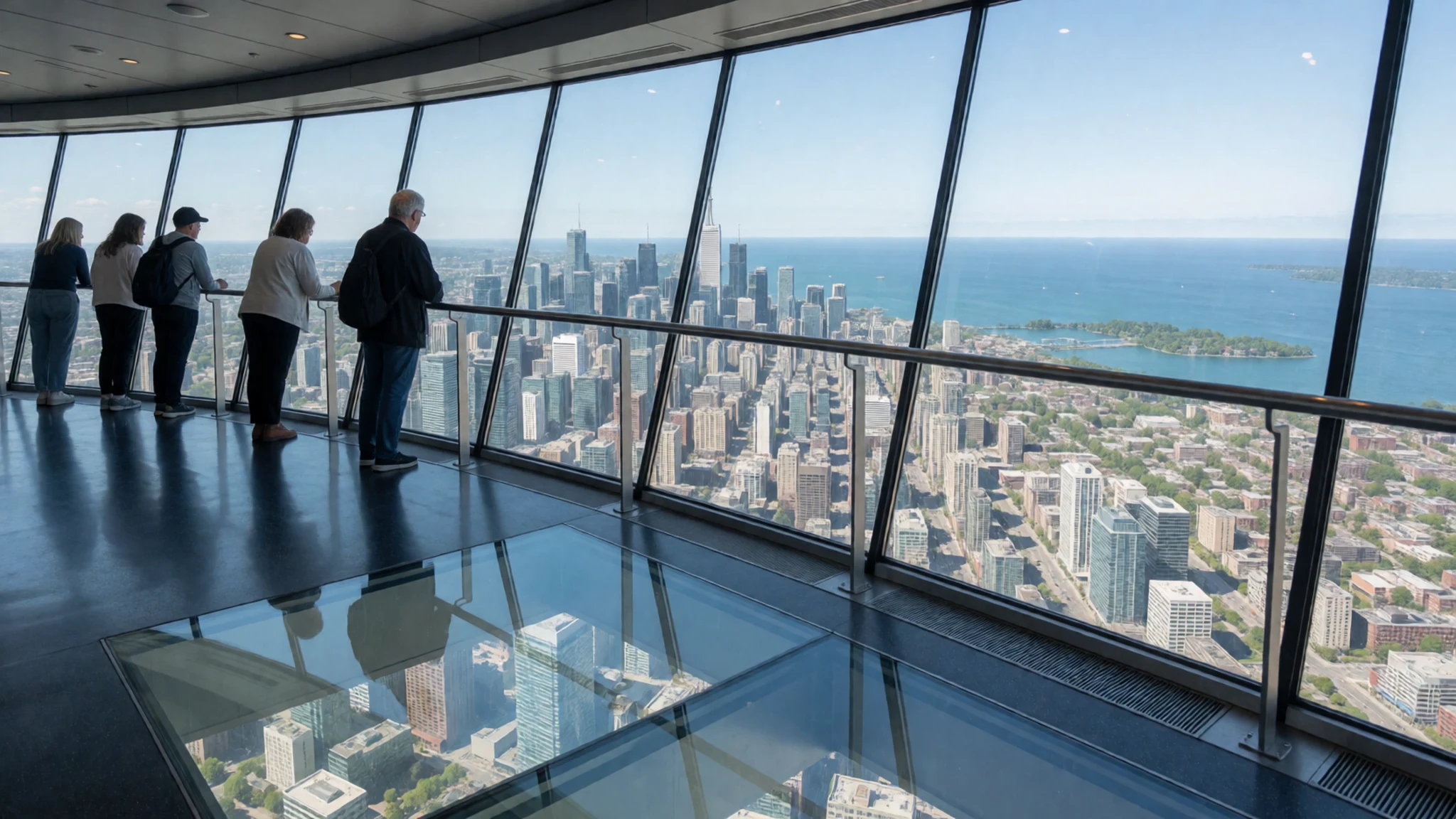
- Canadian National Exhibition — Exhibition Place, lakeshore west of downtown
The Ex is an annual fair held at Exhibition Place on the lakeshore west of downtown. It offers a funfair with the Midway, live entertainment, an international market, and agricultural exhibits including livestock. It is a busy, noisy late-summer event, so plan for crowds and bring comfortable shoes for long walks between the areas.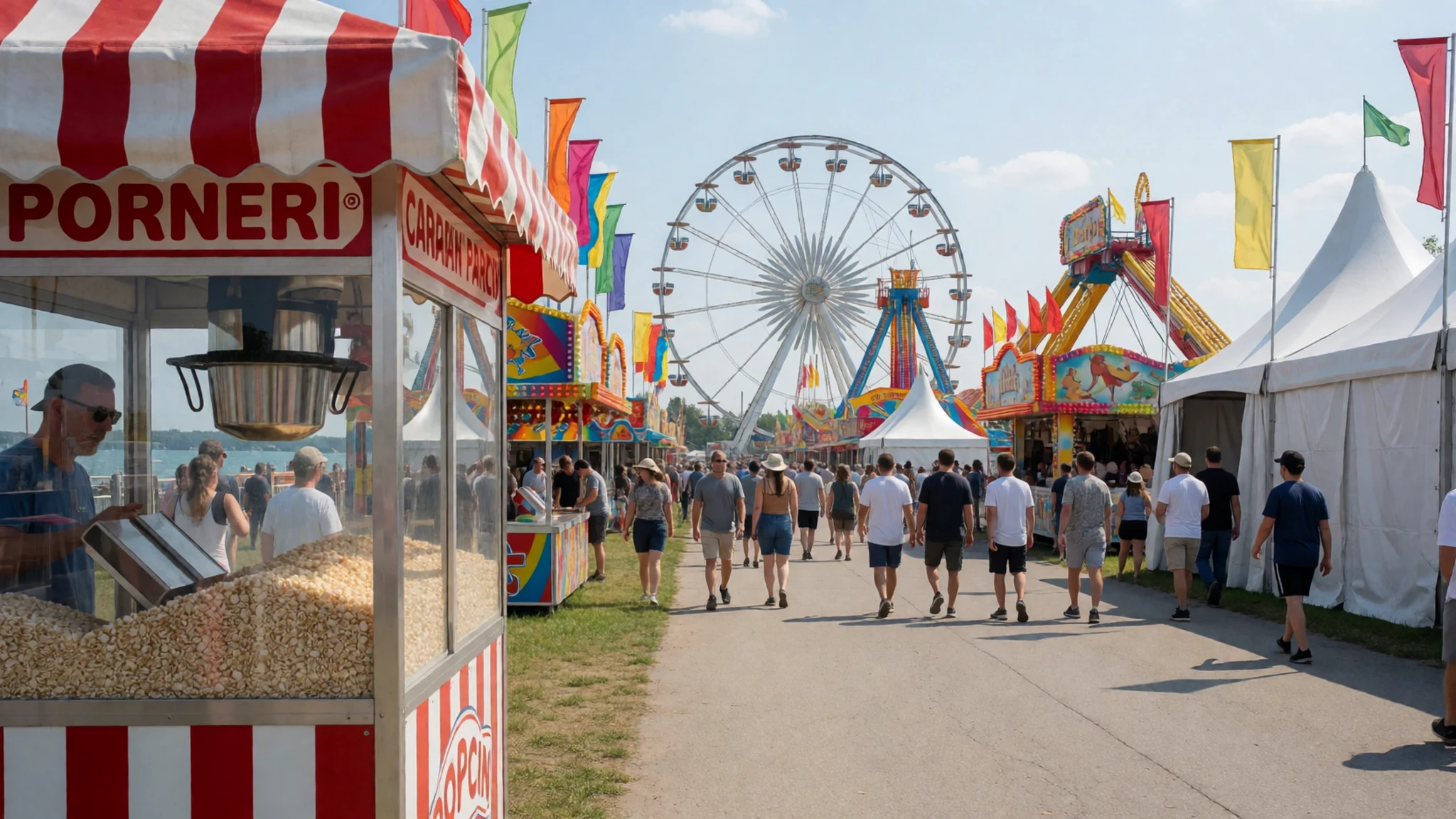
- Doors Open — Buildings across the city centre and neighbourhoods
Doors Open is a city-wide event held on the last weekend of May. It lets residents and visitors step inside more than 100 buildings that are architecturally, historically, culturally or socially significant, many of them normally closed to the public. It is one of the best ways to see Toronto's neighbourhoods beyond the tower and the waterfront.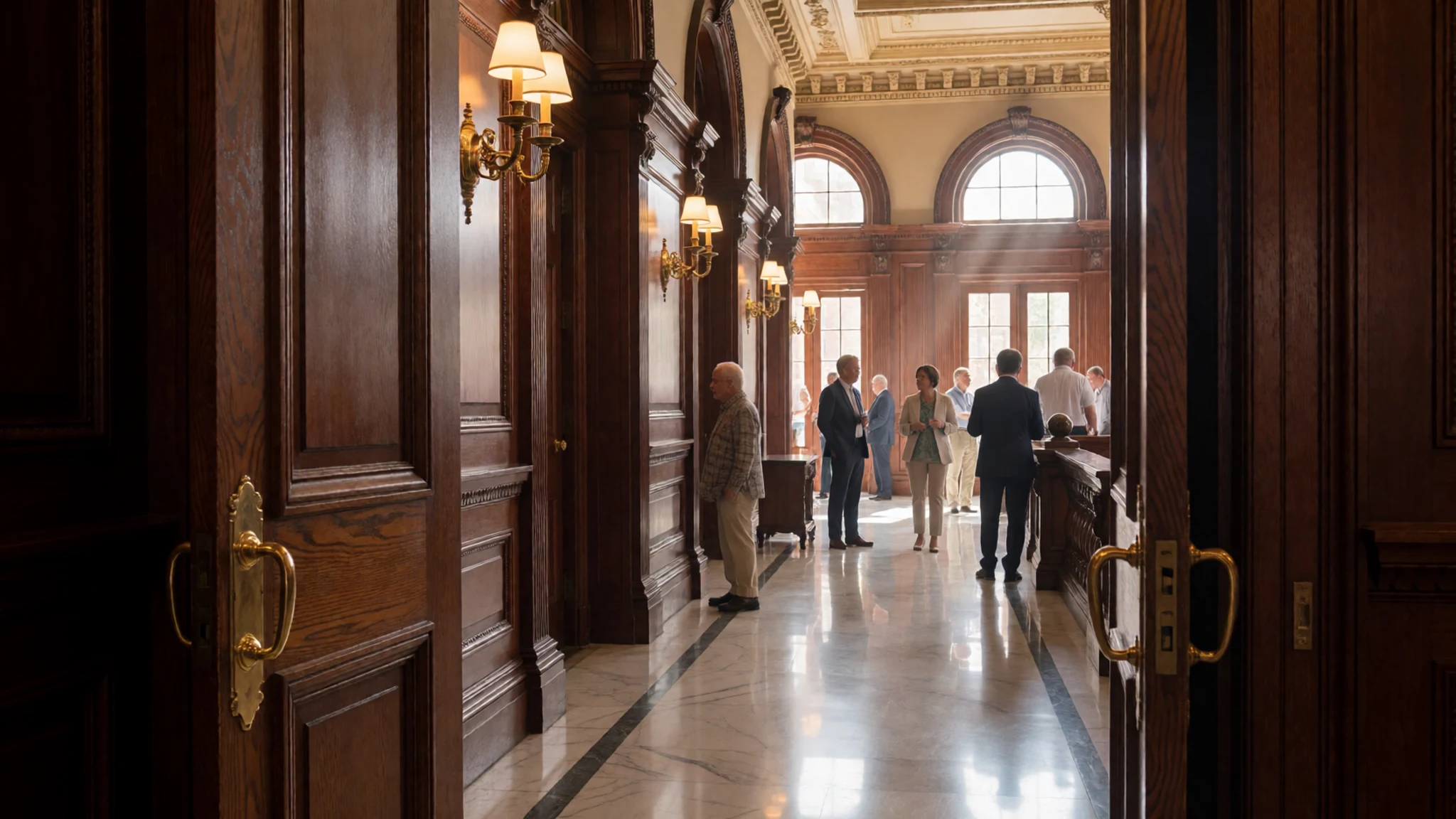
- Fan Expo Canada — Downtown convention district
Fan Expo Canada is a large comic and pop-culture convention, often compared with the big comic conventions in San Diego and New York. It draws over 150,000 attendees each year to celebrate superheroes, science fiction, fantasy and other popular franchises. Expect long queues and busy halls, and book hotel rooms well ahead if you plan to attend.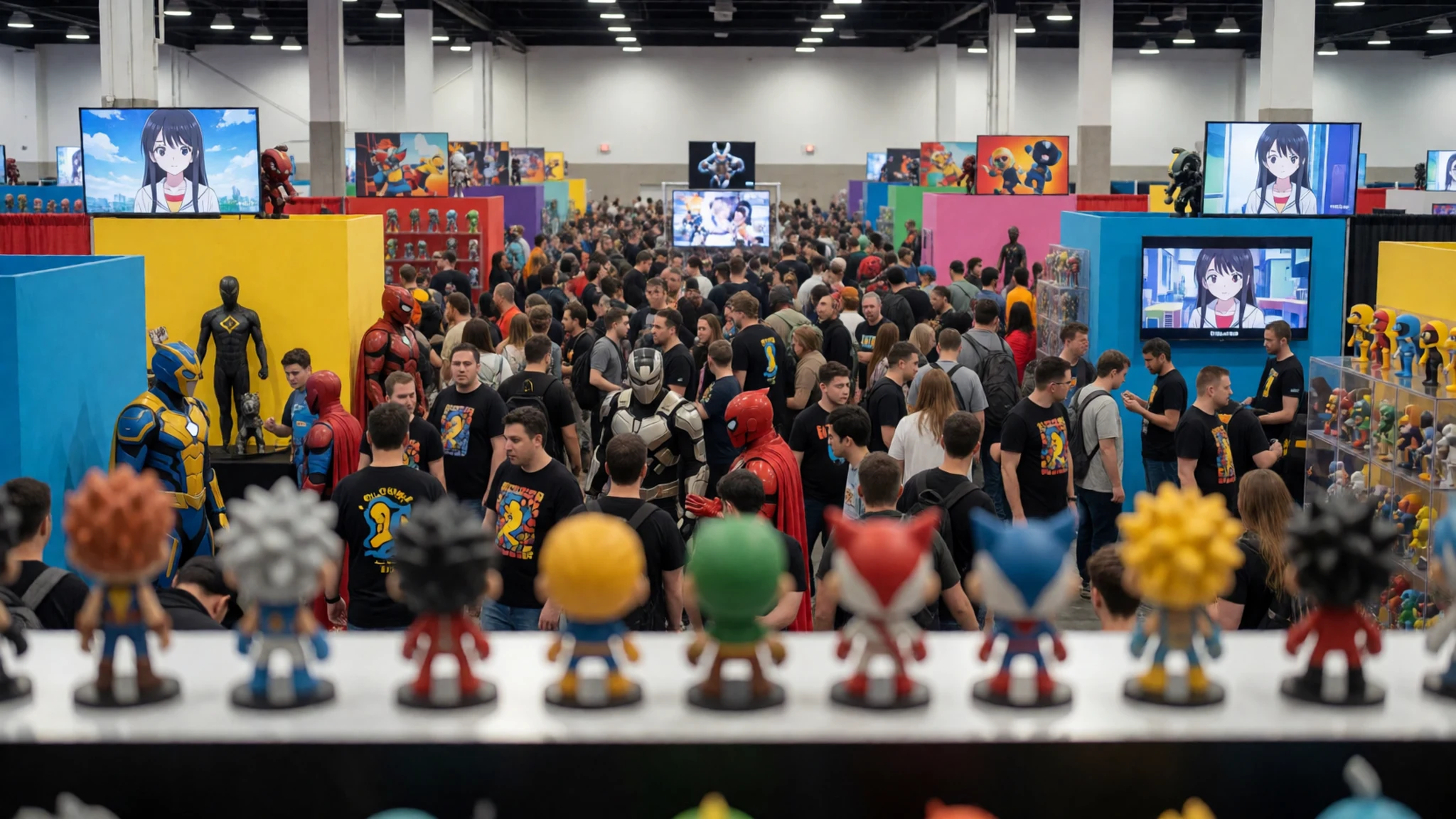
- Pride Toronto — Church and Wellesley area, downtown
Pride Toronto is the city's annual LGBT festival, and its parade is among the most popular events of the summer. Crowds fill the streets of the Church and Wellesley area and the wider downtown route. It is festive and welcoming, and it suits a visit in June, when the city is at its liveliest, though hotels fill quickly.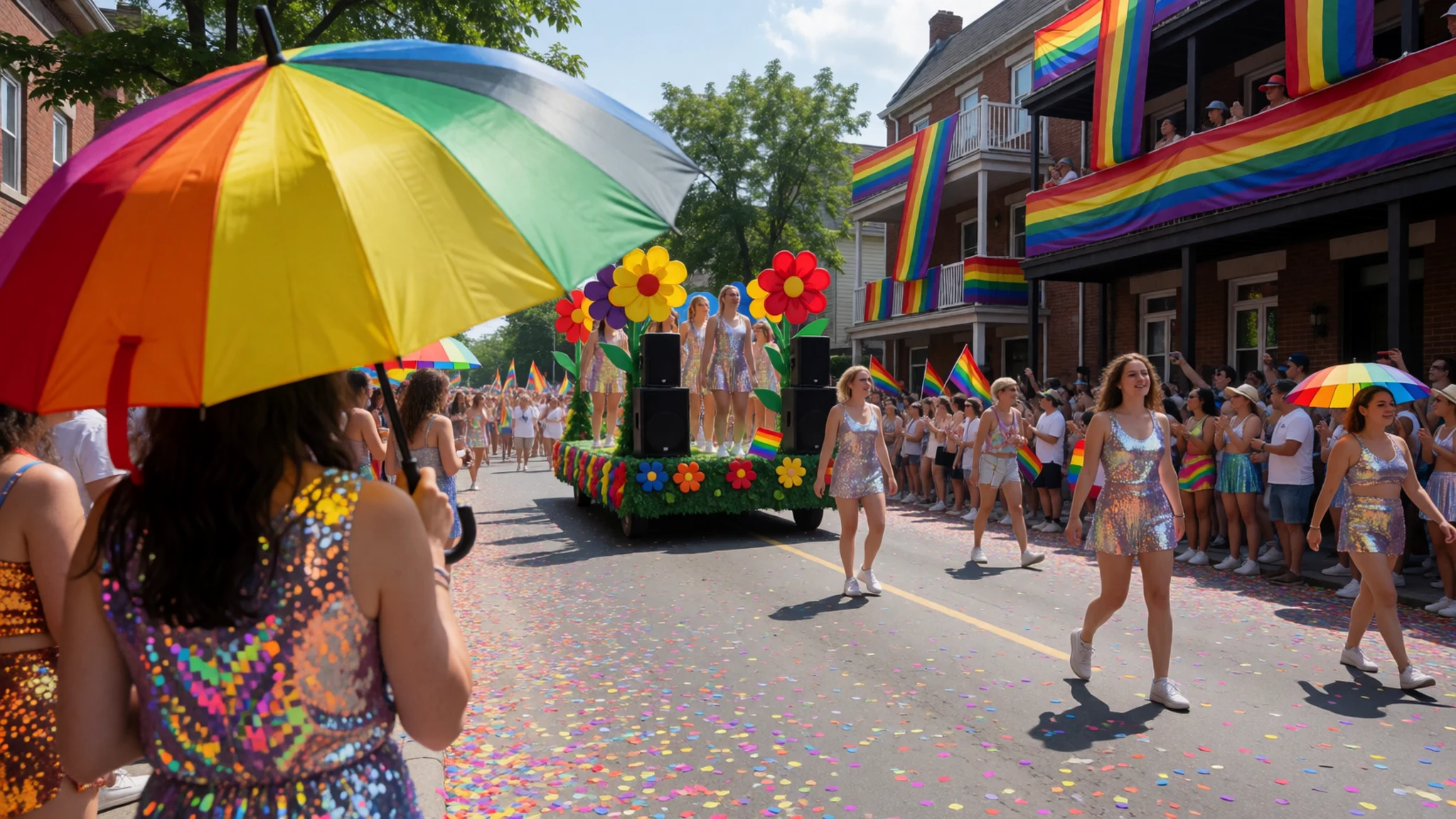
Culture
The CN Tower is both a broadcast mast and one of Toronto's most visited attractions, so it runs with the calm efficiency expected of a working site. Canadian habits of queuing and politeness shape much of daily life in the city, and visitors tend to notice the easy, friendly manner of staff and fellow travellers. Toronto is among the most multicultural cities in the world, and people of many faiths and backgrounds share the same streets, so public manners are relaxed but considerate. Indigenous peoples, including the Mississaugas of the Credit First Nation, have lived on this land for generations, and many organisations and events recognise that history. Indoors, speaking volumes are usually moderate, and on the upper decks people tend to keep their voices low so others can enjoy the views. Photographing the views and the city is fine, but ask before taking close portraits of other visitors. Keep to the queue lines at the entrance and follow staff directions to the right lift or deck.
What to wear
Toronto has no single traditional dress, because the city has been shaped by many peoples over a long time. The oldest textiles here come from Indigenous nations, including the Mississaugas of the Credit First Nation, whose regalia at powwows and ceremonies uses wool, cloth and ribbon, often with intricate beadwork. Ribbon skirts and embroidered shawls remain common at gatherings today. Many newcomer communities bring their own dress, from saris and salwar kameez to embroidered garments and kente cloth, which appears at cultural festivals across the city.
Day to day, people in Toronto dress for changeable weather. Jeans, sneakers and a light jacket cover most situations, with smarter office wear in the financial district and relaxed clothes in the western neighbourhoods. Layers matter, because the weather can turn quickly off the lake.
For a visit to the tower, dress in layers. Indoor spaces are cool and the upper decks can be windy, even on a warm day. Wear comfortable shoes, since walks between downtown attractions are longer than they look on a map. In winter bring a proper coat, hat and gloves. Smart casual is fine for dinner, and there is no formal dress code at the tower. If you attend a powwow, wear modest clothing and ask the organisers before wearing regalia yourself.
What to eat
- Peameal bacon sandwich — St Lawrence Market, east downtown
Back bacon rolled in cornmeal, sliced thick and served on a bun, often with mustard. It is the classic Toronto breakfast or lunch, and the stalls in the old market hall are the place to try it. Weekends bring queues, so eat it standing up with the crowd.
- Espresso and filter coffee — Independent cafés in Queen West and Kensington Market
Toronto's coffee culture runs from long-standing Italian-style espresso bars to newer roasters who brew filter coffee by hand. Many sit in the older neighbourhoods around the downtown core, where shops are small and locals linger. Ask for a single-origin filter if you prefer a lighter cup.
- Dim sum — Chinatown along Spadina Avenue
Cantonese teahouses serve steamed dumplings, buns and rice rolls, often from carts pushed between tables through the morning. Order a few plates at a time and share them with your companions. Weekend mornings are the busiest, so arrive early for the best choice.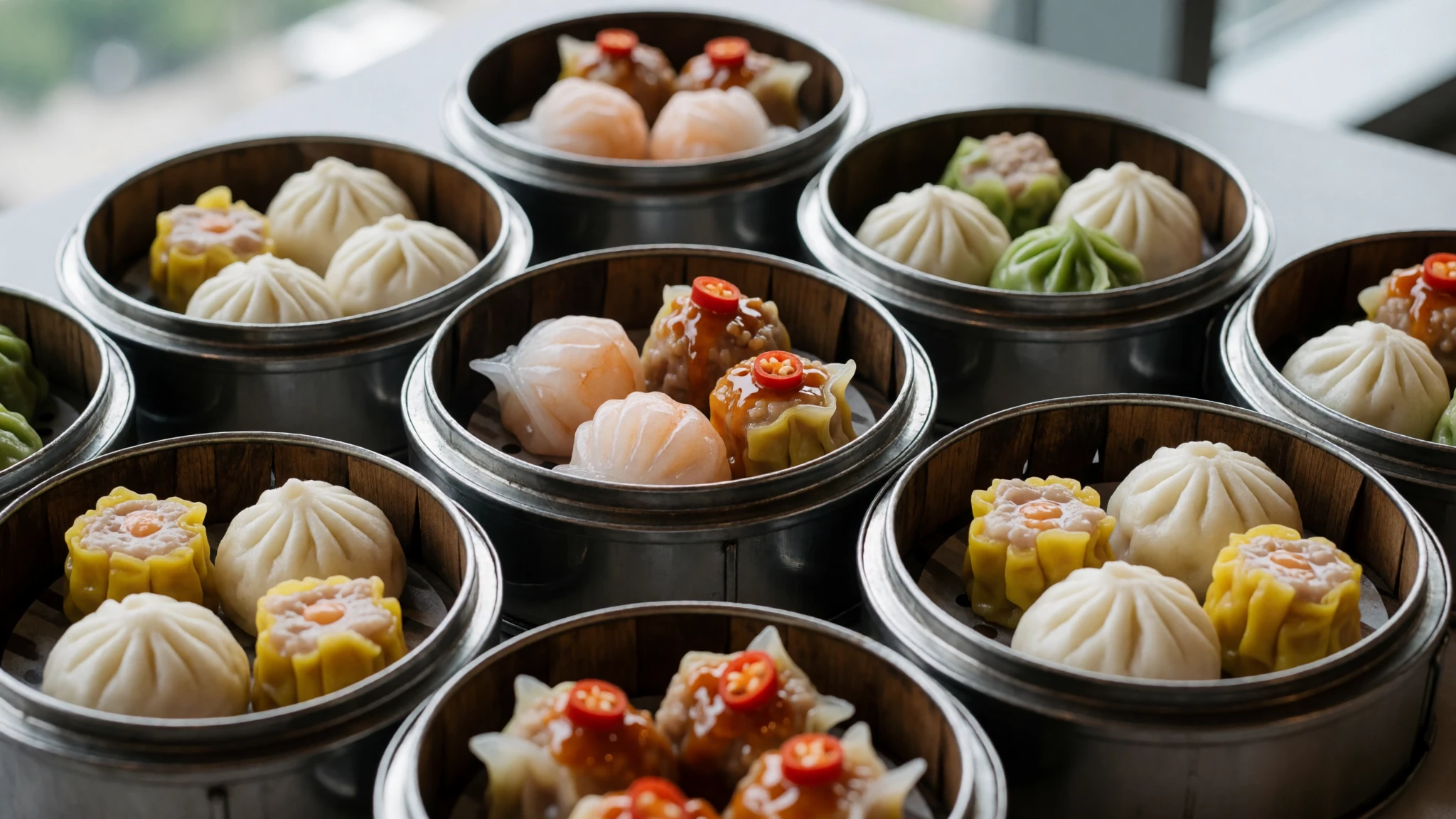
- Pastéis de nata — Little Portugal, along College Street west of the core
These Portuguese custard tarts have a flaky pastry shell, a soft custard centre and a blistered top. Bakeries in this neighbourhood turn them out warm in the morning and they often sell out by mid-afternoon. Buy a few early and eat them with a coffee. - Chaat, samosas and pakoras — Gerrard India Bazaar, Gerrard Street East
Snacks from across South Asia are sold from counters and small eateries along this strip, with flavours from several regions. Spice levels vary, so ask before ordering if you want milder food. Go in the evening, when the street is busiest and the snacks are freshest.
Plan it
Best time. May through September is warm, with highs near 28 to 32°C and clear views, while October is cooler and more comfortable, with fewer crowds. July and August are the hottest months and can be humid, and winter is cold with short days, though a clear winter day can still offer a striking view.
How long. 1–2
Getting there. Toronto Pearson International Airport in Mississauga is about half an hour by car, depending on traffic, or a 25-minute train ride from downtown. Billy Bishop Airport sits much closer to the waterfront, with a short free ferry crossing to the mainland. From either airport, the last leg is by transit, taxi or a short walk to the tower.
Budget. mid
Tips
- Book timed entry online ahead of your visit, especially in summer and on public holidays
- Go early on a weekday morning or in the last hour before dusk for shorter queues
- Check the forecast, because cloud can hide the top of the tower
- Carry a card, as some small stalls and markets prefer cash
- Allow time for security screening at the entrance
Etiquette
- Keep to the queue lines and follow staff directions at the entrance
- Ask before taking close photographs of other visitors
- Keep voices low on the upper decks
Nearby
Sources
- Wikidata Q134883 (CC0)
- Wikipedia (rev 1382252693) (CC BY-SA 4.0)
- Wikivoyage (rev 5405347) (CC BY-SA 4.0)
- CN Tower from Puente de Luz, Toronto, Ontario, 2025-08-25 (Chris Woodrich) (CC BY-SA 4.0)
- Ripley's Aquarium Toronto map (Oaktree b) (CC BY 3.0)
- CN Tower40 construction skycrane, March 1975 (WikiPedant) (CC BY-SA 4.0)
- CN Tower footings 1973 (Robert Taylor) (CC BY 2.5)
- CN Tower50 construction skycrane, March 1975 (WikiPedant) (CC BY-SA 4.0)
- CN Tower under construction, April 1975 (Robert Taylor) (CC BY-SA 2.0)
- CN Tower under construction (Robert Taylor) (CC BY 2.5)
- CN Tower 1976 (Robert Taylor) (CC BY 2.5)


