Clonmacnoise
Clonmacnoise, Ireland
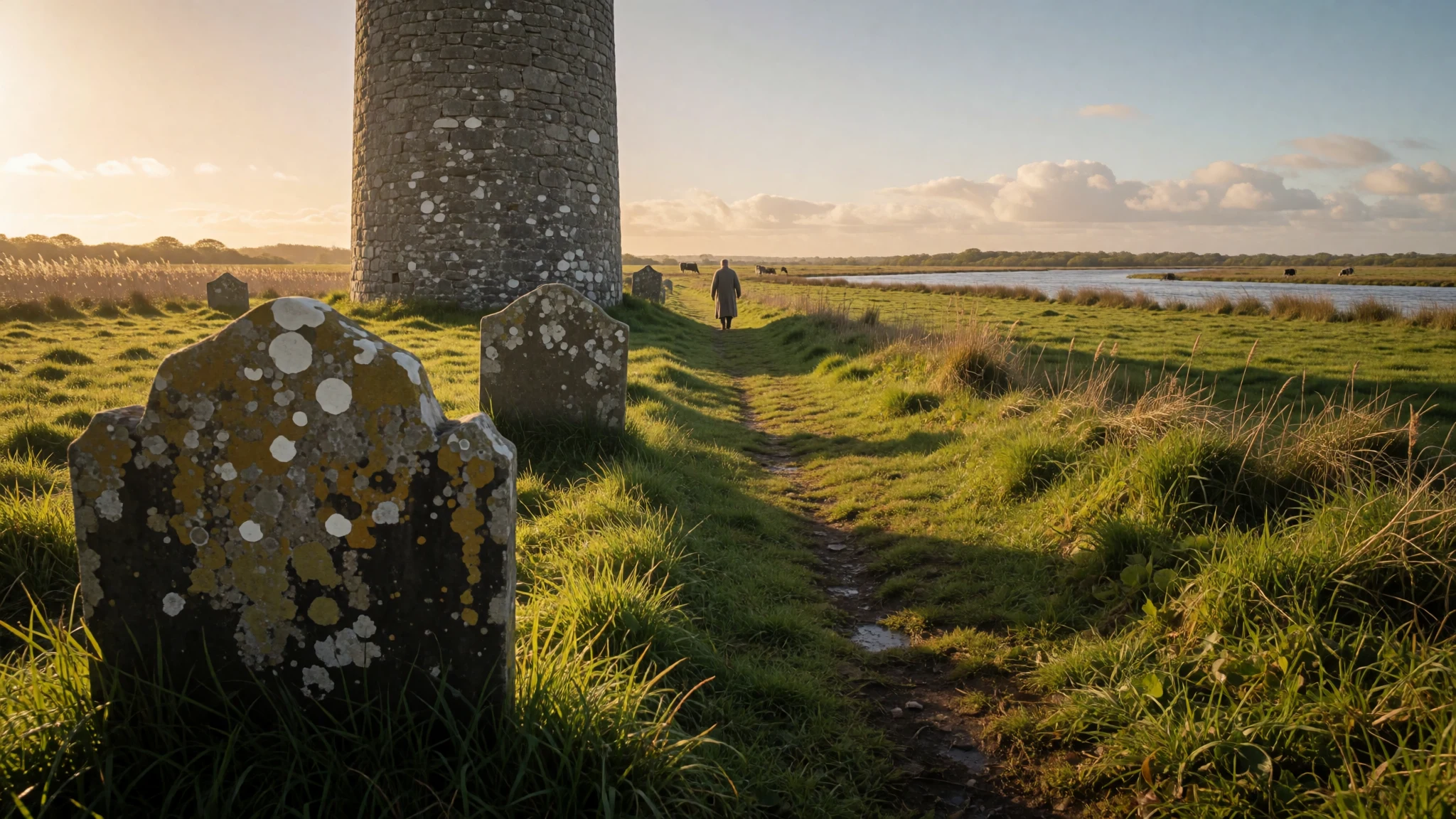
Clonmacnoise is a ruined monastery beside the River Shannon, where carved crosses, stumpy towers and royal graves recall Ireland's early centuries of learning.
The place
Clonmacnoise sits beside the River Shannon in County Offaly, a short way south of Athlone, in the flat middle of Ireland where fields give way to bog. The name is usually explained as the meadow of the sons of Nós, and the setting fits: a low green rise above slow, wide water. The monastery grew up where the main east–west route across the bogs, following a ridge of gravel left by the ice age, reached the river. That meeting of road and water drew pilgrims, traders, metalworkers and scholars, and by the ninth century the community was a centre of religion, learning and trade known across Europe. Kings of Connacht and high kings of Tara were buried here. What survives is a ruin rather than a town: nine roofless churches, two round towers, a Norman castle and a scatter of carved crosses and grave slabs. The Office of Public Works looks after the site, and a visitor centre stands at the entrance. It is not only a museum, though. The graveyard is still used for burials, and a modern chapel holds services. The landscape is open and exposed, so wind off the river is common and the grass is soft after rain. Most people give it a couple of hours, but the place suits slow wandering, with the Shannon, grazing cattle and the stumps of towers all in view at once.
Its story
Clonmacnoise begins, in the traditional account, with a young man named Ciarán from Rathcroghan in County Roscommon, who arrived in 544 with seven companions. He met Diarmait mac Cerbaill, later remembered as the first Christian high king, and together they raised a small wooden church, the first of many clustered on the site. Ciarán died young, of plague, in 549, and was said to be buried beneath that first church. The stone oratory called Temple Ciarán, from the ninth century, now stands on the spot. The monastery prospered because of its position. Over the following centuries it was allied at different times with the kings of Connacht and of Meath, gathered royal burials and drew scholars from far afield. Adomnán, who wrote a life of Columba, describes the saint visiting while he was founding Durrow, foretelling later arguments over the date of Easter and saying that angels had come to Clonmacnoise. In the same story a young monk named Ernéne, who later became well known, sneaked a touch of Columba's cloak. Decline was gradual. The Normans built a castle in 1214 to watch the river crossing, but soon turned their attention to Athlone, and once the castle was wrecked it was never mended. By the end of the thirteenth century the monastery was largely abandoned, although burials among the ruins carried on.
What to see
- Visitor centre and museum — Entrance to the monastery compound
Almost everything at Clonmacnoise lies inside one compound run by Heritage Ireland, and the visitor centre is the sensible first stop. It occupies three conical huts and shows a short audiovisual presentation that sets out who built what. A small cafe here is the only food on offer nearby.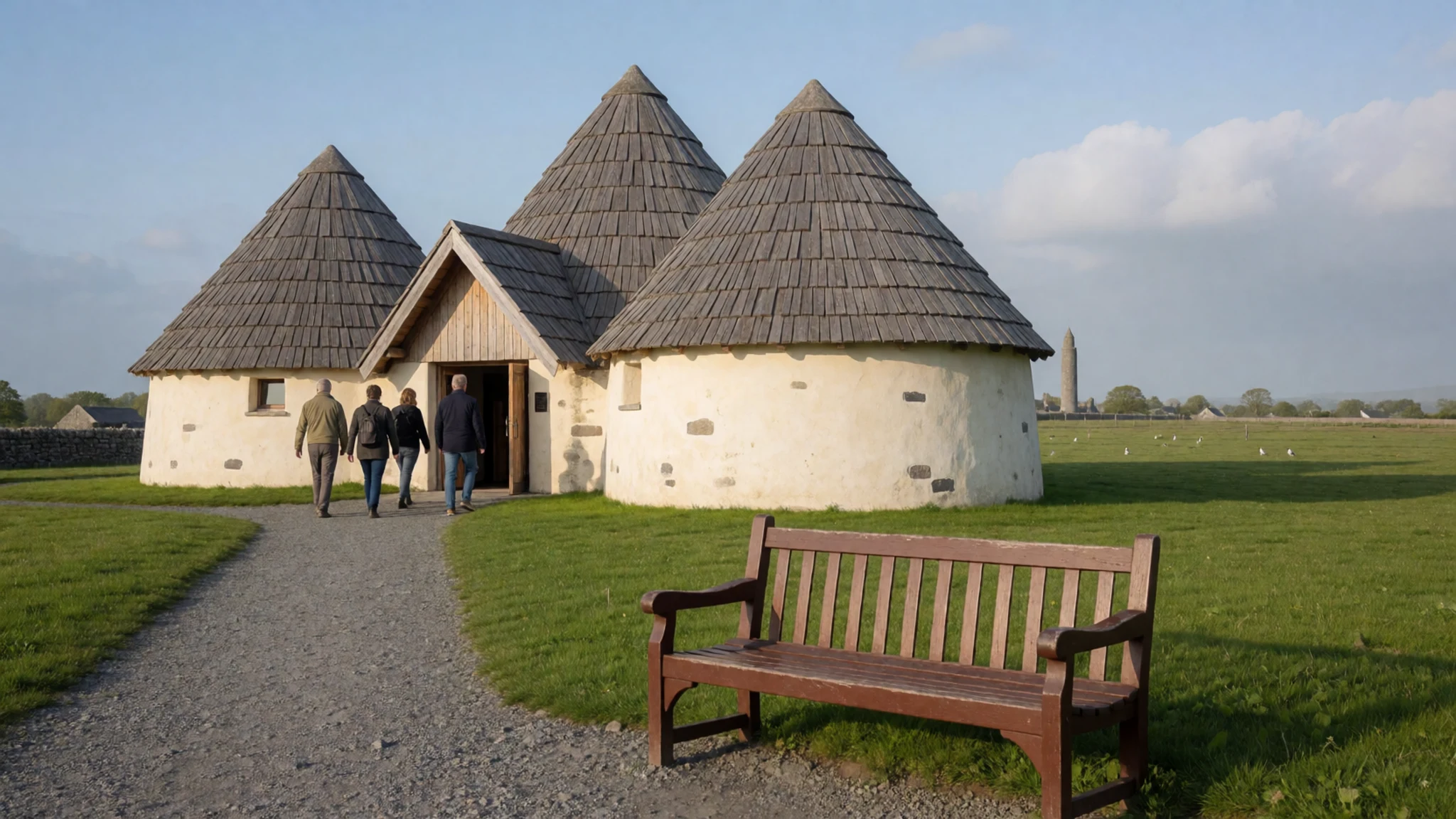
- Cross of the Scriptures (replica) — Inside the compound, near the cathedral
This replica stands about 4 m tall, and its panels show the arrest of Jesus, the Crucifixion, the Last Judgement and Christ in the tomb. Another panel names King Flann Sinna and Abbot Colmán, who commissioned the cross around 900, and asks the reader to pray for them. The carving repays a close look.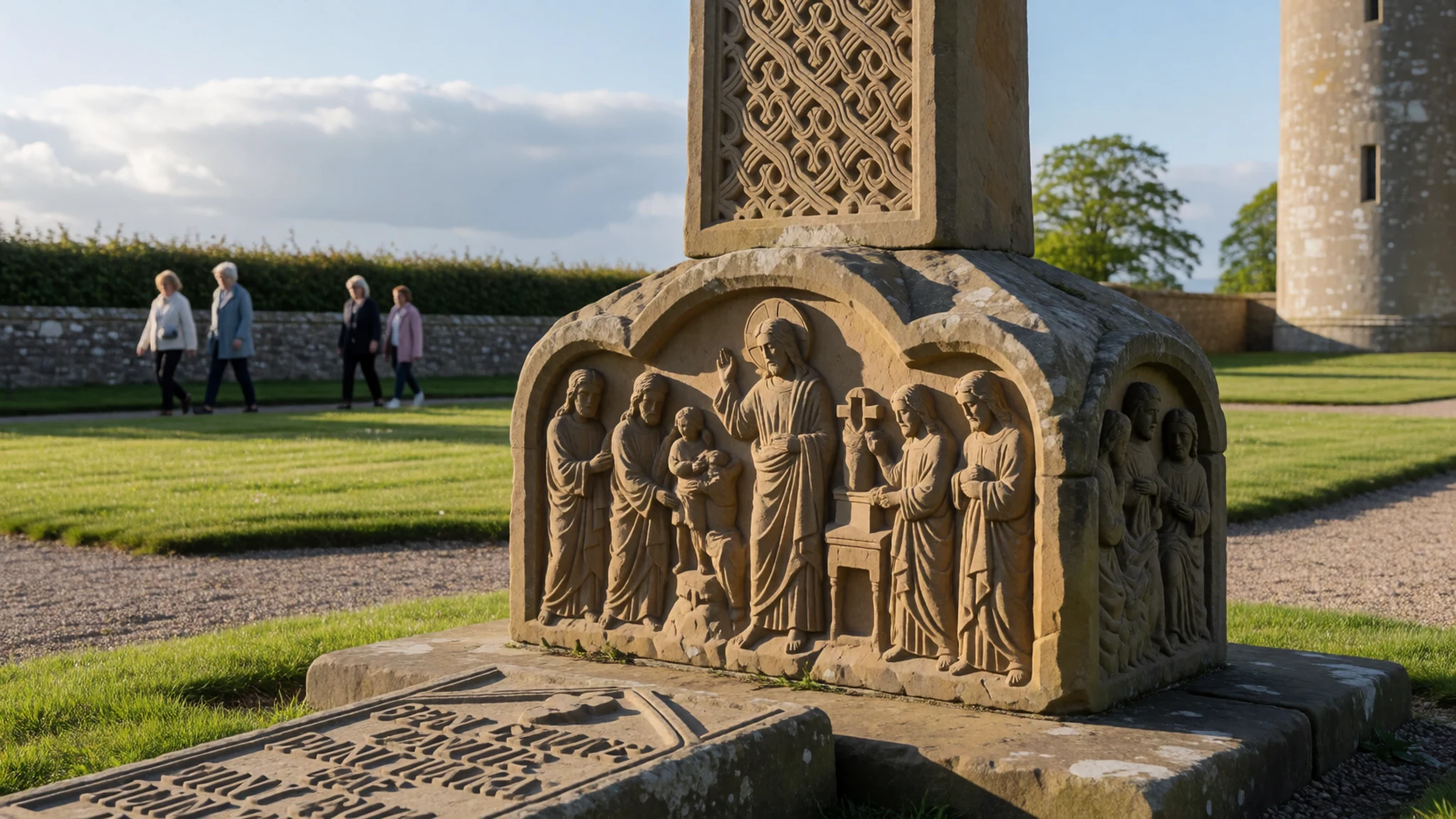
- The Cathedral — Centre of the compound
The cathedral is a roofless stone church whose commissioning is credited to the same king and abbot as the Cross of the Scriptures. It was the main church of a community that buried kings. Stand inside the walls on a quiet morning and the wind and the river are the only sounds.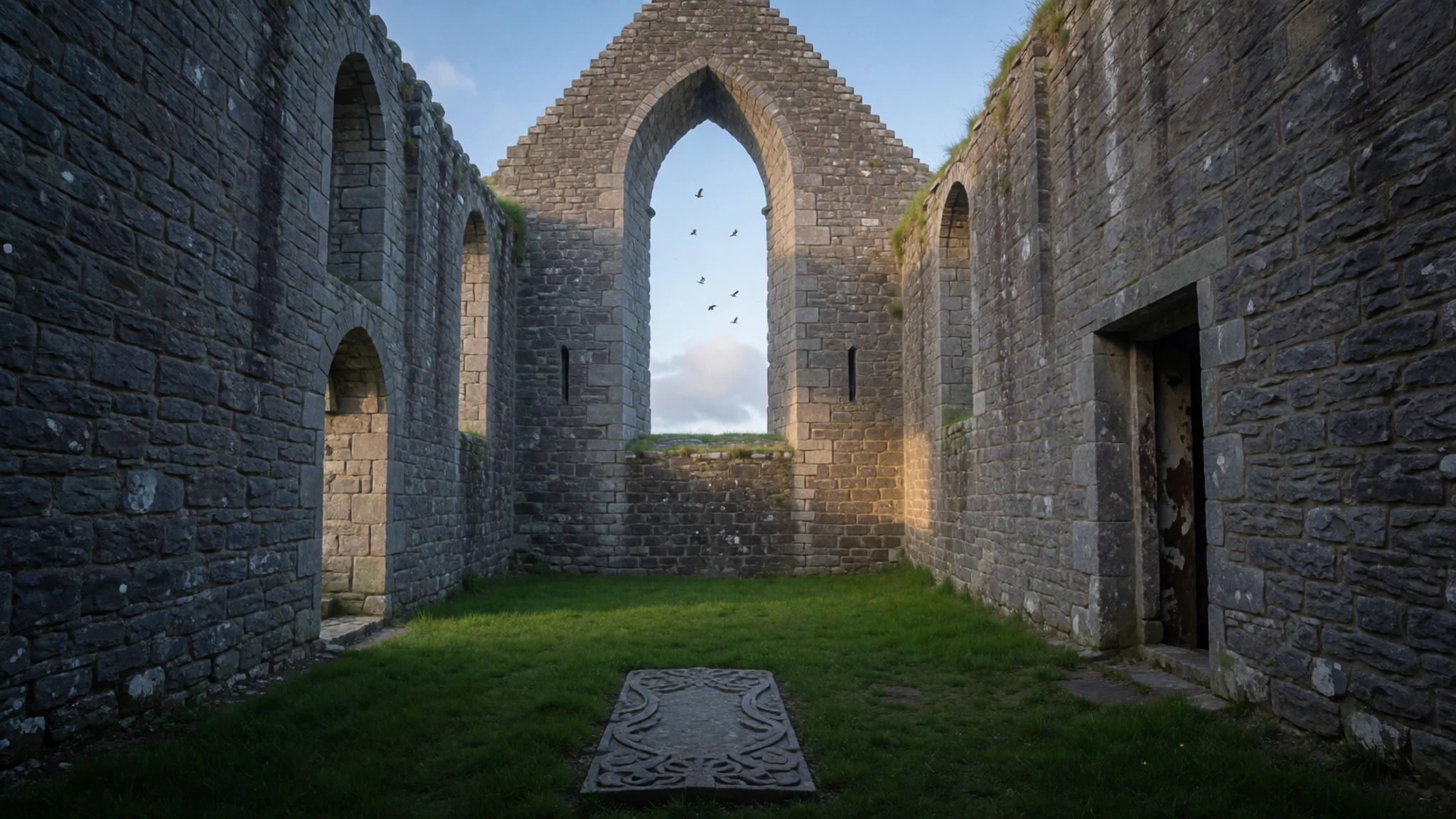
- O'Rourke's Tower — Beside the river, at the edge of the compound
Named after King Fergal O'Rourke, this round tower was not finished until 1124 and once stood about 30 m high, a landmark for pilgrims arriving by water. Lightning took off its top in 1135, so it is now a 19.3 m stump. Its doorway sits 3.3 m above the ground. Round towers were bell towers, not fortresses.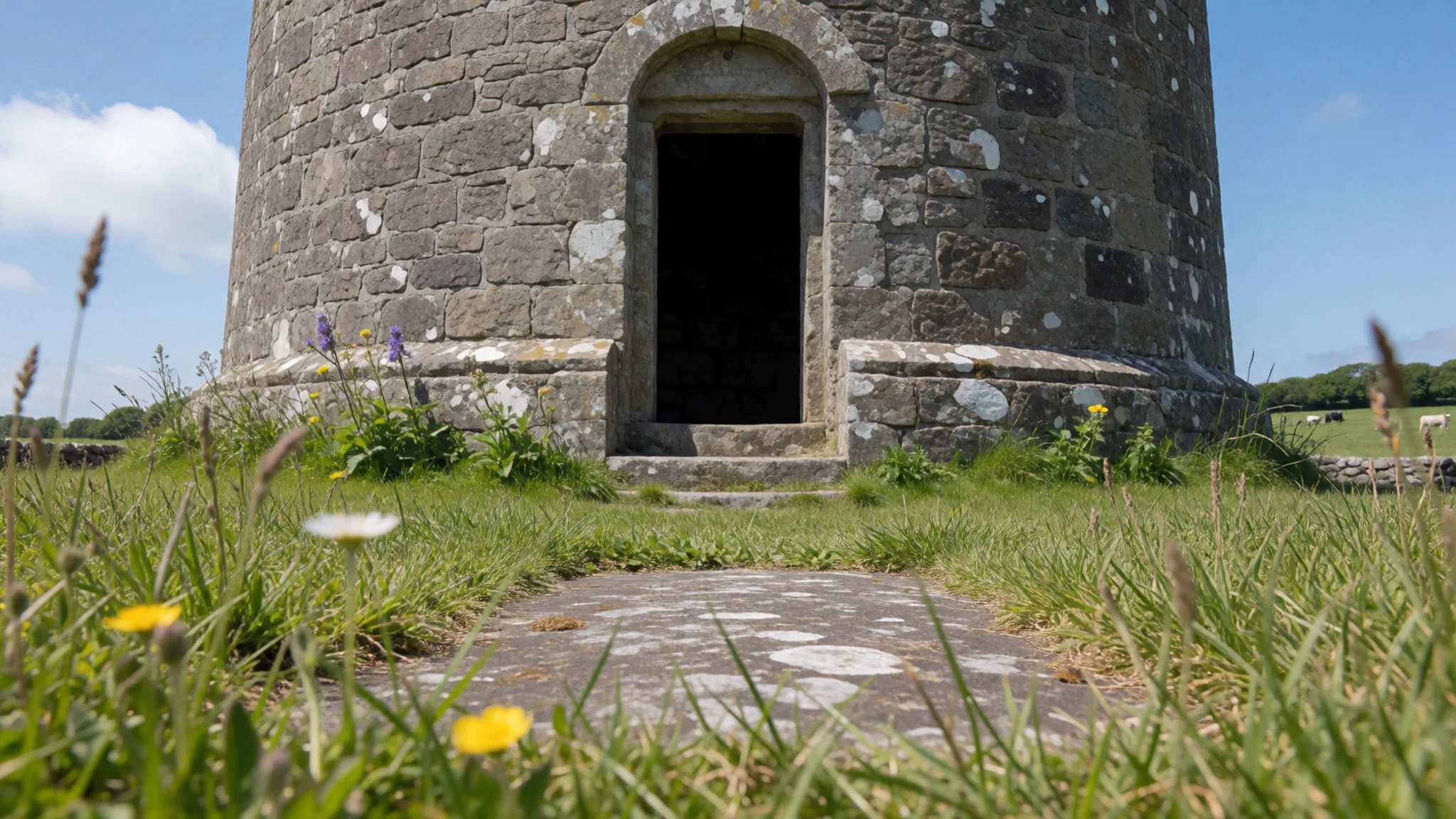
- The Norman castle — On a rise west of the car park
The castle was built by the Normans in 1214, ringed by a deep ditch, to replace an earlier timber fort guarding the river crossing. What remains is a leaning fragment on a small hill. The ruin is unsafe, so look from a distance. Cattle often graze in the fields below it.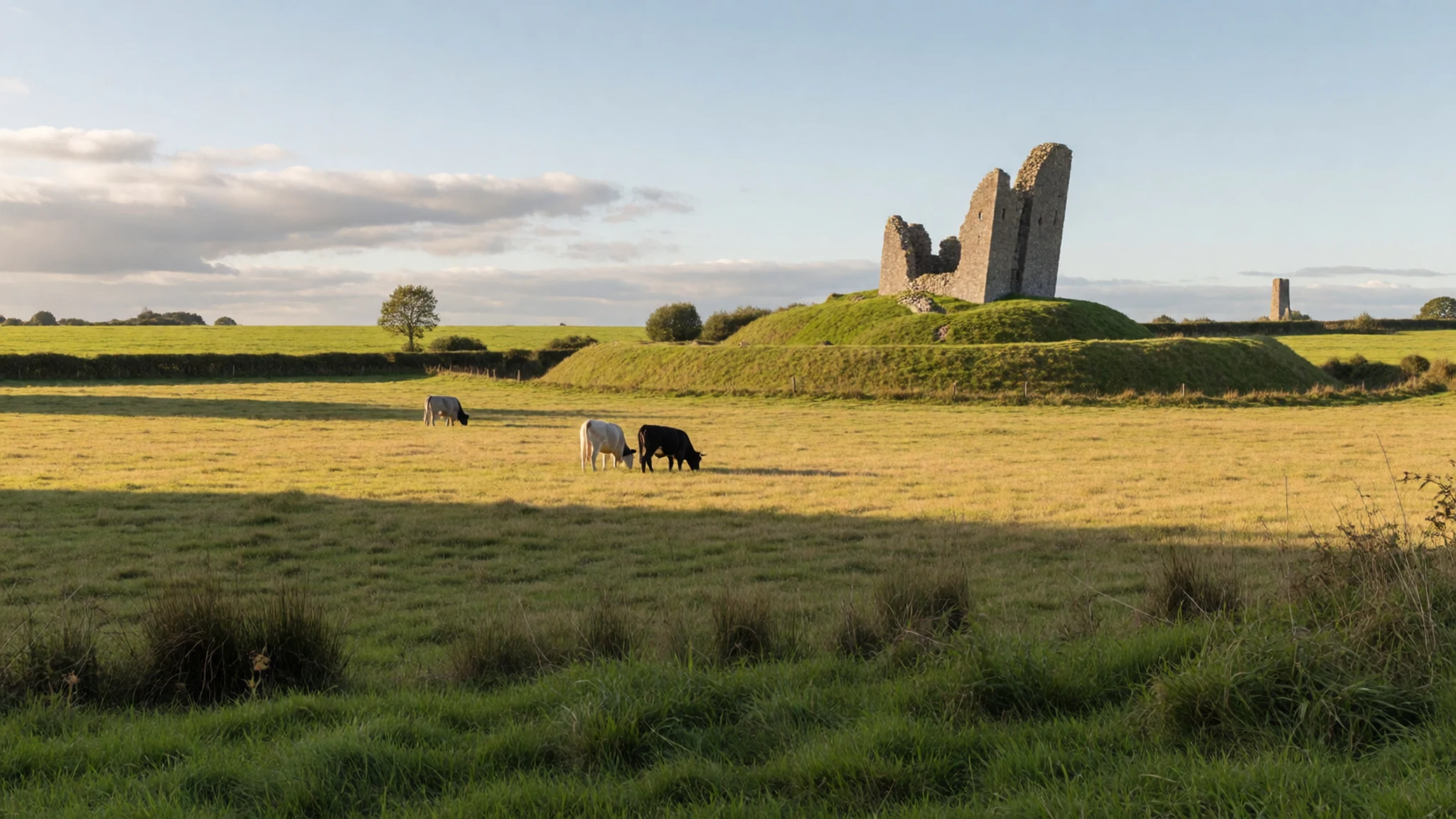
Culture
Clonmacnoise belongs to the tradition of early Irish Christianity, in which monasteries were schools, workshops and trading posts as much as places of prayer. Monks kept records, and the annals of the wider region note the deaths of bishops, abbots and kings, which shows how well connected this riverside community was. The carved high crosses are its best-known legacy. The Cross of the Scriptures carries Gospel scenes and an inscription asking for prayers for the king and abbot who paid for it, a reminder that the stonework was meant to be read and remembered. Round towers served as bell towers and landmarks for people approaching by river or road. Burial is the other thread running through the place. High kings were laid to rest here, and local families still bury their dead in the graveyard, so the ruin is a working cemetery as well as a heritage site. Services take place in a modern chapel within the grounds. The name is Cluain Mhic Nóis in Irish, and the old name still sits easily on the landscape. Many visitors arrive in a quiet, reflective mood, and the site rewards it. Keep to the paths, do not climb on walls or carved stones, and lower your voice near graves and during any service in the chapel.
What to wear
Clonmacnoise has no dress code, but its clothing story still runs from early Ireland to the present. In the early medieval period, people of the monastery's world wore a linen tunic, called a léine, with a woollen cloak, a brat, fastened at the shoulder, and monks wore plain habits. Wool and linen remained the base of Irish textiles for centuries, and Aran knitwear and tweed are the best-known descendants, worn for fishing, farming and weather rather than for ceremony. Today people in County Offaly dress for the climate: waterproof jackets, jeans, jumpers and wellington boots or sturdy shoes, with smarter clothes saved for funerals, weddings and Mass. Traditional dress appears mostly at festivals, dance competitions and school events. For a visit, think layers and rain. The site is open to wind off the Shannon, the grass is wet for much of the year, and paths between the ruins are uneven, so shoes with grip matter more than style. Bring a waterproof even if the morning looks clear, and a hat or scarf for the exposed riverside. Shoulders and knees need no covering, but since people are buried here and the chapel is in use, avoid beachwear and loud slogans, and keep neat, simple clothes for any service.
What to eat
- Tea and a scone — The cafe in the visitor centre
The visitor centre cafe is the only place to eat close to the ruins. A pot of tea with a scone, or a sandwich and soup, is the standard stop before or after the walk. Expect a small, simple menu.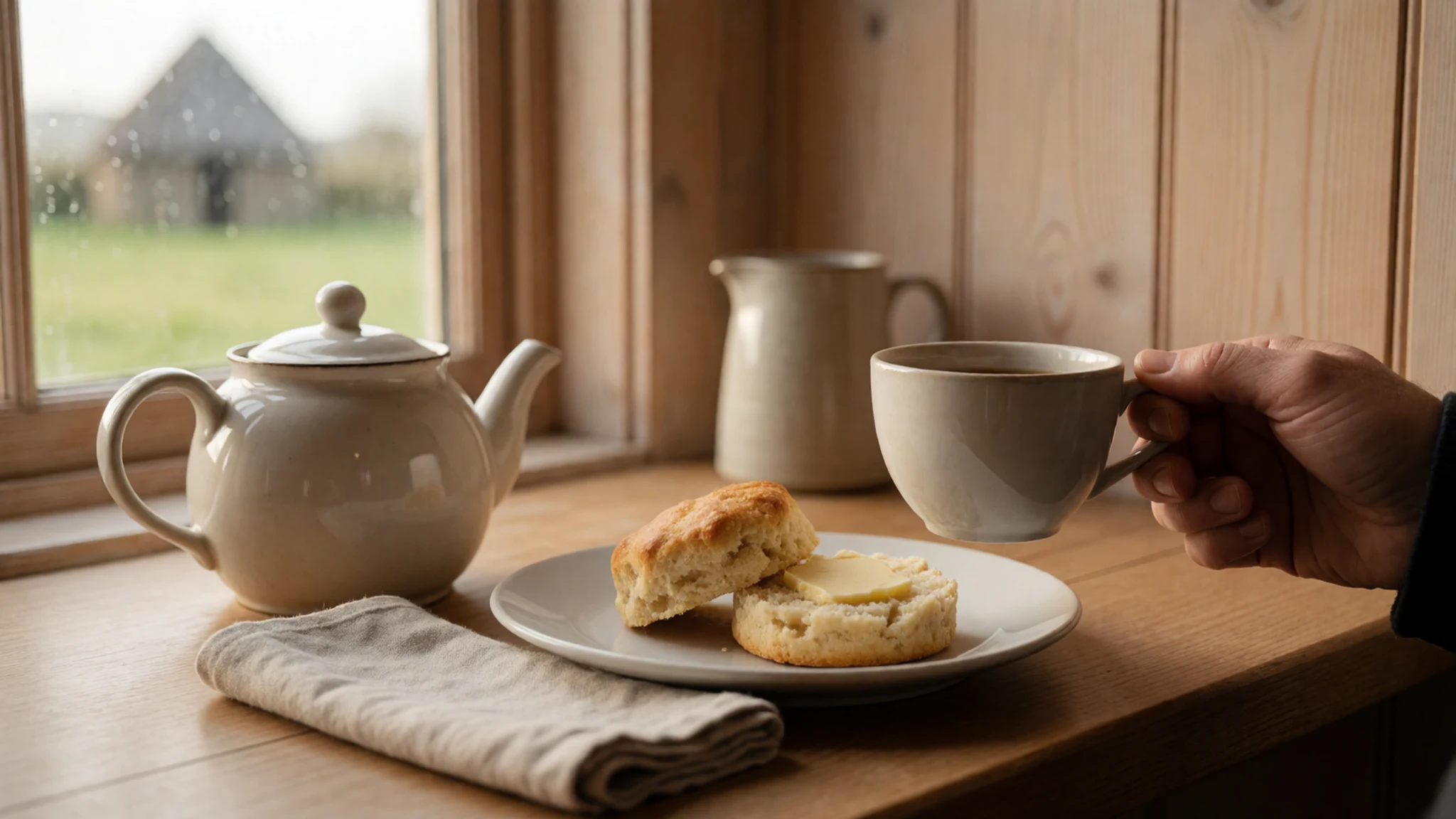
- Full Irish breakfast — B&Bs in Shannonbridge and Athlone
Bacon, sausage, egg, black and white pudding, tomato and toast make up the classic breakfast, served at most guesthouses. It is a sensible meal before a morning on the exposed riverside, and many B&Bs offer a lighter option.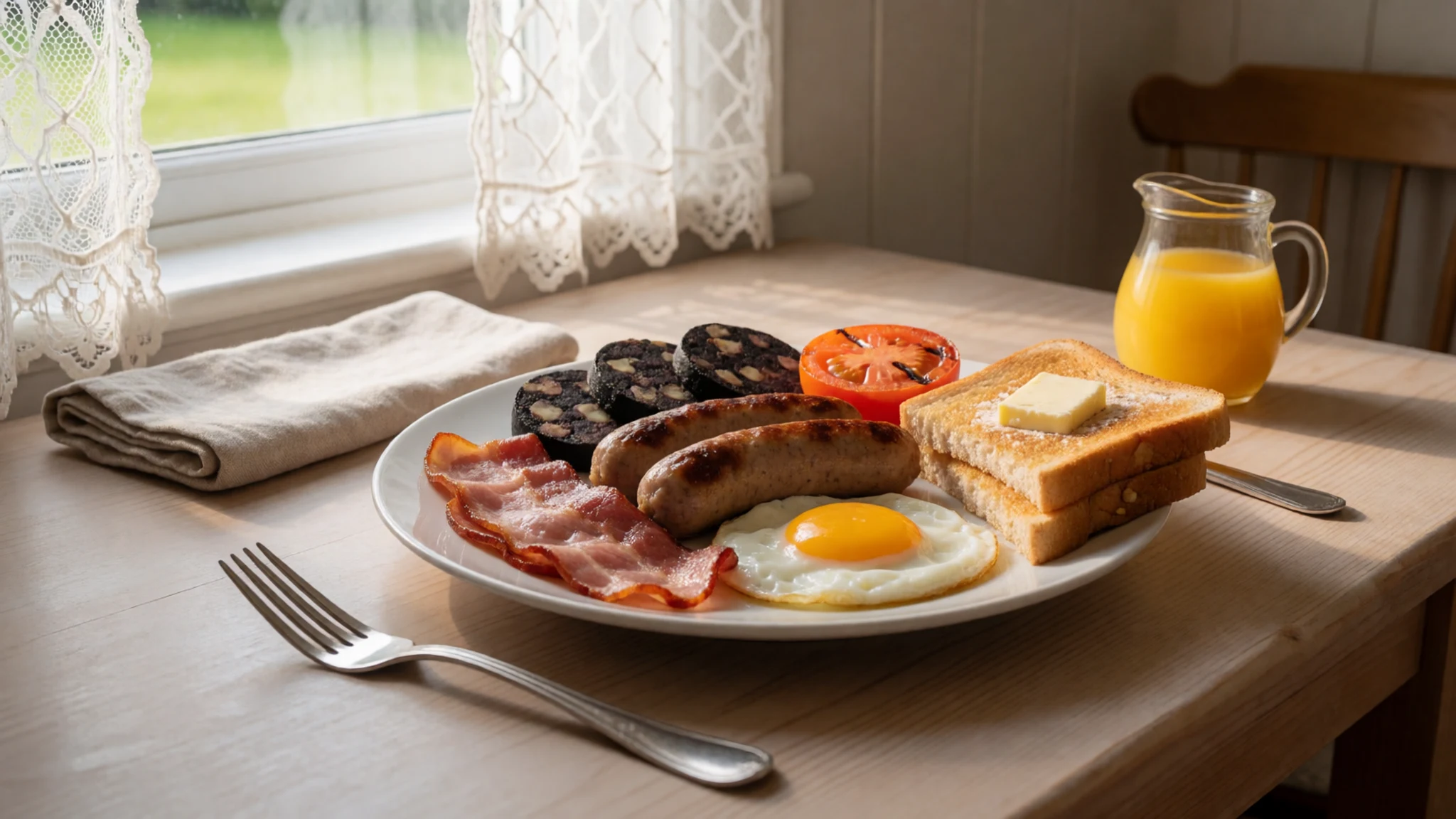
- Irish stew — Pubs and eateries in Athlone or Birr
This slow-cooked lamb or mutton stew with potato, onion and carrot is the dish to look for on a cold evening. There are no pubs by the monastery, so find it in a nearby town after your visit. - Brown soda bread and soup — Cafes in Athlone
Dense, slightly sour brown bread, baked with baking soda rather than yeast, comes buttered beside a bowl of vegetable or seafood soup. Town cafes serve it as an easy lunch, and it keeps well for a picnic. - Tullamore whiskey — The distilleries in Tullamore
Tullamore is known for its distilleries, and coach tours often finish there after Clonmacnoise. A tasting is a reasonable way to end the day. Check opening arrangements locally and keep to a small measure if you are driving.
Plan it
Best time. May to June and September are the easiest months, with longer light and milder weather. Rain can arrive in any season, and winter days are short, cold and often wet on the exposed riverbank.
How long. 1
Getting there. Dublin is the main gateway, with trains on the Dublin–Galway line to Athlone. From Athlone a Local Link bus runs to Clonmacnoise in about half an hour, though services are limited and the Sunday pattern differs, so check the current timetable. By car it is a short drive from Athlone, and boat hire on the Shannon can bring you to a mooring at the site.
Budget. low
Tips
- Check the official Heritage Ireland site for opening hours and fees before you go, as they change by season
- Bring food and water, since the visitor centre cafe is the only option nearby and there are no pubs close by
- Pack a waterproof and shoes with grip, because the site is open to the weather and the grass stays wet
- Arrive early or late in the day, as coach groups tend to come through together around the middle
- If using the bus, plan your return in advance, because there are only a few departures a day
Etiquette
- Stay on the paths and do not climb on walls, crosses or grave slabs
- Keep away from the castle, as the ruin is unsafe
- Be quiet near graves and during services in the chapel
Nearby
Sources
- Wikidata Q927223 (CC0)
- Wikipedia: Clonmacnoise (rev 1362385337) (CC BY-SA 4.0)
- Wikivoyage: Clonmacnoise (rev 5289561) (CC BY-SA 4.0)
- St Keiran's Cathedral, Clonmacnoise, by JohnArmagh (Public domain)
- Cross of the Scriptures and Cathedral, by Ingo Mehling (CC BY 3.0)
- Cows beside the Norman castle ruins, by Javier Mediavilla Ezquibela (CC BY 3.0)
- Clonmacnoise at sunset, by JohnGill (CC BY-SA 4.0)
- McCarthy's Tower, by Ingo Mehling (CC BY 3.0)
- Replica of the Cross of the Scriptures, by Ingo Mehling (CC BY 3.0)
- Interior of Cathedral, by Ingo Mehling (CC BY 3.0)
- Detail of Replica of the Cross of the Scriptures, by Ingo Mehling (CC BY 3.0)


