Civita di Bagnoregio
Civita di Bagnoregio, Italy
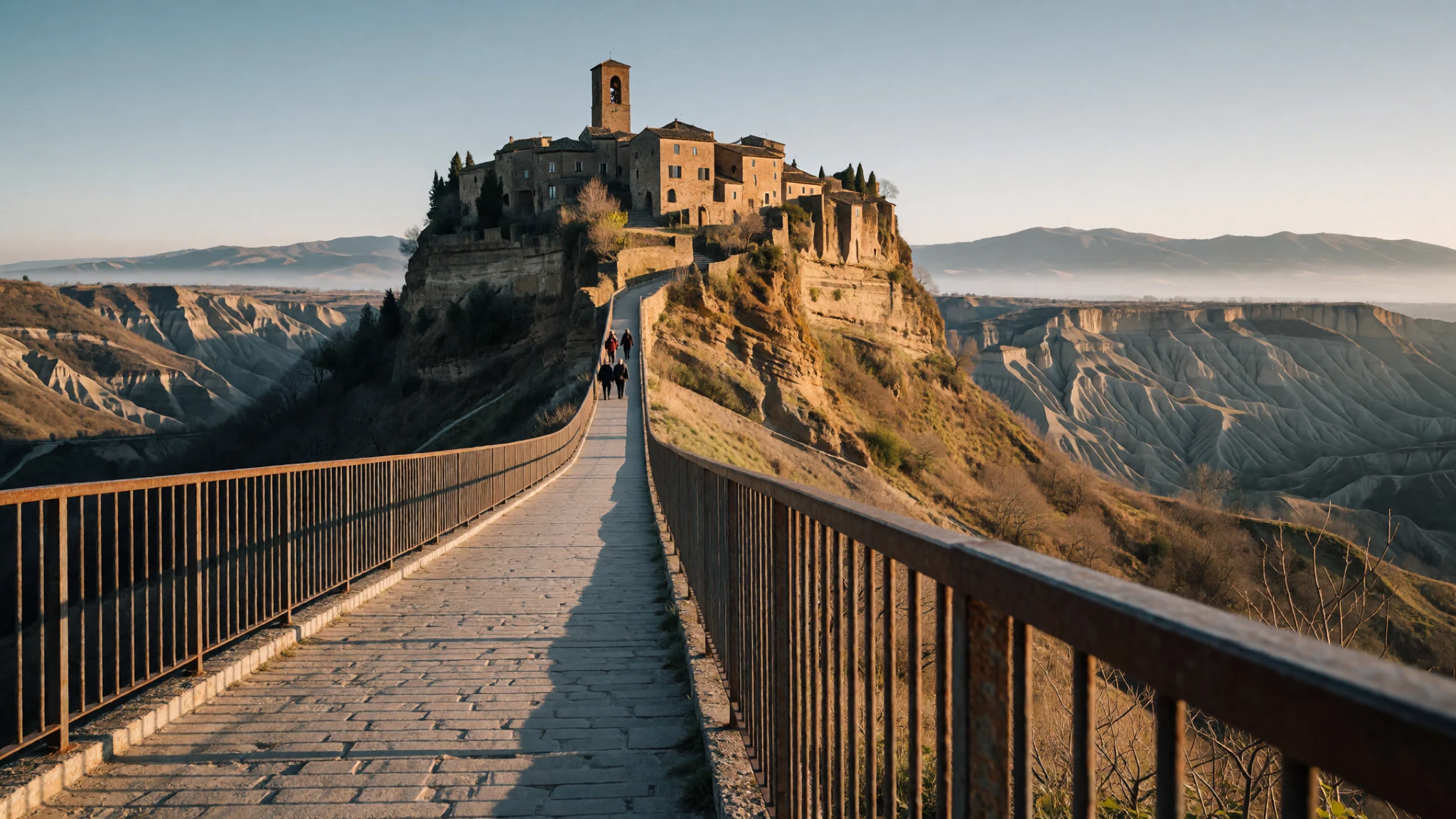
A village on a crumbling tuff ridge, reached only on foot across a bridge, and slowly disappearing into the valley.
The place
Civita di Bagnoregio sits on a narrow spine of pale volcanic rock in the Province of Viterbo, a short drive north of Rome. It is technically a frazione of the nearby town of Bagnoregio, but the two feel like different worlds. The modern town sits on the main road and its car parks, while Civita is a cluster of stone houses and a few churches on a plateau that rises above a deep valley of eroded clay ravines, with the Tiber valley beyond. At around 443 metres above sea level, the village catches the wind and the light, and on a clear day the view runs far over the surrounding hills. Access is on foot. A footbridge crosses the gap from Bagnoregio, and a minibus or a steady walk takes visitors up the last stretch, while cars stay below. Only a handful of people live there year-round, so the village feels half-empty outside the day-trip hours. The cafés and shops are geared to visitors who arrive in the late morning and leave by late afternoon. The plateau is still moving. Its soft tuff keeps crumbling at the edges, and the houses nearest the cliff are the ones that have been lost. That risk is part of why the place draws so many people, and it is also why its future is uncertain.
Its story
Civita's story begins with the Etruscans, who chose this crest of tuff well over two millennia ago, long before Rome had grown into an empire. Their layout still shows in the streets, which run on a grid of main axes, a plan later adapted under Roman practice. Most of what stands today dates from the medieval and Renaissance centuries, which is why the village reads as one medieval-looking place rather than a museum of separate periods. The entrance has changed over time. Several gates once controlled access to the old town, and the main way in today is the Porta Santa Maria, also known as the Porta Cava. A tunnel cut through the rock gives a second route from the badlands valley below, a reminder that the approach has always been carved into the landscape.
Etruscan traces survive mostly in the San Francesco Vecchio area, where a small necropolis was found in the cliff below the belvedere. The Romanesque arch at the entrance is another relic of those early builders. The plateau has been eroding for a long time. Buildings have fallen as their footings gave way, and a single palace façade is all that remains of one old house, the rest having slid into the canyon. More recently, engineers discussed reinforcing the plateau with steel to slow the loss. That work remains a question rather than a settled answer, and the village's survival depends on how the rock behaves in the years ahead.
The isolation that threatens the village has also protected it. Modern building largely passed it by, and it escaped the damage of two world wars, so its streets look much as they did for centuries.
What to see
- The entrance arch — Village entrance
Cut into the tuff at the village entrance, this arch is among the oldest visible traces of the Etruscan settlement. Its stone has the blunt, weathered look of work done more than two millennia ago. Pause here before going inside, because the view back down the ridge shows clearly how narrow the plateau is. Morning light falls across the stone and suits a photograph.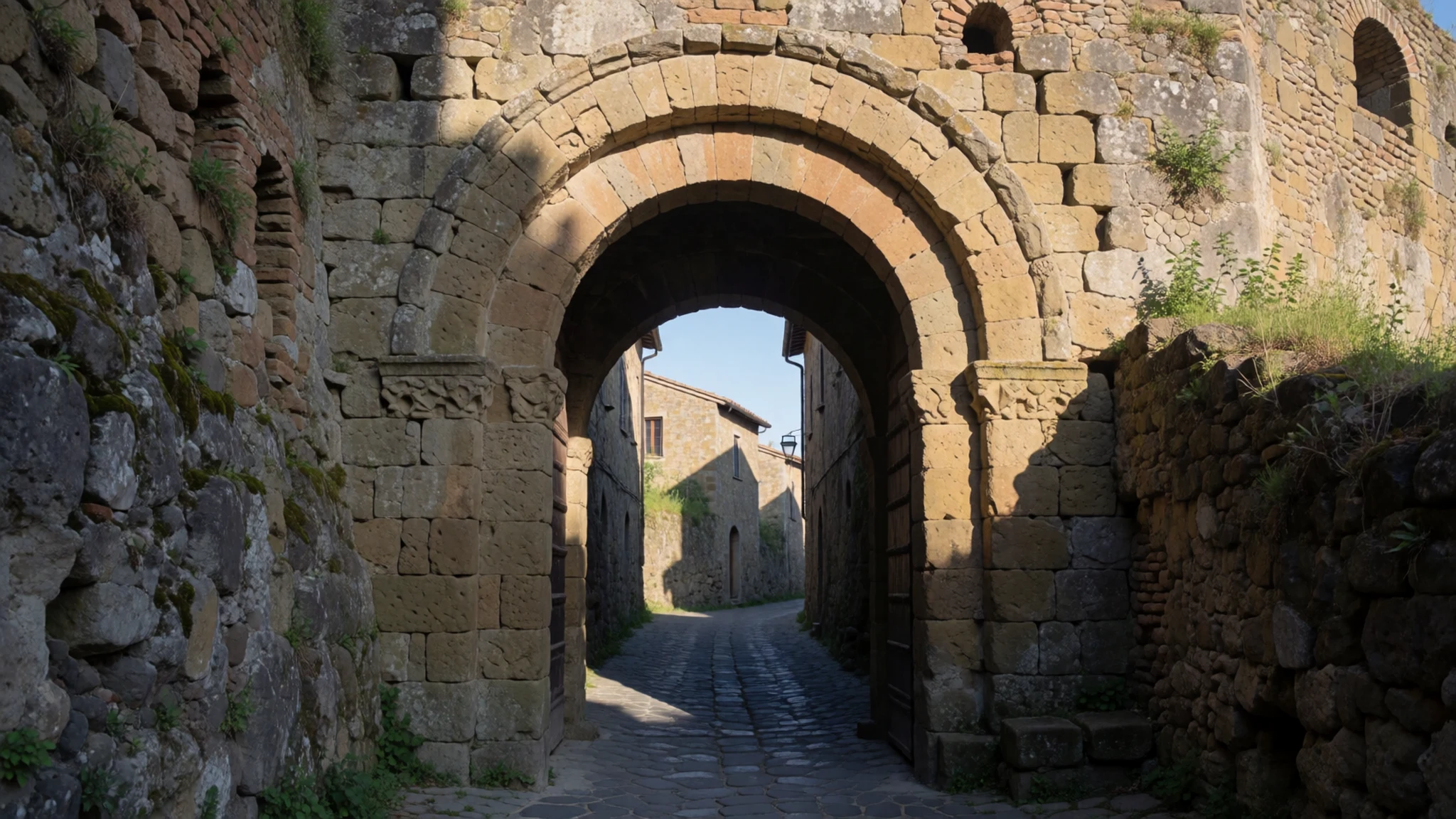
- The church on the old temple site — Central village
The church stands on ground where an Etruscan temple was first built, and later a Roman one replaced it. Inside you will find a fine altar and a crucifix, and the bell tower is the feature most visible from the lanes. The building has been reshaped over the centuries, so the older layers are easiest to see in the stonework. Keep voices low during services.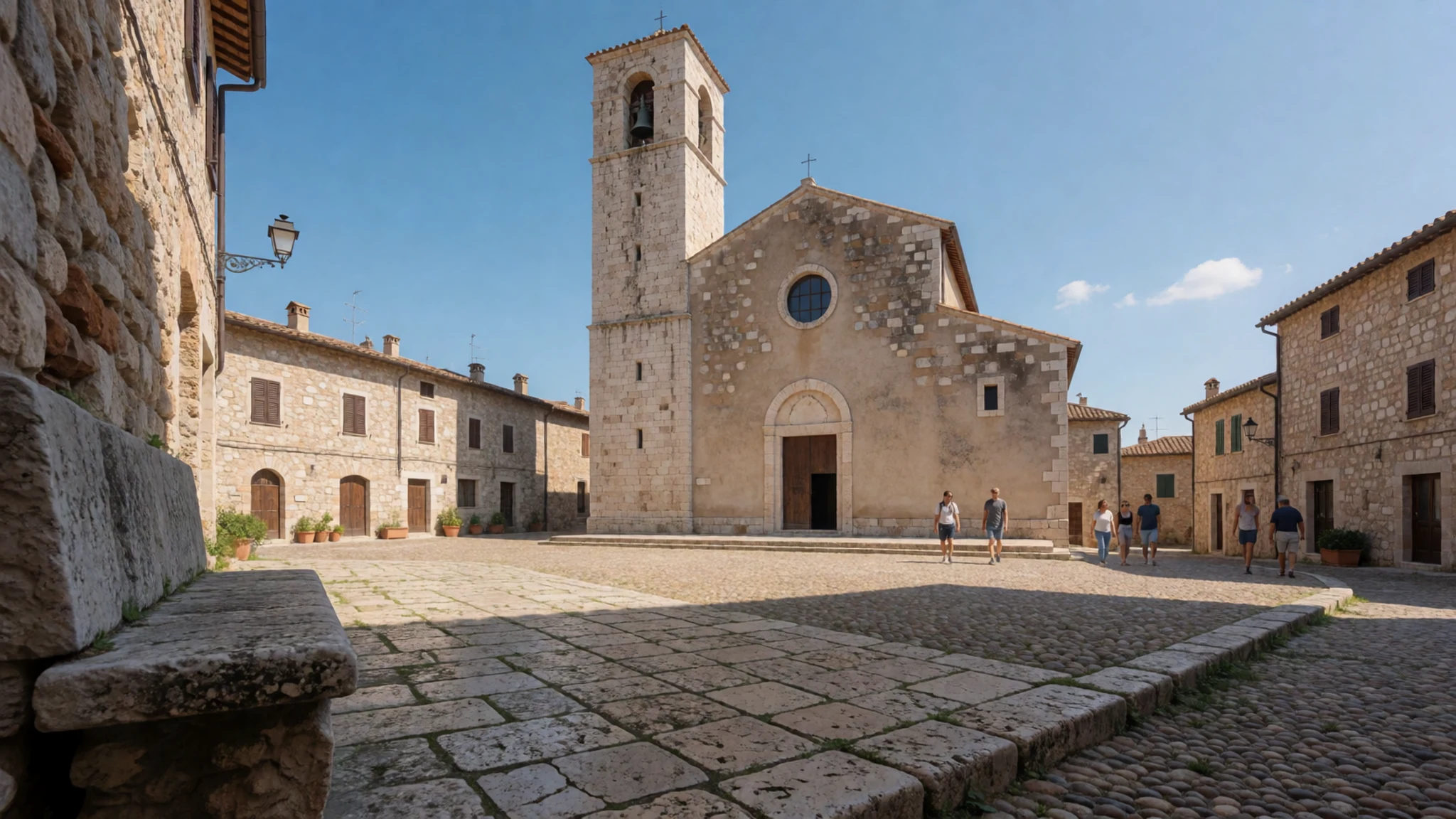
- The main piazza — Central village
The piazza is the social heart of the village, with columns said to be Etruscan. It is also the only place with a public telephone, which makes it a useful meeting point. Donkey races are held here on the first Sunday of June and the second Sunday of September, when the square fills with local families and visitors. Benches here are a good place to rest between lanes.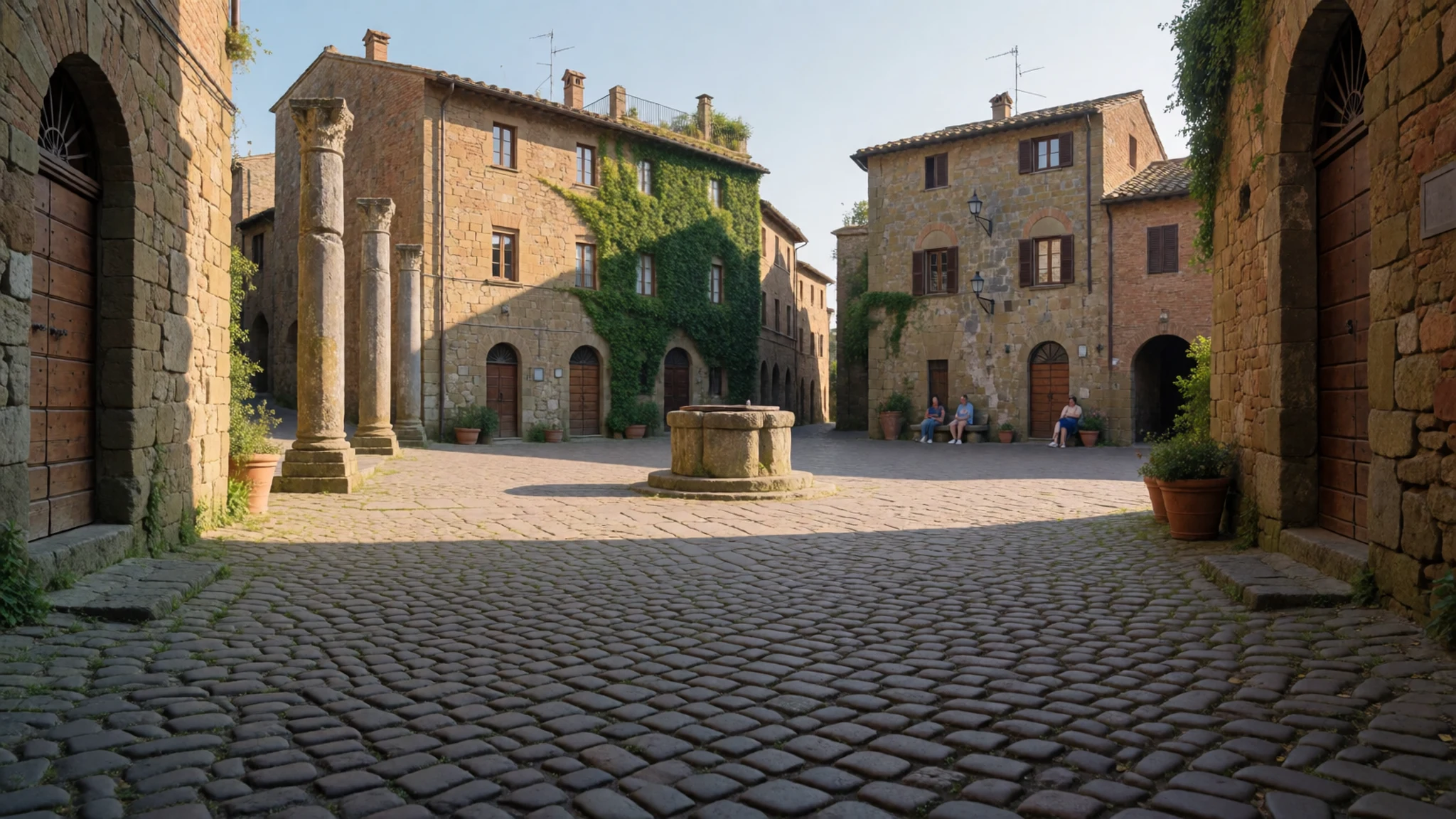
- Maria's Garden — Far end of the village
A small garden on the far side of the village gives some of the best canyon views in Civita. It is not always open, so ask at the nearest café if the gate is closed. When it is open, the garden offers a quiet spot to look down over the eroded ravines and the slopes beyond. Arrive in the morning for softer light and fewer people.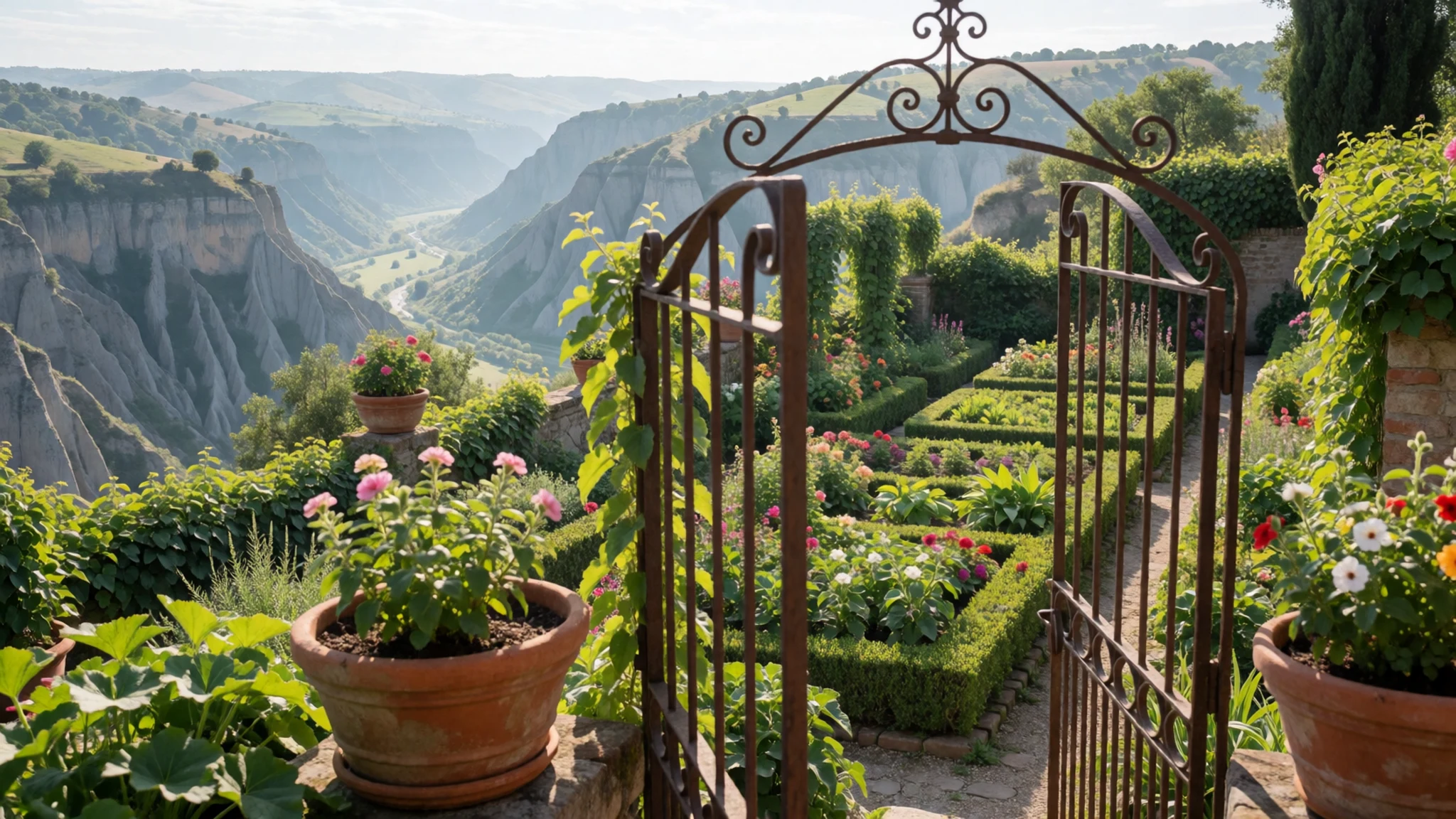
- The Etruscan caves — East end of the village
A series of caves at the eastern end of the village was cut into the rock in ancient times. One has been turned into a chapel, known as the Chapel of the Incarcerated. The space is small and cool, and it offers a direct sense of how closely the old settlement was tied to its cliffs. Walk there slowly, because the edges around the caves are uneven.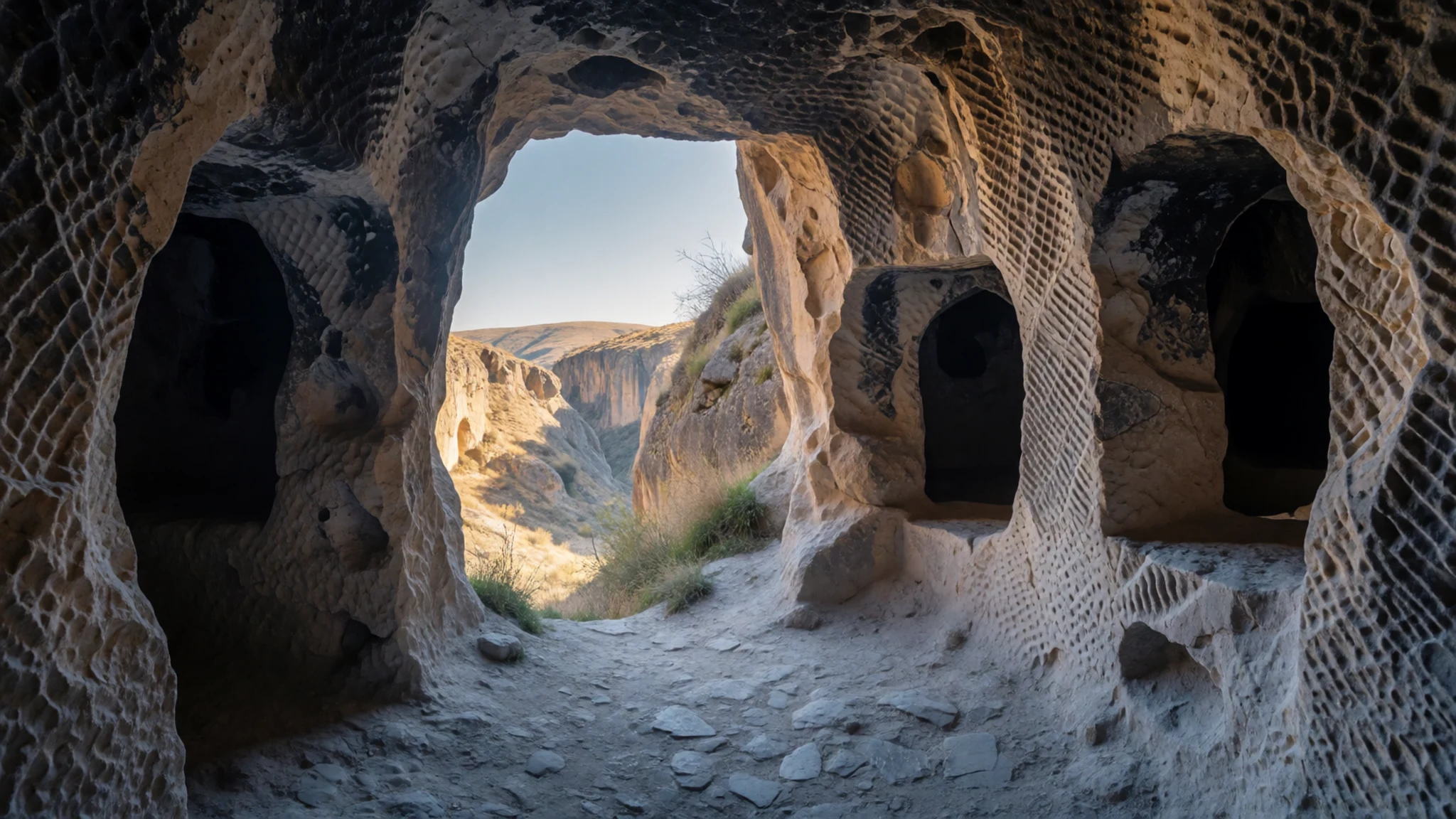
Culture
Civita's calendar is shaped by faith and by a few local contests, and the most striking custom takes place in the neighbouring town of Bagnoregio. On Good Friday, the Holy Crucifix from the church of San Donato is carried through the old procession, a rite that has continued for generations. Its story centres on a fifteenth-century plague that struck the area. A devout woman prayed daily before the image, and one day she heard a voice telling her that her prayers were answered and the sickness would end. The plague ended within days, and she died soon after. The legend is still told with quiet pride.
Civita keeps lighter traditions too. At Christmas, a nativity scene is set in the medieval lanes, with the story of Mary and Joseph played among the stone houses. In the piazza on the first Sunday of June and the second Sunday of September, the donkey race known as the Palio della Tonna brings out the whole community. Visitors often arrive for these days, so the village is busier than usual and the narrow streets fill quickly.
The community is small, and the village is a home as well as a destination. Keep your voice down in the lanes after dusk, and on Good Friday step back from the procession route rather than pushing forward for a close photograph.
What to wear
The old dress of the Viterbo hills is known today mostly from festival and folk traditions rather than from everyday wear. Its materials were practical: wool for warmth, linen and cotton for work and summer, and dark, plain cloth for church and mourning. Those textiles now appear more often in festival displays and photographs than on the street, so the community events are the best place to see them.
Today people in Civita dress much as people do across central Italy. Jeans, knitwear, simple dresses and trainers are common for daily life, with a little more care on Sundays and for festivals in the square. Few residents live in the village all year, so the streets are quiet on ordinary days, and most people on the lanes are day-trippers in holiday clothes.
For a visit, dress for a steep, uneven and sometimes dusty walk. Flat shoes with good grip matter more than style, because the paths are cobbled, the bridge can be windy, and the ground gets slippery after rain. In summer the ridge is hot and largely unshaded, so light cotton, a hat and a bottle of water make sense, along with a layer for cooler evenings. Churches expect shoulders and knees to be covered, so carry a light scarf if you plan to go inside.
What to eat
- Fresh pasta at a trattoria — The small trattorias on the village's main lane
Simple pasta is the most dependable meal in Civita, often served at lunch when the kitchens are busiest. Ask what is made that day and expect a plain tomato, butter or meat sauce served without fuss. Portions are generous, and prices are modest for the setting.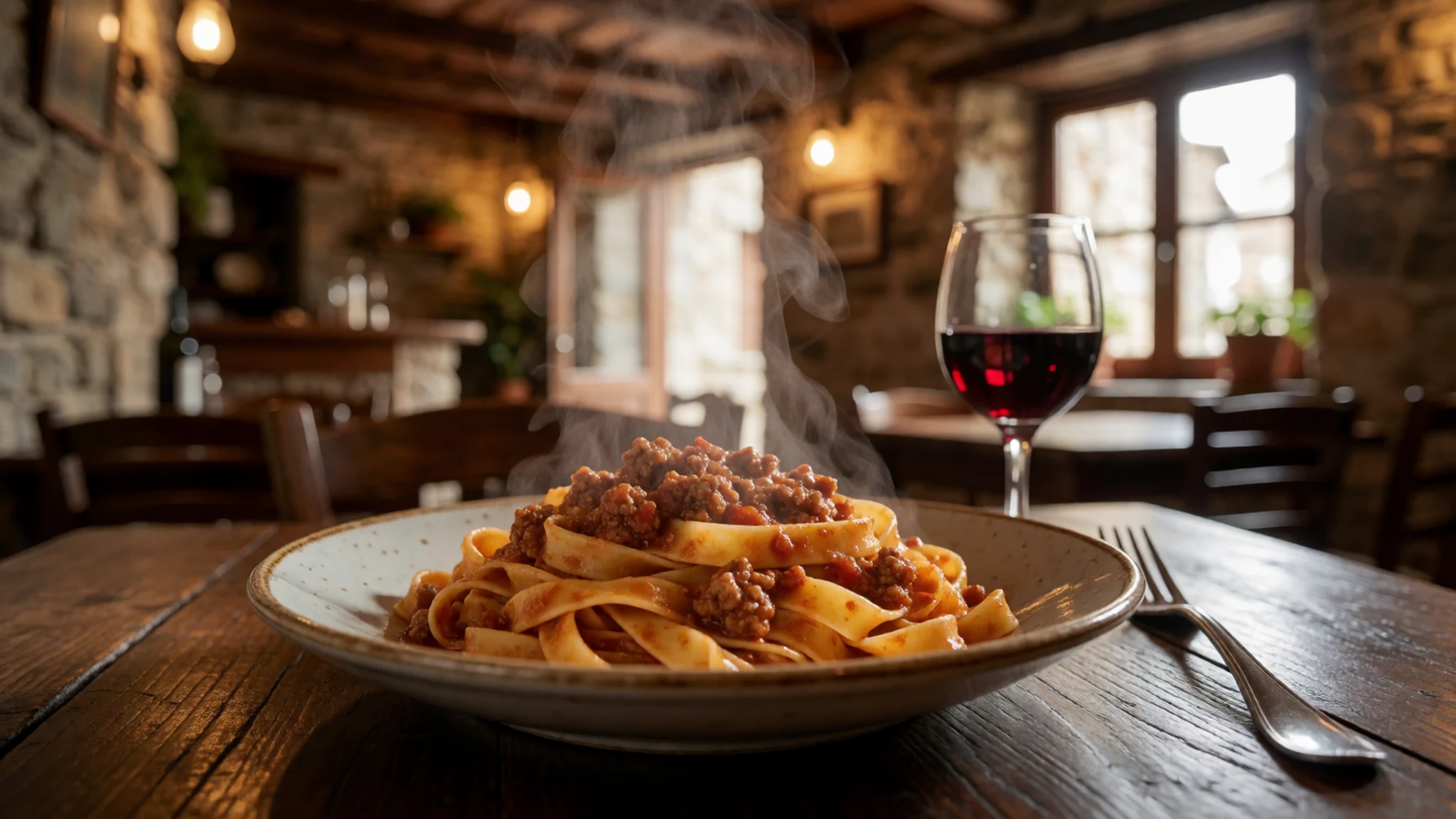
- Pizza to eat in or take away — A pizzeria on the central piazza
A pizzeria near the square serves pizza that can be eaten at a table or wrapped to take to a viewpoint. It is an easy choice for a late lunch or an early dinner. Sweets are often sold alongside, so a small pastry makes a good dessert.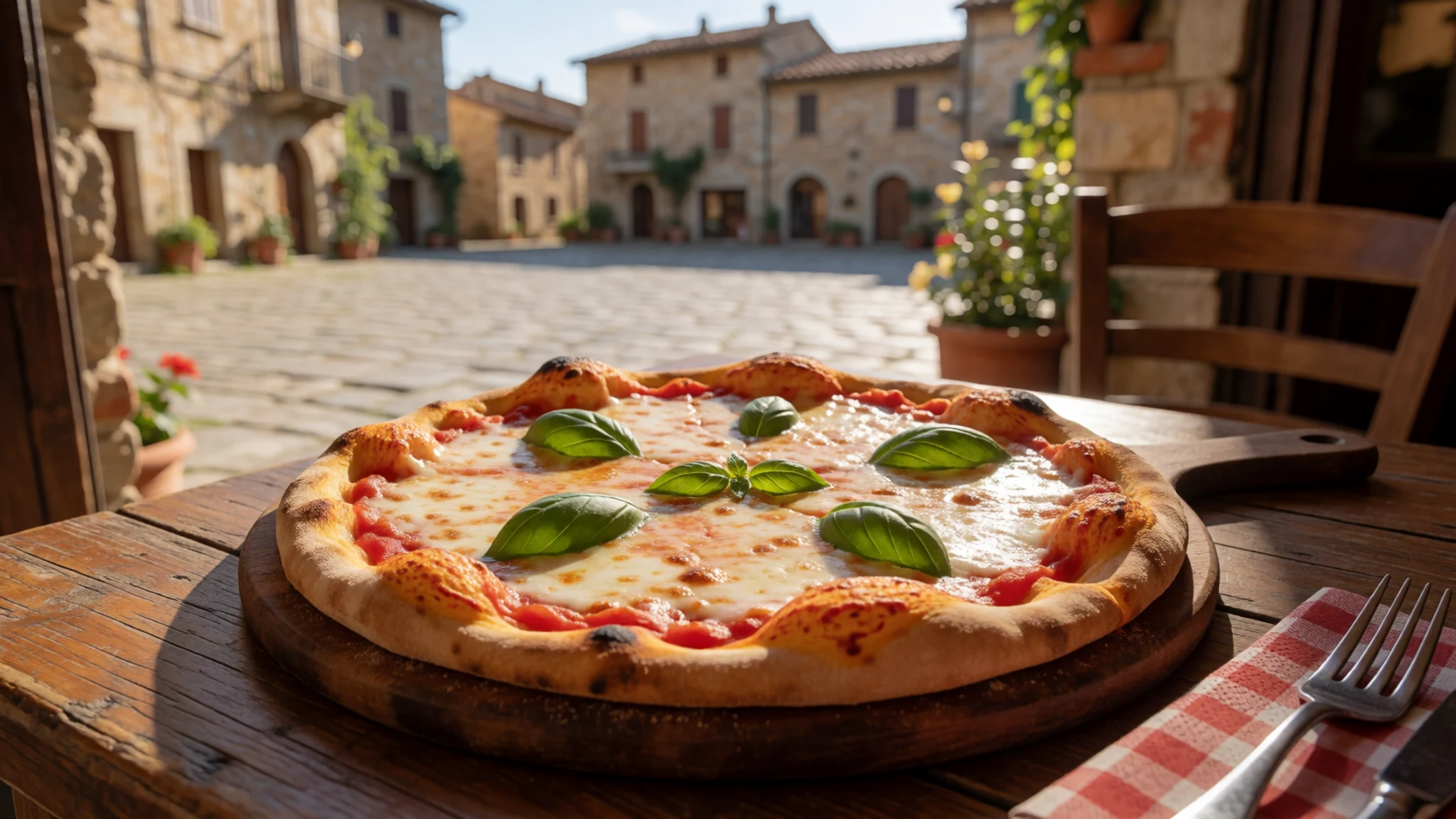
- Lunch on a rooftop terrace — A restaurant at the foot of the stone walkway into the village
Some restaurants at the foot of the stone walkway have rooftop terraces with a clear view over the valley. Book ahead on busy weekends, because the terraces fill at lunch. Expect pasta and grilled dishes, and treat the view as part of the meal rather than a reason to rush. - Local pasta on a covered patio — An osteria off the main square
An osteria near the piazza often has a covered patio, where diners can sit out of the sun. Look for dishes built around seasonal vegetables, beans and grilled meat, and order a jug of local wine to go with them. Service is unhurried, so give yourself time. - A picnic from the valley shops — The supermarket in Bagnoregio, below the hill
Buy bread, cheese, cured meats, fruit and water in Bagnoregio before you climb, because the village has few shops. Eat on the stone wall at the edge of the village with the valley in view. It is a relaxed and inexpensive way to spend a long afternoon.
Plan it
Best time. March and April bring the mildest days for walking and clear views over the valley, while May and October are warm but still workable. July and August are hot and busy, and the sun is fierce on the open ridge. Winter is quiet with fewer visitors, but the paths can be damp and cold.
How long. 2
Getting there. Fly into Rome, then travel north by train or car towards Orvieto. From Orvieto, take the Cotral bus to Bagnoregio, then a minibus up to the village, or walk the main road in about 15–20 minutes.
Budget. mid
Tips
- Leave the car in Bagnoregio, because cars cannot go up into the village.
- Visit early or late in the day, before the coach groups arrive around late morning.
- Wear shoes with good grip for the cobbles and the steep approach.
- Carry water and a hat in summer, since there is little shade on the open ridge.
- Keep some cash for small cafés and the footbridge toll, and check the official village website before you travel.
Etiquette
- Keep to the marked paths and stay well back from the crumbling edges.
- Keep noise low in the lanes, especially in the evening, when residents are at home.
- Stand back from the procession route on Good Friday and on festival days.
Nearby
Sources
- Wikidata Q431470 (CC0)
- Wikipedia, Civita di Bagnoregio (rev 1376480801) (CC BY-SA 4.0)
- Wikivoyage, Civita di Bagnoregio (rev 5359542) (CC BY-SA 4.0)
- Civita (Bagnoregio) - Panorama, New2022 (CC BY-SA 4.0)
- Panorama di Civita di Bagnoregio con vista della Valle dei Calanchi, Sidvics (CC BY-SA 4.0)
- Civita di Bagnoregio aerial panorama, June 2024, BobTanGo (CC BY 4.0)
- Civita di bagnoregio.jpg, unknown author (CC BY 2.5)
- Turists on their way to Civita di Bagnoregio, Ronavni (CC BY-SA 4.0)
- Billboard at the tourist parking lot, Civita di Bagnoregio, Peter K Burian (CC BY-SA 4.0)
- Palazzo che ospita il Museo geologico delle frane di Civita di Bagnoregio, Albarubescens (CC BY-SA 4.0)
- Bagnoregio hdr table, Alessio Damato (CC BY 3.0)


