Chittorgarh Fort
Chittorgarh Fort, India
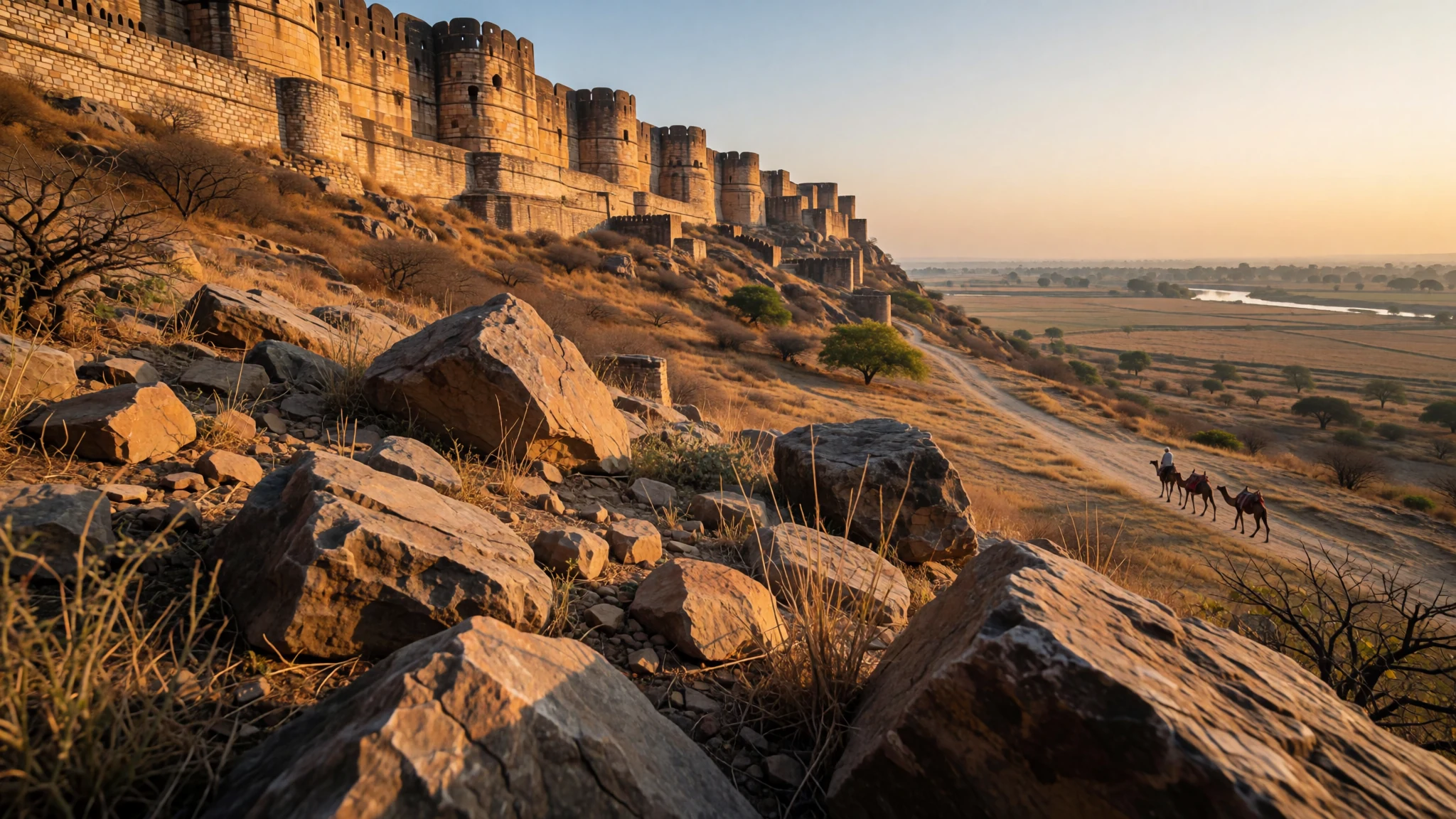
Rajasthan's great hilltop fort, a UNESCO site of palaces, temples and towers rising above the plains of Mewar.
The place
Chittorgarh Fort sits on a hill that rises about 180 m above the plains of southern Rajasthan, so it is visible long before the town itself. The word garh means fort, and this was once the capital of Mewar. The complex covers around 280 hectares, large enough that a visit is closer to a full walk than a short tour. Its 65 recorded structures include four palaces, a long list of temples, many water bodies and several victory towers. The Berach River drains the valley below, and the upper ramparts give a wide view over how the fort dominated the land around it.
The site was inscribed as a UNESCO World Heritage Site in 2013, as part of a group of six hill forts in Rajasthan, so it is often listed alongside Amber and Kumbhalgarh. The town sits in the south of the state, on the national highways that link Delhi and Mumbai, and the fort is reached by a winding road up the hill. A full morning is a sensible minimum. Paths are uneven, the open stretches have little shade, and the monkeys that live on the fort are best watched from a distance. Water, a hat and sturdy shoes matter more than the crowds, because the climb and the heat are the real challenge.
Its story
Chittorgarh was first known as Chitrakut, and the name Chittorgarh, meaning fort, came later. Local tradition credits its founding to the Mori ruler Chitrangada Mori, and one legend says the name itself comes from him. Fragments of small Buddhist stupas, dated on the basis of their script to the 9th century, have been found at the edge of the Jaimal Patta lake, which suggests the site was occupied long before the great walls went up.
The Guhila ruler Bappa Rawal is traditionally said to have taken the fort in 728 or 734 CE. Versions differ: one account has it arriving as a dowry, another has him defeating the Mori rulers after an Arab invasion of north-western India around 725 CE. Some historians doubt that the Guhilas held Chittor so early, pointing to the reign of the later ruler Allata as the first firm evidence. Either way, the fort became the seat of Mewar for centuries.
Its later history is a sequence of sieges. The fort passed between Rajput houses and sultans, and its garrisons faced attacks that ended in the jauhar, a mass self-immolation of women when defeat seemed certain. Rana Kumbha, who ruled in the fifteenth century, is credited with much of the building that survives. The Vijay Stambh tower commemorates his victory over the Sultan of Malwa in 1440, and the tower itself was raised between 1458 and 1468. The Meera Temple, built in 1449, is another of his works. In 2013 UNESCO recognised the site within a group of Rajasthan hill forts, which brought the old walls back into wider view.
What to see
- Vijay Stambh — Main fort complex
Vijay Stambh, the Victory Tower, is often called the symbol of Chittor and a bold statement of triumph. Rana Kumbha raised it between 1458 and 1468 to mark his win over Mahmud Shah I Khalji, Sultan of Malwa, in 1440. Its surface is densely carved, and it stands near the main entrance area, so it is usually the first major monument visitors reach.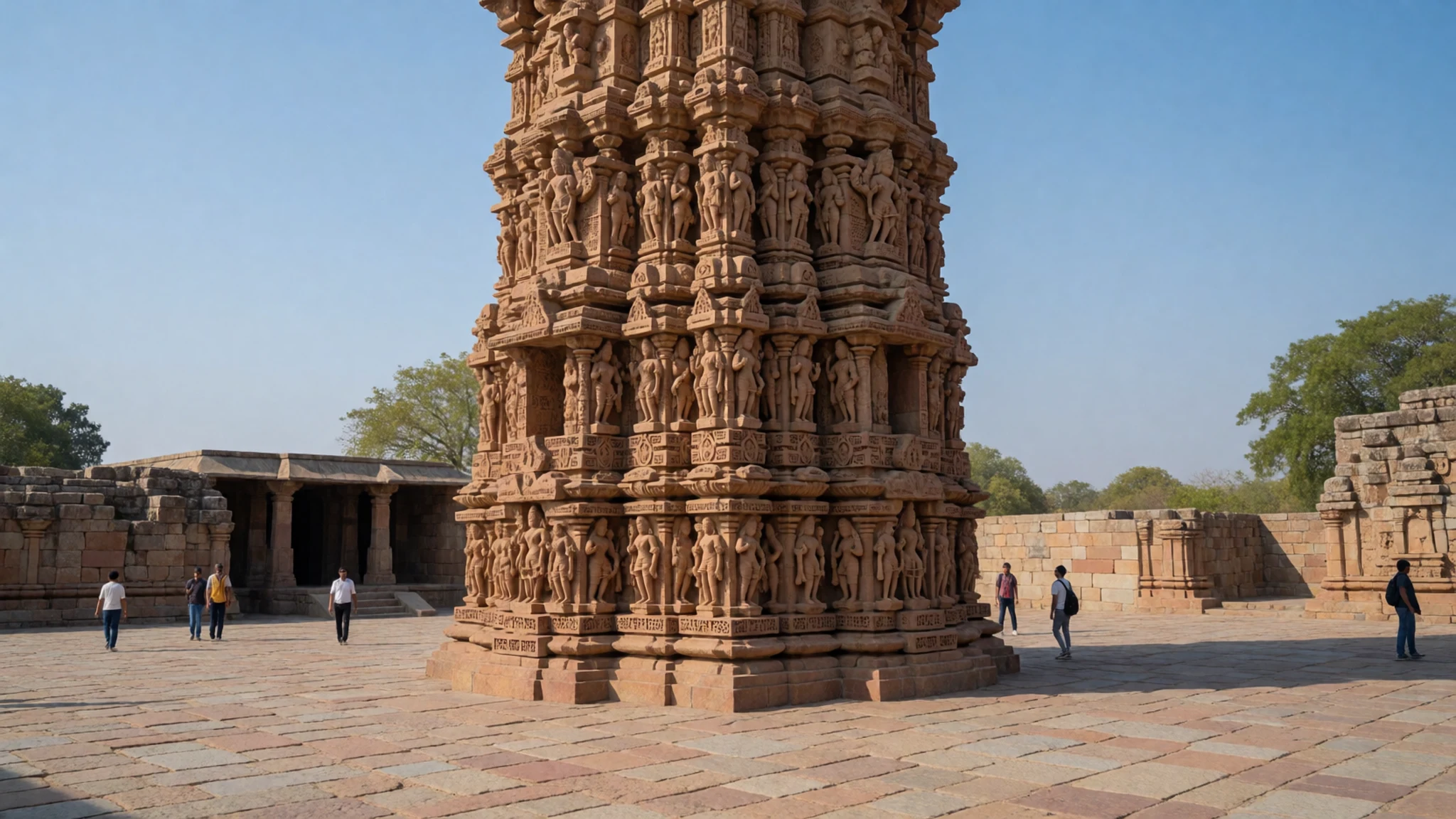
- Kirti Stambha — Inside the fort walls
Kirti Stambha, the Fame Tower, is a 22 m high tower built on a broad base and carved on the outside with Jain sculptures. It is older than the Victory Tower, probably dating to the twelfth century. Its carvings make it a useful counterpoint to the Hindu temples nearby, and it shows how religious life on the hill went well beyond the royal story.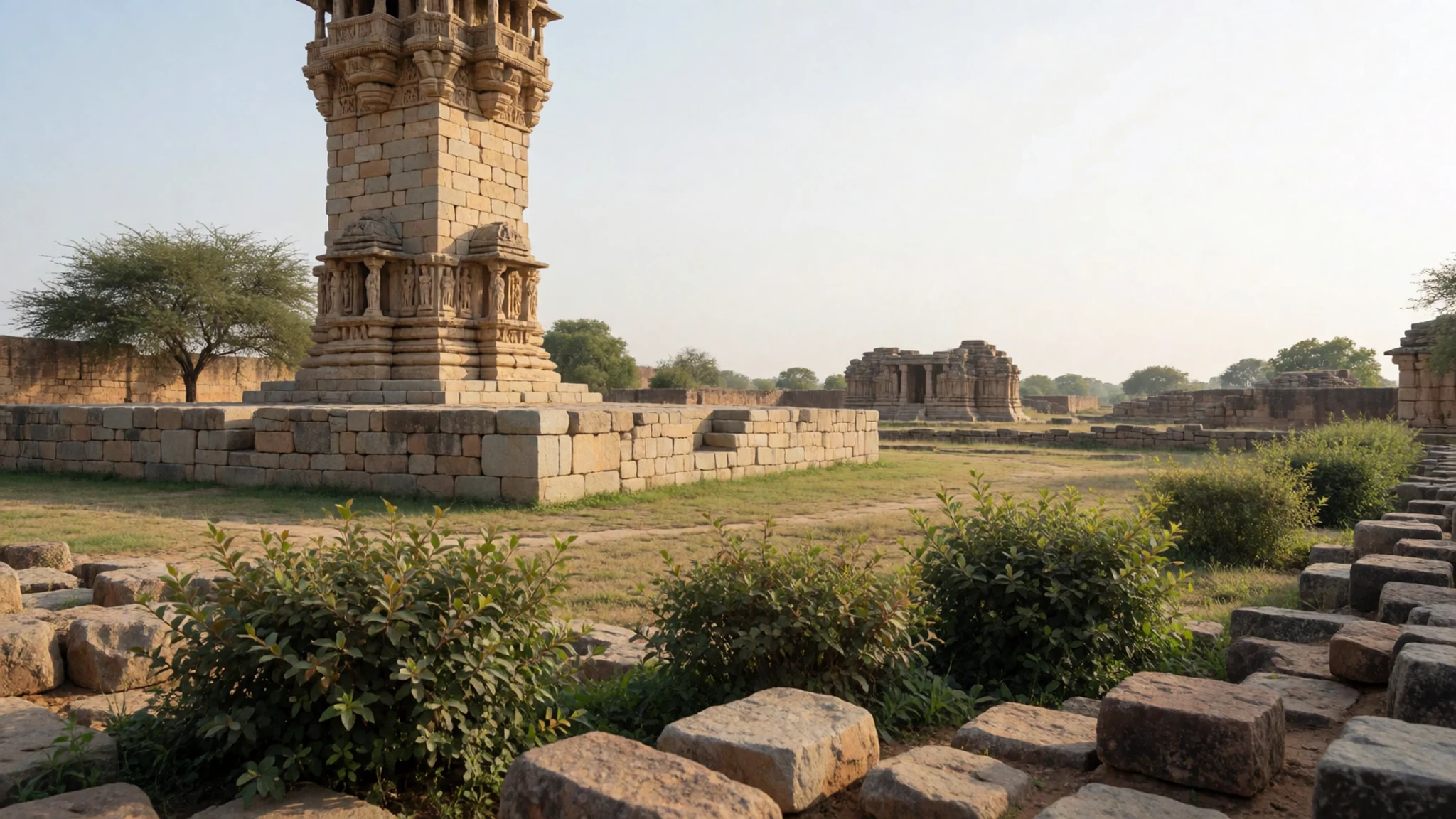
- Rana Kumbha's Palace — Near the entrance gate
Near the entrance gate and the Vijay Stambh, the ruins of Rana Kumbha's Palace are among the older monuments on the site. Its layout once included elephant and horse stables and a temple to Lord Shiva, so it was a working royal complex as much as a residence. Little stands above the foundations now, so visitors should read the plan of the rooms rather than expect intact walls.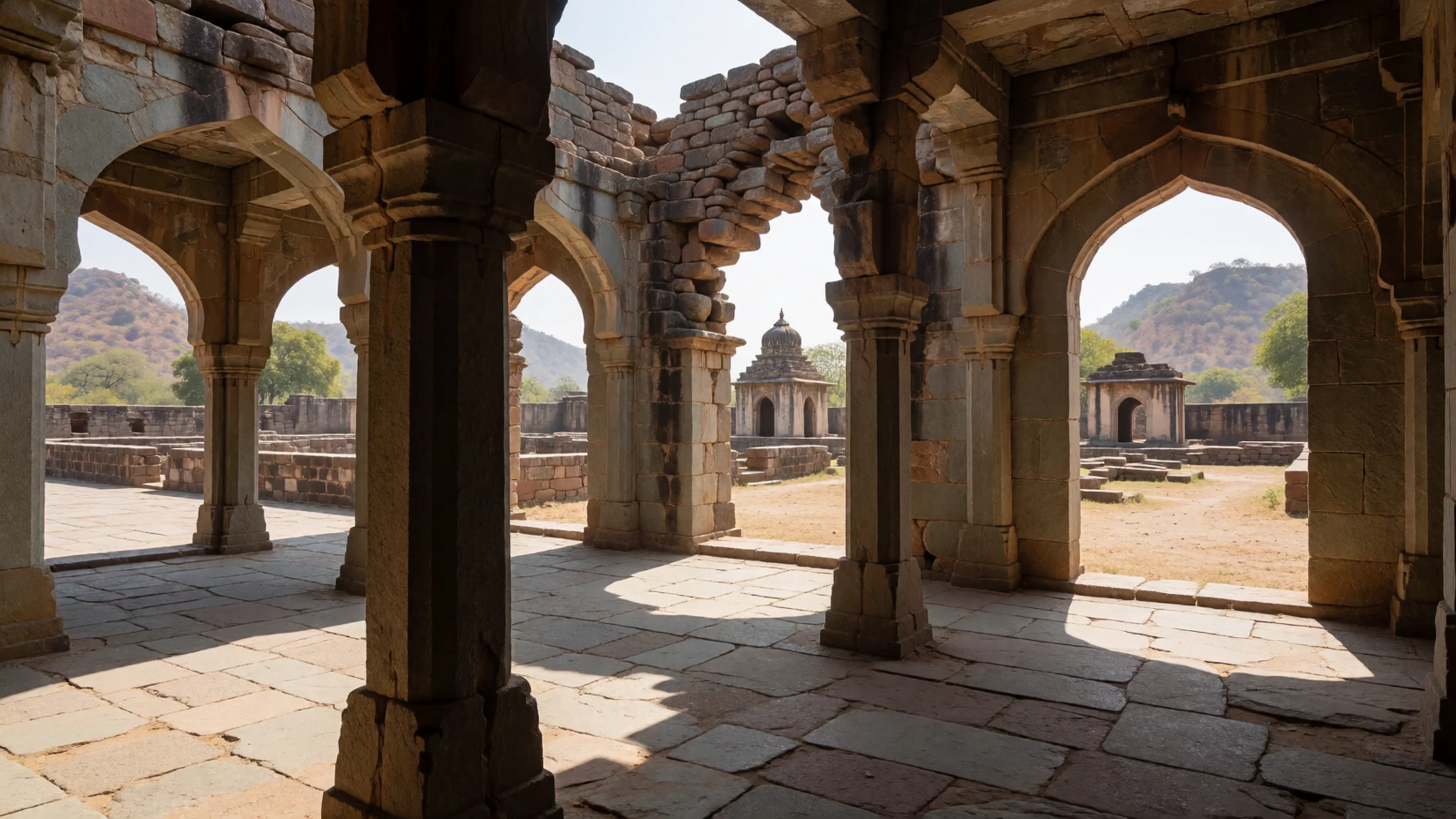
- Padmini's Palace — Southern fort
Padmini's Palace stands in the southern part of the fort, a white three-storey building that is a nineteenth-century reconstruction of an earlier palace. It is linked to the Padmavati legend, and the water around it gives the place a calm, almost pastoral character. Its setting by the tank is the view that painters of the nineteenth century most often recorded.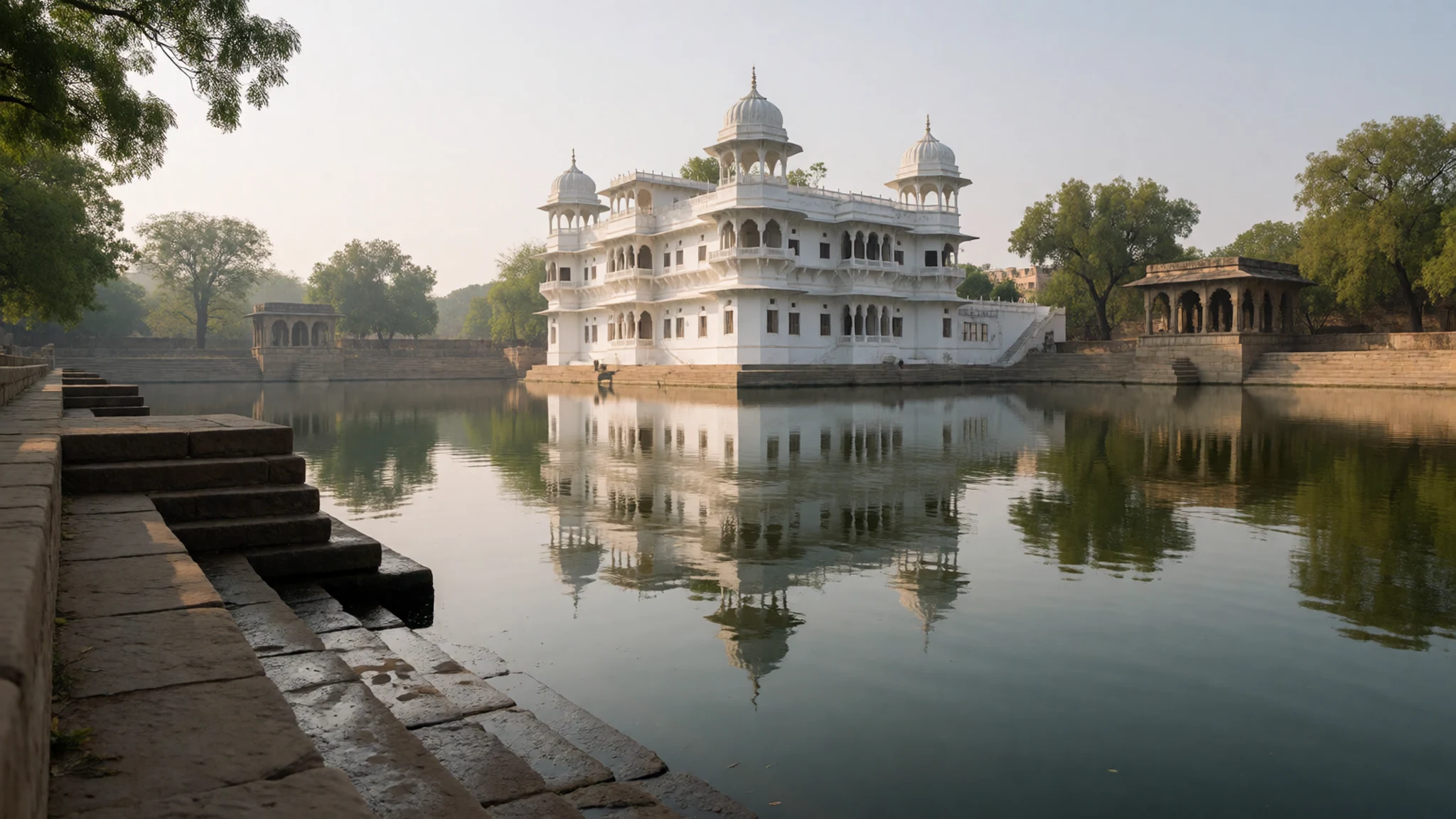
- Meera Temple — Inside the fort
Built in 1449 by Maharana Kumbha, the Meera Temple is dedicated to Lord Vishnu and holds carved idols in its sanctum, mendap and pillars. A small temple to Lord Krishna stands in the same enclosure. The interior carving is the main draw, so allow time to look up at the pillars rather than rushing through.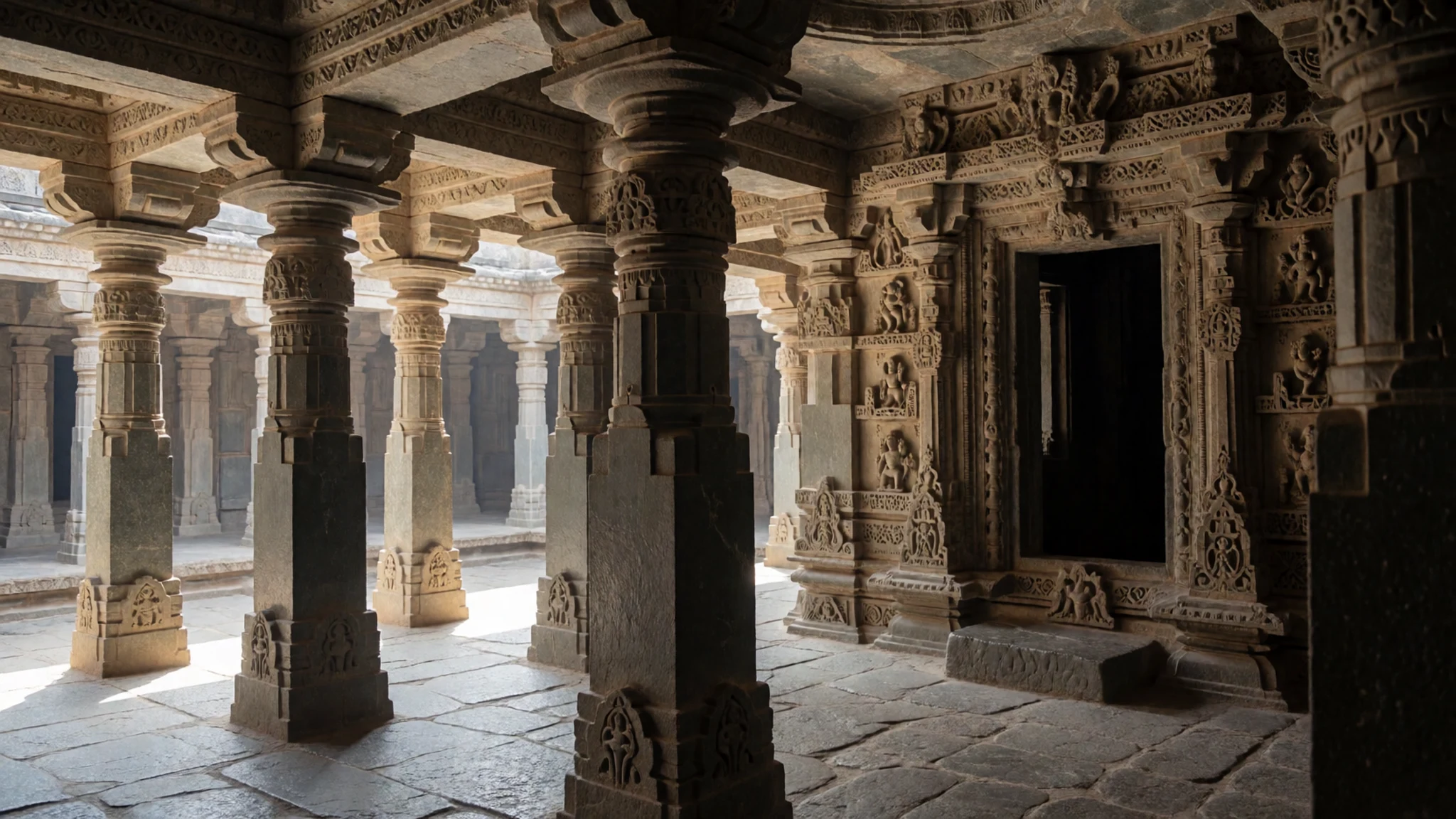
Culture
Chittorgarh Fort is closely tied to Rajput memory, and the Jauhar Meala is the clearest expression of that. Held each year on the anniversary of one of the jauhars, it is generally understood to commemorate the jauhar associated with Padmavati, the most famous of the three that took place at the fort. Descendants of many princely families take part in a procession, and the gathering has also become a forum for people to air their views on current politics, so the mood can be earnest and sometimes charged. Many of the fort's Hindu and Jain sites remain active places of worship. Men and women are expected to dress modestly, and covering shoulders and knees is the simplest way to show respect at shrines. Ask before photographing people at prayer or in the procession, and keep your voice low inside sanctums.
What to wear
Traditional dress around Chittorgarh follows the wider Rajasthani pattern. Women wear the ghagra, a full pleated skirt, with a fitted blouse and a long odhni, the shawl-like scarf often made in bright cotton or silk. Bandhani, a tie-dye technique using tiny knotted dots, is the textile most associated with the state, and bandhani odhnis still appear at festivals and weddings. Men traditionally wore a dhoti or a turban, the pagri, which remains common at weddings and ceremonies.
Day to day, people in Chittorgarh wear shirts, trousers, kurtas and jeans, with a mix of saris and salwar kameez for women. The turban survives mainly on ceremonial occasions and among older men in rural areas. At the Jauhar Meala some participants dress in traditional clothing, which is a striking sight but not a dress code for visitors.
For a visit, dress for the heat first. Loose cotton or linen in light colours keeps the sun off, and a hat and sunglasses matter on the open stretches. Cover shoulders and knees for the temples and shrines, and carry a scarf that can double as a head covering. Choose closed, sturdy shoes with good grip for the uneven stone paths and steps, since the climb is the physical part of the day.
What to eat
- Dal baati churma — Rajasthani thali restaurants and eateries that list local dishes in the town
Dal baati churma is the state's best-known dish: hard baked wheat dumplings soaked in ghee, served with a lentil dal and a sweet crumble of crushed wheat with jaggery. It is rich, so start with a small portion. It appears on the menus of several town restaurants that serve local dishes.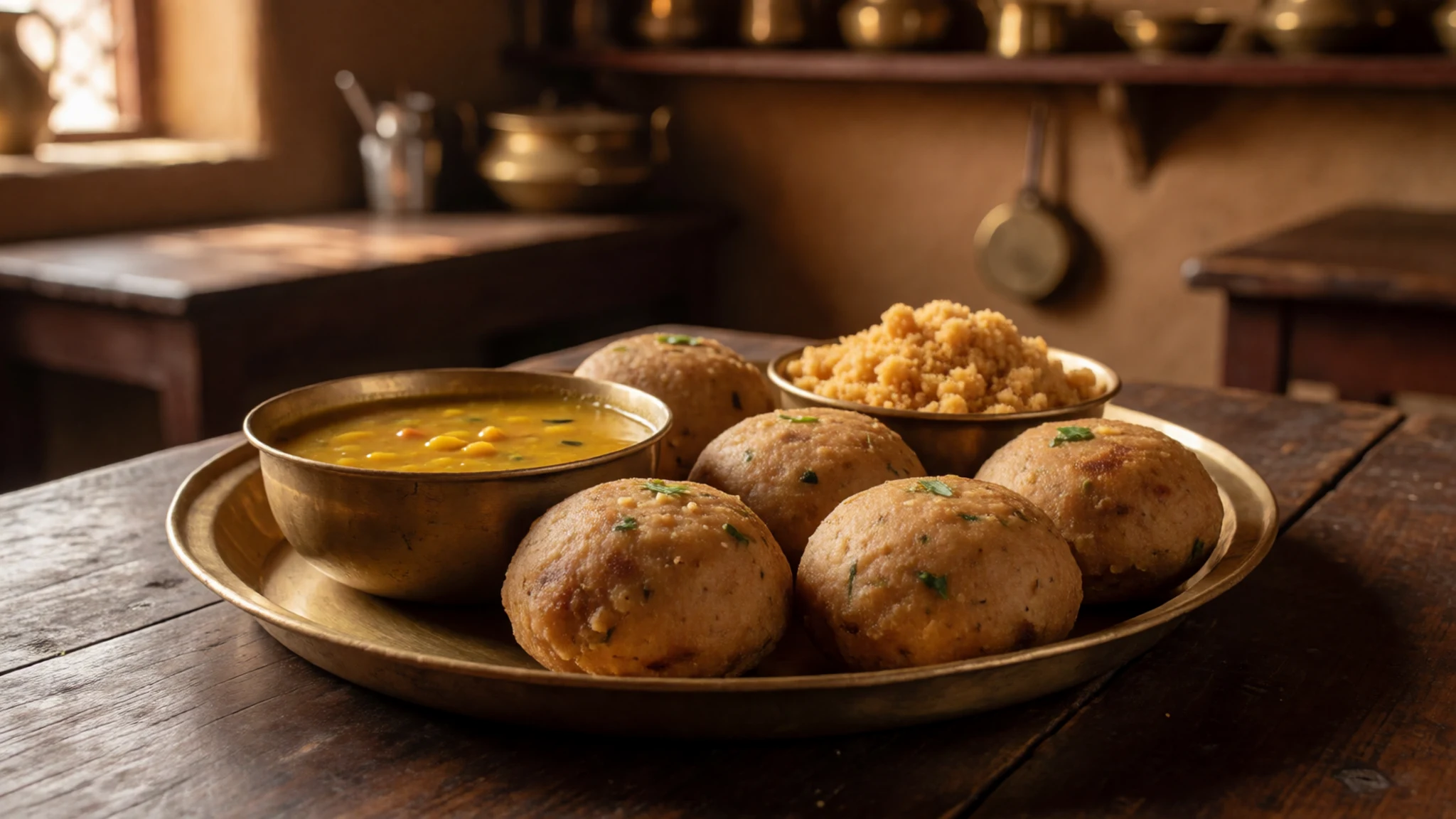
- Lal maas — Restaurants offering traditional Rajasthani meat dishes
Lal maas is a mutton curry in a deep red chilli gravy, traditionally cooked in Rajput kitchens and usually eaten with bajra roti or bread. Order it at a restaurant that lists local Rajasthani dishes, and ask how hot the kitchen makes it before you commit.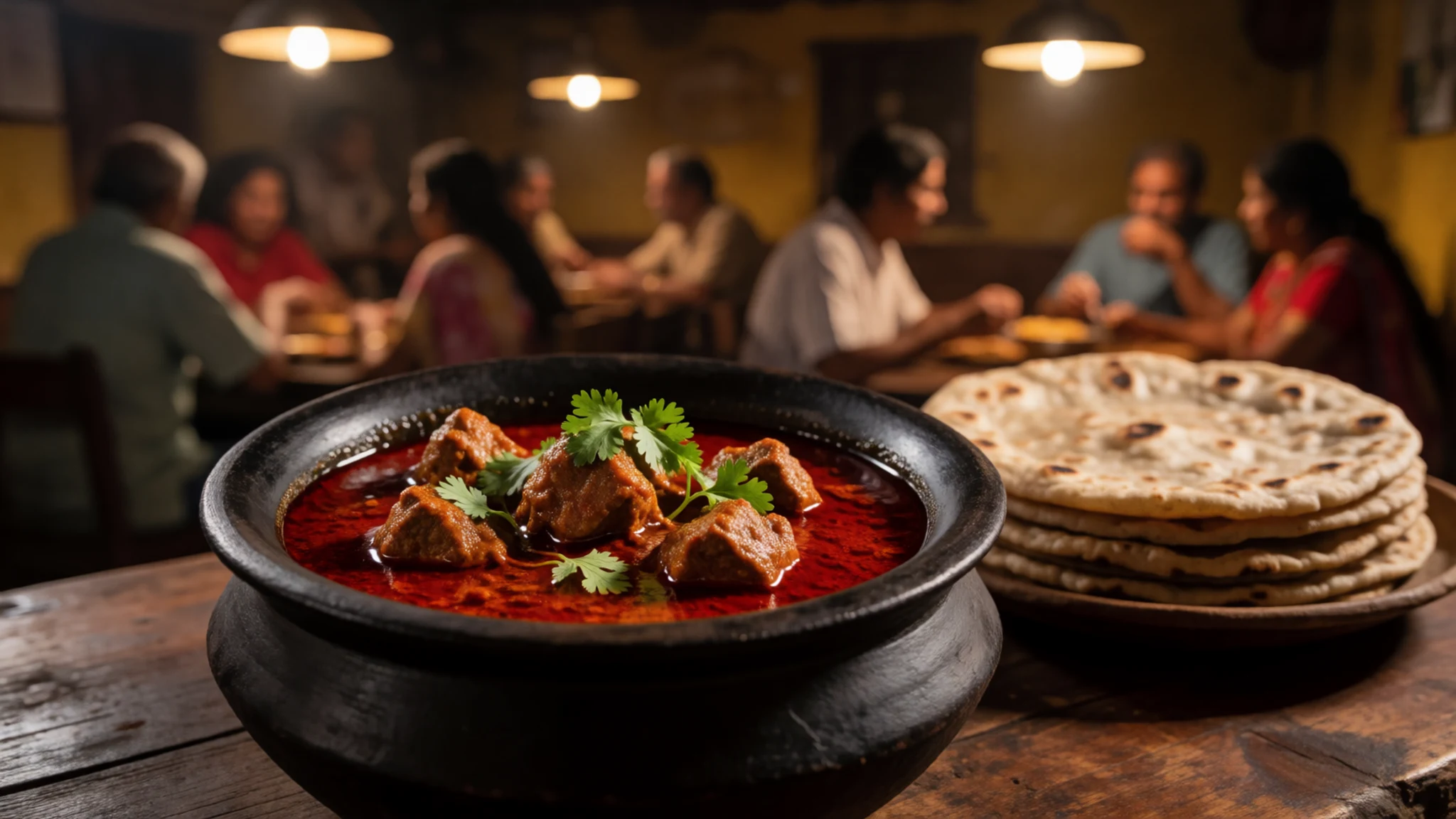
- Stuffed paranthas — Morning stalls and roadside joints in the town centre
Stuffed flatbreads, usually filled with potato, cauliflower or paneer, are cooked on a griddle and served with yoghurt and pickle. They are a breakfast food, so go early in the day. Roadside stalls and basic eateries in the town centre are the usual places to find them.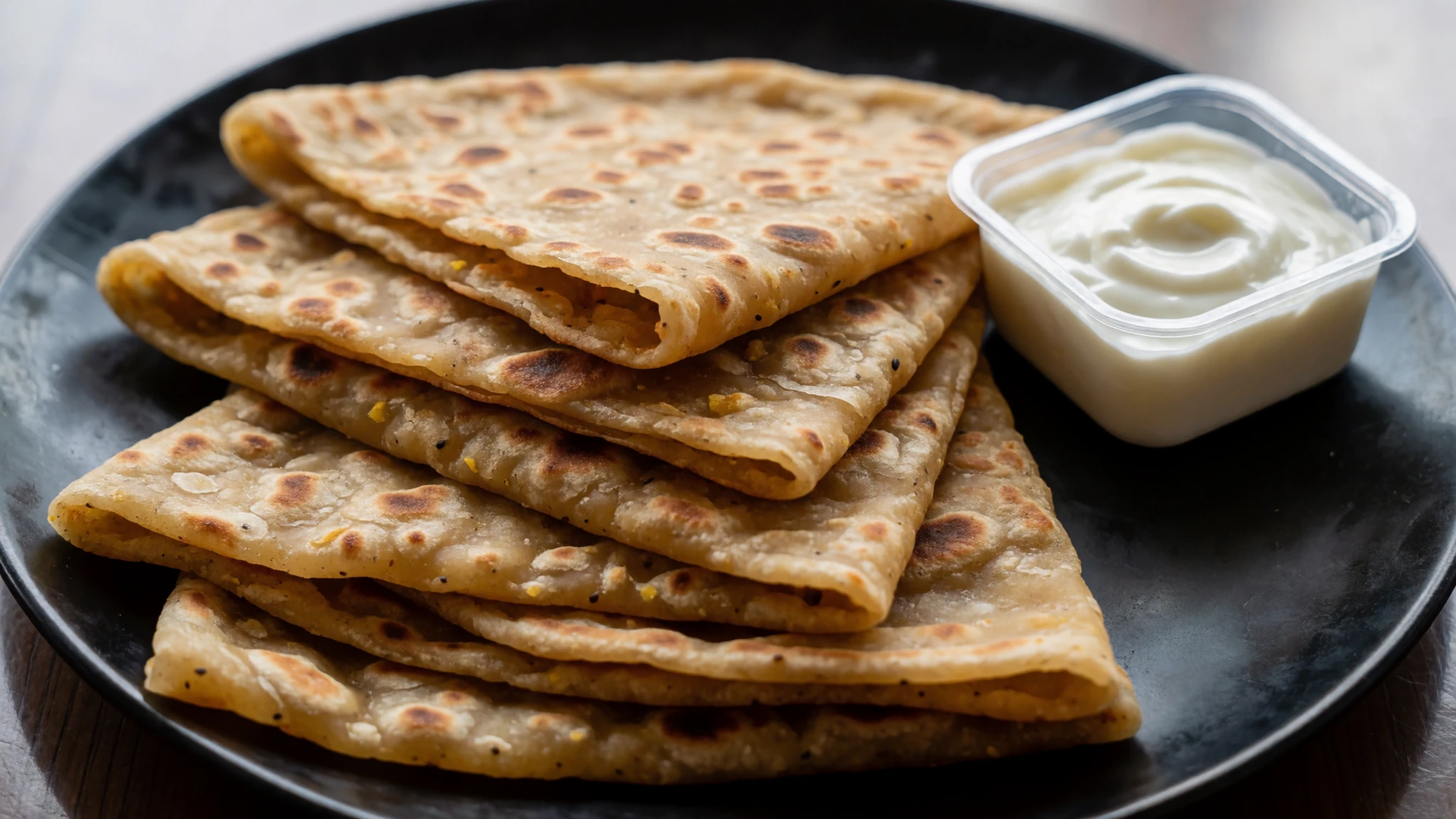
- Pure vegetarian thali — Vegetarian restaurants and family-run eateries across the town
Many restaurants in the town serve pure vegetarian meals, and a thali brings several small dishes on one plate, typically dal, a vegetable curry, rice and bread. It is an easy lunch after a morning on the fort, when you want to eat without much planning.
Plan it
Best time. The most comfortable months are roughly December to February, when highs are about 33 to 37°C, since much of the fort is open ground and October and March still reach about 40°C. Avoid April to June, the hottest months, and the heavy monsoon rains of July and August.
How long. 2–3
Getting there. The nearest airport is Maharana Pratap Airport at Udaipur, about 90 km away. Chittorgarh railway station connects to Ahmedabad, Jaipur, Ajmer, Kota, Udaipur and Delhi, and the last leg to the fort is by taxi or auto-rickshaw.
Budget. low
Tips
- Go early, before the heat builds, because the upper areas have little shade
- Wear strong shoes and carry water and a hat; the climb is steep
- Keep your distance from the monkeys and do not leave food in open bags
- Carry cash for small stalls and auto-rickshaws, and check current opening times and fees locally before you set out
- Base yourself in Chittorgarh for the fort, or in Udaipur if you want more choice of restaurants and hotels
Etiquette
- Remove your shoes before entering any temple sanctum or shrine
- Ask before photographing people, especially those at prayer
- Dress covered at temples and Jain sites
Nearby
Sources
- Wikidata Q3695769 (CC0)
- Wikipedia (rev 1377084198) (CC BY-SA 4.0)
- Wikivoyage (rev 5396623) (CC BY-SA 4.0)
- Photo 01 chittorgarh-fort.jpg (Ssjoshi111) (CC BY 3.0)
- Photo 02 a-painting-of-the-fort-1857.jpg (Marianne North) (Public domain)
- Photo 03 oil-painting-of-padmini-s-palace (Marianne North) (Public domain)
- Photo 04 chittorgarhfortwaterreflection.jpg (Arne Hückelheim) (CC BY 3.0)
- Photo 05 ganesh-staue-at-chittorgarh-fort-rajasthan.jpg (Koshy Koshy) (CC BY 2.5)
- Photo 06 chittorgarh-fort-map.jpg (Amitbanerjee0143) (CC BY-SA 4.0)
- Photo 07 jain-mandir-chittorgarh.jpg (Ssjoshi111) (CC BY 3.0)
- Photo 08 jain-temple-inside-chittorgarh-fort.jpg (Sujay25) (CC BY 3.0)


