Chilika Lake
Chilika Lake, India
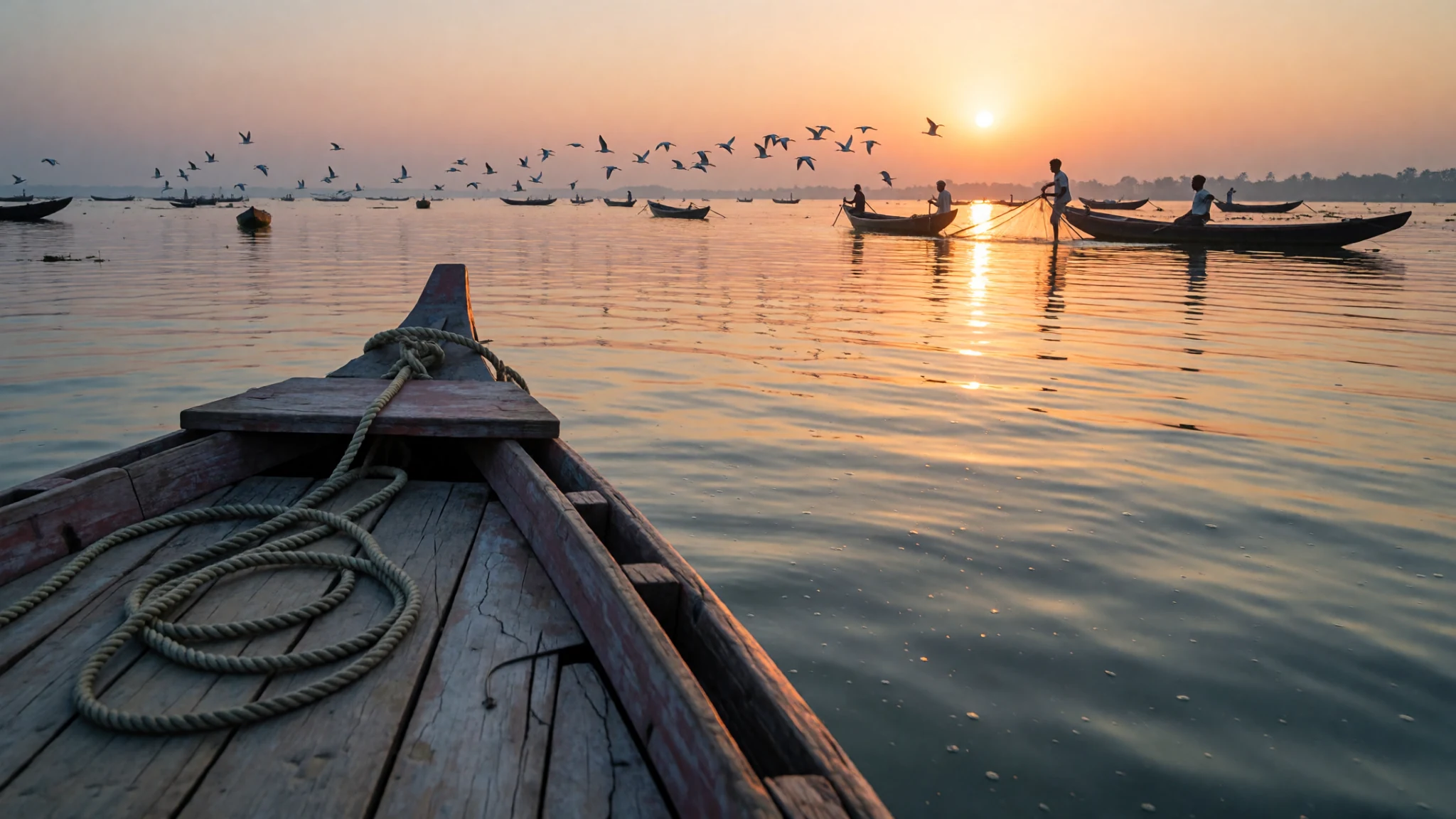
Odisha's Chilika Lake is a shifting, bird-filled lagoon where dolphins and fishing boats share the water.
The place
Chilika Lake sits on Odisha's east coast, spread across the Puri, Khordha and Ganjam districts, where the Daya River reaches the Bay of Bengal. It is a lagoon of mixed water: fresh where rivers pour in, close to sea-salt where tides push through the mouth. Its size changes with the seasons. In summer it shrinks to roughly 900 square kilometres, while the monsoon swells it to about 1,165. Few visitors arrive expecting that kind of change, and the shoreline villages plan their livelihoods around it. The lake is a Ramsar wetland, and it was among the first two Indian wetlands given that status, in 1981. It has since won a conservation award for how it is managed. More than 225 bird species have been recorded here, along with the endangered Irrawaddy dolphin and a wide range of fish, shellfish and aquatic plants. Around 200,000 fisherfolk from more than 130 villages depend on the lake, so it is as much a working landscape as a nature reserve. Getting around means getting onto the water. Boats leave from Rambha, Barkul, Satapada and Tampara, and the main draw in winter is the migratory birds that settle on its mudflats and sandbars. Islands such as Nalabana sit in the middle of the lake. The landscape is flat and hazy rather than dramatic, and the appeal lies in the wide water, the reed beds and the sky full of wings. Crowds are light compared with the big Indian monuments, but weekends and festival days bring more boats onto the lake.
Its story
Chilika was not always a lagoon. Geological evidence points to the sea reaching this stretch of coast during the later Pleistocene, when sea and land were still rearranging themselves. Over long periods the coastline pulled eastward, cutting the bay off behind sandbars and leaving the lagoon we see today, a place where river and tide still negotiate. Archaeology at Golabai, on the Malaguni River, a tributary of the Daya, shows people living around the lake for a long time. The Archaeological Survey of India excavated the site and found a sequence running through Neolithic, Chalcolithic and Iron Age phases. Radiocarbon dating traced the earliest layer to about 2300 BCE. Woodworking adzes were among the many items recovered, and Golabai is the sole dig in Odisha that has uncovered evidence of boatbuilding. That detail matters: it suggests the lake offered a route to the sea and a reason to build boats. Early texts describe the southern part of the lake as a busy harbour for seaborne trade. Kharavela, king of Kalinga, was remembered as the 'Lord of the Sea', a title that hints at naval power or at least a close bond with the water. Ptolemy, writing around 150 CE, placed a port called Paloura near the lake's southern edge, from which ships sailed for Southeast Asia. The coast has continued to shift. The Konark Sun Temple was built on the seashore centuries ago and now stands about 3 km inland, a reminder that this shoreline has been moving for a very long time.
What to see
- Nalabana Bird Sanctuary — Central lake, Puri and Khordha districts
Nalabana Bird Sanctuary covers a large island near the middle of the lake and is protected under the Wildlife Protection Act. Its mudflats and reed edges draw waterbirds in good numbers, especially in winter, and the open water gives clear views of them. Boats reach the island from the mainland villages. Check landing rules with the forest department first.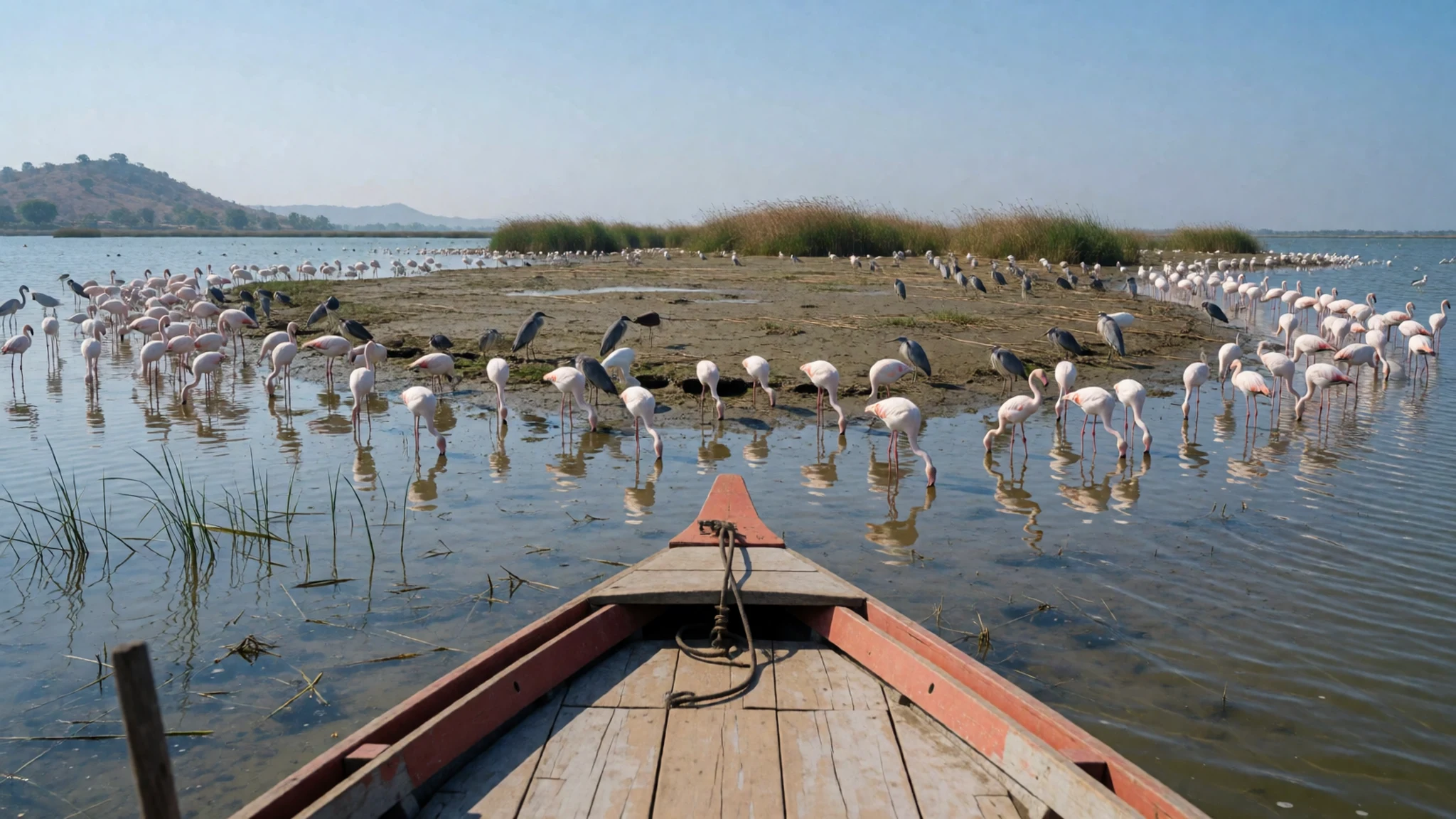
- Satapada and Dolphin Point — Satapada, Puri district
Satapada sits on the lake's outer edge, near a spot known as Dolphin Point. This is where the critically endangered Irrawaddy dolphin can be seen, and bottle-nosed dolphins turn up now and then. Chilika is one of only two lagoons in the world where Irrawaddy dolphins are found. Daily local buses link the village with Puri, and early morning is the calmest time on the water.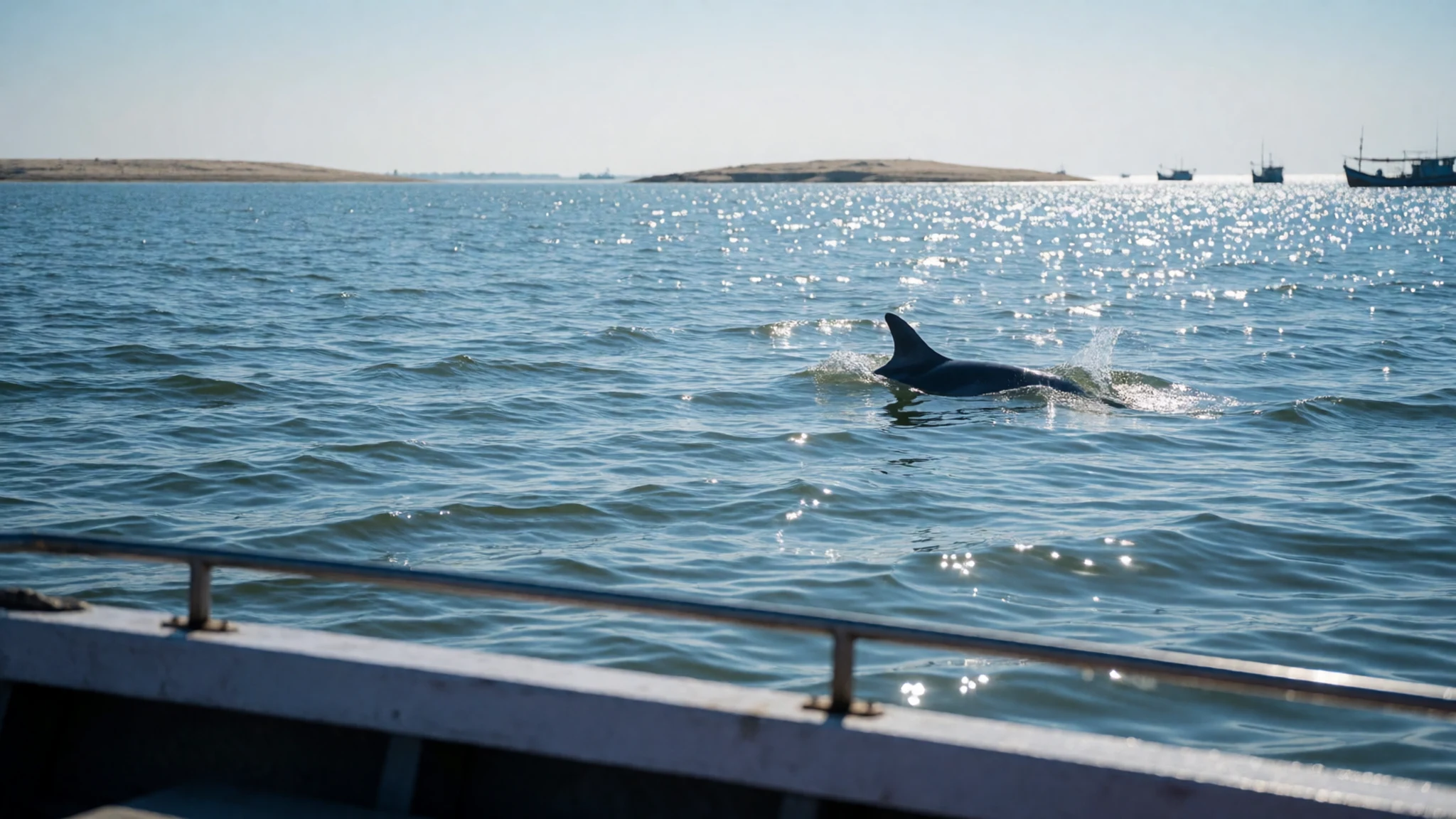
- Kalijai Island — Near Barkul, Khordha district
Kalijai Island is home to a shrine to the goddess Kalijai, and it sits very close to Barkul. Pilgrims crowd onto the island in January for the Makar Mela, held around Makar Sankranti, when the shrine is at its busiest. On ordinary days it is quiet, and the short boat trip offers good views across the lake.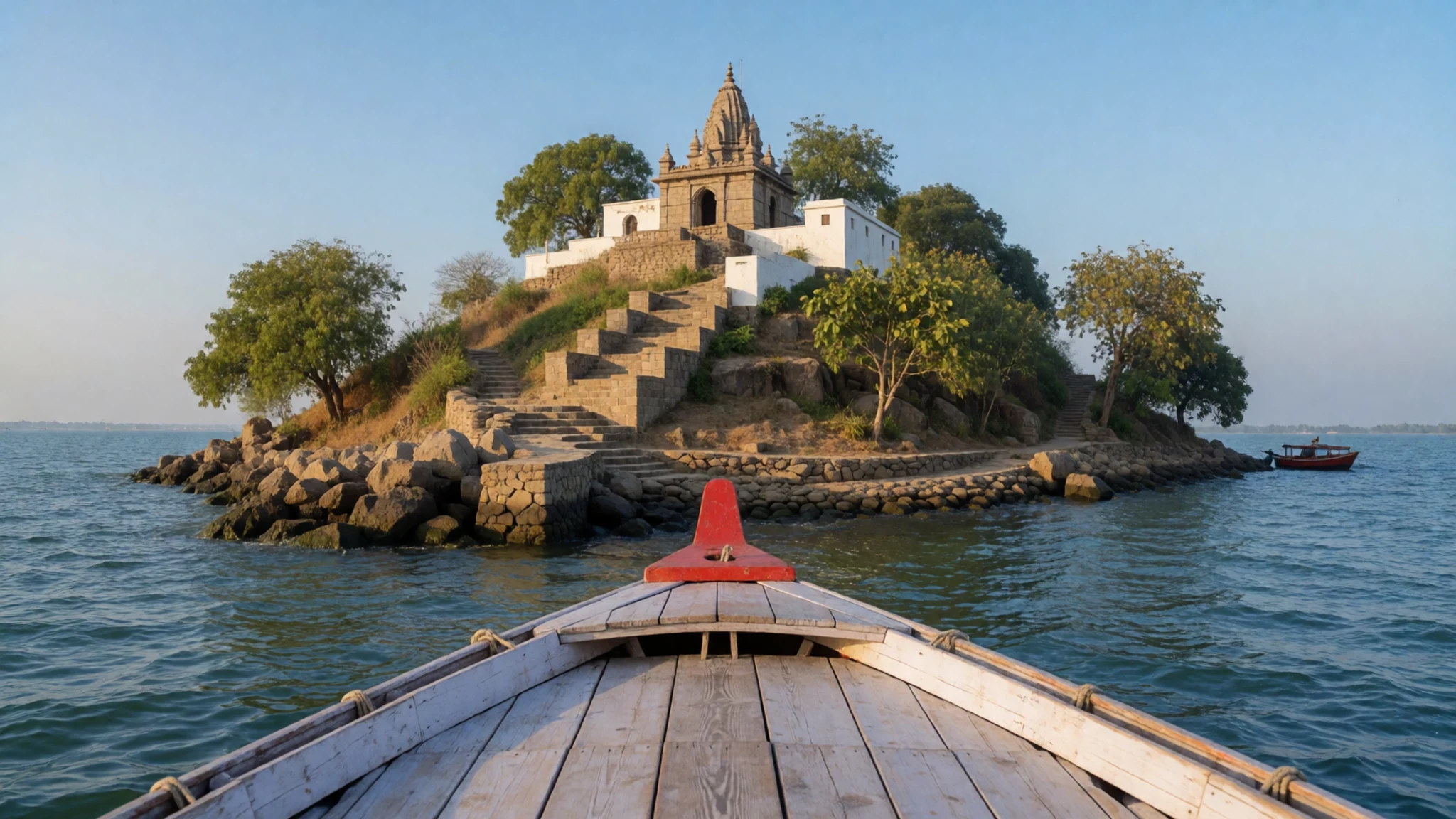
- Breakfast Island — Lake off Rambha, Ganjam district
Boats reach Breakfast Island in about 20 minutes from Rambha. Many people pack breakfast from the OTDC panthanivas and eat it there in clear, open surroundings. Beacon Island and Honeymoon Island are close by, so the trip can be stretched into a longer loop. There is little shade on the sandbars, so water and a hat are sensible.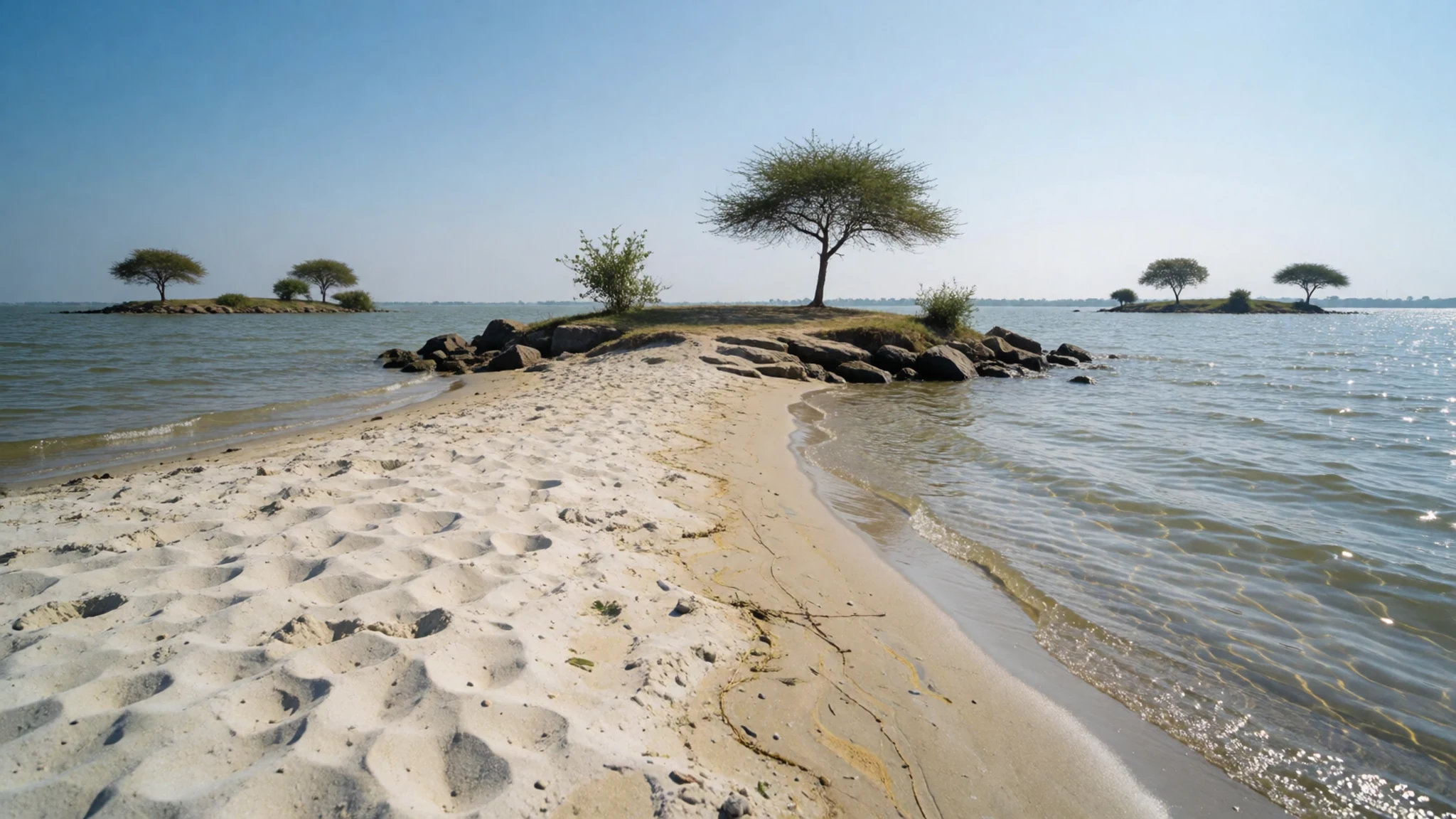
- Mangalajodi — Northern lake, Khordha district
Mangalajodi was once a village of poachers, and it has since turned into a community-owned wildlife venture. Local people guide visits and run the boats, and the income stays in the community through Mangalajodi Ecotourism. It is one of the best ways to see birds on the lake with people who know its channels well. Going with local guides directly supports the village.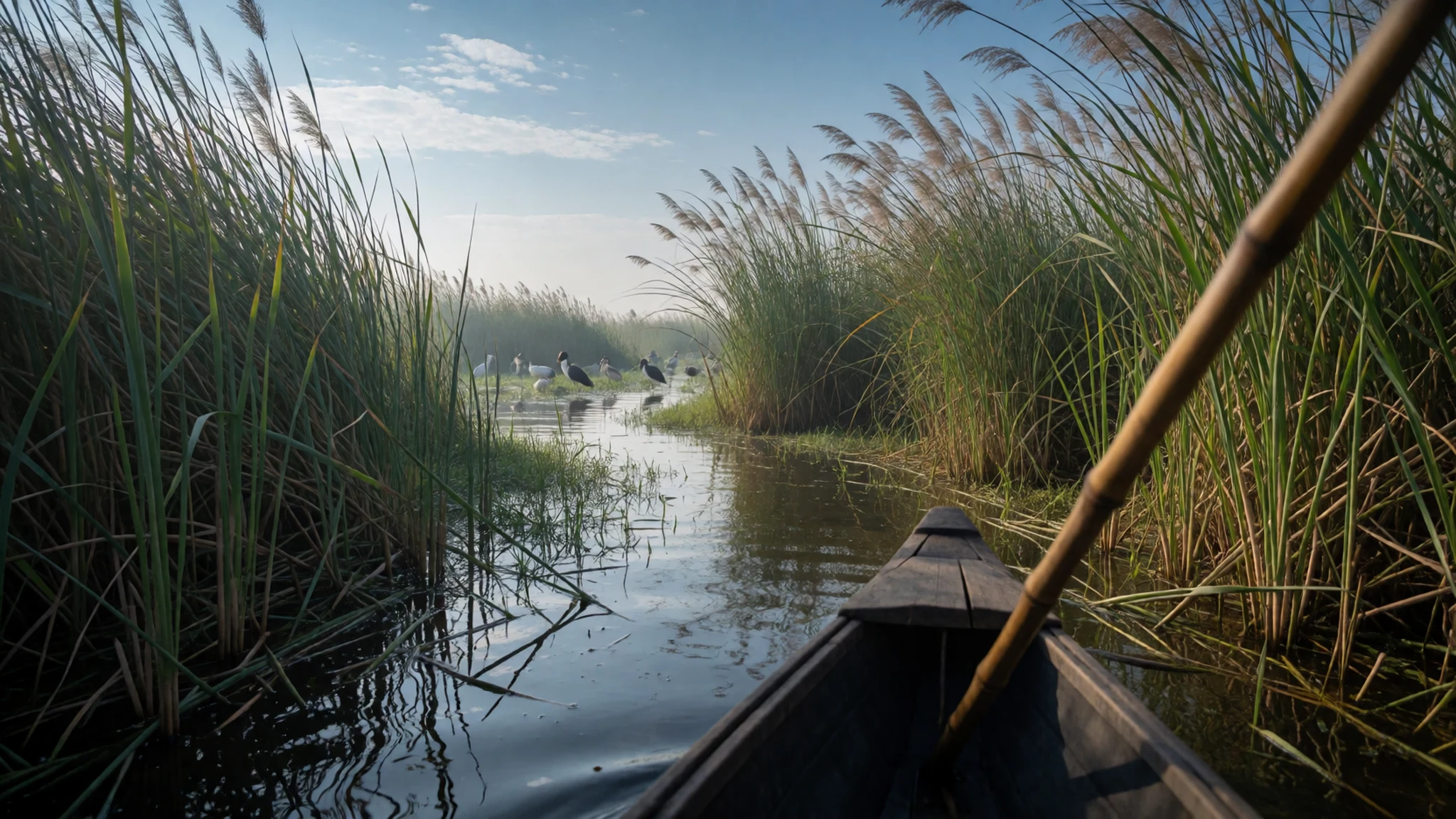
Culture
Chilika is a working lake before it is a destination. Around 200,000 fisherfolk from more than 130 villages depend on its waters, so nets, drying racks and small wooden boats are part of the everyday scene along the shore. Odia is the language of the villages and the boatmen, and a few words of greeting go a long way. The island shrine of Kalijai draws pilgrims in large numbers, especially in January during the Makar Mela around Makar Sankranti, when the island becomes busy and devotional. Many visitors come for birds and dolphins, but the people who live here are fishing, farming and running boats for a living, and their homes and temples are not tourist sites. Dress modestly, keep voices down near shrines, and ask permission before photographing a fishing family or anyone at worship, and take your shoes off before stepping onto a shrine floor.
What to wear
Odisha's traditional dress centres on handloom weaving. Women have long worn saris woven in cotton or silk, and the state is known for ikat work, including the sambalpuri patterns often used for saris and dress lengths. Men traditionally wore a dhoti or a lungi, usually in cotton. These textiles are still worn for festivals, weddings and temple visits more than for everyday work. Day to day, people around Chilika mostly wear practical clothes. Women wear saris, salwar kameez or a simple blouse with a long skirt, and men wear shirts with trousers or lungis, especially among fishing families who work on the water. Many people wear sandals or go barefoot on the boats and sand. For a visit, light cotton or linen in pale colours suits the heat and spray. Long trousers or knee-length skirts, and a shirt with sleeves that cover the shoulders, are the sensible choice for shrines. A wide-brimmed hat, sunglasses and a light layer for early boat rides are useful. Closed shoes that can get wet work better at the landings than flip-flops, and a scarf for the head helps at temples.
What to eat
- Crab curry — The dhabas near Barkul and Rambha
Crab is the lake's most talked-about dish, usually cooked as a spiced curry with a thick gravy. Chilika is known for sea food such as crab and prawn, and the best plates tend to come from places close to the villages where the catch lands.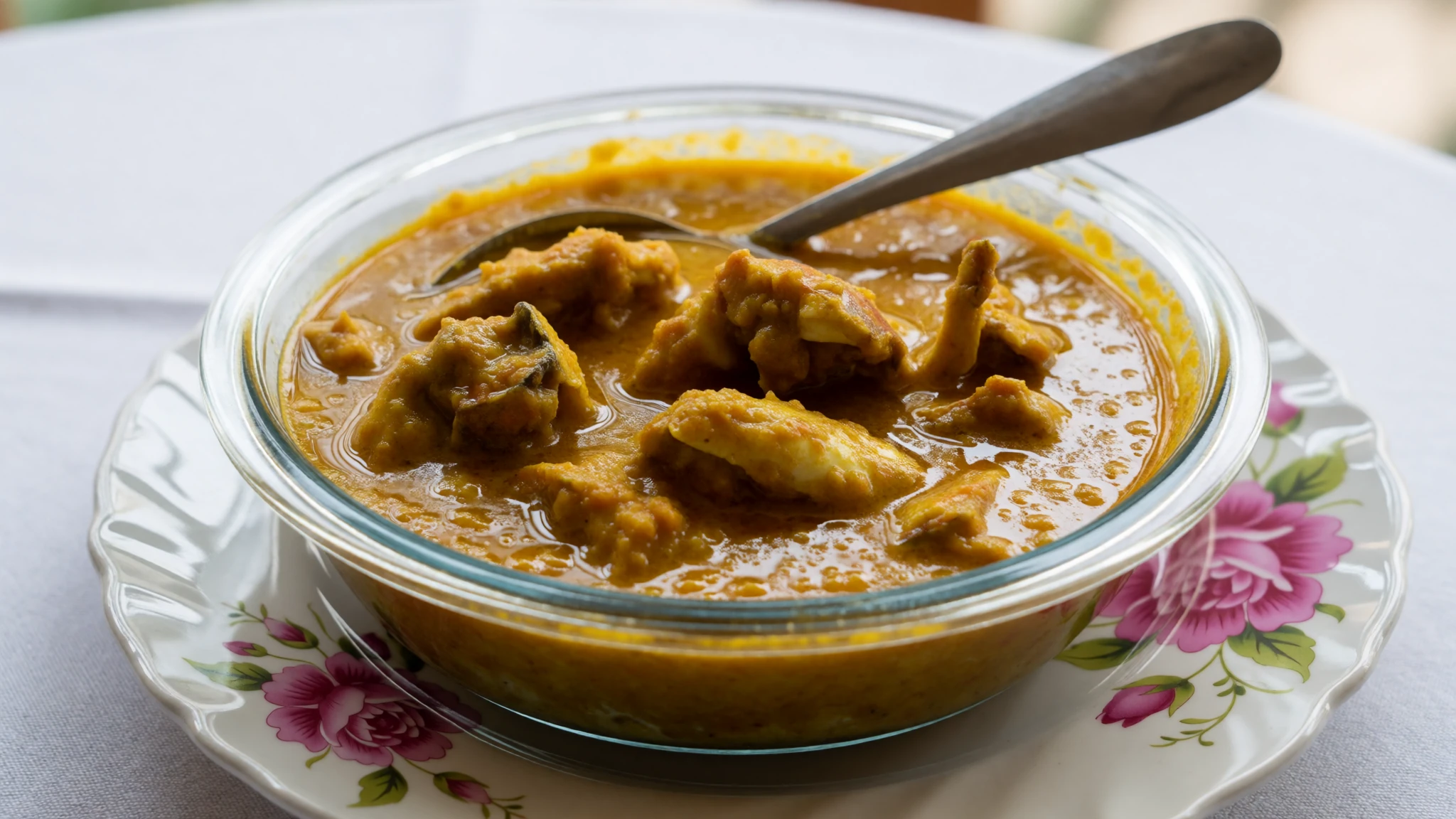
- Prawn preparations — Eateries on the Balugaon main road and near the Barkul panthanivas
Prawns from the lake turn up in fried, dry-spiced and curried versions. Simple cooking lets the freshness of the catch show, and the best plates often arrive soon after the morning catch comes in.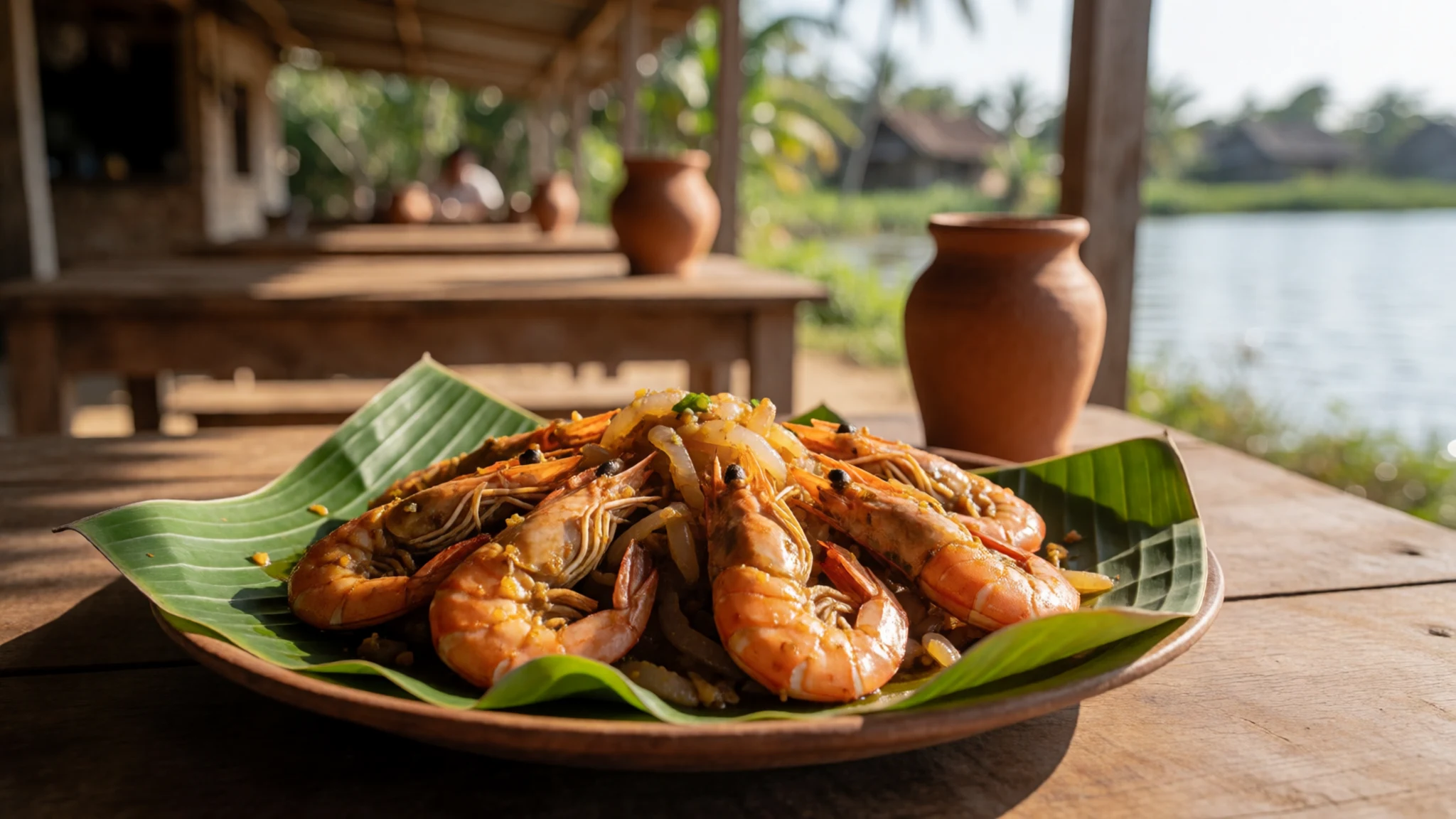
- Fish curry from the lake — Village eateries near the landing points at Satapada and Barkul
Fish from the lake are cooked in mustard or tamarind-based curries typical of Odisha. Many species are bony, so it pays to eat slowly and pick carefully through each piece. - Vegetarian thali — The OTDC panthanivas restaurants at Rambha and Barkul
A thali brings rice, dal, vegetable dishes and a small sweet on one plate. It is a filling option for anyone avoiding seafood, and it makes a good midday meal between boat trips. - Packed breakfast on the sandbars — Breakfast Island, from the Rambha panthanivas
A common plan is to buy a packed breakfast at the Rambha panthanivas and eat it on Breakfast Island, a short boat ride away. The setting makes simple food feel special, and the island is quieter outside the busiest hours.
Plan it
Best time. November to February, when migratory waterbirds arrive and the weather is cooler. The monsoon swells the lake to its largest extent but brings rain and rough water, and the summer months are hot and bright with the lake at its smallest.
How long. 2–3
Getting there. Bhubaneswar airport is about 120 km away, and taxis, buses and trains run from there to the lake. The nearest rail station is Balugaon on the Howrah–Chennai line, and state-run OSRTC buses cover the roughly 2-hour road journey from Bhubaneswar to Balugaon. From Balugaon, hire a taxi or auto-rickshaw to Barkul or Rambha.
Budget. low
Tips
- Book boats at Barkul or Rambha on arrival and agree the terms before setting off
- Go out early for calmer water and better light for birds
- Carry cash for small landings and eateries, as card payment is not guaranteed
- Pack water, a hat and sunscreen, since the sandbars offer little shade
- Check train timings with Indian Railways before travelling
- Stay at the OTDC panthanivas at Rambha or Barkul if you want to be on the lake at dawn
Etiquette
- Dress modestly on the islands and at shrines
- Ask before photographing fishing families or people at worship
- Keep a distance from nesting and roosting birds, and keep boats away from their areas
Nearby
Sources
- Wikidata Q2047322 (CC0)
- Wikipedia: Chilika Lake (rev 1378032739) (CC BY-SA 4.0)
- Wikivoyage: Chilika Lake (rev 5326538) (CC BY-SA 4.0)
- Photo 01-chilika-lake-2.jpg, Krupasindhu Muduli, Odia loves Wikipedia (CC BY 3.0)
- Photo 02-birds-eyeview-of-chilika-lake.jpg, Government of Odisha (CC BY 4.0)
- Photo 03-chilika-lake.png, User:gppande (CC BY-SA 4.0)
- Photo 04-chilka-s-c.jpg, U.S. Army Map Service (Public domain)
- Photo 05-chilka-north-c.jpg, U.S. Army Map Service (Public domain)
- Photo 06-chilika-lake-4.jpg, Krupasindhu Muduli, Odia loves Wikipedia (CC BY 3.0)
- Photo 07-satapada-2.jpg, Rangan Datta (CC BY-SA 4.0)
- Photo 08-chilika-sea-side.png, Anirban Biswas (CC BY-SA 2.0)


