Chavín de Huántar
Chavín de Huántar, Peru
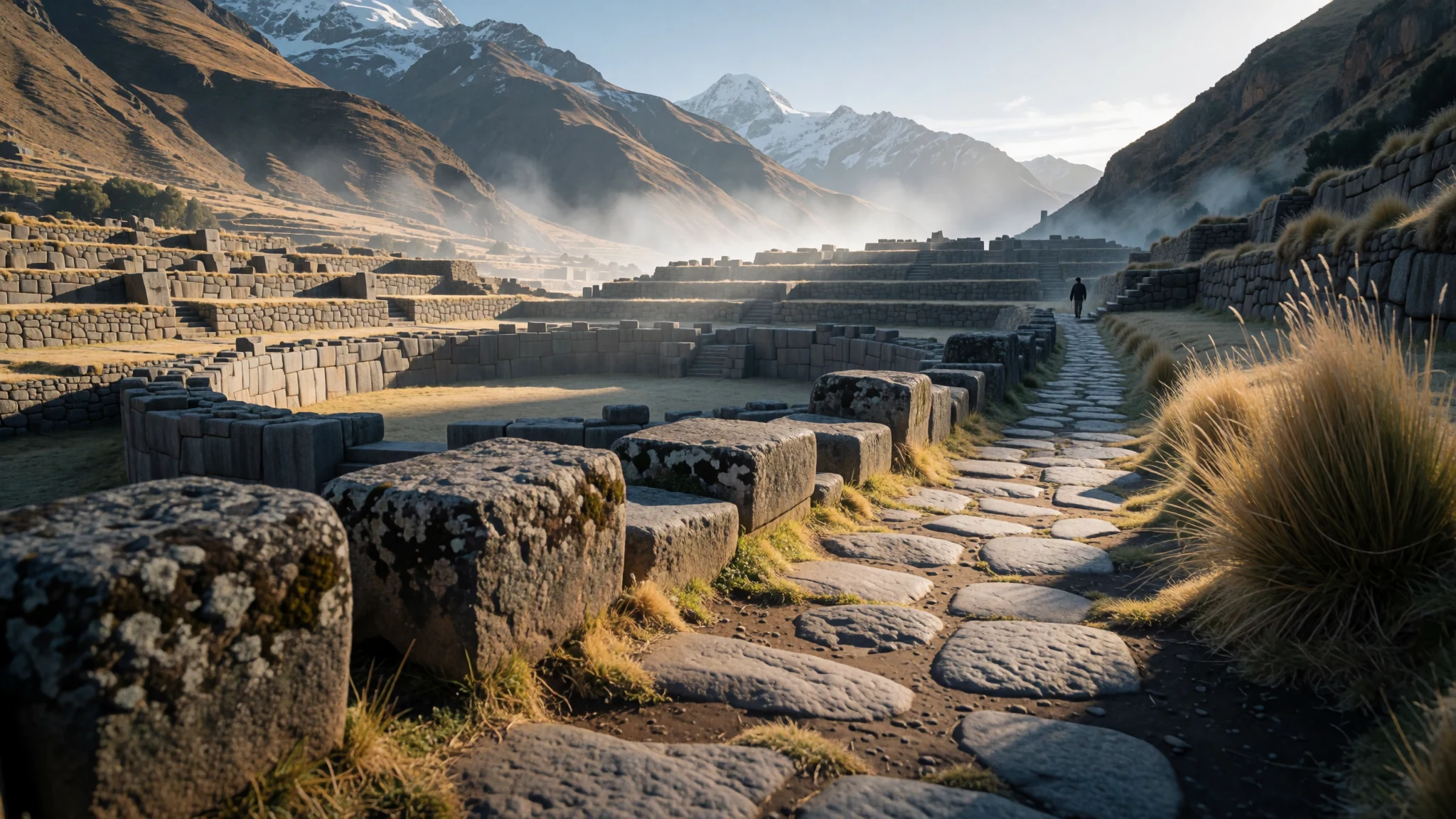
Ancient ceremonial ruins high in the Andes, reached by bus and worth a slow morning on the stone.
The place
Chavín de Huántar is a ceremonial centre in the Ancash region of northern Peru, set at 3,115 metres in the Conchucos Valley, just east of the snow-capped Cordillera Blanca. The village that grew up beside it is small, with a population of 2,384, and most visitors come for the archaeology rather than the town. The ruins are the reason the place matters. The complex was reworked over many centuries into a monument that dominated the valley, and it drew people from across the region to worship, take part in ritual and seek answers from an oracle. Its position mattered as much as its architecture. Near the headwaters of the Marañón River, between the Pacific coast and the Amazon lowlands, it became a crossroads where ideas and goods moved in and out. The stone is grey and the air is thin, so the site feels austere, which surprises people who expect a jungle temple. Expect a short walk between the main structures, sun that is stronger than the cool air suggests, and a steady flow of day-trippers around midday. The village has a workaday feel, with a central square, a few cafés and small shops selling local crafts.
Its story
The story of Chavín de Huántar begins well before the monuments that stand there now. Carbon dating shows people using the site by 3000 BC, but the ceremonial centre took its main shape toward the end of the second millennium BC and stayed busy through the middle of the first. The community was rooted in farming, yet its location gave it an outsized role. Those who came to the centre did so to join rituals, consult an oracle or enter a cult, and in doing so they carried news and objects between the coast, the mountains and the jungle edge. Over the centuries the complex was expanded and reworked until it dominated the valley. The carved stone heads and statues found here show a visual language shared across a wide area, even though archaeologists still argue about what many of the images meant. The decline came slowly. From around 500 BC, and into the years after 300 BC, the wider Chavín world began to fragment. Large ceremonial sites were left unfinished or abandoned, and villages and fields took their place. At Chavín de Huántar a small village eventually replaced the Circular Plaza, and later residents pulled dressed stones and carvings from the old buildings to build into their own house walls. That reuse is part of why the site looks the way it does today.
What to see
- Ceremonial centre — Archaeological zone on the edge of Chavín de Huántar
The archaeological site on the edge of the village is the main reason to come. Its galleries, sunken areas and carved stone work show the religious and administrative life of the Chavín culture. Walk slowly, read the signs, and give yourself at least two hours, since the thin air makes stairs and ramps tiring.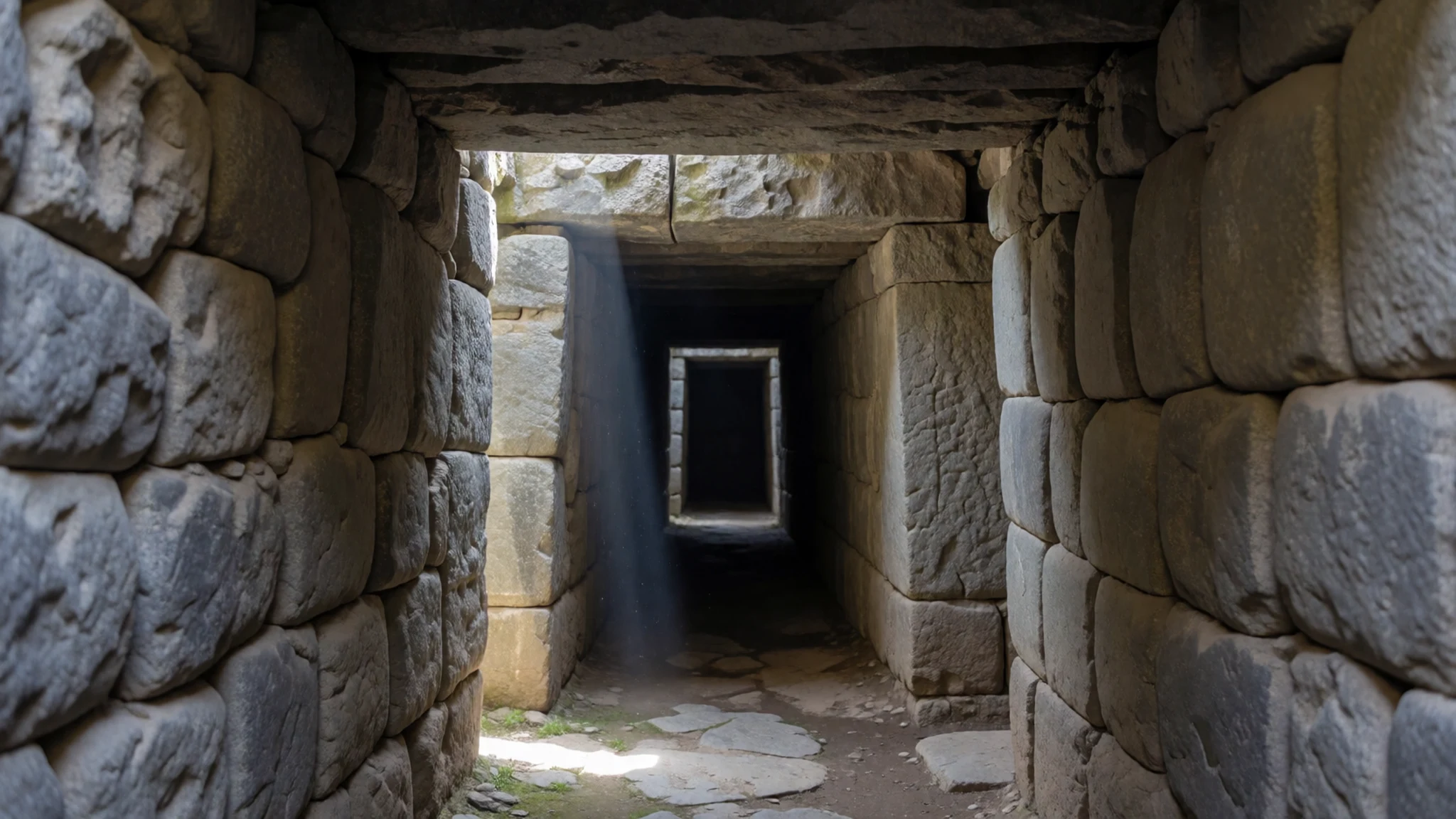
- Museo Nacional de Chavín — Town centre, Chavín
The national museum in town displays artefacts from the Chavín culture. Its best-known pieces include the Tello obelisk, carved conch trumpets called pututos, and stone statues and heads. Go before or after the ruins to see the objects up close and understand the carvings you saw on the site.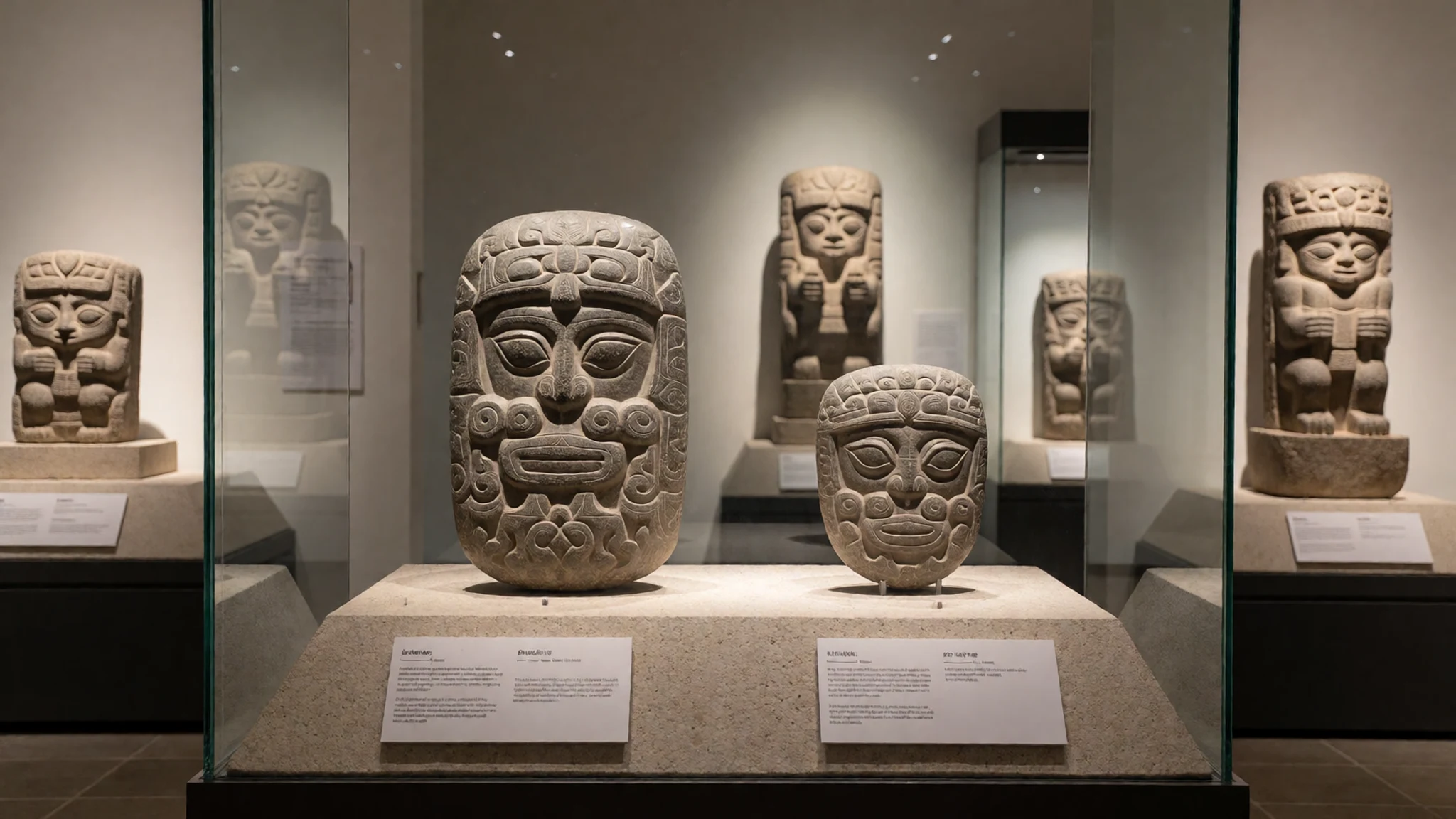
- Muro megalítico — Near the archaeological zone
A megalithic wall with carved figures stands near the site. One of its stones is shaped into the head of a snake, which is easy to miss unless you slow down and look at the edges of the blocks. It is a quiet spot, so it rewards a patient visit rather than a quick photograph.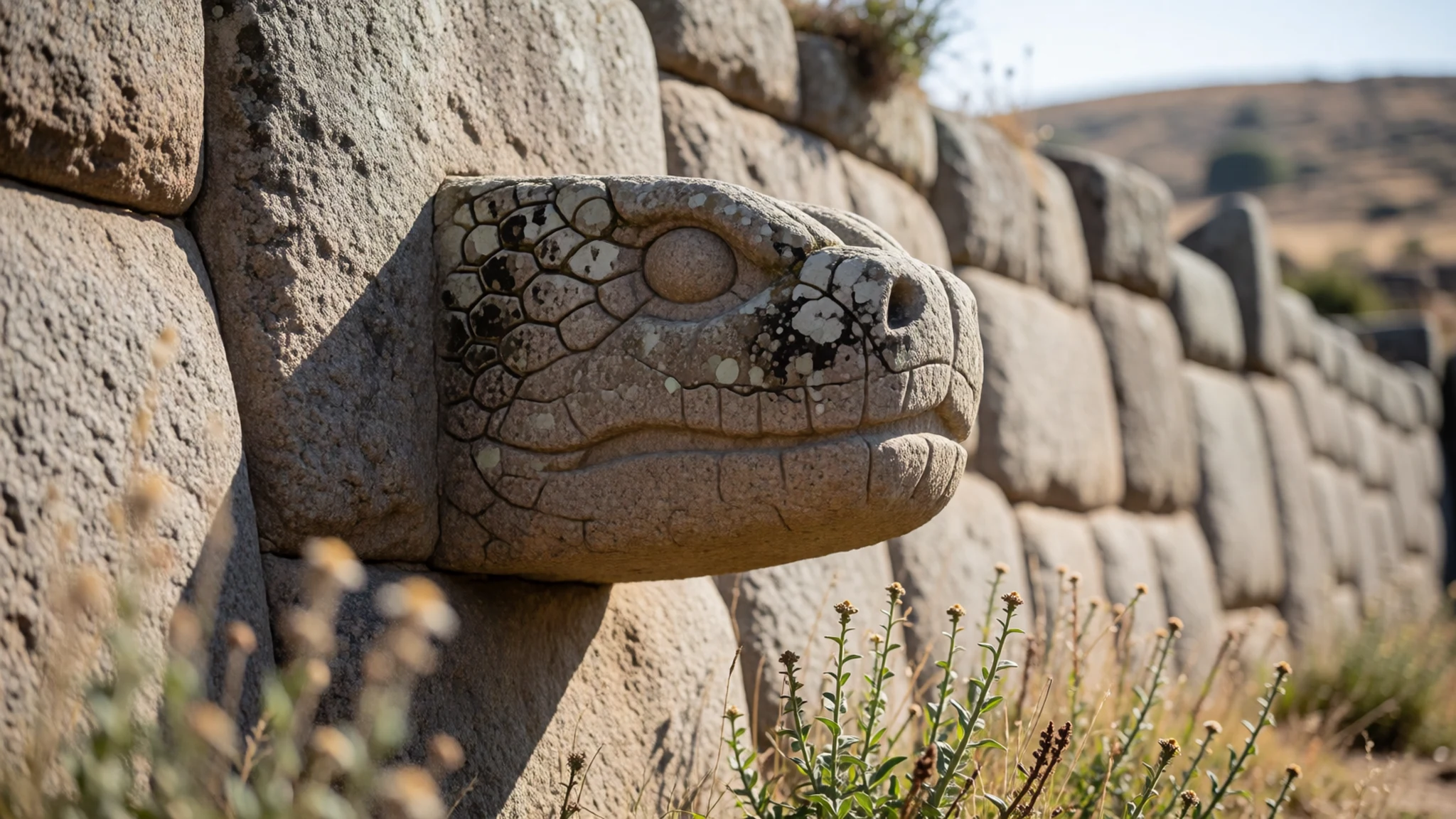
- Mirador de Shallapa — Hillside above the town
A viewpoint reached by a bridle path above the town gives you a wide look over the valley and back towards the main site. The path continues onward to the Pójoc archaeological site and the village of Putcor, so you can make a half-day walk of it. Carry water and start early.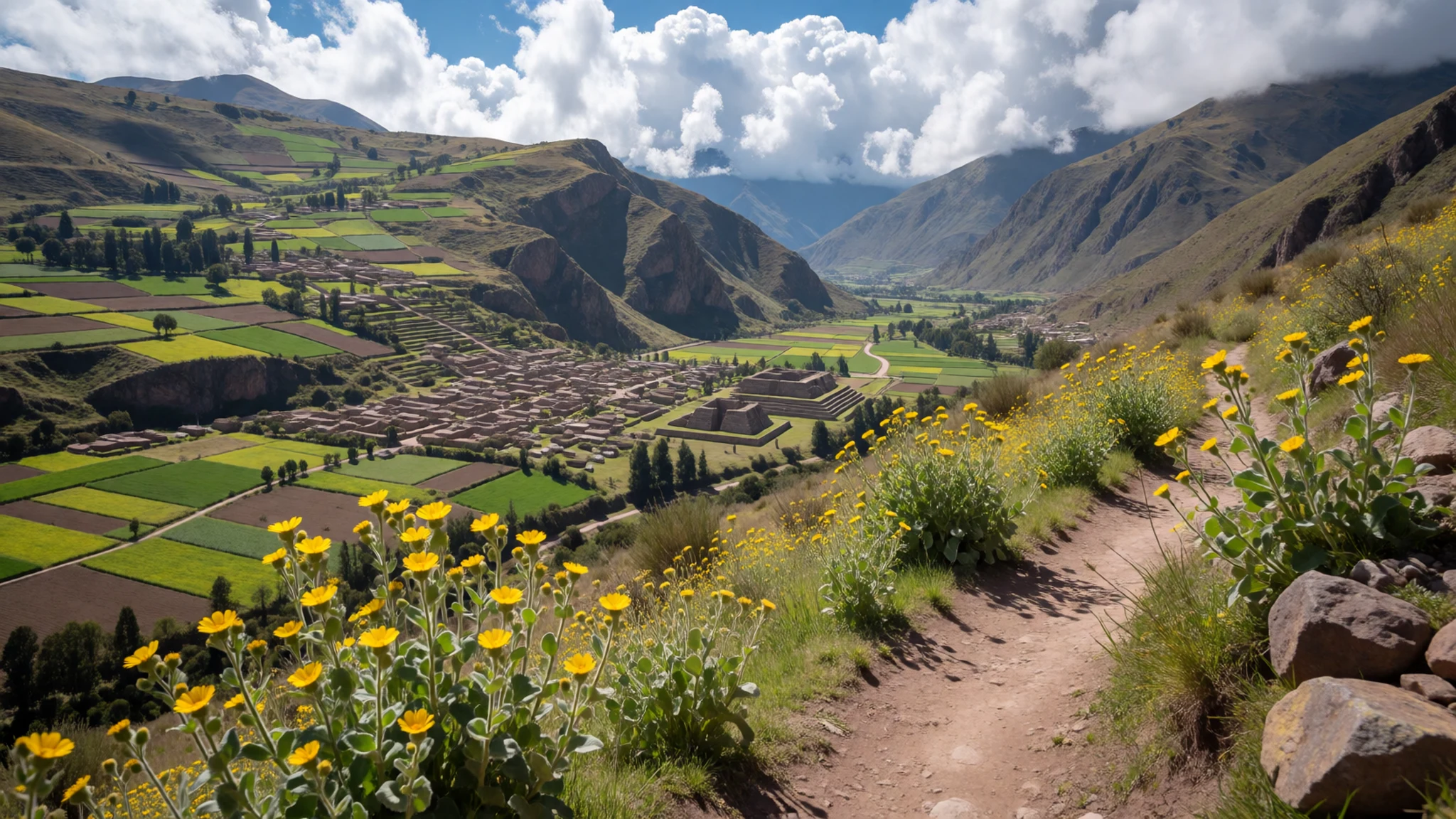
- Baños termales de Quercos — Quercos, a short way from town
Sulphurous hot springs rise from a rock formation a short drive or walk from town. Pay at the ticket office, then take the staircase down towards the river. The water smells strongly of sulphur, so the bath is best for a warm rest after walking rather than a long soak.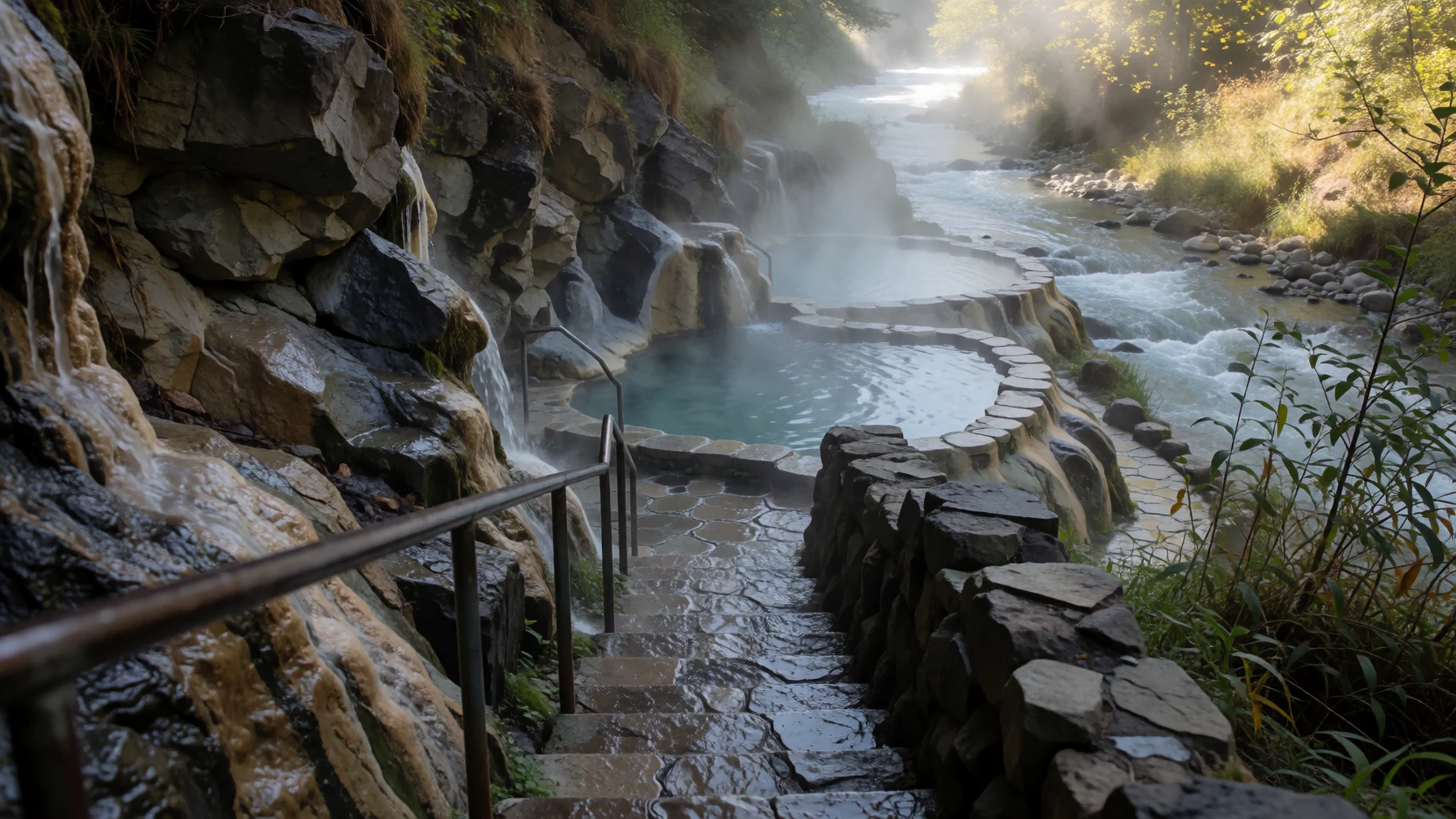
Culture
Chavín de Huántar is a living place as well as an archaeological one, and people use the town and the surrounding fields every day. Family life, religious festivals and market days shape the calendar, and many residents speak Quechua alongside Spanish. Visitors are welcome in the cafés and on the streets, but the ruins carry real weight for the people who look after them, so treat the site with care. Guardians and signs will ask you to stay on marked paths and keep off the walls and carved stones, and you may find your bag checked at some entrances. Respect also shows in how you approach people. Ask before photographing anyone, especially women and children at the market, and accept a refusal with good grace. Keep your voice low in the church on the square and remove your hat when you go in. Keep your hands off the carvings and stay on the marked paths, and always ask before photographing a person.
What to wear
Chavín de Huántar sits in the highland Ancash region, where traditional dress is still part of everyday life in the surrounding villages. Many women wear pleated wool skirts, embroidered blouses and woven shawls, often with a bowler hat, which has become a marker of Andean women's dress. Men have traditionally worn woven wool trousers and ponchos. The textiles are mostly sheep's wool, and in some families alpaca, spun and dyed at home, with bright stripes and geometric patterns often woven on backstrap looms. Today most people in the town wear jeans, sweatshirts and sports jackets, and the traditional outfits appear most at festivals, markets and family occasions. For a visitor the practical choice matters more than the look. Dress in layers: the sun at this altitude is strong by day, but nights and early mornings are cold. Bring a warm jacket, a hat and sunscreen, and sturdy shoes with good grip for the uneven stone of the site and the hillside paths. For churches and cemeteries, cover your shoulders and knees, and avoid very revealing clothes around the square.
What to eat
- Cuy (guinea pig) — Traditional restaurants on the hillside edge of town, and family eateries near the Plaza de Armas
Cuy is guinea pig, roasted or fried whole and served on a plate with potatoes and salad. It is a traditional dish across the highlands and a common choice for special meals. Eat it with your fingers if your hosts do, and expect the meat to be rich and a little gamey.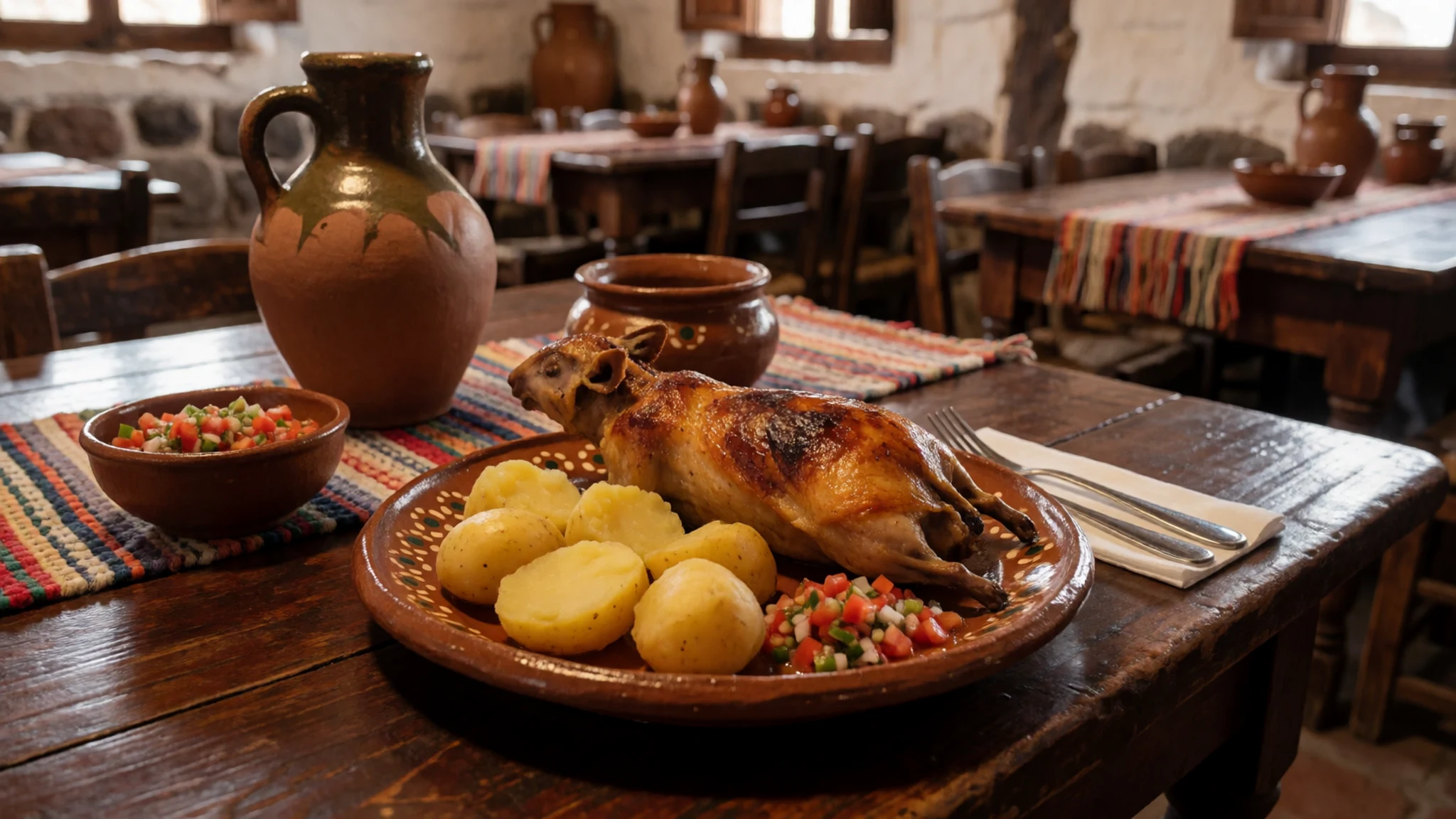
- Trout ceviche — Old-house restaurants in the town centre
Trout from the cold mountain streams is cured in citrus juice with onion, chilli and coriander. The dish is light and sharp, and it suits a midday meal after the site. Ask whether the fish came in that day, since freshness varies.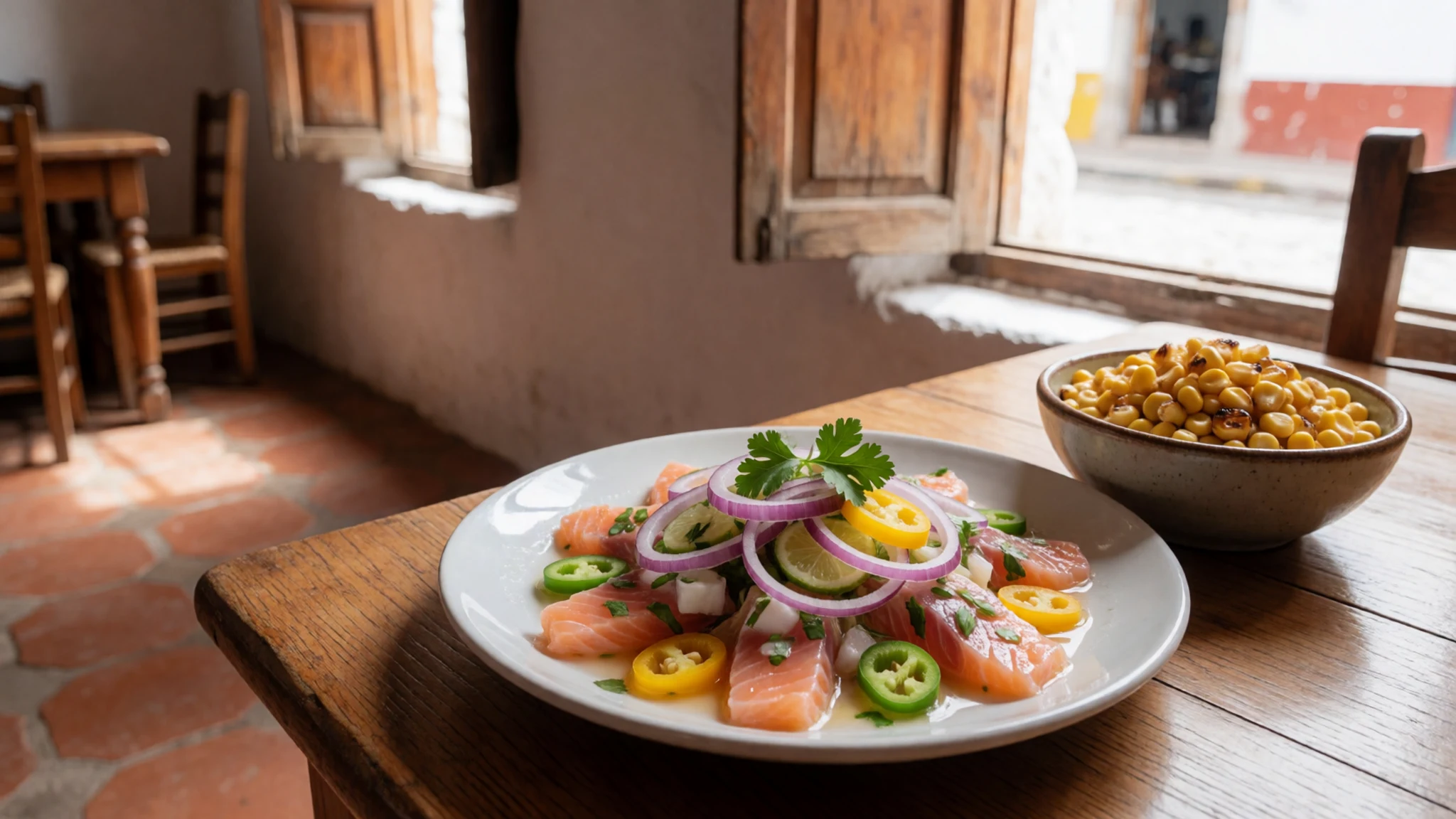
- Papakashki (potato soup) — Simple lunch restaurants around the square, especially in the cooler months
Papakashki is a warm potato soup, thick and filling, that suits the cool mornings and evenings at this altitude. It is simple, inexpensive and a good first meal before walking out to the ruins. Locals often serve it with a little bread on the side. - Choclo con queso (corn with cheese) — Breakfast cafés and the stalls at the morning market
Choclo is large-kernelled Andean corn, boiled and served with a slice of fresh white cheese. The kernels are chewy and sweet, and the cheese is mild and salty. It makes a cheap snack or breakfast on the go. - Chicha de jora — Restaurants on the hillside with views over the site, and at local fairs
Chicha de jora is a mildly alcoholic maize drink, made by fermenting sprouted corn. It is cloudy, sour-sweet and usually served in a glass or a cup at family houses and restaurants. Try a small measure first, since it can be stronger than it tastes.
Plan it
Best time. April to November is the drier season, when the days are clearest for walking around the site and up to the viewpoint. Nights stay cold at this altitude throughout the year. December to March brings heavier rain and cloud, so check the forecast before you commit to the hillside paths.
How long. 2–3
Getting there. Fly into Lima, then take a long-distance bus north into the Ancash highlands; daily buses run to Chavín de Huántar from Huaraz, Huari, Llamellín and Lima. The road from Huaraz is paved but winding, and the last stretch is often by shared taxi or combi from San Marcos.
Budget. low
Tips
- Stay downtown, where most of the places to sleep are concentrated and walking to the square takes minutes
- Go to the ruins early in the morning, before the tour groups and the midday sun arrive
- Carry cash in soles for small shops, markets and the hot springs, since cards are not reliably accepted
- Bring water and sun protection, and take the hills slowly, because the altitude makes walking feel harder than it looks
- Check bus times the day before, since departures thin out in the evening
Etiquette
- Ask before photographing people, especially at markets and in the square
- Stay on marked paths and keep off the carved stones and walls
- Dress modestly and remove your hat when entering churches and cemeteries
Nearby
Sources
- Wikidata Q17449251 (CC0)
- Wikipedia (rev 1364711956) (CC BY-SA 4.0)
- Wikivoyage (rev 5397400) (CC BY-SA 4.0)
- Photo 01 Municipalidad Distrital de Chavín de Huántar (CC BY-SA 1.0)
- Photo 02 Chavín de Huántar streets (CC BY-SA 4.0)
- Photo 03 Chavín town (CC BY-SA 2.5)
- Photo 04 Chavín balconies (CC BY-SA 4.0)
- Photo 05 Chavín de Huántar 1 (CC BY-SA 4.0)
- Photo 06 Chavín de Huántar 2 (CC BY-SA 4.0)
- Photo 07 Chavín de Huántar 3 (CC BY-SA 4.0)
- Photo 08 Chavín de Huántar 4 (CC BY-SA 4.0)


