Chandigarh
Chandigarh, India
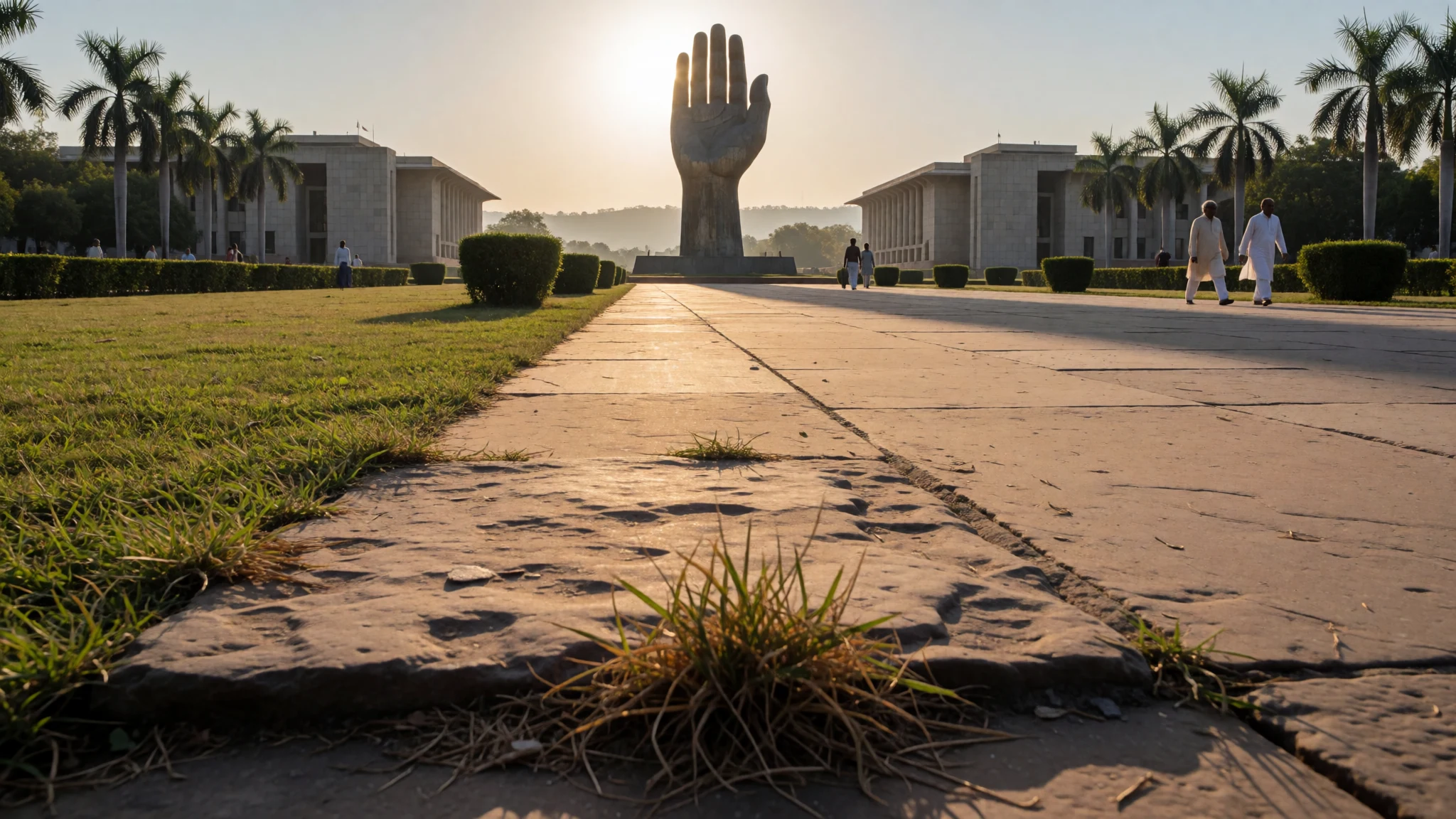
Chandigarh is a planned modernist capital where Le Corbusier's concrete, wide green avenues and good Punjabi food make for a calm, unhurried city break.
The place
Chandigarh sits in north-western India at the foot of the Shivalik hills, the lowest rumple of the Himalaya, at about 350 metres above sea level. It is both a city and a union territory, and it serves as the shared capital of two states, Punjab and Haryana, without belonging to either. On the map, Punjab wraps around it on most sides and Haryana touches it to the east.
The city is the core of a larger urban cluster. Panchkula, on the Haryana side, and Mohali, on the Punjab side, run straight into it, so a taxi ride can cross three jurisdictions without anything on the ground announcing the change. Roughly one million people live in Chandigarh itself, and the wider region holds many more.
The layout is what sets it apart. Streets form a grid of self-contained rectangular neighbourhoods called sectors, each meant to have its own shops, schools, parks and a bit of green. Trees line the roads, traffic moves in an orderly way by Indian standards, and pavements and cycle tracks exist. Government buildings are concentrated at the top of the grid, near the hills, while the commercial centre sits in the middle.
The feel is quieter and more spread out than Delhi, about a half-day's drive to the south, or Amritsar to the north-west. Distances between sights are longer than they look on a map, and the concrete can look stark under a flat summer sky. Even so, many visitors come away liking the greenery, the space and the ease of getting around, and it works well as a base for the hill towns further north.
Its story
Chandigarh exists because of a loss. When British India was partitioned in 1947, the province of Punjab was split between India and Pakistan, and Lahore, its long-standing capital, ended up on the Pakistani side. The Indian part of Punjab was left with a government but no capital, and with a flood of refugees who needed housing, work and a functioning administration.
Shimla, the old summer seat of the British, held part of the government for a while, but it was a hill station with little room to grow. The leadership decided to build something new instead, on farmland in what had been the Ambala district, close to the hills and with a reliable water supply from them. The idea was as much a statement as a solution: a forward-looking city for a country that had just gained independence.
The master plan was drawn up by the Swiss-French architect Le Corbusier, who led a team of European and Indian architects. The Indian architects on the team are often forgotten in the telling. They worked in raw concrete, large open spaces and bold geometric forms, and they planned for a city that would grow in an orderly way rather than sprawl.
The city dates from 1953, and it has been argued over ever since. Admirers point to the clarity of the plan and the trees. Critics say it was designed for the car and the official rather than for the street vendor. Both views have some truth, and walking the city makes the argument easy to follow.
What to see
- Capitol Complex and the Open Hand — Capitol Complex, northern edge of the city
The Capitol Complex gathers the High Court, the Legislative Assembly and the Secretariat at the top of the city grid. Much of it is fenced off for security, so most visitors see it from the Open Hand monument, a tall metal hand that turns in the wind. Come early, when the light is softer and the heat is lower.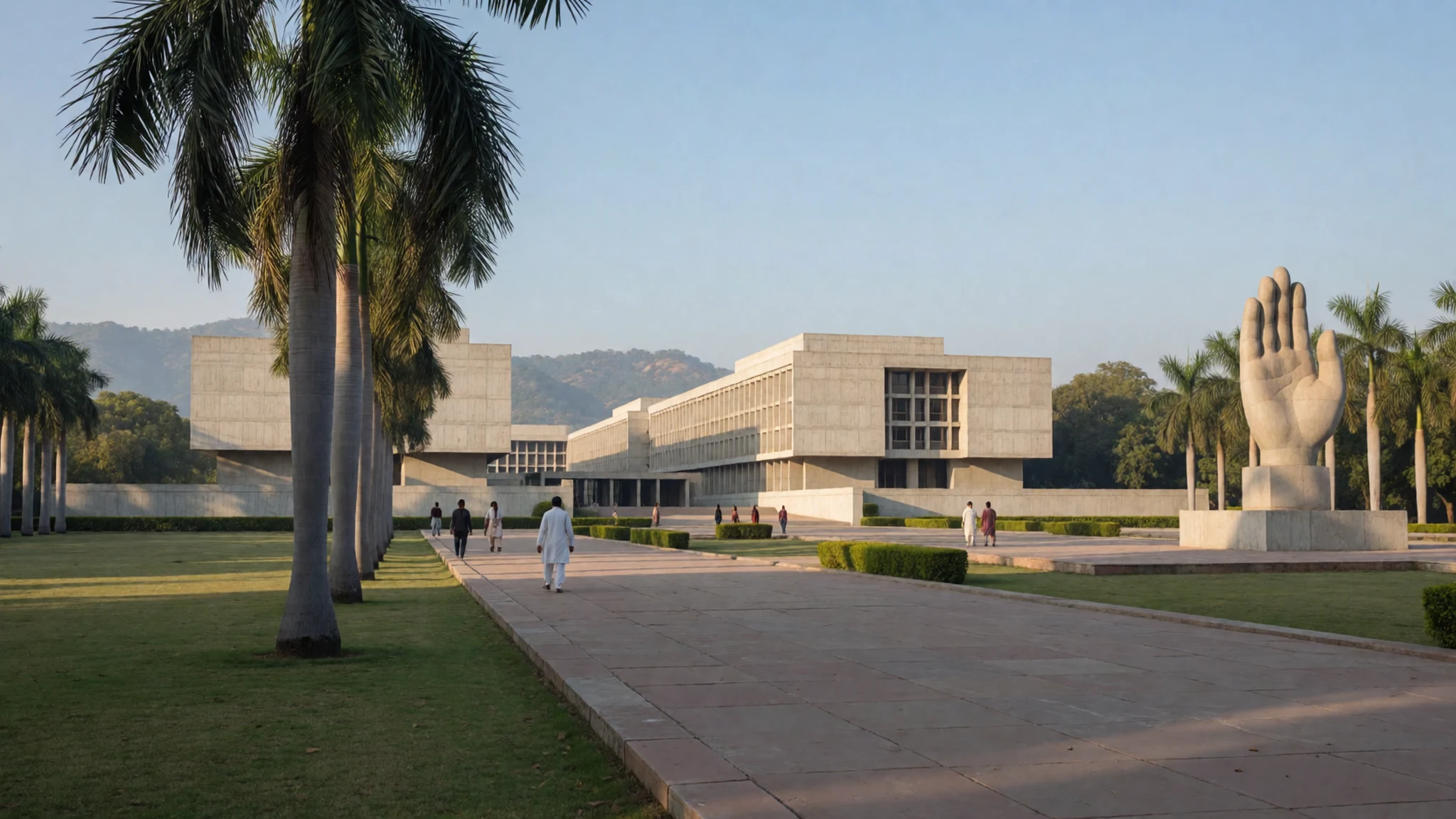
- Legislative Assembly — Capitol Complex
The Legislative Assembly serves both Punjab and Haryana, and its great concrete portico and sculpted roofline are among the most photographed forms in the city. Some visitors compare the shape to a submarine pen. Access to the interior is controlled, so check the official site before planning around a visit.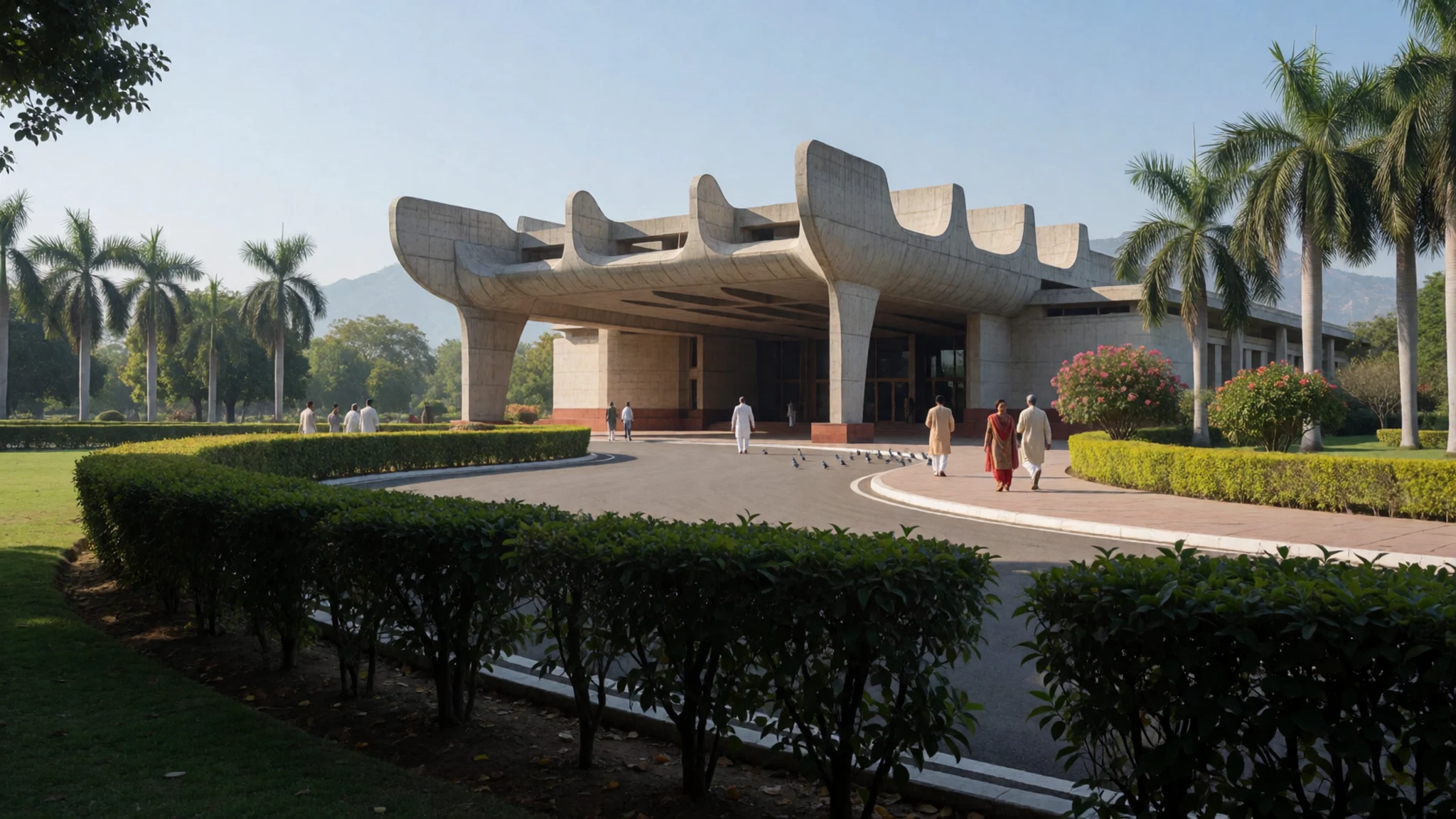
- Chandigarh Museum — Central city, near the museum and gallery cluster
The museum is a good first stop for making sense of the city. It follows the thinking behind the plan, how the architects were chosen and how the neighbourhoods were meant to serve ordinary families. Seeing the story before the buildings makes the concrete easier to read. Opening times change, so check the official site.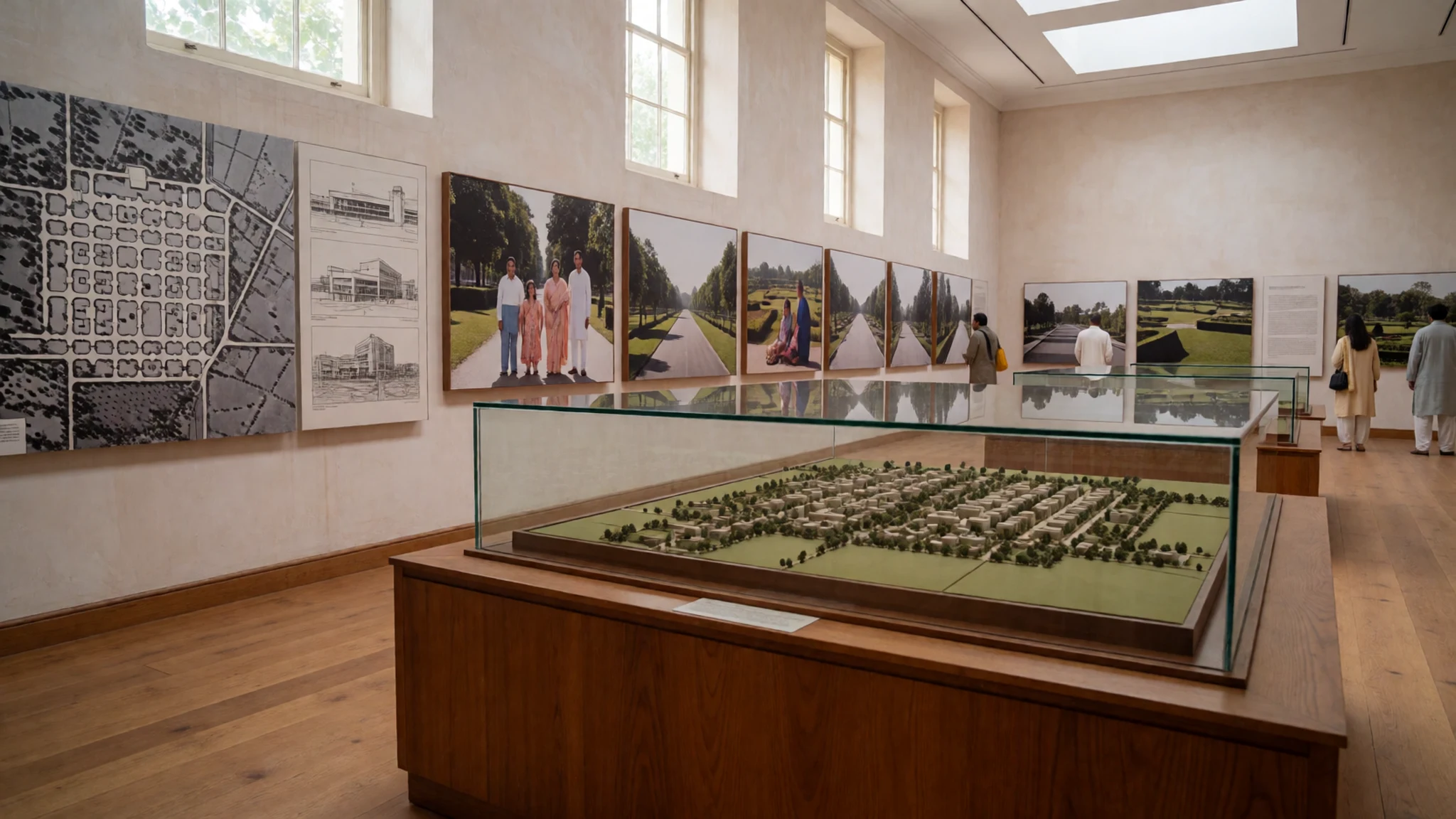
- Rock Garden — Near the Capitol Complex
The Rock Garden is a sprawling maze of walkways, arches, waterfalls and thousands of figures, built from broken crockery, bangles, tiles and other discarded material. It is playful and a little eccentric, and a sharp contrast to the formal grid around it. It gets crowded at weekends and holidays, so a weekday morning is calmer.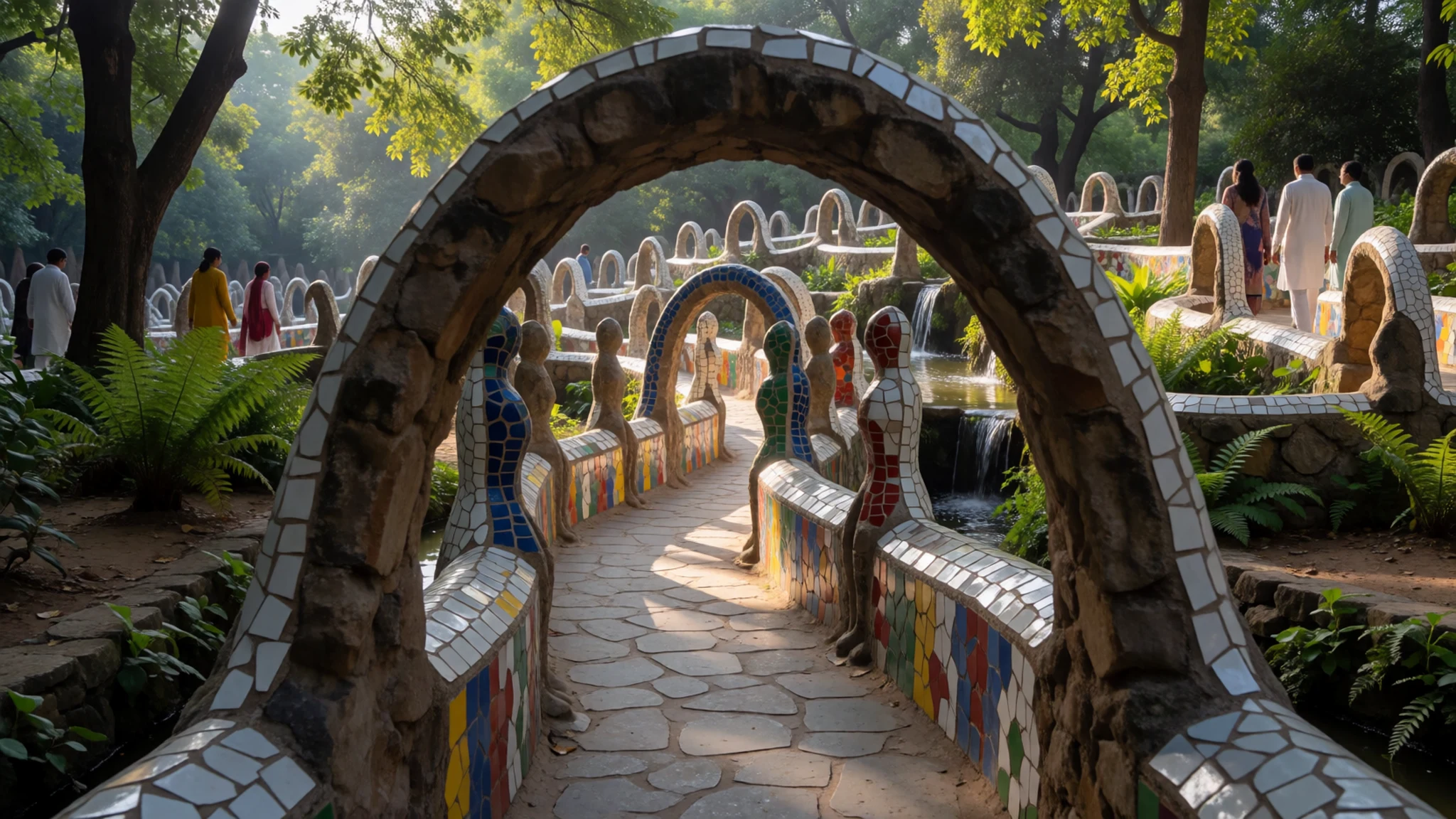
- Japanese Garden — Sector district in the southern half of the city
The Japanese Garden is a landscaped park opened in 2014, with water features, paths and shaded corners. It is a pleasant, quiet place to cool off after a day among the concrete, and a favourite with local families and walkers in the evening. It is a modern creation rather than a historic site.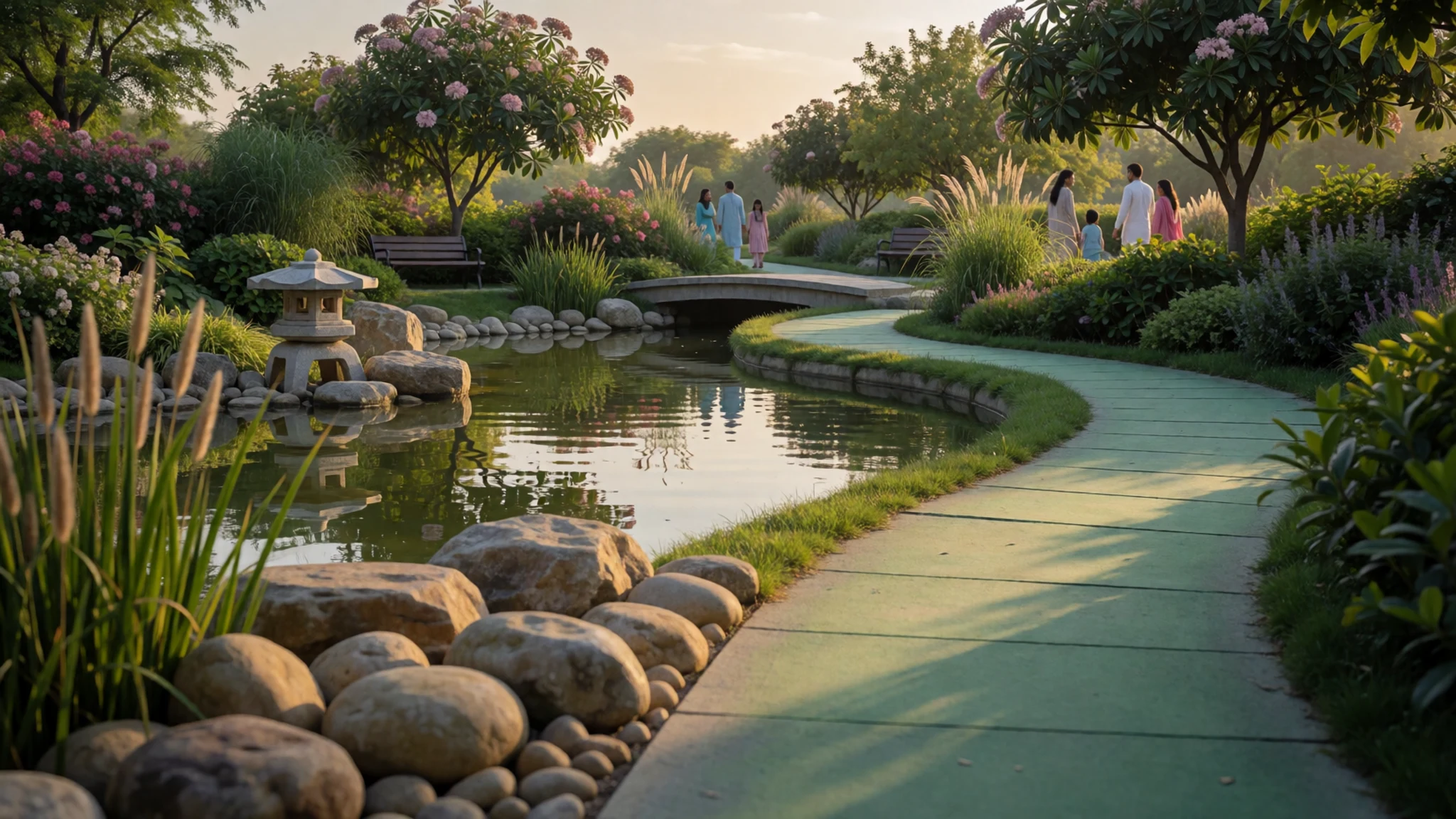
Culture
Chandigarh's culture is mostly Punjabi, shaped by the families who arrived after Partition and by the farming heartland around the city. That shows in the language, in the generous hospitality, in the love of music with a strong dhol beat, and in the way food is treated as a social event rather than a quick stop.
The festival calendar mixes the religious and the civic. Around Navratri in September or October, neighbourhood groups stage Ramlila performances of the Ramayana, a tradition that has run in the city for decades. Lohri, Basant and Vaisakhi, the great Punjabi festivals of winter, spring and harvest, are marked with bonfires, kites, music and dancing. February brings the Rose Festival in the Zakir Hussain Rose Garden, where thousands of varieties are in bloom. Late November has the Chandigarh Carnival, a tourism event with stalls, performances and fairground rides, and the monsoon months bring a Mango Festival. Sukhna Lake hosts a number of other events through the year.
Beyond festivals, the city has a strong student and sporting culture. Panjab University dominates one part of town, and hockey is followed closely, with matches and practice sessions at the city's stadium. Public life is relaxed and fairly orderly, and people are generally happy to talk to visitors about the city's design, which they tend to take pride in.
At gurdwaras and temples in and around Chandigarh, cover your head and remove your shoes before entering, and ask before photographing worshippers.
What to wear
Traditional dress in Chandigarh is Punjabi. Women wear the salwar kameez, a tunic over loose trousers, often with a dupatta scarf, and the patiala salwar, with its generous pleats, is a regional signature. Phulkari, a bright floss-silk embroidery stitched onto cotton, is the best-known textile and appears on dupattas and shawls, especially at weddings and festivals. Men wear the kurta with pyjama or dhoti, and many Sikh men wear a turban, tied in colours and styles that vary with occasion and family. In winter, wool shawls and jackets are common, and embroidered leather jutti shoes complete festive outfits.
Everyday dress now is a blend. Students and office workers wear jeans, shirts, trainers and kurtas, and the malls are full of the same global brands seen in any large Indian city. Traditional clothes come out for weddings, Lohri and Vaisakhi, and many people mix an embroidered scarf or a kurta with modern clothes. Bright colours are popular, and the city is relaxed about what visitors wear.
For visitors, light cotton and linen cope best with the long hot season, along with a hat, sunglasses and sunscreen. Winters are cool enough for a jacket, and evenings can be cold, so bring layers. Shoulders and knees should be covered at temples and gurdwaras, and a scarf is handy for covering the head. Comfortable closed shoes suit the Rock Garden, the wide pavements and the lakeside paths, and sandals are easy to slip off at religious sites.
What to eat
- Amritsari fish — Roadside eateries and small grill outlets in the older market sectors
Fish in a spiced gram-flour batter, fried until crisp and served with chutney and lemon. It travelled here from Amritsar with the Punjabi families who built the city, and it is a good snack with a cold drink on a warm evening.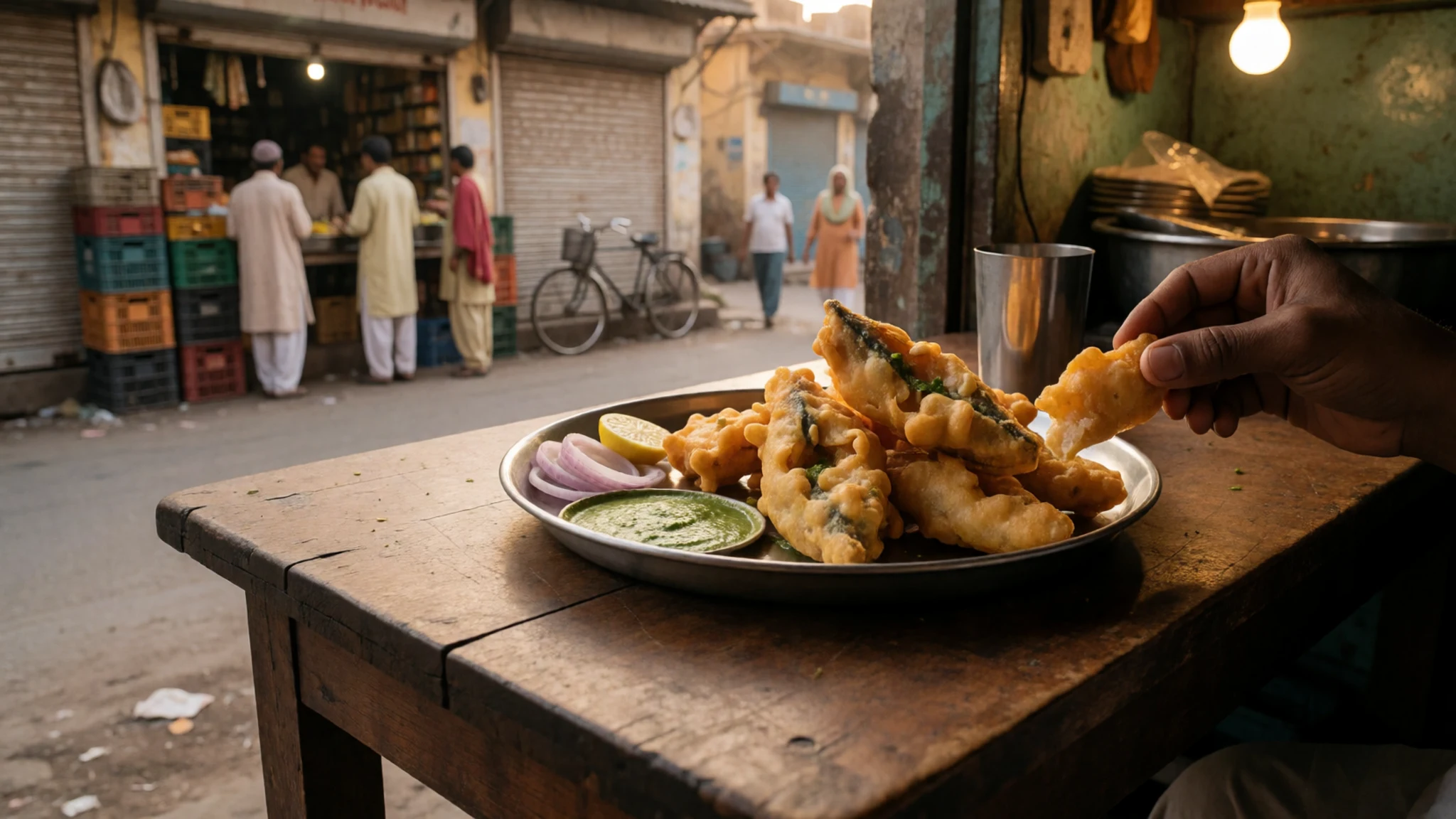
- Chole bhature — Busy breakfast and lunch eateries around the main market squares
Spiced chickpea curry with large puffed fried bread, usually eaten for a late breakfast or lunch. It is rich and filling, so plan a quieter afternoon afterwards. Pickled onions and a glass of lassi are the usual companions.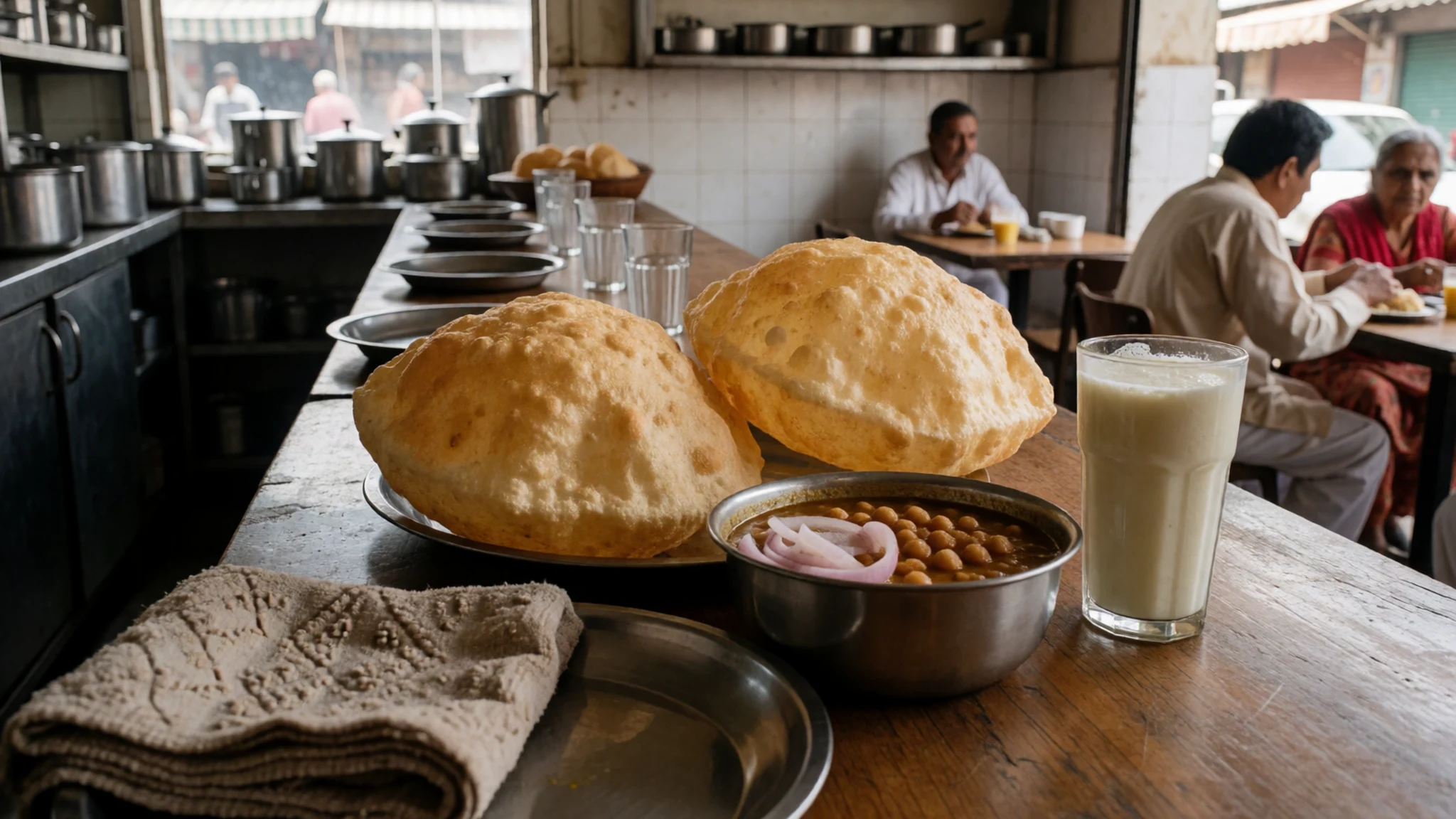
- Tandoori chicken and butter chicken — Family restaurants and grill chains across the city's market sectors
Chicken marinated in yoghurt and spices and cooked in a clay oven, or finished in a creamy tomato gravy and eaten with naan. These are northern Indian staples, and the city has many places serving them well, from small family eateries to chains. - Kakori and galouti kebabs — Roadside grill outlets in the older market sectors
Soft, spiced minced-meat kebabs from Lucknow that melt in the mouth, served with flaky bread or small wraps. They show how many regional cuisines reach Chandigarh, and a roadside outlet is a good place to try them. - Parantha with lassi — Morning eateries and dhabas near the bus stand and market areas
Flatbread stuffed with potato, paneer or radish, cooked on a griddle with butter and eaten with yoghurt or pickle. A tall, thick glass of salted or sweet lassi goes alongside. It is a Punjabi breakfast that can easily last until evening. - Filter coffee and snacks — Old-style coffee houses in the central market area
The city has a long-standing coffee house tradition, with waiters in uniform, a hot cup and simple snacks. It is a good place to sit, read and watch the city pass, and it feels quite different from the mall cafes.
Plan it
Best time. February–March and October–November are the most comfortable, with mild days, clear skies and the Rose Festival in February. Summers are very hot, the monsoon brings humid, wet weather, and winter mornings can bring heavy fog that disrupts roads.
How long. 2–3
Getting there. Fly to Chandigarh's own airport, or to Delhi and continue by road, a drive of roughly half a day on a good highway. Chandigarh station has direct long-distance trains from Delhi, Mumbai, Kolkata, Lucknow and Jaipur, and a taxi or auto-rickshaw covers the last leg into the city. Avoid driving from Delhi in winter fog.
Budget. mid
Tips
- Visit the Capitol Complex and Rock Garden early in the morning, before the heat and the weekend crowds.
- Check the official site (https://chandigarh.gov.in/) for opening times and access rules to the High Court and Assembly before going.
- Distances between sectors are longer than they look, so use taxis, ride-hailing apps or a rented bicycle rather than planning to walk everywhere.
- Carry a water bottle and sun protection from April to September, and carry a light jacket in winter.
- Carry some cash for small eateries and roadside outlets, though cards and UPI work widely.
Etiquette
- Cover your head and remove your shoes at a gurdwara or temple.
- Show ID and follow security staff instructions around government buildings, and do not photograph restricted areas.
- Ask before photographing people, especially at religious sites.
Nearby
Sources
- Wikidata Q43433 (CC0)
- Wikipedia: Chandigarh (rev 1383782902) (CC BY-SA 4.0)
- Wikivoyage: Chandigarh (rev 5397256) (CC BY-SA 4.0)
- Photo: Open Hand Monument and a Rose (Anamdas) (CC BY 3.0)
- Photo: Palace of Assembly, Chandigarh (duncid) (CC BY-SA 2.0)
- Photo: Open Hand monument, Chandigarh (Raakesh Blokhra) (CC BY-SA 2.0)
- Photo: Chandigarh hockey stadium (Gaganspidey) (CC BY 3.0)
- Photo: Gandhi Bhavan, Chandigarh (Unpetitprole) (CC BY-SA 4.0)
- Photo: Rock Garden, Chandigarh (Ian Brown) (CC BY 2.5)
- Photo: Rajiv Gandhi Chandigarh Technology Park (Robinsonmash) (CC BY-SA 4.0)
- Photo: Punjab Province in 1909 (Public domain)


