Chan Chan
Chan Chan, Peru
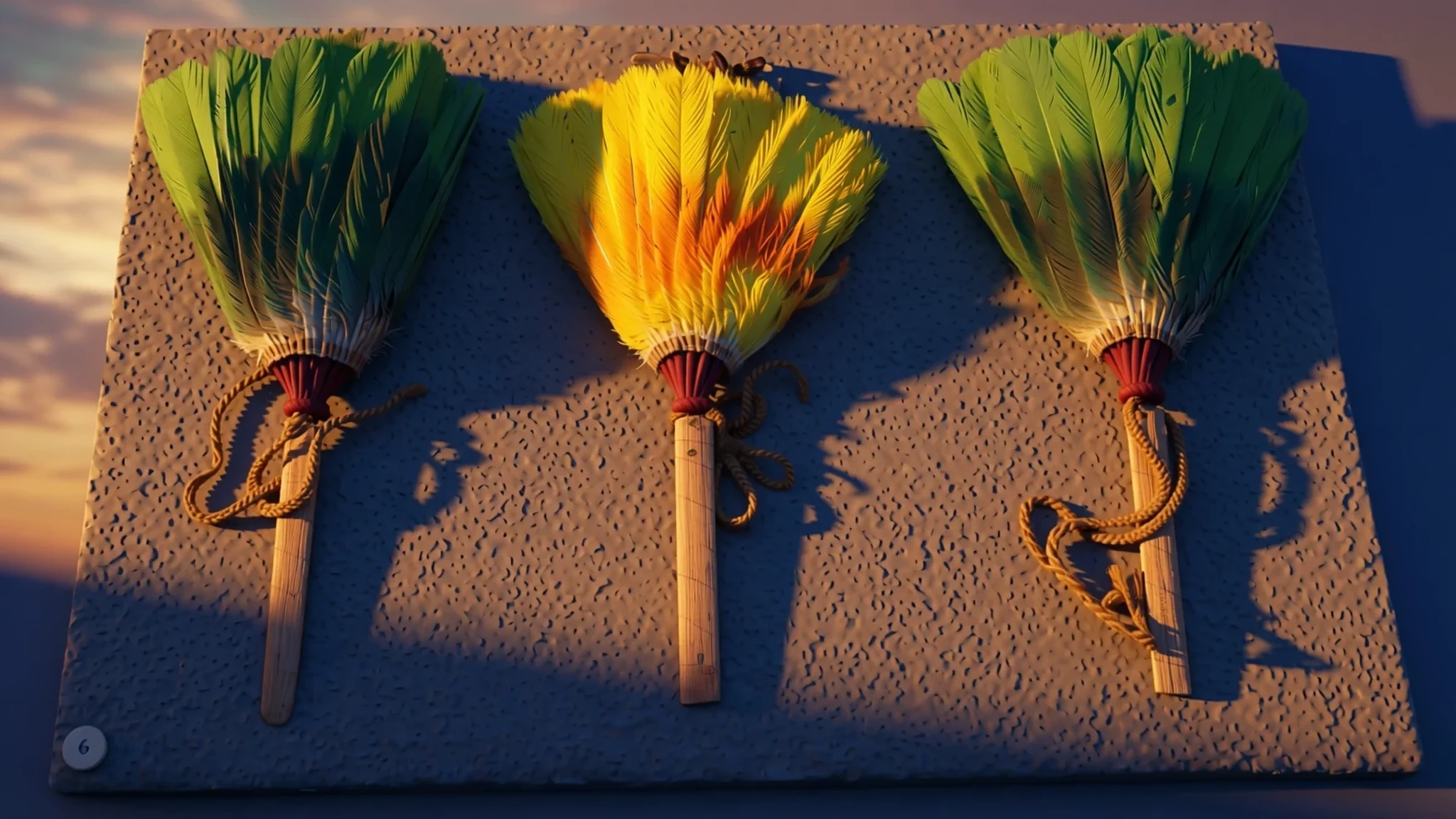
Chan Chan is the adobe capital of the Chimú, a dry desert city of mud walls and carved reliefs just west of Trujillo.
The place
Chan Chan is the remains of a vast city built from adobe, the sun-dried mud brick that still makes up its walls. It lies just west of Trujillo, on the northern coast of Peru, where the Moche Valley meets the sea. The ground around it is among the driest stretches of coastal desert in the country, so the city depended on water that came down from the Andes. Rivers carrying runoff from the mountains fed a network of irrigation channels, and those channels decided where crops could grow and who controlled the land.
Walking the site today, you can enter only one of the enclosed compounds called ciudadelas, the Tschudi, while the others are seen from outside. Each one is a walled block of plazas, storerooms and burial platforms, built for the royal class. Their scale is the first thing most visitors notice: the outer walls rise high above you, and the patterns pressed into them are still sharp in places. Smaller, irregular clusters of rooms nearby are thought to have housed ordinary residents, which gives a clear sense of how sharply the city was divided.
Most of the site is open to the sky and exposed to wind, so bring water and a hat even when the sky is grey. Expect dust, uneven ground and long stretches with little shade. Allow at least a morning to see the main compounds properly, and take time over the signage, which helps make sense of what is essentially a city made of earth.
Its story
Chan Chan was built by the Chimú and grew into the capital of the Chimor kingdom, which ruled much of the northern coast from its base in the Moche Valley. The city is dated to around 850, and for several centuries it was the political and administrative heart of a state that controlled irrigated farmland and a long stretch of Pacific coast. Chimor was a conquest state. Its rulers absorbed neighbouring peoples and their labour, and the great compounds reflect a court able to direct large building projects.
That changed when the Incas moved north. Around 1470 the Inca conquered the Chimú, and their administration relocated large numbers of Chimú people to other parts of the empire. That policy broke up the communities that had kept the city running, and Chan Chan declined. The Spanish founded Trujillo nearby in 1535, and the new colonial town drew people and attention away from the old capital. Chan Chan was still known for its wealth, and it was looted. Colonial records describe gold taken from burial tombs there, which is one reason the site has been so badly disturbed.
Modern study began in 1969, when Michael Moseley and Carol J. Mackey started excavating the site. Work has continued under Peru's national cultural institute, and the adobe walls, which need constant protection from rain and salt, remain a conservation challenge. The site has been listed as a World Heritage Site and placed on the list of sites in danger, a reminder that earth architecture is fragile.
What to see
- Tschudi Ciudadela — Central compound, Chan Chan archaeological zone
The Tschudi Ciudadela is the compound most visitors walk through first, and it helps explain how the city was planned. Its walls are decorated with repeated relief panels, many showing figures linked to the sea, which reflects the Chimú's reliance on the Pacific. A pond in the middle of the building is thought to have been used for ceremonies. Take your time along the inner passages, where the carving is most detailed.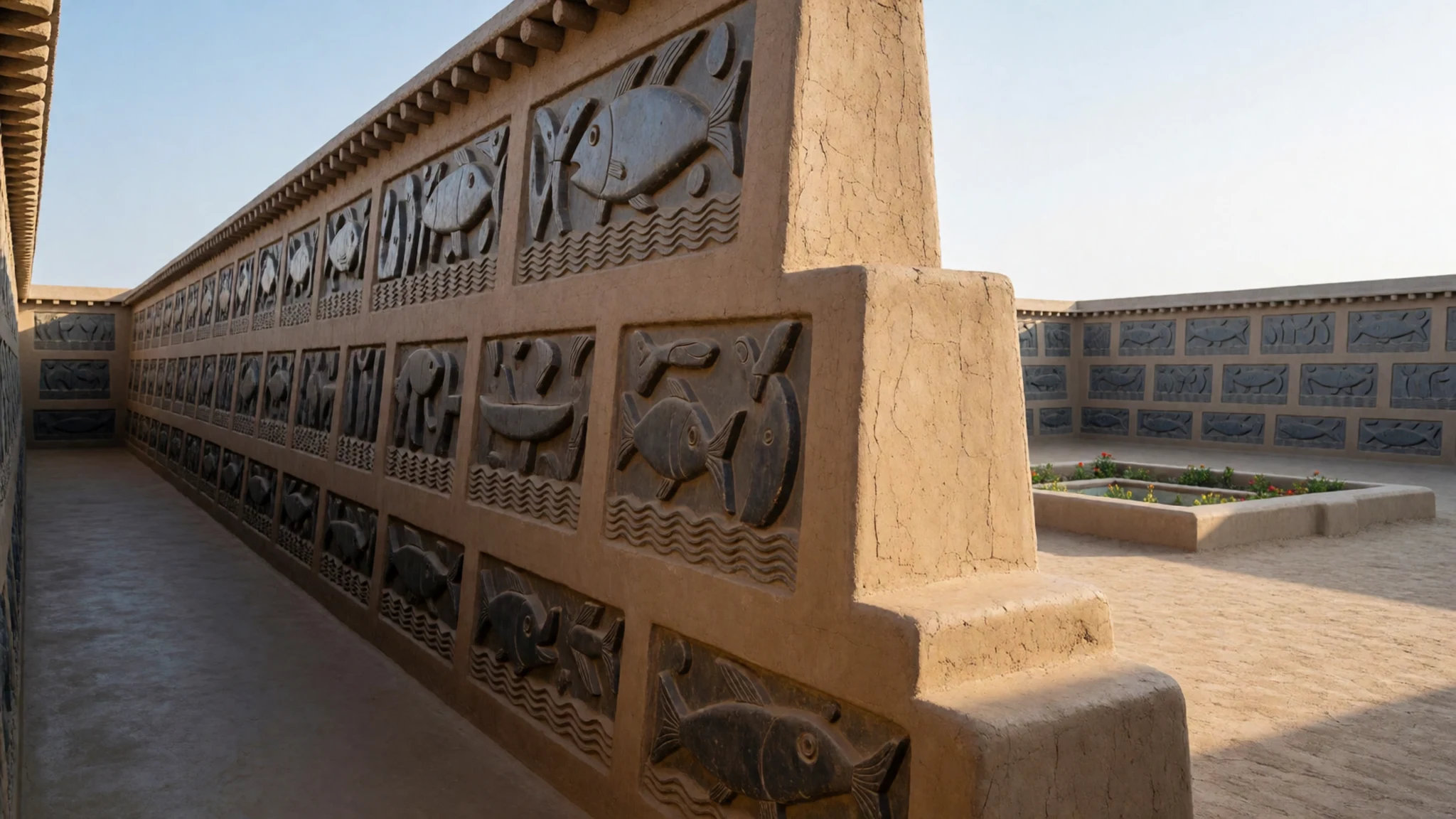
- Carved adobe friezes — Main ciudadelas, throughout the site
Across the main compounds, the adobe walls carry relief designs pressed into the clay while it was still soft. Many of the motifs are geometric or repeated figures, and some still hold fine detail after centuries of wind and rain. Look closely at the lower courses, where the carving is often best preserved. Do not touch the surfaces, because the oils and pressure from hands can speed up their decay.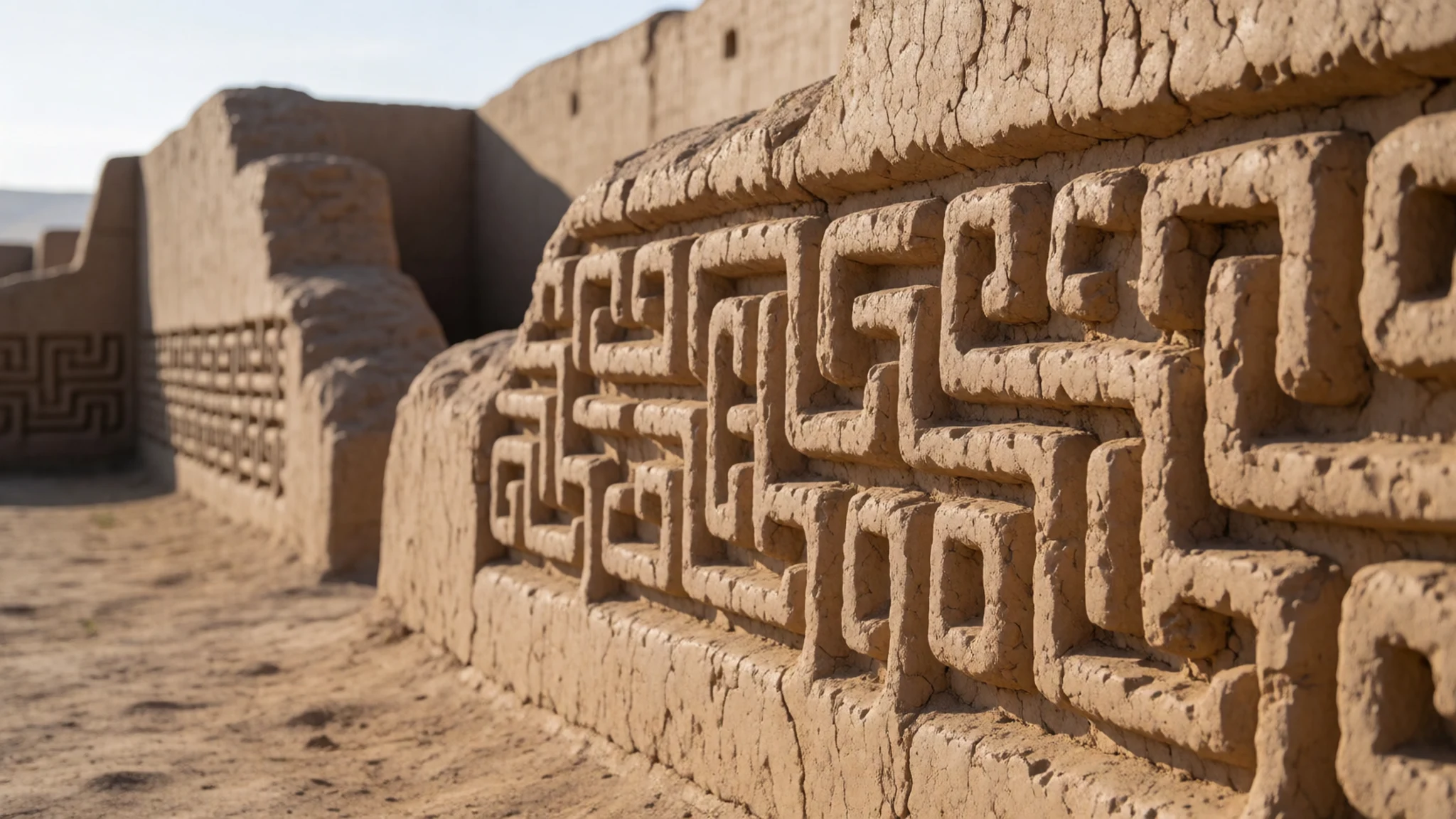
- Small irregular rooms — Between the royal compounds, western part of the site
Between the grand compounds are clusters of small, irregular rooms, often called SIARs. They are thought to be the housing of the city's ordinary people, and their tight, uneven layout contrasts sharply with the orderly royal complexes nearby. Viewing them from the marked paths gives a sense of daily life that the grand walls can hide. The rooms are fragile, so stay on the paths and keep to the marked routes.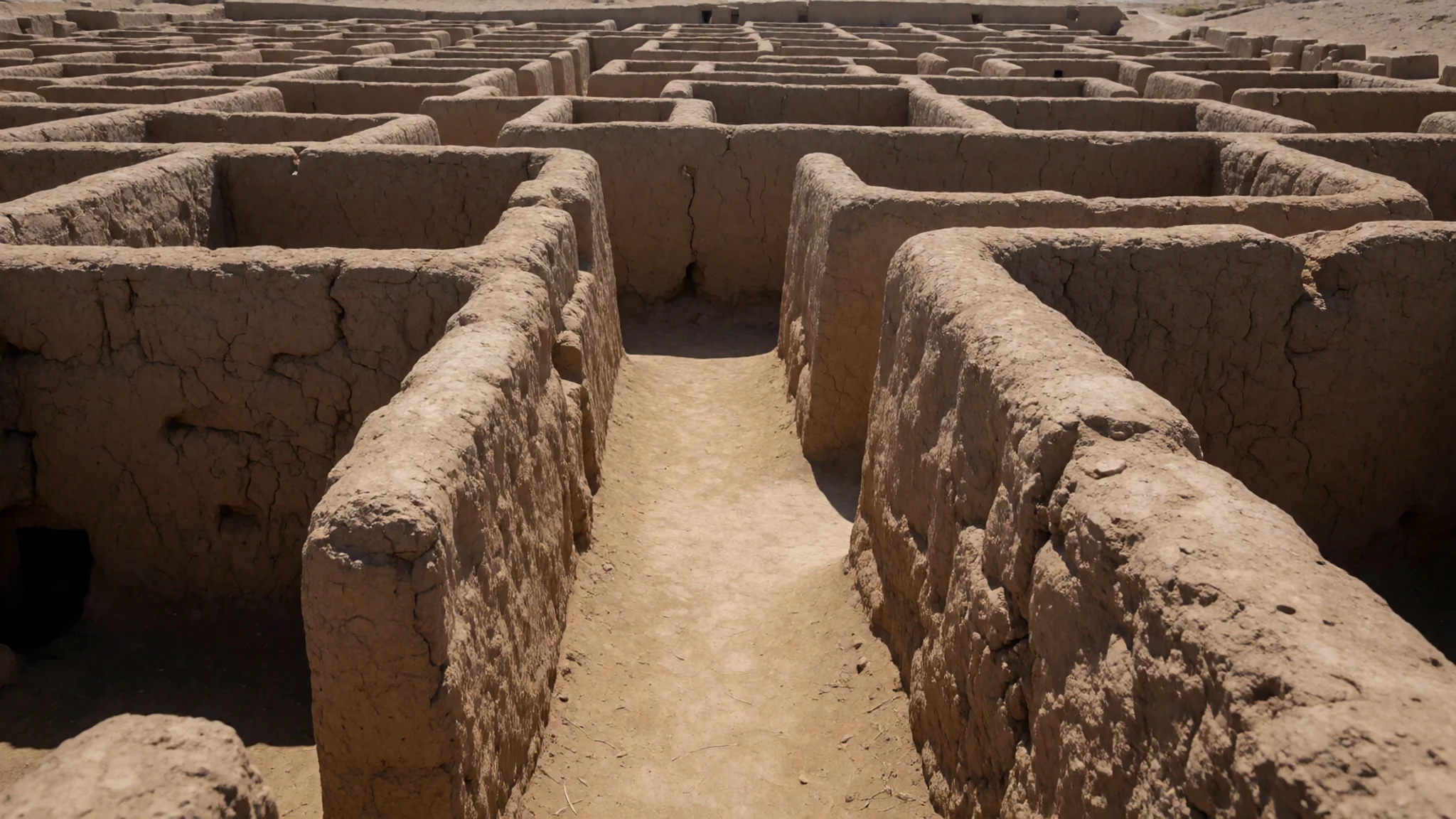
- Site entrance and displays — Main entrance, Chan Chan archaeological zone
The entrance area is the best place to start, because the signage and displays explain the excavations and the layout of the city before you walk in. Information panels help you tell the royal compounds from the residential areas. Check the official site for current opening times and ticket details before you travel, since they can change. Arrive with cash or a card the site accepts, and allow time to look at the displays first.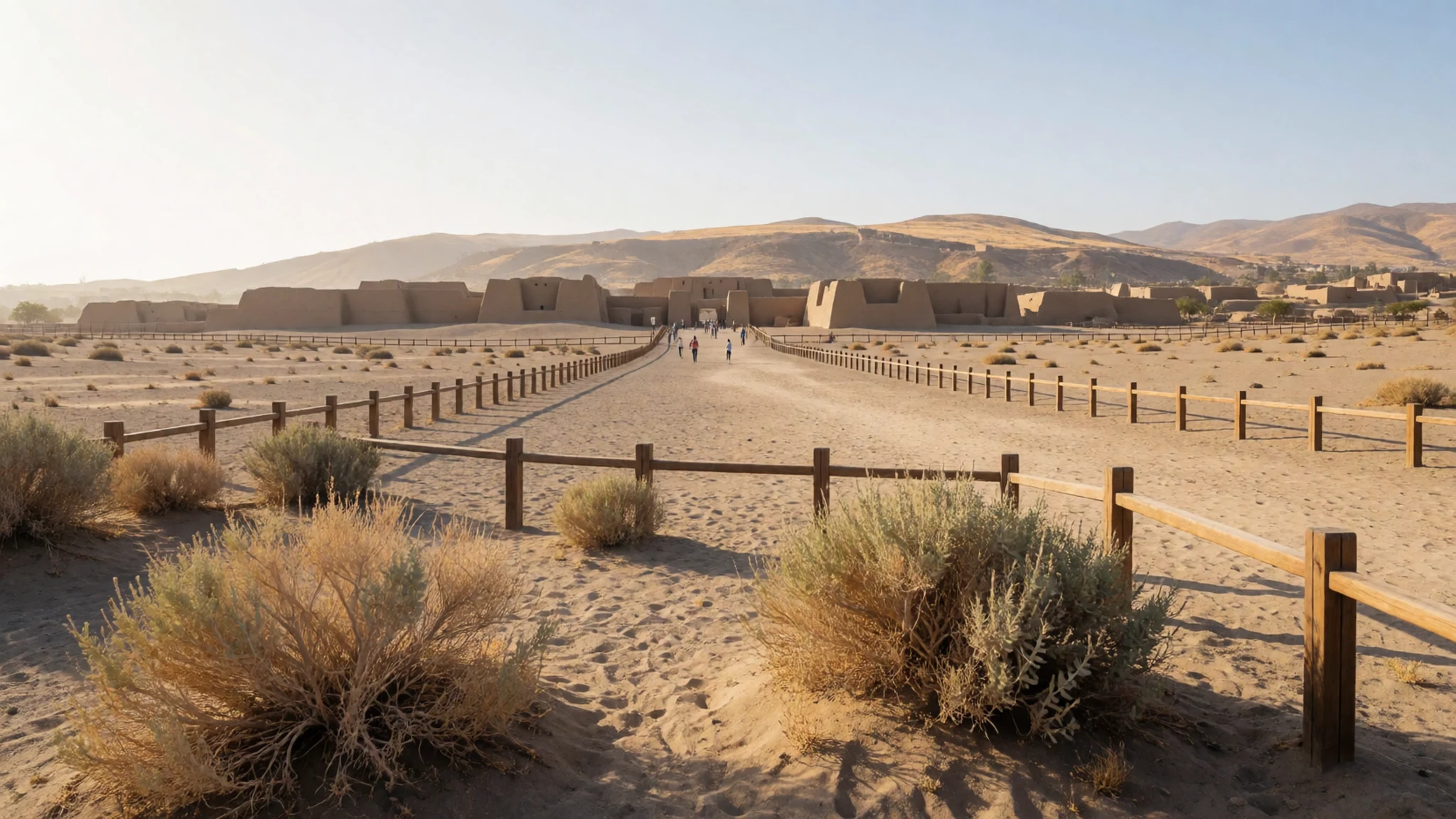
- Trujillo's historic centre — Trujillo city centre, a short drive east of the site
Trujillo was founded by the Spanish in 1535, and its colonial centre is a short drive from the ruins. Its plazas, churches and older houses give a useful counterpoint to the adobe city, showing how the coast changed after the Chimú era. Many visitors pair the two in a single day, visiting the ruins in the morning when it is cooler and the colonial centre in the afternoon.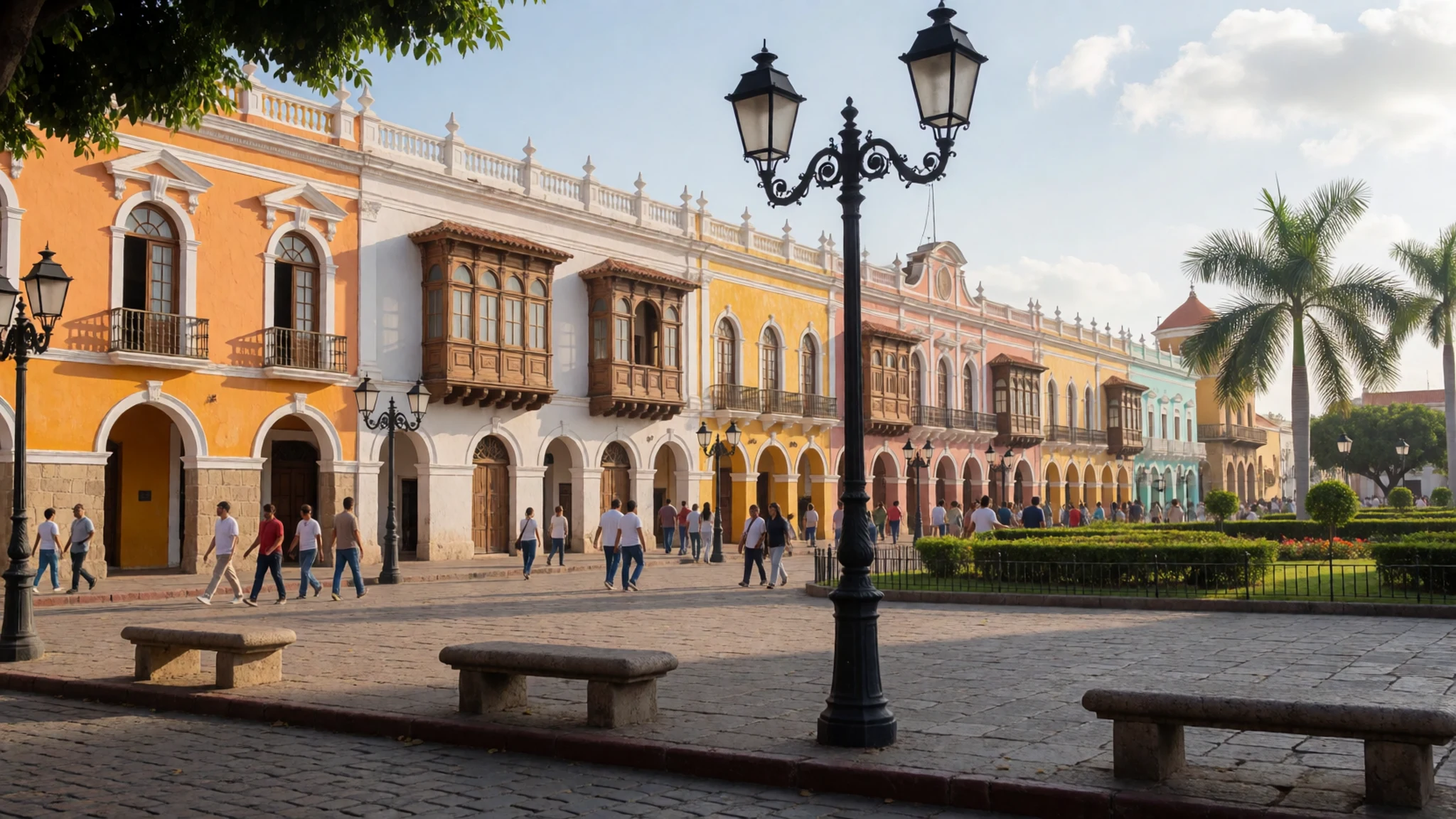
Culture
Chan Chan was the work of the Chimú, whose religion and economy were closely tied to the Pacific Ocean. Much of the city's imagery, especially the sea-related figures pressed into its walls, points to a sea deity, and the Chimú relied on the ocean for much of their food while using irrigation to farm the desert. Their language, usually called quingnam, is now extinct, and very little was recorded, so nobody can say with certainty how it sounded. After the Inca conquest, the people of the city were moved and their traditions faded under the new order. Many people in Trujillo today see the ruins as part of their own history, and excavation and conservation work continues on the site. When you visit, stay on the marked paths and never climb on or lean against the adobe walls, which can crumble under weight and handling.
What to wear
The Chimú are known for their textiles, which were made from cotton and alpaca wool and often decorated with woven and feather-work designs. Few of those garments survive outside museums, but the tradition of colourful weaving remains part of the region's craft. The dress most closely tied to Trujillo today is the marinera, the dance costume of the coast. Women wear a full, flared skirt with a fitted bodice, often in bright or polka-dot patterns, while men wear a white shirt, dark trousers and a straw hat. The dance is performed at festivals and cultural events, not as everyday wear.
In Trujillo, people dress much as they would in any Peruvian city. Lightweight shirts, jeans, skirts and trainers are common, and the coast's climate means people often wear one more layer in the evening when the air cools. Religious and official occasions call for smarter clothing.
For a visit to Chan Chan, dress for sun and dust. A wide-brimmed hat, sunglasses and high-factor sunscreen matter more than anything else, because there is little shade on the site. Wear closed, sturdy shoes, since the ground is uneven and often sandy. Pack a light layer for the cooler parts of the day, and loose, breathable clothing that covers the shoulders keeps you comfortable in the heat.
What to eat
- Ceviche — Cevicherías near the fish market in central Trujillo
Raw fish cured in citrus juice with onion, chilli and a little salt, usually served with sweet potato and corn. It is a coastal dish, so the best versions are found where the catch is fresh. Eat it early in the day, when the fish is at its freshest.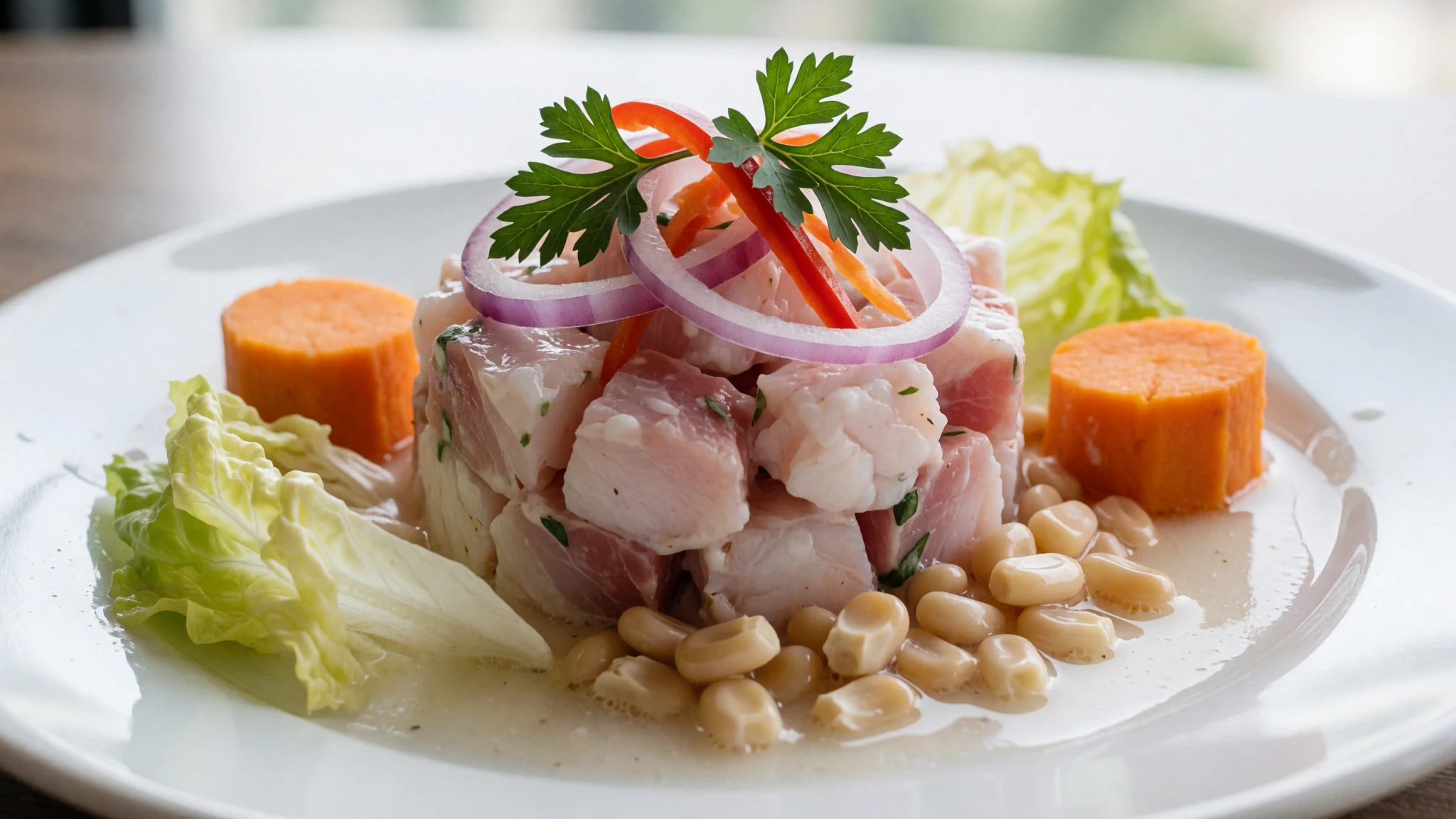
- Arroz con pollo — Set-lunch eateries in the city centre
Chicken cooked with rice, coriander and vegetables, a common Peruvian plate that shows how rice is the staple of the coast. It is a dependable lunch option when you are touring the site and want something filling. Ask for the daily set lunch, which is often the best value.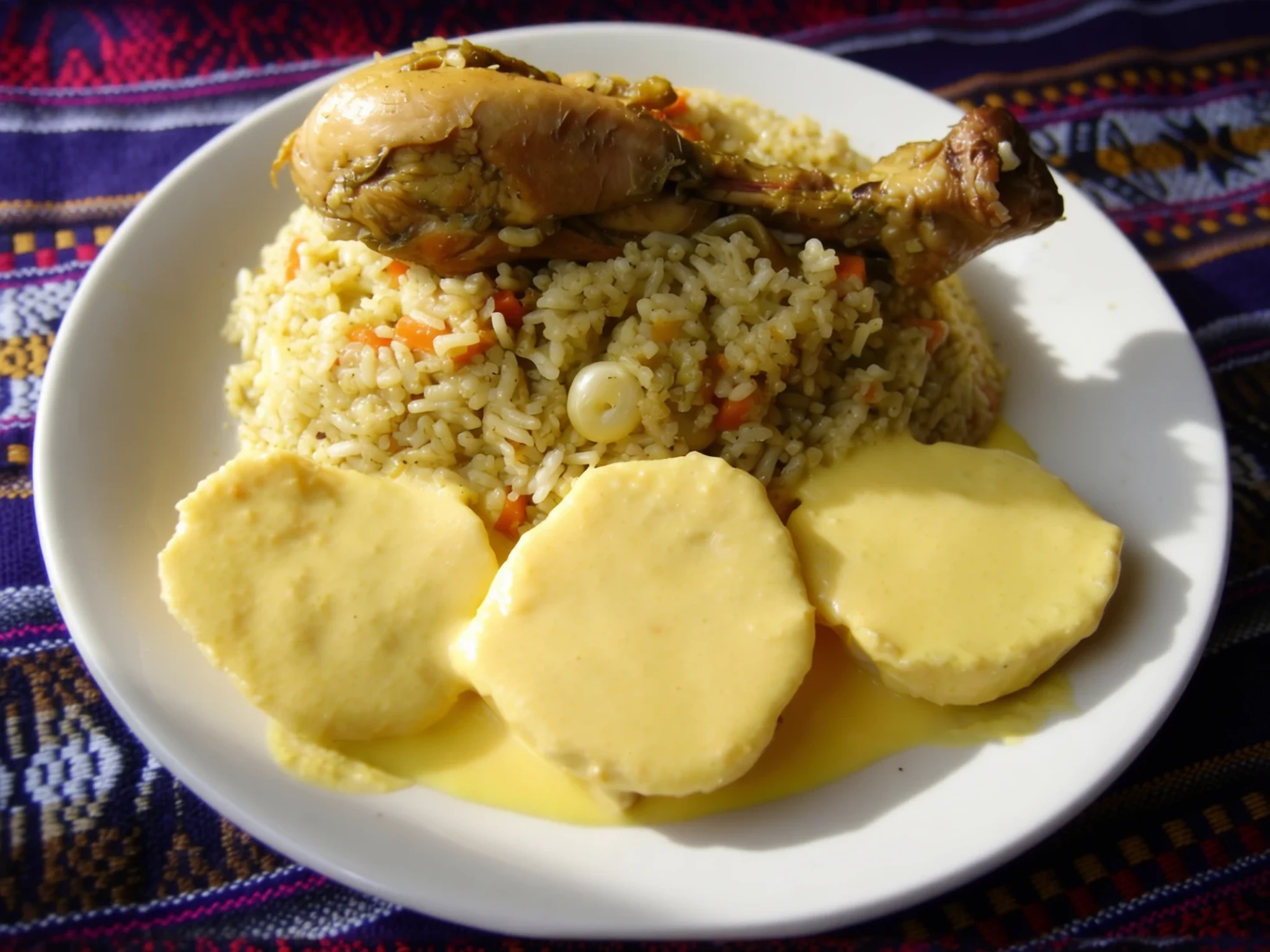
- Lomo saltado — Creole eateries and family-run restaurants in town
Strips of beef stir-fried with onion, tomato and chips, served with rice. It reflects the creole mix of Peruvian cooking, with Chinese influence in the wok technique. It is a good choice in an eatery that cooks to order.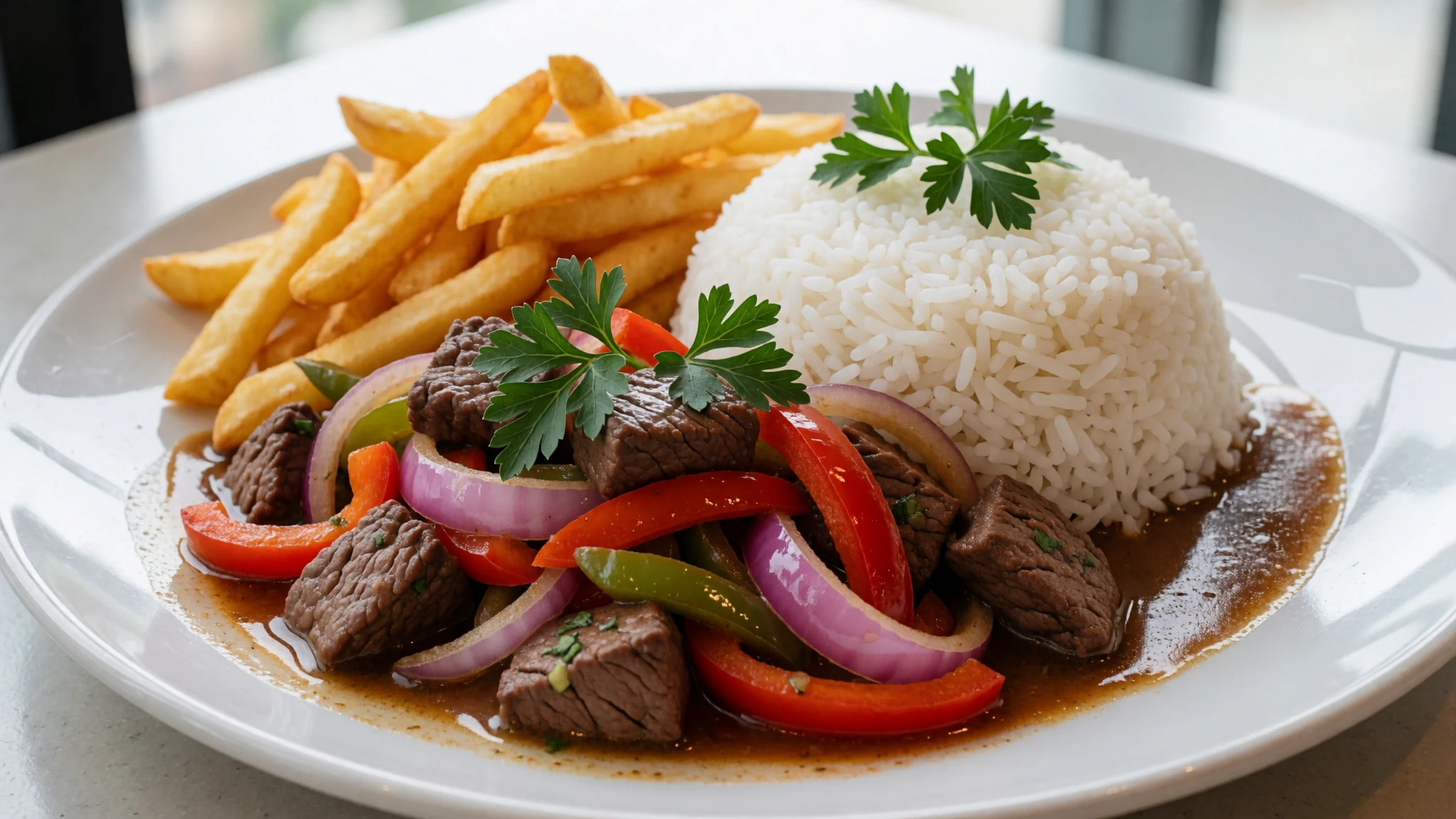
- Chicharrón — The morning market in Trujillo
Crisp fried pork, usually served with sweet potato and a salsa, and often eaten as a breakfast or lunch dish. The best places fry it fresh, so arrive early for the hottest pieces. It is a filling meal before a morning at the ruins. - Cuy — Andean eateries in the highlands, not usually on the coast
Guinea pig, roasted whole and served with potatoes in the Andean style. It is a traditional highland dish, and you are unlikely to find it on the coast. If you want to try it, look for an Andean-style eatery in the highlands rather than in Trujillo.
Plan it
Best time. Trujillo sits in a coastal desert, so the weather is dry, with little rain at any time of year. Winter months are often cooler and cloudier, with a fine coastal mist, while summer brings warmer, brighter days. The milder, drier months suit walking the open site, so check the forecast and plan the ruins for the cooler parts of the day.
How long. 1–2
Getting there. Fly into Trujillo or Lima, then take a taxi or ride-hailing car to the site, which lies just west of the city. From Lima, a long-distance bus to Trujillo is an option for those travelling overland.
Budget. low
Tips
- Visit early in the morning, before the midday sun and the heat build up on the open site
- Carry more water than you think you need and a hat, because there is little shade
- Agree a fixed fare for taxis before you set off, or use a ride-hailing app
- Carry cash for entry, small stalls and transport, since card payment may not be available everywhere
- Combine the ruins with Trujillo's historic centre in the same day to avoid travelling back and forth
Etiquette
- Stay on the marked paths and keep off the walls and carved surfaces
- Ask before photographing local people, especially at markets
- Respect any restricted areas, even where the barrier is low or unmarked
Nearby
Sources
- Wikidata Q277540 (CC0)
- Wikipedia: Chan Chan (rev 1382092046) (CC BY-SA 4.0)
- Wikivoyage: Peru (rev 5386000) (CC BY-SA 4.0)
- Chan Chan, 2023 (32) — Draceane (CC BY-SA 4.0)
- Chan chan view1 — Håkan Svensson (CC BY 3.0)
- Chan chan wall2 — Håkan Svensson (CC BY 3.0)
- Chan chan wall1 — Håkan Svensson (CC BY 3.0)
- Adobe detail at Chan Chan — Kevstan (CC BY 3.0)
- Chan Chan 18 — MacAllen Brothers (CC BY-SA 2.0)
- Chan Chan panel — MacAllen Brothers (CC BY-SA 2.0)
- Comparativa-chanchan — 2025newyork (CC BY-SA 4.0)


