Certosa di Pavia
Certosa di Pavia, Italy
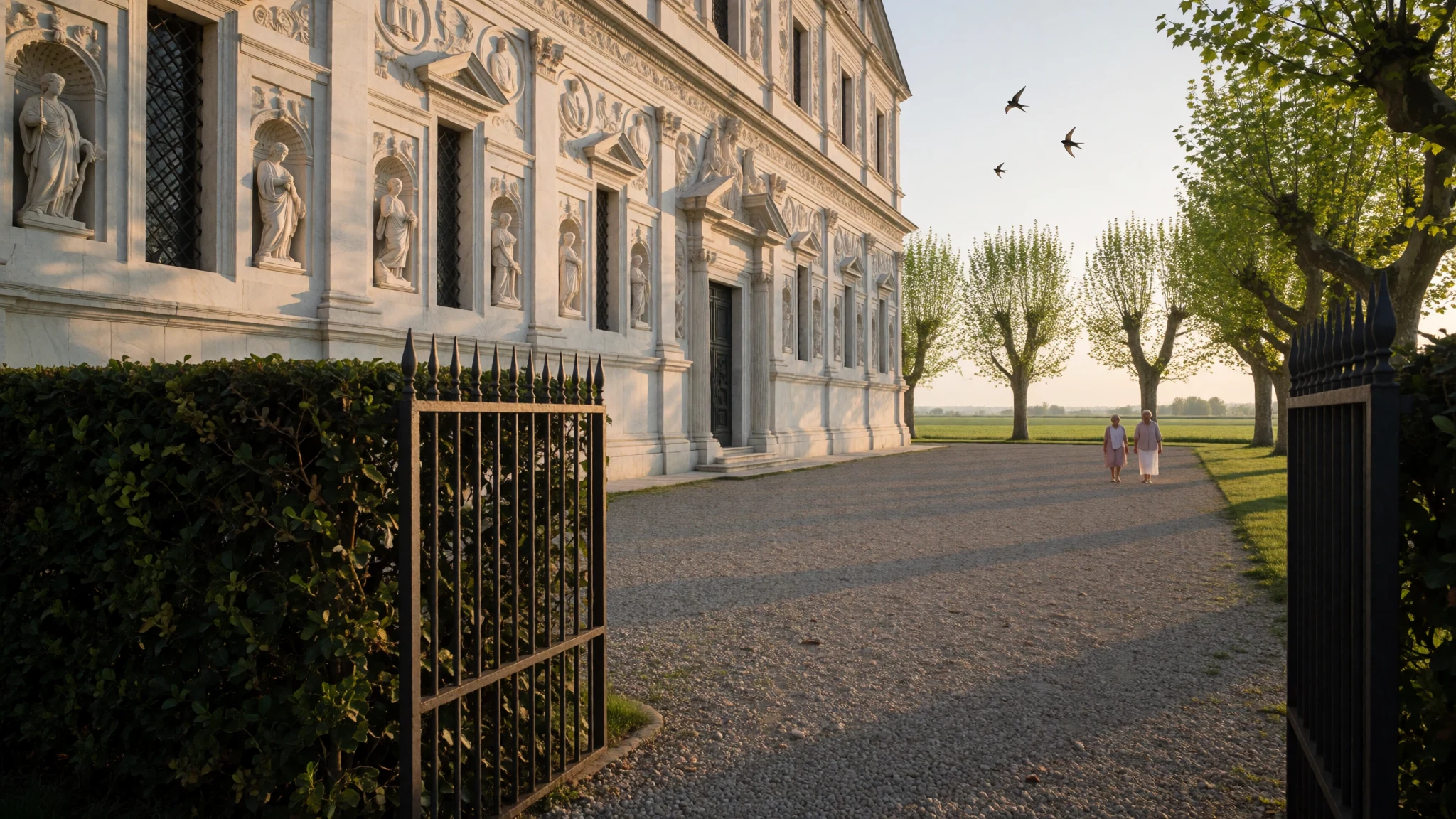
Certosa di Pavia is a monastery built for silence and then covered in marble sculpture, an easy half-day from Milan.
The place
The Certosa di Pavia sits in flat Lombard farmland about 8 km north of the city of Pavia, roughly midway between Pavia and Milan. It is a Carthusian monastery, begun in 1396, and certosa is simply the Italian word for charterhouse, the name given to a house of that order. The Carthusians, founded by St Bruno, were known for silence, solitude and unadorned buildings, which is what makes this place such a surprise. The church and its façade are packed with sculpture and coloured marble, and Gothic and Renaissance ideas sit together in the same walls. The monastery was planned as the far end of the Visconti park, a hunting ground and pleasure garden belonging to the dukes of Milan; only scattered pieces of that park survive. What a visitor finds today is a compound of a grand church, cloisters, gardens and the small separate dwellings where monks once lived largely apart from one another. The setting is rural rather than urban: irrigated fields, rows of trees, a village sharing the monastery's name and a long approach that still hints at the old axis of the park. Lombardy around it is a fertile, temperate region, and the Po Valley mixes farming with industry, so the monastery feels like a medieval island inside a working landscape. It works well as a half-day from Milan or paired with Pavia, and it rewards unhurried looking more than ticking off a list.
Its story
The Certosa di Pavia began as a political statement. Carved into its façade is a panel recording the founding in 1396, when Gian Galeazzo Visconti, first Duke of Milan, had the first stone set and handed the design to the architect Marco Solari. He had seized power from his uncle Bernabò in 1385, and like his father he kept his court at Pavia, the old capital of the Lombard kings. Gian Galeazzo dreamed of a new kingdom in northern Italy, and he wanted a family monument worthy of that ambition. His first idea was Milan's cathedral, whose rebuilding the citizens had decided on in 1386. He hoped to turn it into a Visconti mausoleum, starting with a tomb for his father. The cathedral's governing body, the Fabbrica del Duomo, and the Milanese, who guarded their independence jealously, would have none of it. So the duke built elsewhere, at the end of his own hunting park, on a site that linked the castle at Pavia to the new church by a direct route. He even drew masons and sculptors from the cathedral works, including Giacomo da Campione and Giovannino de' Grassi, which hardly helped relations. Work continued until 1495, long after the duke's own lifetime, and the slow timetable explains the mix of styles seen today: medieval Gothic planning that gradually gave way to Renaissance decoration as tastes and artists changed. A dynastic tomb became a rich collection of regional art.
What to see
- The façade — Church forecourt
The façade of the Certosa di Pavia is the first thing to read slowly. Panels of relief, statues, medallions and slender windows cover the marble, and the carving rewards a long look from the forecourt, ideally in low morning or late light. Among the scenes is the panel recording the founding, a small piece of history set into the stone.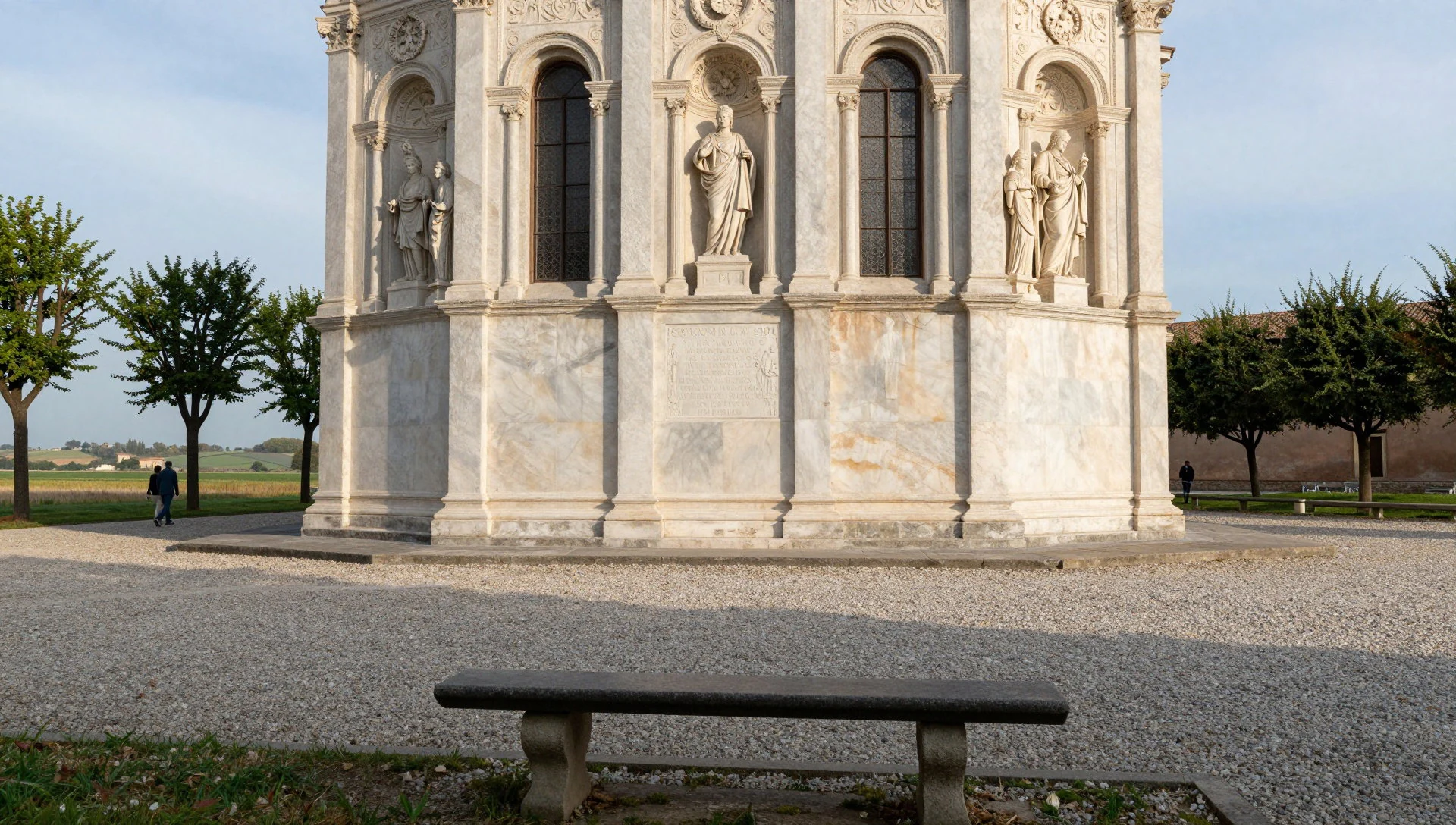
- The church nave — Inside the church
Inside the church of the Certosa di Pavia, the nave is a cool, tall space of ribbed Gothic vaults, with side chapels opening off both sides. Paintings, carved woodwork and marble inlay fill the chapels, so the best approach is to move slowly and let the eyes adjust to the dim light.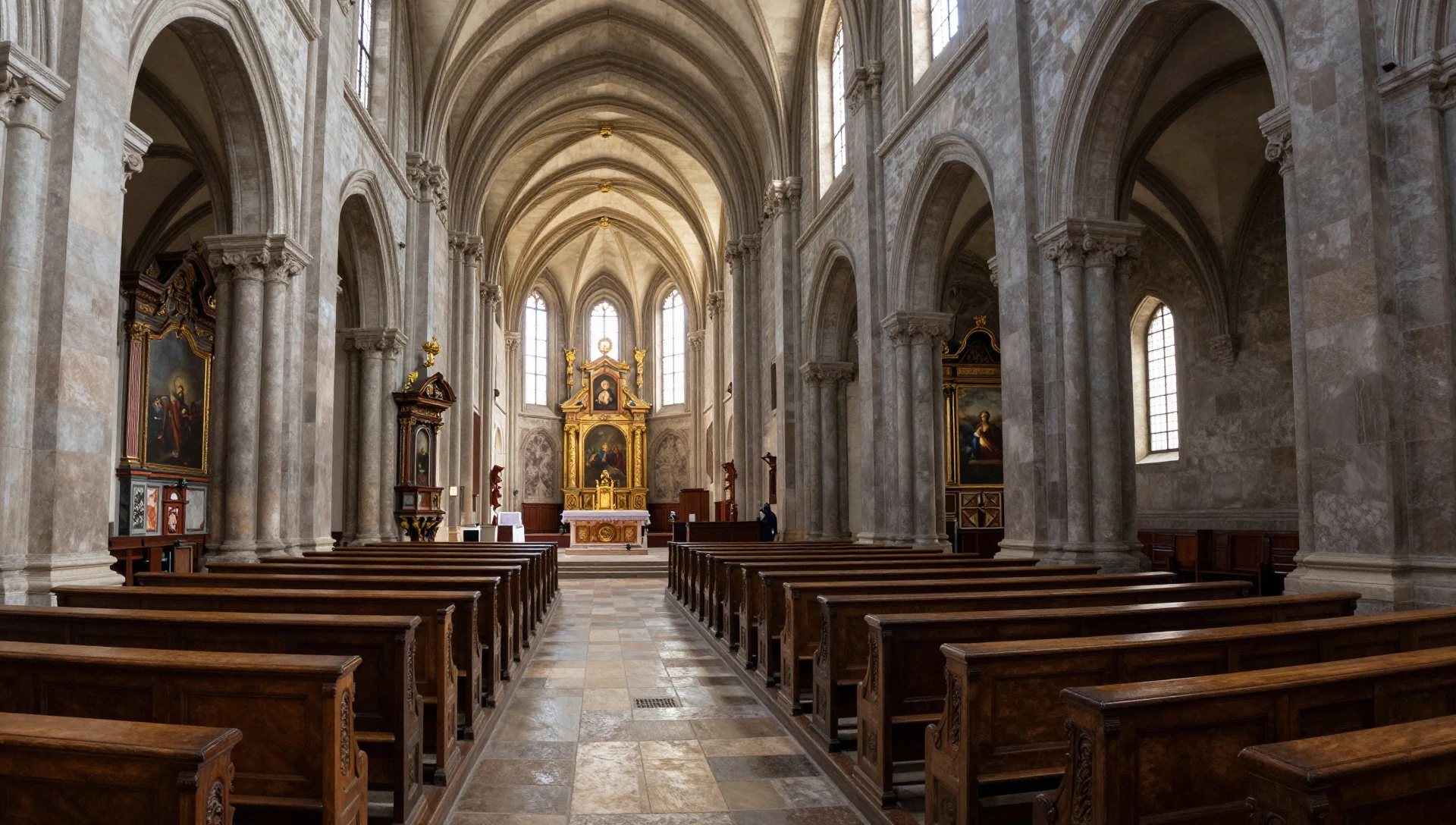
- Tomb of Gian Galeazzo Visconti — Inside the church
The tomb of Gian Galeazzo Visconti in the Certosa di Pavia is the monument the whole building was meant to shelter. The sculptor Benedetto Briosco worked on it, and the marble figures and reliefs show a duke remembered as a ruler rather than a monk. It is the clearest sign that this church was planned as a family mausoleum.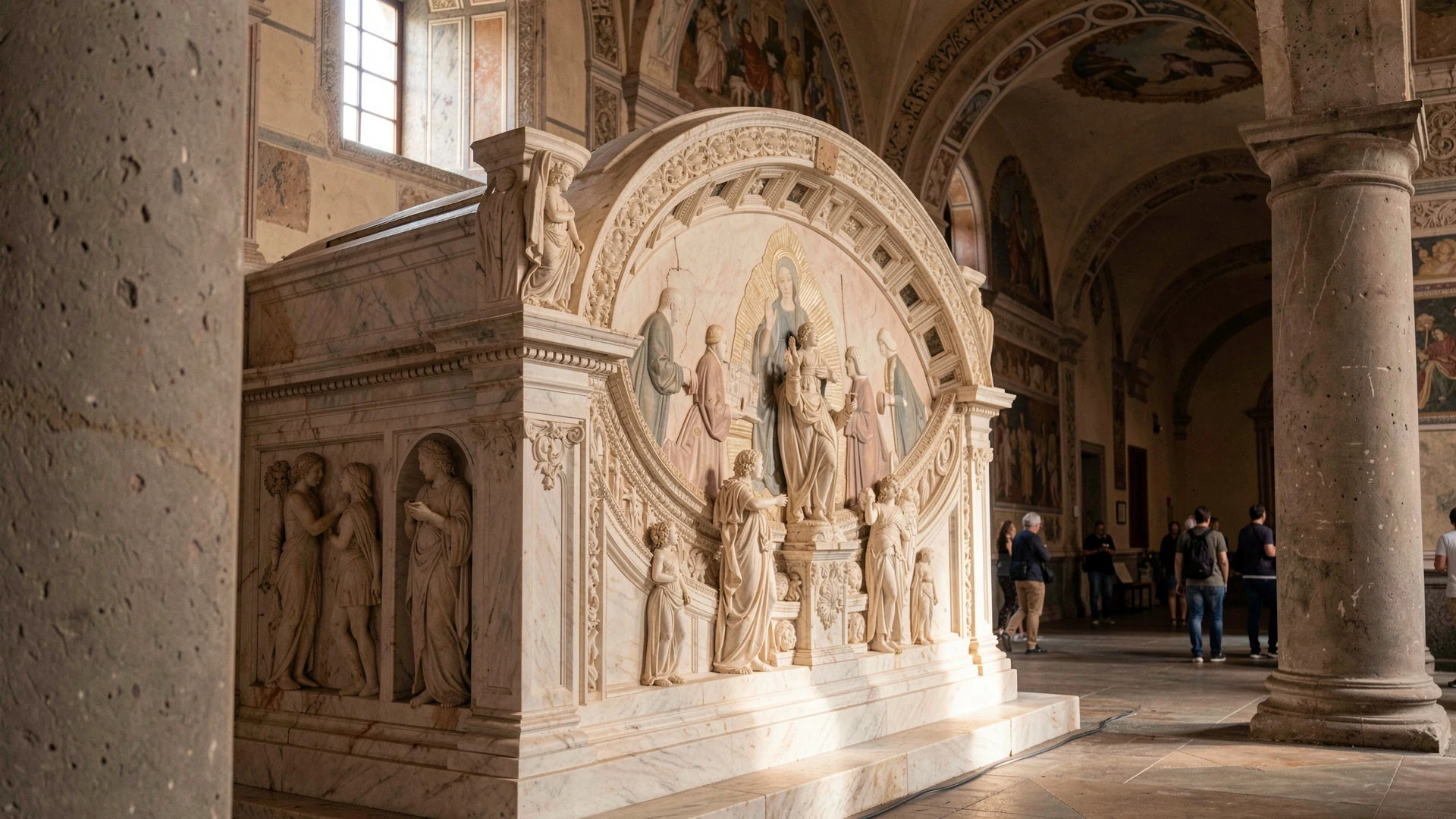
- The lavabo portal — Beside the church
The lavabo portal at the Certosa di Pavia carries portraits of the dukes of Milan, a reminder that the monastery was a dynastic project as much as a religious one. The doorway is modest beside the church, but the sculpted faces and decoration repay close attention from anyone curious about how Lombard patrons wished to be remembered.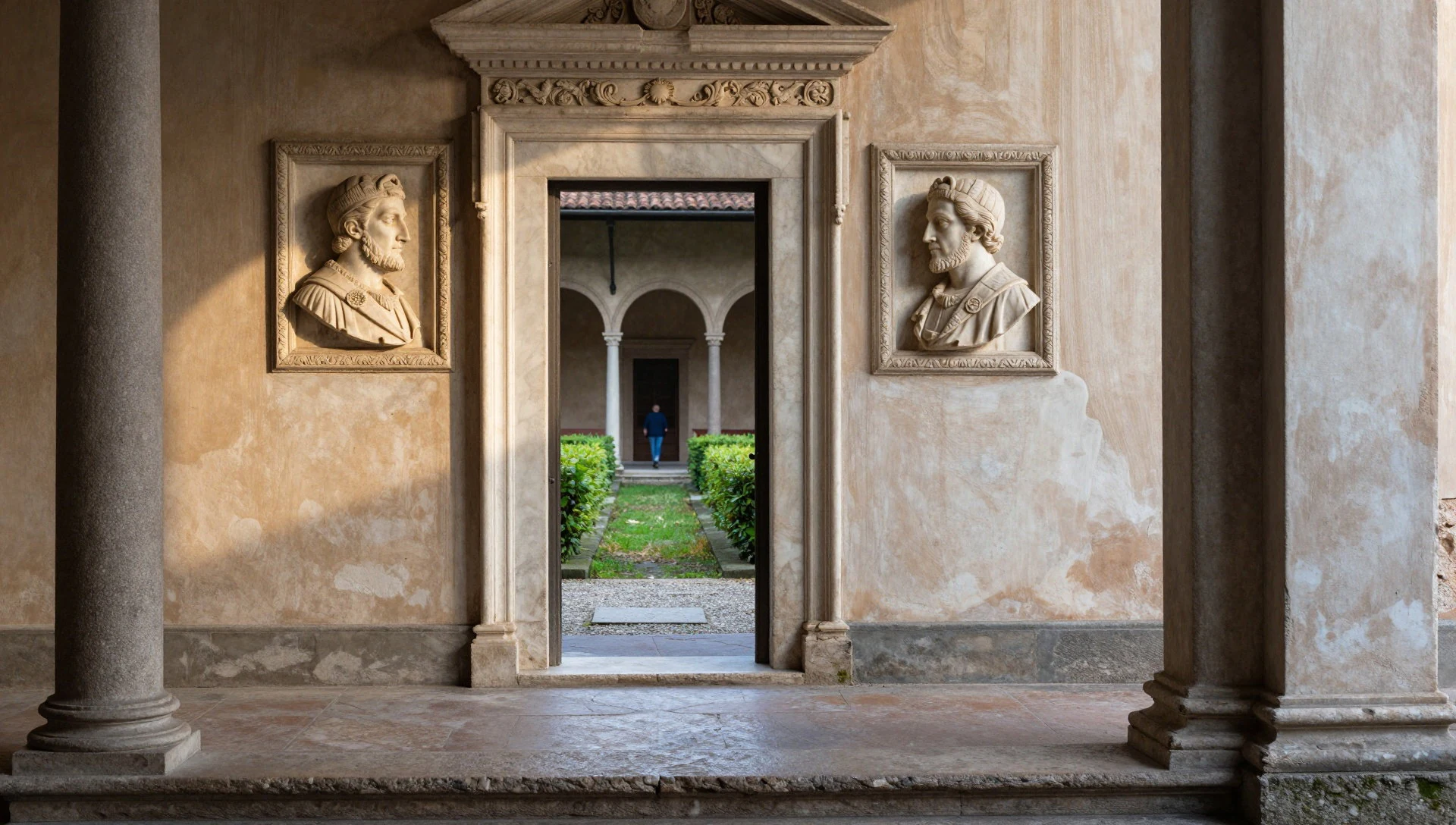
- The cloisters and monks' cells — Cloister range behind the church
The cloisters of the Certosa di Pavia show the other side of Carthusian life. Around the large garden court, each monk had a small separate dwelling with its own plot, since the order valued solitude over communal bustle. Visits are often guided, so check the official site for how access is arranged.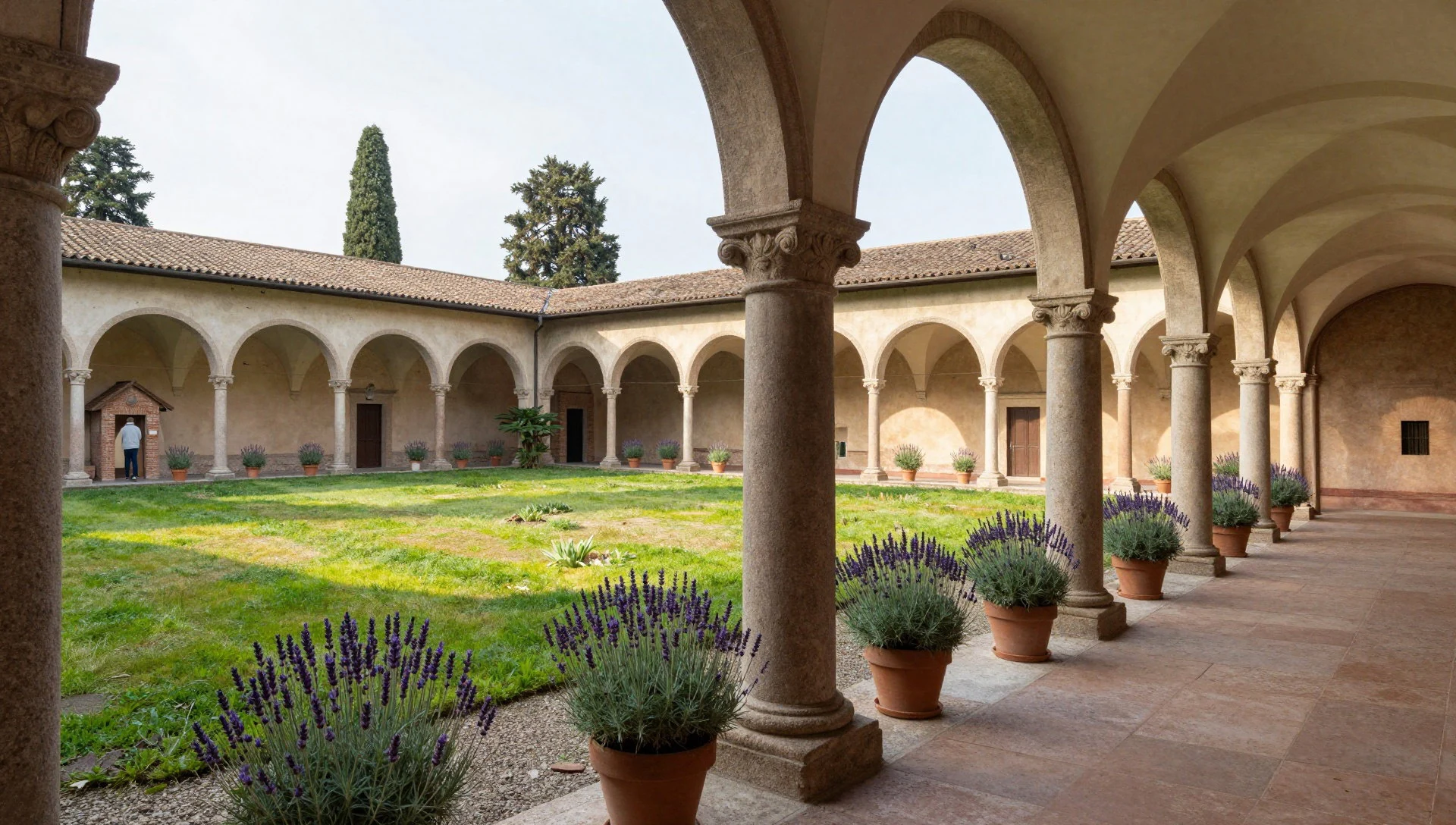
Culture
The Certosa di Pavia is still a religious place rather than only a museum, and the culture around it is shaped by the Carthusian ideal of silence, prayer and solitude. The order, founded by St Bruno, gave each monk a separate cell and kept shared life to a minimum, which is why the monastery centres on private dwellings around a cloister rather than on grand communal halls. The exuberant decoration of the church speaks of a different tradition: princely patronage. The Visconti and later patrons used art to show power and piety together, and Lombard churches often read as dynastic and civic statements as much as places of worship. That double character shapes a visit. Access is often by guided tour, the tone is hushed, and the pace follows the monastery rather than the visitor. The wider region adds its own rhythm: lunch is a proper sit-down meal, mornings are for sightseeing, and village life nearby slows around midday. Many Italians come as a day trip from Milan or Pavia, so weekends and school holidays can feel busier than weekdays. A few words of Italian, such as buongiorno and grazie, go down well with guides and staff. Speak quietly, cover shoulders and knees, and follow the guide's instructions on photography inside the church and the cloisters.
What to wear
The Certosa di Pavia belongs to a part of Italy with no single costume that visitors will meet in the street. The clothing most tied to the place is monastic: Carthusians traditionally wore a plain white woollen habit, chosen for simplicity rather than display. Court dress of the Visconti era was the opposite, with silk, velvet and brocade, and Lombardy's long association with silk weaving, centred on the lakes around Como, helps explain why such cloth appears so often in the region's painting and sculpture. Folk dress now mostly appears at local festivals and in museums rather than in daily life.
Everyday wear around Pavia is practical and tidy. Milan sets the tone for the whole region, so people tend towards neat, well-cut, understated clothes in dark or neutral colours, with trainers common for casual days and leather shoes for work or dinner. In farm country and villages, fleeces, boots and waterproofs are normal in wet months.
For a visit, dress for a working religious site: shoulders and knees covered, and no beachwear. Wear flat, comfortable shoes, since the visit involves stone floors, gravel and a good deal of standing. Summers in the Po Valley are hot and humid, so choose light cotton or linen with a thin layer for the cool church interior. Winters can be cold and damp, so bring a coat, scarf and sturdy footwear.
What to eat
- Risotto alla milanese — Family-run trattorie in Pavia and Milan
Lombardy's signature rice dish, made with rice from the paddies that spread across the plain west of Milan and around Pavia. It is creamy, golden and rich, served as a first course rather than a side dish.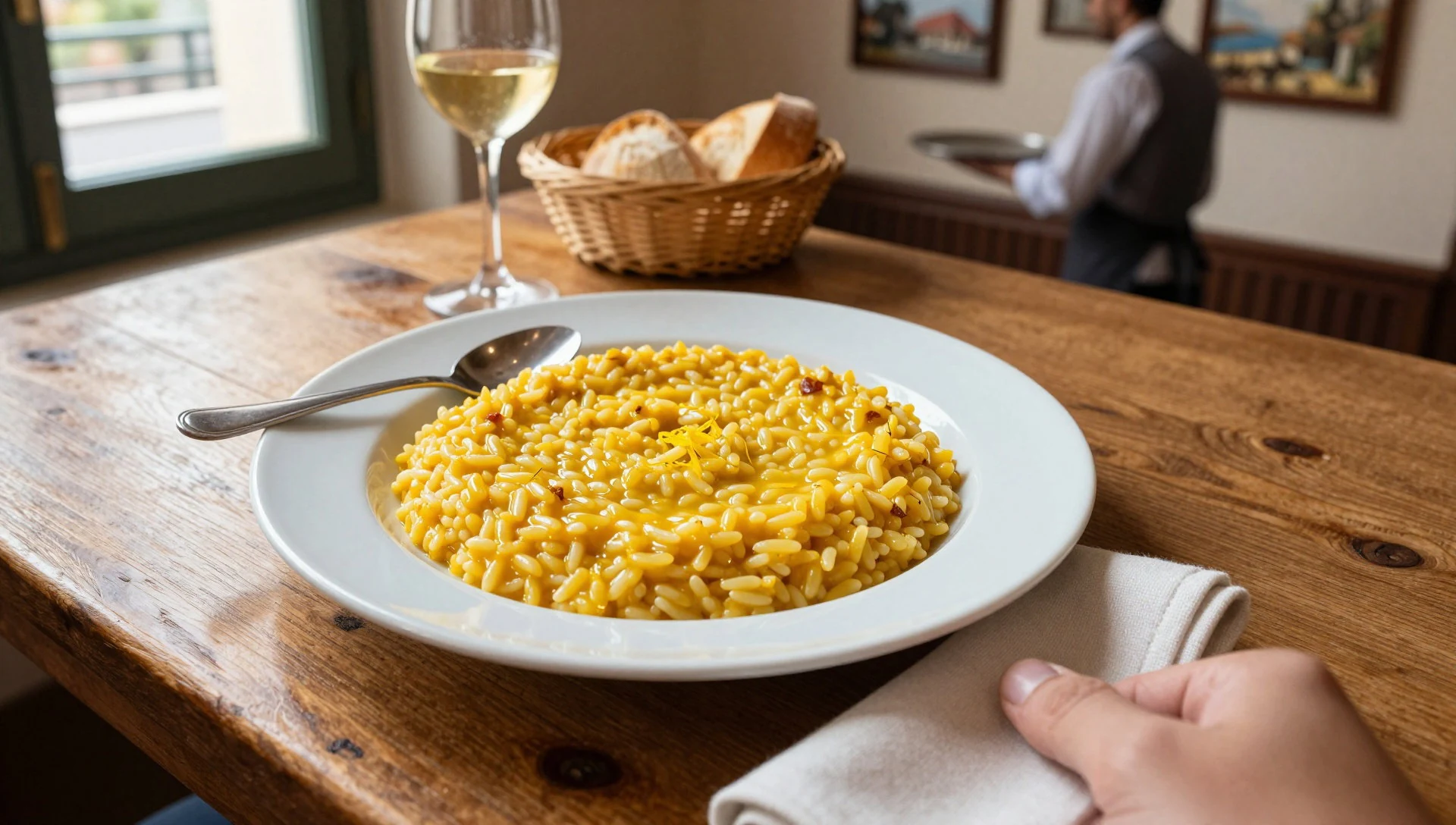
- Osso buco — Traditional trattorie in Milan and Pavia
Slow-cooked veal shin, literally 'bone with a hole', braised until the meat falls from the bone and the marrow turns soft. It is a hearty main course, often served alongside risotto in colder months.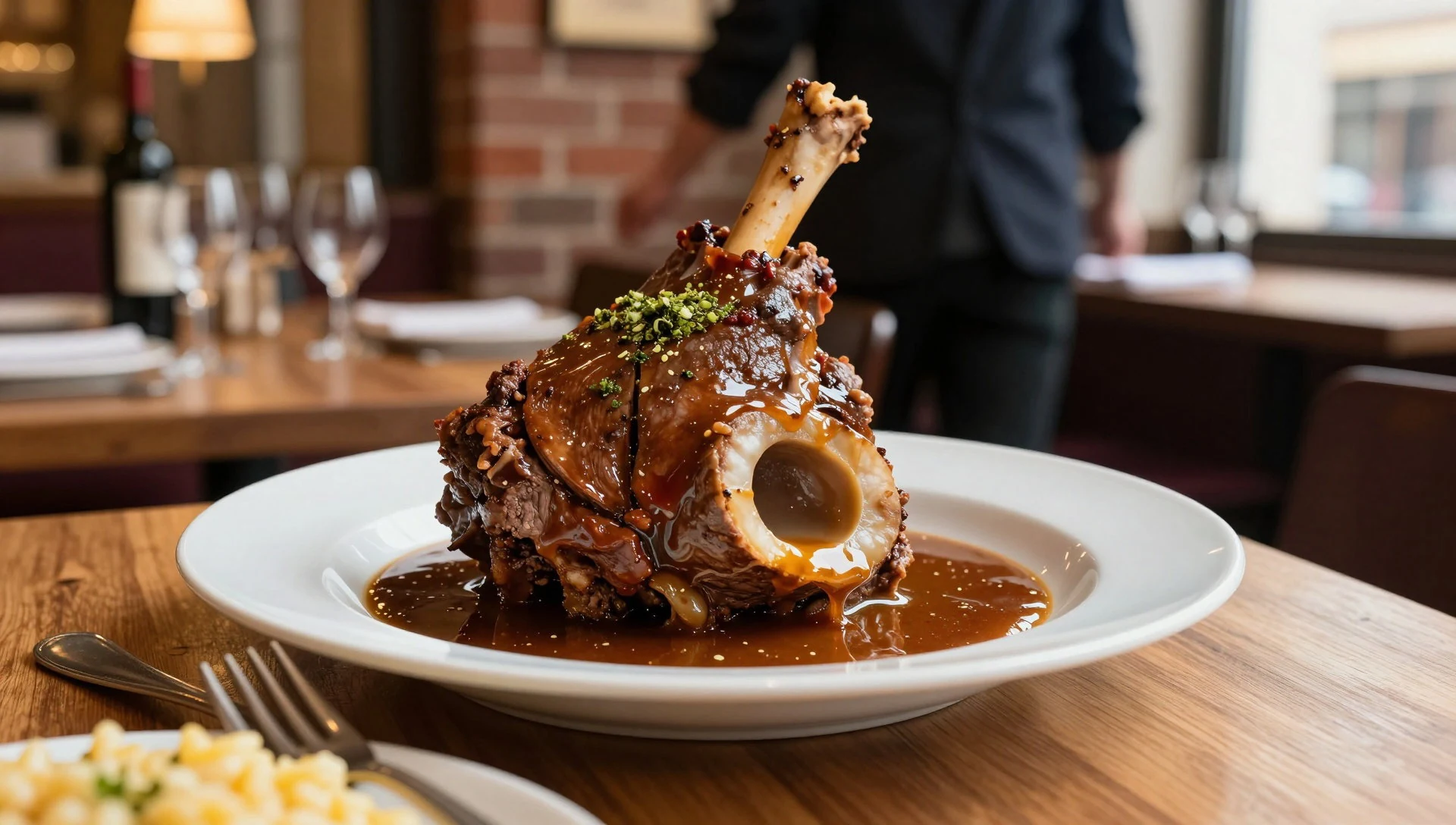
- Minestrone — Village trattorie and home-style eateries near the Certosa
A thick vegetable soup, often with rice or pasta, and a staple of Lombard home cooking. It suits damp, foggy days in the Po Valley and is usually a modest, filling start to a meal. - Salumi — A salumeria or a trattoria antipasto table
Cold cuts of cured pork, sliced thin and eaten with bread as a starter or a light lunch. Each town has its favourites, so ordering a mixed plate is the easiest way to taste the local range. - Polenta — Country trattorie around Pavia
Cornmeal cooked slowly into a soft porridge or cooled and sliced, then served with stews, braised meat or cheese. It is a comforting winter dish that has long been part of northern Italian farm tables. - Oltrepò Pavese wine — An enoteca or wine bar in Pavia
The hills south of the Po, across from Pavia, produce wines that are well worth tasting with a meal or at an aperitivo. Ask for a local red or sparkling wine by the glass and let the staff choose.
Plan it
Best time. April–May and September–October, when the Po Valley is mild and the fields are green or golden. July and August are hot and humid, and winter is cold, damp and often foggy.
How long. 1
Getting there. Fly into Milan Malpensa, Linate or Bergamo, then take a train from Milan towards Pavia. A station named Certosa di Pavia serves the village, and the monastery is a short walk or taxi ride from there; check current services before travelling.
Budget. low
Tips
- Check the official site for opening days, guided-tour arrangements and any fees before setting out
- Go on a weekday morning to avoid weekend and school-holiday crowds
- Combine the visit with Pavia so the day is not spent mostly in transit
- Carry some cash and water, as facilities near the monastery are limited
- Allow time for the church interior, which is dim and rewards slow looking
Etiquette
- Keep voices low and follow the guide's directions inside the church and cloisters
- Cover shoulders and knees when visiting the monastery
- Ask before photographing inside, and never photograph monks or residents without permission
Nearby
Sources
- Wikidata Q654443 (CC0)
- Wikipedia: Certosa di Pavia (rev 1381782863) (CC BY-SA 4.0)
- Wikivoyage: Lombardy (rev 5077722) (CC BY-SA 4.0)
- Certosa di Pavia - Chiesa della Certosa, Geobia (CC BY 3.0)
- Facade of the Certosa di Pavia, Blackcat (CC BY-SA 4.0)
- Gian Galeazzo donates the Certosa to the Madonna, Ugo franchini (CC BY 3.0)
- Gian Galeazzo Visconti grave by Benedetto Briosco, Carlo Dell'Orto (CC BY-SA 4.0)
- Portale del lavabo, Certosa di Pavia, Catalogo generale dei Beni Culturali (CC BY-SA 4.0)
- Navata centrale, FabioRomanoni (CC BY-SA 4.0)
- Fragment fasady - Certosa di Pavia, Danielkwiat (CC BY-SA 2.0)
- Certosa portale, FabioRomanoni (CC BY-SA 4.0)


