Cát Tiên National Park
Cát Tiên National Park, Vietnam
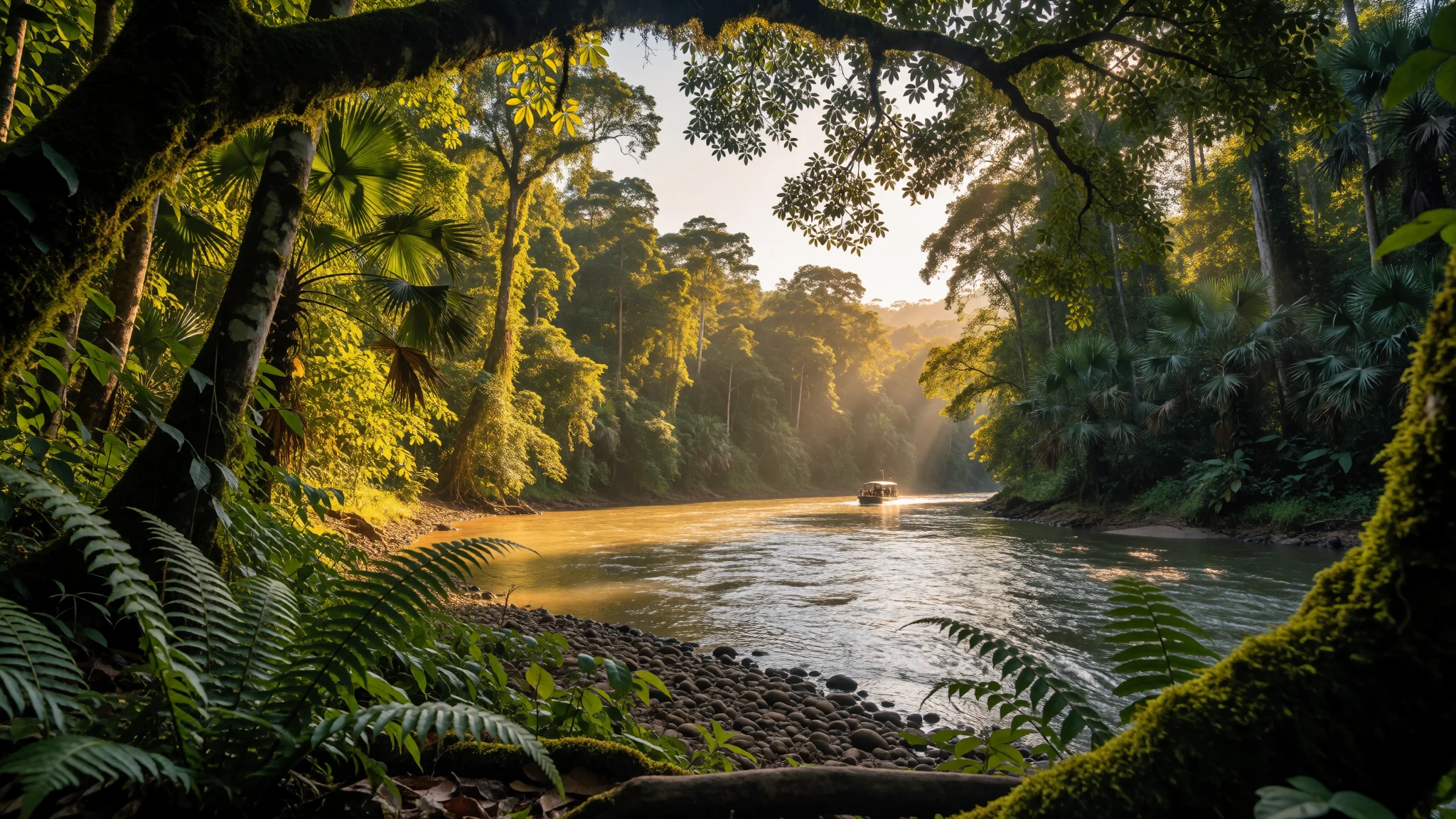
Cát Tiên National Park keeps a rare block of lowland rainforest within reach of Ho Chi Minh City, with gibbons, rapids and a crocodile lagoon.
The place
Cát Tiên National Park (Vườn quốc gia Cát Tiên) sits in southern Vietnam, roughly 150 km north of Ho Chi Minh City, where the provinces of Đồng Nai, Lâm Đồng and Bình Phước meet. It is lowland forest, at about 159 m above sea level, and that matters: most forest of this kind in the region was cleared long ago for farms and towns, so the survivors, including patches of old-growth, carry real conservation weight. Since 2011 the park has been part of the Đồng Nai Biosphere Reserve, and it runs into a neighbouring nature reserve to the south-west, which gives animals more room than the boundary alone suggests.
The park has two main parts. Cát Lộc, in the north, sees few visitors. Nam Cát Tiên, the southern part, is where nearly everyone goes; its eastern half holds the headquarters, trailheads, museum and lodges. The Đồng Nai river marks the edge, and visitors cross it by ferry.
The land is flat, so there are few sweeping views. The rewards are close at hand: very old trees, vines, palms, river bends, and gibbon calls at dawn. Some areas are scarred, with bamboo and grass where logging and wartime defoliant stripped the canopy, and the contrast with intact forest is easy to read on foot. Heat and humidity are constant, and mosquitoes are part of the deal in wetter months. Expect a quiet walking-and-watching trip rather than dramatic scenery.
Its story
Cát Tiên National Park is young as a protected area but old as a place. On the northern bank of the Đồng Nai, just outside the park and facing in, archaeologists found a group of temples built by a Hindu culture that was previously unknown; it probably lived here between the 4th and 9th centuries CE, and perhaps later. Before the park existed, the forest was home to the Ma people, mainly around what is now Cát Lộc, and to the Stieng people further west. After protection began, many of them were resettled in Ta Lai village, south-west of Nam Cát Tiên.
Protection started in 1978, first as two sectors, Nam Cát Tiên and Tây Cát Tiên. In 1992 the Cát Lộc sector was gazetted as a rhinoceros reserve after a small population of Vietnamese Javan rhinoceros was found there, news that turned international attention to the park. That animal has since vanished from Vietnam, which makes the story a caution as much as a triumph. The three sectors were merged into a single park in 1998. Nam Cát Tiên also joins the Vĩnh Cửu nature reserve, enlarging the area where species can breed. Rangers of the Kiểm lâm, the forest service, now handle poaching, fire control and other threats.
The park's past includes damage as well. Parts were sprayed with defoliant herbicides during the Vietnam War, and logging continued into the 1990s. Those patches still carry thick bamboo and grassland instead of tall trees, a slow reminder of how long forests take to return.
What to see
- Crocodile Lake — Nam Cát Tiên, end of the main long trail
Crocodile Lake is the end point of the park's main long hiking trail, a walk of some hours from the trailhead that passes through forest before opening onto a large natural lagoon. At low water the lagoon is ringed by green meadow, with forest behind. Birdlife is best early; the lake is quiet and feels remote, and overnight stays are possible at a lodge.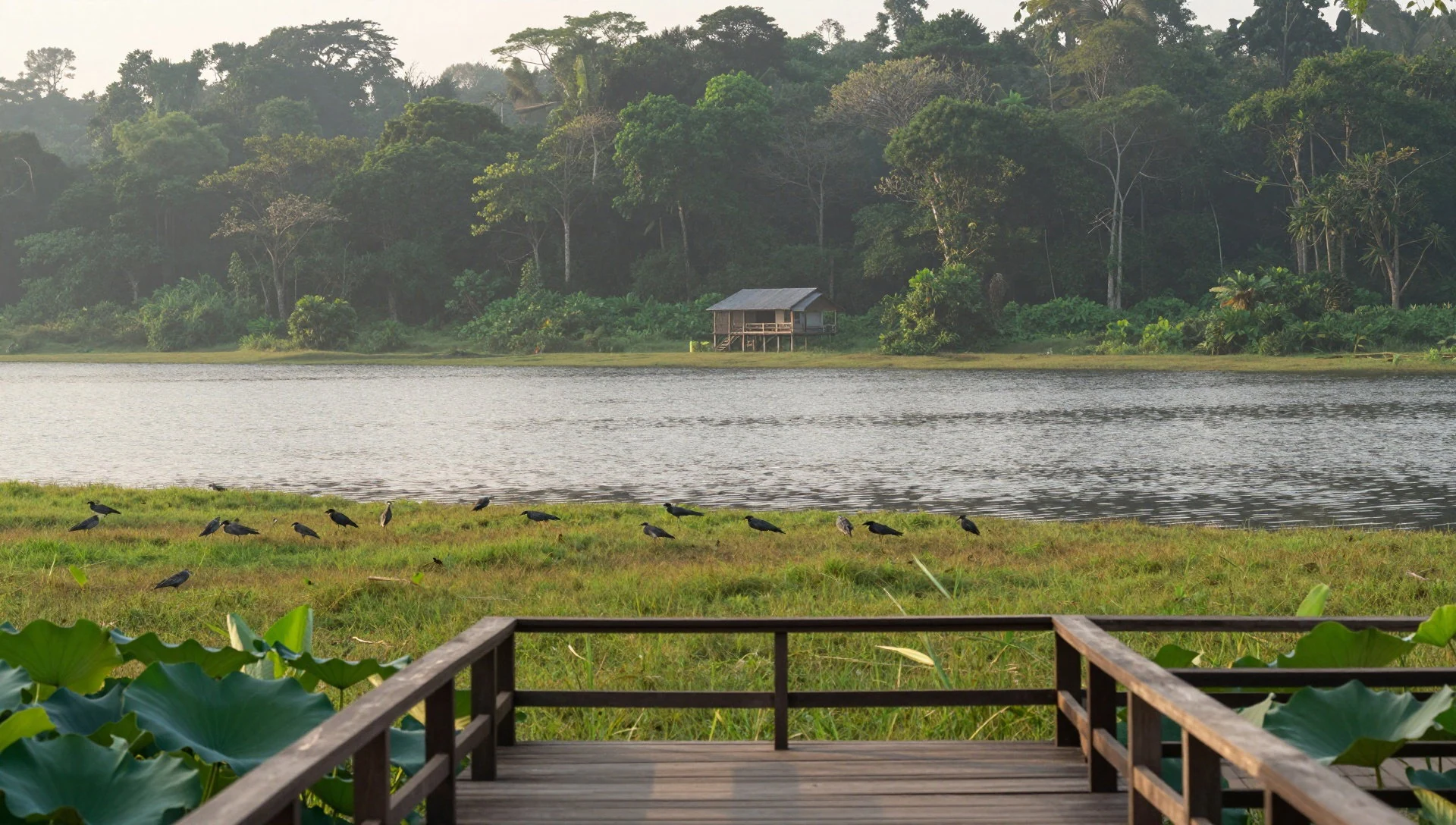
- Heaven's Rapids — Nam Cát Tiên, along the river
Heaven's Rapids is a horseshoe bend in the river where jungle trees lean over both banks and the water rushes away fast. The sound of moving water fills the clearing, and the shade makes it a pleasant place to rest. It works well as a stop on a longer day through the forest.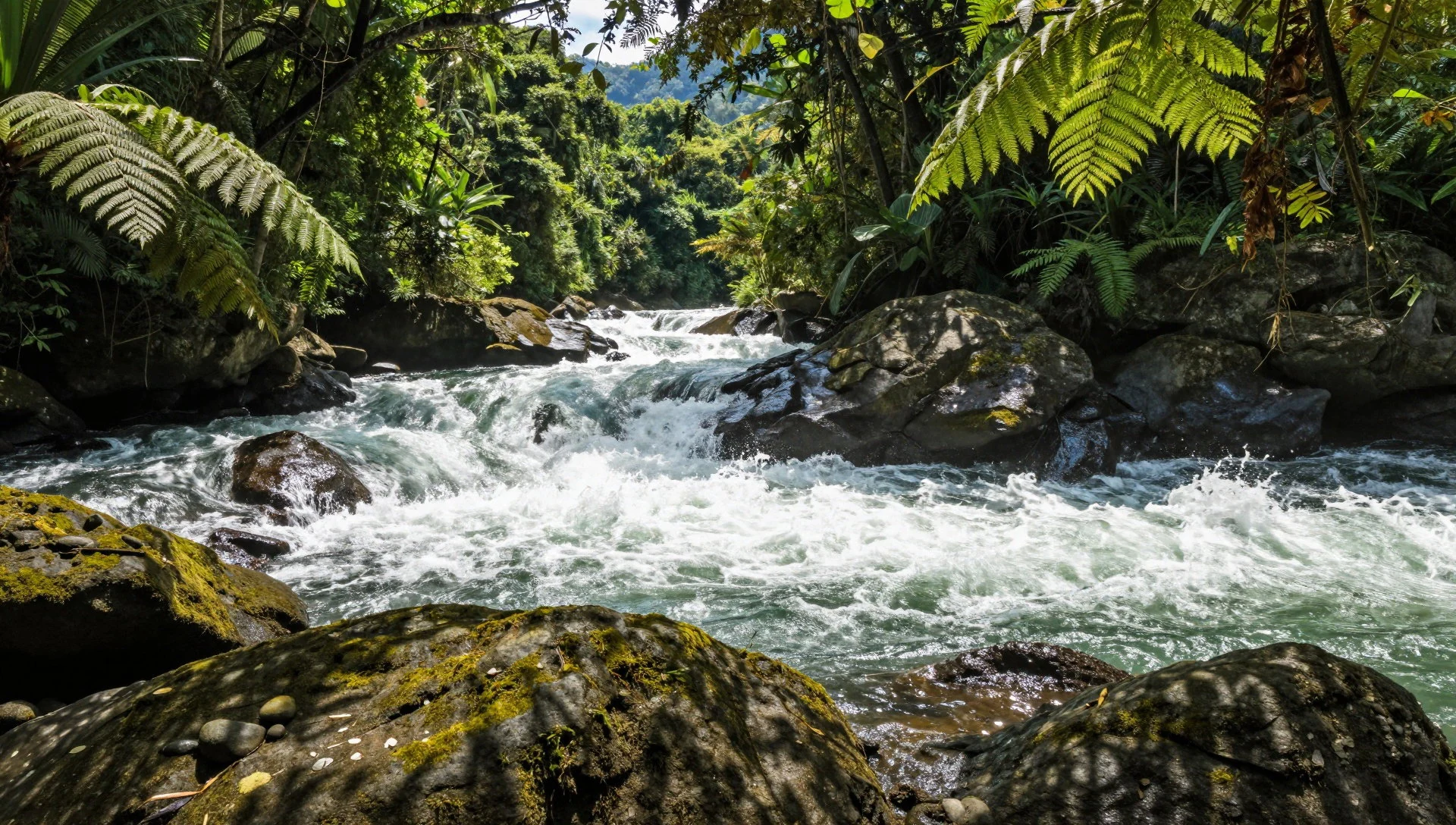
- Bến Cự (Lower) Rapids — Nam Cát Tiên, river section near the main road
Bến Cự, the lower rapids, offers an easy view of the river where it runs shallow over rocks and water plants. The scene is at its best in the dry season, when the water is low enough to show the stones. Forest trees line the banks, and the spot makes a gentle introduction to the park's riverside habitat for those not keen on long hikes.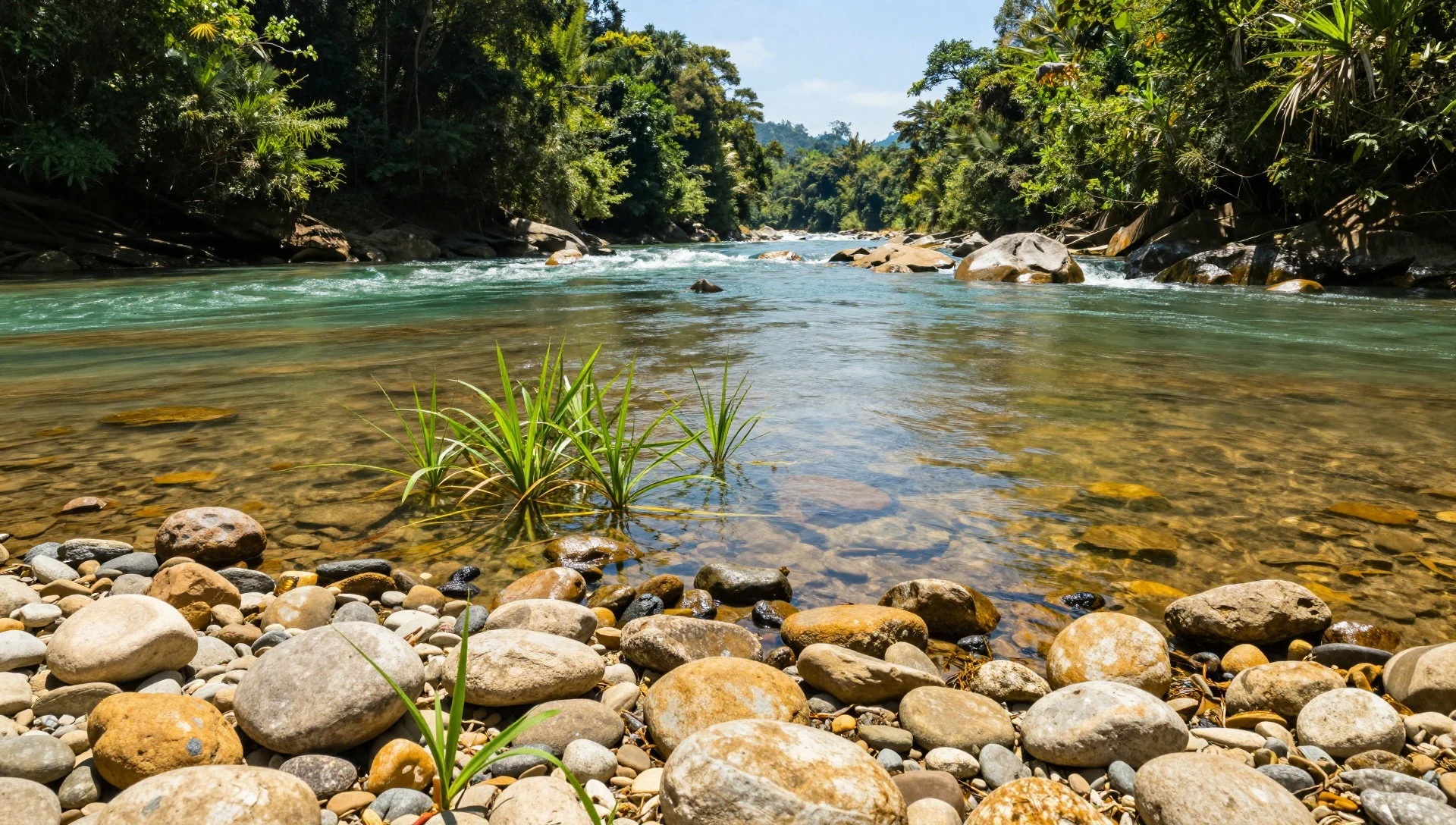
- Old-growth trees — Side trails off the main park road
Several very old trees stand along short, well-labelled side trails off the main road, and one more grows beside the long trail to Crocodile Lake. Some are hundreds of years old, with trunks far wider than a person's reach. They are an easy way to grasp how tall and dense the original forest was.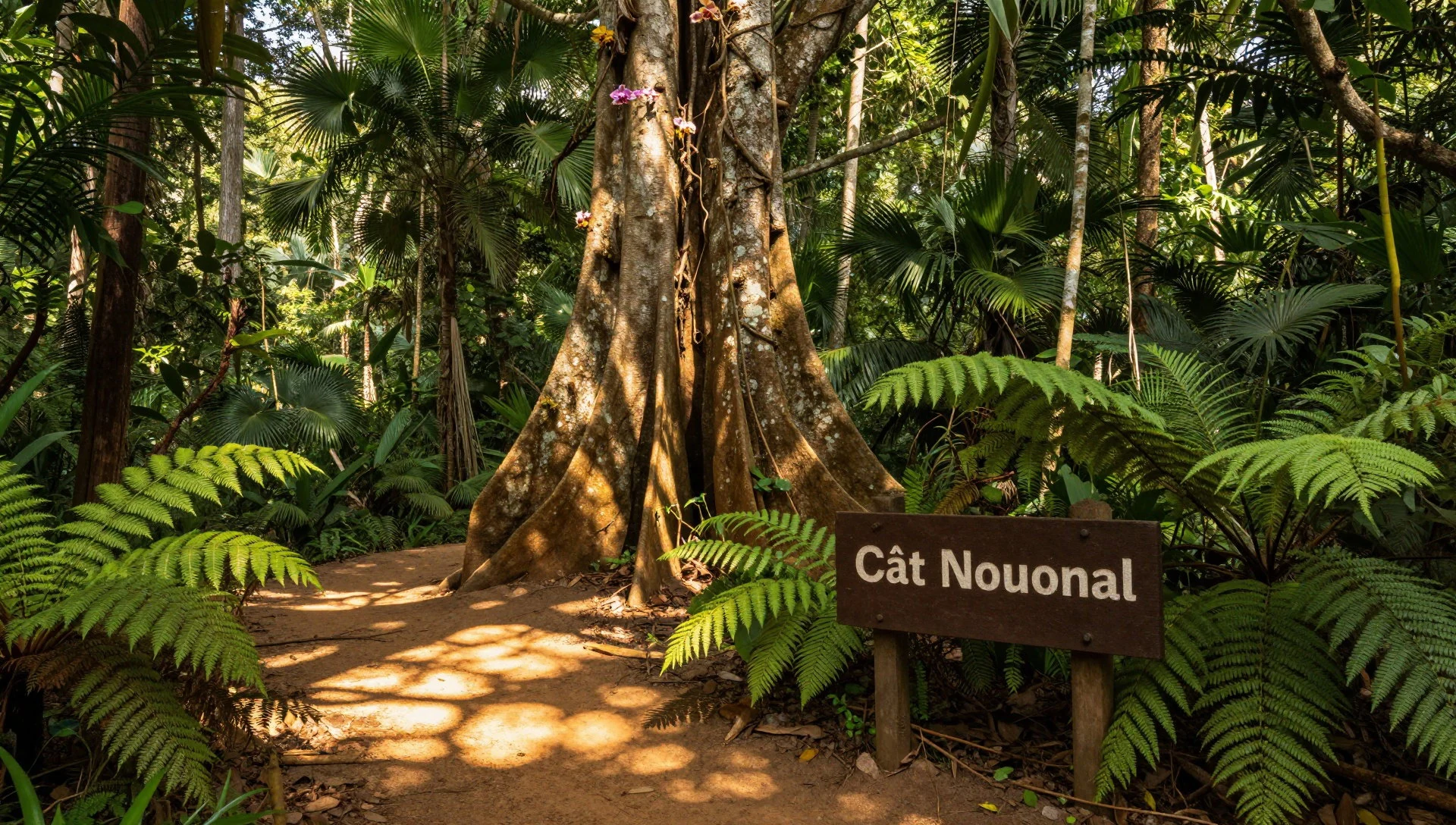
- The "Botanical Garden" — Near park headquarters
The so-called Botanical Garden is really a block of native forest, where name plates give each tree and vine's species and family, in Latin and in Vietnamese. A network of short trails makes it easy to wander. Palms such as Licuala cattienensis grow in the park, and cycads can be found too, so it suits plant-minded visitors and anyone who likes knowing what they are looking at.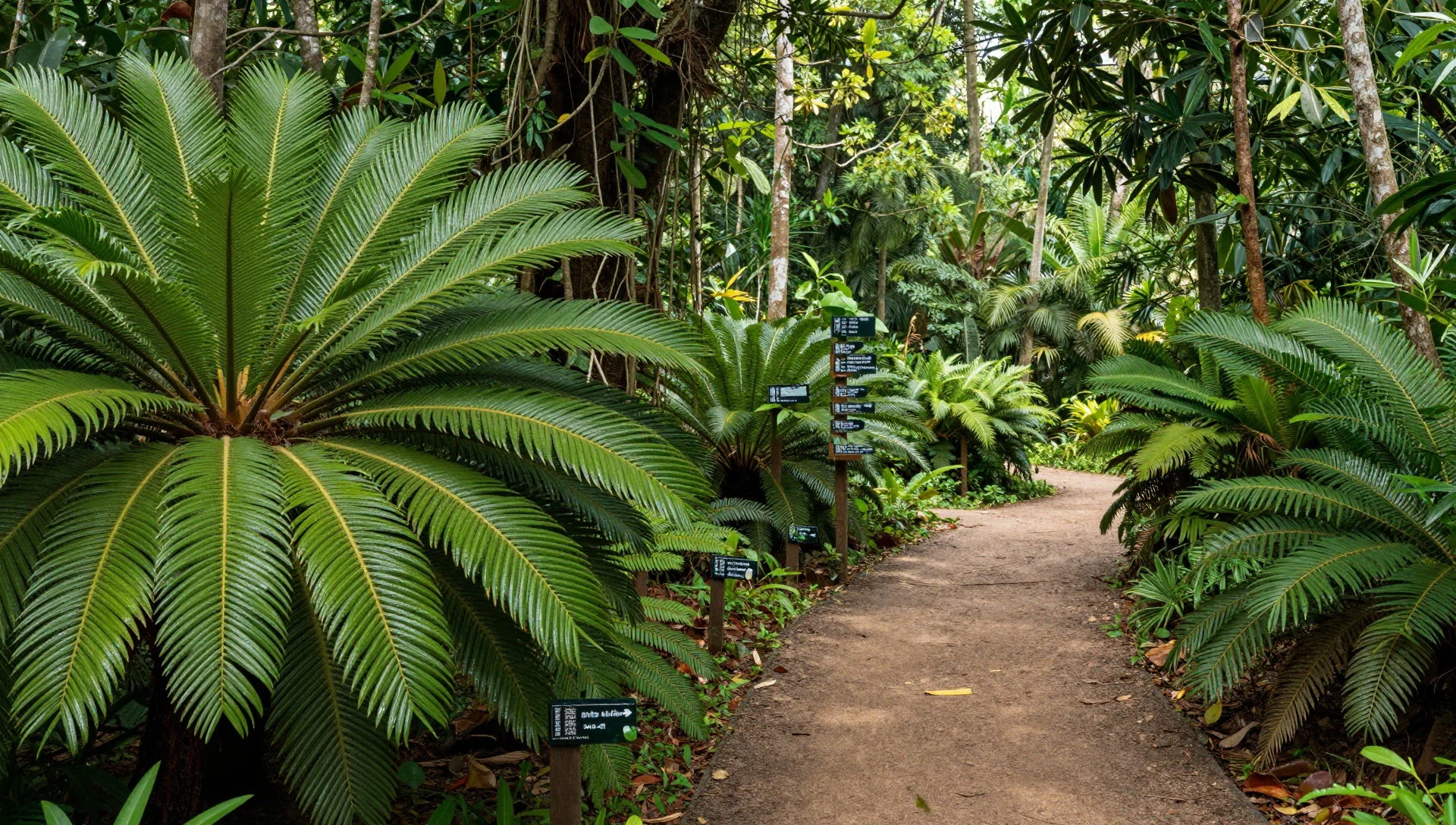
- Nature Museum and Animal Rescue Centre — Park headquarters, Nam Cát Tiên
The Nature Museum, close to park headquarters, is a natural-history display, and beside it the park runs an outdoor rescue centre that cares for bears, gibbons, deer and other animals. It is a useful first stop for learning what lives in the forest, since sightings on the trails are never guaranteed. Animals here are recovering, so expect enclosures rather than wild encounters.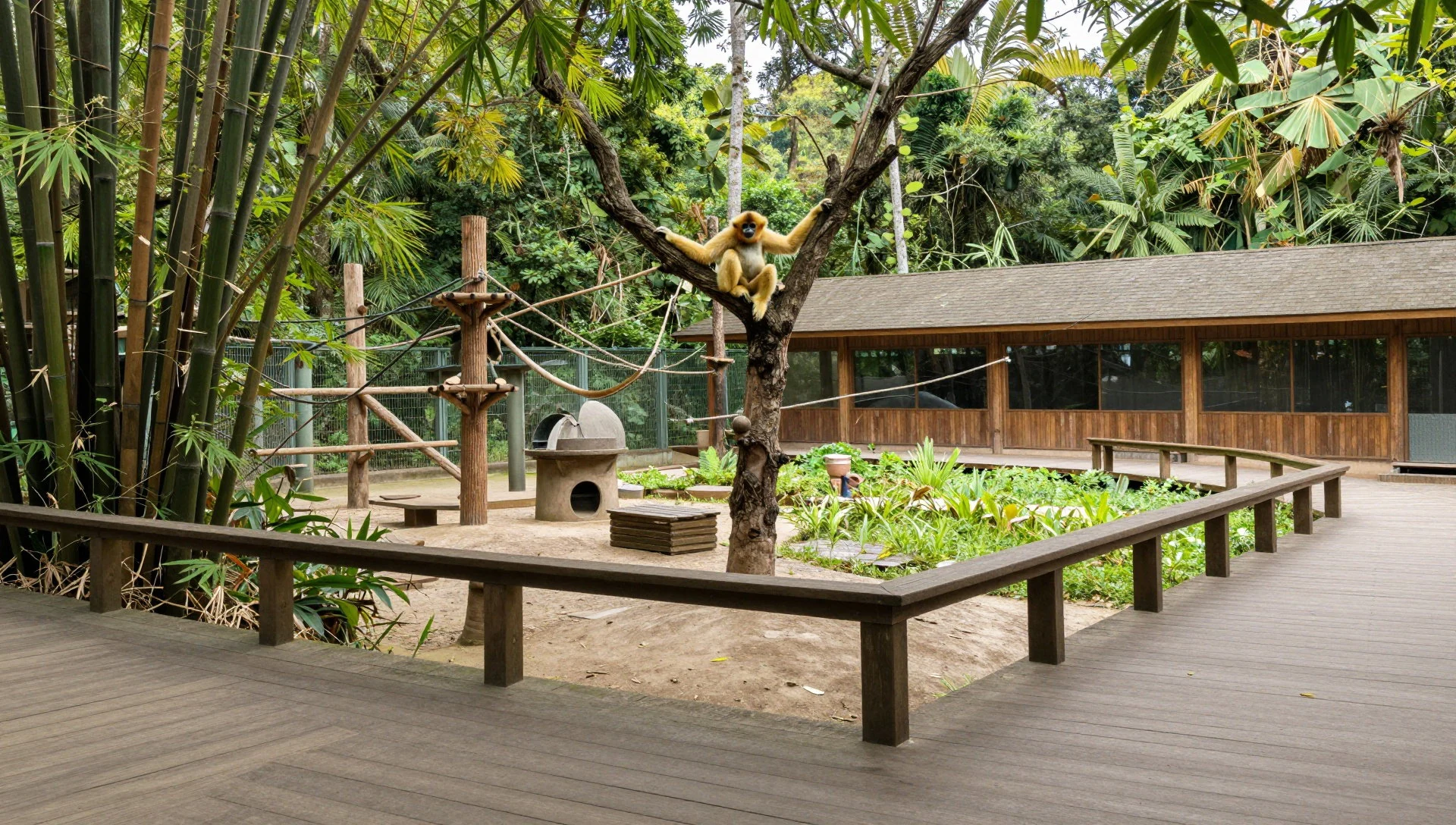
Culture
Cát Tiên National Park is first a nature reserve, but the human story around it has several layers. The forest was long home to the Ma and Stieng peoples, and after the park was created many families were resettled in Ta Lai village, south-west of the main visitor area. Ta Lai is the nearest place to ask about local life beyond the park gate.
Older still are the temple remains of a Hindu civilisation on the northern bank of the Đồng Nai, a culture that was unknown until the site was found and that archaeologists are still piecing together.
Modern culture here is conservation culture. Kiểm lâm rangers patrol against poaching and fire, and the park's rescue centre cares for bears, gibbons and deer that need a second chance. The discovery of rhinoceros in the early 1990s showed how one sighting can turn a quiet forest into an international concern, and that sense of responsibility still shapes how the park is run and how visitors are asked to behave.
Keep voices low on the trails, stay on marked paths and never feed or chase animals, because gibbons, birds and other wildlife are best watched quietly in the early morning.
What to wear
Cát Tiên National Park sits in a region where clothing says as much about the day as about the people. In southern Vietnam the classic everyday outfit is the áo bà ba, a loose collarless shirt with wide trousers, cut in cotton or lighter silk and made for heat. The áo dài, a fitted silk tunic worn over trousers, is kept for Tet, weddings and formal photographs. Highland communities such as the Ma and Stieng have traditionally woven cotton cloth with geometric bands, worn mostly for festivals and ceremonies.
Day to day, people near the park wear what suits farm work and humidity: T-shirts, shorts or light trousers, rubber sandals and wide hats, while rangers wear green uniforms.
Visitors should dress for mosquitoes, mud and heat rather than for style. Light long-sleeved shirts and long trousers in quick-drying fabric protect against insects and scratchy undergrowth. Closed shoes with grip are better than sandals on root-covered and muddy trails, and a hat, sunscreen and a thin rain jacket earn their place in wetter months. A torch matters in the evening. Casual forest wear is fine in the park, but cover shoulders and knees in villages and at any temple on the way.
What to eat
- Cá lóc nướng — Riverside eateries around Nam Cát Tiên village
Grilled snakehead fish, a southern favourite, is usually served whole with rice paper, fresh herbs and a sharp dipping sauce. Diners wrap pieces themselves at the table. Look for it at riverside eateries near the park, where freshwater fish is the obvious local choice.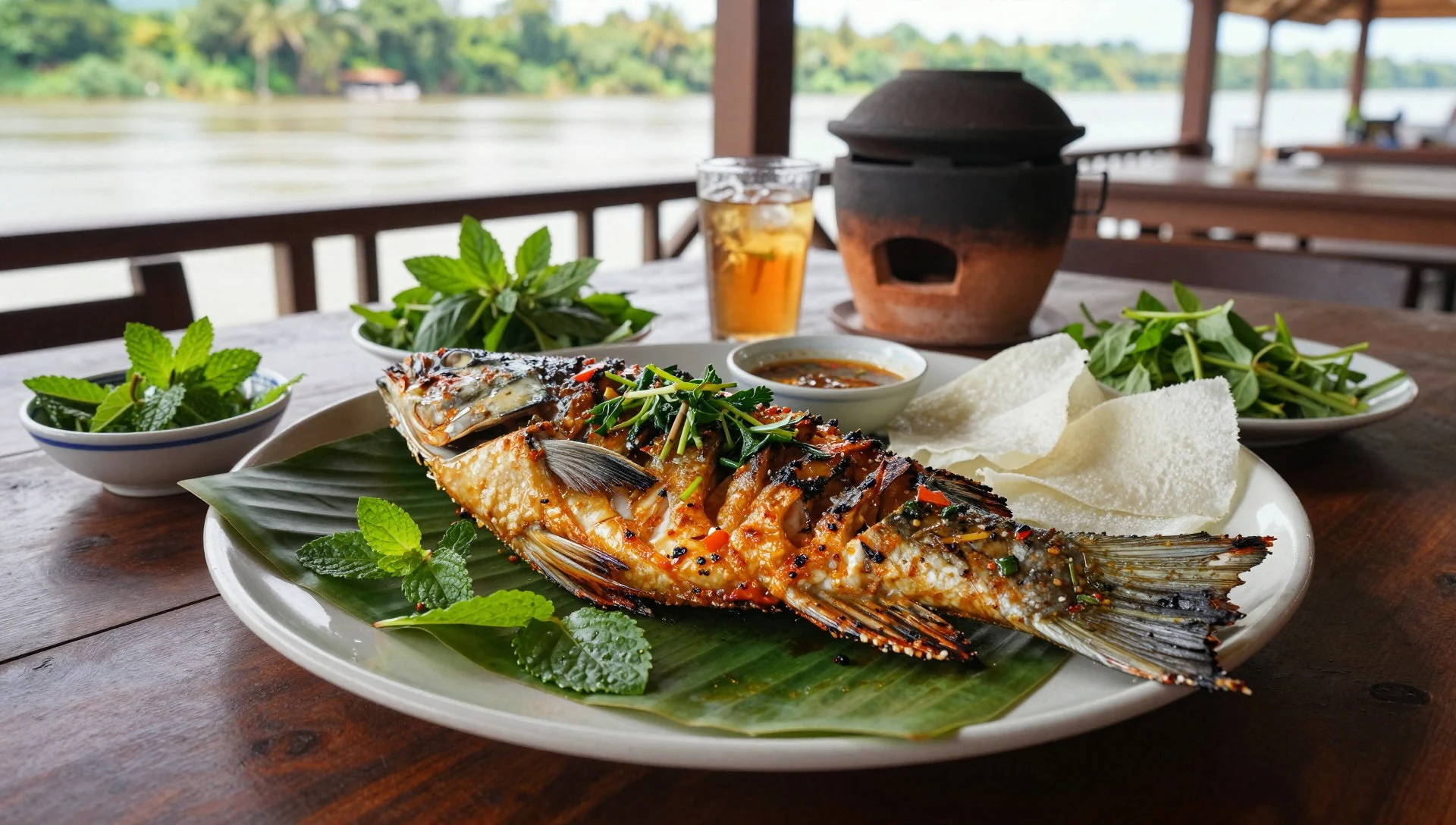
- Canh chua — Cafe-style restaurants near park headquarters
Canh chua is a sour soup built on tamarind, tomato and pineapple, often with fish and fragrant herbs. It tastes sharp, sweet and light at once, a practical dish in humid heat. Order it as a shared dish alongside rice at cafe-style restaurants near park headquarters.
- Rau muống xào tỏi — Family-run eateries on the road to the park
Rau muống xào tỏi is water spinach stir-fried over high heat with plenty of garlic, leaving the stems crisp and the leaves soft. It is a standard side dish across Vietnam and a light option beside heavier mains. Ask for it at any family-run eatery near the park. - Bánh xèo — Street stalls in Tân Phú, the nearest highway town
Bánh xèo is a southern crisp pancake of rice flour and turmeric, folded over prawns, pork and bean sprouts, then wrapped in lettuce and herbs and dipped in sweet-sour sauce. It is messy, filling and best eaten hot. Look for it at street stalls in Tân Phú. - Cà phê sữa đá — Roadside cafes and juice stands near park reception
Cà phê sữa đá is strong filter coffee dripped over sweetened condensed milk and poured over ice. It is the usual fuel for an early start, served at roadside cafes and the restaurants near park headquarters, though opening times are unreliable, so carry water too.
Plan it
Best time. December to March, the drier months, when trails are firmer, the rivers run clearer and wildlife is easier to spot. The wet season brings mud and higher water, though the forest is greener and quieter.
How long. 2–3
Getting there. Fly to Ho Chi Minh City, then travel by road for about three hours to Nam Cát Tiên; allow at least four hours from Dalat. Long-distance buses between the two cities drop passengers at the Ta Lai or Nam Cát Tiên turn-off on the main highway, so say which one you need. From the highway town of Tân Phú, a local road leads to the ferry crossing into the park.
Budget. mid
Tips
- Cross on an early ferry and stay inside the park if you want gibbons and birds at dawn; night crossings are normally not allowed.
- Check the official site, http://www.namcattien.org, for current fees, lodge and night-safari bookings, and ferry times.
- Carry cash and water; snack bars along the road open and close without warning.
- Bring a torch and insect repellent, since paths between lodges are unlit after dark.
- Start the long Crocodile Lake trail early, before the heat builds.
Etiquette
- Stay on marked trails and keep your voice low so wildlife stays within sight.
- Never feed, touch or chase animals, including those at the rescue centre.
- Cover shoulders and knees when visiting villages or temples on the way.
Nearby
Sources
- Wikidata Q1421202 (CC0)
- Wikipedia: Cát Tiên National Park (rev 1379269746) (CC BY-SA 4.0)
- Wikivoyage: Cat Tien National Park (rev 5270931) (CC BY-SA 4.0)
- Photo: Cát Tiên National Park, Vietnam (Vyacheslav Argenberg) (CC BY 2.5)
- Photo: Ben Cu forest structure (Roy Bateman) (CC BY-SA 4.0)
- Photo: Licuala cattienensis (Roy Bateman) (CC BY-SA 4.0)
- Photo: Cycas inermis (Roy Bateman) (CC BY-SA 4.0)
- Photo: Golden-cheeked gibbon female (Roy Bateman) (CC BY-SA 4.0)
- Photo: Northern smooth-tailed treeshrew (Broobas) (CC BY-SA 4.0)
- Photo: Asian black bear in CTNP (Roy Bateman) (CC BY-SA 4.0)
- Photo: Asian palm civet over a tree (Praveenp) (CC BY 3.0)


