Cassis
Cassis, France
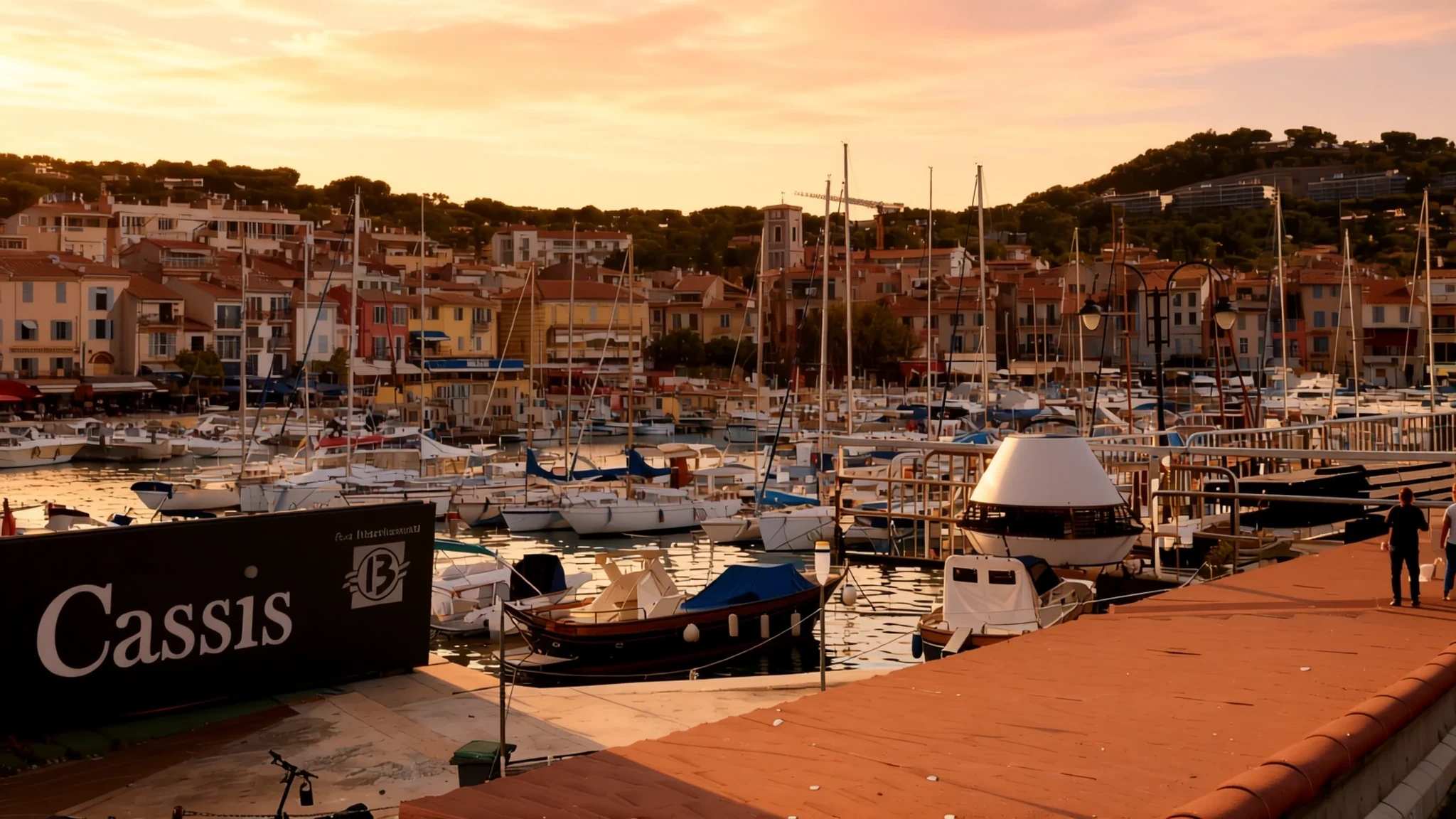
Cassis puts steep-walled calanques, sea cliffs and a working harbour within easy reach of each other, about 20 km from Marseille.
The place
Cassis is a small seaside town on the Mediterranean coast of Provence, about 20 km east of Marseille in the Bouches-du-Rhône department. It has a little under 6,700 residents, and the town feels compact. Its centre is a pair of squares, Place Baragnon and Place de la République, lined with cafés, the town hall and a few older buildings. The harbour sits a short walk away, crowded with fishing boats and yachts, and the streets behind it climb into a tight tangle of old houses.
The main draw is the coastline. Cap Canaille rises to 394 m east of town, a landmark for sailors for a very long time, and its summit is a walk of roughly an hour and a half from the centre. Nearby, the calanques are steep-walled inlets cut into the limestone between here and Marseille, reached either on foot along marked paths or by boat. Bestouan, one of the main beaches, stays cooler than its neighbours because fresh water comes through a karstic spring.
The local wines are white and rosé, and they are worth tasting on their own terms. Their name is often confused with crème de cassis, the blackcurrant liqueur associated with Burgundy, which takes its name from the fruit rather than the town. Cassis has also appeared on screen, most famously as a backdrop in The French Connection.
Its story
People have lived on this stretch of coast for more than two and a half thousand years. Between about 600 and 500 BC the Ligures built a fortified settlement on the hill of Baou Redon above the present town, living from fishing, hunting and small-scale farming. Some historians suspect Greek traders visited the site as well, although no firm evidence has turned up.
Under the Romans Cassis became a stop on a coastal sea route, and a small village grew up around the Arena and Corton beaches. Its economy rested on fishing and trade with North Africa and the Middle East, and several archaeological finds from that period confirm the link.
From the 5th to the 10th centuries, raids by incoming groups drove the population up into a fortified enclave, the castrum, which became a refuge for the coast. By 1223 the lordship had passed to the Seigneurie des Baux-de-Provence. In the 15th century the town came under the Counts of Provence, and René of Anjou later handed it to the Bishops of Marseille. The bishops governed Cassis until the Revolution of 1789 brought that arrangement to an end. The town's old fishing and harbour life survived all these changes, and it still shapes the waterfront today.
What to see
- Place Baragnon — Town centre
The square at the heart of Cassis is a good place to start, with the Place de la République beside it. The seventeenth-century town hall stands here, and so does the Musée d'Art et Traditions Populaires, which covers local customs and working life. Go in the morning, when the cafés are quiet and the square has shade.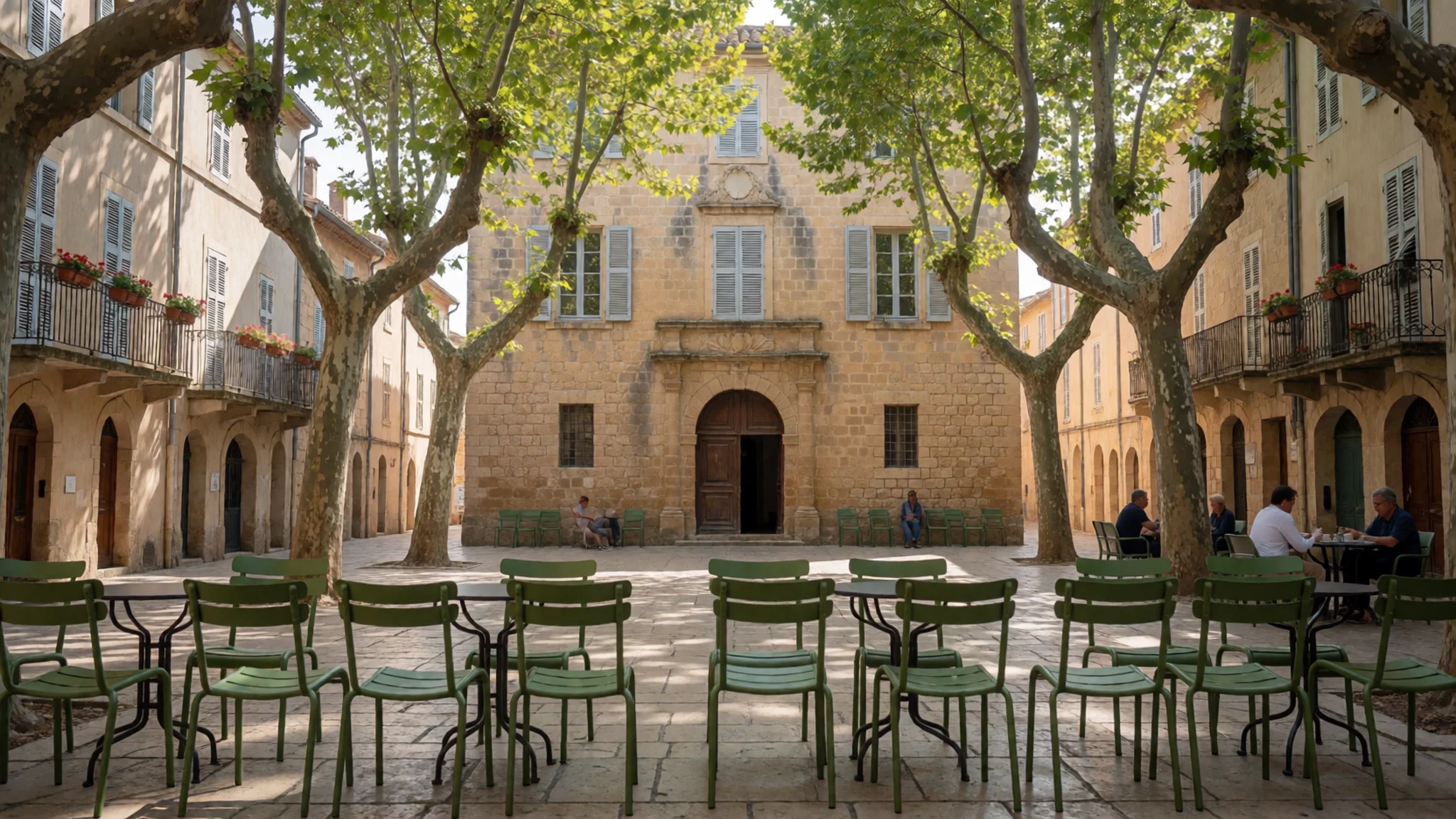
- Église Saint-Michel — Town centre
The parish church, opened in 1875, stands a few steps from the centre. It is a practical stop on the way to the harbour, and it is worth a short look at the interior before the day heats up. Dress modestly and keep your voice low if a service is under way.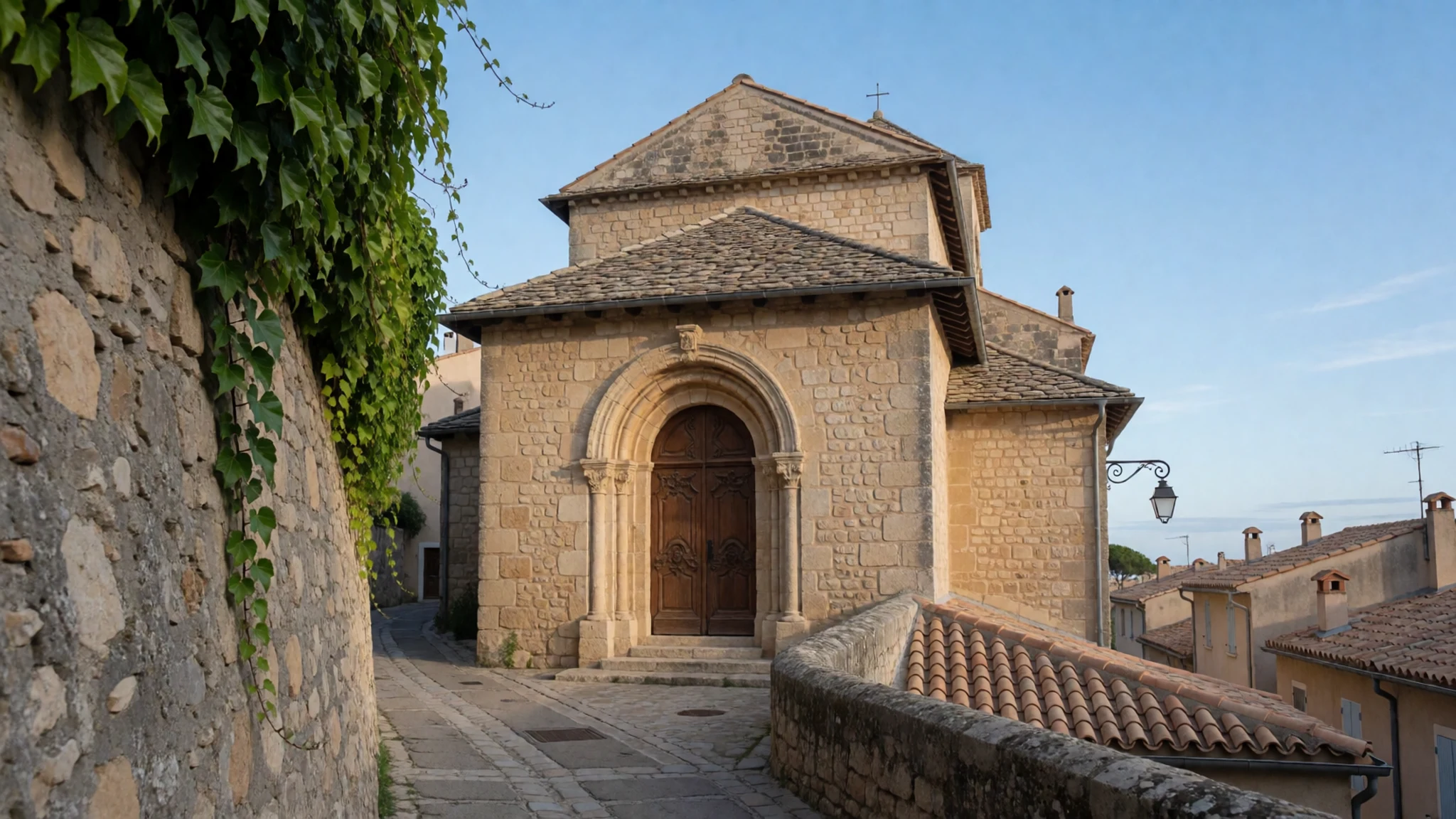
- Château de Cassis — Upper old town
The château overlooks the town from its high ground and is best seen from outside, because the building is not open to the public. Photographs from the surrounding square give a good sense of the old town's rooflines and the bay. The climb is short but steep, so wear shoes with a good grip.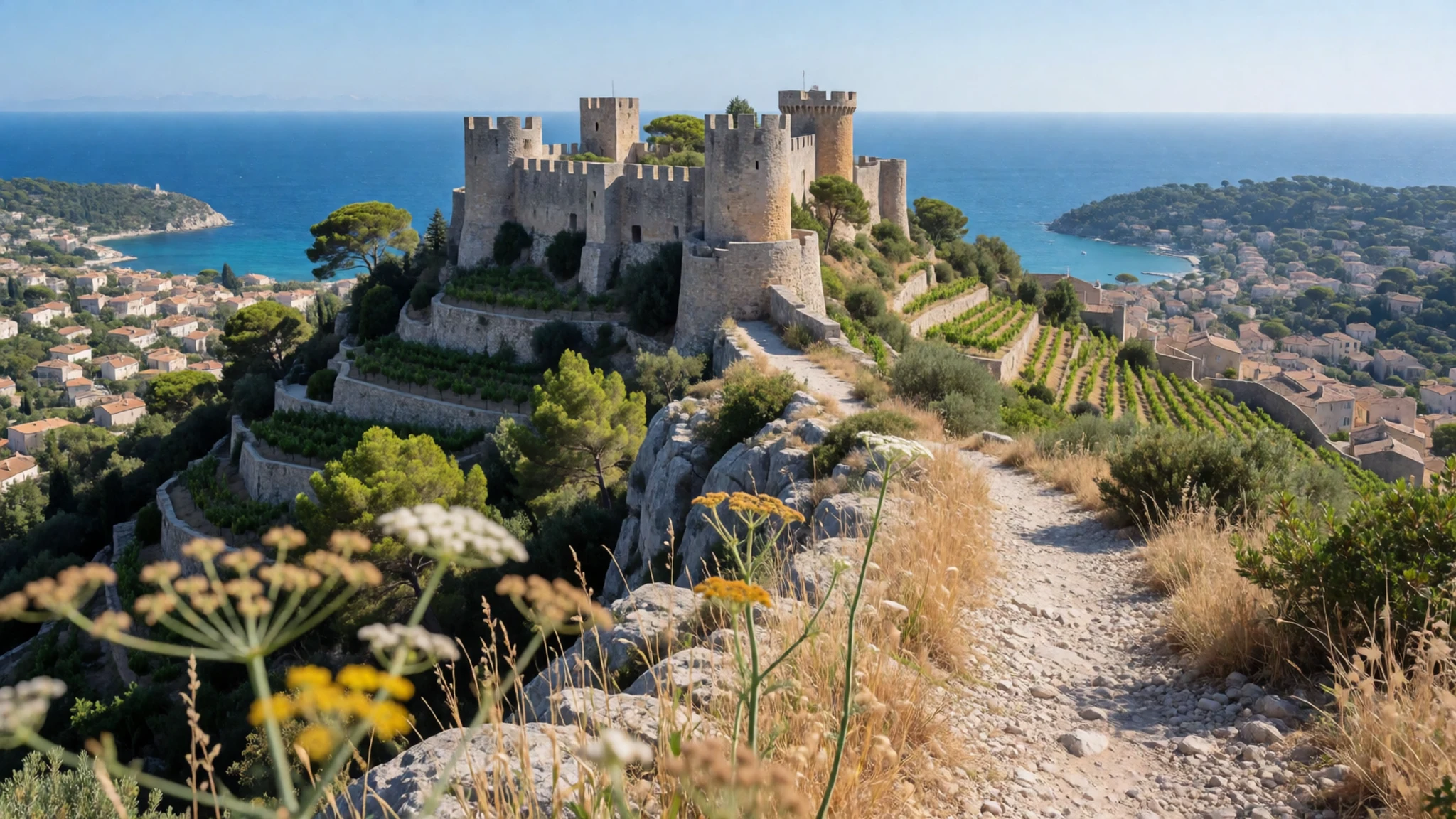
- Statue de Calendal — Town centre
A bronze statue honours Calendal, a fictional hero from Cassis who appears in a poem by Frédéric Mistral. It is a small, quiet stop, and the statue makes a good orientation point when you are walking between the harbour and the squares.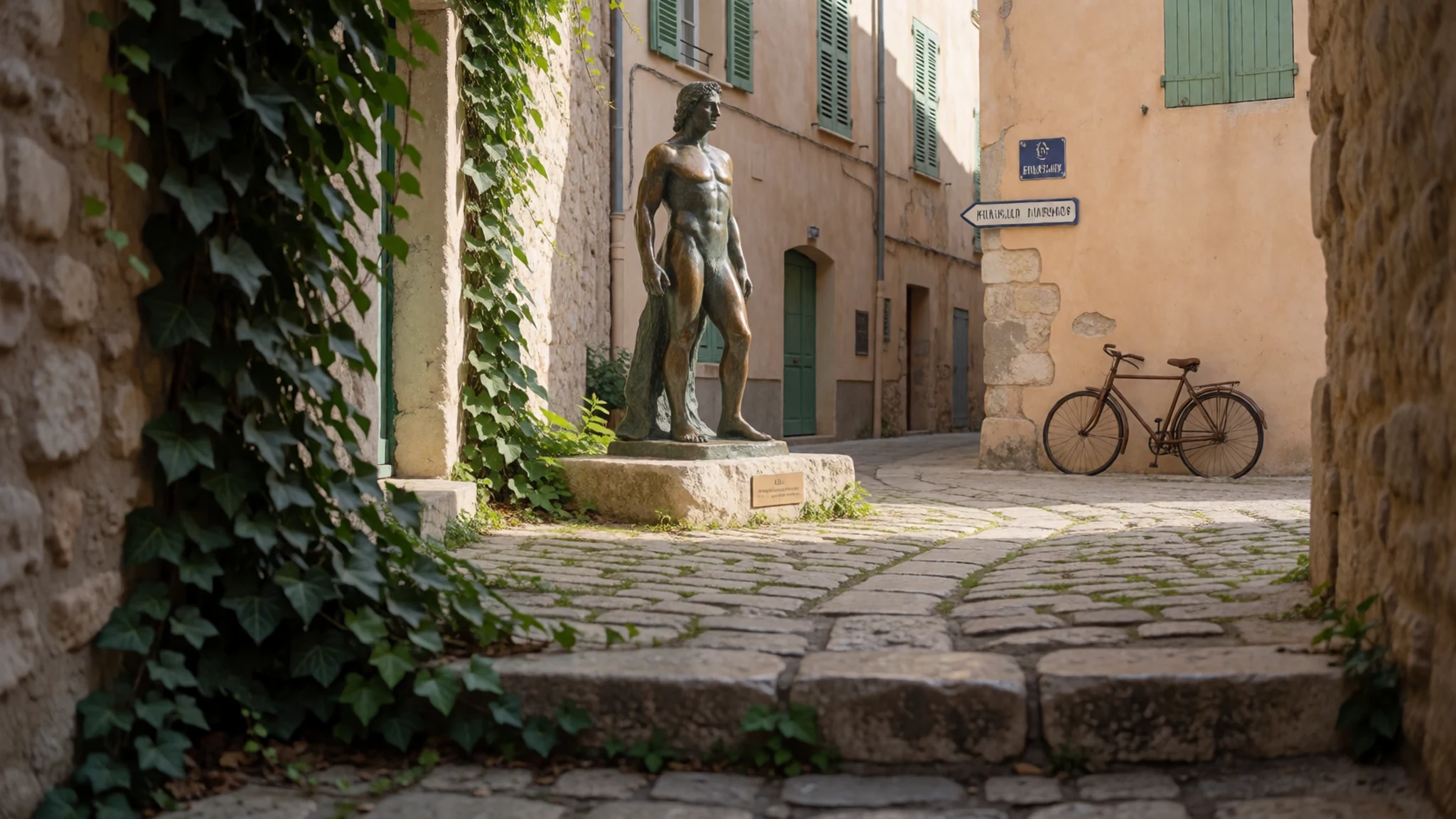
- The calanques — Coast east and west of the town
The calanques are the biggest attraction in Cassis. Walk from the centre to the first bay, which is full of yachts, and continue on signposted paths to the next inlets. The rock is hot and the paths have little shade, so start early. Boat trips run along the coast and can drop walkers at one bay and collect them at another.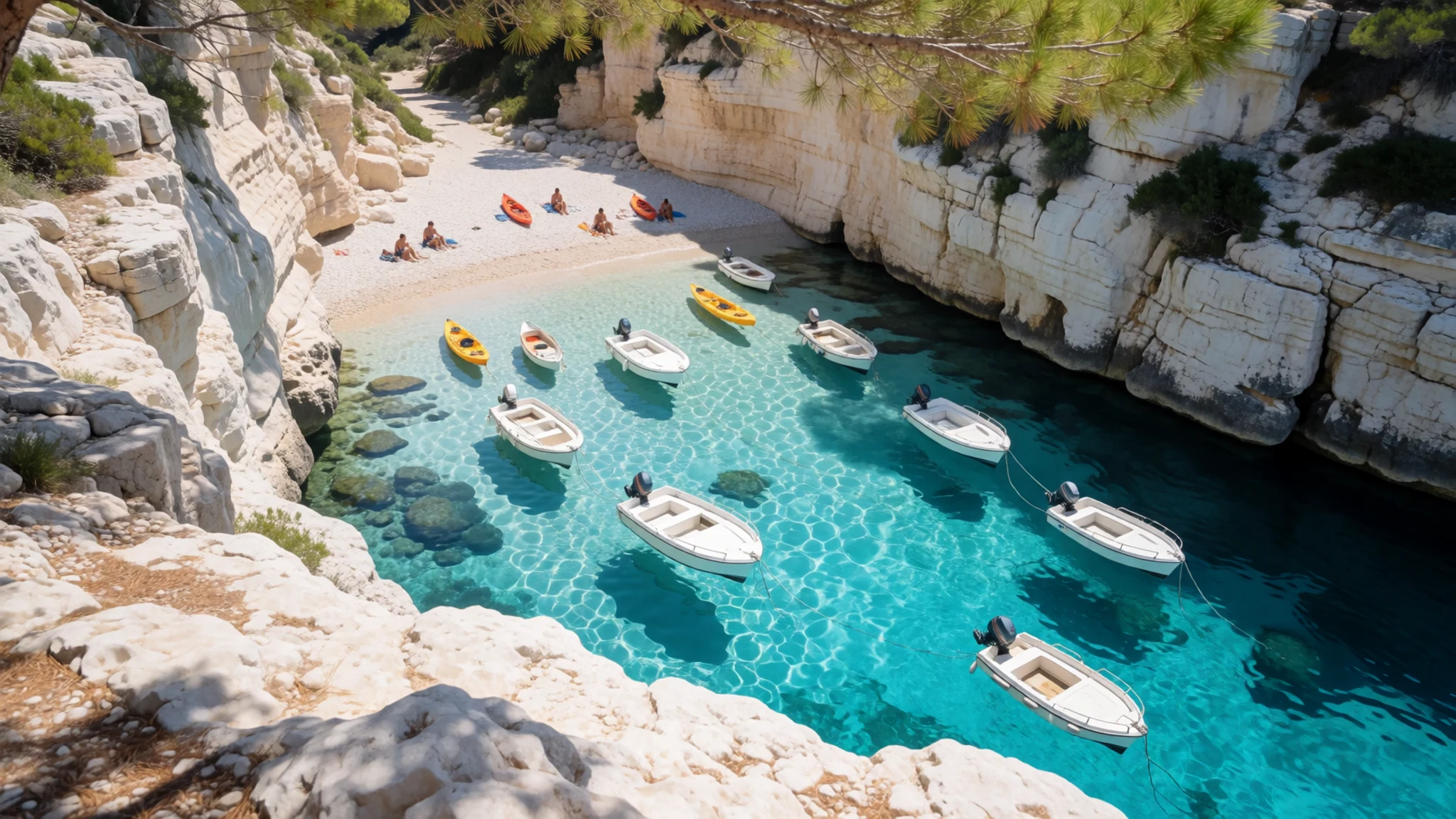
Culture
Cassis is a fishing and harbour town first, and its daily life runs around the water, the squares and the café terraces rather than around monuments. Provençal is still spoken in parts of the region, and the town's name appears in both French and Provençal on signs and in local conversation. Lunch is a long, relaxed affair, and the bouillabaisse tradition is taken seriously, so treat the meal as an occasion. The squares are social spaces where people gather in the evening, so expect a lively atmosphere after dark. Many visitors are in swimwear on the beaches, but the town centre is a place for ordinary clothes and a shirt over a swimsuit when walking through the streets. Keep your swimsuit to the beaches and the boat, and cover up before entering the church or walking through the old town.
What to wear
The traditional dress of Cassis is not a separate costume, and the town did not develop one of its own. Its clothing traditions belong to wider Provence, where cotton prints, linen and the quilted cotton called boutis were the everyday fabrics of farming and fishing families. Those materials still define the local look, and the bright printed cottons sold in Provençal markets are a good guide to the palette.
What people wear now is relaxed and practical. Locals dress in linen shirts, cotton dresses and espadrilles in summer, with a light jacket for the evening breeze. The waterfront has a stylish but casual feel, and few people dress up except for a formal lunch.
For a visit, pack light layers that can handle warm afternoons and cooler evenings near the sea. Wear a sun hat and sunglasses, and bring walking shoes with real grip for the calanque paths, where the limestone is hard and uneven. Sandals suit the town itself. Swimwear is fine on the beaches, and a cover-up is sensible for the walk back through town and for entering churches.
What to eat
- Bouillabaisse — Restaurants along the seafront and around the harbour
Cassis is well known for bouillabaisse, a fish stew served as a full meal. The dish begins with a thick fish soup, croutons and a rich sauce, followed by the fish and more of the soup. Restaurants on the seafront serve it, and many need a day's notice to source the right fish, so ask ahead.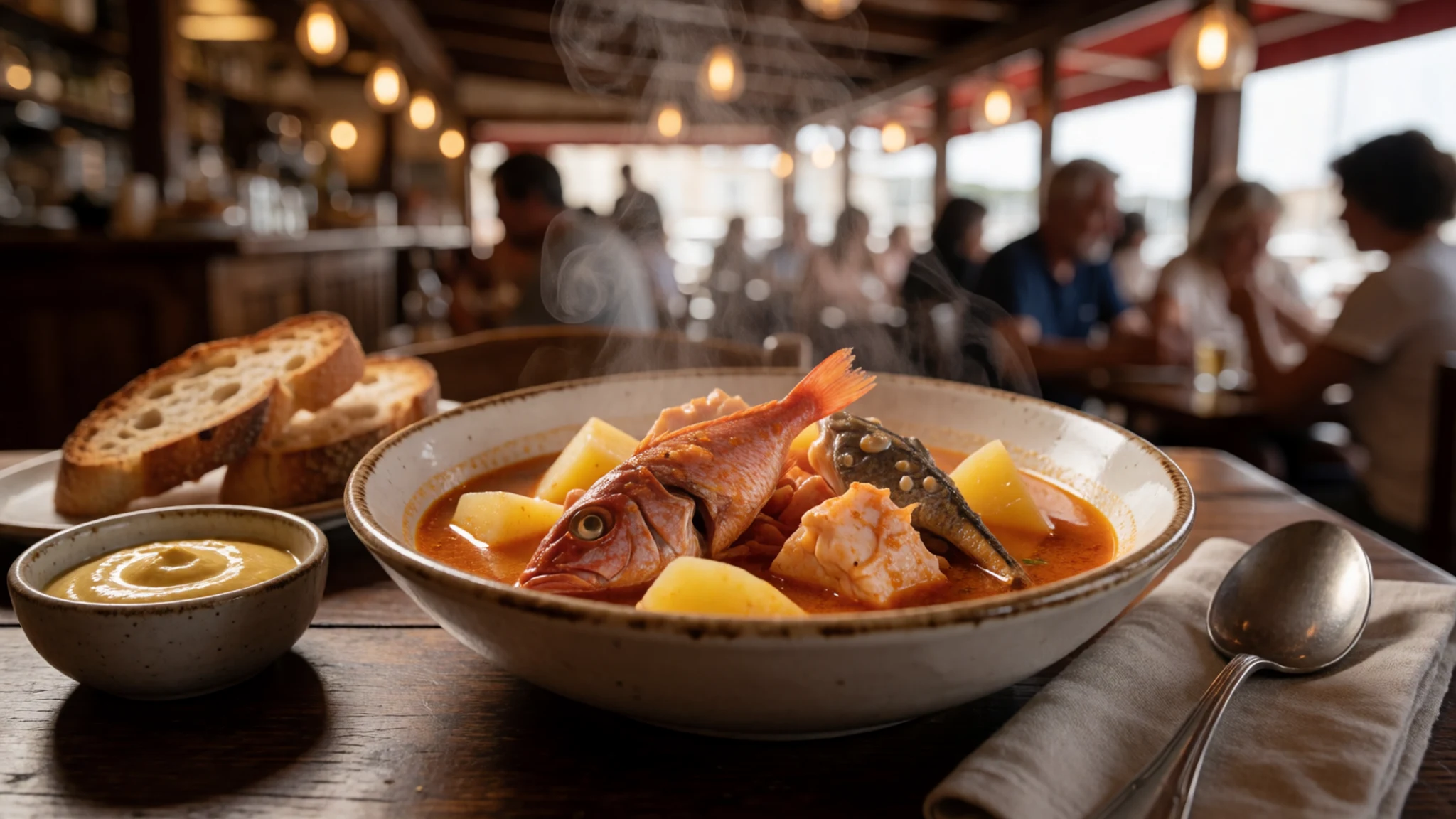
- Grilled sardines — Small grill restaurants and bistros away from the waterfront
Sardines are caught close to the coast and are often grilled simply over charcoal with olive oil and herbs. The fish is best eaten fresh and hot, with bread and a glass of local white wine. It is a good light lunch when the full bouillabaisse feels too heavy.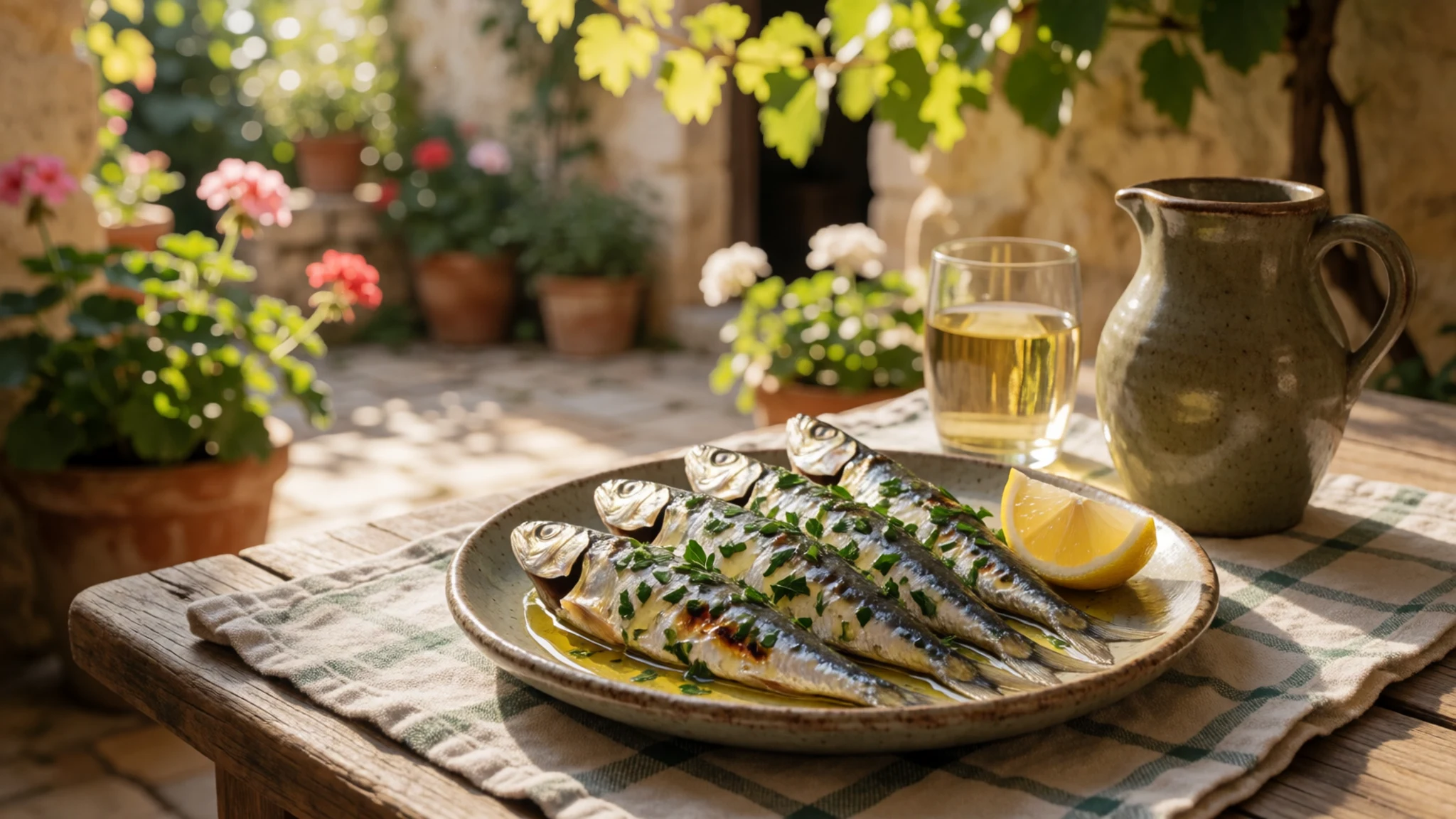
- Sea urchins — Fishmonger-restaurants near the harbour
Sea urchins are a local delicacy that appear on menus in the right season. They are opened at the table and eaten straight from the shell, often with a squeeze of lemon. Ask the server what is fresh that day before ordering. - Cuttlefish and squid — Bistros in the old town
Cuttlefish and squid are cooked with garlic, herbs and olive oil, or grilled and served with a salad. These are reliable choices that show how much the local catch depends on the boats coming in each day. They are often cheaper than the grander fish dishes. - Local honey and olives — Grocers and delicatessens in the old town
The region produces honey, herbs and olives, and these make good gifts or picnic items. Buy them from a Provençal grocery or a delicatessen in the old town rather than from the waterfront, where prices run higher. Cassis wine is a fitting pair for any of these.
Plan it
Best time. April and May bring mild weather and fewer crowds, and late September and October are warm and quieter still. Summer is busy with day-trippers and the beaches get crowded, while the calanque paths are hot and exposed in July and August.
How long. 2–3
Getting there. Marseille-Provence Airport is about 55 km away, and buses run from the airport and from Marseille and La Ciotat to Cassis. Check the timetable before travelling, as services can be infrequent outside the peak season. Driving is possible, but some of the roads around the town have many sharp bends.
Budget. mid
Tips
- Book bouillabaisse a day ahead, since the fish needs to be ordered in
- Walk the calanques in the morning or the late afternoon to avoid the midday heat
- Take a boat trip to see the calanques from the water if the walking is too much
- Allow about an hour and a half each way for the climb to the top of Cap Canaille
- Carry water and sun protection, as there is little shade on the paths and few shops
Etiquette
- Stay on marked paths in the calanques and take all your litter back with you
- Keep your voice down in the early morning and late evening around the squares
- Cover up with a shirt or dress when walking through the old town and entering churches
Nearby
Sources
- Wikidata Q243002 (CC0)
- Wikipedia — Cassis (rev 1381813023) (CC BY-SA 4.0)
- Wikivoyage — Cassis (rev 5397086) (CC BY-SA 4.0)
- Port de Cassis (Bouches du Rhône) — Jean-Christophe BENOIST, via Wikimedia Commons (CC BY 3.0)
- Cassis, a city in southern France, seen from the cliffs — Mediocrity, via Wikimedia Commons (Public domain)
- Rando Marche Nordique — Nrocks75, via Wikimedia Commons (CC BY-SA 4.0)
- The fishing village of Cassis in Provence — Astronautilus, via Wikimedia Commons (CC BY 2.5)
- Francis Picabia and F.M. Mansfield with 2 women and a man at outdoor café table, Cassis — Unknown author, via Wikimedia Commons (Public domain)
- Place Georges Clemenceau and château in Cassis — Superbass, via Wikimedia Commons (CC BY-SA 1.0)
- 13260 Cassis, France — cosmopolitan-views, via Wikimedia Commons (CC BY 3.0)
- Avenue J. J. Garcin, Cassis - the fence — Андрей Романенко, via Wikimedia Commons (CC BY-SA 4.0)


