Cannes
Cannes, France
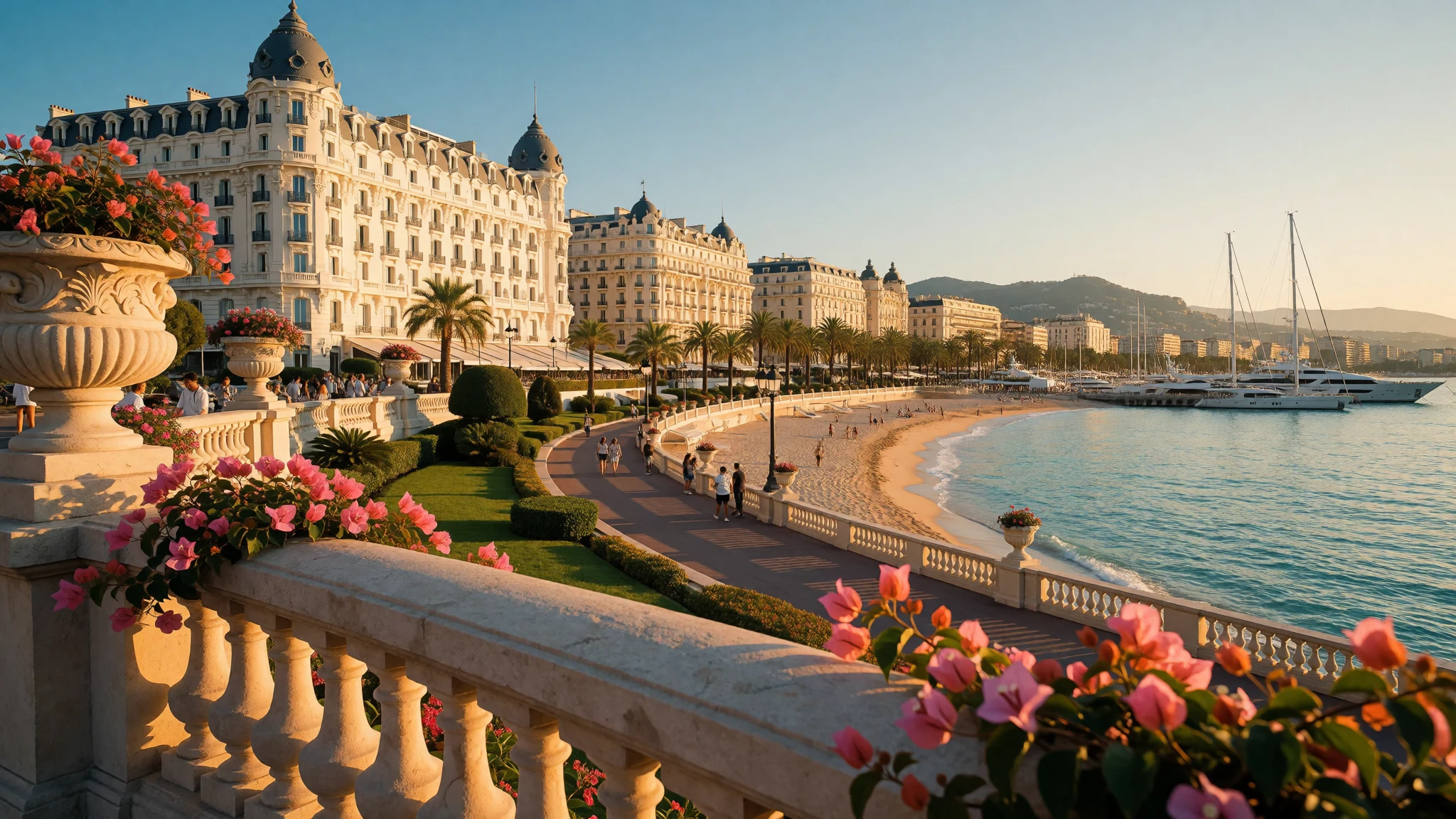
Fringed by palms and turquoise sea, Cannes blends glamorous Mediterranean seafront promenades with historic stone lanes climbing above the marina.
The place
Cannes sits on a crescent bay along the French Riviera, where the Mediterranean meets palm-shaded boulevards and deep harbour docks. Looking across the shoreline, the city presents two distinct faces. Along the curved waterfront, grand palace hotels line the sweeping coastal promenade, facing sandy beaches and marina basins packed with private yachts. Behind this polished seaside front lies Le Suquet, the historic hill district where steep cobblestone alleys wind past shuttered pastel buildings towards an old defensive watchtower.
The urban layout follows the coastline, anchored by the central harbour and civic squares near the shore. Daily life moves between the salt air of the waterfront and the quiet shade of upper residential neighbourhoods. During the warm months, the promenade buzzes with activity as visitors stroll beside landscaped gardens and outdoor cafes, while boat traffic moves constantly between the mainland harbour and nearby forested islands. When evening arrives, warm light washes over the stone ramparts of the old quarter while dining tables spill into narrow lanes. Despite its global reputation for glamour and high-profile international gatherings, Cannes retains the core structure of a Mediterranean fishing port where sea breezes soften the summer heat and life turns naturally towards the water.
Its story
Before Cannes grew into a coastal resort city, the area began as a small Ligurian fishing settlement known in antiquity as Aegitna. Positioned along the coast facing the Lérins Islands, the natural harbour served as a convenient stopping point for ancient seafarers navigating the Mediterranean. Regional conflicts between local tribes and Roman forces occasionally swept across the coastline, leaving military traces on the mainland. Over time, Roman presence established a small harbour outpost on the hilltop that would later become Le Suquet.
By the tenth century, the settlement was recorded under the name Canua, a name likely derived from the dense reeds growing along the coastal marshlands. Maritime raids during the early medieval period created persistent insecurity along the shore, forcing local monastic communities based on the offshore islands to seek safety on the mainland. Fortifications were constructed on the hilltop to protect the inhabitants, establishing a defensive castle tower overlooking the bay. For centuries, monastic authority governed the town and its surrounding lands, directing trade and coastal defense.
By the sixteenth century, the town secured independence from monastic rule, establishing itself as a self-governing community. Subsequent centuries brought repeated military struggles as rival European powers attempted to seize control of the strategically positioned islands off the coast. Despite periodic conflicts, the town maintained its maritime tradition until the nineteenth century, when international travellers discovered its mild climate and coastal setting, transforming the quiet harbour into a global winter resort.
What to see
- La Croisette and Palais des Festivals — La Croisette waterfront
The famed beachfront promenade stretches along the bay, lined with Mediterranean palms, grand hotels, and sandy public beaches. At its western end stands the sleek festival convention complex where international film gatherings take place. Walking the red carpet steps offers a classic Cannes experience, while the surrounding avenue provides endless people-watching and coastal views. - Le Suquet and Notre-Dame d'Espérance — Old Town (Le Suquet)
Rising above the harbour, the medieval quarter features narrow winding cobblestone lanes, stone archways, and traditional Provençal dining spots. At the top of the hill, the gothic church of Notre-Dame d'Espérance features rich interior wood panelling and historic regional paintings, alongside a square offering sweeping panoramas over the bay. - Tour du Masque — Le Suquet
Tucked within the old quarter, this historic stone tower is steeped in local folklore and mystery. Popular legend associates the structure with the ghost of the mysterious Man in the Iron Mask, who was held in nearby island fortresses during the seventeenth century. The surrounding alleys retain an atmospheric medieval character. - Lérins Islands — Bay of Cannes
A short boat ride across the bay leads to two tranquil, pine-forested islands. Sainte-Marguerite features the maritime Fort Royal and walking trails through eucalyptus groves, while Saint-Honorat houses a working monastery surrounded by vineyards and secluded stone coves. They offer a quiet escape from the bustle of the mainland.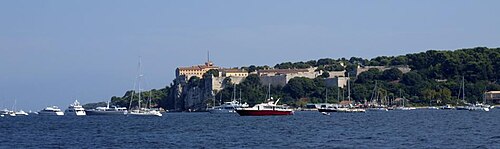
- Croix des Gardes — West Cannes
Located on a hill just west of the city centre, this expansive natural park covers sprawling wooded hillsides laced with walking trails. A high viewpoint marked by a cross overlooks the entire coastline, providing a quiet pine-scented refuge with clear vistas across the Mediterranean and distant alpine foothills.
Culture
Life in Cannes revolves around a Mediterranean rhythm where public life is lived outdoors along the sea and in communal squares. The city balances two distinct cultural identities: the international glamour of major festivals and trade events, and the traditional Provençal heritage of the local population. In the mornings, residents gather at neighbourhood markets to trade regional produce, cheeses, and fresh fish, speaking with the relaxed cadence of southern France.
The coastal lifestyle values leisure, slow dining, and visual presentation. Cafes along the water stay active from morning coffee through late evening aperitifs, with people-watching elevated to a favoured local pastime. Provençal traditions remain strong in the old town, where seasonal festivals, regional art exhibits, and outdoor summer music gatherings highlight local music and gastronomy. Respecting public spaces is central to local life; keep noise levels low in residential quarters after dark and always greet shopkeepers when entering local stores.
What to wear
Traditional dress in Provence reflects the rural heritage of southern France, characterized by printed cotton fabrics known as indiennes, featuring vibrant floral, olive, and geometric motifs. Historically, women wore layered skirts, fitted bodice jackets, and embroidered lace caps, while men wore linen shirts, wide trousers, and neck scarves suitable for agricultural work in the warm sun. Today, these traditional textiles appear mainly during regional folk celebrations and craft markets.
Modern street style in Cannes is chic, tailored, and distinctly coastal. Local residents favour crisp linen shirts, tailored shorts, light summer dresses, and stylish sunglasses, blending effortless elegance with Mediterranean practicality. Footwear tends toward quality leather sandals or clean loafers suitable for walking along paved promenades.
Visitors should dress for warm, sunny weather while keeping local norms in mind. Lightweight natural fabrics like linen and cotton are ideal for summer heat. While beachwear is standard on sandy shores, swimwear should be covered when walking through city streets, dining in restaurants, or entering shops. Sturdy, comfortable walking shoes or flat sandals are essential for navigating the steep, cobblestone streets of Le Suquet.
What to eat
- Pan Bagnat — Seaside stalls and harbour bakeries
A traditional Riviera sandwich made with a round crusty wheat roll soaked in olive oil and filled with fresh raw vegetables, hard-boiled eggs, anchovies, and tuna. It is a portable classic, ideal for beach lunches or picnics along the harbour. - Provençal Fish Soup — Bistros around the old port
A rich, slow-simmered broth made from local rockfish, tomatoes, garlic, and Mediterranean herbs. Served hot alongside crispy croutons, spicy rouille sauce, and grated cheese, it represents the coastal culinary tradition of the region. - Socca — Old town food stalls and open-air markets
A thin, savoury pancake made from chickpea flour, water, and olive oil, baked in a wood-fired oven until crisp on the edges and soft inside. Seasoned generously with cracked black pepper, it is served hot as a street food snack. - Pissaladière — Local bakeries and neighbourhood markets
A savoury tart topped with deeply caramelized onions, black olives, and salted anchovies on a thick bread dough base. Sliced into squares, it makes a favourite mid-day snack or aperitif accompaniment across southern coastal towns. - Salade Niçoise — Traditional Provençal restaurants
A crisp, refreshing salad featuring fresh tomatoes, hard-boiled eggs, Niçoise olives, anchovies or tuna, and a drizzle of olive oil. Served chilled, it captures the bright, sun-ripened flavours of Mediterranean summer produce.
Plan it
Best time. May to June and September to October offer warm weather, sunny days, and manageable crowds; July and August bring high heat, heavy traffic, and peak resort prices.
How long. 2–3
Getting there. Fly into Nice Côte d'Azur Airport, then take a 30-minute regional train or direct airport express bus along the coast straight into central Cannes.
Budget. high
Tips
- Book coastal accommodation and train tickets well in advance if travelling during major event periods or peak summer.
- Check regional news updates for announced public transport strikes before major travel days.
- Take the short local ferry ride early in the morning to explore the quiet pine trails of the Lérins Islands.
- Wear sturdy flat shoes when exploring the steep cobblestone lanes and stairs of Le Suquet.
Etiquette
- Cover up swimwear with shirts or dresses before walking off the beach into shops or city streets.
- Always greet shop owners with a polite 'bonjour' upon entering local boutiques or market stalls.
- Keep noise levels down when walking through residential streets in the old town late at night.
Nearby
Sources
- Wikidata Q39984 (CC0)
- Wikipedia (rev 1382788381) (CC BY-SA 4.0)
- Wikivoyage (rev 5424665) (CC BY-SA 4.0)
- Hamnen Cannes Mipim 20140312 (CC BY 2.5)
- Cannes from Suquet Tower 03 (CC BY-SA 4.0)
- Mairie de Cannes (CC BY 3.0)
- Hôtel Majestic Barrière (CC BY 3.0)
- Hotel Carlton Cannes (CC BY 3.0)
- Ile St Marguerite (CC BY 3.0)
- Saint Honorat Island (CC BY 4.0)
- Festival pyrotechnique de Cannes 2021 (CC BY-SA 4.0)


