Cane Garden Bay
Cane Garden Bay, British Virgin Islands
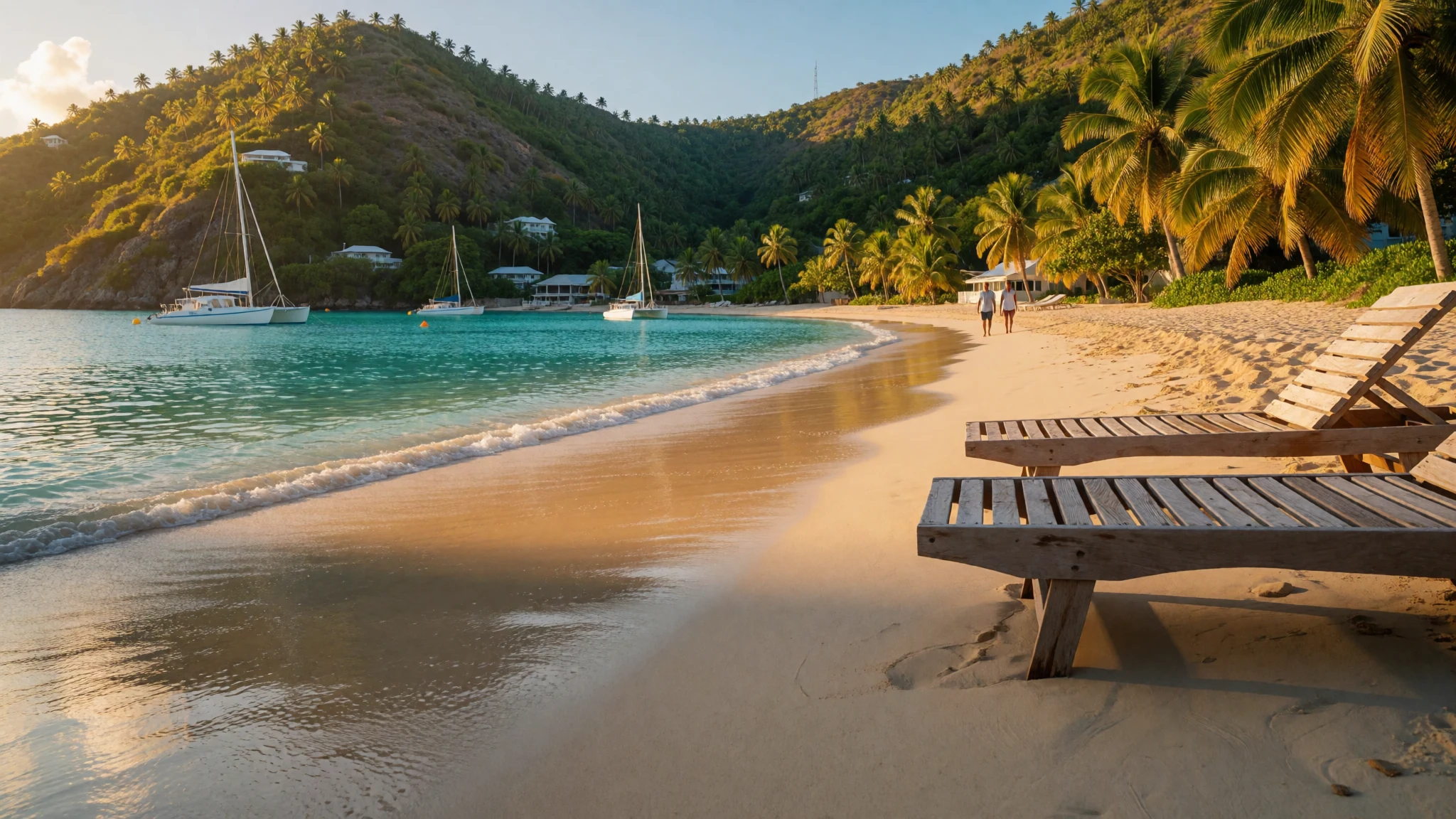
A sheltered Tortola bay of pale sand, calm water, rum history and evening music, with rain-forest walking close behind.
The place
Cane Garden Bay sits on the north shore of Tortola, the main island of the British Virgin Islands, where a curve of pale sand faces open Caribbean water below steep green hills. It is a small settlement as well as a beach: one road runs behind the sand, with beach bars, a few guesthouses and villas, drink stalls and a rum distillery tucked in behind. Tortola is only about 16 km long and under 5 km wide, so nothing is far, but the road over the ridge from Road Town is steep and twisting, and the drive takes longer than the map suggests. Beaches along this coast mostly shelve gently and have light surf, which suits families and slow swimmers. Swell can build in winter, though, and some beaches on the island have undertow, so posted signs and local advice are worth following. The bay is also an anchorage, with yachts bobbing offshore, because Tortola has steady trade winds and is a hub of Caribbean sailing. Days here follow a pattern. Mornings are quiet, with walkers and early swimmers. When cruise ships are in at Road Town, the sand fills up around midday as taxi groups arrive. Evenings bring music from the bars and a relaxed, sociable crowd. English is spoken everywhere, with a West Indian lilt that can be hard to follow when spoken quickly.
Its story
Cane Garden Bay's past is tied to Tortola's, and Tortola's is a plantation story. The name most likely points to sugar cane, which once covered the island's valleys and was crushed, boiled and distilled into rum. The Callwood Rum Distillery, still operating in the bay, is a reminder of that trade. Sugar meant enslaved labour, and the island's ruins tell the same history from different angles. Fort Recovery, built in 1648 by a Dutch colonist, shows that European powers competed for Tortola long before the British Virgin Islands settled as a British territory. The African Church, officially St Phillips, was built for Africans freed by the Royal Navy, and is reportedly the first free Black church in the Americas. A fort known as the Dungeon, of Spanish origin and dating from the 1700s, adds another layer. After the sugar economy faded, islanders turned to fishing, small-scale farming and, in time, sailing and tourism. Today the bay lives mainly on visitors who come for sand, boats and music, yet the older settlement still shows in the place names, the church congregations and the rum. Anyone who looks beyond the beach finds a quieter, more serious island history than the bars suggest.
What to see
- Cane Garden Bay beach — North shore of Tortola
The crescent of sand is the main draw, calm enough for easy swimming on most days, with low beach bars along the back. Mornings are quietest. Swell can arrive in winter, so ask a local before swimming far out. Anchored boats give the water a lively backdrop. - Callwood Rum Distillery — Cane Garden Bay
A historic rum works in the bay, worth a short stop to see how cane spirit was made in the old way and to taste what is on offer. It links the beach to the plantation past and fits easily between a swim and lunch. Check opening times locally. - Sage Mountain National Park — Central Tortola, above the bay
Sage Mountain National Park protects the high ground of Tortola and a remnant of old rain forest near the summit. It is shaded and cooler than the coast, a welcome change from beach heat. Paths can be rough and slippery after rain, so sturdy shoes matter and steady walkers will cope best. - Josiah's Bay — East end of Tortola's north shore
Josiah's Bay, further along the north shore, is a surfers' beach popular with islanders. Waves are strong in season and undertow runs at the corners, so stronger swimmers stay in the middle and keep to a safe depth. Two casual bar-restaurants sit behind the sand, plain rather than polished. - African Church, the Dungeon and Fort Recovery — Various sites around Tortola
Tortola's history is easy to miss from the beach, but small ruins repay a detour. The African Church, officially St Phillips, was built for Africans freed by the Royal Navy. The Dungeon, a fort of Spanish origin, and Dutch-built Fort Recovery add a quiet trail of colonial remains. Ask locally about access.
Culture
Cane Garden Bay shares the manners of the wider British Virgin Islands, where British influence has left a strong sense of politeness and decorum. Conversation starts with a greeting suited to the time of day, such as "Good morning" or "Good afternoon", and launching straight into a question or order without one can come across as abrupt or even rude. English is spoken everywhere, but older islanders speak with a thick West Indian accent that can be hard to follow at speed, so patience and a friendly tone go a long way. Social life leans on the beach bar. Rum is popular, local beers such as Red Stripe and Carib are easy to find, and island cocktails like the Painkiller and rum punch are everyday drinks. It is common to chat with strangers, to be bought a drink and to return the favour, ideally with a "Cheers". Music is part of evenings in the bay, and many bars stay open late at weekends. Churches matter in island life, and the freed-African church at St Phillips is a reminder of how deep that tradition runs. Visitors who arrive curious about the history, not just the beach, tend to be warmly received. Greet people with a proper "Good morning" or "Good afternoon" before asking for anything, and ask before photographing anyone.
What to wear
Cane Garden Bay has no single formal costume, but the wider Caribbean tradition that islanders draw on is built around cotton and madras, a brightly checked cloth. Madras appears in head-ties, skirts and shirts, and is most visible at festivals and cultural events, when many people dress up in it. Everyday dress in the bay today is simple and practical: shorts, light cotton shirts, sundresses, flip-flops and sandals, with boat shoes among the sailing crowd. Charter-yacht visitors often wear sun shirts and wide-brimmed hats, while residents working in Road Town favour neat, light office wear in the heat. A visitor should pack for strong sun and humidity: loose breathable cotton or linen, a hat, sunglasses and reef-safe sun cream. Swimwear belongs on the beach, so cover up with a shirt or wrap when walking into a shop, a restaurant or the village road, and when visiting a church. For Sage Mountain and other trails, bring closed shoes with grip, since paths can be rough and slippery after rain, plus a light rain jacket for the cooler forest. Evenings are warm, so a thin layer is mostly needed for boat trips and breezy decks. Sandals are fine for the beach bars, but leave heavy gear at home.
What to eat
- Johnny cakes — Bakeries and lunch counters on Tortola's main road
Fried dough rounds, crisp outside and soft inside, eaten at breakfast or as a snack and often served alongside savoury fillings. Look for local bakeries and lunch counters on the main road west of Road Town, where workers stop early in the day. - Patties — Local lunch counters and takeaways around Road Town
Spiced pastry parcels filled with beef or chicken, handy for a beach day or a drive across the hills. They are cheap, filling and best eaten warm from a local counter, usually alongside a cold drink, where they sell quickly. - Roti — Roti shops and cafes on Main Street, Road Town
Indian-style flatbread wrapped around curry, with vegetable, chicken or goat fillings. It reflects migration into the Caribbean and makes a filling lunch. Roti shops in Road Town sell it, and some vegan places do versions with tofu. - Grilled lobster and fresh fish — Beach bars and waterfront restaurants in the bay
Seafood is the beach-bar staple at Cane Garden Bay, with fish and lobster grilled or served island style. Lobster costs noticeably more than burgers or chicken, so ask about the catch of the day and its price before ordering. - Painkiller and rum punch — Beach bars and roadside stands
Rum is the island drink, and the Painkiller and rum punch are two common ways to take it, usually with fruit and a dusting of nutmeg. Strength varies, so drink slowly in the sun, and say "Cheers" when glasses are raised. - Soursop daiquiri and barbecue — Small north-shore bars in Carrot Bay
On the north shore, small bars in villages such as Carrot Bay serve home-grown soursop daiquiris, a creamy, tangy fruit drink, with barbecued chicken or ribs. It makes an easy stop on a drive between bays, and the shell-filled walls are a curiosity.
Plan it
Best time. December to April is the usual choice: it is drier and breezier, and the sailing season is at its height, so the bay is busiest. Hurricane season runs from June to November, with more rain, heat and humidity, and some businesses slow down. Check forecasts and cruise-ship days before fixing dates.
How long. 2–3
Getting there. There are no direct long-haul flights, so connect through San Juan, St Thomas, Antigua or Sint Maarten and fly on to Beef Island airport on Tortola. Alternatively, take a ferry from Charlotte Amalie on St Thomas to Road Town or West End, then a taxi over the hills to the bay.
Budget. mid
Tips
- Book a taxi or hire car in advance, as the roads over the ridge are steep and twisting
- Visit the beach in the morning for quiet water, as it fills up around midday on cruise-ship days
- Carry some cash for roadside stands and small bars, and check whether cards are accepted
- Bring reef-safe sun cream, a hat and plenty of water, as shade is limited on the sand
- Ask locals or check signs before swimming, as swell and undertow vary between beaches
Etiquette
- Greet people with "Good morning" or "Good afternoon" before asking for anything
- Cover up when walking away from the beach into villages, shops or churches
- Ask before photographing people, especially at local events
Nearby
Sources
- Wikidata Q14206059 (CC0)
- Wikivoyage: Tortola (rev 5420429) (CC BY-SA 4.0)
- Wikipedia: Cane Garden Bay (CC BY-SA 4.0)