Caesarea
Caesarea, Israel
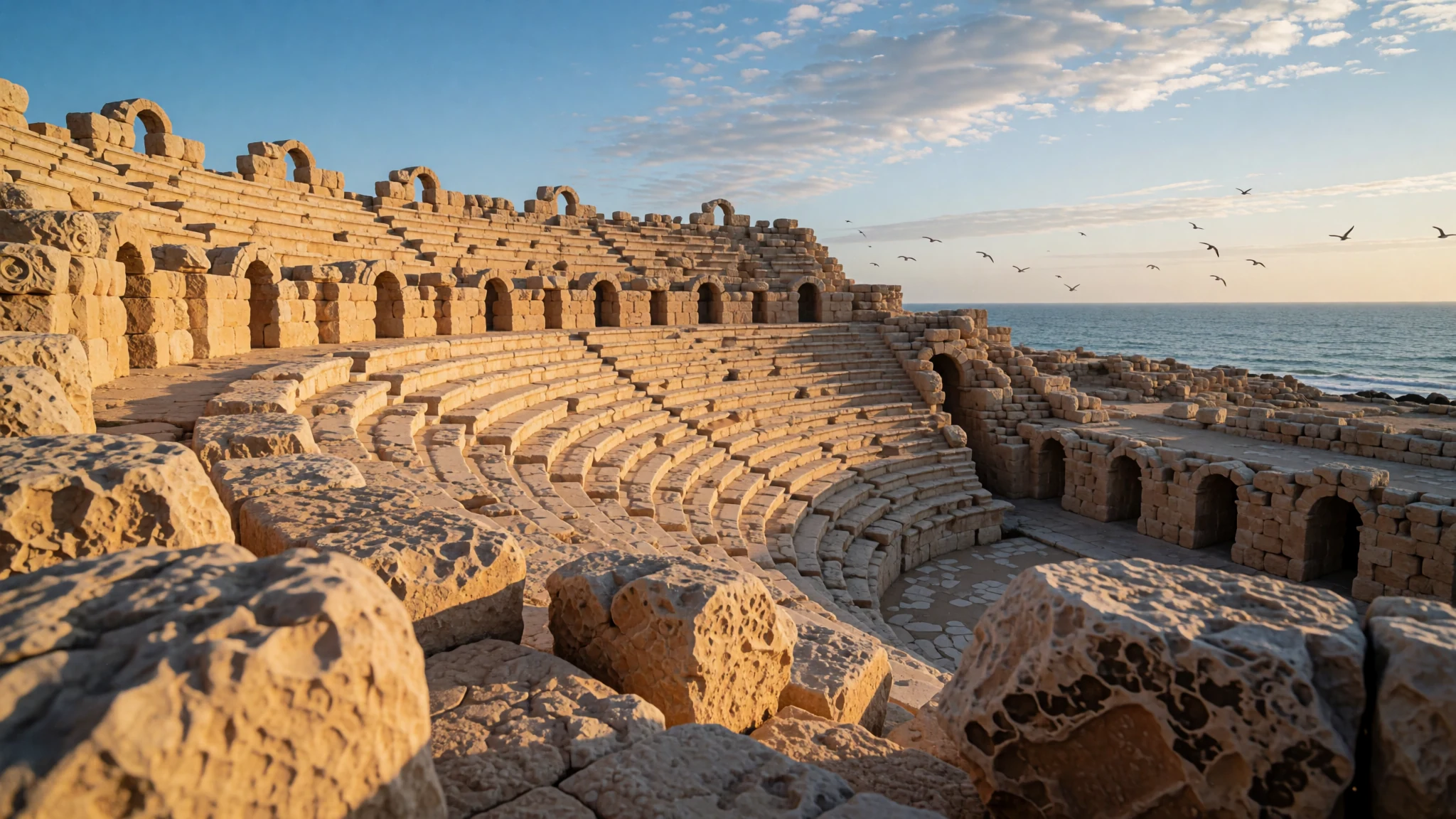
Caesarea is a calm coastal resort town where Roman port ruins, a seaside theatre and a quiet beach sit side by side.
The place
Caesarea is an affluent resort town on the Israeli coastal plain, roughly halfway between Tel Aviv and Haifa. It lies just north of the ancient port it takes its name from, Caesarea Maritima, and the two are close enough to walk between. The modern town has a population of about 5,300 and sits about 20 metres above sea level, so it feels flat, green and unhurried compared with the big cities on either side.
The character is suburban. Many residents commute to work in Tel Aviv or Haifa, and the town is divided into named residential zones called clusters. The newest, Cluster 13, is known as the Golf Cluster because it lies beside the Caesarea Golf Course, which Wikivoyage describes as the only golf course in Israel. On the edge of town the Caesarea Business Park holds about 170 companies, mostly in distribution and high-technology services.
Day to day the town has the feel of a planned community: a shopping concourse with a supermarket, bank, optician and newsagent, and cafes and restaurants scattered around, some inside the old port. Most visitors come for the beaches, the ruins and the summer concerts rather than for nightlife. The pace is relaxed and the atmosphere comfortable, with more traffic at weekends and in the warmer months.
Its story
The modern town takes its name from Caesarea Maritima, a major port that Herod the Great built in the decades before the turn of the era. He named it in honour of the emperor, and under Roman rule it became the administrative centre of the province of Syria Palaestina. Its harbour handled shipping, and its theatre, aqueduct and grand buildings made it a showpiece of the coast.
Later the city became the capital of the Byzantine province of Palaestina Prima. The Arab conquests of the seventh century changed its fortunes. The provincial capital moved inland to Ramla, and the coastal city shrank to a village with an Arab majority. Crusaders took it and restored it as a fortified port, before Mamluk rule reduced it again.
By the nineteenth century the site was a partly demolished archaeological ruin. In 1884 Ottoman authorities settled Muslim families from Herzegovina, who had left Austria-Hungary, on the ruins, and they came to share the local Arab culture. In 1940 the kibbutz Sdot Yam was founded beside the village. In February 1948 a Palmach unit under Yitzhak Rabin took the village, after Lehi militants had attacked a bus. Later, the Rothschild family transferred most of its land holdings in the area to the new state, and the modern town grew on that land.
What to see
- Caesarea National Park — Ancient Caesarea, south of the modern town
Ancient Caesarea Maritima is the main reason most people come to this stretch of coast. Herod the Great founded it as a large port and dedicated it to the emperor Augustus, and the park now holds the harbour remains, the Roman theatre and other excavated structures. Allow at least a few hours, go early or late to avoid the heat of midday, and check the official site for opening times and tickets.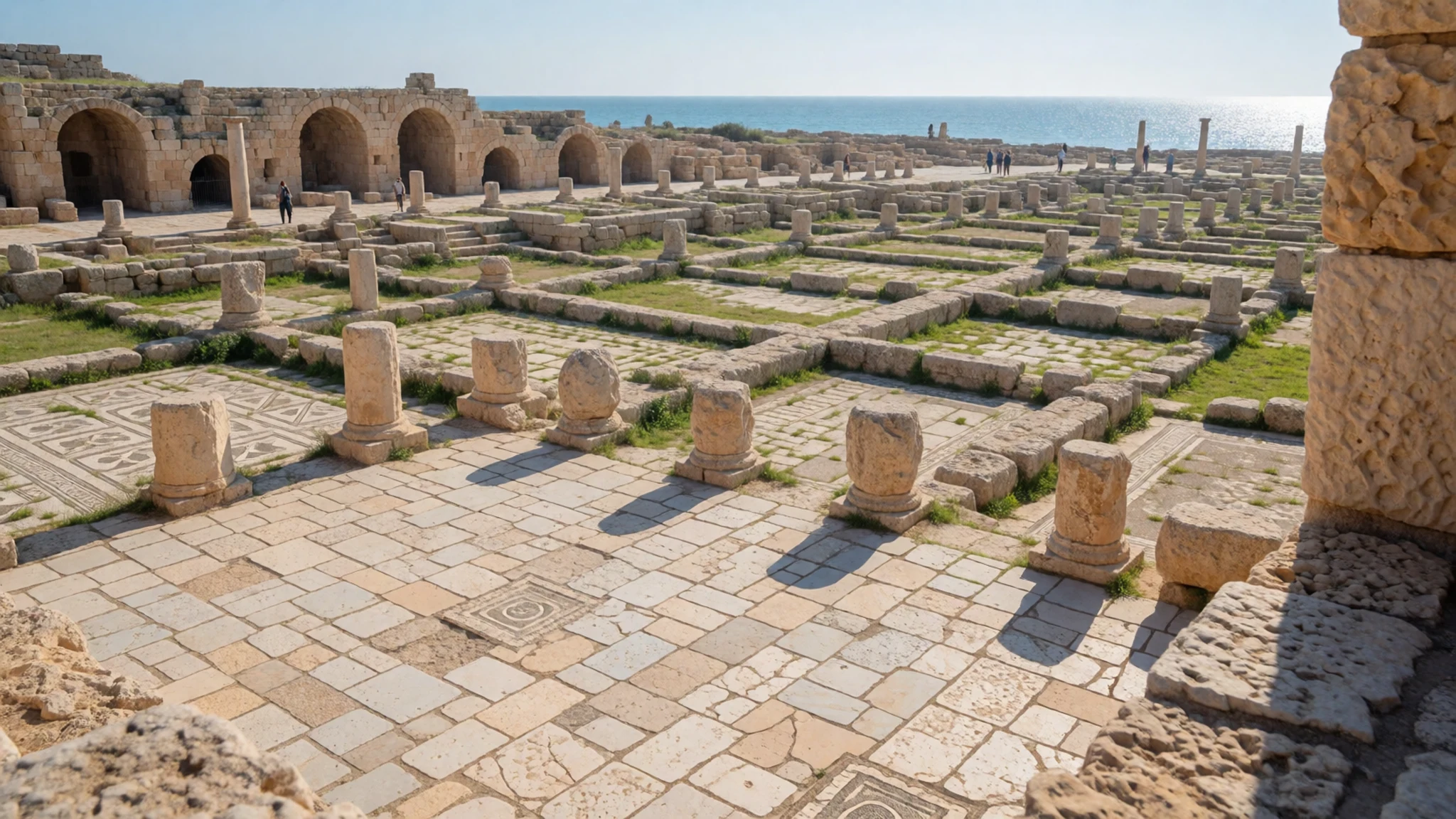
- Caesarea Aqueduct — Inland from the national park
Hike along or on top of what survives of this impressive aqueduct, which runs inland from the coast. The stretch has little shade, so walk in the cooler hours, carry plenty of water and stay on the paths. It is a good way to see the landscape between the ruins and the town, and it works well as a short walk before lunch.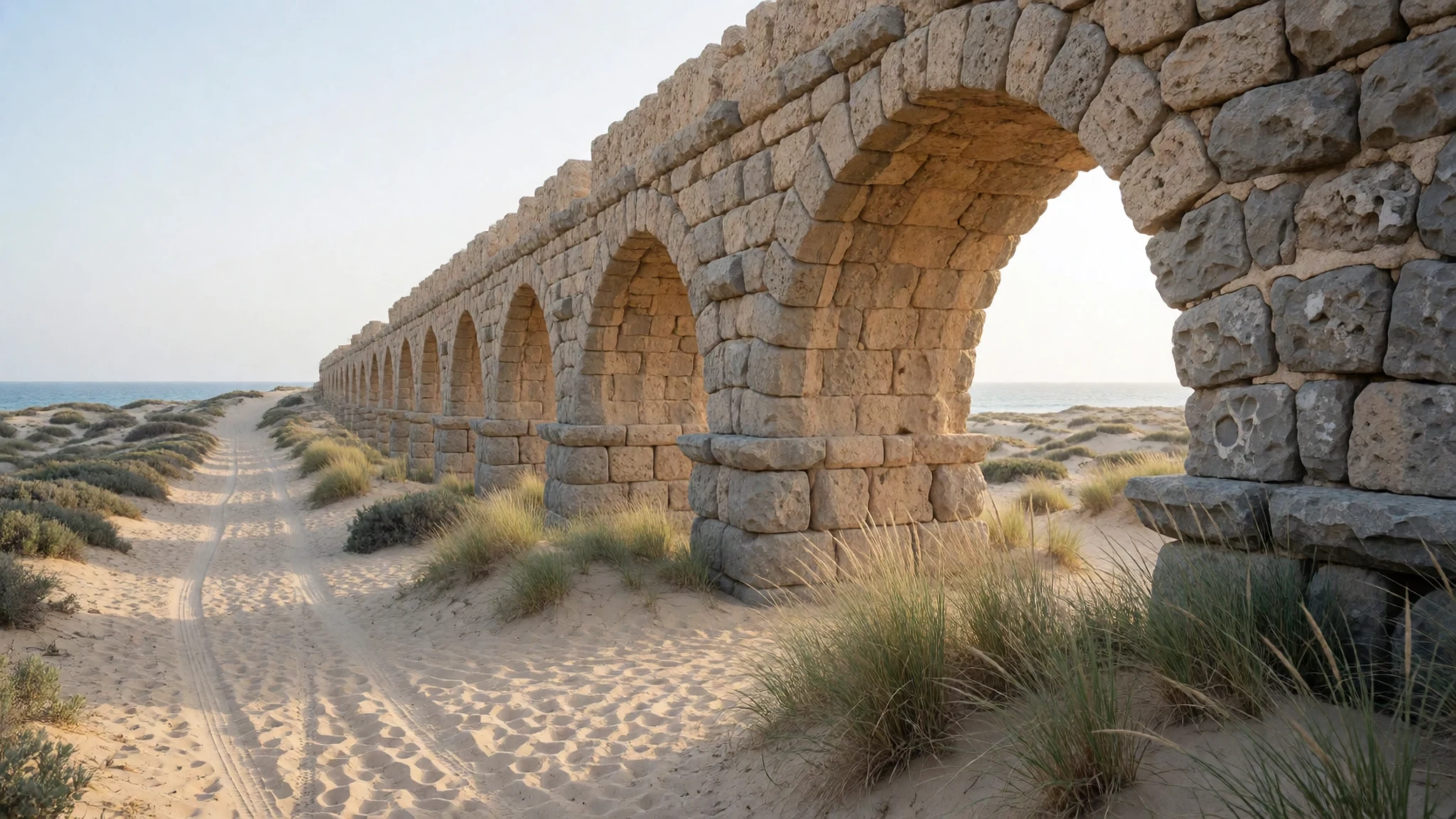
- Ralli Museums — Modern town
The Ralli Museums are two art museums. One focuses on Spanish and Latin American art and holds several original works by Salvador Dalí, and the other concentrates on early modern pieces with biblical themes. The collections make a good break from the sun, and the rooms are usually quieter than the beach.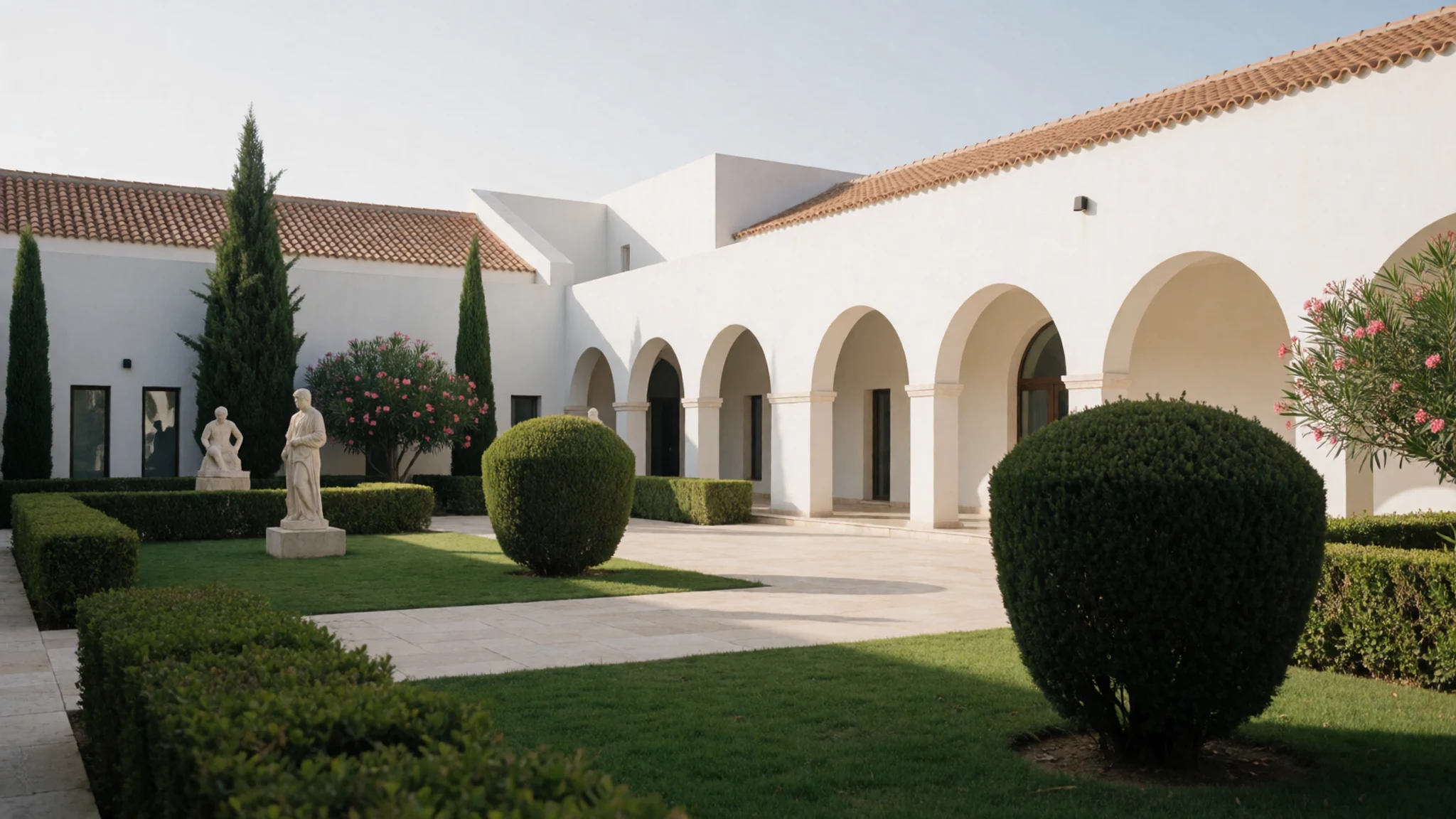
- Birds mosaic — Ancient Caesarea, near the park
This is a little-known archaeological site, the remains of a Byzantine palace. Its complex floor mosaics show birds and other wildlife alongside geometric patterns. Few visitors reach it, so it is often calm, and it rewards a slow look at the detail. Ask at the national park or check the official site for access arrangements.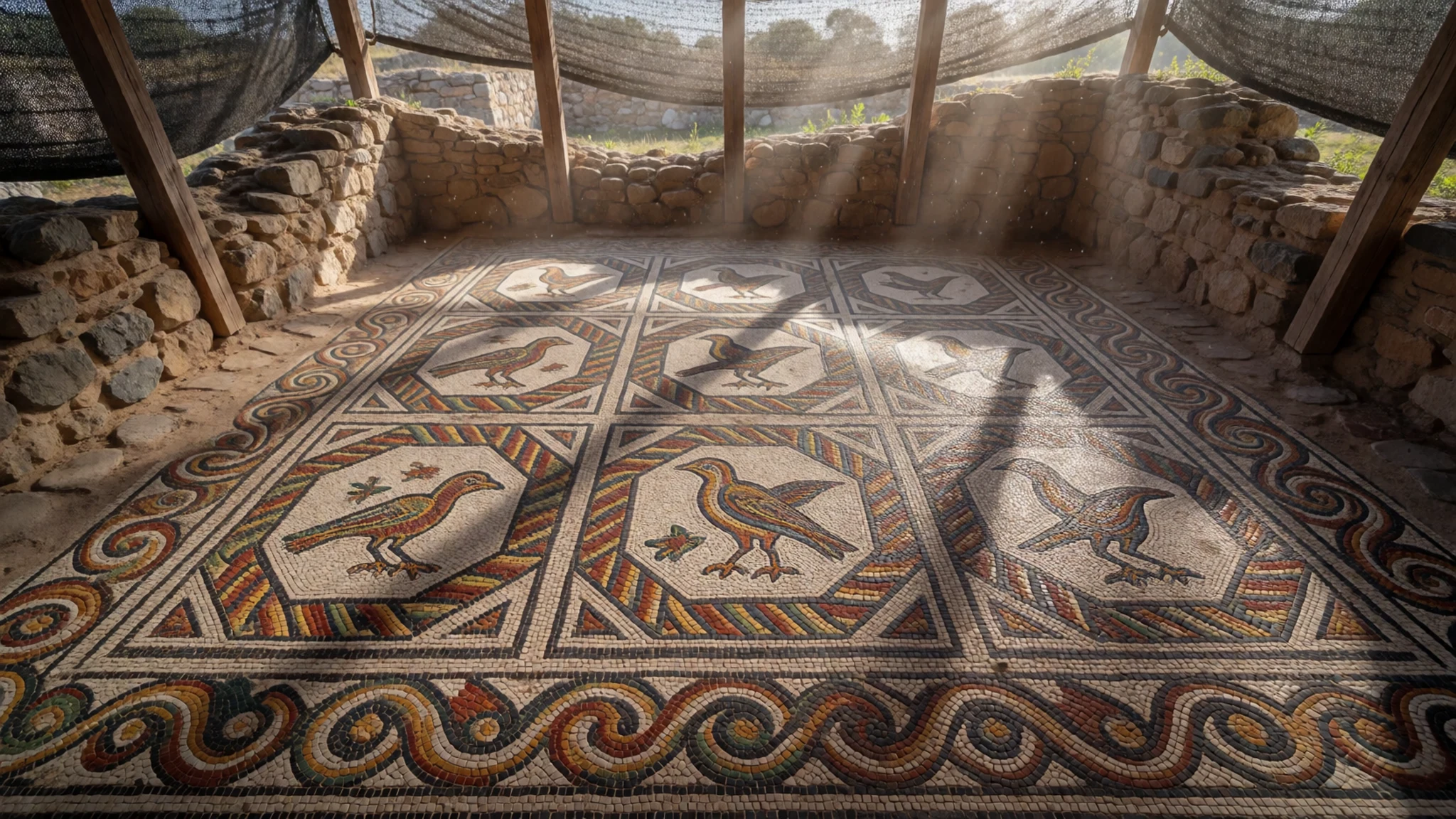
- Zarqa Bay and Beach — North of the old port, beside Jisr az-Zarqa
Zarqa Bay and its beach lie north of the old port, close to the village of Jisr az-Zarqa. The bay is a good place for a swim and a walk along the sand, and it is quieter than the beaches nearer the town centre on weekdays. Ask at a guesthouse such as Juha's Guesthouse about surfing, which is possible on this coast.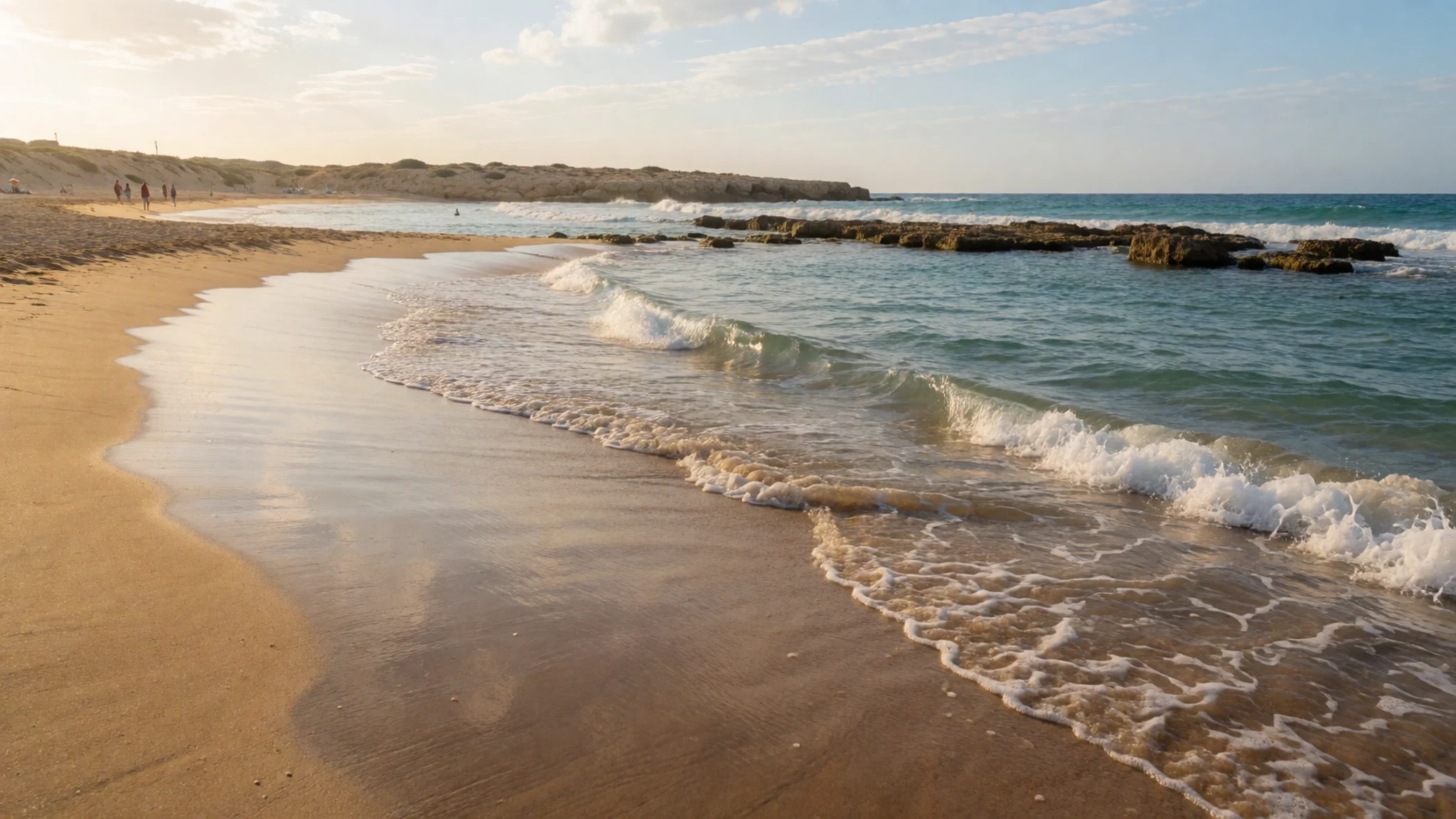
Culture
Caesarea Maritima's Roman theatre is the town's cultural stage. Major Israeli and international acts have performed there, from Israeli singers and rock bands to jazz and world musicians. The Caesarea Jazz Festival, held at the beginning of June, gives the coast a lively run of evenings, and the International Opera Festival adds to the calendar. Concert nights draw crowds, so buying tickets early is sensible for a popular act.
The Ralli Museum holds a substantial collection of Spanish and Latin American art alongside several original works by Salvador Dalí, which makes it a good option on a windy or wet afternoon. The town itself is calm and suburban, with most residents commuting out for work. Just north lies the village of Jisr az-Zarqa, where the everyday rhythm is different from the resort front and where people go about their daily lives without the crowds of the beaches.
Social life varies between neighbourhoods, and the coastal strip is where people relax at weekends. When you walk through Jisr az-Zarqa, dress modestly and ask before photographing anyone in the street.
What to wear
Caesarea has no costume tradition of its own that visitors are likely to see today. The older communities nearby are mostly Arab, with long histories of everyday clothing shaped by the climate and by religious custom. In villages such as Jisr az-Zarqa, traditional women's dress has been loose and long-sleeved, often with a head covering, while men have worn simple long trousers and shirts. Cotton and linen have always suited the coastal heat.
Day-to-day wear in Caesarea is coastal and casual. Residents dress for work in office clothes and wear shorts and sandals on the beach. People dress up a little for concerts at the Roman theatre, where evening wear is common, though no formal dress code applies.
For a visit, pack light, breathable clothing for the coast, a thin layer for cooler evenings, and a hat and sunglasses for the ruins, where shade is limited. Cover shoulders and knees when walking through the village or visiting any religious site. Bring closed shoes with good grip for the uneven stone paths of the national park, and a swimsuit with a cover-up for the beach.
What to eat
- Falafel — Falafel and shawarma counters in Jisr az-Zarqa, just north of the town
Crisp fried chickpea balls, packed into flatbread with salad, pickles and tahini. This is the everyday food of the area, and the small counters in Jisr az-Zarqa are where many people eat it. Ask for it hot from the fryer and add the pickled vegetables for contrast.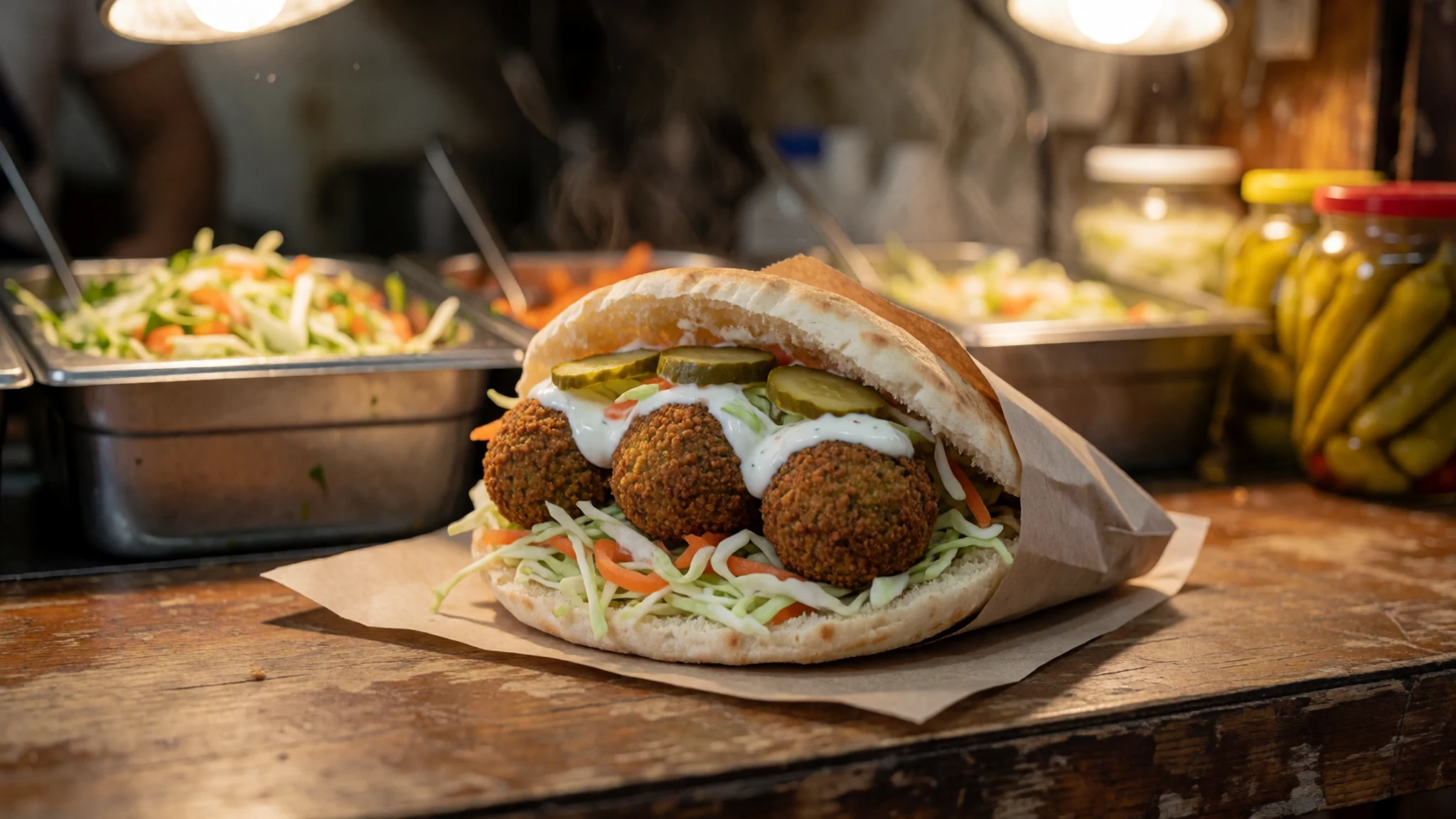
- Shawarma — Street stalls in Jisr az-Zarqa
Spiced meat, slow-roasted on a vertical spit and shaved to order into flatbread with salad and sauce. It is a filling, straightforward meal that suits a day of walking the ruins. The stalls in Jisr az-Zarqa are the simplest place to find it.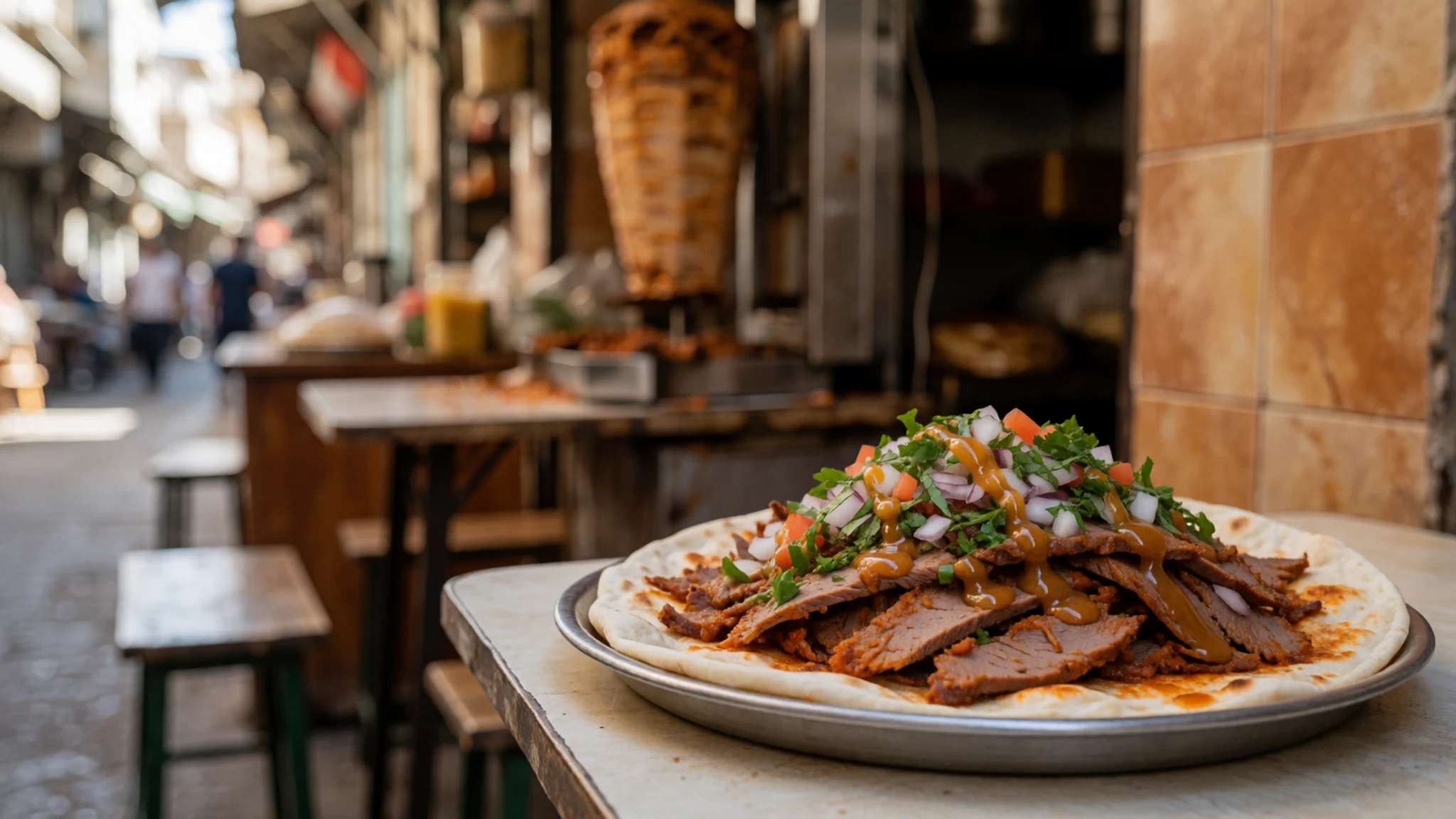
- Hummus and mezze — Restaurants in the national park holiday area
Creamy chickpea hummus served with warm bread, salads and grilled vegetables, often shared at the table. Restaurants serving the national park holiday area cater for visitors, so this is a good choice for a lunch after the ruins, when the sun is strongest. - Grilled fish — Cafes and restaurants inside the ancient port area
Fresh fish cooked over charcoal and served simply with lemon and salad, a natural choice on a coast like this. Cafes and restaurants within the old port area are the places to look for it, and an evening meal there suits the calm of the harbour.
Plan it
Best time. December to February are the most comfortable months on this coast, with daytime highs of about 25 to 29 °C, though they are also the wettest. Summer is hot and busier, and the Caesarea Jazz Festival at the start of June is worth planning around if you like live music.
How long. 2–3
Getting there. Fly into Tel Aviv, then take an intercity bus. Bus 910 runs about hourly from Tel Aviv to the Or Akiva interchange on Route 2, and from there it is a walk of about 20 minutes west to the ruins. Buses 9, 76 and 80 stop at the ruins but are slow and infrequent.
Budget. mid
Tips
- Walk or cycle the separate path from Or Akiva to the ruins in the morning, before the coastal road heats up
- Check bus timings in advance, since the local routes run only a few times a day
- Carry water and some cash for small stalls near the ruins
- Book concert tickets for the Roman theatre early, as popular acts fill quickly
- Ask at a guesthouse about surfing if you want to try it on this coast
Etiquette
- Dress modestly in Jisr az-Zarqa and ask before photographing people
- Keep to marked paths at the national park and the aqueduct
- Keep noise down in the residential clusters in the evening
Nearby
Sources
- Wikidata Q1615560 (CC0)
- Wikipedia: Caesarea (modern town), rev 1383046887 (CC BY-SA 4.0)
- Wikivoyage: Caesarea, rev 5349395 (CC BY-SA 4.0)
- Caesarea maritima, roman theatre (Berthold Werner) (Public domain)
- צילום אוויר של קיסריה ואור עקיבא (Meronim) (CC BY 3.0)
- ralli museum, cesarea, israel (avishai teicher) (Public domain)
- 2013 Women's British Open, Laetitia Beck (Wmigda) (CC BY 3.0)
- April 2016 in Israel 42 (Rakoon) (CC0 1.0)
- April 2016 in Israel 43 (Rakoon) (CC0 1.0)
- April 2016 in Israel 44 (Rakoon) (CC0 1.0)
- April 2016 in Israel 47 (Rakoon) (CC0 1.0)


