Brazzaville
Brazzaville, Republic of the Congo
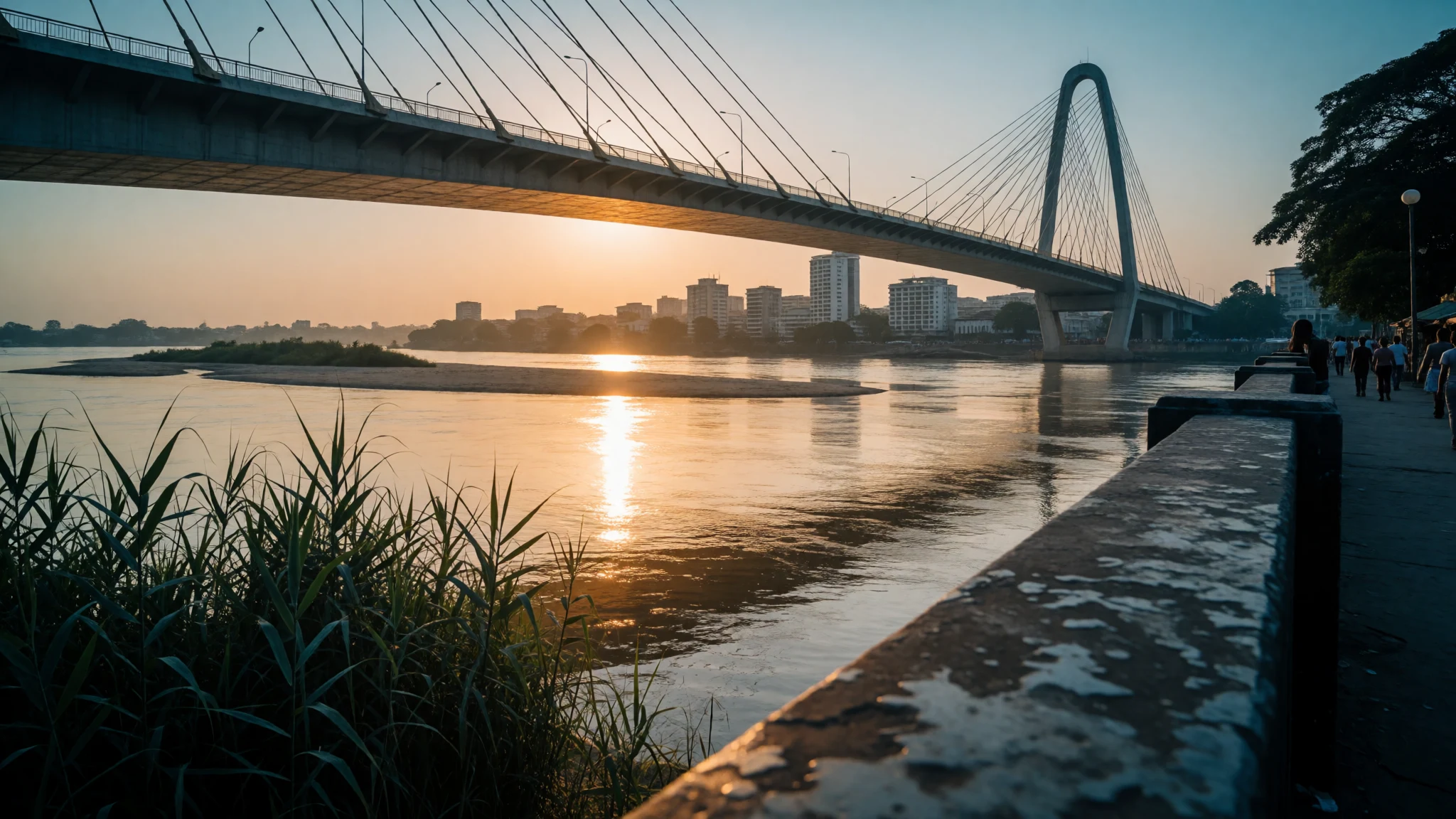
Brazzaville is a green, relaxed riverside capital facing Kinshasa across the Congo, with colonial-era landmarks, painters' studios and some of Central Africa's liveliest music.
The place
Brazzaville is the capital of the Republic of the Congo, spread along the north bank of the Congo River at an elevation of about 320 metres. Straight across the water stands Kinshasa, capital of the Democratic Republic of the Congo, and on a clear day the two skylines look at each other over a broad, slow reach of the river known as Pool Malebo. Islands and sandbanks break up that stretch, and one large island in the pool belongs to the Republic of the Congo. Behind the city the land is flat, with open plains rather than hills, so the river is the natural way to get one's bearings. Roughly 2.1 million people live here, and it serves as both the administrative seat and the main business centre of the country. It feels like a working capital rather than a resort: ministries and embassies, church spires, busy markets, shaded avenues and evenings given over to music. The climate is tropical, warm all year, with a long wet season and a shorter dry one, and the city has plenty of trees, which is why locals sometimes call it the green capital. UNESCO named Brazzaville a City of Music in 2013, and it sits in the Creative Cities Network. Sights are modest in scale and spread out, so most visitors pair a few landmarks with time on the riverfront and in the neighbourhoods around the centre. The official website for the city's sustainable development drive is developpement-durable.gouv.cg.
Its story
Before any European flag arrived, the ground under today's Brazzaville held two trading settlements, Mfwa and Mpila, tied to the Tio kingdom of the Teke people. A Bateke village called Ncuna stood on the river bank, and it was here that the Italian-born explorer Pierre Savorgnan de Brazza, by then a French citizen, set up a French post in 1880. The city carries his name. The local Tio ruler, Iloo I, agreed a protection treaty with him, which in practice tied the territory to France. A small detachment under Sergeant Malamine Camara, a Senegalese soldier, then held the site to stop rival Belgian claims from taking root. The rivalry was real: across the water, King Leopold II's agents were building their own outpost, which became Léopoldville and later Kinshasa. Serious construction in Brazzaville began a few years later, partly as a response to that neighbour. The Berlin Conference of 1884 gave French control of the area formal recognition, and in 1904 the town became capital of French Congo. During the Second World War, Brazzaville took on a larger role when it served as the base of Free France in Africa, starting in 1940. Independence changed the flag and the government but not the geography, and the capital still faces its twin across the river. Colonial buildings, memorials and mausoleums from these different chapters now stand close together in the city centre.
What to see
- Basilique Sainte-Anne-du-Congo — Poto-Poto district
Designed by the architect Roger Erell, this modern church is the city's most photographed building. The roof is steeply pitched and clad in green tiles, and the interior is airy and plain. It is an active place of worship, so visit outside service times and keep voices low while looking around.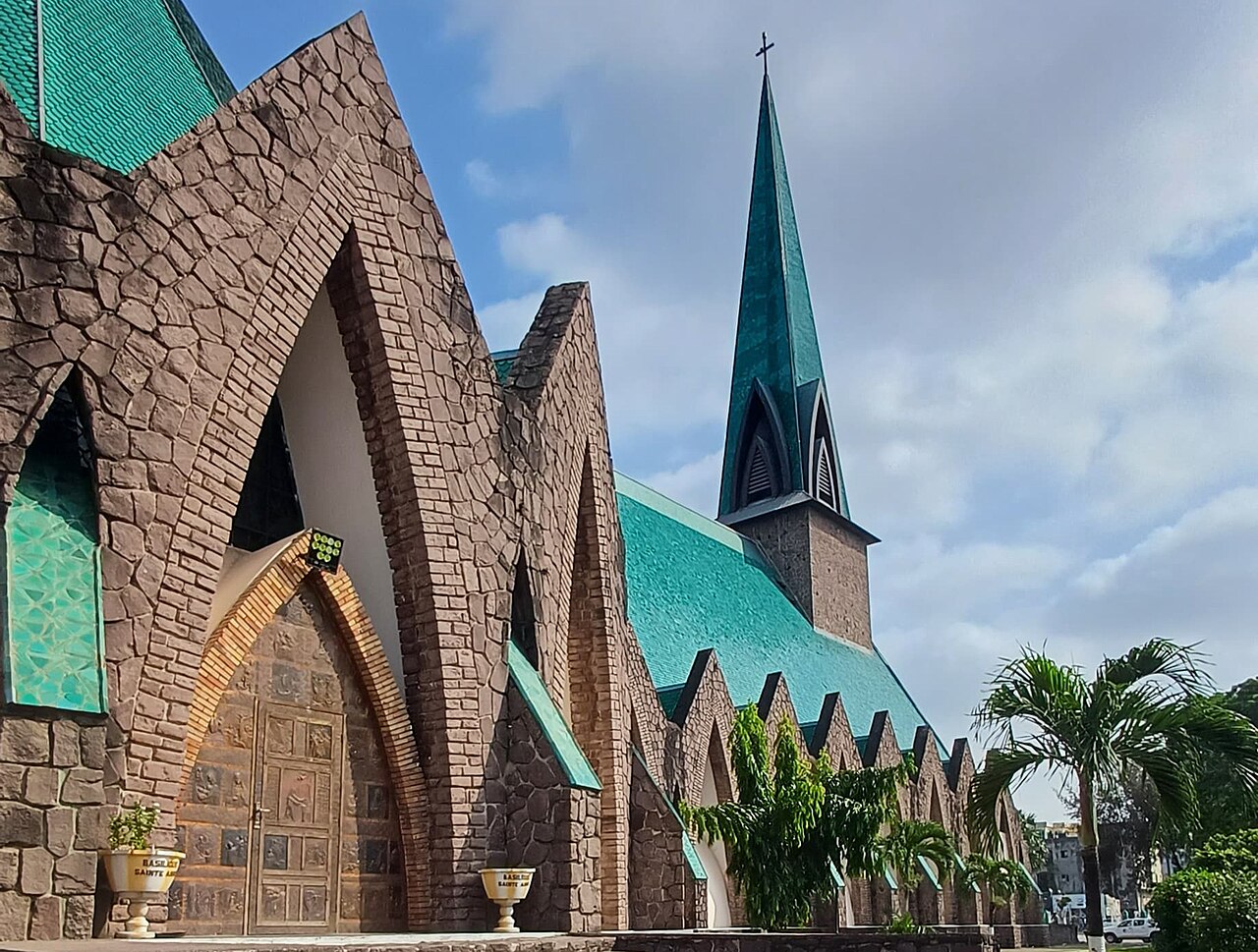
- Pierre Savorgnan de Brazza Memorial — City centre
A marble mausoleum honours the explorer whose name the city bears, and a museum alongside traces the history and cultures of the Republic of the Congo. It is a useful first stop for context, and the exhibits help make sense of the colonial buildings elsewhere in the centre. Check current opening arrangements before going.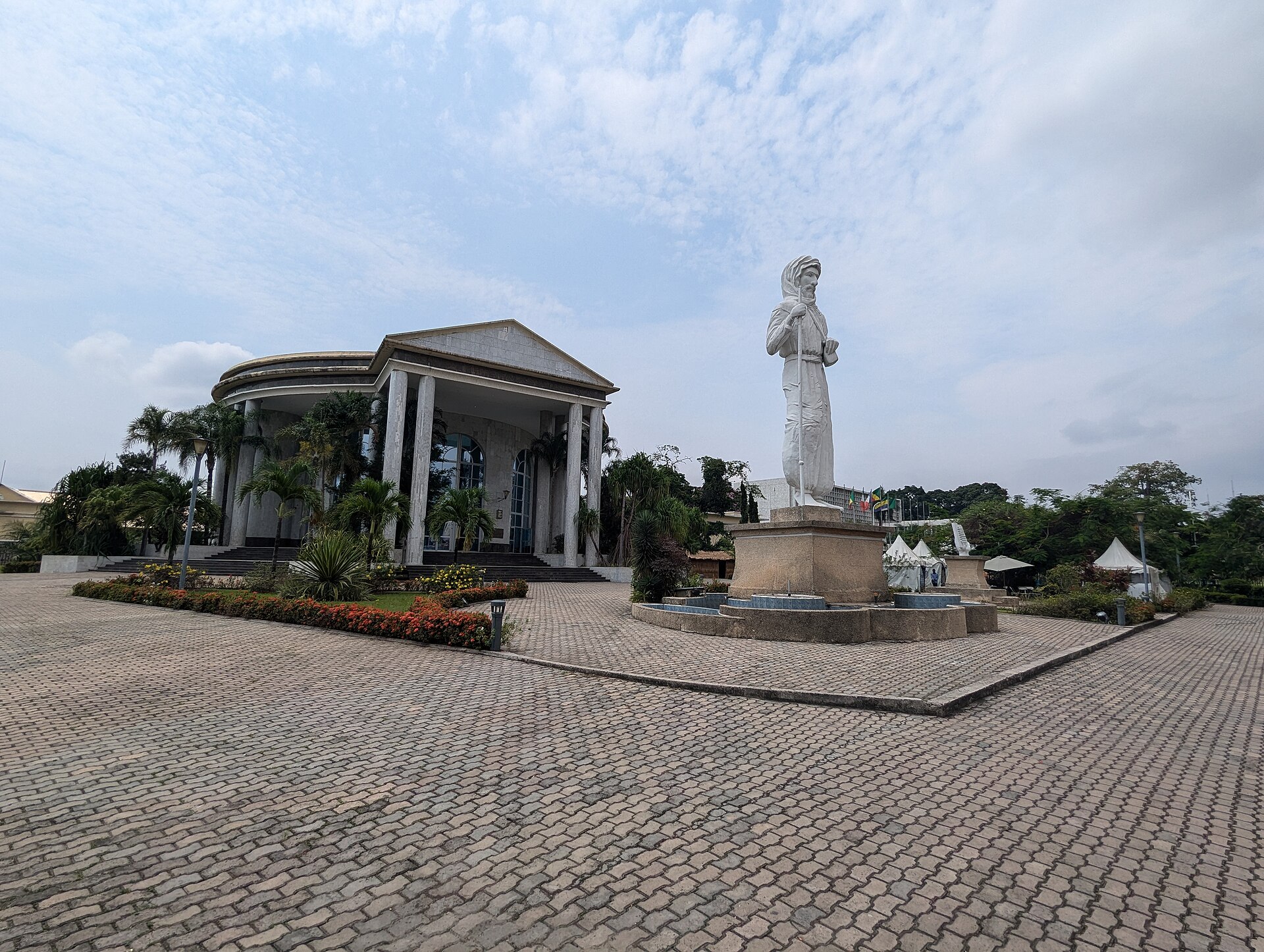
- Palais du Peuple — Near the river, central Brazzaville
A colonial-era palace, now used as the presidential residence. Visitors usually admire it from outside, where the proportions and verandas show the style of early French administration in the region. Security is serious around government buildings, so ask before pointing a camera at it, and expect to be moved along.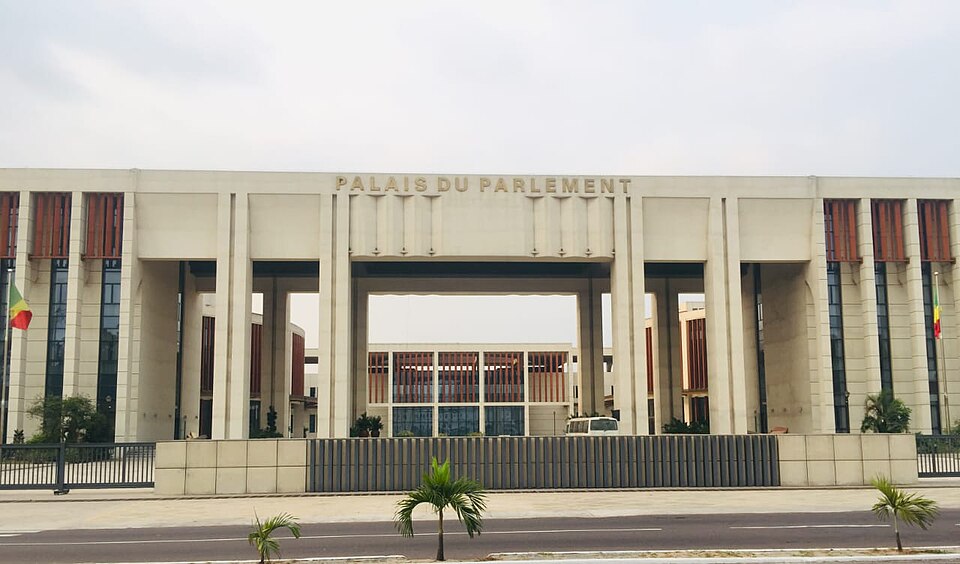
- The Corniche — Riverfront
The riverside promenade is the best place to understand the city's setting. From here Kinshasa fills the far bank, and a recent road and rail bridge links the shores nearby. Late afternoon is pleasant for a stroll, with fishing boats, vendors and families out for the breeze off the water.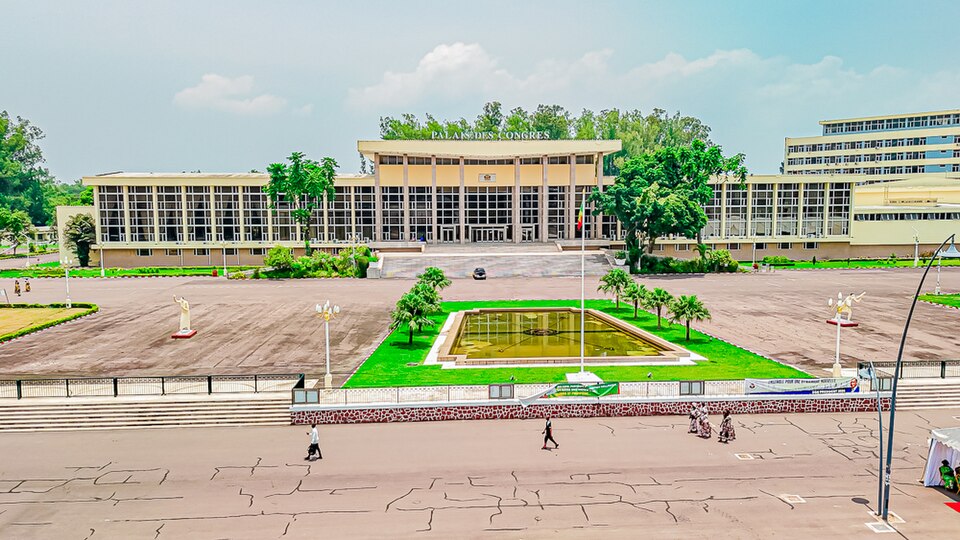
- Poto-Poto School of Painting — Poto-Poto district
Poto-Poto gave its name to a well-known school of Congolese painting, and the studios in the neighbourhood still show bold, colourful canvases. Visitors can look at work, talk with artists and buy directly. Prices are negotiated, so agree on a figure before anything is wrapped.
Culture
Brazzaville's culture is shaped by two things: the Bateke and other Congolese peoples whose homeland this is, and a century of French influence. French is the language of administration and schooling, while Lingala and Kituba are heard in markets, taxis and songs. Music is the city's loudest expression of identity. Congolese rumba and its descendants pour out of bars, clubs and open-air stages, and the same sound is shared with Kinshasa across the river, so the two capitals have long swapped bands, dancers and styles. Painting has its own tradition in the Poto-Poto school, and public life includes memorials and mausoleums to both colonial and post-independence figures, which sit side by side without much comment. Religion is mostly Christian, with Catholic churches such as Sainte-Anne prominent in the centre, and many families also keep older ancestral customs for funerals and family occasions. Social life revolves around family, church, neighbourhood bars and long meals, and greetings matter: a handshake and a few polite questions come before any request. The city moves at a relaxed pace outside rush hour, though official buildings and the riverfront border can be sensitive places. Ask permission before photographing people, and never photograph soldiers, government buildings, the port or the bridge without clear approval.
What to wear
Traditional dress in Brazzaville draws on printed cotton cloth, usually called pagne, which women wrap as skirts, tie as head wraps or have sewn into fitted tops and dresses. Bright wax-print and Dutch-style fabrics are worn for weddings, funerals, church and family celebrations, often as matching cloth for a whole group. Men may wear a tailored shirt or suit in a similar print for formal occasions. Brazzaville is also known for la SAPE, a tradition of extravagant elegance in which Sapeurs, mostly men, dress in sharply cut suits, coloured ties, hats and polished shoes, and treat a Sunday stroll as a performance. Everyday dress is more practical: jeans or light trousers, shirts, dresses and sandals, with neat grooming valued, especially in offices and churches. Visitors should dress for heat and humidity in light, breathable cotton or linen, with a hat and sunscreen for the riverfront. Modest clothing is wise, meaning covered shoulders and knees, particularly in churches and for official meetings. Closed shoes or sturdy sandals suit pavements that can be broken, dusty or muddy in the rainy season, and a light rain jacket is useful from October to May. Avoid camouflage patterns, which can be misread around soldiers.
What to eat
- Poulet moambé — Family-run eateries and home-style restaurants in Poto-Poto and Bacongo
Chicken simmered in a rich sauce of palm nuts, often with garlic and spices, and served with rice or cassava. It is often regarded as a national dish across the Congo region, and a good version is deep, savoury and slightly smoky. - Saka-saka with fish — Neighbourhood eateries and market food stalls
Pounded cassava leaves cooked down until soft and glossy, often with palm oil, onion and smoked or salted fish. It tastes earthy and slightly bitter, and is usually eaten with rice or a starchy side. - Grilled river fish — Riverside restaurants and the Corniche area
Fish from the Congo is grilled over charcoal with pepper, onion and lemon, and served with fried plantain or chikwangue. It is simple, smoky and best eaten fresh, with your hands and a cold drink. - Chikwangue — Open markets and roadside stalls across the city
Fermented cassava paste steamed in leaf-wrapped parcels, sold in long sticks. It has a mild, slightly sour taste and a firm, chewy texture, and works as the starch beside sauces and grilled meats. - Lebanese and French-style dishes — Avenue Foch and the city-centre restaurant streets
Brazzaville has a long-standing mix of Lebanese, French and Asian restaurants. Shawarma, grilled meats, pastries, pizza and steak are widespread, and Lebanese places are the usual choice for halal food.
Plan it
Best time. June to August is the best window. This is the dry season, with July and August the driest months, so roads are easier and the riverfront is pleasant. The wet season runs from October to May and brings heavy rain and humidity. Temperatures stay fairly steady all year.
How long. 2–3
Getting there. Fly directly into Brazzaville rather than crossing from Kinshasa, as the official border crossing by boat is more complicated for visitors. Trains link the city with Dolisie and Pointe-Noire, but the long journey is better treated as an overnight option than a quick hop. Within the city, taxis are the usual last leg.
Budget. mid
Tips
- Check visa and entry rules well before travel, and carry copies of your passport and visa
- Carry some cash, since cards are not accepted everywhere
- Use taxis agreed on a price beforehand, and avoid walking alone after dark
- Drink bottled or filtered water, and bring sun protection
- Many restaurants close on Sundays, so plan meals ahead
Etiquette
- Greet people politely before asking questions or making requests
- Ask permission before photographing people, and never photograph soldiers or government buildings
- Dress modestly for churches and official meetings
Nearby
Sources
- Wikidata Q3844 (CC0)
- Wikipedia: Brazzaville (rev 1378477766) (CC BY-SA 4.0)
- Wikivoyage: Brazzaville (rev 5424483) (CC BY-SA 4.0)
- Photo: Quartier OCH, Prével EPOTA (CC BY-SA 4.0)
- Photo: Les lieux de Brazzaville 03, Africany (CC0 1.0)
- Photo: TOUR 01, Leon Bilili (CC BY-SA 4.0)
- Photo: Palais du peuple BZV, JunyNG (CC BY-SA 4.0)
- Photo: Basilique Sainte-Anne-du-Congo, Henri van der Noot (CC BY-SA 4.0)
- Photo: Memorial Pierre Savorgnan de Brazza 27, Africany (CC0 1.0)
- Photo: Brazzaville vue aérienne 21, Africany (CC0 1.0)
- Photo: Brazzaville vue aérienne 16, Africany (CC0 1.0)


