Bourges Cathedral
Bourges Cathedral, France
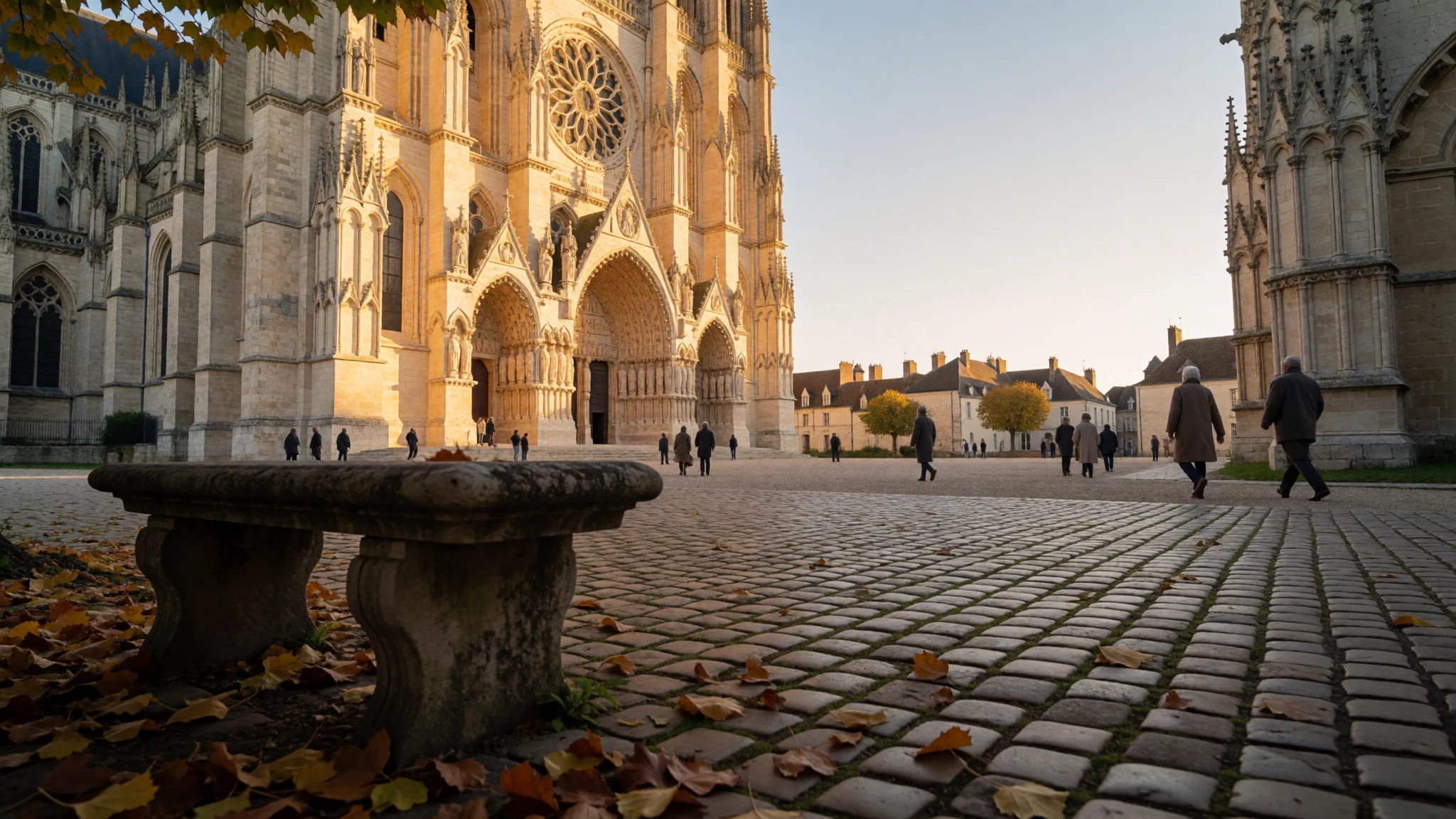
Bourges Cathedral is a cohesive High Gothic interior, famed for its portals and a large run of 13th-century stained glass.
The place
Bourges Cathedral (Cathédrale Saint-Étienne de Bourges) sits in the centre of Bourges, in France’s Cher region, and it’s dedicated to Saint Stephen. It isn’t a “pick one highlight” place: the building reads as a single, deliberate space where height, rhythm, and light work together. Even before the details, the cathedral gives a sense of unity from nave to choir.
The standout feel comes from what the designers chose to preserve and what they rebuilt. The cathedral was laid out over earlier Romanesque foundations, starting from the late 12th century work that continued into the early 13th, with the earlier lower church and east end forming the base for what followed. As a visitor, you’ll notice the way the interior supports the eye: aisles, columns, and the sense of depth are all part of the same visual story.
Outside, the cathedral’s presence is defined by its stonework and its sculptural portal decoration. Inside, the attention turns to windows, especially the stained glass associated with the 13th-century programme. The effect is not just “pretty glass”, but a kind of moving atmosphere as you shift position from the nave towards the ambulatory.
Practically, Bourges is a comfortable city for a focused visit. Footpaths and signage around the historic core are straightforward, and the cathedral is the kind of place where lingering pays off—though school groups and weekend visitors can make the quietest moments feel brief.
Its story
Bourges Cathedral (Cathédrale Saint-Étienne de Bourges) grows out of layers of earlier worship. The city’s story begins long before the present building: the area was linked to the Gallo-Roman world after Julius Caesar’s conquest of the region in 54 B.C., and Christianity is associated with Saint Ursinus of Bourges, considered the first bishop, around 300 A.D. By the 6th century, sources mention a “magnificent” church building, and later rebuilding efforts kept the sacred site alive through the centuries.
What makes the cathedral feel specific is how strongly the 12th–13th-century campaign shaped the final result. Reconstruction is documented as beginning in 1195, with major phases moving from the lower church work—intended as a base over a space cut to accommodate older ramparts—towards completion of the east end and then the movement towards the west. The project also preserved the old nave for a period so worship could continue while new parts were finished.
The design choices make the story legible. Compared with some other High Gothic cathedrals of the period, Bourges developed a different approach to how the aisles relate to the nave, creating a stepped rise that changes the interior proportions. That structural “plan” shows up in what visitors notice today: the sense of order and the way the cathedral holds together as you walk through it.
In the end, the building’s long arc—from early Christian associations, through medieval reconstructions, to a status recognised in modern times—explains why it’s remembered not just for a single chapel or window, but for the whole concept of the space.
What to see
- Cathédrale Saint-Étienne de Bourges (interior & nave) — Historic centre, cathedral precinct
Inside Bourges Cathedral, focus on the overall geometry: aisles, column rhythms, and the way depth pulls you towards the choir. The stained glass in the ambulatory and choir windows helps you read the structure, not just admire it. Go slowly and change your position rather than just standing still.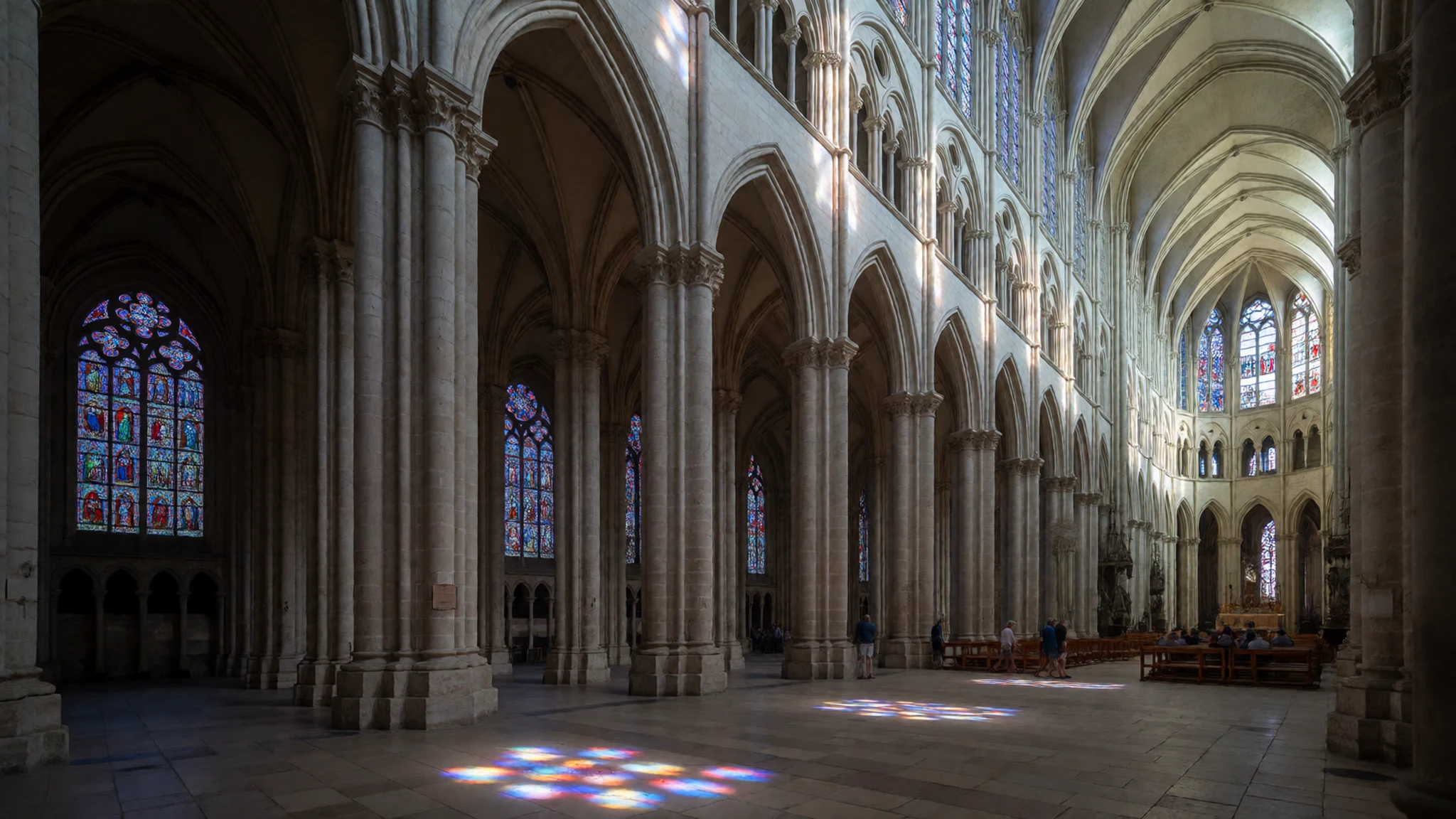
- West façade & sculptural portals — Historic centre, cathedral front
The exterior character is driven by the western façade and its sculpted portal decoration. If the weather is kind, take your time with the details: the stonework gives a strong sense of medieval design intent. This is also where your photos look “cathedral-like” even before you enter.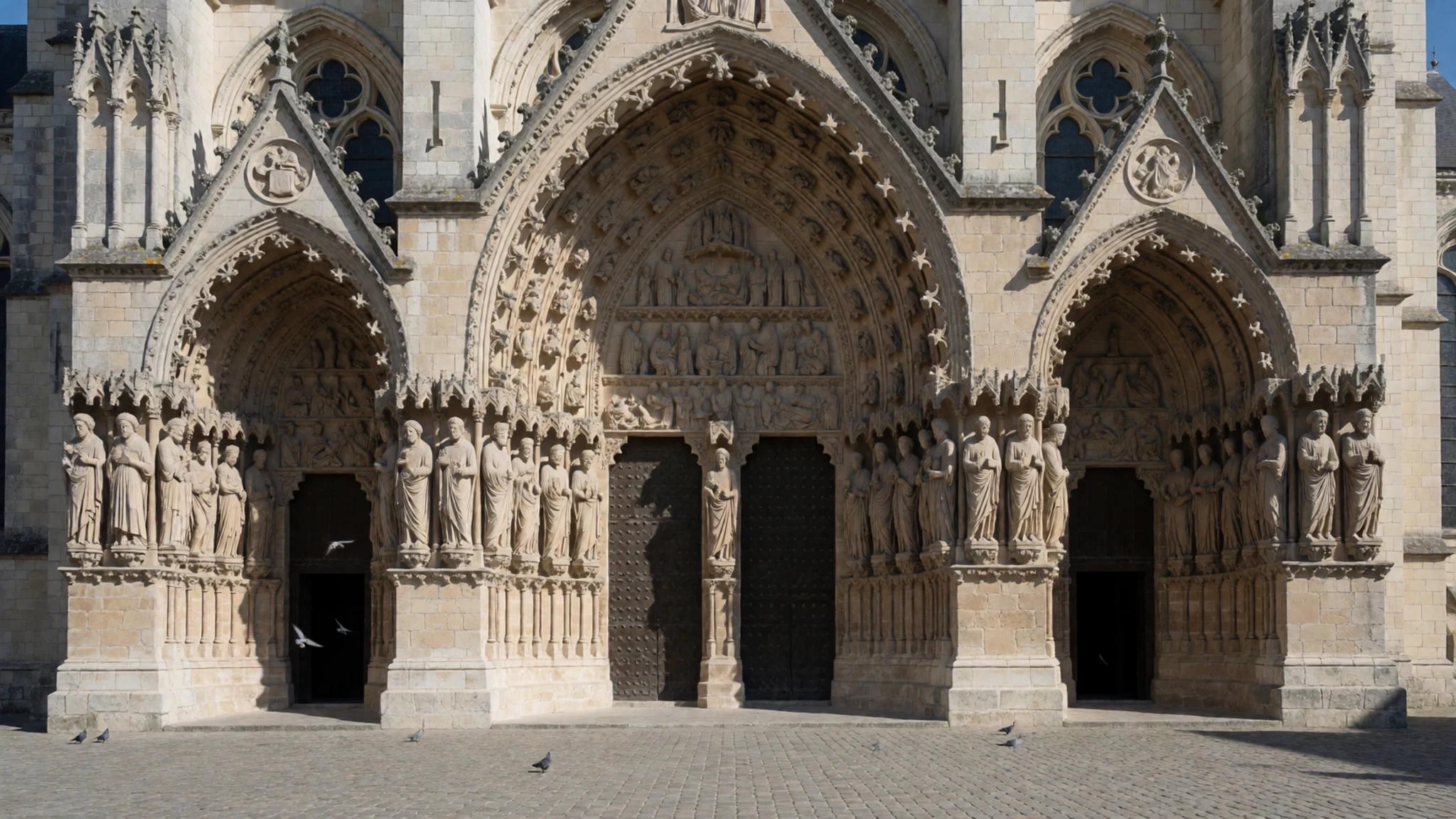
- Viewpoint from the east: towers over the city — Eastern side of the historic core
There are good perspective moments where you can see how the cathedral’s towers sit over Bourges and how the building relates to the surrounding rooflines. Aim for softer light rather than midday glare, and use a longer pause to compare north versus south tower views.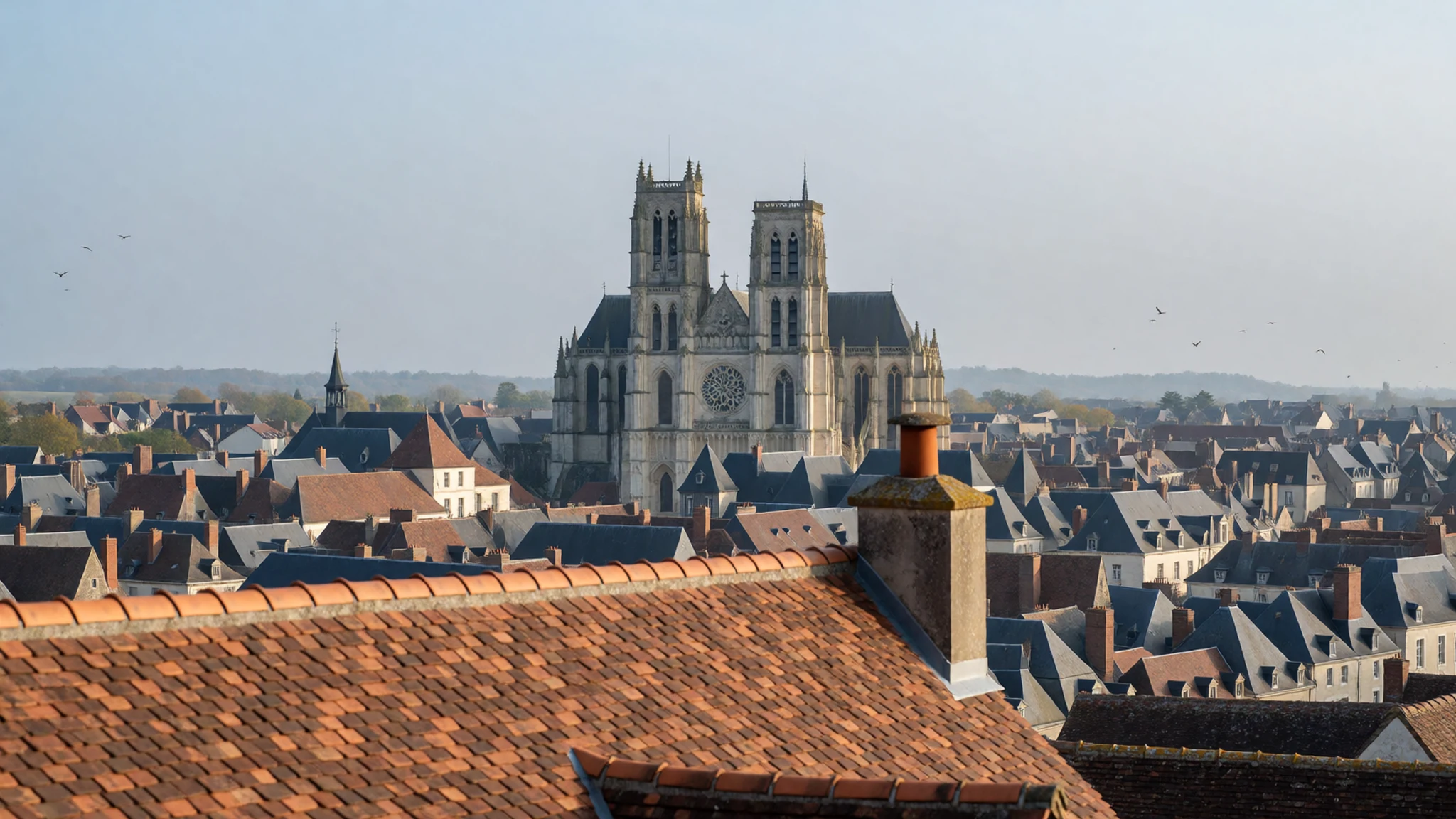
- Marais (north of the historic centre) — Marais area, north of the centre
The Marais is a leafy network of allotment gardens divided by canals. Walking the loop is a calm contrast to the cathedral, with occasional punctures of views back towards the building. Weekend mornings can be lively, and canal-side scenery makes a good “cool-down” after the interior.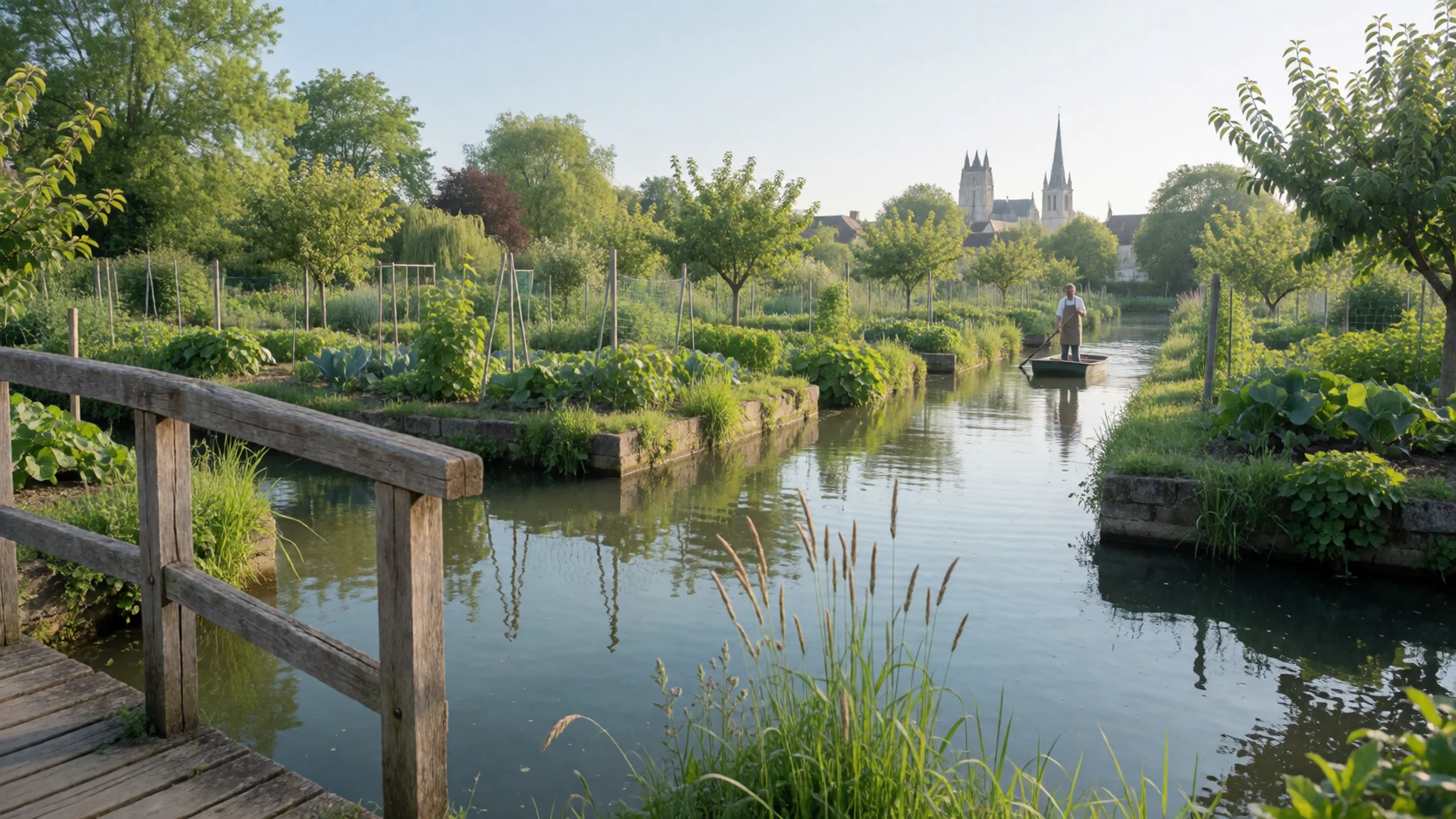
- Palais Jacques Coeur (outside; interior by guided tour) — Historic centre
The Palais Jacques Coeur adds a different medieval mood: flamboyant decoration, turrets and tower-like elements. The interior requires a guided tour, so treat this as a planned add-on rather than a spontaneous stop, especially if you’re visiting on a tight timeline.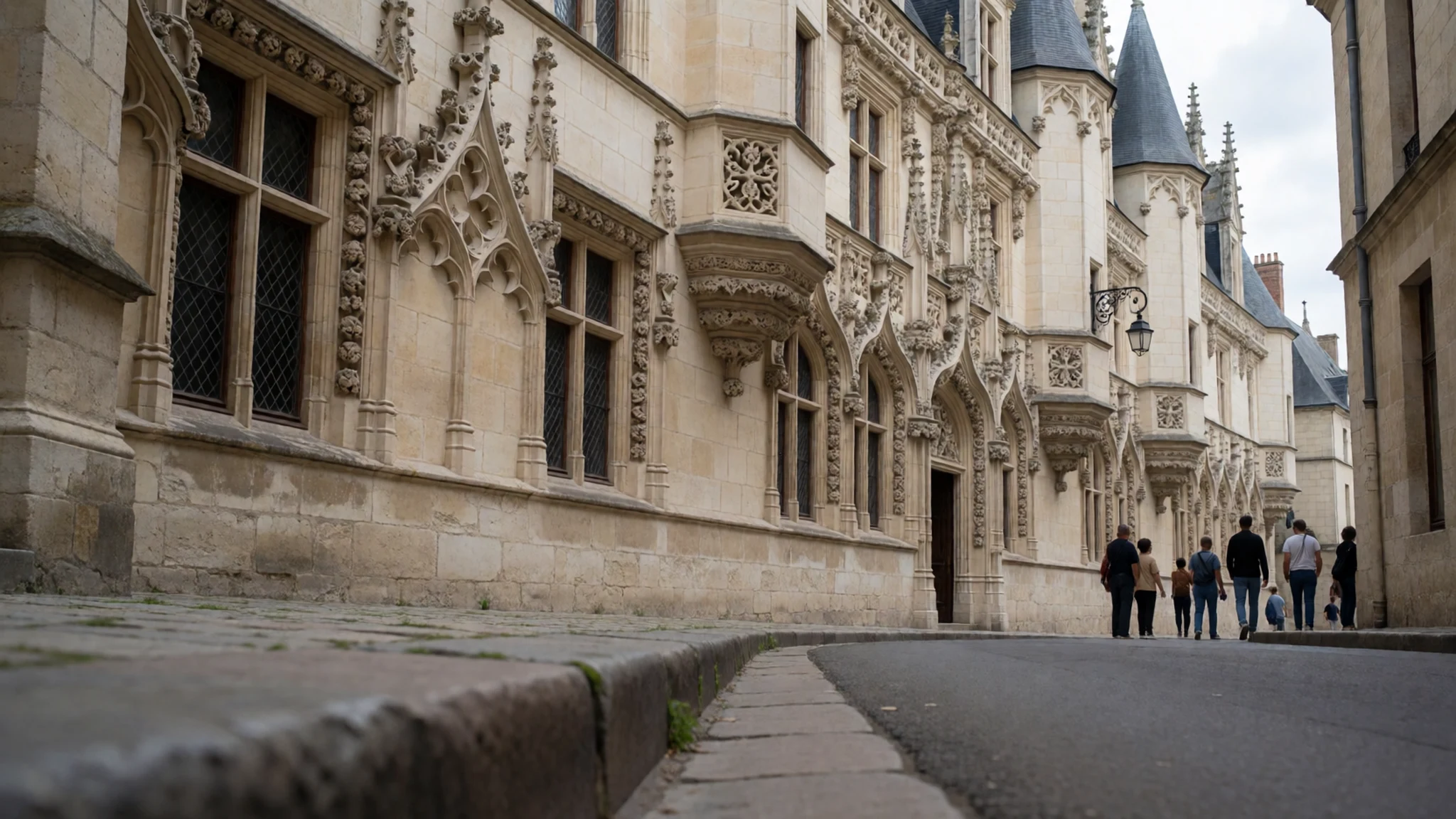
Culture
Bourges Cathedral is a working Catholic cathedral, so visits feel both historical and present-day. A key part of the experience is moving through the space in a respectful, unhurried way: the architecture and stained glass are best understood when you stop, step back, and let the light settle rather than taking a quick “through the doorway” look.
Photography rules vary by area and can change during services, so look for signage near the entrances and follow the guidance of staff. If you’re attending a quieter moment, you’ll likely notice how groups behave: school visits are common on certain days, and the sound level can rise quickly when everyone tightens around the same spot.
Dress-wise, Bourges doesn’t demand anything extreme, but it’s a cathedral: modesty reads well. In cold months, bring a layer; in warm months, avoid overly thin clothing that makes you feel uncomfortable sitting or standing for long stretches. If you’re also exploring the Marais afterwards, remember you’ll be walking on uneven ground near canal edges.
Visitor etiquette: keep voices down, silence your phone, and follow any no-photography signs inside the cathedral.
What to wear
Bourges Cathedral isn’t about a strict dress code, but it does reward practical clothing. For the church interior, aim for modest coverage: shoulders and knees that are comfortable for standing and walking tend to fit the “respectful cathedral” norm. If you’re visiting in cooler months, a warm layer helps because cathedrals can feel chilly even when the streets are mild.
Traditional dress in Bourges is more about regional French fashion cues than something you’ll see in everyday cathedral wear. Visitors might encounter garments typical of French countryside celebrations—think light wool or cotton fabrics, practical shoes, and simple colours—yet the cathedral visit is usually a modern clothing scene.
What people actually wear now is what you’d expect for central France: jeans, trainers, and light jackets for city walking, with a scarf or cardigan for the colder evenings. For tours that involve exterior viewing, a comfortable waterproof jacket and shoes with grip are a good idea. The cathedral area is walkable, but Bourges has cobbled patches around the historic core, and the Marais walk can be muddy after rain.
What to wear: comfortable walking shoes, layers you can adjust, and clothing that covers shoulders and knees for the cathedral interior.
What to eat
- Shawarma near Place Gordaine — Place Gordaine area
For something quick and filling, try shawarma around Place Gordaine. It’s the kind of casual, grab-and-go option that works well before or after cathedral sightseeing. Look for stalls and takeaway setups clustered near the square and market lanes.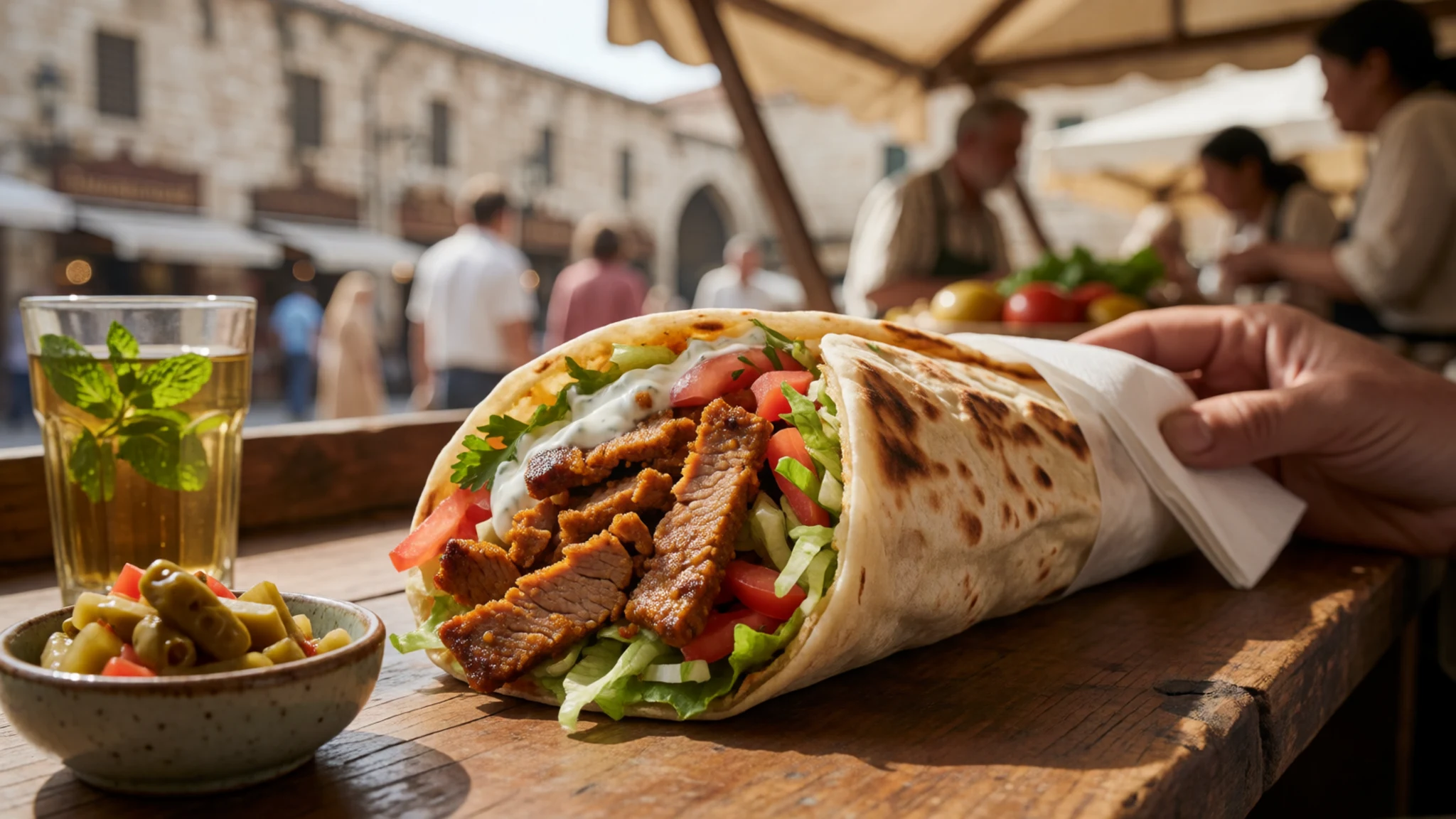
- Couscous around the market area — Place Gordaine and the area by the market
Couscous is also commonly found around the market zone near Place Gordaine, offering a hearty meal that suits cooler days. It’s a straightforward choice when you want flavour and portion size without sitting for ages. Expect local eateries and casual counter service patterns.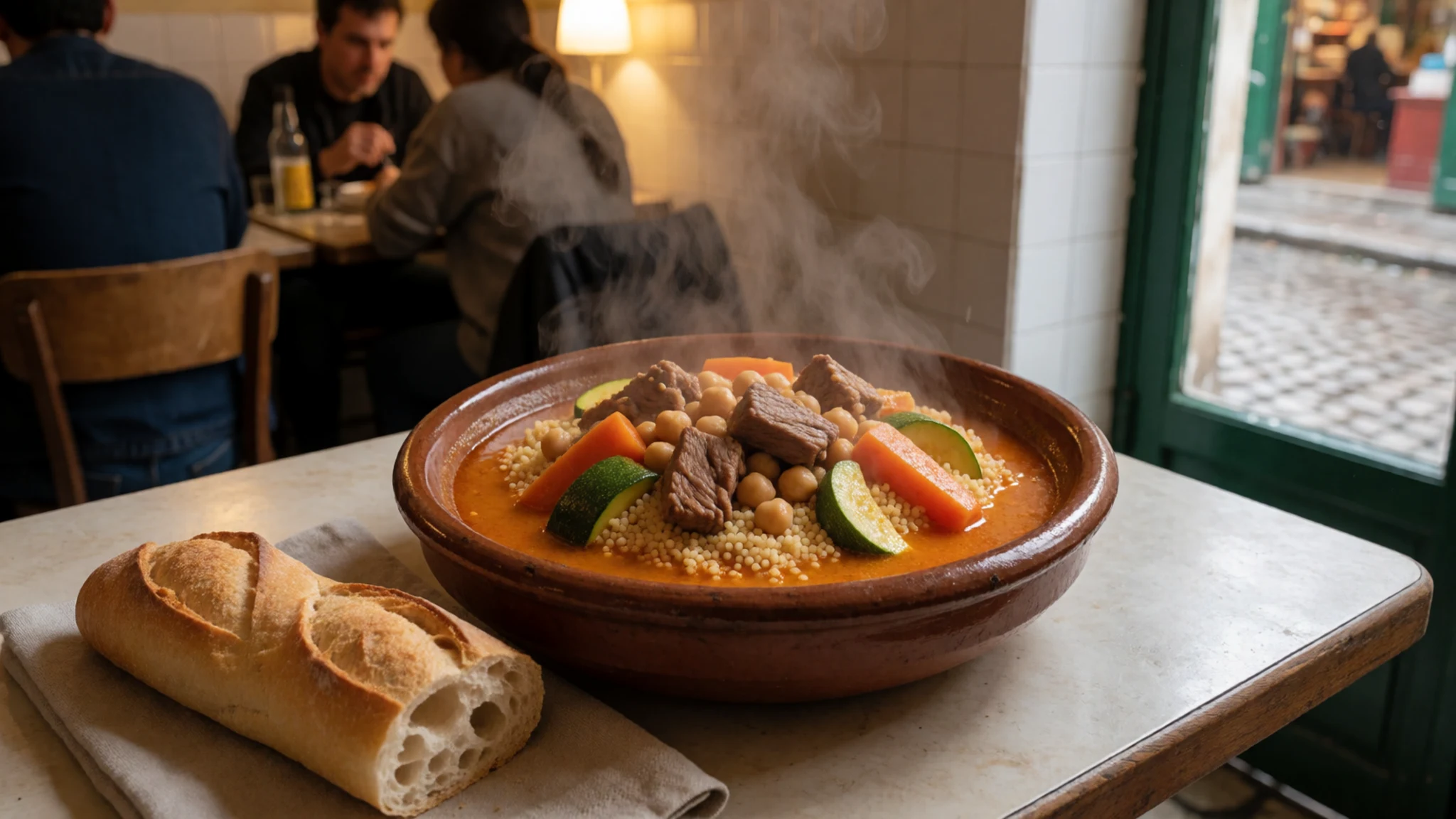
- French restaurants on Rue Bourbonnoux — Rue Bourbonnoux
If you want something more sit-down, French restaurants cluster around Rue Bourbonnoux. This is a good street for a calmer lunch or early dinner after a cathedral visit. Menus vary, but the vibe is more classic brasserie than fast food. - Breton crêpes (fine crêperie nearby) — Rue Bourbonnoux
Bourges has a fine Breton crêperie option in the Rue Bourbonnoux area. It’s an easy way to do dessert without overthinking it—crêpes and galettes fit well for a late afternoon pause. Go when the streets are active and you can browse the choices. - Irish-style pubs in Bourges — Central Bourges (Irish pub-style venues)
Bourges also leans into traditional “Irish” pub culture, with several pub-style venues in town. This is a decent evening plan when you want something familiar and social, especially if other places feel quiet. Order what’s on offer and settle in for a relaxed drink.
Plan it
Best time. May and June are the warmest months (with the highest temperatures), and July–August are also relatively mild; the coolest period is December–February. The wettest months are May (highest rainfall) and the winter months that follow it, while September is notably drier. For a comfortable day out with manageable conditions for walking the cathedral and the Marais, aim for April–June or September, when temperatures are pleasant and rainfall isn’t at its peak; as always, plan some indoor time around the cathedral in wetter spells.
How long. 2–3
Getting there. From Paris Austerlitz, take the train to Bourges in about 1 hour 45 minutes; from the station, it’s a straightforward local connection on foot or by short taxi ride to the cathedral area.
Budget. mid
Tips
- Do the cathedral first thing in the day for calmer light and fewer groups.
- Plan a separate block for the Marais walk so the pace doesn’t feel rushed.
- If you want the Palais Jacques Coeur interior, treat it as a booked activity rather than a walk-in.
- Sunday can mean closures for many places, so arrange meals and museum-style plans for other days.
- Bring a refillable bottle; it makes warm or humid days easier when you’re on foot.
Etiquette
- Keep voices down inside and respect any restrictions on photography.
- Dress modestly for the cathedral and be ready for cooler air even in warmer seasons.
- When walking in the Marais, stay aware of canal edges and allotment paths.
Nearby
Sources
- Wikidata Q207985 (CC0)
- Wikipedia (rev 1368337327) (CC BY-SA 4.0)
- Wikivoyage (rev 5395716) (CC BY-SA 4.0)
- Photo photos/01-bourges-kathedrale-110-2008-gje.jpg (CC BY-SA 4.0)
- Photo photos/02-cath-drale-saint-tienne-7sc2336cfp.jpg (CC BY 3.0)
- Photo photos/03-heures-de-louis-de-laval-bnf-lat920-f265r.jpg (Public domain)
- Photo photos/04-folio-84r-psalm-cxxxvii.jpg (Public domain)
- Photo photos/05-folio-137r-the-presentation-of-the-virgin.jpg (Public domain)
- Photo photos/06-bourges-au-xvie-si-cle.jpg (Public domain)
- Photo photos/07-bourges-cathedral-c1840.jpg (Public domain)
- Photo photos/08-bourges-cath-drale-saint-tienne-ext-rieur-19.jpg (CC BY-SA 1.0)


