Sultan Ahmed Mosque
Sultan Ahmed Mosque, Turkey
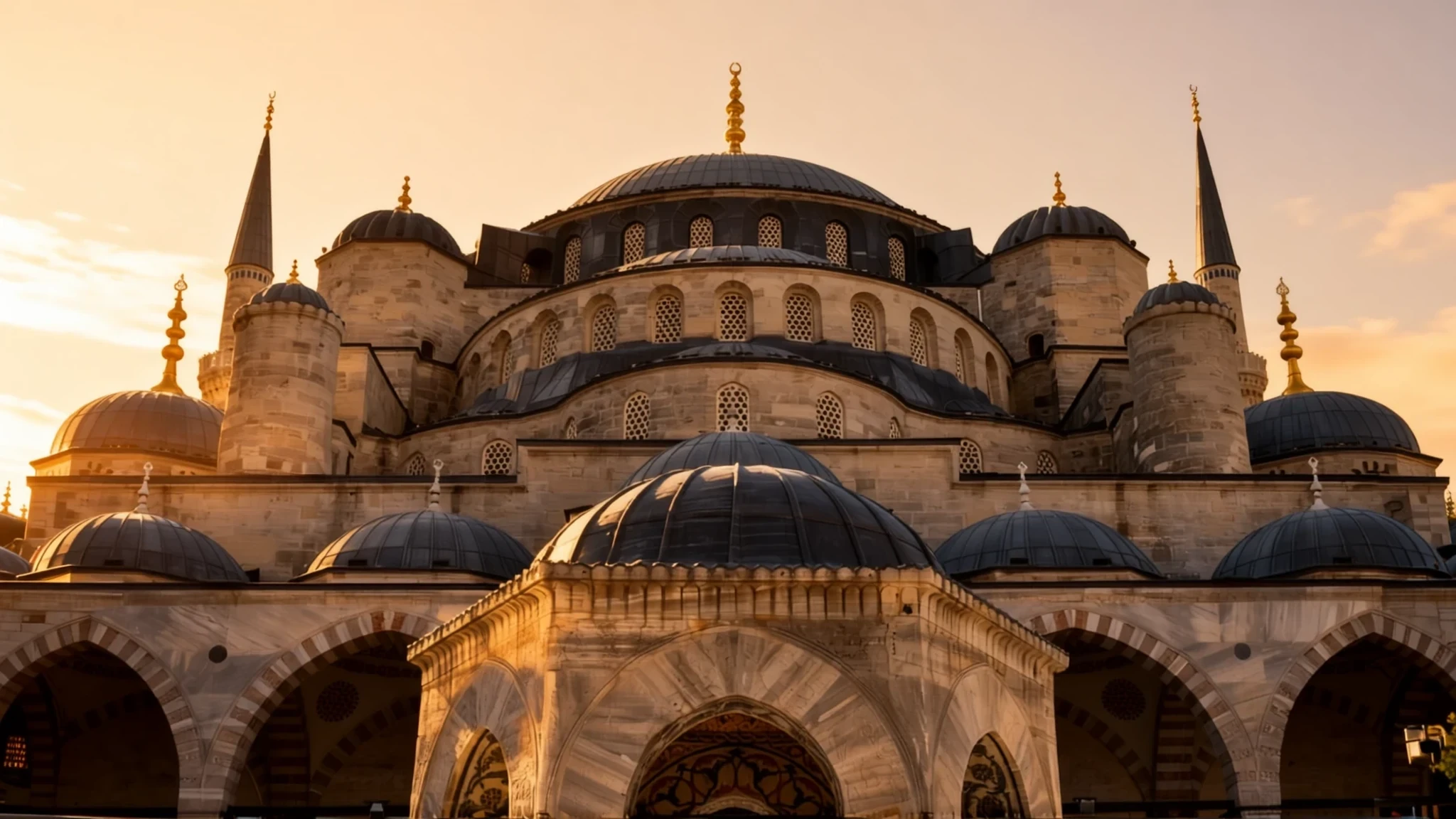
The Blue Mosque, finished in 1617, is worth a slow visit for its tiles, courtyard and light.
The place
The Sultan Ahmed Mosque stands on the south-eastern side of the old Hippodrome in Istanbul's Sultanahmet district, facing the Hagia Sophia across an open square. Its popular name comes from the blue İznik tiles and painted floral motifs that fill the interior, which glow most strongly when morning light comes through the windows. Visitors approach through a large forecourt with a fountain for washing before the entrance, and six minarets rise above the dome line.
The building follows a classical Ottoman plan: a central dome supported by four semi-domes over the prayer hall, with smaller domes and buttresses spreading the weight outward. The imperial complex, or külliye, once included a tomb for Ahmed I, a madrasa and other buildings, and some of these remain in differing states of repair.
The mosque is a working place of worship, so the prayer hall is closed to visitors during prayer times, and the courtyard offers the best view in the quieter hours. The surrounding streets are busy in summer with tour groups, carpet sellers and tram crowds, so a visit early in the day tends to feel calmer. Its position across from the Hagia Sophia means the two can be seen in one walk, a pairing that shapes much of the Old City's skyline.
Its story
Sultan Ahmed I began the mosque after the Peace of Zsitvatorok, a treaty many in the empire saw as a blow to Ottoman prestige. Hoping to win God's favour, he chose a site on the south-eastern side of the old Byzantine Hippodrome, close to the Hagia Sophia, which had already been converted into a mosque and gave the architects a model to study. Ahmed was the first sultan since Selim II, who died in 1574, to build an imperial mosque of his own, because Murad III and Mehmed III had not built one.
The ground was not empty. Several Ottoman viziers' palaces stood there, including those of Sokollu Mehmet Pasha and Güzel Ahmet Pasha, and clearing them required a costly process of expropriation. Religious scholars objected that a sultan should fund an imperial mosque only from the spoils of conquest, and Ahmed had won no major victories. The treasury paid anyway, and construction ran from 1609 to 1617.
Excavations in the early twentieth century uncovered ancient seats from the Hippodrome in the courtyard, a reminder that the mosque occupies the stands and imperial box where Byzantine emperors once watched events. Given its location, its size and its six minarets, it is probable that Ahmed meant to rival or surpass the Hagia Sophia across the square, which still dominates the view from the mosque's courtyard.
What to see
- Sultan Ahmed Mosque — Sultanahmet, the old Hippodrome
The mosque itself is the draw. Its great central dome and six minarets define the skyline, and the blue İznik tiles are best studied by walking slowly around the prayer hall. It remains a working mosque, so modest dress, shoes removed at the entrance, and keeping clear during prayer times are expected.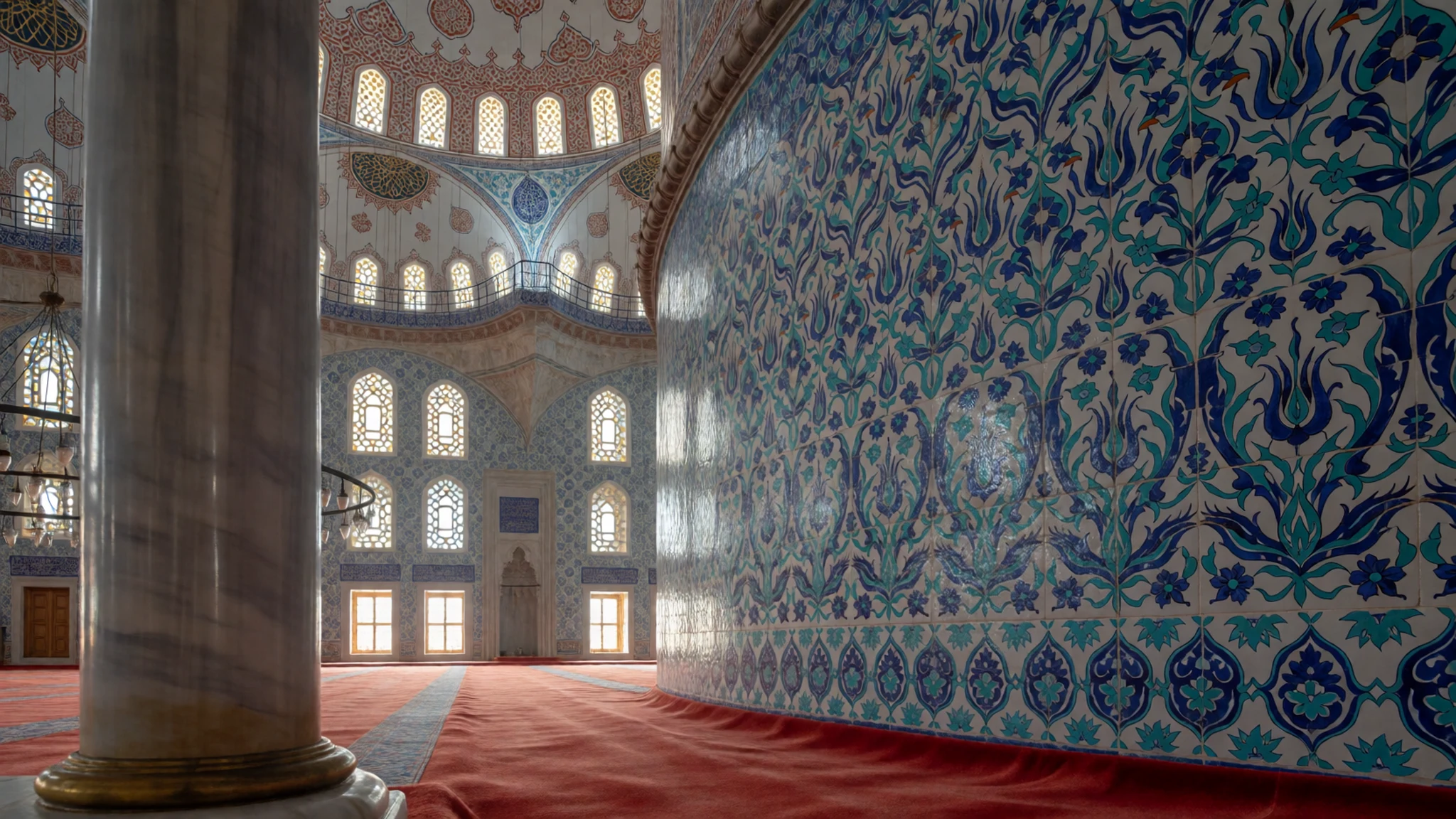
- Hagia Sophia — Sultanahmet Square
Across the square stands the third and grandest of the churches built on this site, completed in 537 AD. Its dome, about 30 m across, covered for more than a thousand years the largest enclosed space in the world, a record only broken in 1520 by Seville cathedral. The building is best seen from the square first, then from inside, to appreciate its scale.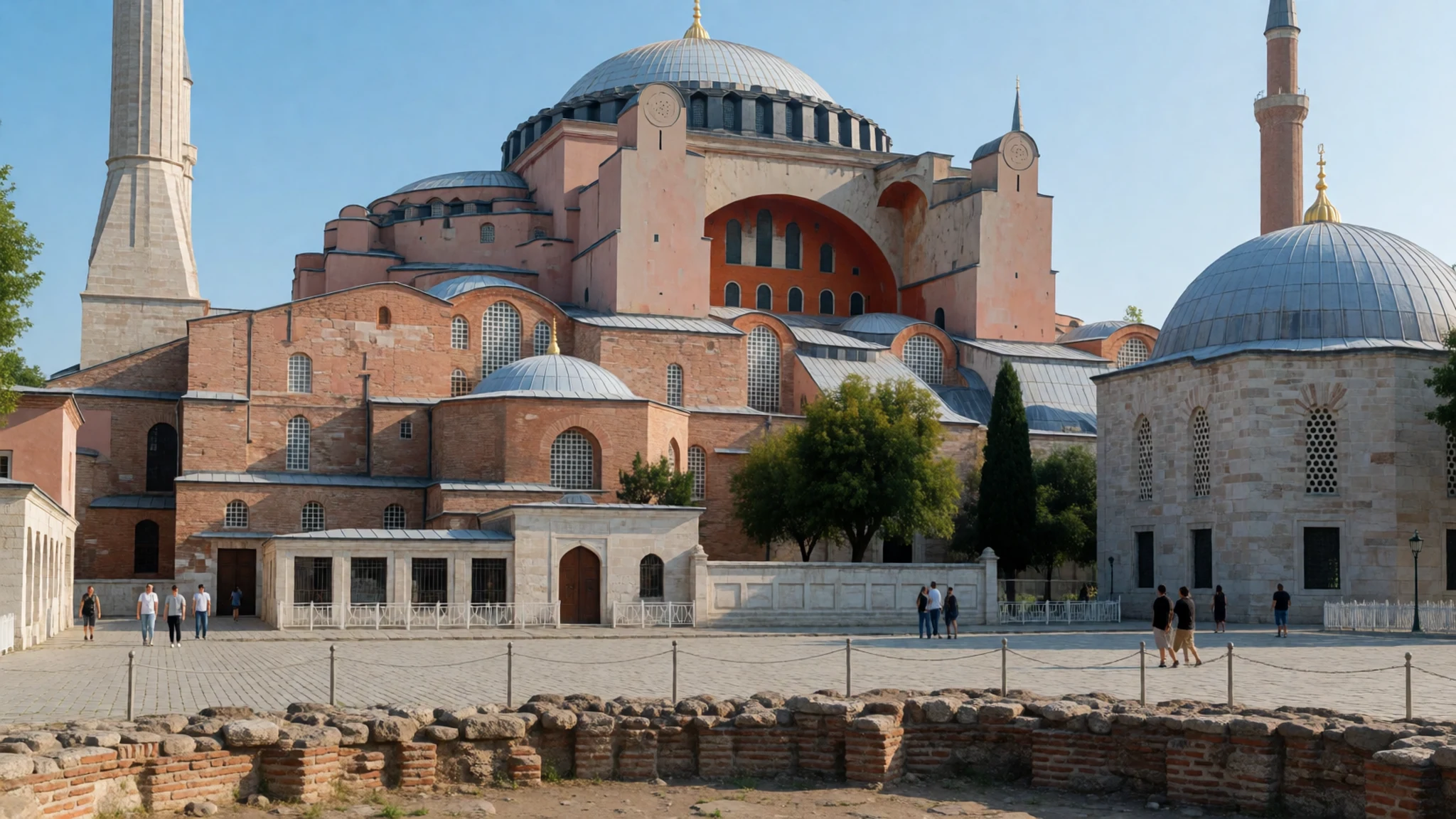
- Topkapı Palace — Sarayburnu, above the Bosphorus
The palace was the imperial enclave of the Ottoman emperors for four centuries, arranged as four courtyards of increasing grandeur. Its walled complex overlooks the Bosphorus and holds treasury rooms, the harem quarters and palace kitchens, with fine craftsmanship on show throughout. Allow at least half a day, and go early because the busiest rooms fill by midday.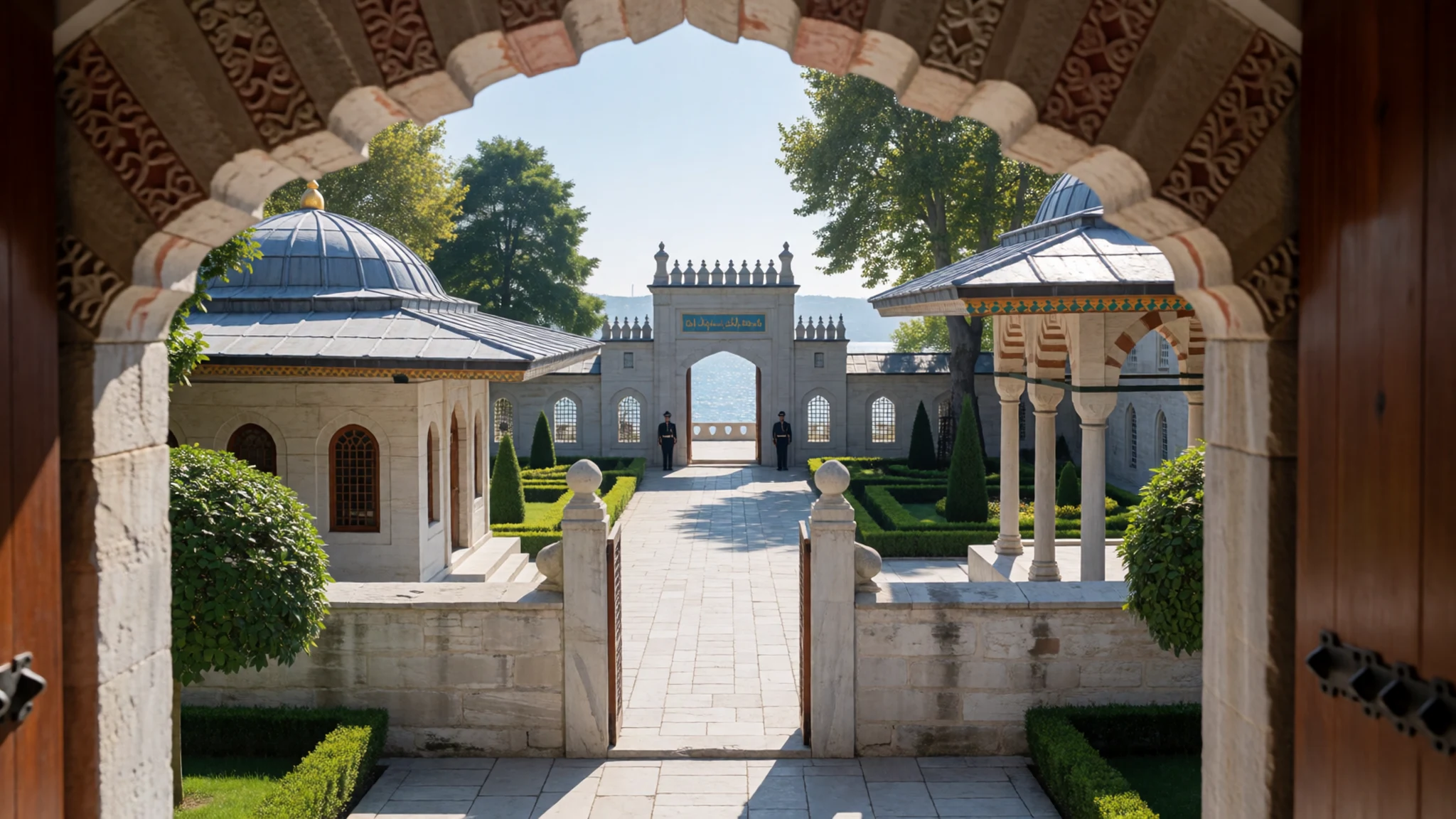
- Turkish and Islamic Arts Museum — Atmeydanı, near the Hippodrome
Housed in the Palace of Pargalı İbrahim Pasha, built between 1495 and 1536, the museum holds carpets, rugs, calligraphy, pottery and manuscripts, including Qur'ans. The building is worth seeing in its own right, and the carpet rooms help explain the floral designs and tile work of the mosque across the way.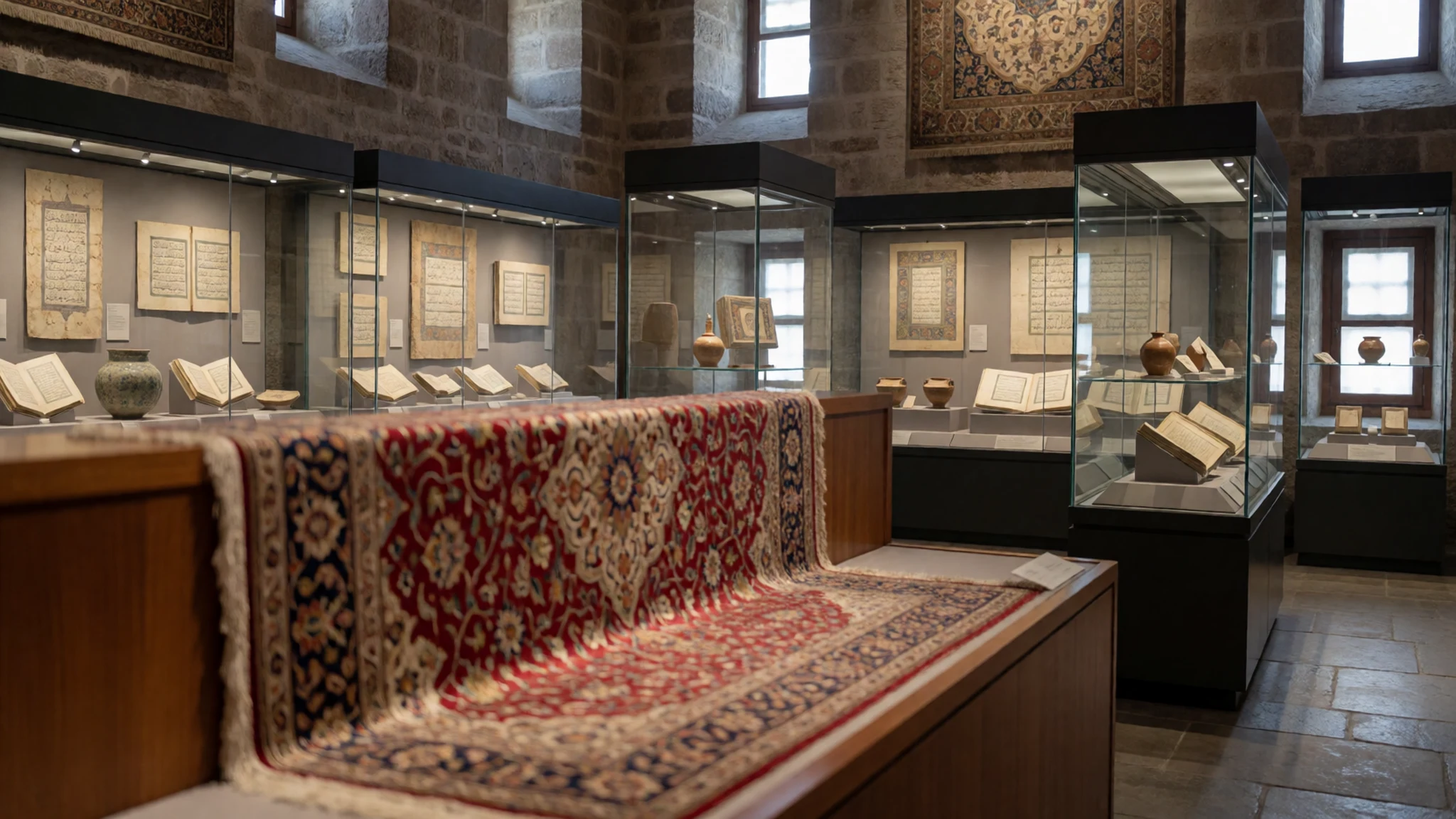
- Basilica Cistern — Sultanahmet, a short walk from the mosque
A vast underground cistern built by Justinian in 532 to store the city's water, one of hundreds constructed and the largest and best-known of them. Columns rise from still water in a dim, cool hall, which makes it a welcome stop on a hot afternoon. Expect queues in summer, and wear shoes with grip, as the walkways can be damp.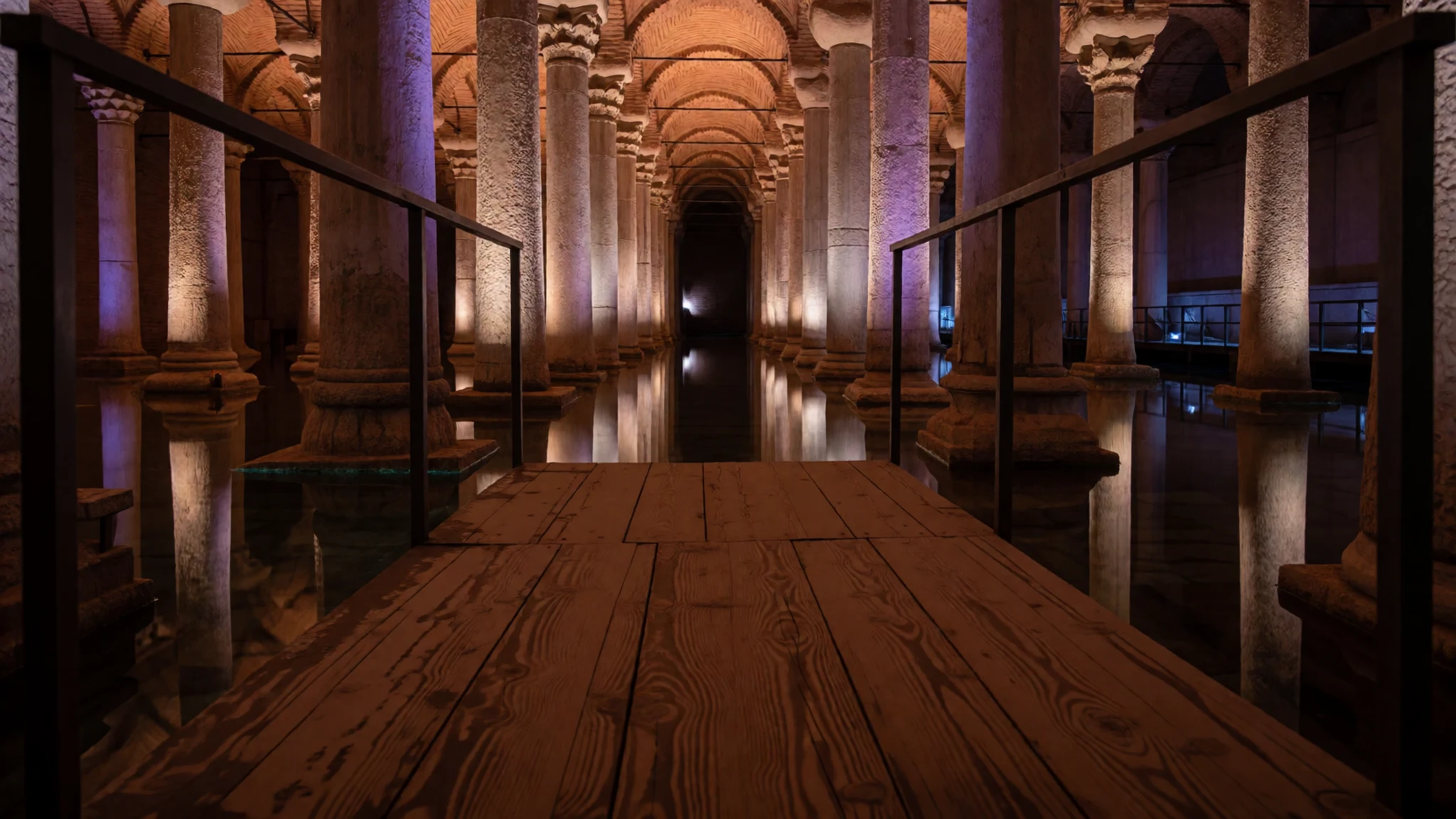
Culture
The Sultan Ahmed Mosque is a working place of worship, and visitors share its courtyard and prayer hall with people who come to pray several times a day. Prayer times draw worshippers at set hours, and the building is closed to visitors while they take place, so a visit is best planned around them. Women are expected to cover their hair inside, and both men and women should keep shoulders and knees covered; a light scarf carried in a bag solves most problems. Shoes come off before the carpeted prayer hall, and the racks near the entrance are where they belong. Photography is generally accepted from the courtyard, but avoid photographing people at prayer and do not use flash inside. Keep voices low and step carefully around people sitting or kneeling on the carpet. Remove your shoes at the threshold, carry them in a bag if the rack is full, and never walk onto the carpet wearing them.
What to wear
The Ottoman court dressed in long layered robes called kaftans, usually cut from silk, velvet and brocade, with fabrics often embroidered in gold thread. These textiles echo the blue and floral patterns on the mosque's tiles. Hand-knotted carpets and kilims are still sold across the Old City, and many visitors take home a small woven piece rather than a full garment. Today most people in Istanbul wear ordinary European-style clothing, from tailored coats in winter to light cotton in summer. Headscarves are a common sight among many women, especially in more conservative neighbourhoods, and religious dress is a personal choice rather than a uniform. For a visit, modest clothing that covers shoulders and knees is the sensible choice, whatever the heat. Women should carry a scarf to cover their hair inside the mosque, and a light layer helps in air-conditioned museums and the cool stone of the cistern. Shoes must come off at the mosque door, so comfortable, easily removed pairs with good grip suit the uneven cobbles best.
What to eat
- Pide — a neighbourhood pide house in the streets around the mosque
Pide is a boat-shaped flatbread topped with minced lamb, cheese, egg or vegetables and baked hot in a wood-fired oven. Neighbourhood pide houses are cheap, quick and busy, and a table of local diners is a good sign of value.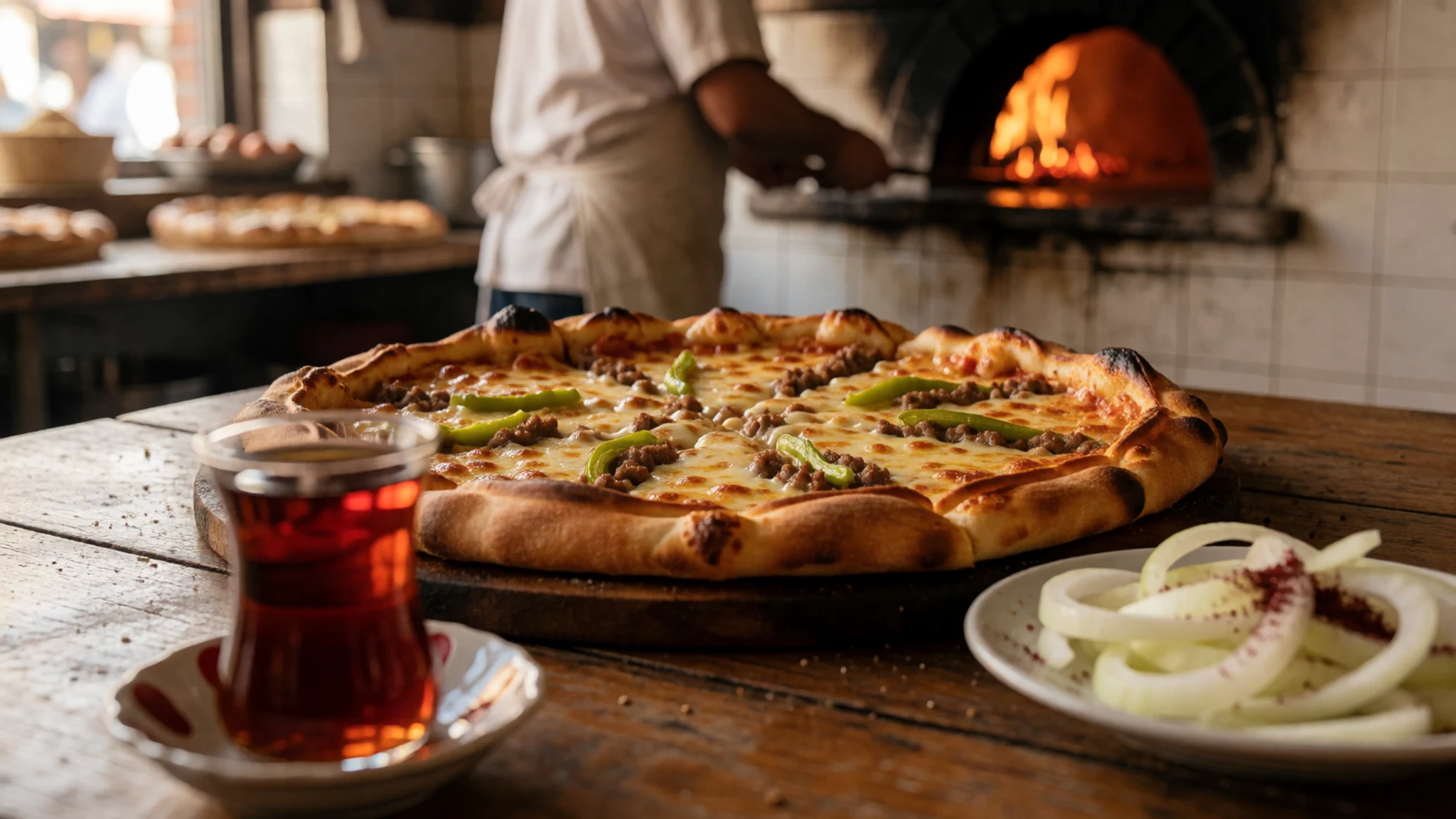
- Çiğ köfte — small takeaway shops in the side streets near the tram line
A spicy, hand-kneaded mixture of bulgur and chilli, usually wrapped in lettuce with herbs and a squeeze of pomegranate molasses. A vegan version is common, and the wrap is eaten standing or on the move.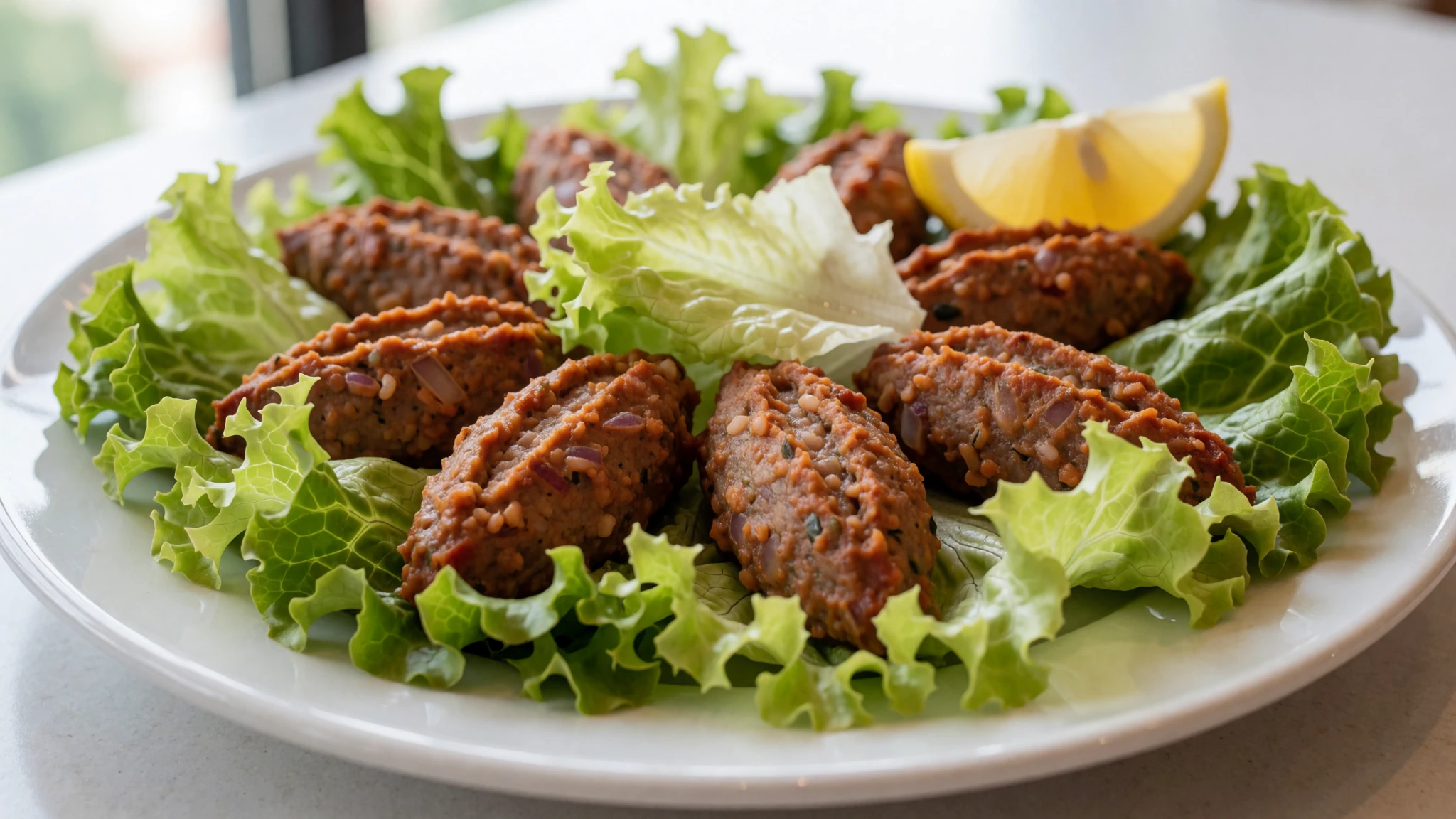
- Ev yemekleri — a lokanta, a counter-service canteen away from the square
Ev yemekleri means home-style cooking: stews, rice dishes and vegetable plates kept warm in steel trays behind the counter. Point at what looks good, and the plate arrives hot at the table. - Turkish breakfast — a breakfast café in a quiet side street or on a roof terrace
Kahvaltı is a spread of white cheese, olives, tomatoes, cucumber, jam, eggs and bread, served with tea. Breakfast cafés in quieter streets away from the square serve it at a leisurely pace, and some have roof terraces with views of the mosque and sea. - Simit and tea — street carts near tram stops and ferry piers
Simit is a sesame-crusted bread ring sold hot from carts and bakeries, often eaten with tea served in small tulip-shaped glasses. Carts near tram stops and ferry piers sell both cheaply, making a quick breakfast for walking.
Plan it
Best time. April–May suit a visit best: spring is mild and green, with highs of 25 to 30 C and less rain than in winter. Summer is hot and crowded, and winter is grey and cold but quieter.
How long. 1–2
Getting there. Fly into Istanbul Airport or Sabiha Gökçen (SAW), then ride the metro and Marmaray to Yenikapı or Sirkeci; from Sirkeci, trams serve the Sultanahmet area, and the mosque is a short walk from the stop.
Budget. mid
Tips
- Check the official site for current visiting arrangements, as the mosque closes to visitors during prayer times
- Arrive in the first hour of the day for quieter courtyards and softer light
- Pair the mosque with the Hagia Sophia in one morning and give Topkapı Palace its own half day
- Carry cash for small eateries and a card for transport; load an Istanbulkart for trams and trains
- Carry water in summer and keep to shaded routes between sights
Etiquette
- Remove shoes at the entrance and carry them if the rack is full
- Keep shoulders and knees covered, and bring a scarf for women
- Avoid visiting during prayer times and keep voices low inside
Nearby
Sources
- Wikidata Q80541 (CC0)
- Wikipedia: Blue Mosque, Istanbul (rev 1373546739) (CC BY-SA 4.0)
- Wikivoyage: Istanbul/Historical Peninsula (rev 5405527) (CC BY-SA 4.0)
- Photo: View of Blue Mosque in Istanbul, Moonik (CC BY 3.0)
- Photo: Blue Mosque, Istanbul, Pedro Szekely (CC BY-SA 2.0)
- Photo: Portrait of Sultan Ahmed I (CC0 1.0)
- Photo: Interieur de la Mosquée Ahmed, Sébah & Joaillier (DPLA) (Public domain)
- Photo: Mosquée bleue, Julien Maury (Public domain)
- Photo: The blue mosque (inside), Christian Perez (CC BY 3.0)
- Photo: The blue mosque, Christian Perez (CC BY 3.0)
- Photo: A lateral halfdome of the Sultan Ahmed Mosque, H005 (CC BY 3.0)


