Big Sur
Big Sur, United States
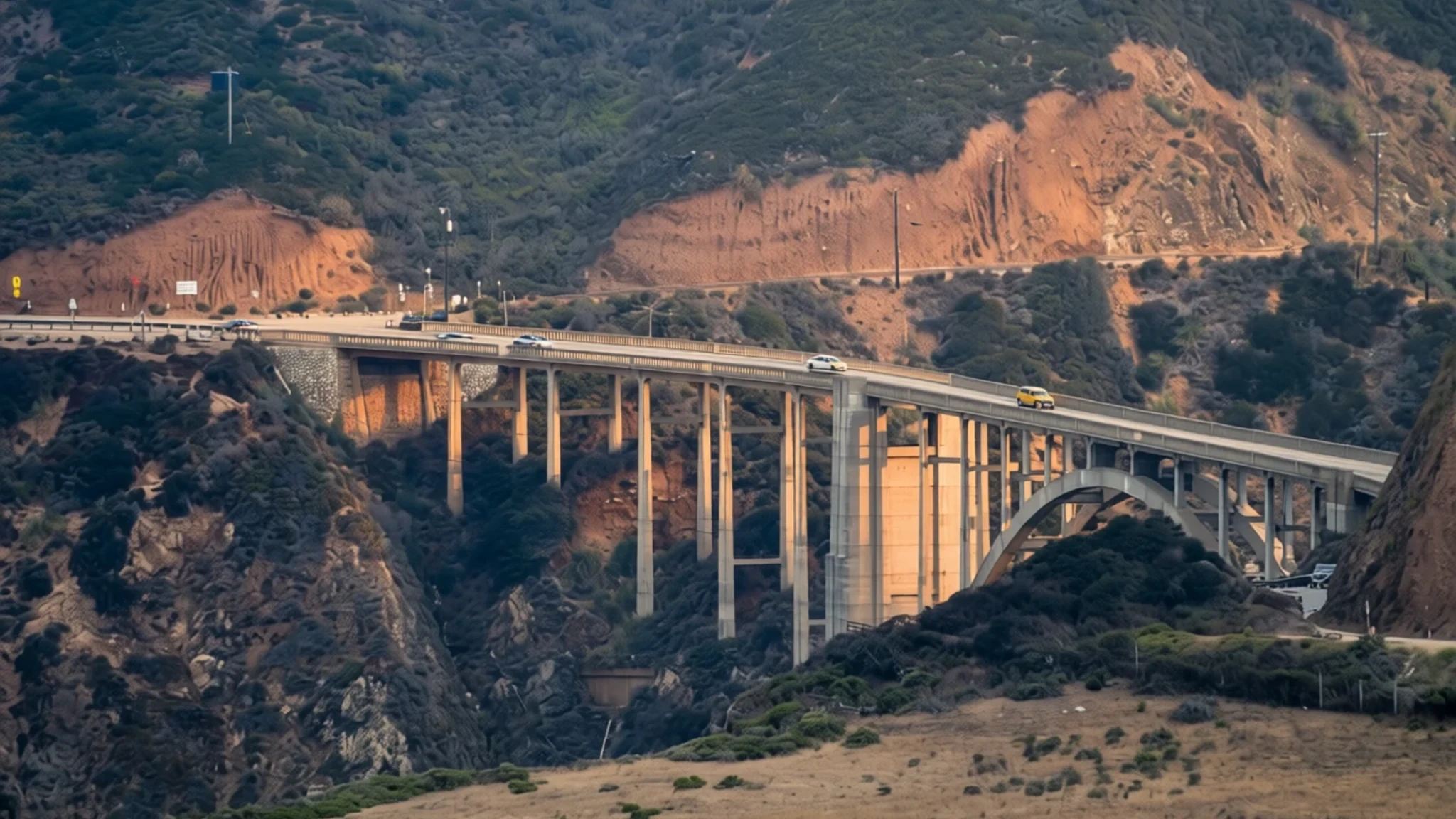
Big Sur offers a raw, mountainous coastline where ancient redwood forests meet the crashing Pacific Ocean with remarkably little human development.
The place
Big Sur occupies a dramatic and rugged stretch of the Central Coast in California, set where the steep Santa Lucia Mountains plunge straight down into the Pacific Ocean. Often celebrated as one of the most sublime and isolated coastal landscapes anywhere in the world, the region is defined by winding tarmac, high cliffs, and deep river canyons filled with towering trees. Unlike many heavily developed tourist hubs, Big Sur remains deliberately sparse, featuring a scatter of small roadside communities, scattered cabins, and limited parking spots rather than sprawling resort towns. Millions of travellers arrive every year to experience the quiet majesty of its shores, yet the infrastructure stays intentionally minimal to protect the wild terrain from overbuilding. Driving along the edge of the continent here reveals changing microclimates, where sea fog often rolls in quickly over the headlands before burning off to reveal vast blue horizons. Every turn along the highway brings new vistas of rocky coves, offshore sea stacks, and dark groves of evergreens clinging to steep hillsides.
Its story
Long before European vessels charted these waters, the Esselen people sustained a nomadic hunter-gatherer life across the rugged mountains and coastal canyons. They utilized fire management techniques to encourage useful vegetation and hollowed out mortar holes in large boulders to grind acorns into staple meal, traces of which remain visible across the landscape. Spanish mariners first sighted the steep range from offshore during early maritime expeditions, though the sheer drop of the mountains made initial colonisation nearly impossible for generations. Land expeditions eventually broke through the southern canyons, paving the way for ranches, logging operations, and coastal trails. In the twentieth century, the region's dramatic isolation attracted writers, painters, and poets seeking solitude away from urban centres. Figures such as Robinson Jeffers and Henry Miller settled among the canyons, immortalising the untamed spirit of the cliffs in literature and drawing successive waves of curious travellers to the edge of the continent.
What to see
- Garrapata State Park
Encompassing nearly three thousand acres, this park preserves miles of rugged beachfront, coastal footpaths, and steep climbs leading directly from the ocean surf up into dense inland redwood groves.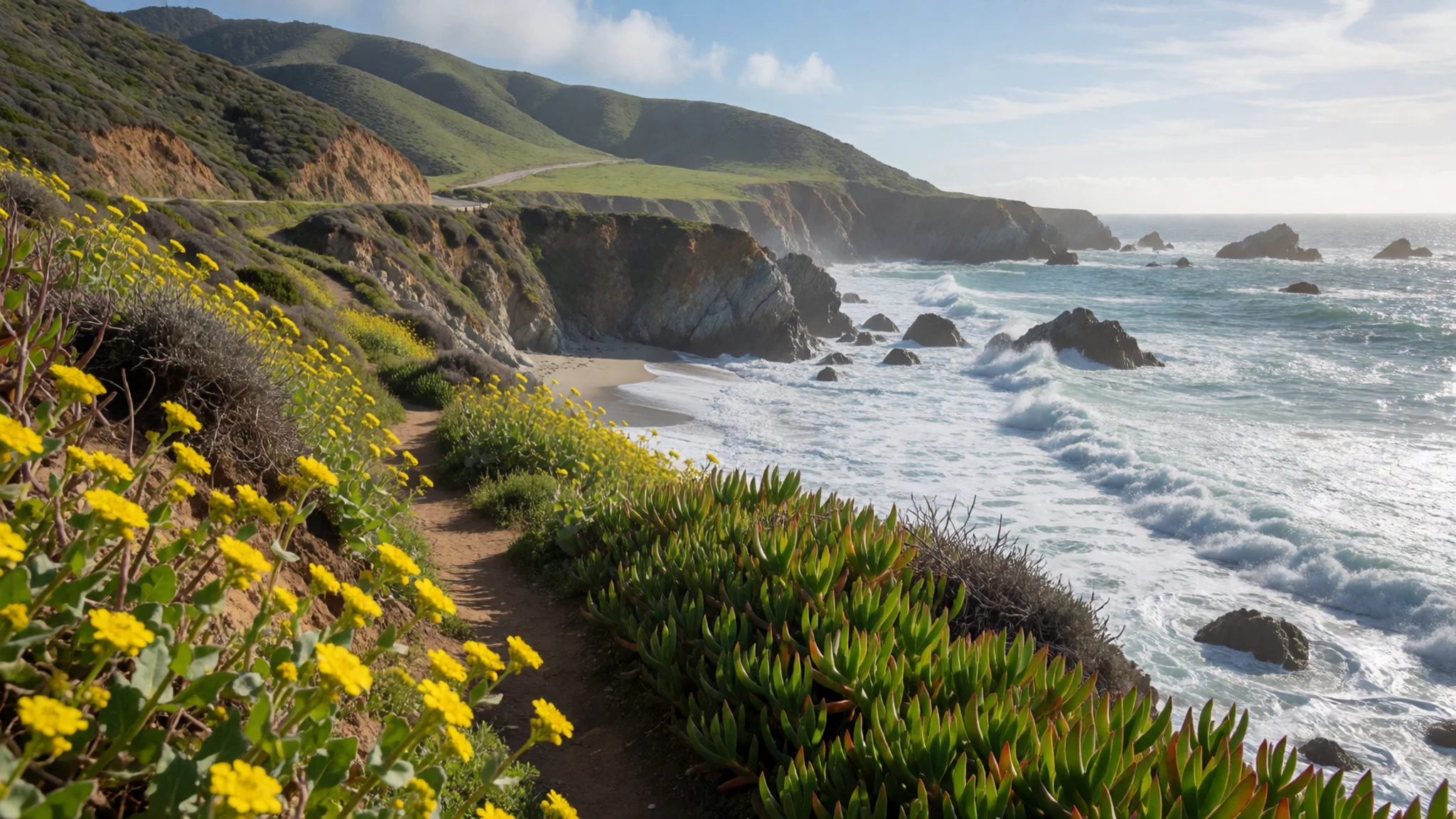
- Bixby Bridge
Completed in the early nineteen-thirties, this soaring concrete arch structure spans a deep ocean canyon and stands as one of the most widely photographed engineering landmarks along the entire Pacific seaboard.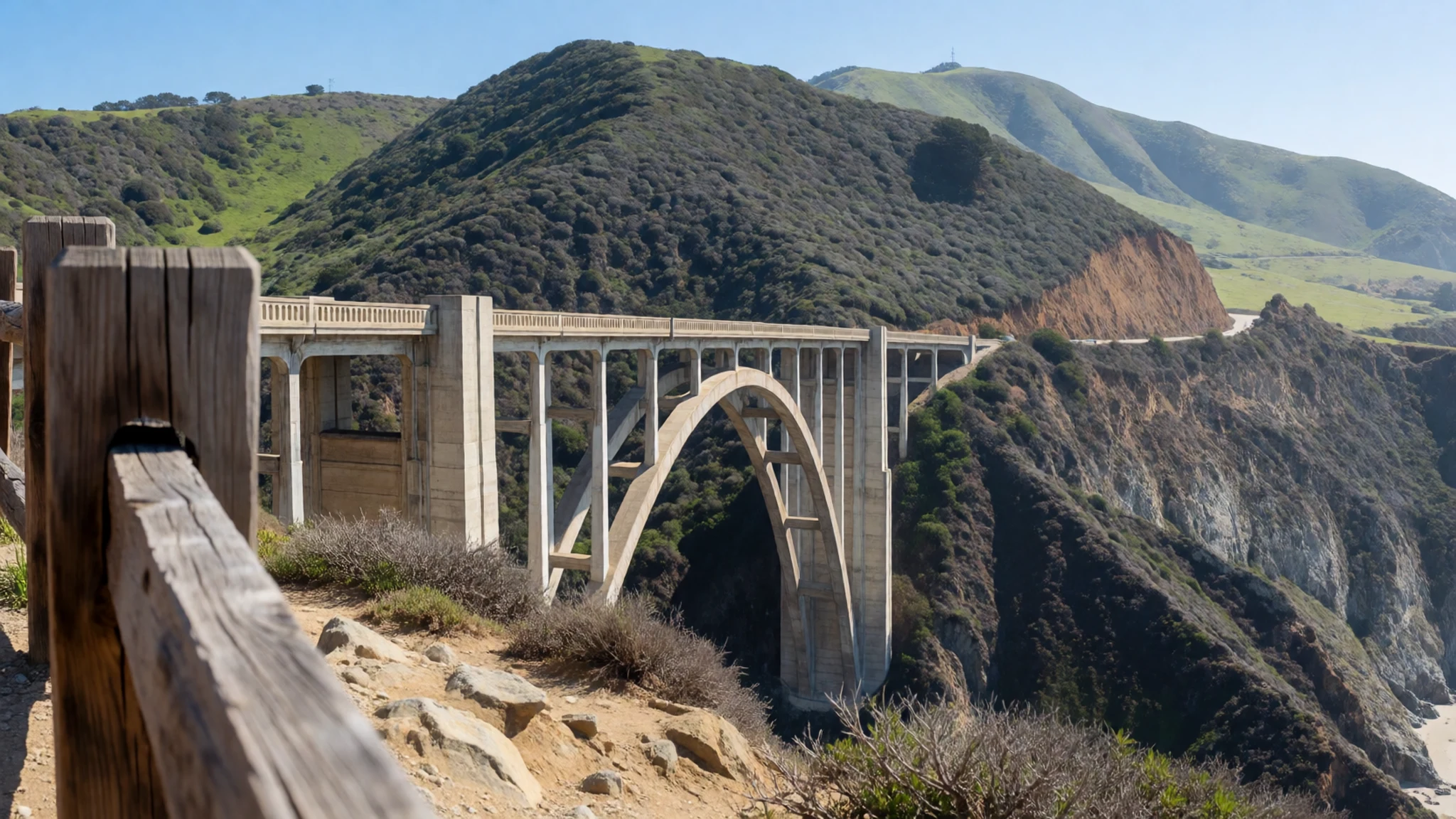
- Point Sur Lighthouse
Perched atop a massive volcanic rock rising straight out of the surf, this historic turn-of-the-century light station remains an operational beacon and a prominent navigational landmark along the highway corridor.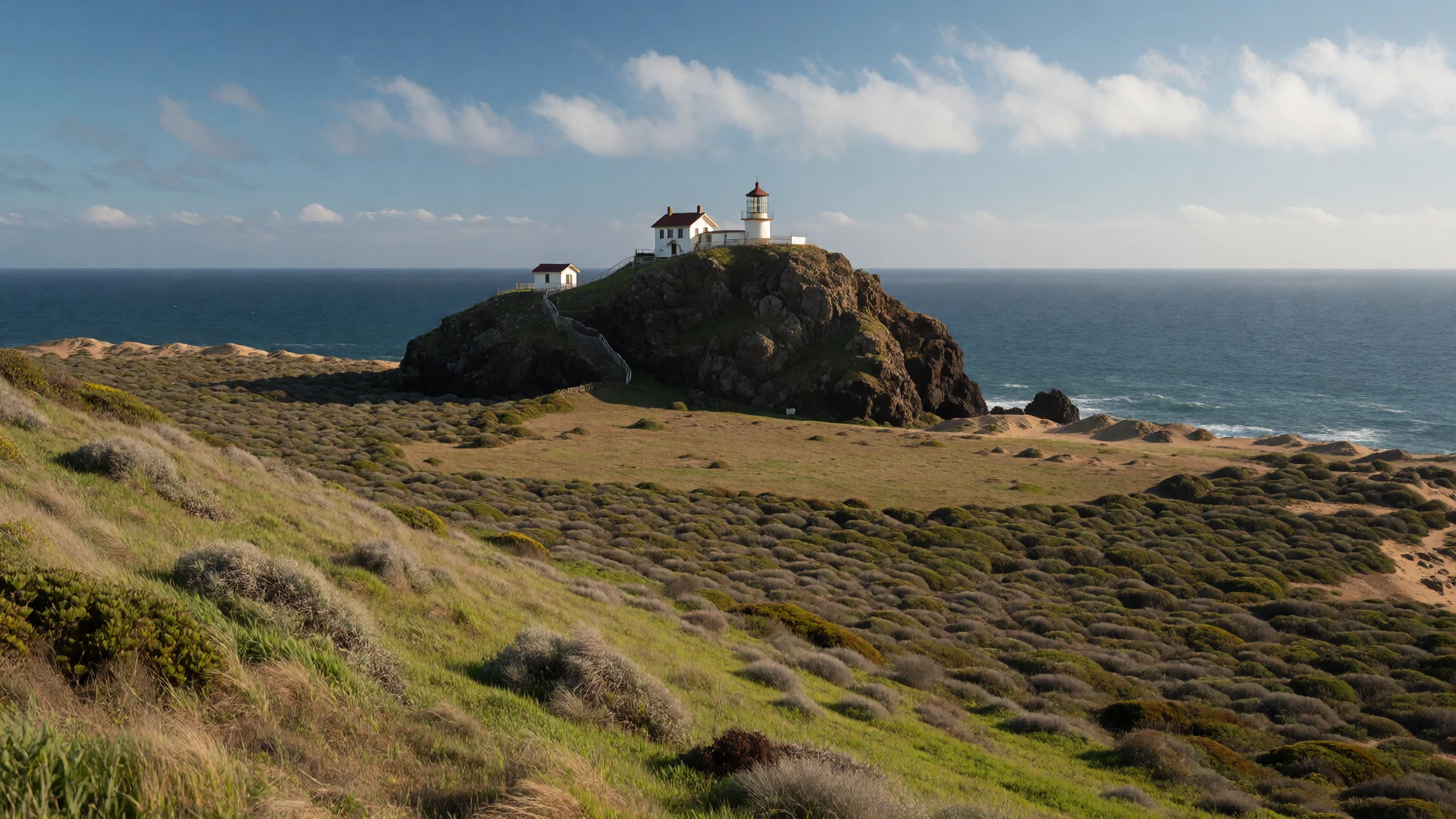
- Pfeiffer Big Sur State Park
A lush river valley park offering shaded walking paths beneath towering trees, including short excursions leading past cascading water features and fern-lined canyon walls.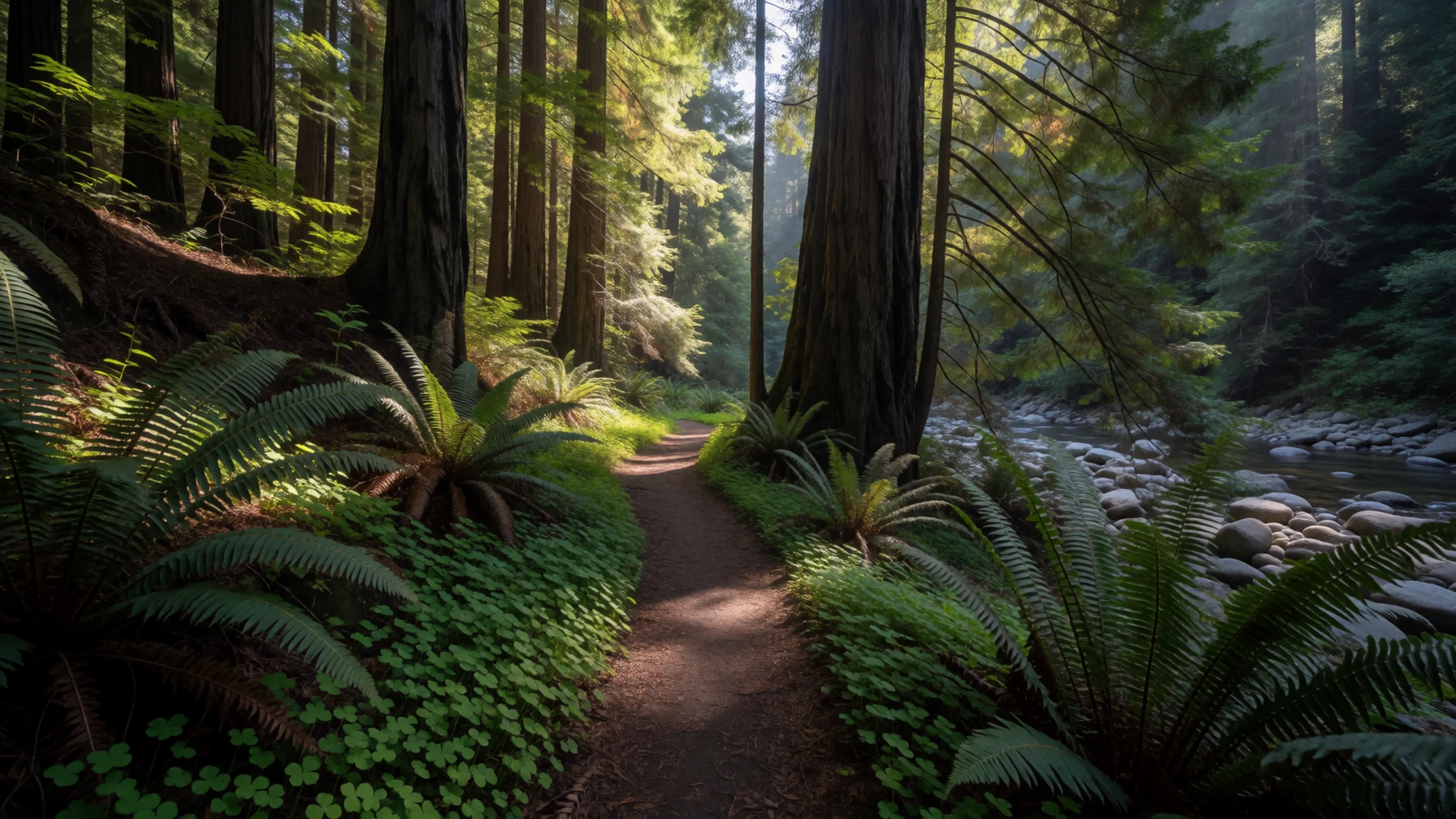
- Julia Pfeiffer Burns State Park
Famous for protecting dramatic coastal cliffs, deep green coves, and a striking tide-washed waterfall that plunges directly from granite rocks onto the sandy beach below.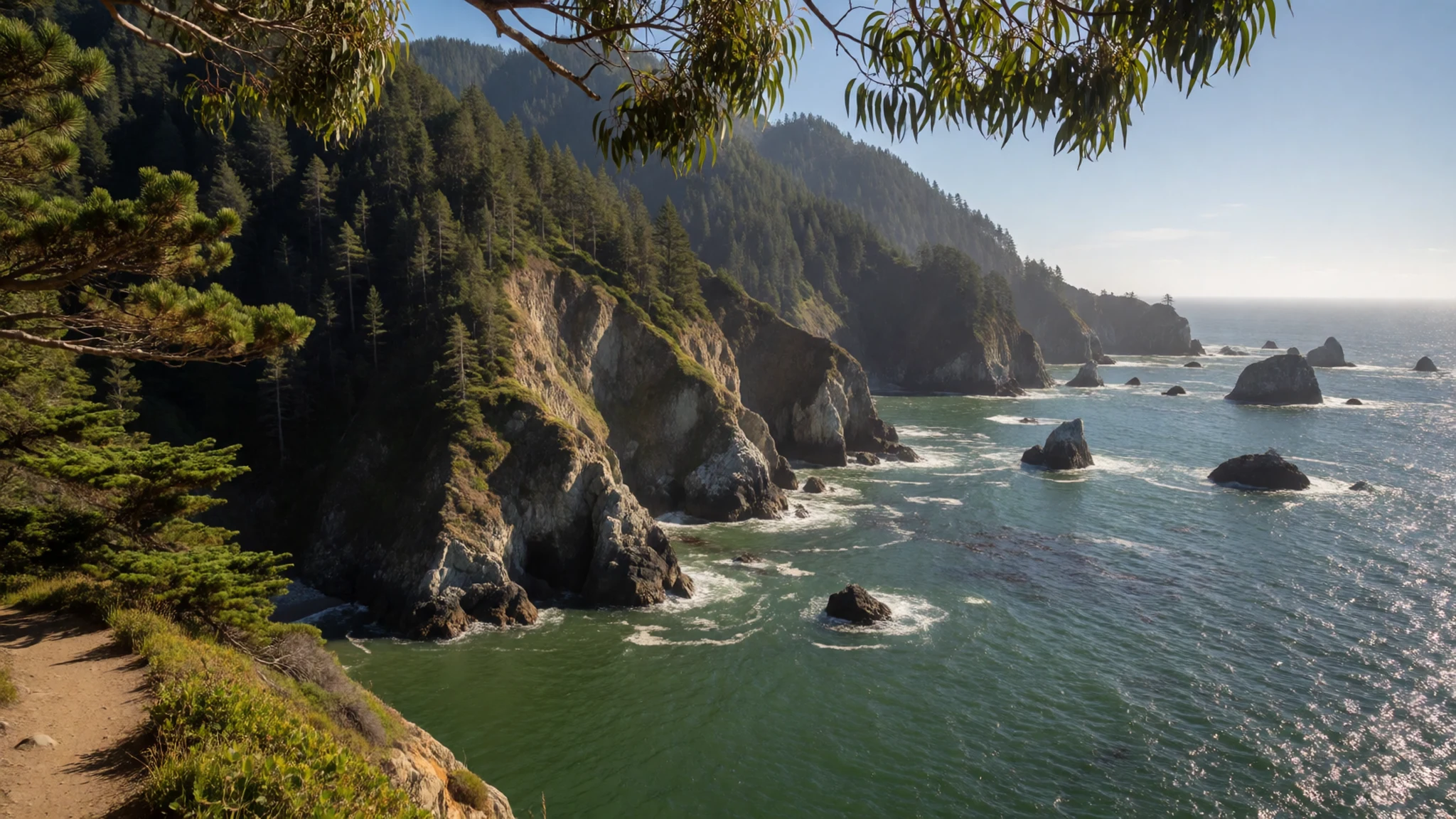
Culture
The cultural identity of Big Sur has long been forged by its geographic isolation and rugged topography, which discouraged mass industrialisation and instead fostered an independent community of artists, writers, and conservationists. From early twentieth-century poets finding inspiration in the roaring surf to mid-century novelists seeking sanctuary in quiet canyon cabins, the region developed a mythos centred around creative solitude and deep respect for the natural environment. Locals and long-term residents fiercely guard the wild character of the coast, working to limit commercial sprawl and preserve dark night skies free from heavy light pollution. Visitors will find a quiet, informal atmosphere where local galleries, small bookshops, and rustic roadside eateries reflect a slower pace of life attuned to the rhythms of the Pacific weather. Always pack out every piece of your rubbish and respect fragile coastal flora by staying strictly on marked paths.
What to wear
Given the dramatic shifts in coastal weather, dressing for Big Sur requires practical layering rather than formal attire. Traditional local wear leans entirely toward rugged outdoor utility—sturdy denim, durable cotton canvas jackets, and flannel shirts suited to handling cool ocean winds and damp forest trails. Footwear is paramount, with most visitors and residents opting for broken-in hiking boots or sensible trainers capable of handling uneven terrain, sandy paths, and muddy slopes. Waterproof windbreakers or fleece layers are essential year-round, as temperatures can drop precipitously the moment coastal fog rolls in or when moving from a sunlit cliffside down into shaded redwood canyons. Swimwear and light cottons work well during warm afternoon spells, but visitors should always keep warm jumpers and trousers close at hand for chilly evenings by the Pacific.
What to eat
- Nepenthe Restaurant Burgers — A cliffside terrace overlooking the Pacific Ocean along the coastal highway corridor
Hearty grilled burgers served on rustic buns at a legendary cliffside terrace perched high above forty miles of rugged ocean coastline.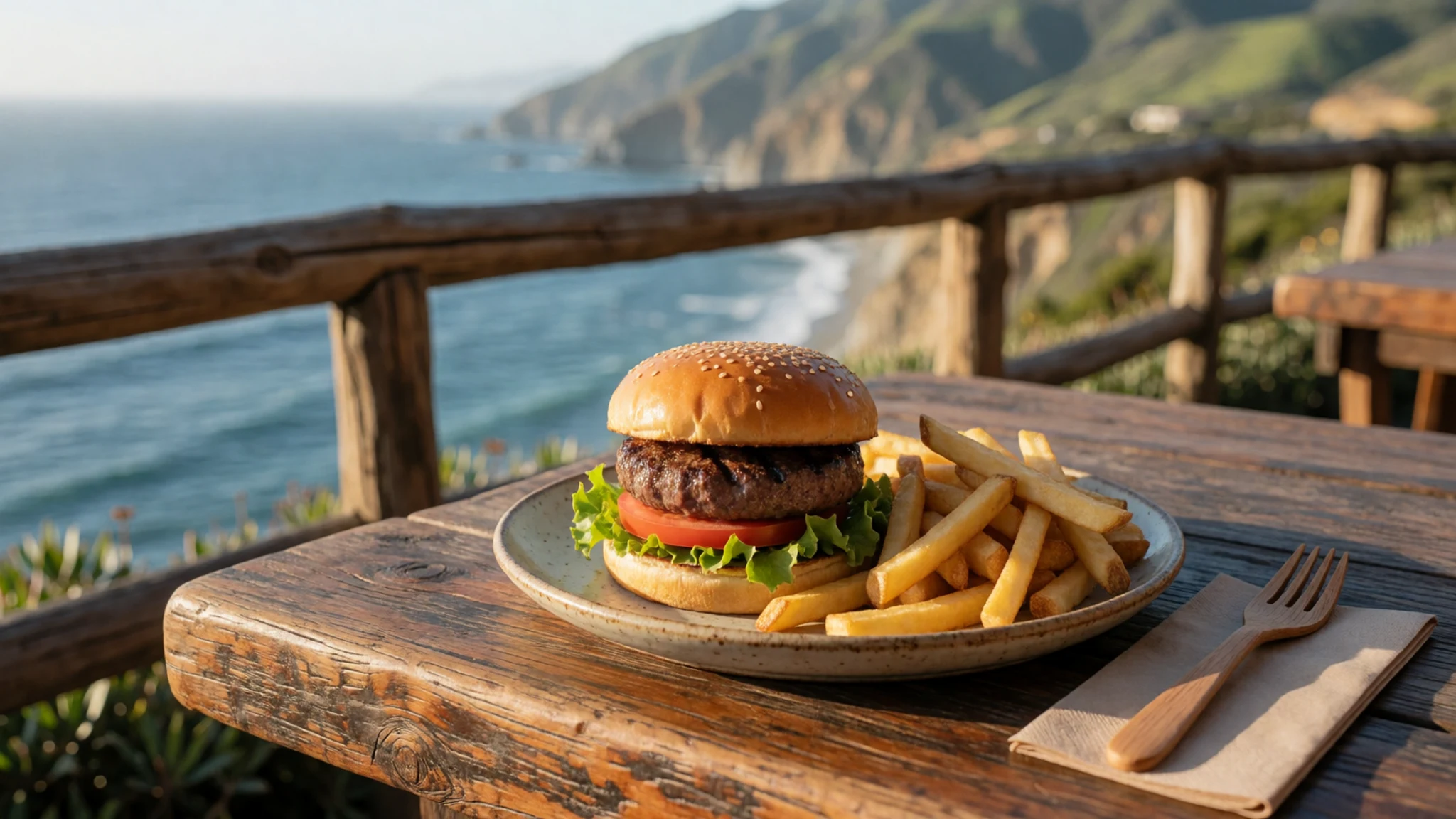
- California Coastline Breakfast — Small family-run cafes situated just steps from the Pacific shoreline
Classic morning fare including farm-fresh eggs, artisanal toast, and locally roasted coffee served in cozy roadside cafes within sight of the surf.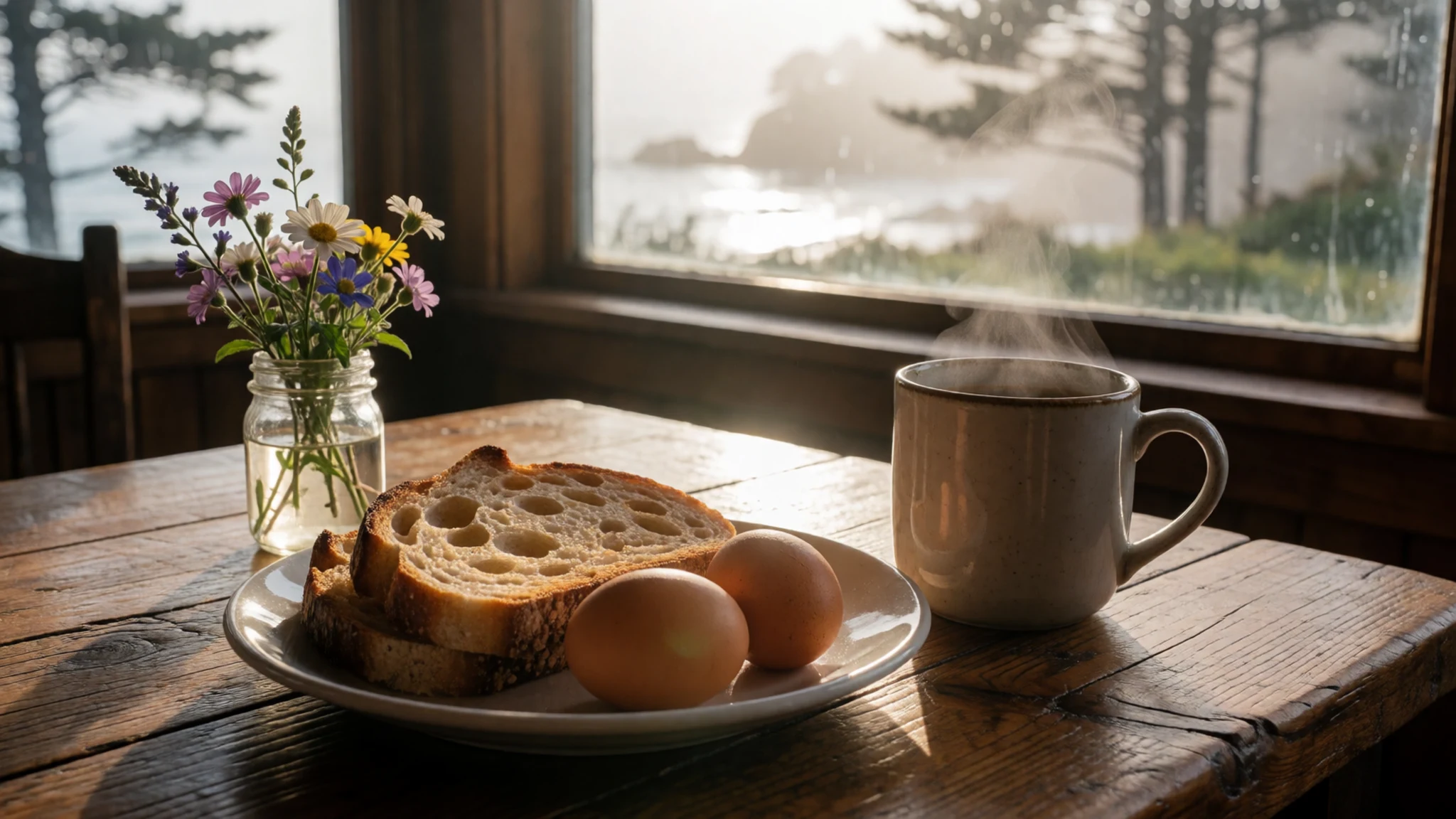
- Sierra Mar Multi-Course Dining — An elevated cliffside dining room high above the Pacific waters
Sophisticated regional tasting menus highlighting seasonal California produce, fresh seafood, and fine wines, served in a glass-walled dining room suspended high above the ocean. - Roadside Inn Fare — Onsite dining rooms located within rustic mountain and coastal inns
Comforting soups, fresh garden salads, and hearty artisan sandwiches prepared at historic lodge eateries welcoming both overnight guests and passing travellers.
Plan it
Best time. April to May or September to October offers clear skies, pleasant daytime temperatures, and fewer crowds than the peak summer months.
How long. 3–4
Getting there. Fly into a nearby international airport such as San Francisco or San Jose, rent a vehicle, and drive south along California State Route 1.
Budget. high
Tips
- Fill your fuel tank before entering the region, as petrol stations are sparse and expensive.
- Download offline maps ahead of time, as mobile phone signal is notoriously unreliable along the cliffs.
- Start your visits to popular parks and viewpoints early in the morning to secure limited parking spaces.
- Keep headlights on when driving the coastal highway due to frequent fog banks and winding blind curves.
Etiquette
- Pull over safely into designated turnouts whenever you want to stop and admire the views, rather than blocking narrow lanes.
- Respect local privacy by remaining on public trails and avoiding private property boundaries.
Nearby
Sources
- Wikidata Q859413 (CC0)
- Wikipedia (rev 1378650814) (CC BY-SA 4.0)
- Wikivoyage (rev 5401547) (CC BY-SA 4.0)