Bergen
Bergen, Norway
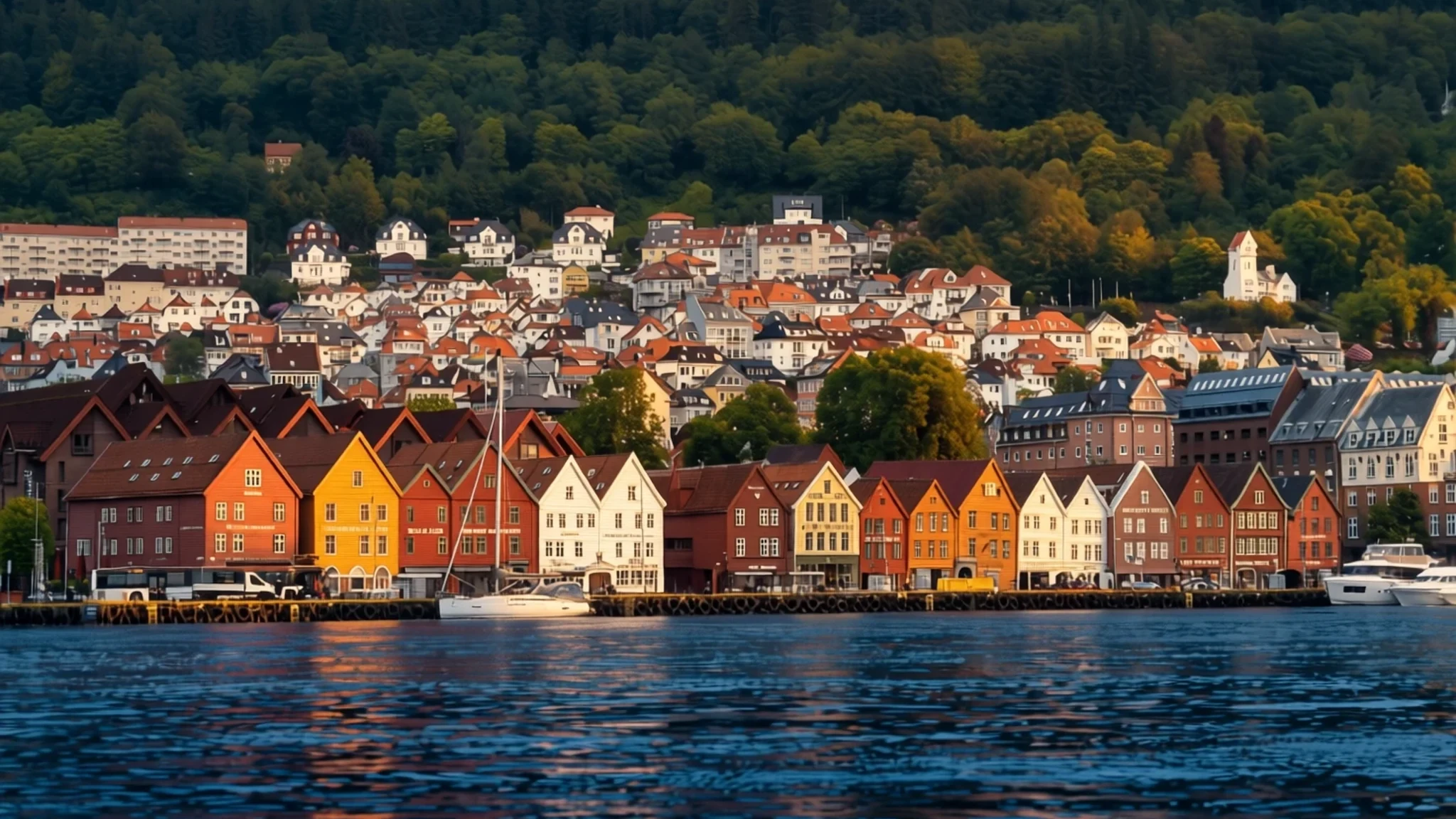
Bergen rewards a wet-weather visit with wooden wharf houses, mountain walks and a funicular ride above the harbour.
The place
Bergen sits on Norway's west coast in the county of Vestland. The city centre and the northern districts face Byfjorden, the city fjord, and the land rises steeply behind them. About 290,000 people live here, which makes Bergen the second-largest city in Norway after Oslo. Mountains ring the town on several sides, which is why it is often called the city of seven mountains, and the hills are never far from the harbour. Many suburbs lie on islands or across the water, so ferries are part of daily life rather than a novelty. The old town is compact and easy to walk, but the streets climb quickly, so expect stairs and gradients in most districts. Rain is the thing everyone mentions. Mountains squeeze moisture from Atlantic air, and grey, wet spells can run for weeks. Locals rarely cancel plans because of it. They pack a good waterproof and keep walking. Summers are mild for such a northern city, and the long daylight in June and July makes evenings feel generous. Winters are damp and dark, with snow that tends to melt quickly. The city combines wooden wharf houses, modern waterfront architecture and a student-filled university quarter, so a walk from one to the next tells much of its story.
Its story
Bergen's written history begins with a founding story. Tradition credits King Olav Kyrre with founding the town in 1070 and naming it Bjørgvin, roughly 'the green meadow among the mountains'. Historians now think trade was already taking place in the area before that, with merchants arriving by sea along the coast. By the early thirteenth century the town had become the seat of a basic central government, and its cathedral hosted royal coronations, the first of them in the middle of the twelfth century. Bergenhus fortress, built in the mid-thirteenth century, guards the entrance to the harbour. The role of capital passed to Oslo later in the thirteenth century, under King Haakon V. From the late thirteenth century, North German merchants established one of the four Kontore of the Hanseatic League at Bryggen, the row of wooden wharf houses that still lines the harbour. The main export was dried cod from northern Norway, a trade that began long before the Hanseatic merchants arrived. King Håkon Håkonsson granted the town a monopoly on trade from the north, and Bergen kept exclusive rights to mediate that trade until the late eighteenth century. The town stayed Norway's largest city until the nineteenth century, when the capital, Christiania, overtook it.
What to see
- Fjellveien panorama road — Sandviken to Bellevue
Fjellveien runs for several kilometres between Sandviken and Bellevue, largely level and mostly for walkers. The views take in the harbour, the wooden houses of Sandviken and the water beyond. The gentle gradient makes it a good first walk. Go in the morning for clearer light and fewer people.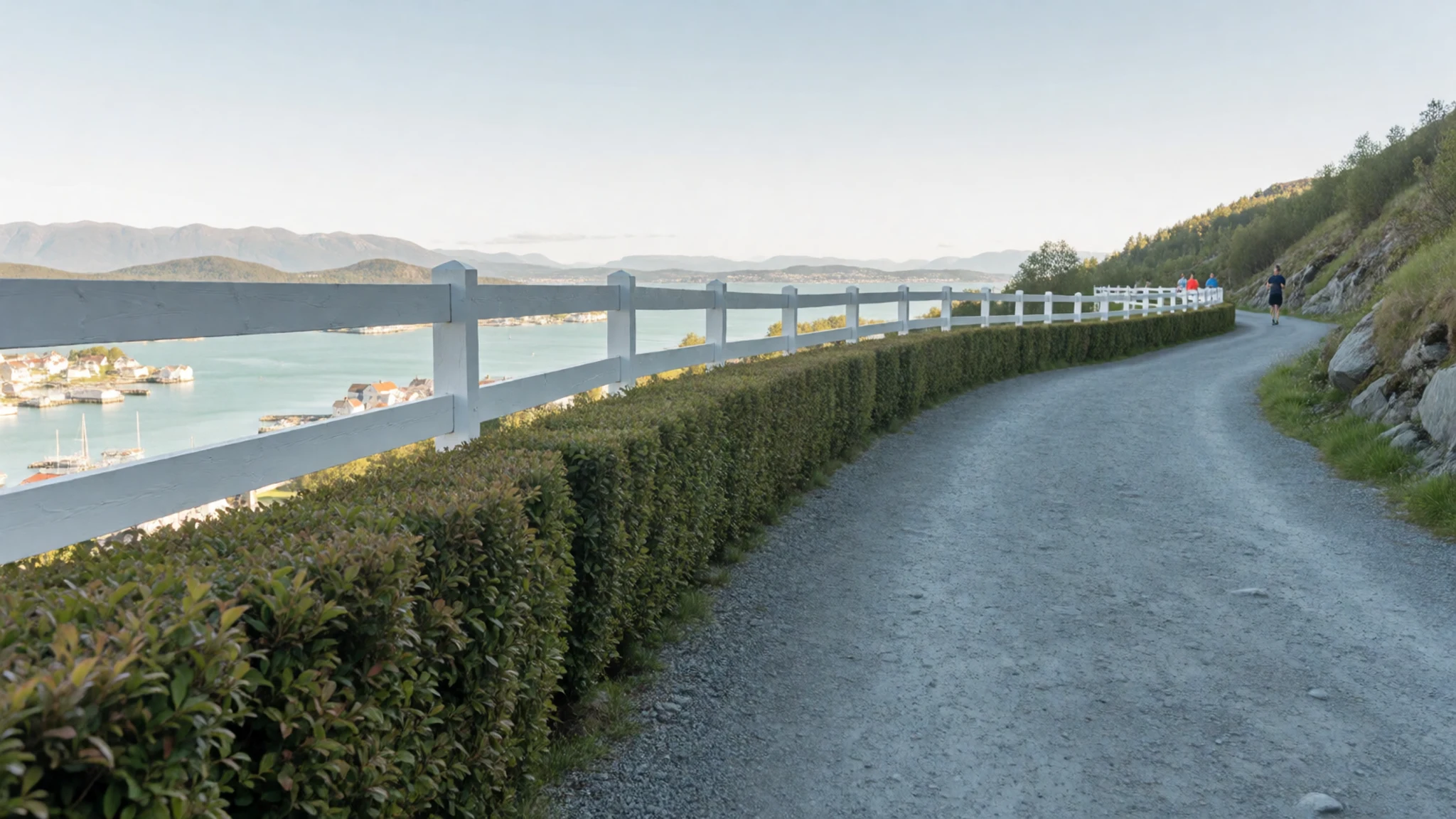
- Skansen panorama point — Above the funicular's lower station, city centre
Skansen is an easily reached viewpoint just above the lowest station of the funicular, so it suits anyone short on energy. A small white wooden tower, once a fire outlook, stands in front of the view. It is now used by one of the city's buekorps, the traditional youth brigades whose drums and parades are part of local life.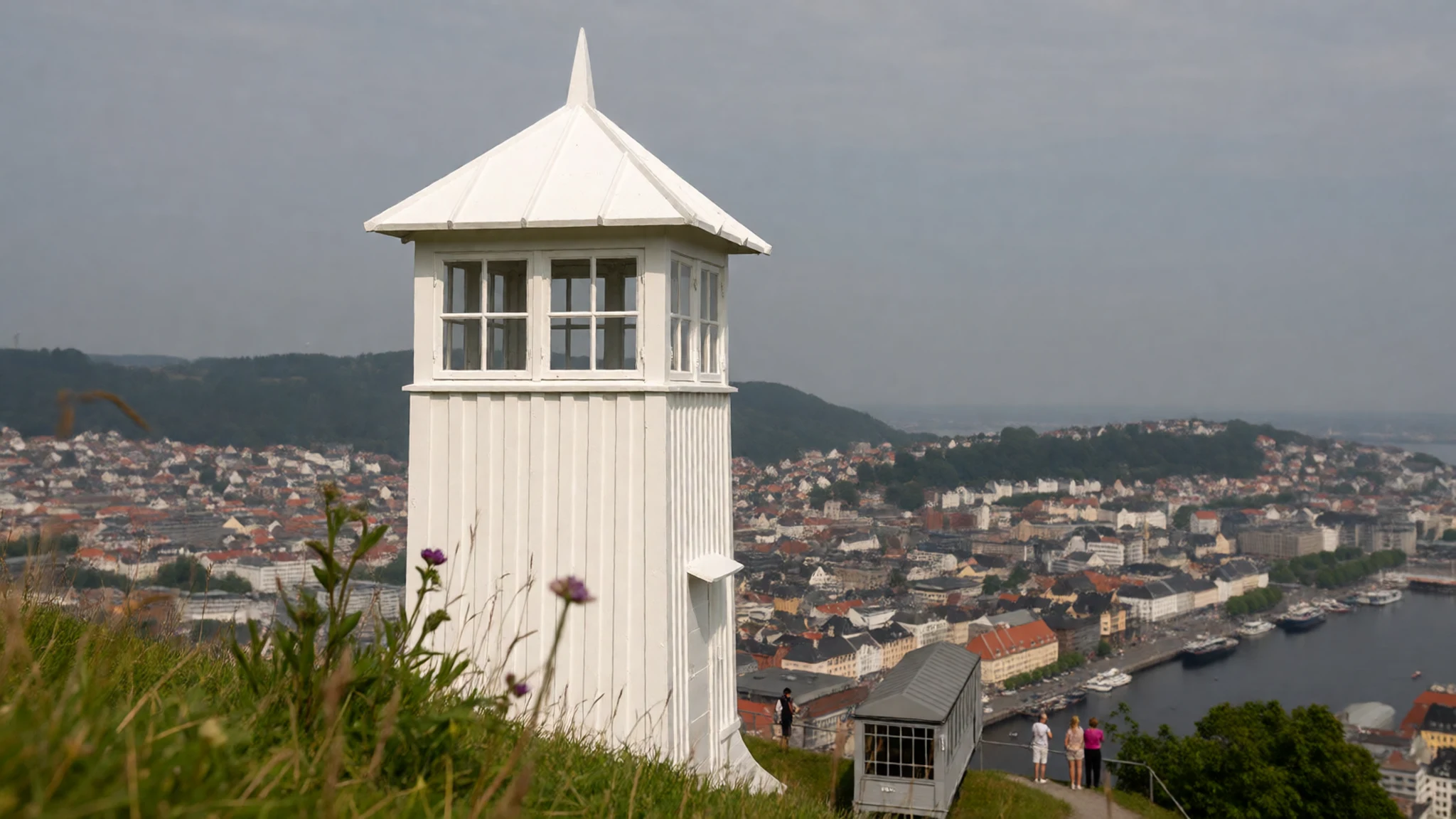
- Tippetue panorama point — Footpath to Mount Fløyen
Tippetue is a panorama point on the footpath up towards Mount Fløyen, so it sits between the city and the hills. The climb is a steady walk on a footpath rather than a scramble. The view opens over the rooftops of the centre and the harbour. Treat it as a stop on a longer walk and bring water.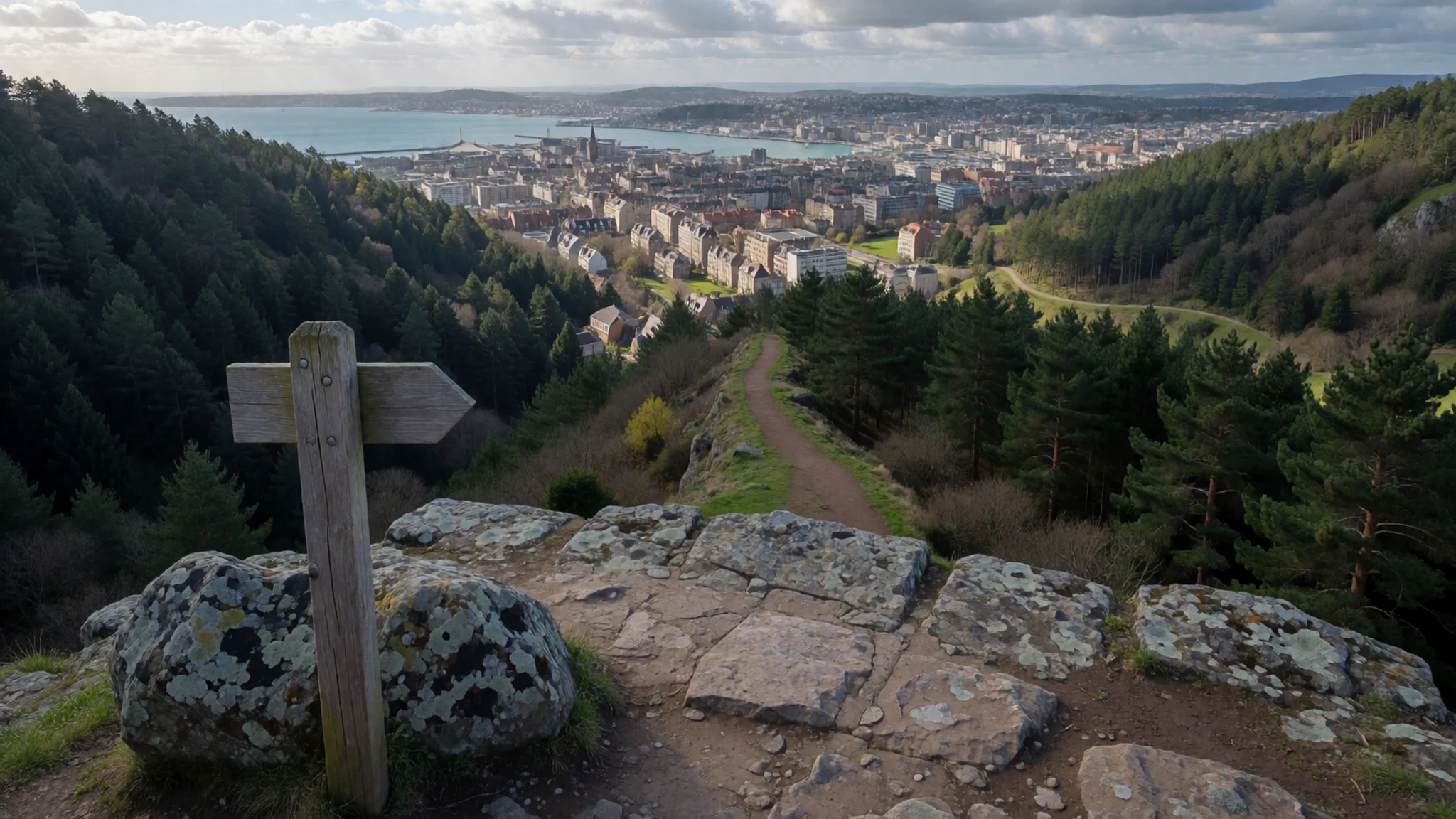
- Nordnes peninsula viewpoints — Nordnes peninsula, near the aquarium
Nordnes peninsula holds two good viewpoints: a panorama at its highest point, close to the aquarium, and a park at the very tip. The park is a pleasant place to linger on summer evenings, when the sun sets late and the light hangs over the water. It is a quieter alternative to the centre and an easy walk from the harbour.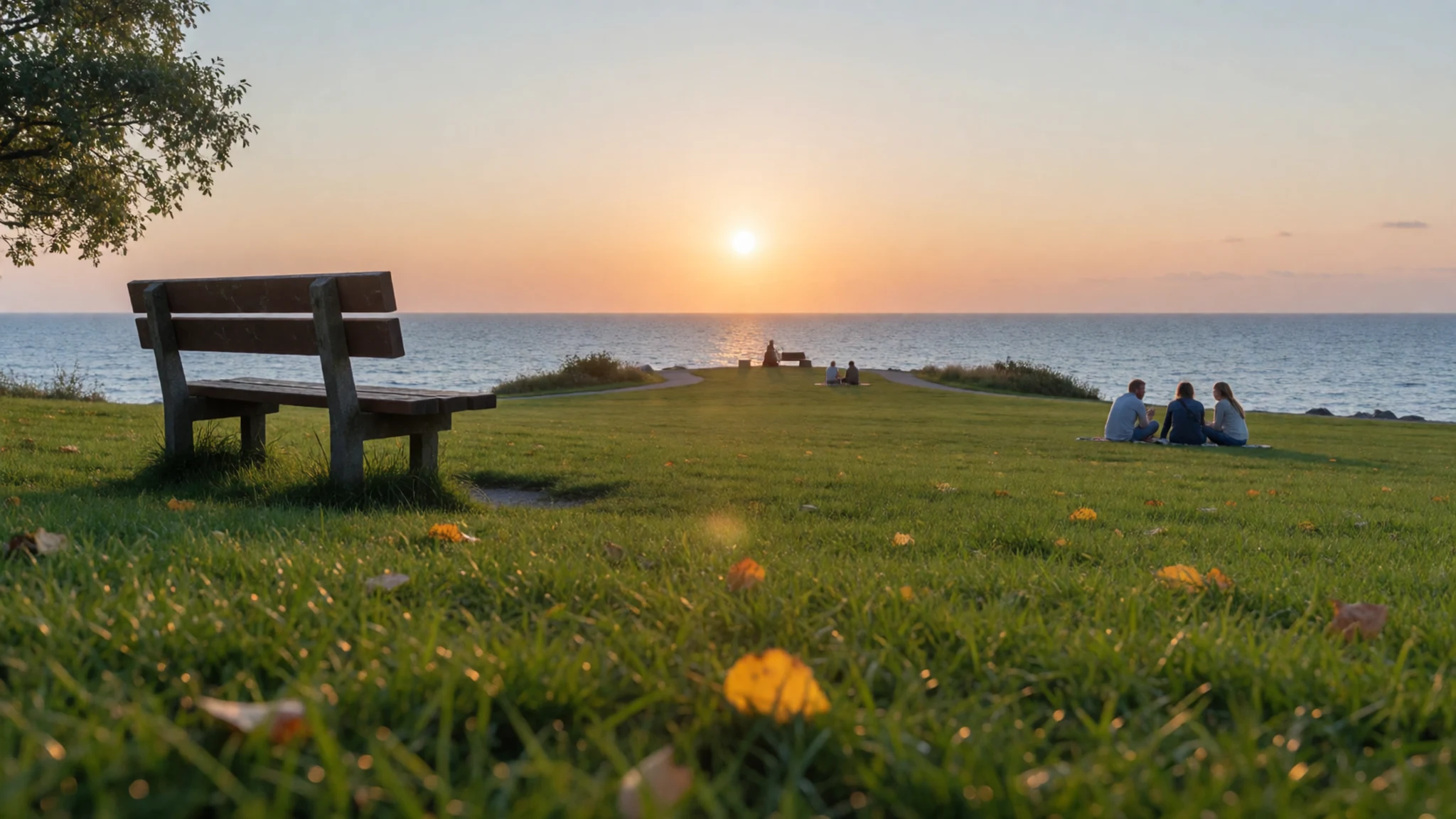
- St John's Church — Nygårdshøyden, university quarter
St John's Church, Johanneskirken, dominates the top of Nygårdshøyden, the hill that holds the University of Bergen. Its position makes it a landmark from much of the city. The walk up through the student streets shows the mix of older villas and modern campus life. Check the official site for service and opening times before visiting.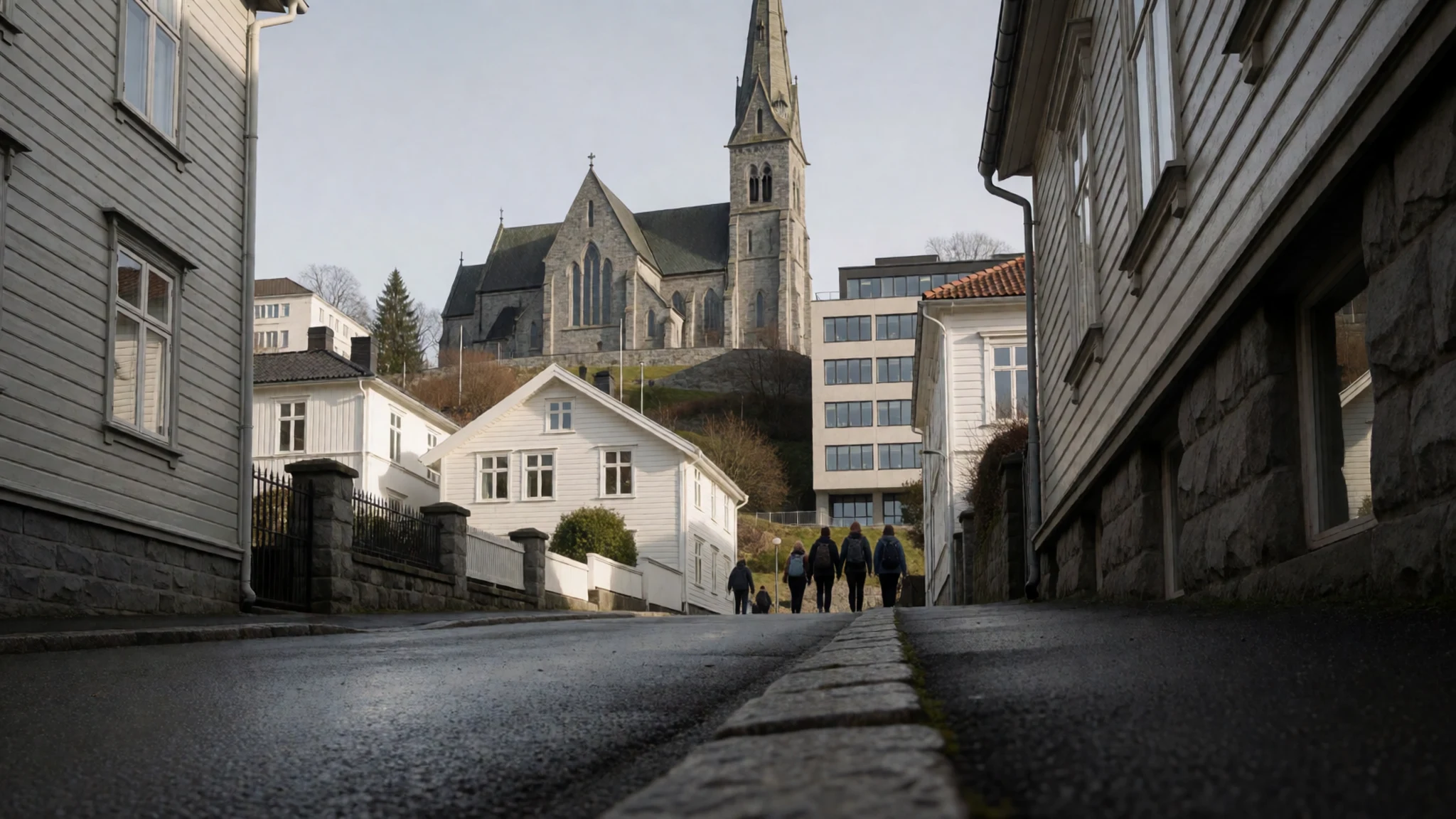
Culture
Bergen has a lively cultural life for a city of about 290,000 people. The main concert venue is Grieg Hall, which seats 1,500 and is home to the Bergen Philharmonic Orchestra, founded in the eighteenth century. The Bergen International Festival is the main cultural event of the year and fills concert halls, streets and churches for weeks. Two daily newspapers, Bergens Tidende and Bergensavisen, are read widely across the region, and a Christian national daily and an international shipping paper also publish here. Norwegians are generally reserved in public but friendly once a conversation starts, and they value punctuality and plain dealing. Queue in turn at bakeries and fish counters, keep voices low on early ferries and buses, and ask before photographing people working on the wharf.
What to wear
Bergen's dress tradition is shaped by wool, rain and the sea. The traditional costume is the bunad, a regional dress that varies by district and is worn on national occasions in May. Bunads are typically made from wool and linen, with embroidery in coloured wool thread and silver jewellery such as brooches and belt clasps, often in filigree. Many families keep one for a lifetime. Locals now dress for the weather more than for fashion. Waterproof shell jackets, wool jumpers and sturdy boots are everywhere, and the knitwear shops near the harbour sell the same kind of wool that has been used for generations. For a visit, pack a waterproof jacket with a hood, a warm layer that keeps its insulation when damp, and shoes with good grip for wet cobbles and steep wooden steps. Dress neatly for church services, and bring gloves and a hat even in summer.
What to eat
- Dried and salted cod — Older restaurants around the Bryggen wharf
Dried and salted cod, known locally as klippfisk, is the dish that ties Bergen to its medieval trade. Fish is split, salted and dried on wooden racks, then soaked for days before cooking, usually with potatoes, butter and mustard. Look for it in older restaurants around the wharf.
- Fish cakes and fish soup — The covered fish market by the quay
Fish cakes, fiskekaker, are poached patties of minced white fish, often served with boiled potatoes and a sweet-sour cucumber salad. Fish soup, fiskesuppe, is creamier and richer, with prawns or salmon in the broth. Both appear at harbourside fish counters and at the covered fish market by the quay.
- Kebab and pizza — Student quarter on Nygårdshøyden
Pizza and kebab are the cheap staples of the student quarter on Nygårdshøyden, where the university sits. Thin-crust pizzas are generous, kebabs are simple and filling, and the beer lists are long. Go late in the evening for a cheap meal after a day of walking the steep streets.
- Chinese stir-fry — Open-kitchen eateries in the city centre
Chinese stir-fry is a dependable pick in the central streets, where woks are tossed over high flame in full view of the counter. Plates of noodles or rice with vegetables and chicken or beef arrive quickly and cheaply. Late afternoon is the busiest time, so arrive before it. - Brown cheese (brunost) — Cafés in the old town and bakeries near the fish market
Brown cheese, brunost, is a sweet, caramel-tasting whey cheese sliced thinly over bread or waffles. It is a breakfast staple, and the taste takes a visitor a while to like. Cafés around the old town and the bakeries near the fish market serve it with coffee.
Plan it
Best time. Late May to early September brings the mildest weather and the longest days, though rain can arrive at any time. May and September are quieter and cooler. Winter is mild for the latitude but short on daylight and wet throughout.
How long. 2–3
Getting there. Bergen Airport, Flesland, is linked to the city by the Flybussen, which leaves from right outside the terminal building. Trains from Oslo arrive at Bergen's railway station after a long run across the mountains.
Budget. mid
Tips
- Pack a waterproof jacket and treat rain as a normal part of the day
- Walk Fjellveien early, before the crowds gather
- Carry some cash for small shops, though cards are widely accepted
- Check the official site for ferry, bus and funicular timetables before travelling
Etiquette
- Keep voices down on early ferries and buses
- Ask before photographing people working at the fish counters or on the wharf
- Keep noise low on residential hillside streets in the evening
Nearby
Sources
- Wikidata Q26793 (CC0)
- Wikipedia: Bergen (rev 1381197296) (CC BY-SA 4.0)
- Wikivoyage: Bergen (rev 5394922) (CC BY-SA 4.0)
- Photo 01: View over the store Lungegårdsvann (CC BY-SA 4.0)
- Photo 02: Bergen panorama at night (CC BY 3.0)
- Photo 03: Kong Olav Vs Plass (CC BY 2.5)
- Photo 04: Old town, Bergen (52) (CC BY 2.5)
- Photo 05: Norwegian national day at Bryggen (CC BY 2.5)
- Photo 06: Night view of Sandviken, Bergen (CC BY 3.0)
- Photo 07: Fjordsteam 2018 (CC BY-SA 4.0)
- Photo 08: Map of Bergen (Braun and Hogenberg) (Public domain)


