Bellinzona Castles
Bellinzona Castles, Switzerland
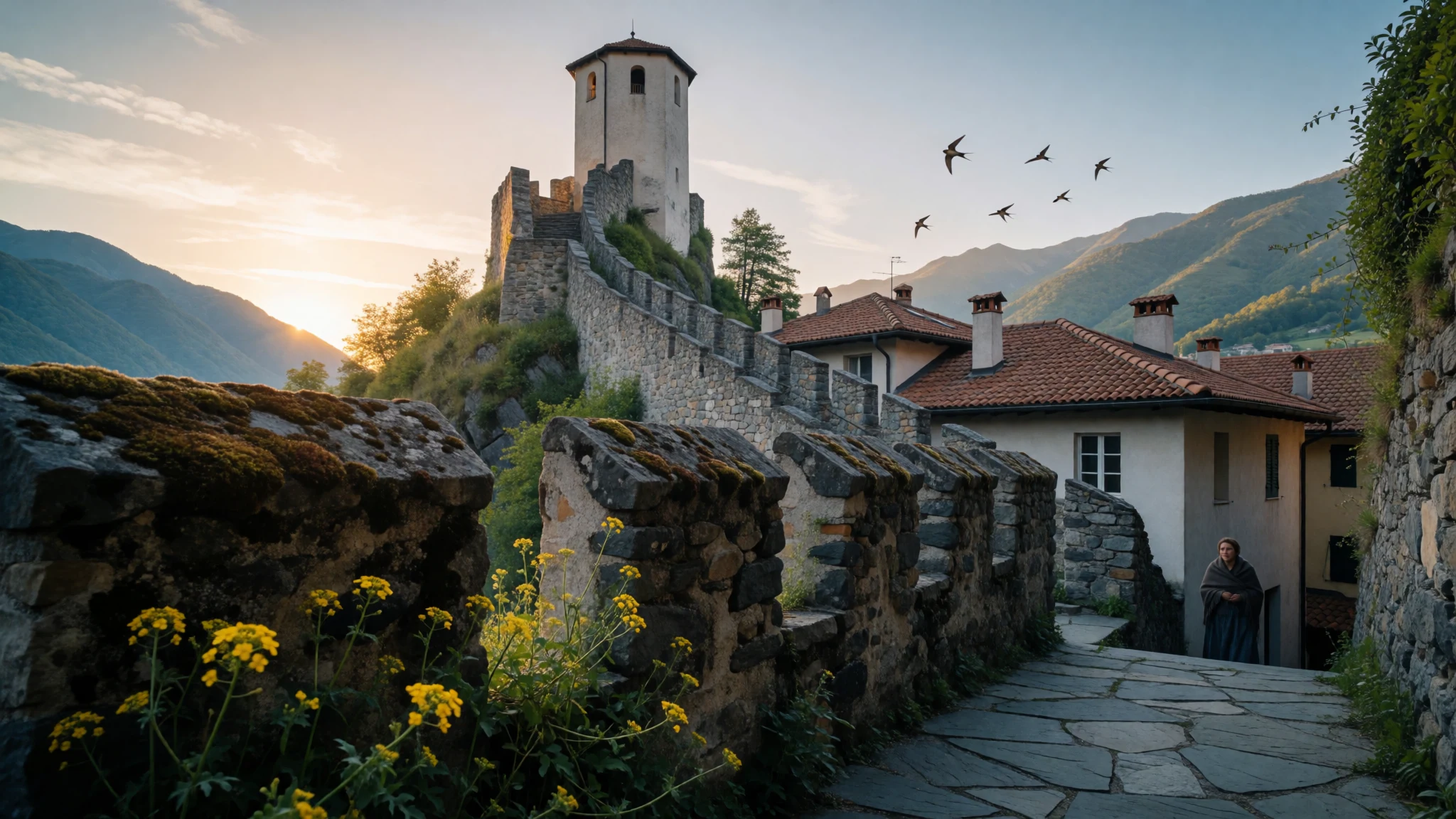
Bellinzona Castles are three medieval fortresses linked by walls, set among Alpine foothills in a quiet Swiss-Italian town that makes an easy, uncrowded day out.
The place
Bellinzona Castles stand around the town of Bellinzona, the capital of the Swiss canton of Ticino, where the Alpine foothills close in on a narrow valley floor. The group is three castles joined by lengths of fortified wall: Castelgrande, Montebello and Sasso Corbaro. Castelgrande sits on a rocky spur right above the old town, and its walls run down to the streets and across towards Montebello, so the medieval centre once sat behind a stone barrier stretched across the valley. Montebello perches a little higher on the slope, with a compact courtyard and a museum. Sasso Corbaro is the highest of the three, standing alone on a rocky promontory to the south-east, reached by a climb on foot or a short road. The setting explains the purpose. Roads through the Alps converge here, and whoever held this gap could control movement between northern and southern Europe. The ensemble is a UNESCO World Heritage Site. Today the town below is a working administrative centre rather than a resort, which gives a visit a quiet, local feel: schoolchildren, office workers and market stalls beneath castle walls. Rail connections are good, so the castles work as a day out from Lugano, Locarno or Milan, though a night in Bellinzona lets the walls be seen in evening light with few other visitors around.
Its story
Bellinzona Castles owe their existence to geography. Several Alpine routes, among them the St Gotthard, Lukmanier and San Bernardino passes, meet near the point where the Ticino and Moesa rivers come together, so the valley was a funnel for trade and for armies. People lived here from the early Neolithic, but the first known fort on the Castelgrande rock dates to the Roman period, under Augustus. It fell into disrepair, then was rebuilt and enlarged in the late empire, when a chain of castles and watchtowers was raised to shield northern Italy. Its garrison is recorded beating off a larger Alemannic force. After the western empire collapsed, the Ostrogoths, the Byzantines and then the Longobards each held the rock to command the passes. Under the Longobards it became a permanent garrison against Frankish and Alemannic raids. Gregory of Tours reports that a Frankish invasion stalled against stiff resistance here, and legend says one spear thrown by a defender killed the enemy commander and ended the attack. The Franks later took the valley, and Castelgrande gained a chapel, living quarters, towers and barracks. The other two castles came later: Montebello probably in the thirteenth century, and Sasso Corbaro, thrown up in a matter of months in the late fifteenth century as the highest link in the defences. In recent decades the architect Aurelio Galfetti remodelled Castelgrande, and the whole complex has been inscribed by UNESCO.
What to see
- Castelgrande — Above the old town
Castelgrande rises from a rock directly above the old town. Aurelio Galfetti's remodelling added a lift cut through the rock and a spiral ramp, so the summit can be reached from Piazza Mario della Valle without a steep climb. Up top are ramparts, lawns and views across the valley's rooftops towards the other two castles.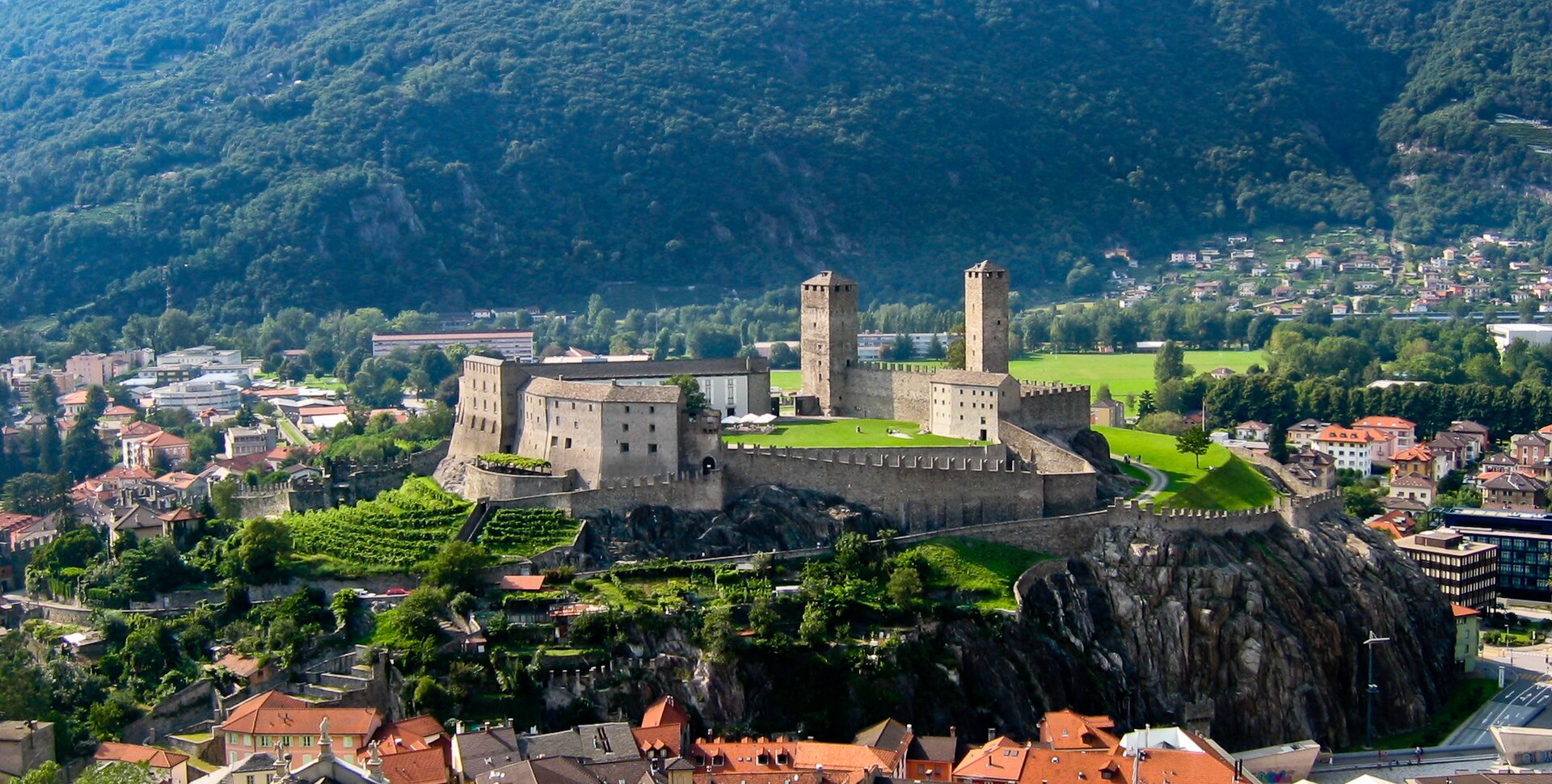
- Torre Bianca and the Castelgrande museum — Upper court, Castelgrande
The White Tower (Torre Bianca) stands in Castelgrande's upper court, a pale tower visible from across town. Close by, the castle museum shows archaeological finds from the rock, which help in tracing the Roman, Longobard and later phases of the fortress. It is worth seeing before walking on, as it makes the later castles easier to read.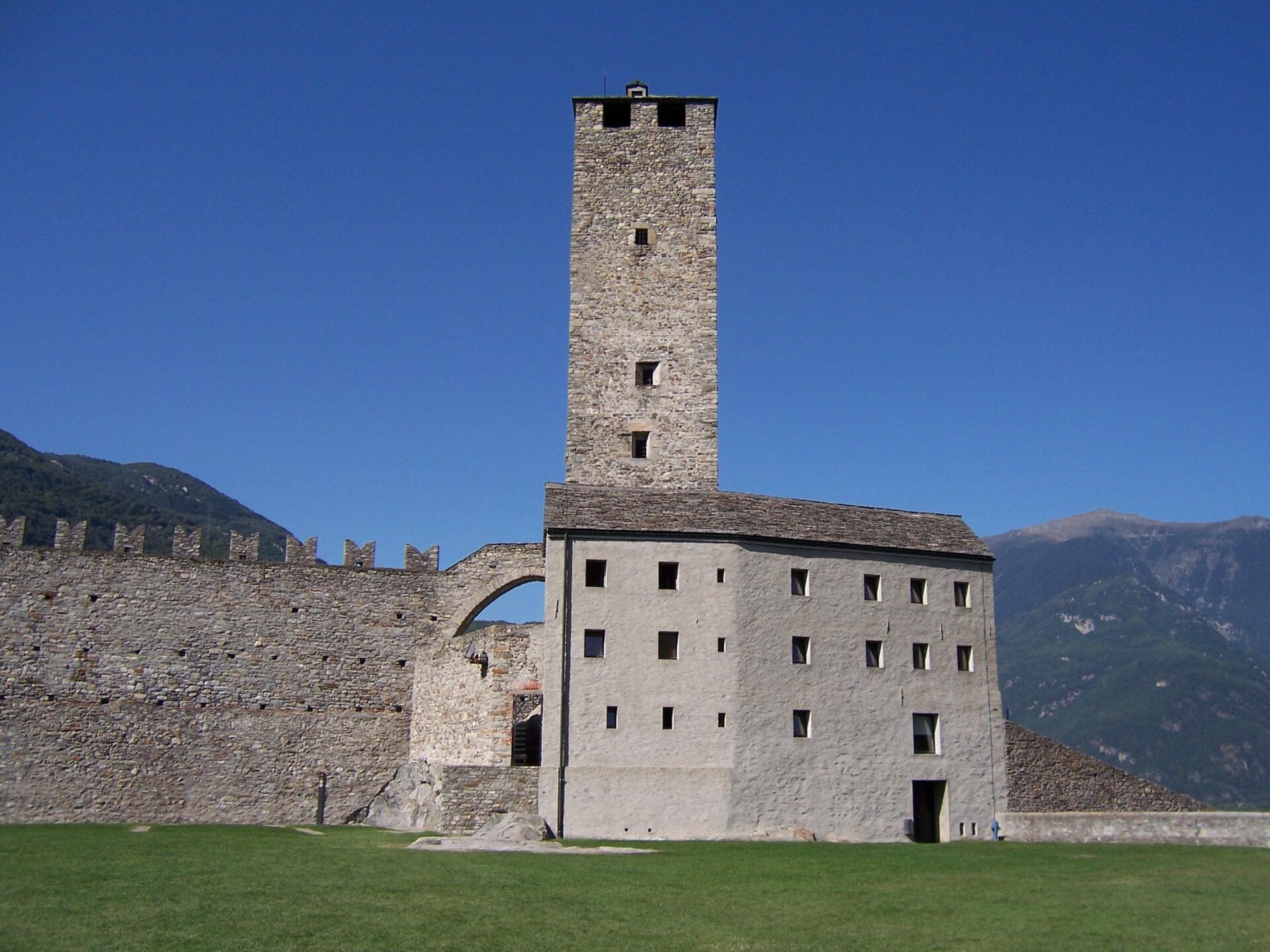
- Castello di Montebello — Slope above the old town
Montebello was probably built in the thirteenth century and restored in the later twentieth. It is a compact, convincing medieval castle with a courtyard, a keep and a civic and archaeological museum. Walls run down the slope to join Castelgrande. The walk up from the old town is short but steep, so sturdy shoes help.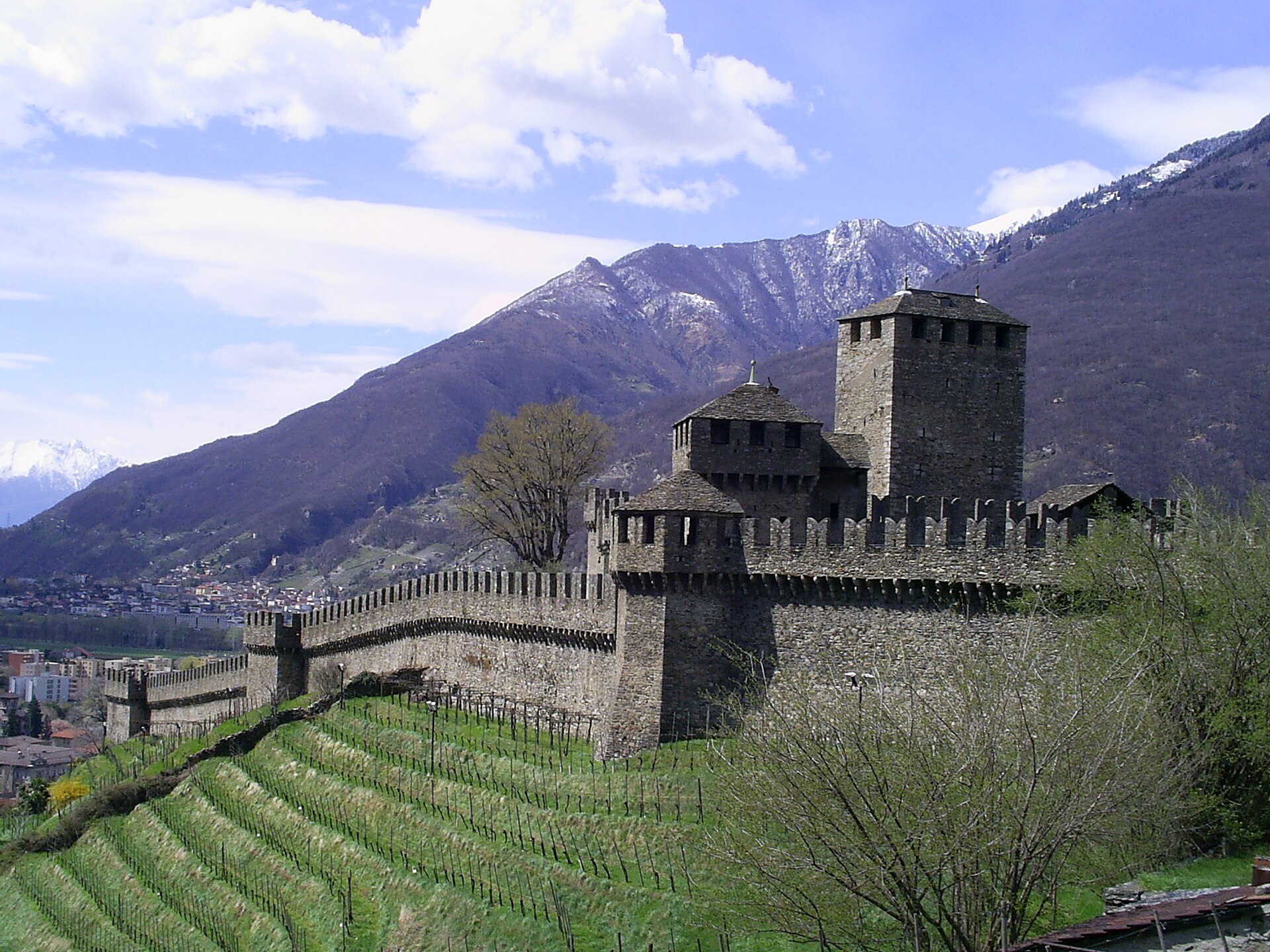
- Castello di Sasso Corbaro — Hill south-east of town
Sasso Corbaro sits alone on a rocky promontory south-east of the town, the highest of the three. It was built in a matter of months in the late fifteenth century and feels plainer and more austere than its neighbours. The views over the town and valley are the reward for the climb, which can be done on foot or by a short road.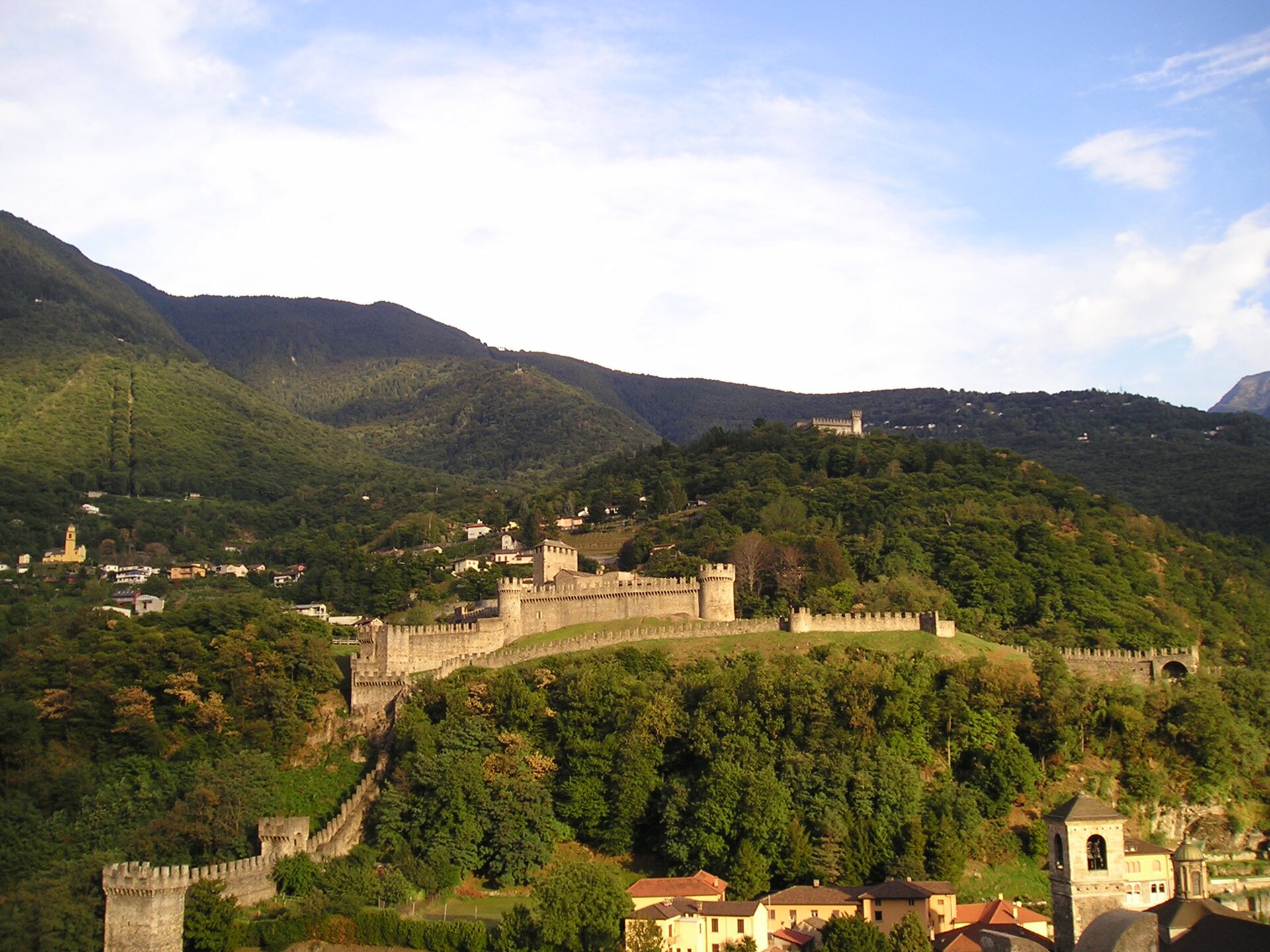
- The town walls — Between Castelgrande and Montebello
Bellinzona's defensive walls link Castelgrande to Montebello and once closed off the valley floor. Stretches survive beside streets and gardens. Following them on foot shows how the defences were meant to work as one system rather than as three separate castles, and it costs nothing beyond a slow stroll.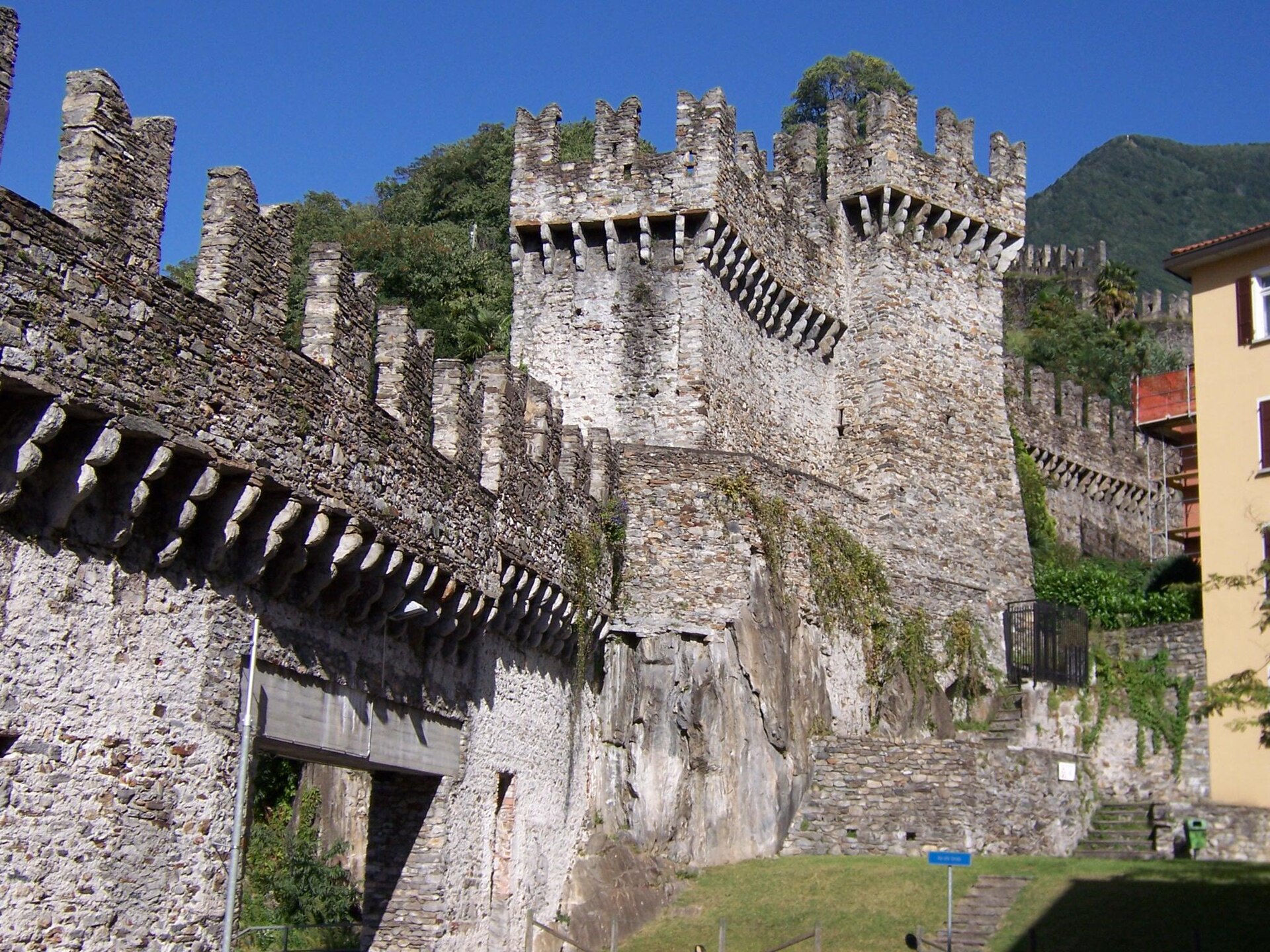
Culture
Bellinzona Castles sit in Italian-speaking Switzerland, and the culture around them blends Swiss order with Italian ease. Conversation, menus and street signs are in Italian, coffee is taken standing at a bar counter, and the early-evening aperitivo is a fixed habit. Trains keep to their timetable, yet the pace of the town is relaxed, especially at weekends. Bellinzona's long role as gatekeeper of the Alps shows in its civic pride: the castles are treated as the town's shared property, used for concerts, exhibitions and open-air events as well as for visits. The best-known local celebration is Carnevale Rabadan, held in the old town before Lent, when costumed brass bands play in the streets and risotto is served in public squares. Ticino also keeps a strong tradition of grotti, rustic taverns set under chestnut trees or against hillside rock, where simple regional food is eaten at stone tables. Market days bring farmers and cheese sellers into the old centre, a reminder that the valley still looks to the mountains behind it for much of its produce. Greet staff with a friendly buongiorno when entering shops and cafés, and stay on the marked paths and off the wall tops at the castles.
What to wear
Bellinzona Castles lie in a region with no everyday traditional dress, so costume here belongs to festivals and folk groups. Ticino's older rural clothing was made from wool, linen and hemp, spun and woven in the Alpine valleys, and local folk groups bring out versions of it for processions and village feasts. The loudest outfits appear at Carnevale Rabadan, where bands and revellers wear bright, invented costumes and masks. Day to day, people in Bellinzona dress in the neat, understated style common across northern Italy and Switzerland: tailored trousers, light jackets, good shoes and quiet colours. Office workers fill the old town on weekdays, while weekends bring hiking boots and outdoor gear from people heading into the valleys. A visitor needs mainly practical clothes. Wear shoes with grip, because the paths up to Montebello and Sasso Corbaro are steep and the courtyards and ramps are stone. In summer bring a sun hat, light cotton layers and water, as stone walls hold heat; in spring and autumn add a light waterproof, since showers come off the mountains. Winter needs a warm coat and gloves on the ramparts. No special dress is required at the castles, but cover shoulders and knees when stepping into a church.
What to eat
- Polenta e brasato — Traditional grotti and family-run eateries in and around Bellinzona
Slow-braised beef served over soft maize polenta, a staple of Ticino's cooler months. The meat is cooked in red wine until it falls apart, and the polenta soaks up the sauce. A hearty, filling plate after a day on the castle slopes. - Risotto ticinese — Restaurants in the old town; public risotto servings at Carnevale
A creamy risotto, often made with local Merlot wine and sometimes served with sausage. It is the dish associated with festivals and public feasts in the region, and appears on many everyday menus too. - Luganighe — Butchers and market stalls in the old centre, and grotti menus
Fresh pork sausages of the Italian-Swiss kind, usually grilled or pan-fried and eaten with polenta, risotto or beans. They are simple, savoury and generally seasoned lightly with pepper and garlic. - Formaggio d'alpe — Market stalls and dairies in the old town, and cheese counters near the station
Cheese made in summer pastures high in the Ticino valleys and sold in wheels and wedges. Flavours range from mild and milky to sharp and nutty, depending on age and altitude. Good with bread, honey or a glass of local red. - Torta di pane — Local bakeries and pastry shops in the town centre
A dense, old-fashioned bread cake made from stale bread soaked in milk, with raisins, pine nuts and a little citrus or liqueur. It is a thrifty dessert that has become a regional favourite, best with strong coffee.
Plan it
Best time. April–June and September–October are the most comfortable months: mild days, clear air and green or autumn-coloured hills around the walls. July and August are warm and humid, with thunderstorms off the mountains. Winter is cool with shorter days, and opening hours may be reduced, so check the official castle site before travelling.
How long. 1–2
Getting there. The nearest major airport is Milan-Malpensa (MXP); regional TiLo trains connect it to Bellinzona. Intercity trains on the Gotthard line link Bellinzona with Zurich, Lugano, Chiasso and Locarno. From the station, walk into the old town; Castelgrande is a short walk uphill, and the lift from Piazza Mario della Valle avoids the climb.
Budget. mid
Tips
- Check the official castle website for current opening times and ticket options before you go
- Do Montebello and Sasso Corbaro earlier in the day, when the uphill walks are cooler
- Wear shoes with grip; paths and ramps are stone and steep in places
- Carry water in summer, as the walls hold heat and shade is patchy
- Combine the castles with a market morning in the old town for the best sense of local life
Etiquette
- Greet shopkeepers and café staff with a quiet buongiorno
- Stay on marked paths and off the wall tops
- Keep voices low in residential streets below the castles
Nearby
Sources
- Wikidata Q510279 (CC0)
- Wikipedia: Castles of Bellinzona (rev 1365731826) (CC BY-SA 4.0)
- Wikivoyage: Bellinzona (rev 5380186) (CC BY-SA 4.0)
- Photo: Castelli.JPG (Massimo Macconi) (Public domain)
- Photo: Castelgrande Bellinzona.JPG (H005) (CC BY-SA 2.5)
- Photo: Plan 3 Burgen English.PNG (Presse03 / Tobyc75) (CC BY-SA 2.0)
- Photo: Bellinzona Stadtmauer.JPG (Jungpionier) (CC BY 3.0)
- Photo: Bellinzona 066.jpg (Aliman5040) (Public domain)
- Photo: Bellinzona Torre Bianca.JPG (Jungpionier) (CC BY-SA 1.0)
- Photo: Castelgrande Castle, Bellinzona.JPG (Daisypolanco) (CC BY 3.0)
- Photo: ChateauMontebelloBellinzona.jpg (Aliman5040) (Public domain)


