Beit She'arim
Beit She'arim, Israel
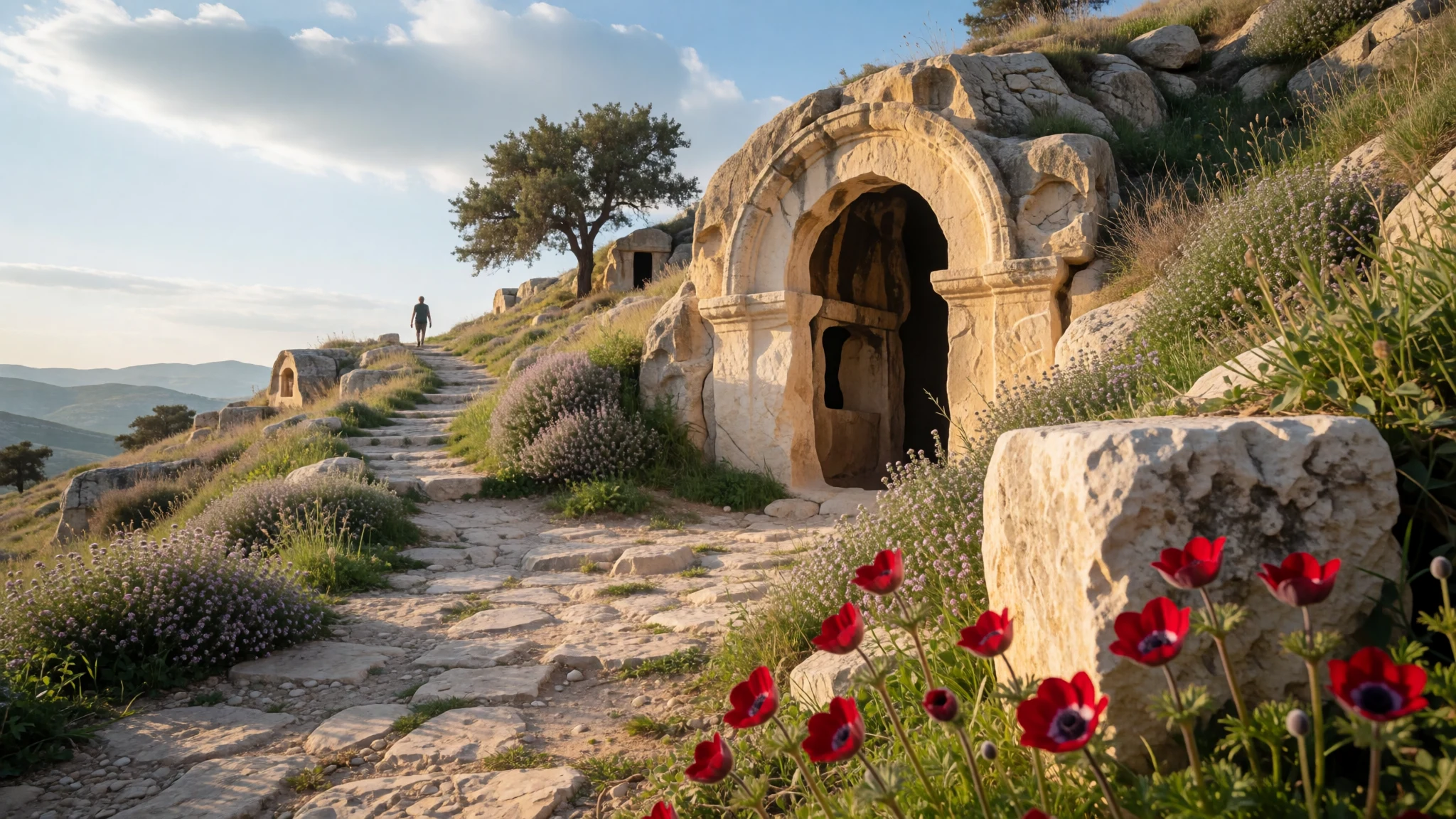
Beit She'arim is a hillside of rock-cut tombs in the Galilee where Jewish scholars, and the compiler of the Mishnah, were laid to rest.
The place
Beit She'arim National Park lies in the southern foothills of the Lower Galilee, east of Haifa and next to the town of Kiryat Tiv'on, at about 74 metres above sea level. The Hebrew name, בֵּית שְׁעָרִים, means "House of Gates". The park holds two things: the thin remains of an ancient Jewish town, and a necropolis dug into pale, soft limestone slopes. The necropolis is the reason the site is a World Heritage Site, and it is what most visitors come for.
The tombs are underground complexes. A forecourt leads to a doorway, and behind it run halls and side passages lined with recesses for the dead, with stone coffins set in many of them. Some caves can be walked through, and a few have been partly rebuilt so the walls read clearly. Inside it is cool and dim, a relief on a bright afternoon.
The place matters because of who was buried here. In the late Roman period it became a favoured cemetery for Jewish families and scholars, among them the household of Judah ha-Nasi. Epitaphs in Hebrew, Aramaic and Greek show how far some of the dead had travelled to lie in this soil. One Greek inscription names a man from Antioch.
As a visit it is quiet and unhurried. There is little shade between the caves, the ground is uneven, and summer afternoons are hot. A morning or an afternoon is enough for most people, and the park pairs easily with Nazareth, a short drive away.
Its story
The story of Beit She'arim starts modestly. Pottery from the Iron Age shows people lived on this ridge early, but the town known from later texts took shape in the time of King Herod, around the turn of the era. Josephus calls it Besara and ties it to royal estates in the Jezreel Valley.
Its rise followed catastrophe. After the Second Temple was destroyed, the Sanhedrin, the Jewish supreme council, kept relocating, from Jabneh to Usha, then Shefar'am, and finally to Beit She'arim. Rabbinic writing treats the town as a centre of learning in the second century. Judah ha-Nasi, who led the Sanhedrin and edited the Mishnah, lived here. Ill health took him to Sepphoris for his last years, yet he arranged to be buried at Beit She'arim, and that choice turned the hillside into a cemetery that families across the region wanted to join.
Burials went on until the fourth century. Later the caves were looted: the style of oil lamps left behind suggests thieves broke into the coffins in the early medieval period and carried off the bones. In the Mamluk era shepherds sheltered in the Cave of the Coffins. In the late nineteenth century Claude Conder of the Palestine Exploration Fund described a cave system the locals called the Cave of Hell, and dated the ruins from a coin of Agrippa found inside.
The village on the site at that time was Sheikh Bureik, emptied after a land purchase early in the twentieth century. The geographer Samuel Klein matched the ruins to the ancient name in 1936, a decade after a nearby moshav had already borrowed it.
What to see
- Cave of the Coffins — Beit She'arim National Park
The best-known cave at Beit She'arim opens through an arched doorway in the hillside. Inside, long halls hold stone sarcophagi, some carved with animals, wreaths and figures. It is cool and dim, so a torch on a phone helps. Shepherds once sheltered here, and thieves visited long before archaeologists.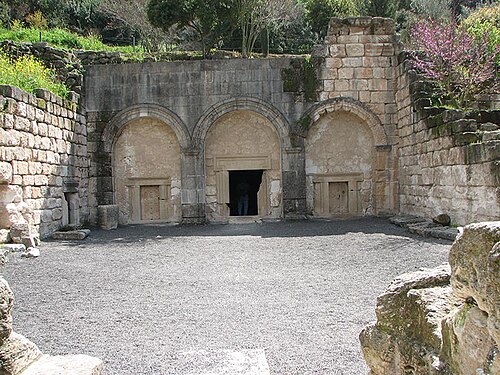
- Partly reconstructed galleries — Beit She'arim National Park
In one catacomb the walls have been partly rebuilt, which makes the layout easier to follow: a forecourt, a doorway, then chambers opening off a passage. The rebuilt stonework is visibly newer than the original rock, so it is easy to tell what is ancient and what is repair.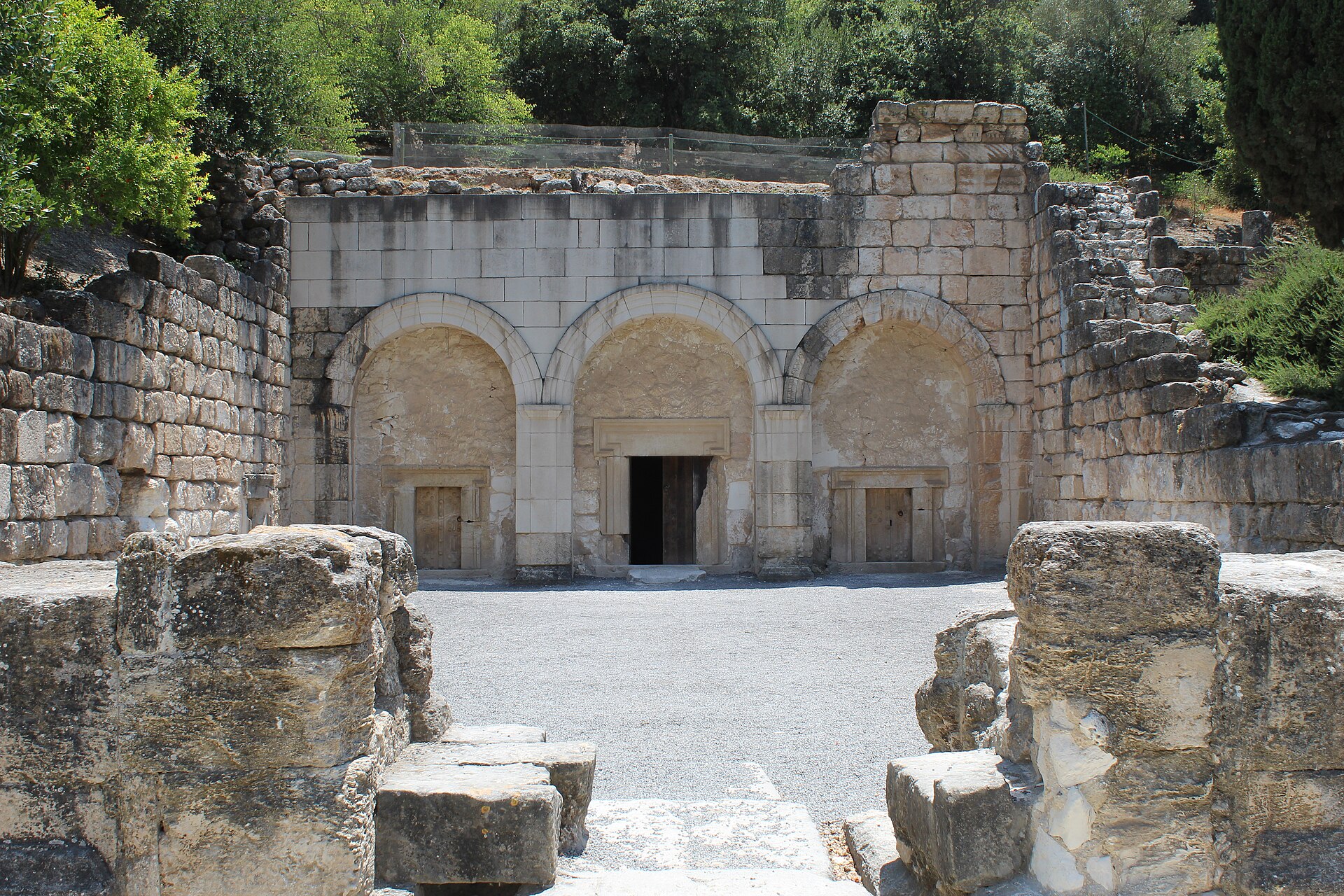
- Decorated sarcophagi — Beit She'arim National Park
Several stone coffins in the main catacomb carry relief carving, in a style shared with the wider Roman world. Many are broken, because robbers prised them open centuries ago. Look at the lids and sides rather than hunting for whole examples; the surviving damage tells its own story about the site's later history.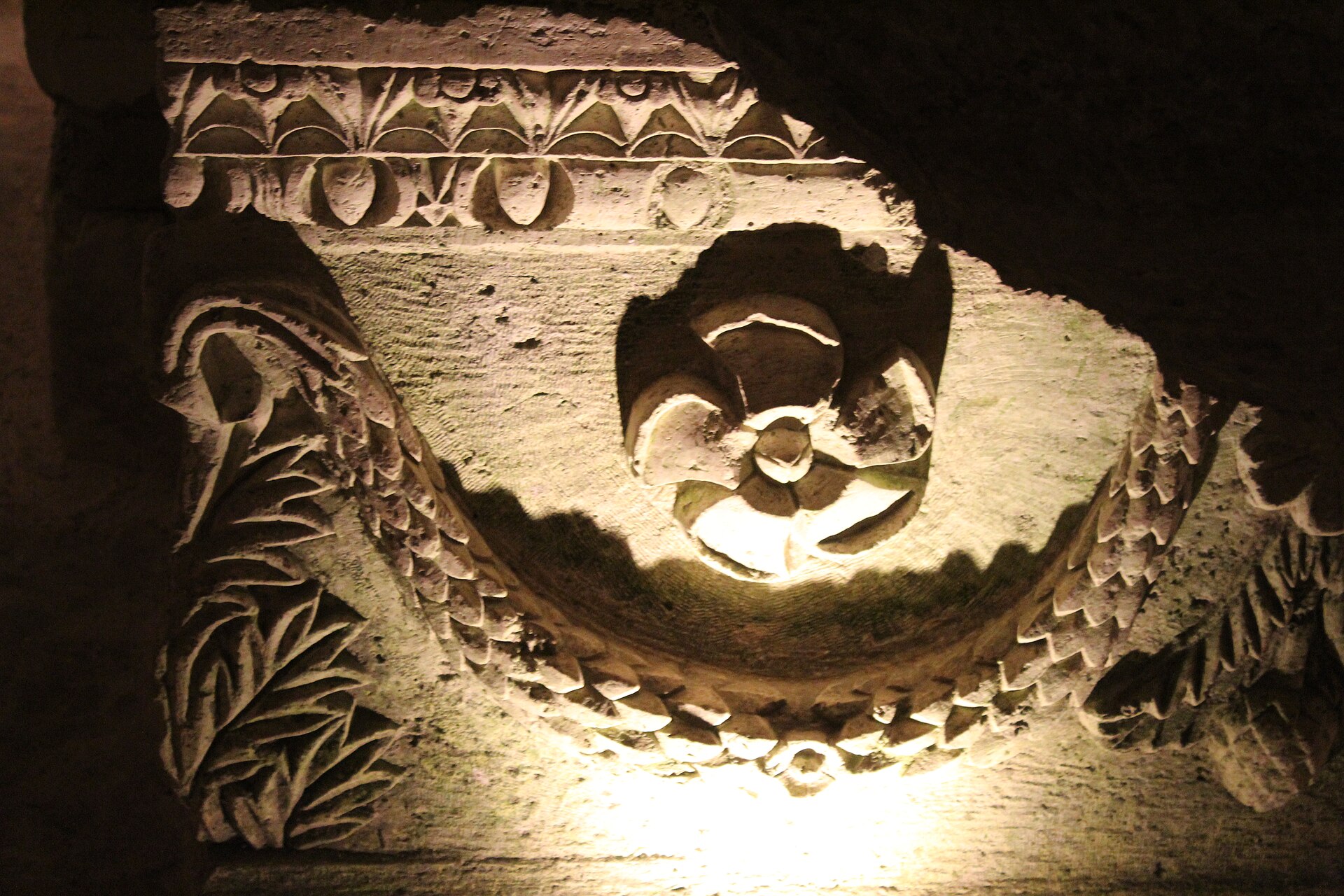
- The menorah chamber — Beit She'arim National Park
A chamber in the main catacomb shows a sarcophagus beside a carved menorah, the seven-branched lamp stand that marks many Jewish tombs here. It is a small, quiet detail that shows who the cave belonged to. Pause here to see how Jewish symbols sit alongside Roman-style carving.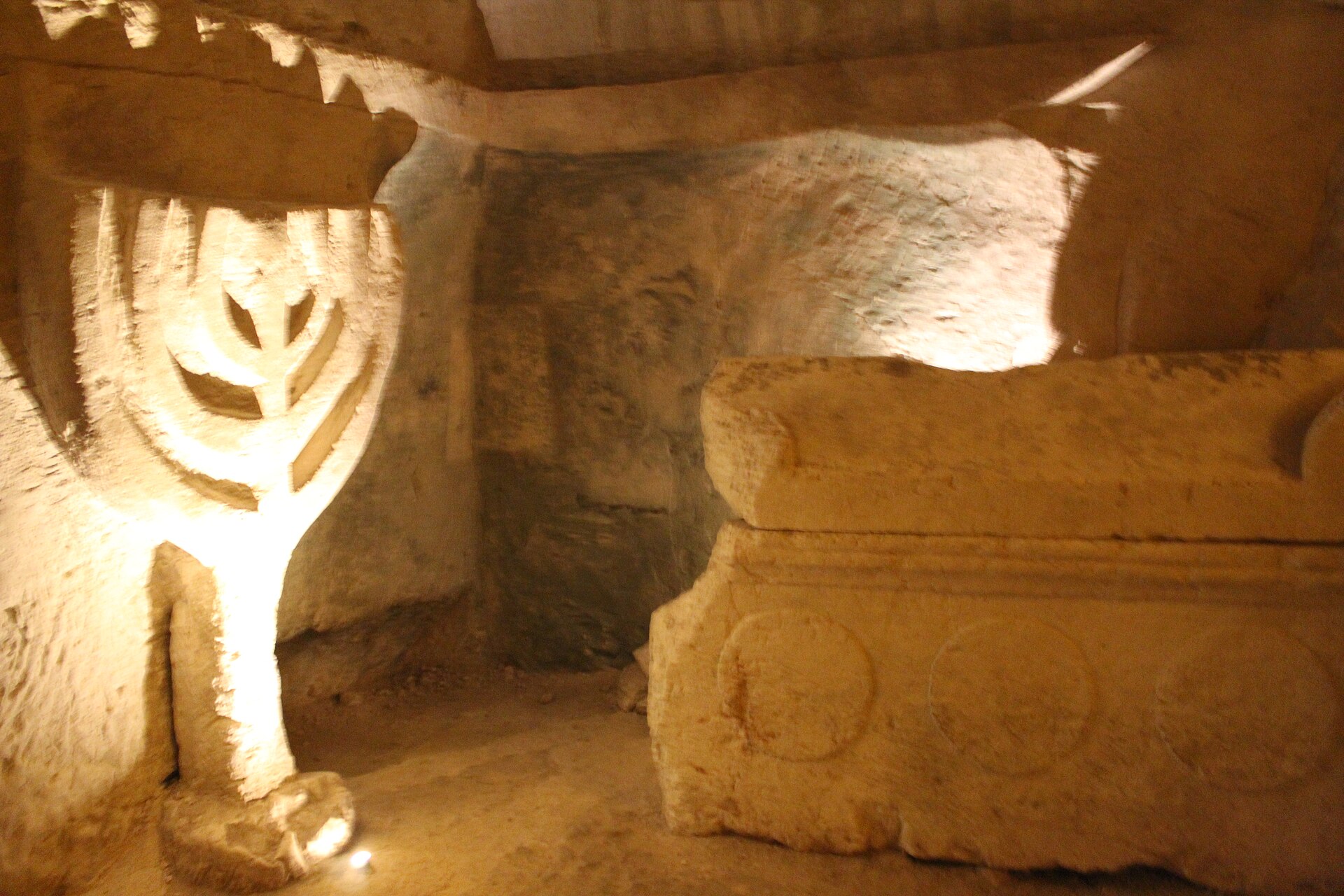
- Wall inscriptions — Beit She'arim National Park
Epitaphs scratched or painted on cave walls are some of the most personal things at the site. One Greek inscription records a man from Antioch who headed a council of elders. Short and plain, these lines show that the dead came from across the Mediterranean and Near East, not only the Galilee.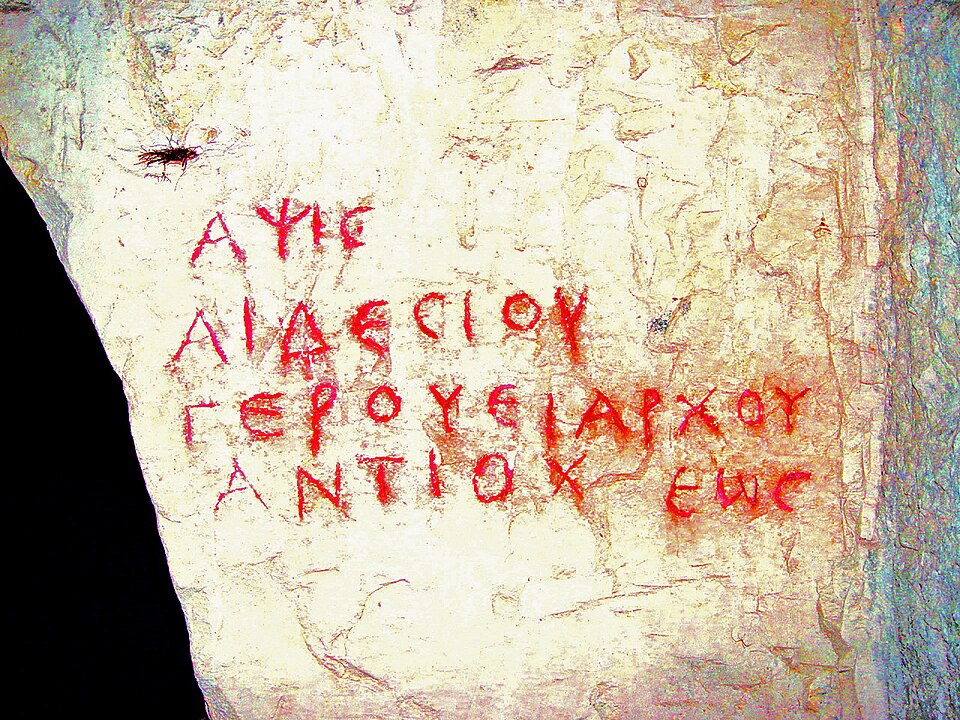
- Synagogue remains — Beit She'arim National Park
Beyond the caves, the park keeps traces of the ancient town, including the foundations of a synagogue. They are low and need some imagination, but they remind visitors that Beit She'arim was a living community and a seat of learning, not only a cemetery. Check the park map for what is currently open.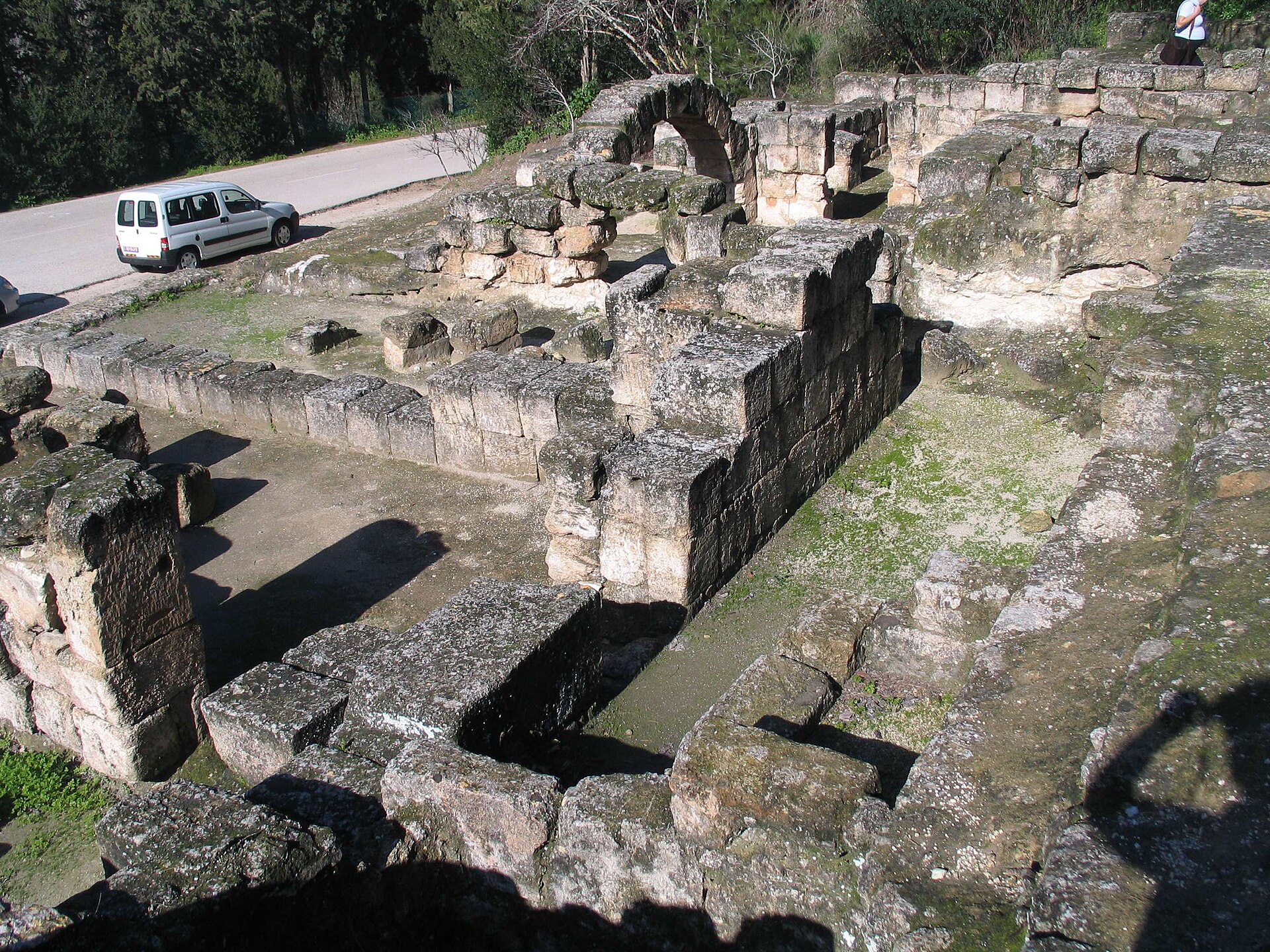
Culture
Beit She'arim is, first of all, a cemetery, and its culture is the culture of Jewish burial in the Roman and Byzantine Galilee. Families chose to bury their dead in rock-cut caves, in coffins or in wall niches, and many marked the place with a name, a symbol or a short blessing. The menorah appears again and again, and the inscriptions switch between Hebrew, Aramaic and Greek, which shows a community comfortable in several languages and tied to a wider Mediterranean world.
The burial of Judah ha-Nasi gave the site its pull. He edited the Mishnah, the written core of rabbinic law, and being laid near a scholar of that stature mattered to the people who followed. Some came from other lands, which is why a Greek epitaph here can name someone from Antioch. The practice of travelling to be buried in the Land of Israel is part of what the place records.
Today the area around the park is mixed. Kiryat Tiv'on is a Jewish town next door, and Nazareth, a short drive away, is a largely Arab city with a long Christian history. A visit works well as a day that touches several layers of the Galilee, and it is worth keeping in mind that Saturday is the Jewish day of rest, so opening hours and local transport can change.
In the caves, speak quietly, do not touch the carvings or climb on the sarcophagi, and treat the whole site as the burial ground it is.
What to wear
Beit She'arim sits in a region where dress has layers of history. In the Roman-era Galilee, people wore tunics and wrapped mantles of wool and linen, with belts and simple sandals, and the textiles of the time were woven from local flax and sheep's wool. Those garments survive today only as descriptions and a few fragments, not in the park itself.
Later traditions are easier to see. In Galilee villages and towns such as Nazareth, women's festive dress was long and embroidered, with cross-stitch patterns called tatreez worked onto cotton or linen. Many Jewish communities have their own customs: a kippah for men at prayer, tassels at the corners of a garment, and the best clothes kept for the Sabbath and holidays. Most of this is now brought out for weddings and festivals, not daily wear.
What people wear now is mostly ordinary modern clothing: shorts and T-shirts in summer, jeans and light jackets in winter. Observant families dress more modestly, and in Nazareth's churches and mosques, shoulders and knees are expected to be covered.
For the park, think practical. Wear sturdy shoes with grip, because the stone is uneven and can be slippery inside the caves. Bring a hat, sunglasses and sun cream for the open ground, and a light layer for the cool interiors. Carry a scarf or light cover-up if the day will include a church or mosque in Nazareth.
What to eat
- Katayef — Sweet shops and eateries in Nazareth's old city
A folded pancake stuffed with nuts or goat cheese and finished with sweet syrup. Wikivoyage calls it Nazareth's own speciality. It is a sweet, rich snack best eaten fresh, and a good reward after a morning among the tombs. - Falafel in half a pita — Falafel counters near the old market in Nazareth
Fried chickpea balls in pita with salad and sauces. A half portion is usually enough unless very hungry. Nazareth has long-running falafel counters, and it is a cheap, quick way to eat before or after the park. - Kenafeh — Sweet shops in Nazareth
A warm cheese pastry soaked in syrup, often topped with crushed pistachio. Nablus is considered the home of the dish, and Nazareth's versions are said to be less good, but it is still a classic dessert to try with strong coffee. - Mezze and grilled meats — Family-run Arab restaurants and eateries in Nazareth
Small plates of hummus, salads, pickles and breads, followed by grilled meat. Nazareth's Arab restaurants are known for generous hospitality, so ordering several dishes to share is the easiest way to taste the range of local cooking. - Taybeh beer — A bar with a patio near Mary's Well in Nazareth
A Palestinian beer brewed in the West Bank, served in some bars in Nazareth, often with peanuts or pretzels. It suits an evening after a hot day. Alcohol is not available everywhere, so ask before assuming.
Plan it
Best time. March–April and October–November, when days are mild enough to walk the open ground and the caves are comfortable. Summer afternoons are hot with little shade, and winter can bring rain, so the caves and paths may be damp.
How long. 1
Getting there. Fly to Ben Gurion Airport near Tel Aviv, or reach Haifa by rail, then continue towards Nazareth or Kiryat Tiv'on. A frequent bus (route 331) links Haifa and Nazareth and runs on Saturdays, unlike most Israeli services. For the last leg to the park, a taxi or hire car is simplest; check local bus options before travelling.
Budget. low
Tips
- Go in the morning, when it is cooler and the caves are quieter
- Check the National Parks Authority's official site for opening hours, tickets and any closures before travelling
- Carry water and a hat, because shade between the caves is limited
- Wear shoes with good grip for uneven and slippery stone
- Combine the visit with a meal in Nazareth, a short drive away
Etiquette
- Keep your voice down in the caves, which are burial places
- Do not touch the carvings or climb on the sarcophagi
- Dress modestly if you add churches or mosques in Nazareth to the day
Nearby
Sources
- Wikidata Q830805 (CC0)
- Wikipedia: Beit She'arim necropolis (rev 1372344444) (CC BY-SA 4.0)
- Wikivoyage: Beth Shearim (rev 5412372) (CC BY-SA 4.0)
- Photo: Cave of Coffins entrance, unknown author (CC BY 3.0)
- Photo: Catacomb no. 20 partially reconstructed, Davidbena (CC BY-SA 4.0)
- Photo: Greek epitaph, Etan Tal (CC BY 3.0)
- Photo: Menorah and sarcophagus, Davidbena (CC BY-SA 4.0)
- Photo: Decorated sarcophagus, Davidbena (CC BY-SA 4.0)
- Photo: Beyt Shearim synagogue, Bukvoed (CC BY 3.0)
- Photo: Visitors at the Cave of Coffins, Etan Tal (CC BY 3.0)
- Photo: The gate of Bet Shearim, Hanay (CC BY 3.0)


