Basel
Basel, Switzerland
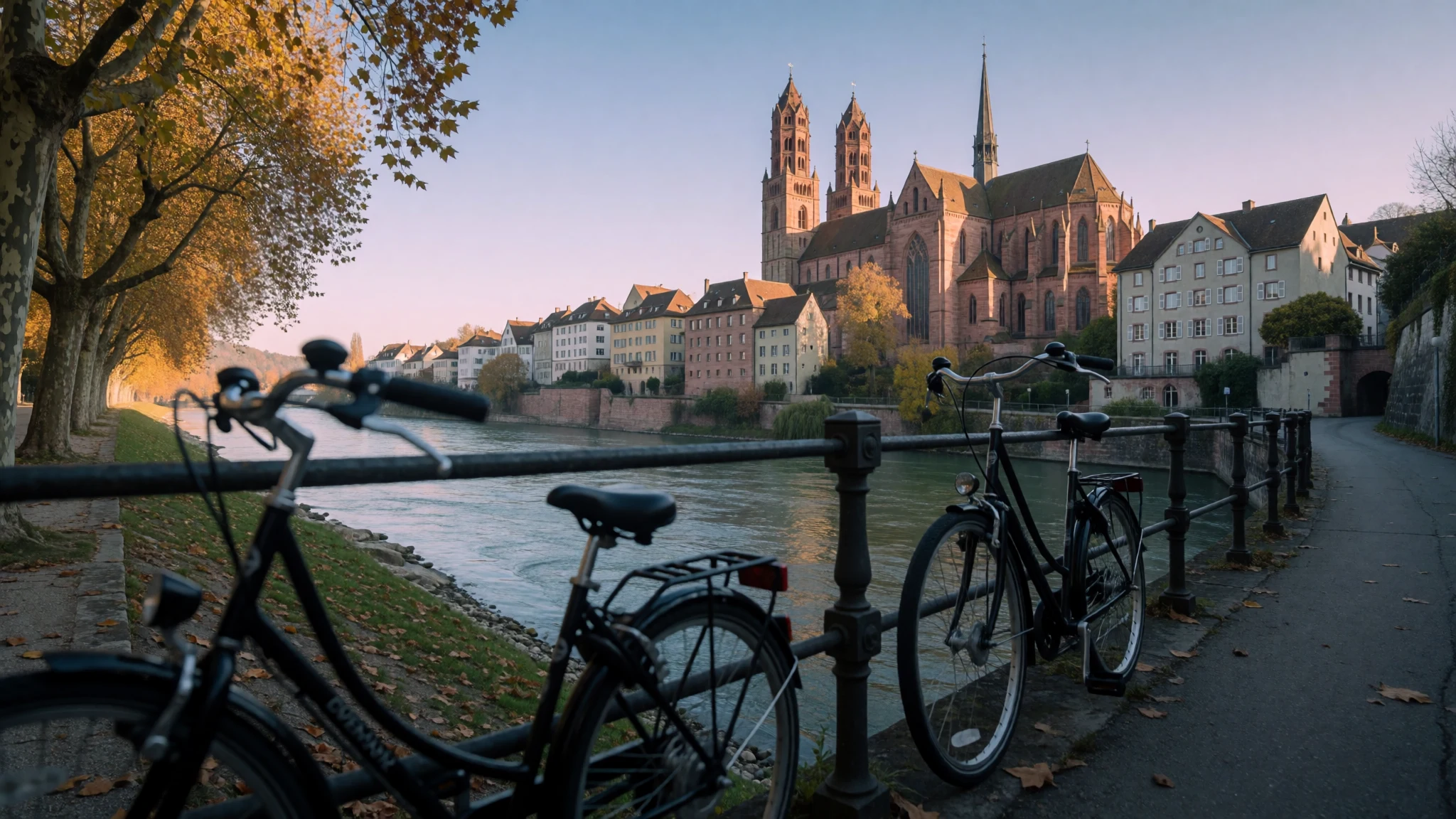
Basel packs serious museums, a red sandstone cathedral and a swimmable Rhine into a small, walkable border city where three countries meet.
The place
Basel sits in the far north-west corner of Switzerland, where the Rhine turns north out of its upper valley and begins its long run across the plain towards Germany and the Netherlands. The city has about 180,000 residents and stands at roughly 260 metres above sea level. It is a cantonal capital and a university town, and both facts show in the streets: students cycling past medieval gables, pharmaceutical towers on the skyline, and a river that locals float down on hot afternoons.
The border is part of the character. France and Germany are a tram ride or a short walk away, and the airport itself sits on French soil. Everyday speech is Swiss German, though French and German signs and accents mingle, and French maps may call the city Bâle, which matters when searching on a phone.
The Old Town climbs from the water to a sandstone cathedral on a terrace, with narrow lanes, fountains and a red town hall on the market square. Across the river, Kleinbasel feels more workaday, with cafés, bars and the Messe fairground. Art is the city's main calling card: dozens of museums for a place this size, from old masters to Tinguely's clattering machines and Renzo Piano's gallery at Riehen. Basel is compact, orderly and best taken slowly, on foot, with trams for the outer museums and a day trip or two across the border.
Its story
Basel's story starts with Celtic farmers and traders on the Rhine, long before any Roman arrived. A village of the Raurici stood north-west of today's Old Town, and when Roman armies moved into Gaul the settlers shifted to a defensible hill above the river, the site of the present cathedral. The Romans then built a fortified camp on that same hill. Upriver they founded Augusta Raurica, a planned provincial town whose theatre can still be walked through at Augst and Kaiseraugst. As Roman control faded in the later empire, Basel became a frontier outpost, and the hill stayed the centre of life.
Later centuries added a bishop's seat, a cathedral begun in the eleventh century, and a river crossing that tied the Swiss interior to the Upper Rhine plain. The great earthquake of 1356 wrecked much of the town, and rebuilding stretched into the early sixteenth century. Basel's printers and university drew scholars, and Erasmus is commemorated inside the Münster.
The city also kept a Roman founding legend. Since the Renaissance, tradition has named the senator Munatius Plancus as its founder, a classical ancestry that is tradition rather than documented fact. Early woodcuts and the seventeenth-century engraving by Matthäus Merian show a walled town stacked above the river, a view that still partly survives in the Old Town today.
What to see
- Basler Münster — Old Town, Grossbasel
The red sandstone cathedral crowns a terrace above the Rhine and mixes Romanesque and Gothic work. An earthquake in 1356 wrecked much of it, and rebuilding, then restoration, continued for centuries. Erasmus is commemorated inside. Walk out to the terrace behind it for river views and the small ferries below. - Kunstmuseum Basel — St Alban district, Grossbasel
The city's main art museum holds medieval and Renaissance paintings, including Holbein, alongside a large run of nineteenth and twentieth-century work and a room given to Picasso. Its collection became publicly accessible in 1661, an early date for any civic gallery. Allow half a day and check the official site for opening times. - Mittlere Brücke — Rhine crossing between Grossbasel and Kleinbasel
The Middle Bridge links Grossbasel and Kleinbasel and is a good place to see how the city sits on the Rhine. From it the cathedral, the old university and the houses along Rheinsprung line up above the water. Cross on foot, then walk the Kleinbasel bank for the reverse view.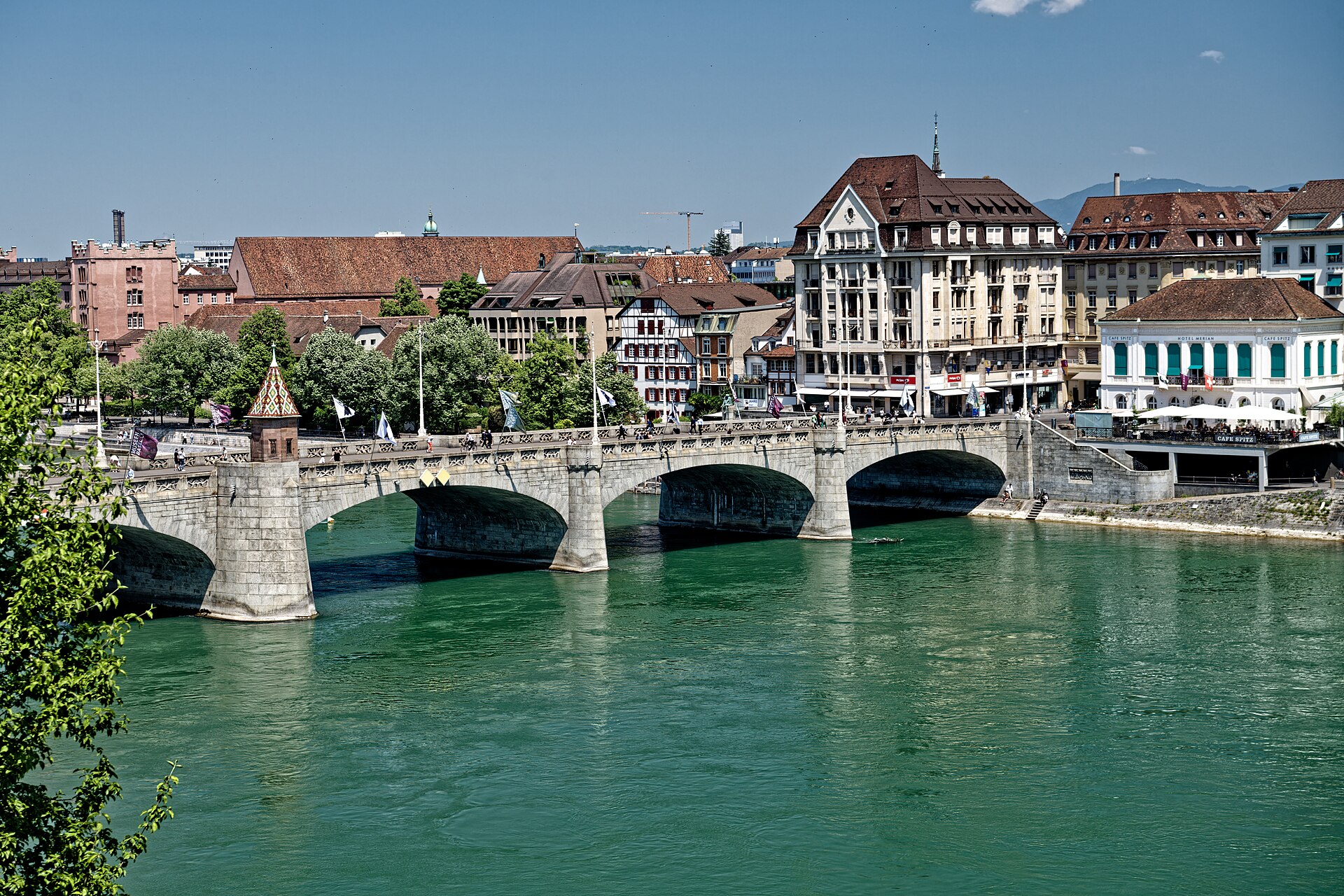
- Marktplatz and Rathaus — Marktplatz, Old Town
The red town hall dates from the sixteenth century and is covered in painted murals, on its outer walls and around its inner courtyard. It faces the market square, where stalls set up on market days. Step into the courtyard when the doors are open and look closely at the paintwork. - Augusta Raurica — Augst and Kaiseraugst, upriver from Basel
A short journey upriver, at Augst and Kaiseraugst, lie the remains of a Roman provincial town, with a theatre that still stands in recognisable shape. It gives Basel's Roman layer a physical form and suits a half-day out. Check the official site for the museum and site opening arrangements.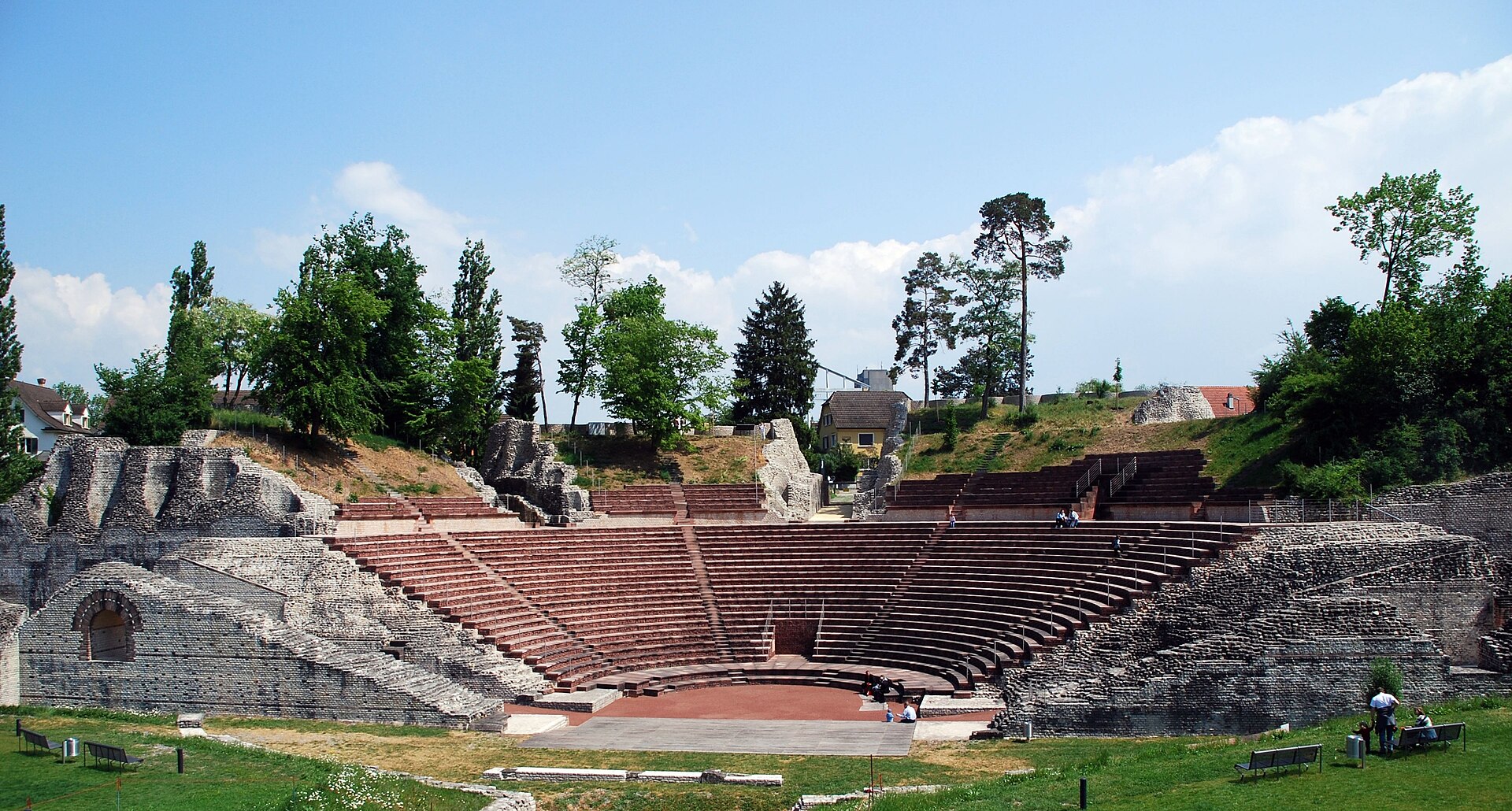
Culture
Basel's cultural life revolves around art, architecture and a carnival the whole city takes seriously. The Kunstmuseum's collection was opened to the public in 1661, and later arrivals include the Museum Tinguely, the Museum der Kulturen and Renzo Piano's Fondation Beyeler in Riehen. Just over the German border at Weil am Rhein, the Vitra campus has buildings by Zaha Hadid, Frank Gehry, Álvaro Siza and Tadao Ando, reachable by tram and a short walk. The Old Town's red sandstone Münster and town hall give the historic backdrop, while the Roche towers beside the river show the pharmaceutical industry that shapes the modern skyline.
Fasnacht, the late-winter carnival, fills the streets with masked cliques, piping, drumming, lanterns and satirical verses, and many residents spend months preparing. Daily life is orderly and punctual: trams run on time, bicycles have their own lanes, and most shops are closed on Sundays. The language is Swiss German, but English is widely understood in shops and museums, and a friendly 'Grüezi' on entering a small shop is appreciated.
Inside the Münster and other churches, keep your voice low and ask before photographing anyone at prayer or during a service.
What to wear
Basel has no single everyday costume, but its clothing traditions are real. The city's historic wealth came partly from silk-ribbon weaving, and silk, wool and linen mark older regional dress, the Tracht, now mostly seen at folk festivals, national days and in costume groups. The most striking textile moment is Fasnacht, when cliques wear elaborate costumes, carry painted lanterns and put on papier-mâché masks and oversized heads called Larven.
Day to day, Baslers dress smart-casual and practical: dark jackets, scarves, good shoes, bicycle helmets, and trainers worn with tailored trousers. In summer many people carry a waterproof bag to float their belongings down the Rhine while swimming. Business clothing is visible around the pharmaceutical firms and banks but stays understated.
Visitors should pack layers: the city can be warm in summer and cold, damp or foggy in winter, and a light waterproof is useful in any season. Comfortable shoes with grip matter on cobbles and wet riverside steps. Shoulders and knees need not be covered in churches, but quiet, tidy dress is respectful, and swimwear belongs by the river rather than in streets and museums.
What to eat
- Basler Läckerli — Old Town confectioners and bakeries
A chewy, spiced honey biscuit with candied peel and almonds, topped with a thin white sugar glaze. A Basel classic, sold in tins as a souvenir. Eat a piece with coffee while walking the Old Town. - Mehlsuppe — Traditional restaurants, especially around Fasnacht
A brown, toasted-flour soup, often finished with grated cheese. It is tied to the Fasnacht carnival, when it is served in the cold early hours, but some traditional restaurants list it in the colder months too. Rich, warming and plain. - Zwiebelwähe — Bakeries and traditional restaurants
A thin, crisp-edged tart of onions baked in an egg and cream custard, often with caraway. It is another Fasnacht favourite, and bakeries and traditional restaurants sell it warm in winter. Plain, savoury and filling, it pairs well with a glass of white wine. - Brötli — Cafés and bars around Barfüsserplatz
Small open sandwiches, the Swiss 'Brötli', piled with cheese, cured meats or vegetables on fresh bread. They suit a light lunch or a quick snack between museums. Bars and cafés around Barfüsserplatz offer wide selections. - Cheese fondue — Traditional Swiss restaurants in the Old Town
A communal pot of melted cheese, white wine and garlic, eaten by dipping cubes of bread on long forks. It is Swiss rather than purely Basel, but traditional restaurants serve it from autumn through winter, and it suits a cold evening after an Old Town walk.
Plan it
Best time. April and September–October, when days are mild to warm and the Rhine is pleasant to walk beside and, in summer, to swim in. July and August can be hot; winters are cold and grey, though the Fasnacht carnival in late winter is lively.
How long. 2–3
Getting there. EuroAirport Basel Mulhouse Freiburg (codes BSL, MLH and EAP) lies about 4 km north-west of the city, on the French side of the border, with a road link into Basel. Zurich airport is about 90 minutes away by train. Basel SBB station is the rail hub, and trams cover the last leg into the centre.
Budget. high
Tips
- Try all three airport codes (BSL, MLH, EAP) when searching for flights
- Check each museum's website for opening days and for booking advice on big exhibitions
- Cards are widely accepted, but carry a little cash for small stalls
- Wear shoes with grip for cobbles and wet riverside steps
- Switzerland is expensive: lunch from a bakery or supermarket counter keeps costs down
Etiquette
- Greet shopkeepers with 'Grüezi' when entering a small shop
- Keep voices low in churches and on trams
- Ask before photographing people, especially Fasnacht participants
Nearby
Sources
- Wikidata Q78 (CC0)
- Wikipedia: Basel (rev 1384592070) (CC BY-SA 4.0)
- Wikivoyage: Basel (rev 5394514) (CC BY-SA 4.0)
- Photo: Basel, Switzerland — Norbert Aepli (CC BY 2.5)
- Photo: Alte Universität, Weisses und Blaues Haus — JoachimKohler-HB (CC BY-SA 4.0)
- Photo: Mittlere Rheinbrücke — Tilman2007 (CC BY-SA 4.0)
- Photo: Roche Hochhäuser, Grenzacher Strasse — Tilman2007 (CC BY-SA 4.0)
- Photo: Cold Day in Basel — Karlheinz Klingbeil (CC BY 4.0)
- Photo: The Roman theatre of Augusta Raurica — Wladyslaw (CC BY 3.0)
- Photo: Woodcut of Basel from the Nuremberg Chronicle (Public domain)
- Photo: Ansicht der Stadt Basel, um 1642 — Matthäus Merian (Public domain)


