Bandhavgarh National Park
Bandhavgarh National Park, India
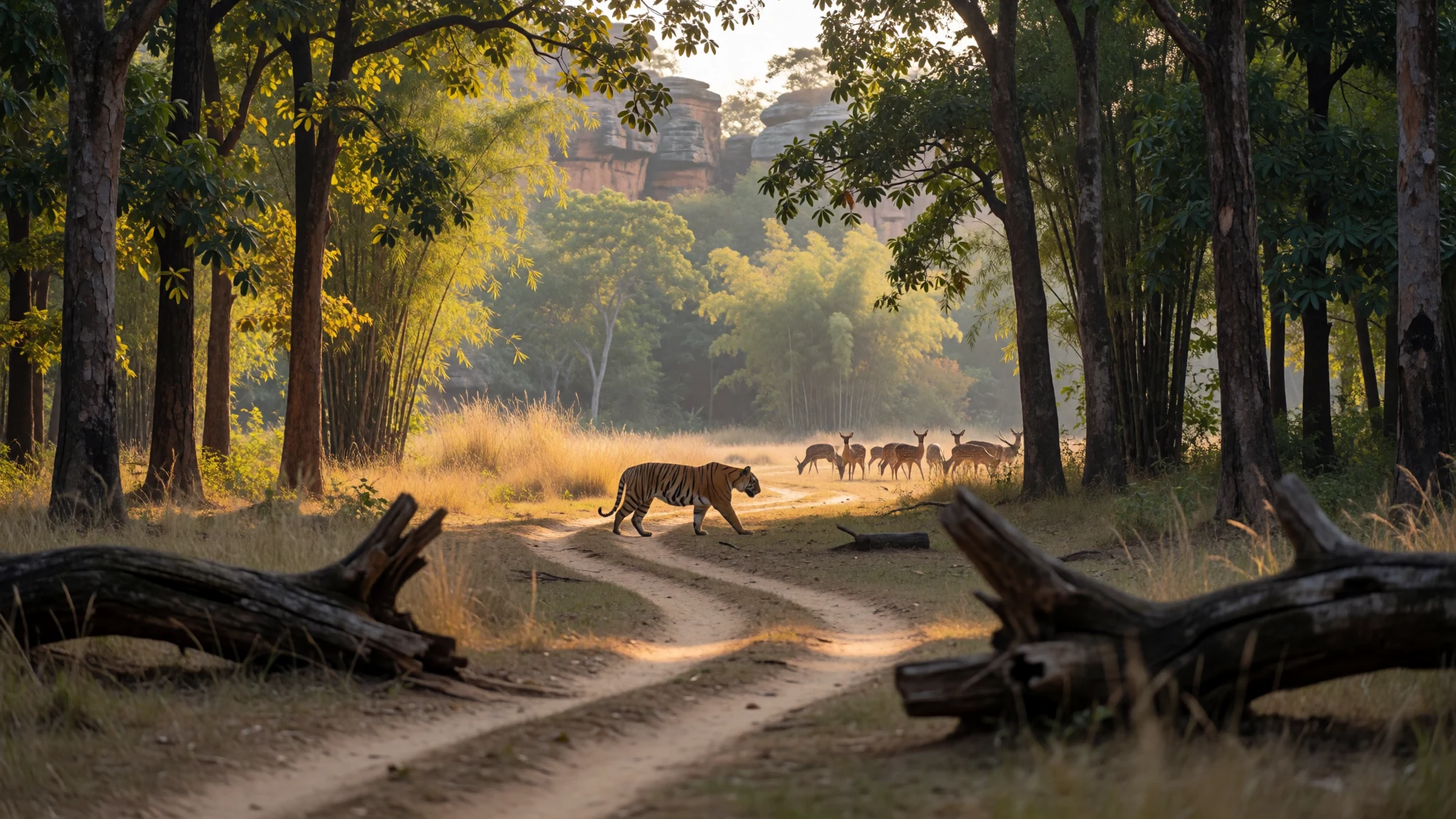
Bandhavgarh National Park packs tiger safaris, rock-cut caves and an old hill fort into one compact stretch of central Indian forest.
The place
Bandhavgarh National Park sits in the Umaria district of eastern Madhya Pradesh, in central India, and was declared a national park in 1968. Its character comes from a compact landscape: low, steep-sided hills, sal forest on the slopes, bamboo in the gullies and open grassy clearings in the valleys between. Those clearings are where many sightings happen, because deer and wild boar graze there and the big cats are rarely far behind. The park became a tiger reserve in 1993. The core area of the reserve covers 716 sq km, and the whole reserve, with its buffer of surrounding forest and village land, comes to 1,536 sq km. Safaris are organised by zone. The three main ones are Tala, Magdhi and Khitauli, each with its own entrance and feel. Tala, the village at the main gate, is where most visitors base themselves, and it has the widest choice of lodges and eateries. Besides tigers, the park holds leopards, sambar and a long bird list, and the forest also hides caves and carved rock far older than the protection it now enjoys. Expectations are worth setting honestly: a tiger sighting is likely to be a matter of patience, luck and a good guide, never a promise. Seasons shape everything. The park is closed from 1 July to 30 September, the monsoon months. Summer is hot, dry and dusty. Winter mornings in an open jeep are properly cold, with temperatures reported to fall as low as 0°C, so one trip can call for a jacket at dawn and sunglasses by noon.
Its story
Bandhavgarh National Park takes its name from the fort on its central hill. Local tradition says Rama gave the fort to his brother Lakshmana so that he could keep watch over Lanka, and the name reads, roughly, as 'brother's fort'. The recorded political story begins with the state of Rewa, founded in 1234 by Vyaghra Dev, a descendant of the Vaghelas of Gujarat. Bandhogarh, as the fort was then spelt, came to the family as the dowry of his wife, the daughter of the Raja of Ratanpur. The Mughals took it in 1597 almost by accident. When Maharaja Virbhadra Rao died in 1593, his young son was sent to Delhi for safety, and the emperor used the absence to place a loyal noble in charge. Once that governor held the fort, the Maharaja's officials were expelled and the place was annexed. Later the forest returned to the rulers of Rewa, who treated it as a royal hunting ground, and the area's reputation for tigers grew out of that. Formal protection came in two steps: national park status in 1968, then tiger reserve status in 1993. Today the story is mostly one of management. Forest guards patrol the zones, some of them on bicycles, villages sit along the edge of the reserve, and the park has to balance the interest of visitors against the peace the animals need to breed and hunt.
What to see
- Tala zone safari — Tala, Umaria district
Tala is the zone most visitors book first, entered from the village of the same name. Jeeps follow forest tracks through sal woodland and meadow, with a guide and driver watching for alarm calls from deer and langurs. Mornings are cold and quiet; afternoons are warmer. Tigers are the aim, but leopards and sambar often turn up instead.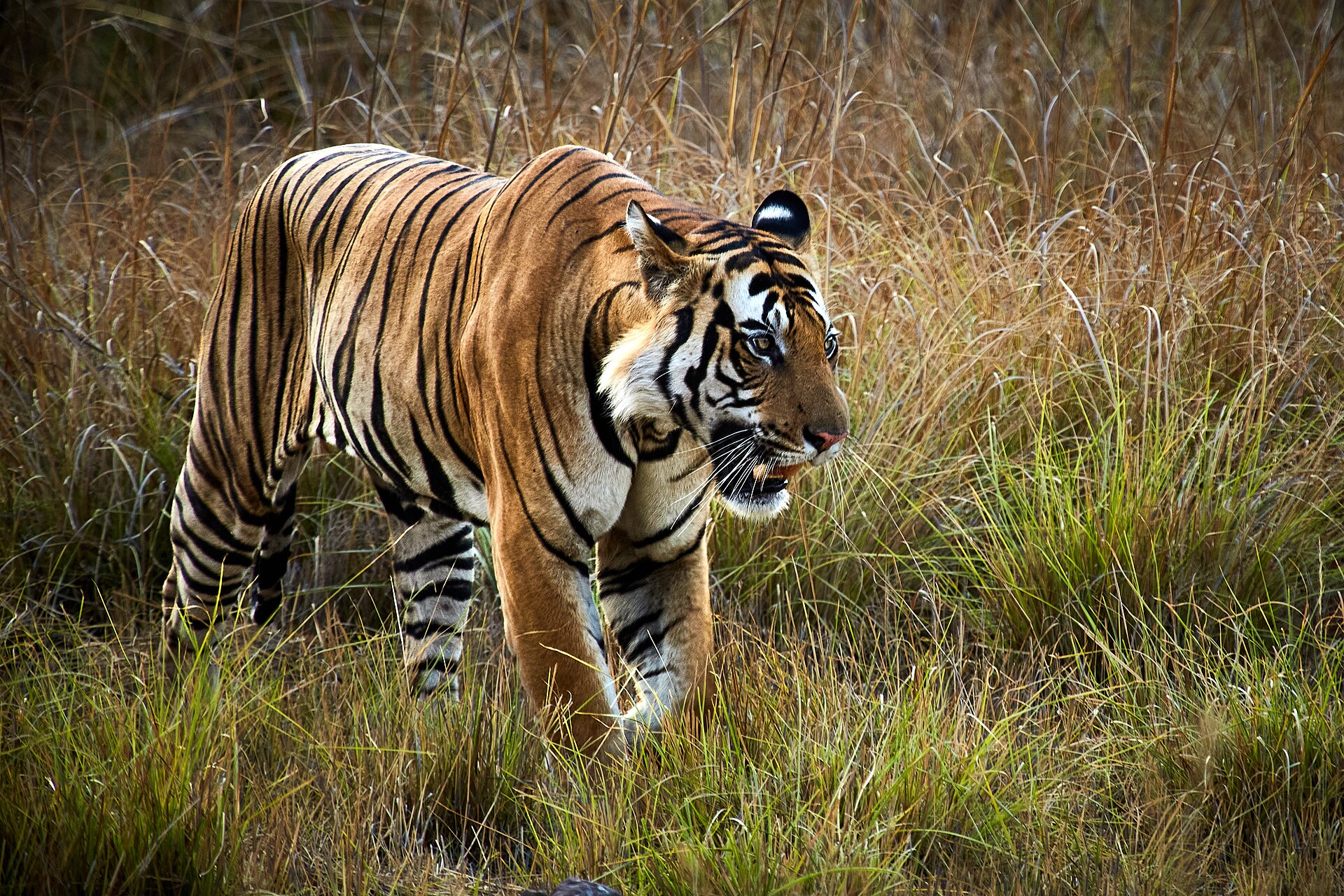
- Magdhi zone — Magdhi, Umaria district
Magdhi is another of the main safari zones, with its own gate and a different mix of forest and clearing from Tala. It is worth including on a longer stay, since a second zone means a second set of tracks and a fresh chance at sightings. Forest guards sometimes patrol here by bicycle, a reminder of how the park is protected.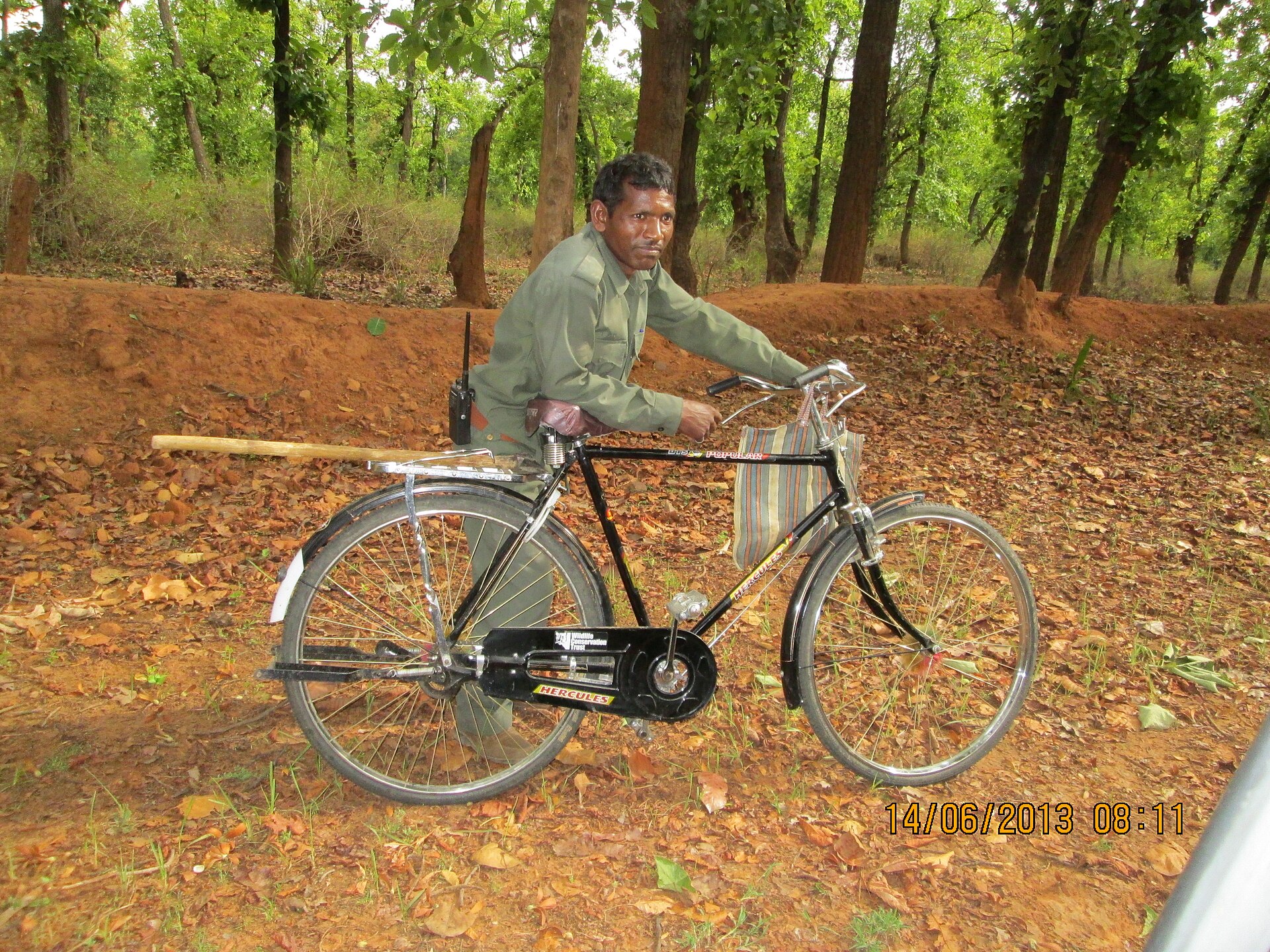
- Bandhavgarh Fort — Central hills of the park
The fort stands on a high plateau among the park's hills, ringed by cliffs that drop sharply to the forest. Its ruins, tanks and gateways trace centuries of Rewa and Mughal history. Access is normally part of a safari, with the driver climbing the hill track. The views over the canopy are the reward.
- Shesh Shaya — Below the fort, near the Charan Ganga spring
Shesh Shaya is a large rock-carved figure of Vishnu reclining under the hood of the serpent Shesh Nag, dated by tradition to the 10th century. A stream, said to be the source of the Charan Ganga, rises near the figure's feet. Shivalinga and Brahma carvings stand close by, and a line of old caves runs along the hillside. - Jwalamukhi Temple — Banks of the Charan Ganga, near the park
This temple to the goddess Jwalamukhi sits beside the Charan Ganga stream and is traditionally dated to the 10th century. It is a quiet stop for anyone interested in the human history around the reserve rather than its wildlife. Ask a local guide about current access, since the route runs close to protected forest.
Culture
Bandhavgarh National Park sits in a part of India where religion and forest have long been intertwined. The fort's story is tied to the Ramayana, and the rock-cut Vishnu at Shesh Shaya, with a spring said to rise from his feet, is still a place of worship as well as a historical site. Many local families see the tiger as a presence to be respected rather than only admired. Communities along the edge of the reserve, including Gond and Baiga families, have lived with the forest for generations, using it for food, fuel and ritual. Village life around Tala runs on a rhythm of safari jeeps, tea stalls and small shrines, and visitors pass through all three. Rewa's former rulers also shaped the area's culture. Their hunting heritage now sits awkwardly beside present-day conservation, and guides often speak openly about that shift. Festivals such as Diwali and Holi are celebrated across the district, and village temples often hold fairs with local music and food. Conservation work is a form of local pride, with guides, drivers and forest staff talking about the park's animals by name and personality. Listening to them is one of the better ways to understand the place. At the Shesh Shaya and other shrines, remove your shoes before approaching the carvings, keep your voice low, and ask before photographing worshippers.
What to wear
Bandhavgarh National Park lies in a region where everyday dress is shaped by climate and community. Traditionally, women in Madhya Pradesh villages wear the sari, often in cotton, draped in regional styles, and men wear the dhoti or kurta with a cloth head wrap or safa on formal days. Tribal communities near the reserve, including Gond and Baiga families, have their own jewellery, tattoo traditions and woven cloth, worn most visibly at festivals and weddings. Rewa's old court culture is remembered through silk and brocade worn at ceremonies. What people wear now is largely practical: cotton salwar kameez or saris for women, shirts and trousers or kurta-pyjamas for men, with jeans and shirts common among younger people in Tala and Umaria. Sandals and rubber slippers are the usual footwear. For a visitor, the key is the safari. Choose muted greens, browns and khaki so as not to stand out to wildlife, and avoid bright colours and white. Winter mornings in open jeeps are cold, so bring layers, a woollen cap, gloves and a windproof jacket, then shed them by midday. In summer, wear light long sleeves, a hat and sunscreen against the heat and dust. Closed, comfortable shoes work best on rough ground. For temples, cover shoulders and knees, and carry socks if you dislike bare feet on stone.
What to eat
- Vegetarian thali — Simple eateries and lodge dining rooms in Tala village
The standard meal around Tala is a plate of dal, seasonal vegetables, rice, roti and pickle, served hot and fresh. It suits the hours of safari life, with an early breakfast, a mid-morning snack and a full meal after the afternoon drive. - Pure vegetarian meals — Vegetarian-only eateries near the Tala gate
Some eateries near the main gate serve strictly vegetarian food, and one is run on Jain principles. Expect lightly spiced dishes, plain dal and fresh bread. They are usually economical and a good choice for families or anyone avoiding meat and eggs. - Poha and jalebi — Roadside stalls and tea shops at breakfast time
Flattened rice cooked with onion, turmeric and peanuts is a common central Indian breakfast, often sold with a hot, syrupy jalebi on the side. It is cheap, filling and ready before the early safari gates open. - Chai and samosa — Tea stalls in Tala and outside Umaria railway station
Milky, sweet tea and a fried, spiced potato samosa are the standard pick-me-up for travellers on the road or waiting for a train. Vendors work from early morning, which suits the pre-dawn starts that safaris demand. - Millet dishes (kodo and kutki) — Village homes and community-run stays near the reserve
Kodo and kutki are small millets traditionally eaten by forest-edge communities, usually cooked like rice or porridge. They are not always on menus, so ask a guide or host whether a family-run place can prepare them.
Plan it
Best time. November to March is the comfortable window, with cool mornings, dry weather and clear tracks; December and January can be cold in open jeeps. April to June is hot, dry and dusty. The park is closed from 1 July to 30 September for the monsoon, so check current dates on the official site.
How long. 2–3
Getting there. Umaria is the nearest railway station, with sleeper trains from Delhi and Agra, and a jeep ride on to Tala, the village at the main gate. Katni, a major junction, is a further option, about 2 to 2½ hours away by road. Jabalpur, the nearest city, is about 164 km away and has an airport; arrange the onward road transfer in advance.
Budget. mid
Tips
- Book safari permits and a guide ahead through the official site, mpforest.org/bandhavgarh.html, because zone entries are limited and busy periods fill up.
- Allow at least three safaris across two zones, since a single drive may not produce a tiger.
- Carry packed drinking water for every safari and avoid tap water.
- Pack layers for pre-dawn winter drives, when open jeeps are cold, and sun protection for midday.
- Keep some cash for tea stalls, village shops and tips, as cards are not accepted everywhere around Tala.
Etiquette
- Stay seated in the jeep, keep your voice low and never try to attract or feed animals.
- Follow the guide's instructions on distance, especially if a tiger or elephant is nearby.
- Remove shoes at shrines and ask before photographing local people.
Nearby
Sources
- Wikidata Q806310 (CC0)
- Wikipedia: Bandhavgarh National Park (rev 1374899840) (CC BY-SA 4.0)
- Wikivoyage: Bandhavgarh National Park (rev 5394372) (CC BY-SA 4.0)
- Tigress in Bandhavgarh NP, User:Archith (CC BY 3.0)
- Bandhavgarh National Park Morning Light, Prithwiraj Dhang (CC BY-SA 4.0)
- A leopard in the Bandhavgarh National Park, Anuj shree (CC BY-SA 4.0)
- Sambar stag at Bandhavgarh National Park, Kandukuru Nagarjun (CC BY 2.5)
- Bandhavgarh National Park, Tom Thai (CC BY 2.5)
- A Bengal tiger, Bandhavgarh National Park, Thomas Fuhrmann (CC BY-SA 4.0)
- Bandhavgarh forest patrol guard, Magdhi Zone, Rudolph.A.furtado (CC0 1.0)
- Bandhavgarh National Park 01, Bernard Gagnon (CC BY 4.0)


