Avenue of the Baobabs
Avenue of the Baobabs, Madagascar
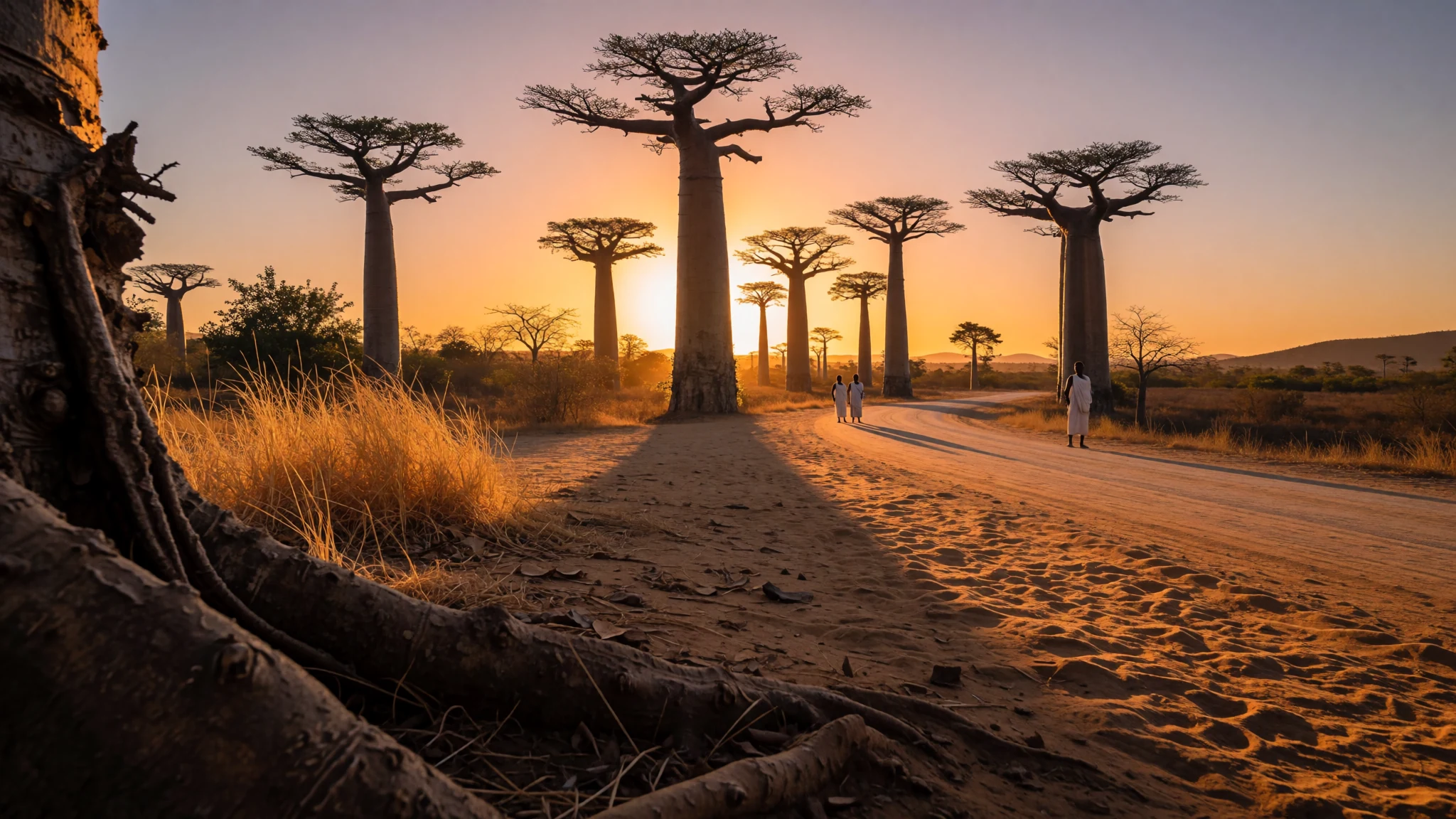
Few landscapes look like this: a dusty road lined with ancient, bottle-shaped baobabs, best seen in the soft light of late afternoon.
The place
The Avenue of the Baobabs sits on the west coast of Madagascar, in the Menabe region, where an unpaved road runs north of the coastal town of Morondava towards Belon'i Tsiribihina. The trees are Grandidier's baobabs, a species found only on this island. A grove of about twenty to twenty-five of them lines one short stretch of the road, and a further couple of dozen grow over nearby rice paddies and meadows. Their trunks are swollen and grey, and their crowns look small for the bulk beneath, which is why the scene photographs so well.
Most people do not come to Madagascar only for baobabs, but many make this stop part of a western trip. Visitors gather at sunset, when the light is at its warmest, and the road is quieter at other times of day. The site has become a focus for local conservation, and in 2007 the trees received temporary protected status from the national environment ministry, a step towards recognising the avenue as a natural monument. The surrounding land of scrub and fields gives a sense of how much of the original forest has gone.
Heat, dust and a long drive from Morondava are the trade-offs for seeing the trees in their open setting. The avenue is a short distance from town, so most visitors combine it with a half-day trip rather than a full day.
Its story
The Avenue of the Baobabs has its roots in a forest that has largely disappeared. Before the land was cleared, these trees grew among dense tropical trees rather than standing alone in open ground. As the population of Madagascar grew over the years, the forests were cut back for farming, and the baobabs were left behind. Local people kept them, partly because the trees gave food and building material, and partly out of respect for what they represented.
The trees are known locally as renala or reniala, a name that comes from Malagasy words meaning something like mother of the forest. That name fits the way they have been treated, not as a crop to be cut down but as an elder that stays when everything else has gone. Baobabs grow slowly, so losses are hard to reverse, and the trees now depend on keeping the surrounding land and their young seedlings protected.
In 2007 the national environment ministry granted the avenue temporary protected status, with the aim of moving it towards recognition as Madagascar's first natural monument. Local conservation efforts, nearby villages and visitors have all shaped what happens next, and the balance between tourism and farming remains a live question.
Seven kilometres north-west, the Baobab Amoureux tell a different story. Two Adansonia za trees, another endemic baobab species, have grown twisted around each other over the centuries, and a legend says they came together and grew as one. It is a reminder that the baobabs here are more than scenery; they are part of how people describe their land.
What to see
- The Avenue of the Baobabs — Menabe region, north of Morondava
The Avenue of the Baobabs lines an unpaved stretch of Road No.8 north of Morondava, in the Menabe region. Grandidier's baobabs stand in a grove along a short stretch of the road, with more scattered over nearby rice paddies. Go in the late afternoon for the light, and expect other visitors at sunset. It is a short drive from Morondava, so a half-day trip works well.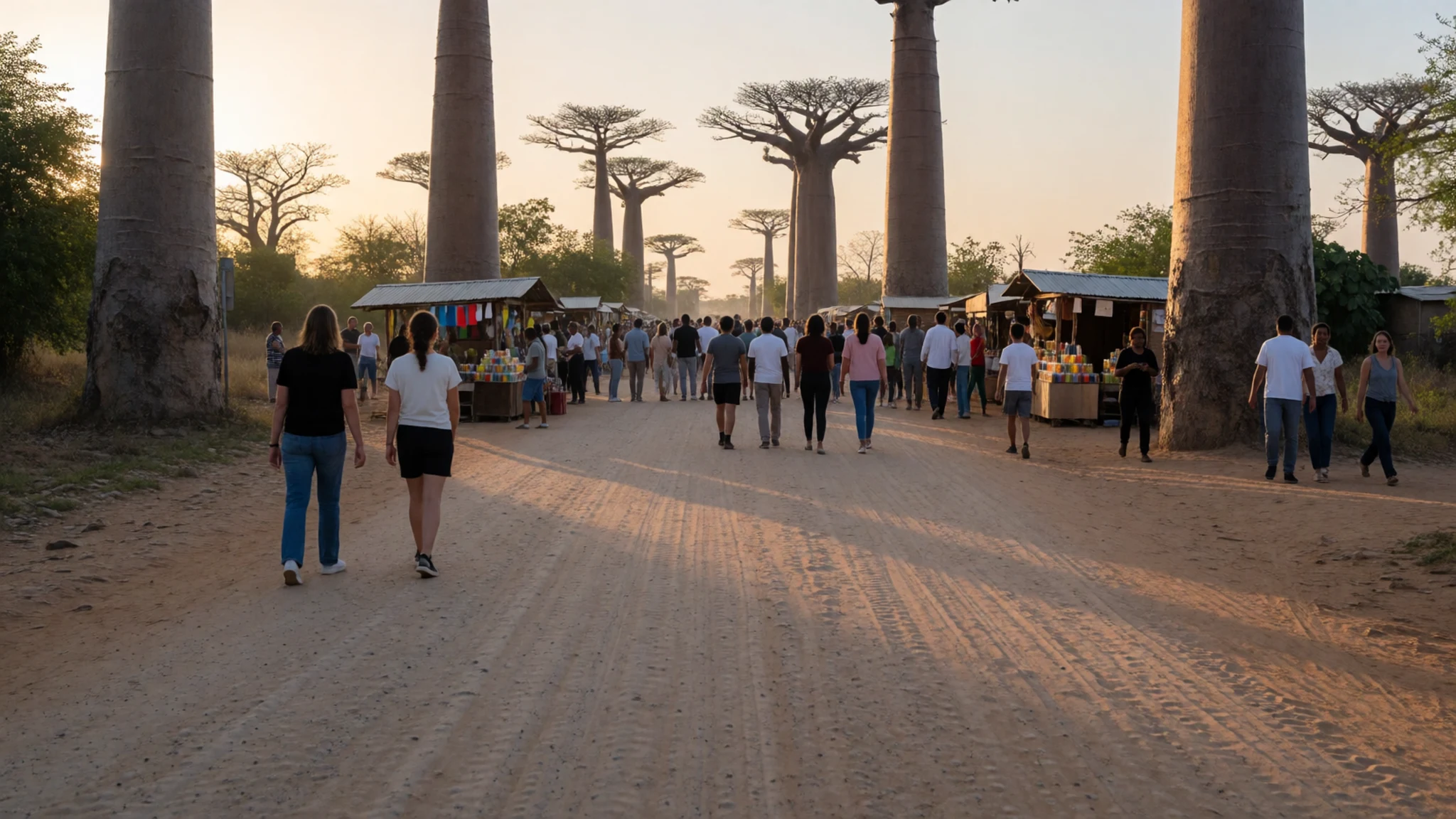
- Baobab Amoureux — About 7 km north-west of the avenue
The Baobab Amoureux are two Adansonia za trees that have grown twisted around each other over the centuries. They lie about 7 km north-west of the avenue, so they are an easy addition on the same trip. Local legend says the pair came together and grew into one shape. Mornings tend to be cooler, which helps on a long walk.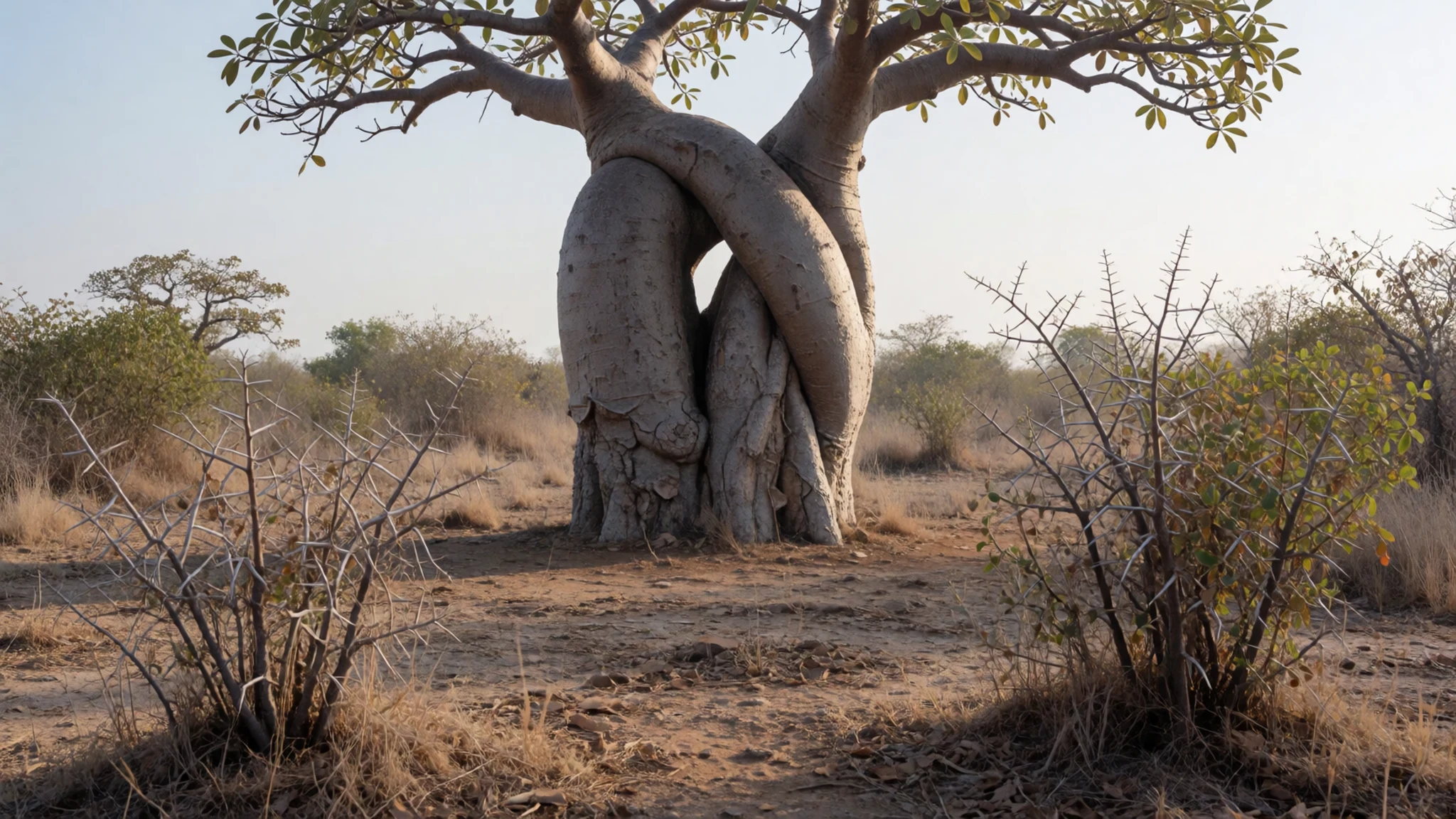
- Tsingy de Bemaraha Strict Nature Reserve — Western Madagascar, a separate trip from Morondava
Tsingy de Bemaraha Strict Nature Reserve protects a raised limestone plateau cut into razor-sharp pinnacles, known locally as the Tsingy. Its scale and rough ground make it a separate trip from the avenue, usually with a guide and a full day or more set aside. Wear sturdy shoes with good grip, and check conditions and permits before you go.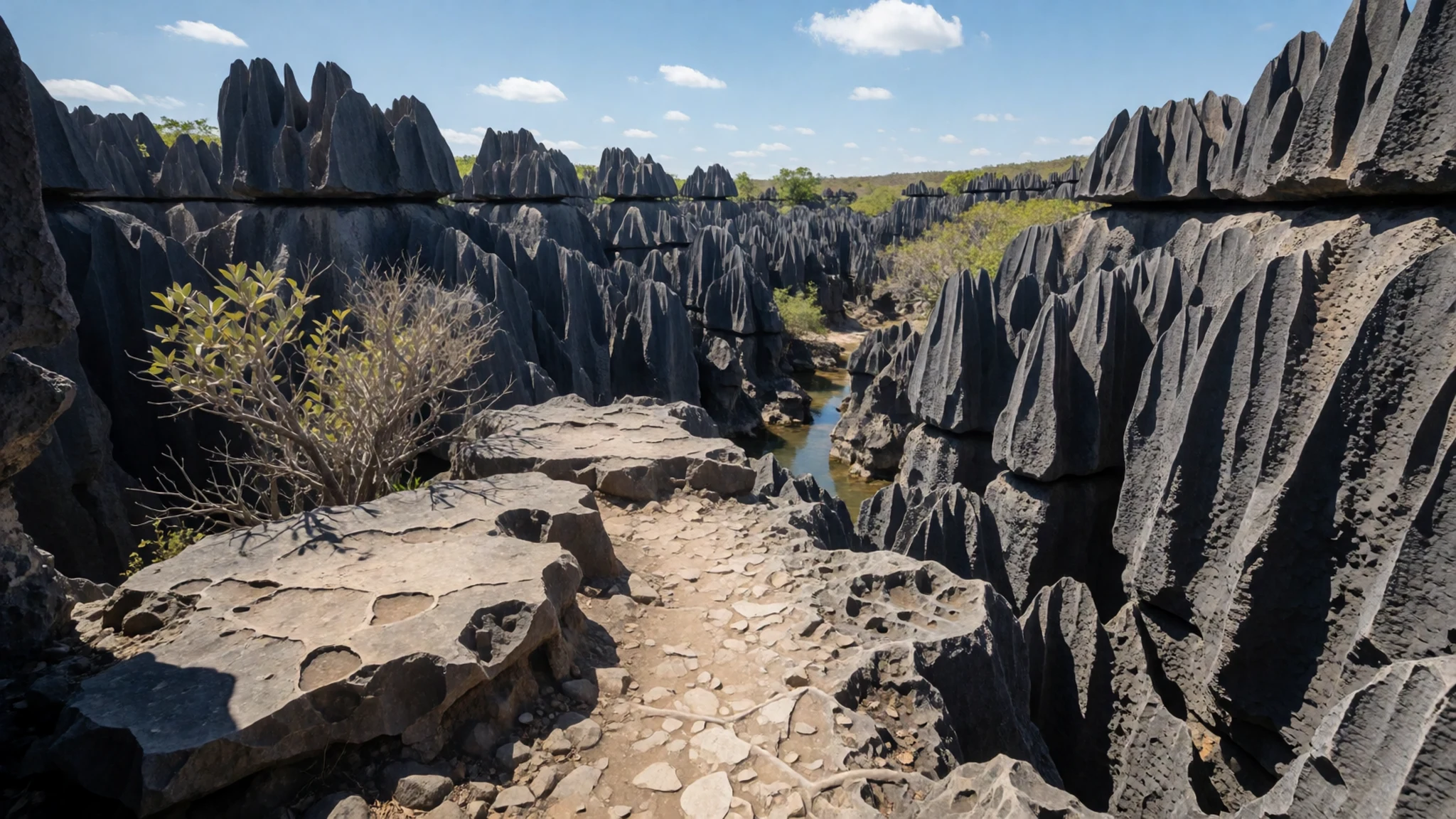
- Andasibe-Mantadia National Park — Eastern Madagascar, a few hours from Antananarivo
Andasibe-Mantadia National Park sits a few hours from the capital by paved road, which makes it an easy wildlife stop from Antananarivo. It is a good contrast to the dry west, with rainforest, lemurs and a slower pace. Book a local guide at the park entrance, and expect early starts for the best animal sightings.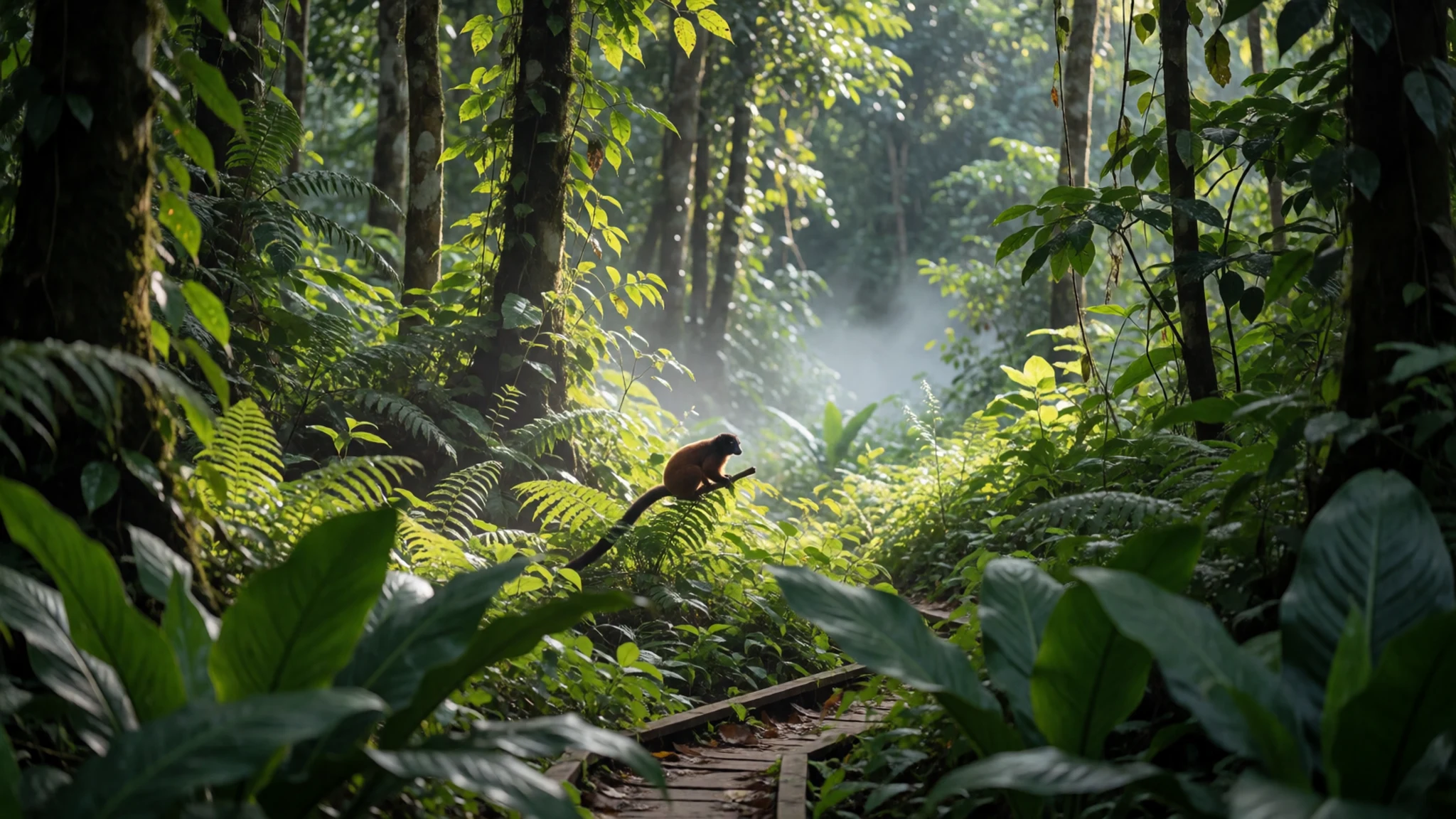
Culture
Around the Avenue of the Baobabs, everyday life is shaped by fady, local taboos that vary from one region to another. They can forbid certain foods, particular clothing colours, or bathing in a river or lake. Fady are tied to respect for ancestors, and they matter most in rural villages, which is where much of this stop takes place. Most visitors do not run into them directly, but it is wise to ask your driver or guide what applies in the village you are passing through.
Respect for elders and people in authority is important. When addressing someone older, or an official such as a police officer, use the word tompoko (toom-pook), much as English speakers might say sir or madam. A smile and a greeting go a long way along the road.
Photography needs care. Ask permission before taking pictures of people, and keep well back from any family tombs you pass near the trees. Ask before photographing anyone, and never photograph a tomb without permission.
What to wear
Around the Avenue of the Baobabs, traditional dress centres on the lamba, a wrapped cloth worn across Madagascar. Lambas are often woven from cotton, and finer silk versions, called lamba landy, are kept for ceremonies and important occasions. Patterns and stripes vary by region. Older women are more likely to wrap a lamba over everyday clothes, while men may wear one over the shoulder at gatherings.
Day to day, most people in Morondava and the villages dress in simple Western clothing: t-shirts, shorts, skirts and cotton shirts, with rubber sandals or plain shoes. The lamba still appears in rural areas, particularly for market days and church.
For a visit, pack light cotton or linen that dries fast and covers the shoulders. Long trousers or a long skirt are sensible when walking through villages or near tombs, where modesty matters. A wide-brimmed hat, sunglasses and sunscreen are essential under the open sky. Choose closed shoes with grip for the dusty road, and carry a light scarf to cover up in the midday sun.
What to eat
- Hotely plate of rice and laoka — A hotely, the simple local eatery near town markets
A hotely is a local eatery whose standard plate is rice with laoka, a side dish of chicken, beans or pork. It is among the cheapest meals you will find, and a small glass of homemade yoghurt is an optional extra. Look for one near any market.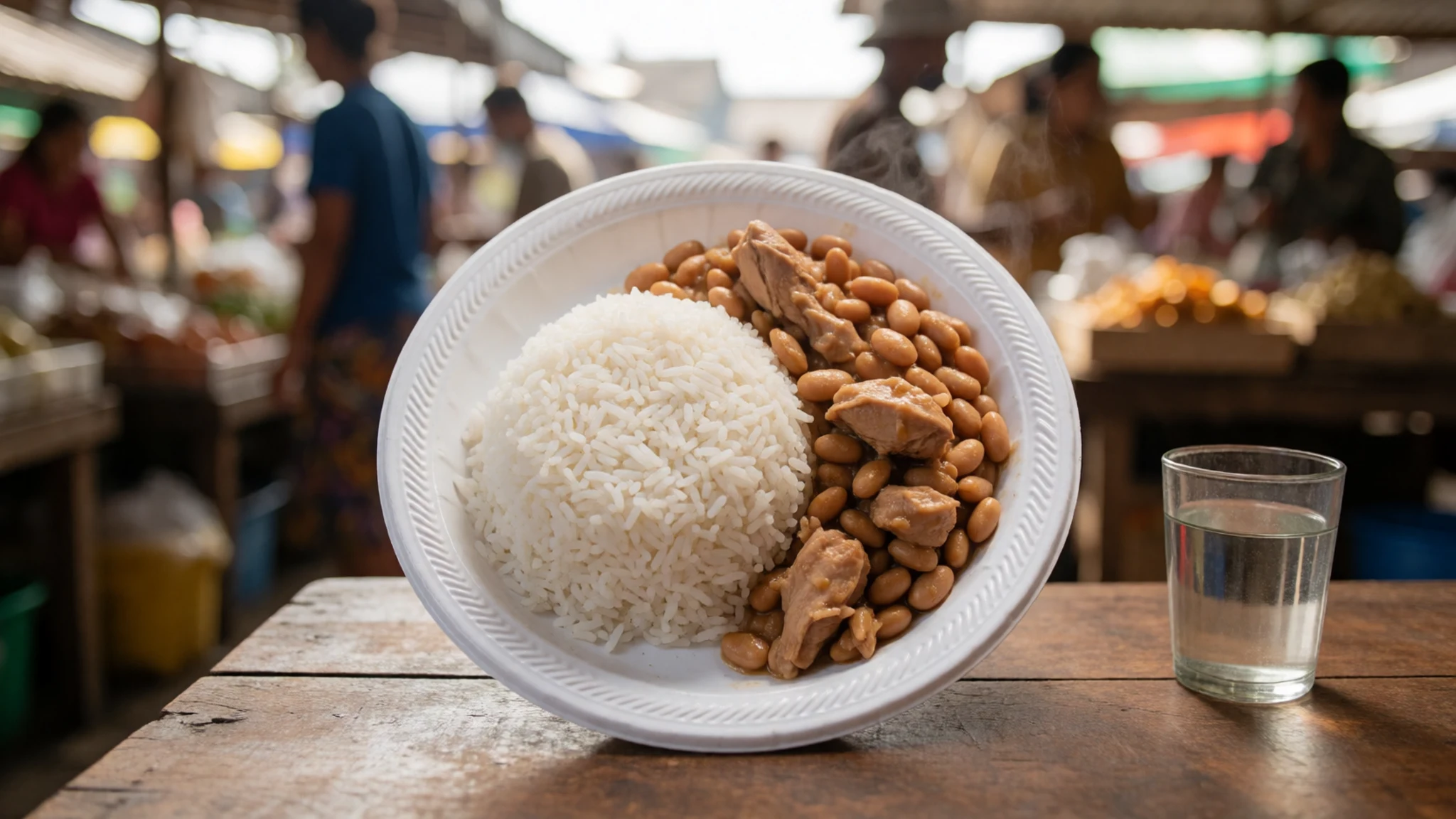
- Ranon'apango — Any hotely, lodge or village household
Ranon'apango is the water used for cooking rice, so it has been boiled, unlike tap water here. Locals often drink it warm. Bottled water is the main alternative and is usually easy to buy. Ask at a hotely or your lodge for ranon'apango when you are in a village.
- Rice cakes and bananas — Roadside stalls and the morning market
Rice cakes, called mofo gasy, and bananas are everyday snacks you will see everywhere. Sellers offer both at roadside stalls, and bananas come in hundreds of varieties, so ask which one is sweetest. The morning market is the best place to buy them.
- Hand-made coffee with condensed milk — Small roadside stalls and cafés in Morondava
Coffee is usually made by hand, one cup at a time, and served very sweet with condensed milk. Each cup takes a moment, so expect a short wait. Ask for less sugar if you prefer it, and enjoy it as a break before the walk along the avenue.
Plan it
Best time. The dry season, roughly May to October, is the easier window: the unpaved road is more passable and the days are cooler and less humid. September to November is hot and dusty before the rains arrive, and the wet months make the road muddy.
How long. 1–2
Getting there. International flights arrive at Antananarivo (TNR). From there, domestic flights or a long road journey reach Morondava, and the avenue lies about 45 minutes north of town on Road No.8.
Budget. mid
Tips
- Hire a driver with a 4x4 for the unpaved road and agree the route in advance
- Go in the late afternoon for the light, and stay until the sun drops
- Start early in the day to avoid midday heat
- Carry cash in small notes and check the official site for current entry details
- Bring bottled water, a hat and sunscreen, as shade is limited
Etiquette
- Ask before photographing people, and never photograph a tomb without permission
- Use tompoko when addressing elders or officials
Nearby
Sources
- Wikidata Q788084 (CC0)
- Wikipedia: Avenue of the Baobabs (rev 1371624285) (CC BY-SA 4.0)
- Wikivoyage: Madagascar (rev 5381342) (CC BY-SA 4.0)
- Photo 01 Baobab Avenue Morondava Madagascar, Hiroki Ogawa (CC BY 3.0)
- Photo 02 Adansonia grandidieri, Pat Hooper (CC BY-SA 2.0)
- Photo 03 Amoureux Baobab Morondava Madagascar, Hiroki Ogawa (CC BY 3.0)
- Photo 04 Walking the Avenue of the Baobabs, Gavinevans (CC BY 3.0)
- Photo 05 Avenue of the Baobabs at Sunset, Gavinevans (CC BY 3.0)
- Photo 06 Sunset on the Avenue of the Baobabs, Gavinevans (CC BY 3.0)
- Photo 07 After Sunset on Avenue of the Baobabs, Gavinevans (CC BY 3.0)
- Photo 08 Avenue of the Baobabs (Adansonia grandidieri), Bernard Dupont (CC BY-SA 2.0)


