Atafu
Atafu, Tokelau
Atafu is a tiny, car-free coral atoll in the open Pacific where village life, canoes and lagoon set the pace, for those patient enough to reach it.
The place
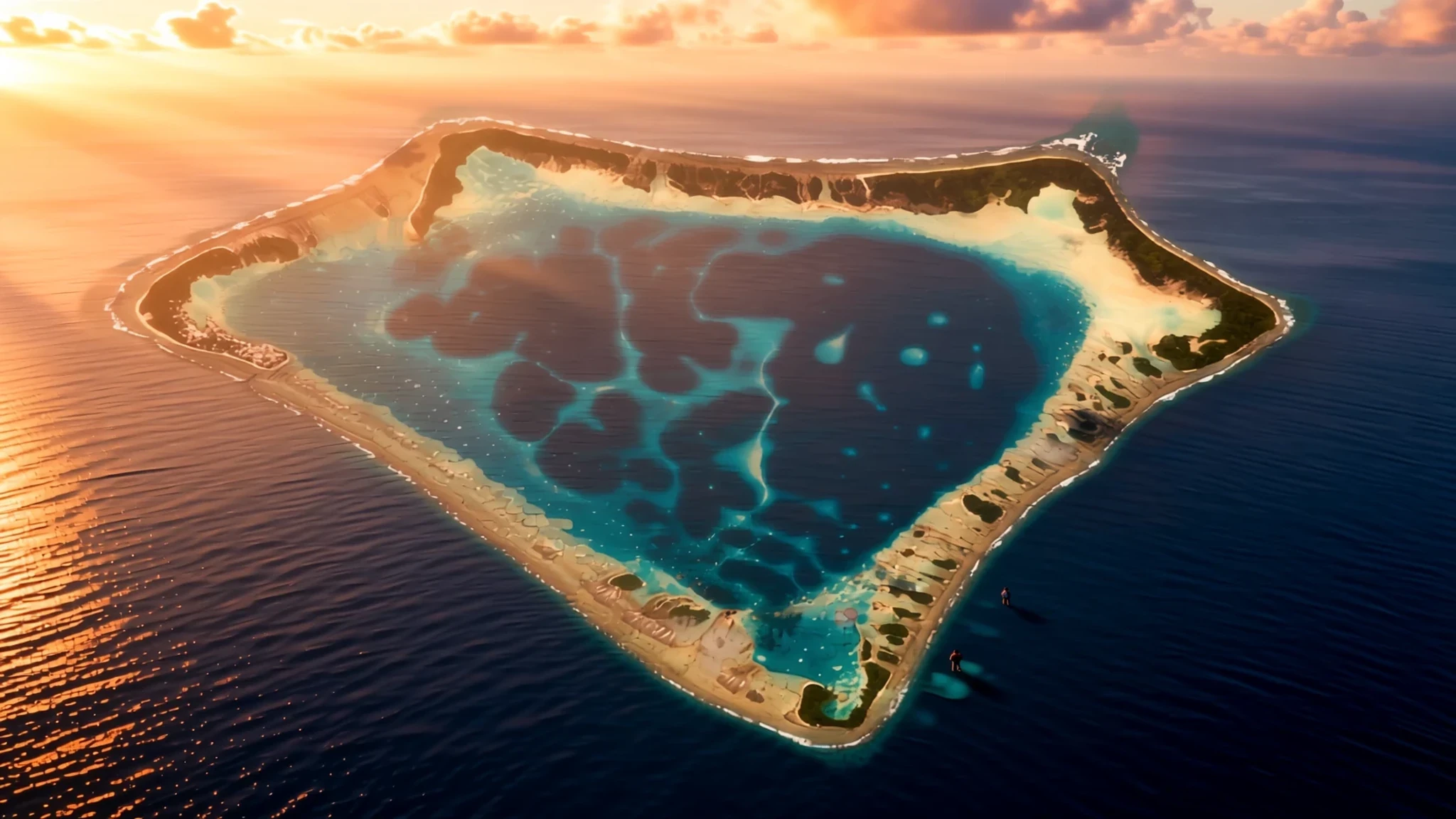
Atafu is the smallest of the three atolls of Tokelau, a New Zealand territory in the south Pacific, roughly 500 kilometres north of Samoa. It is also the northernmost place under New Zealand sovereignty. The land area is only 2.5 square kilometres, split into dozens of coral islets that wrap around a shallow lagoon. About 541 people live here, almost all in a single village on the north-western side.
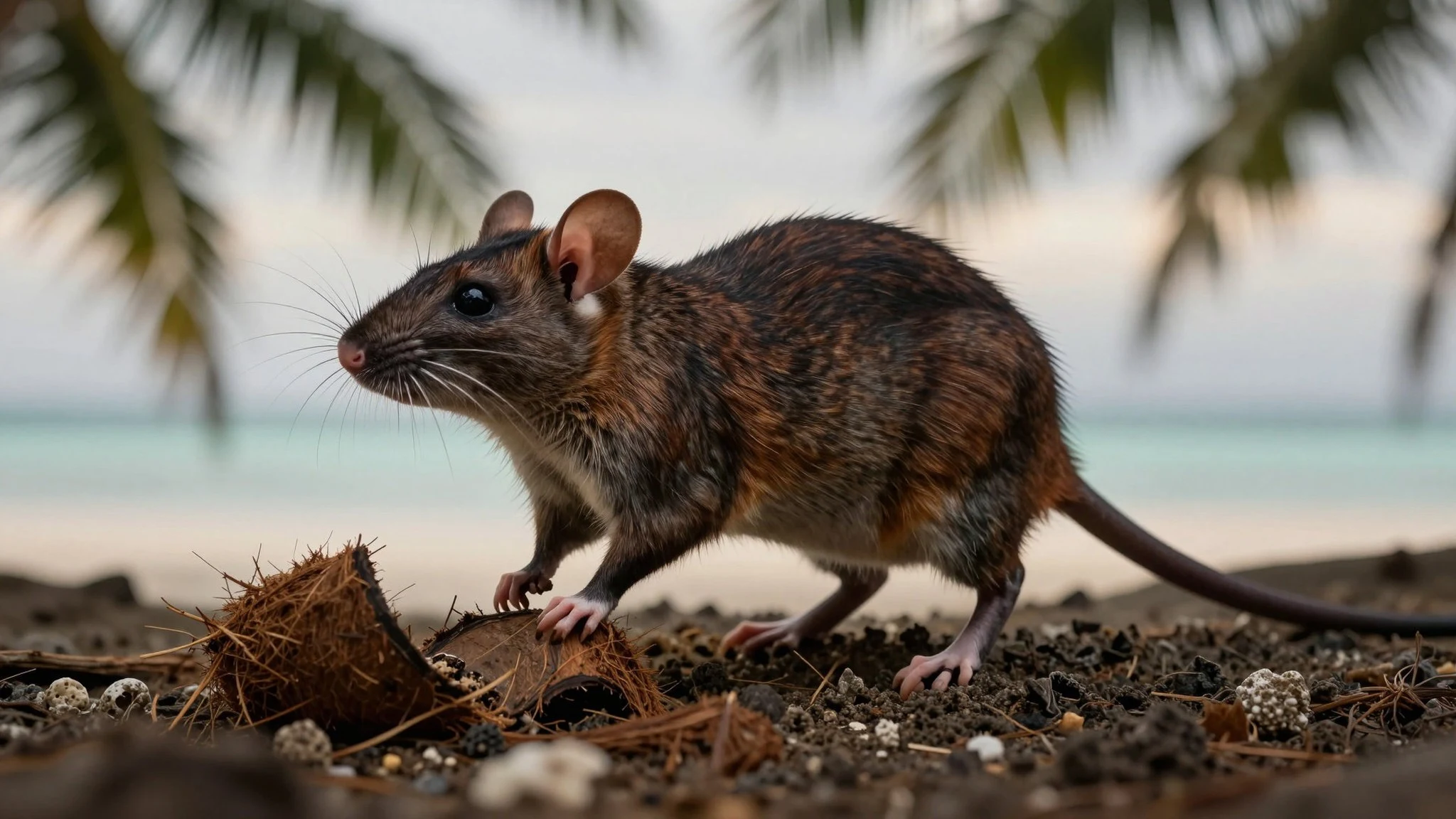
The atoll is roughly triangular. The eastern rim is a thin, nearly unbroken strip of land, while the western side is a chain of separate islands and reef, among them Alofi and the L-shaped Fenualoa. The highest ground is about five metres above the sea, so the horizon is mostly water, sky and coconut palms. Lizards, rats and seabirds share the undergrowth, and fish gather in large numbers around the reef.
The reef is shallow enough at low tide to walk between islets, but there is no boat passage into the lagoon. Beyond the reef the ocean drops away steeply, which gives good anchorage for ships yet rough water close to the breakers. Everything arrives by sea and is carried ashore in small boats.
This is not a resort island. There are no shops in the usual sense of a holiday town, no airport and no harbour. A visit means joining a working community, on its terms and its timetable, and accepting that plans here are written in pencil.
Its story
Atafu has a founding story told in Tokelauan oral tradition: a man called Tonuia and his wife Lagimaina settled the atoll with their seven children. Outside historians think Polynesian voyagers probably visited in ancient times, though they may not have stayed. When the British captain John Byron sighted the atoll in the eighteenth century, nobody was living there, and he named it the Duke of York's Island, a label that clung to the group for a long while.
The nineteenth century brought outside claims. An American guano company asserted rights over Atafu and neighbouring atolls, but most of these islands were never worked, and Britain later claimed them as a protectorate. Administration then passed through the Gilbert and Ellice Islands colony before landing with New Zealand, which ran Tokelau through Western Samoa. In the late twentieth century a treaty settled the old American claim and fixed a sea boundary with American Samoa.
Storms are part of the island's memory. Atafu lies in the Pacific hurricane belt, and one great storm early in the twentieth century flattened the church and most houses and stripped many coconut palms. Rebuilding has been the habit of the place.
The sea also brings strangers. A solo rower heading from South America crash-landed on the reef in 2007, and three local teenagers once drifted for weeks across the Pacific before being rescued. Atafu's history is, in the end, a history of the ocean's reach.
What to see
- Atafu village and its main street — Village, north-western Atafu
The single village is the heart of the atoll, and its main street is best at dawn, when the air is cool and men gather to practise canoe paddling. Walk slowly, greet people, and notice the church, the houses and the shared spaces that organise daily life.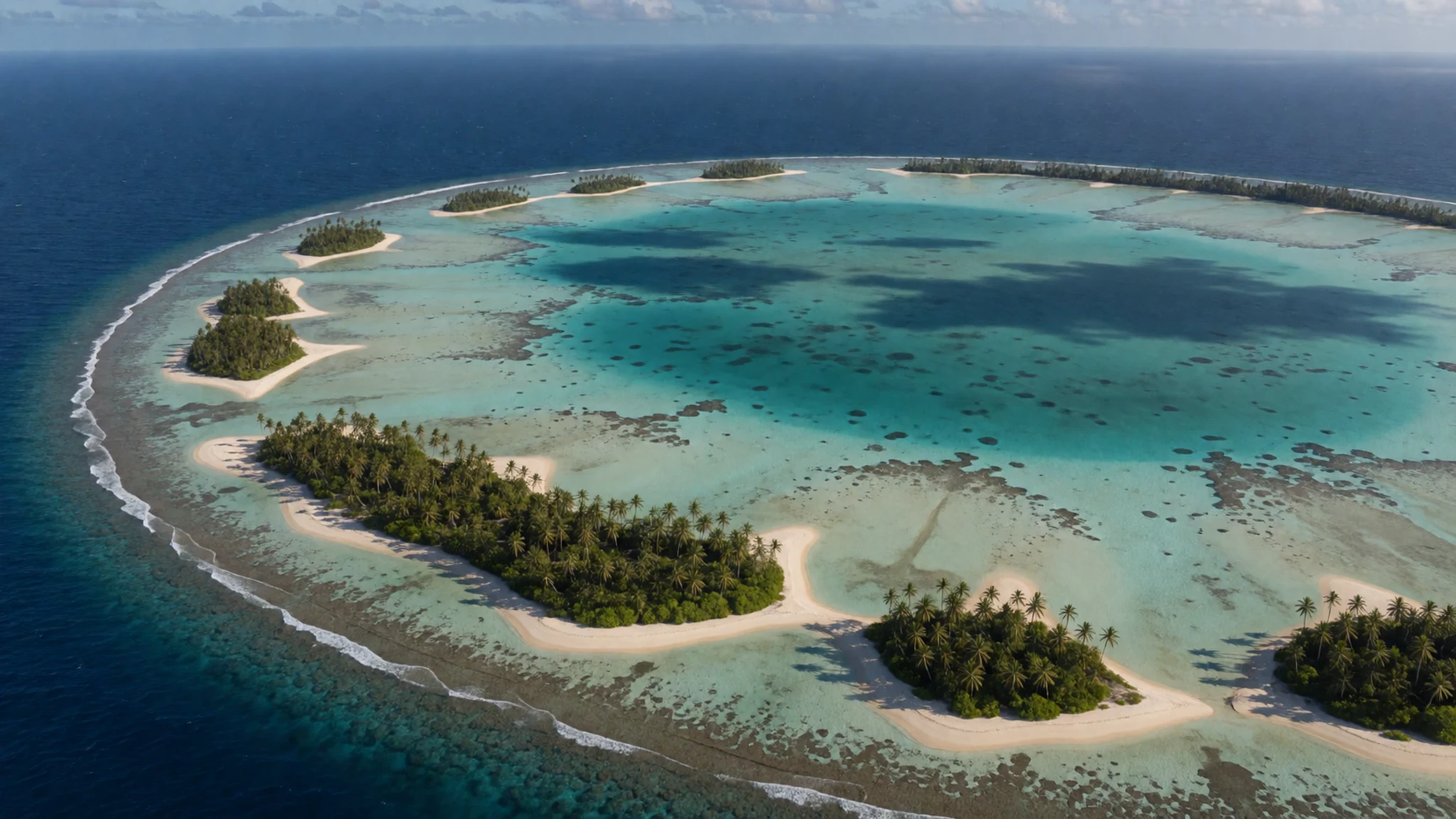
- Traditional vaka canoes — Village beach, Atafu
Canoes are still drawn up on the beach beside the houses, their planks lashed together rather than nailed. They are worth a long look, and a conversation if an owner is nearby. Ask before touching or photographing one, as they are working tools and family property.
- The central lagoon — Central lagoon, Atafu
The lagoon, about five kilometres north to south, is calm and shallow compared with the open ocean. Local boats cross it, and its water is a clear green-blue. Swimming and snorkelling depend on local guidance about tides, currents and where it is appropriate to go.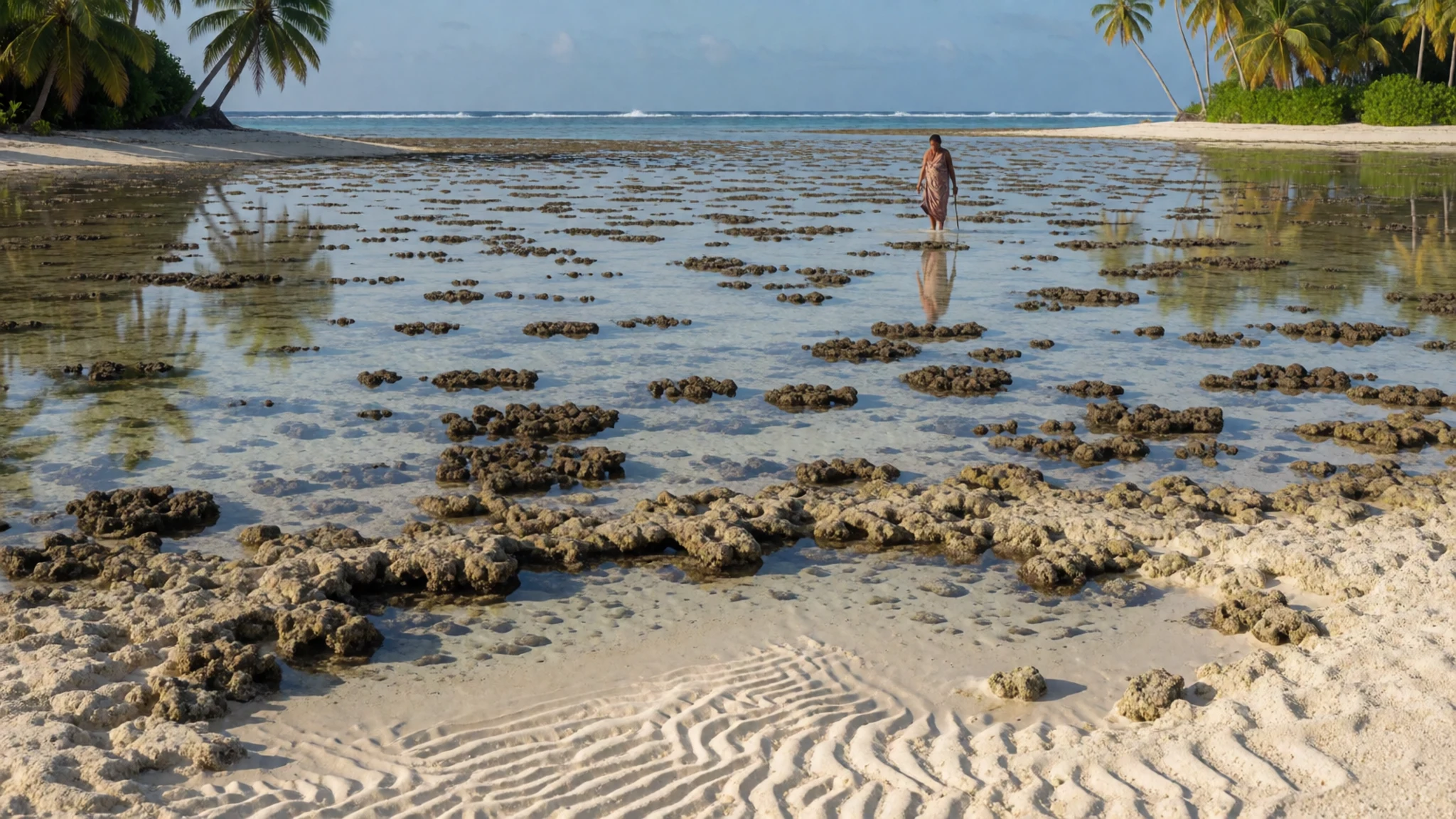
- The reef at low tide — Western reef, Atafu
At low tide the reef links the islets, and locals walk it for fishing and travel. Visitors should go only with a guide, since the outer edge meets rough seas and the ocean turns deep very close to the coral. Reef-top pools hold small fish and crabs.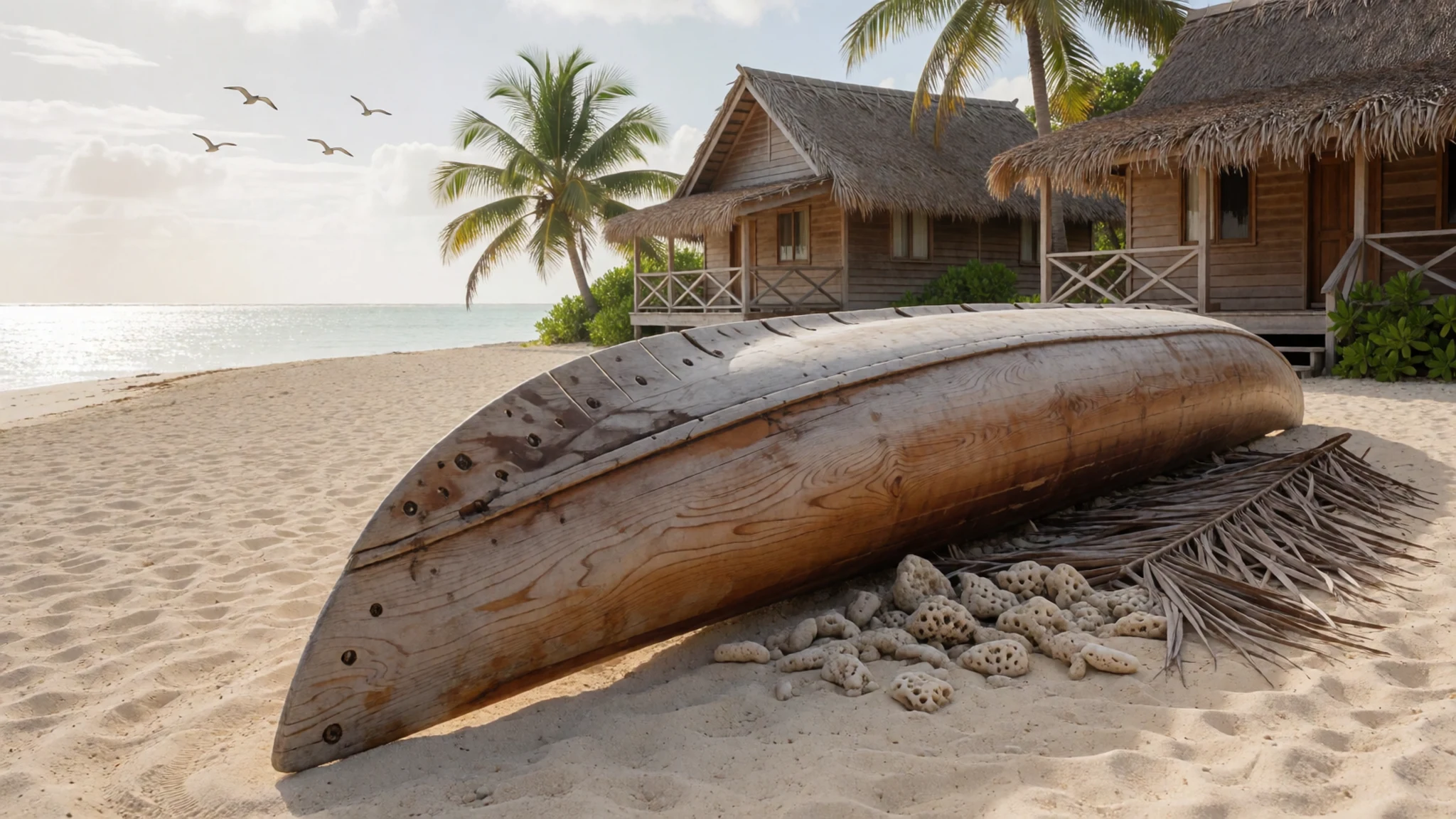
- Birds and wildlife of the islets — Outer islets, Atafu
Twenty-nine bird species are recorded across Tokelau, and Atafu's quieter islets are where seabirds are easiest to watch. Land crabs and lizards are common underfoot. Whales and dolphins pass in the surrounding waters. Bring binoculars and a field guide, and keep your distance from nesting birds.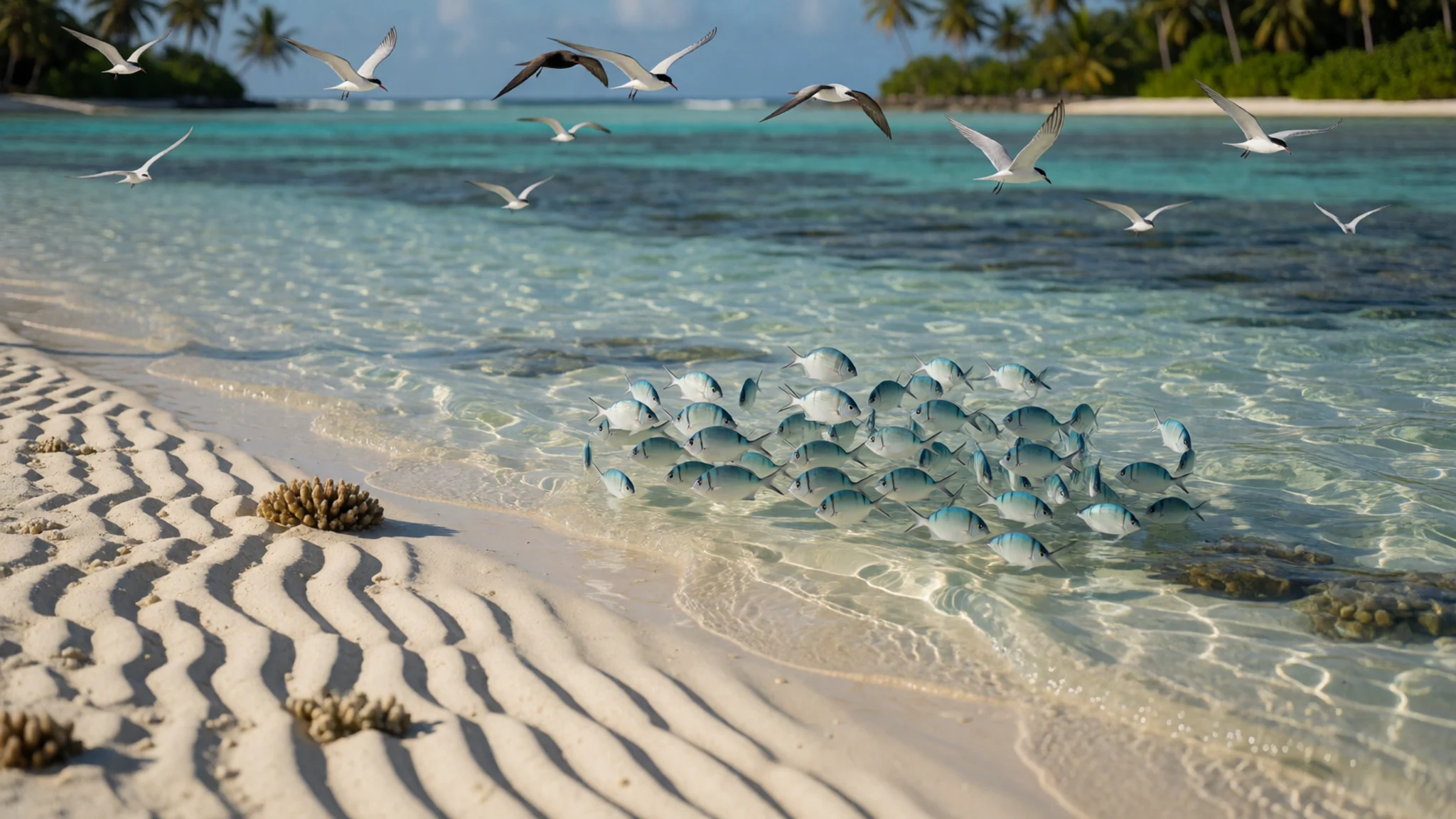
Culture
Atafu is a close community of a few hundred people, and daily life is shaped by the church, extended family and village decisions made together. Tokelauan is the language of the home, with English used in official settings. Hospitality is real but not automatic: with so few people and so little spare supply, a visitor is a guest of the whole village, and is expected to behave like one.
Christianity is central. Sunday is a day of worship and rest, and services, singing and shared meals structure the week. Fishing, canoe building and weaving continue as skills handed down in families, and the village council of elders still carries great weight in deciding what happens on the atoll.
Tokelau is a place where the sea is both provider and threat. Most land is barely above sea level, so rising water and storms are everyday conversation rather than abstract news. Visitors who listen to this, rather than treating the atoll as a postcard, usually find it far easier to be welcomed.
Alcohol is limited in Tokelau and the legal drinking age is 18, so do not assume drink will be available or welcome. Dress modestly in the village, keep Sundays quiet, and always ask the host or council before you photograph people, houses, canoes or church services.
What to wear
Atafu's traditional dress belongs to the wider Polynesian family: wraparound cloth for men and women, often called a lavalava or pareu, and woven mats and fans made from pandanus leaf. Weaving is done by women and carries real skill and status. Garlands and headpieces of flowers and leaves appear at celebrations, church festivals and welcomes.
Day to day, people wear what suits heat, humidity and a working life by the sea: light cotton shirts and T-shirts, shorts or wrapped cloth, and bare feet or simple sandals. For church on Sunday, people dress with care, usually in their best clothes, with women often in long dresses and men in a clean shirt and a wrap or trousers.
A visitor should pack for tropical heat and for modesty. Choose loose, light, quick-drying clothes that cover shoulders and knees, plus a wrap for the village and church. Swimwear belongs on the beach or in the water, not in the village street. A wide hat, strong sun protection and a rain jacket matter more than anything smart.
For footwear, bring reef shoes or sturdy sandals for walking on coral and across the reef at low tide, and leave anything delicate at home. Salt and damp are hard on cameras and clothes, so waterproof bags are worth their space.
What to eat
- Fresh reef and ocean fish — Family homes and village feasts
Fish is the staple protein, caught from the reef, the lagoon and beyond, and served grilled, boiled or raw. It is usually shared from a family's catch, so the best way to eat it is at a household meal if you are invited.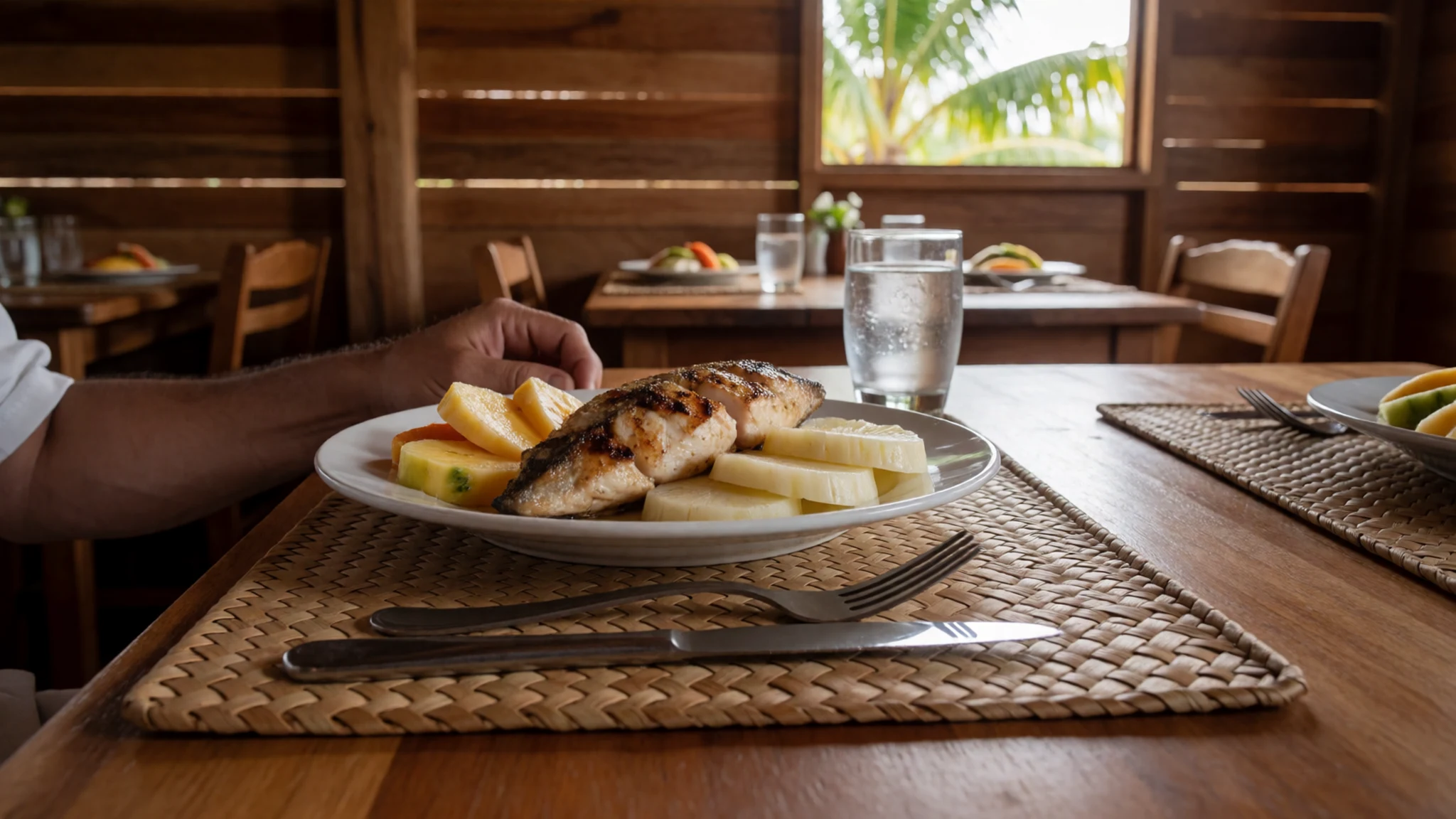
- Coconut in every form — Household kitchens and village gatherings
Coconut is eaten, drunk and cooked with: green nuts for water, mature flesh grated into dishes, and cream used for sauces and puddings. It is the ingredient the whole atoll depends on, and the one most visibly shaped by its palms.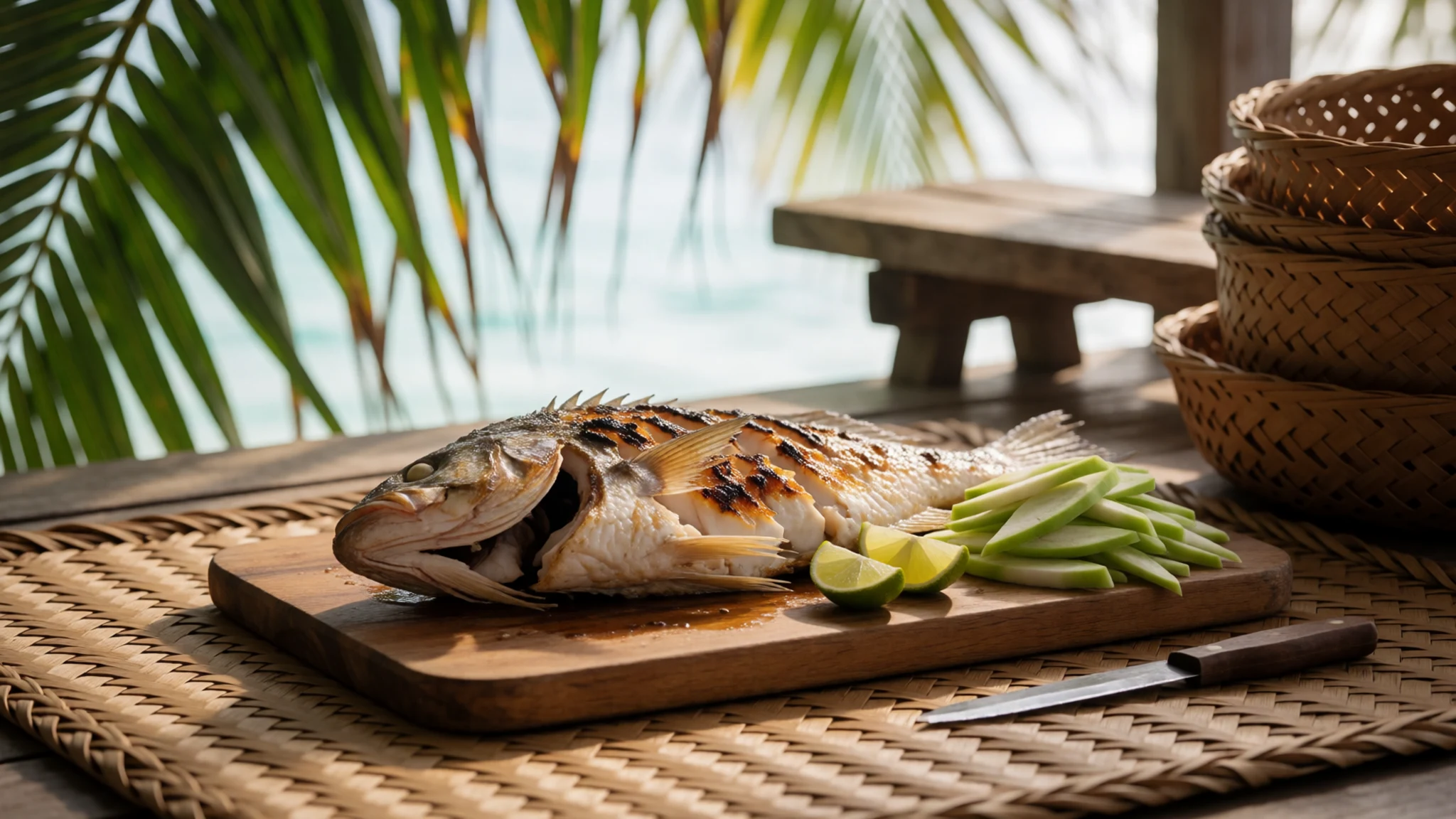
- Breadfruit and taro — Village homes and community meals
Starchy staples like breadfruit and taro, where grown, are baked or boiled and eaten with fish. On a low coral atoll, soil is poor and supplies are limited, so these foods are valued and often supplemented with imported rice and flour. - Land crabs and shellfish — Household meals in the village
Land crabs and reef shellfish are gathered locally and cooked simply, often boiled or in coconut cream. They are seasonal and depend on local rules about gathering, so eat them where they are offered rather than seeking them out. - Feast food at celebrations — The village hall or a family compound
On church days and special occasions, the village shares a large meal of fish, root crops, coconut dishes and sweet baked puddings. Visitors invited to one should bring a small gift of food or supplies and wait to be shown where to sit.
Plan it
Best time. The drier months, roughly May to October, are the easiest for sea passages and for days on the lagoon. Atafu lies in the Pacific hurricane belt, so the wetter, stormier season is best avoided if you can.
How long. 14 or more, mostly set by the ferry rather than by choice
Getting there. Fly to Apia in Samoa, the nearest international airport, then take the twice-monthly ship, the MV Mataliki, which calls at all three atolls and takes about a day or more each way. Schedules change and are often unreliable, and foreign visitors have last priority for places, so check with the Tokelau Liaison Office in Apia. A travel permit is needed before you go, and the application takes one to two months, so start early. Landings from the ship are in small boats across the reef.
Budget. mid
Tips
- Apply for your travel permit one to two months ahead through the Tokelau Liaison Office in Apia, as ordinary New Zealand visas are not valid
- Allow for delays at both ends and keep your onward flights flexible
- Arrange a homestay through the Liaison Office in advance, as there is no commercial accommodation on Atafu
- Bring all medicines, sun protection, insect repellent, cash and snacks you may need, as supplies are limited
- Ask your host about safe drinking water and take a refillable bottle
Etiquette
- Ask permission before photographing people, canoes, houses or church services
- Dress modestly in the village and keep Sundays quiet
- Bring a small gift for your host and follow the village council's guidance
Nearby
Sources
- Wikidata Q642787 (CC0)
- Wikipedia: Atafu (rev 1373603517) (CC BY-SA 4.0)
- Wikivoyage: Tokelau (rev 5304285) (CC BY-SA 4.0)
- Satellite picture of Atafu, NASA Johnson Space Center (Public domain)
- Atafu street at dawn, CloudSurfer (CC BY 3.0)
- Tokelauan vaka canoe, CloudSurfer (CC BY 3.0)


Wildlife
- Polynesian rat (animal)
The Polynesian rat, also called the kiore or little rat, is a small, adaptable rodent, rather like a tiny traveller that has hopped from island to island. Despite its name, it began its journey in Southeast Asia. On Atafu, rats are mentioned as part of the island's living web, alongside seabirds and lizards, though the notes give no particular place, season or hour for seeing them. If you do notice one, keep your distance, stay quiet and let a local guide advise you. Never feed it, since rats follow people for food and can become pests.