Asheville, North Carolina
Asheville, North Carolina, United States
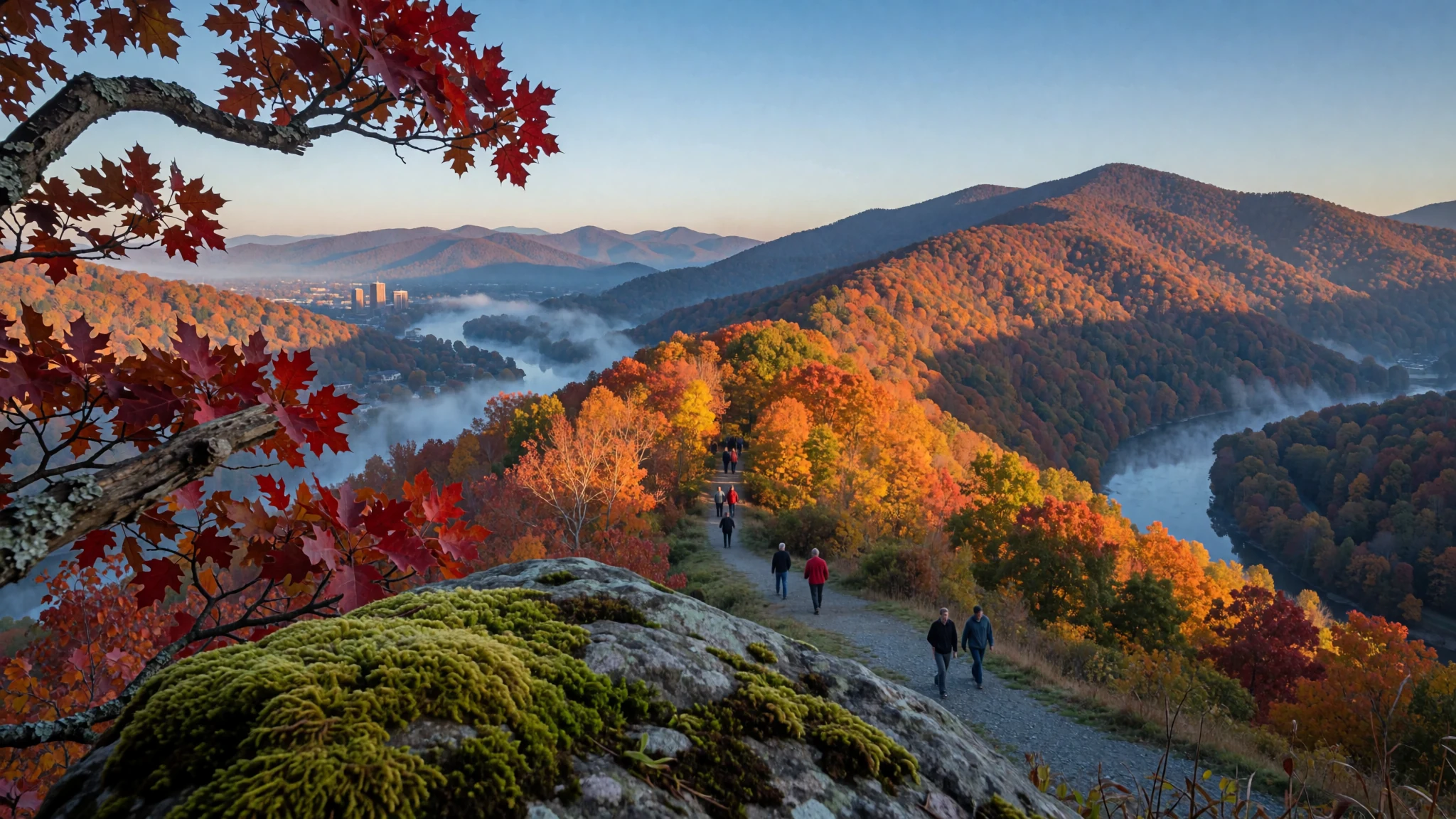
Asheville is a mountain city of craft beer, Art Deco civic buildings and easy access to the Blue Ridge Parkway.
The place
Asheville sits in the Blue Ridge Mountains of western North Carolina, where the French Broad and Swannanoa rivers meet. It is the county seat of Buncombe County and the largest city in the western part of the state, with 94,589 residents at the last count. The wider metro area, spread across three counties, holds roughly 422,000 people, so the city feels bigger than its downtown suggests. At around 650 metres above sea level, it runs cooler than the Piedmont towns to the east, and that height shapes everything from summer evenings to the autumn colour on the ridges.
Most visitors come for the outdoors and the arts in roughly equal measure. The downtown core is compact enough to cover on foot, with brick and terra cotta commercial blocks, independent bookshops, galleries and a long run of bars and restaurants. Live music is constant, and on many evenings it drifts out of doorways along the main streets. The Blue Ridge Parkway, forest trails and waterfalls are within easy reach by car, and the Biltmore estate sits just outside town.
The city has a reputation for vegetarian cooking and a relaxed, slightly bohemian mood, but it is also a working place with its own routines and neighbourhoods. Expect heavier traffic on the approach roads in peak leaf season, and a slower pace than the big cities of the Southeast. Hurricane Helene damaged parts of the city and the valleys around it, so check which roads, trails and buildings are open before setting out.
Its story
The ground where Asheville now stands was part of Cherokee homelands long before European settlement. Its people used the flat land at the river confluence for hunting and gatherings, and called the place by a name meaning somewhere people raced. The Cherokee held territory across what is now western North and South Carolina, south-east Tennessee and north-east Georgia, and this valley was one of their meeting grounds.
Europeans reached the valley in the mid-sixteenth century, when a Spanish expedition led by Hernando de Soto passed through and recorded a town at the river junction. The explorers carried Eurasian diseases with them, and these spread through native communities well ahead of any permanent colonial settlement. The loss shaped the region's history for generations afterwards.
Permanent settlement by European Americans began after the American Revolution. In 1784 Colonel Samuel Davidson and his family took up land in the Swannanoa Valley, on a grant given to a soldier in place of wages. Settlers followed along the rivers, and the town was founded in 1797. It grew as a market and gradually drew visitors seeking the mountain air, a pattern that still shows in the downtown streets.
The city's architecture carries the later story. The commercial blocks and civic buildings of the early twentieth century, many in Art Deco, Romanesque and Neo-Classical styles, were raised during a period of confident growth. Floods have also left their mark, and the city keeps a long memory of rivers rising suddenly across its low streets.
What to see
- The Biltmore Estate — Biltmore, just outside downtown
The Biltmore Estate sits a few minutes outside the city centre and is worth a full day rather than a quick stop. Its château is inspired by French Renaissance architecture, and the listing describes it as the largest single-family home in the United States. The gardens are a good complement to the house. Check the official site for tickets and current hours before you go.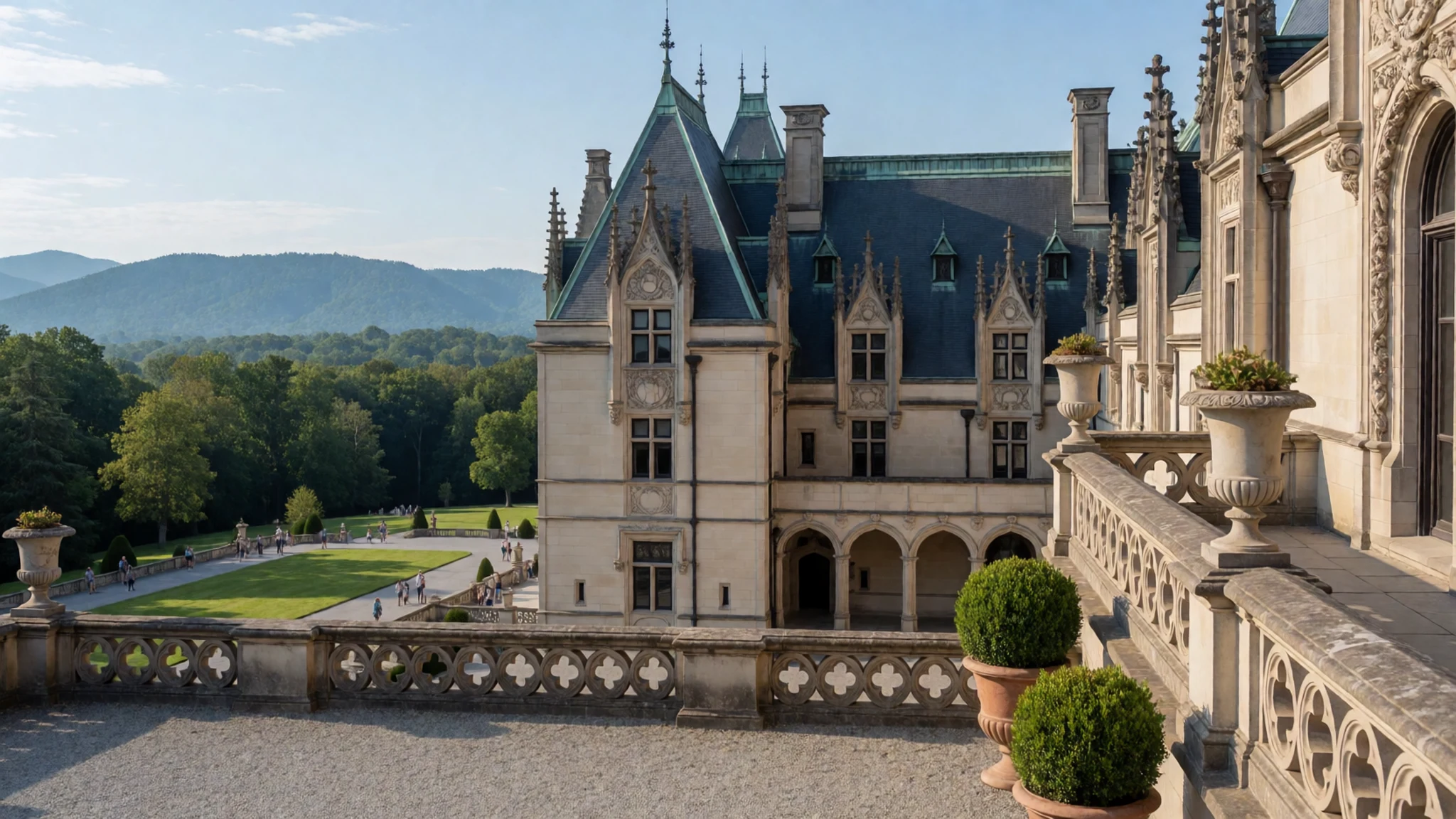
- Asheville City Hall — Downtown civic core
Asheville's City Hall, known as the City Building, was designed by the Art Deco architect Douglas Ellington and finished in the years before the Great Depression. Its facade combines Georgia Pink marble, brick and terra cotta, so the building looks warm and layered rather than flat. It is a short walk from the main shopping streets.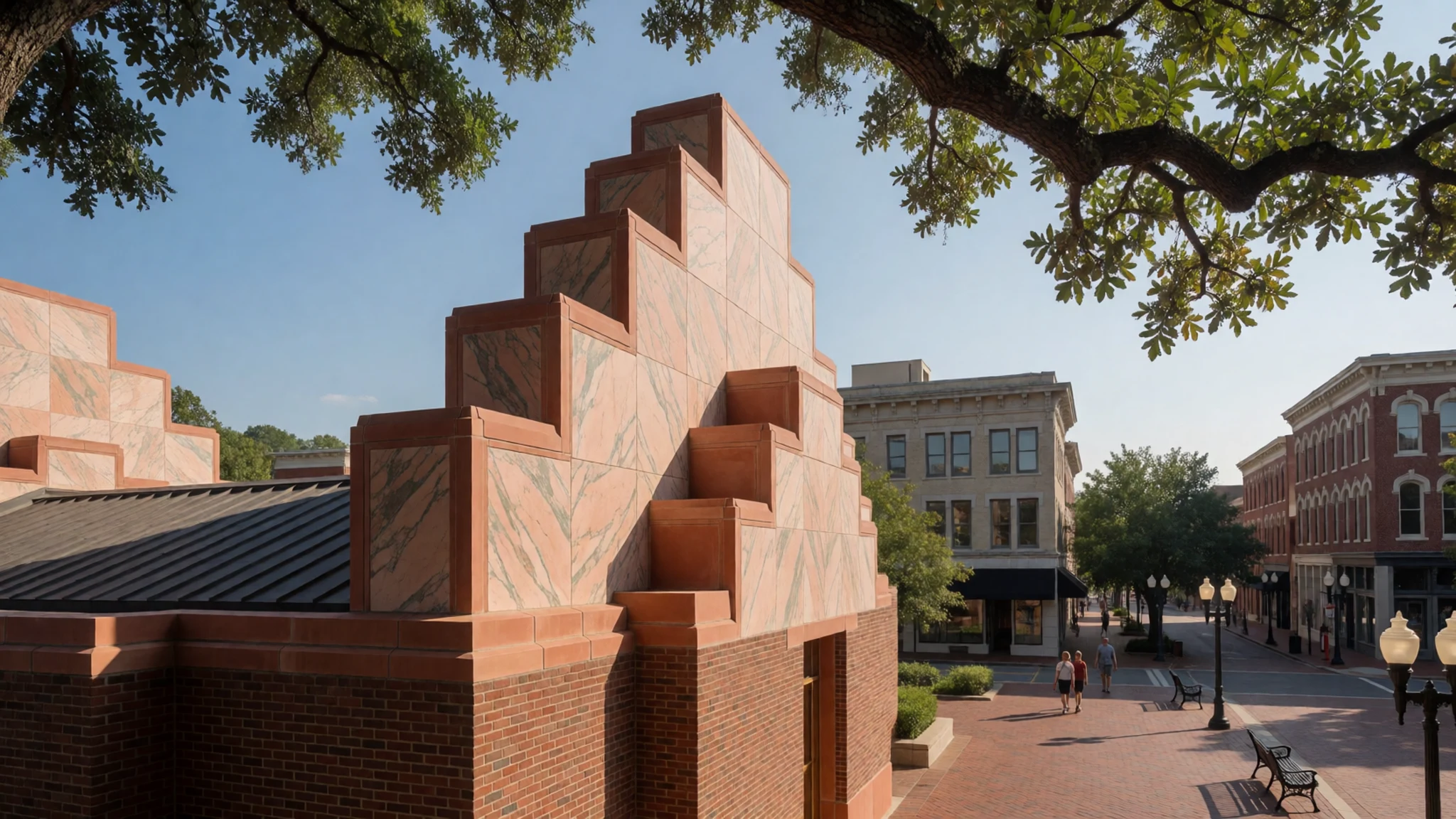
- Grove Arcade — Downtown, between the main streets
Commissioned by Dr E W Grove, the Grove Arcade fills an entire city block in an elaborate Tudor-inspired style. Its stonework and detailing reward a slow look from the street, especially from the corners. The building now houses shops and offices, and it makes a good first stop for orientation on foot.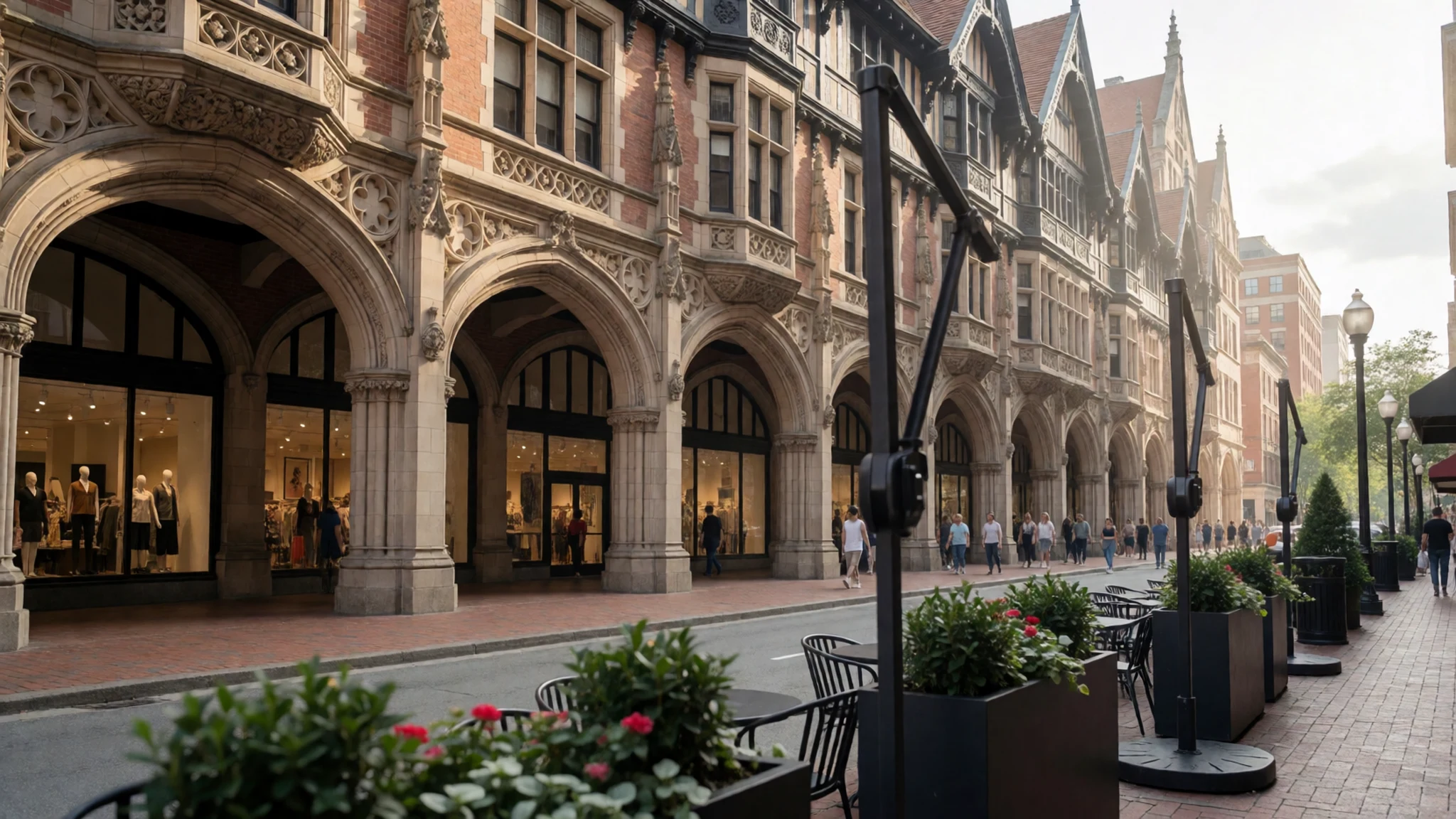
- Battery Park Hotel — Downtown, near the central blocks
The Battery Park Hotel is a tall brick building from the early twentieth century, with limestone and terra cotta trim and a Mission Revival style roof. It stands in the downtown area and is one of the older hotel buildings in the city centre. Its scale is a useful reminder of how the city grew in its prosperous years.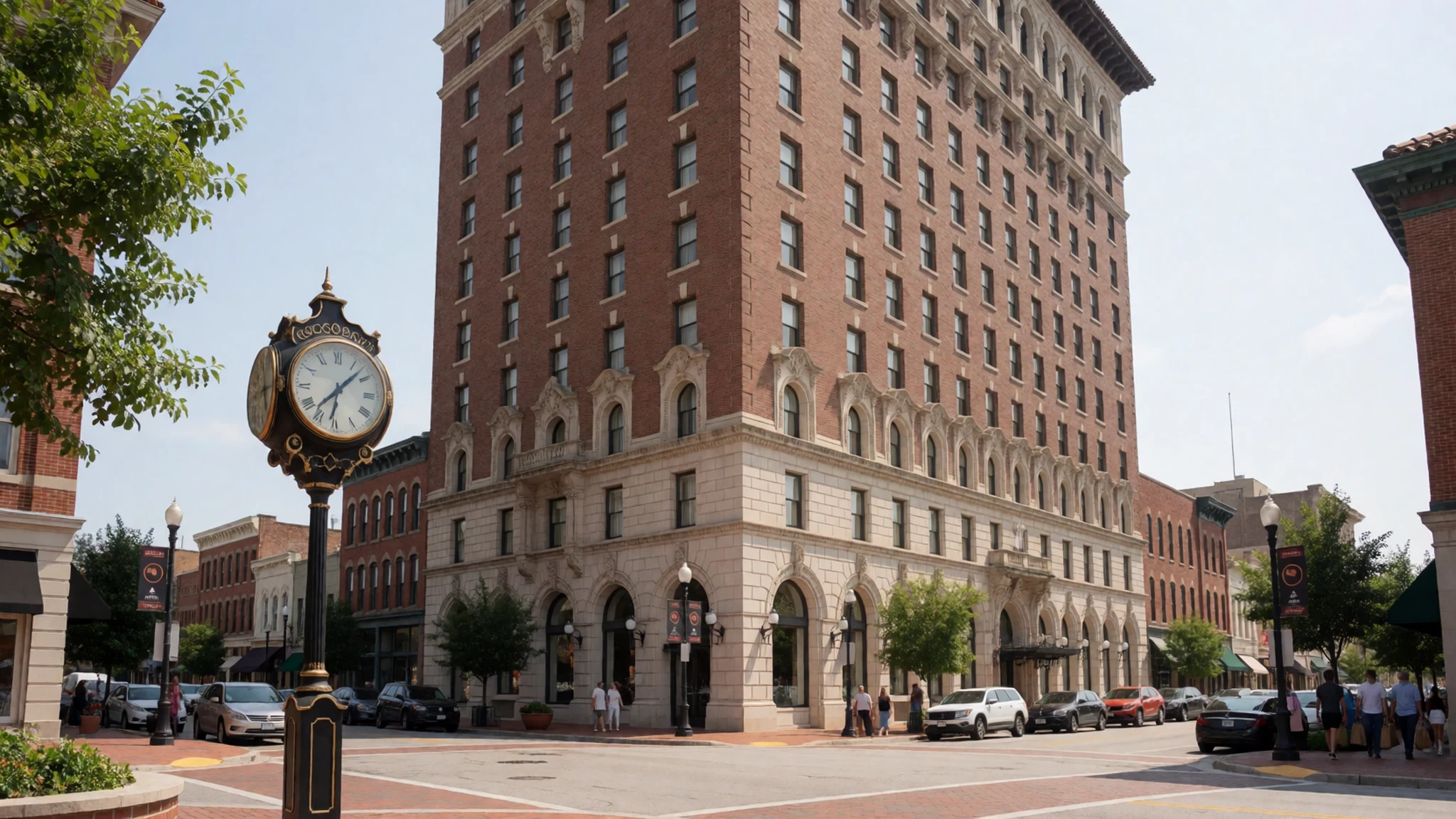
- Buncombe County Courthouse — Downtown, around City/County Plaza
The Buncombe County Courthouse was completed in the late 1920s and is a fine example of the county's civic architecture. Its exterior has stepped massing, bays of windows and classical ornament layered over the facade. It is the usual meeting place for the informal music sessions on summer evenings, so the grounds are worth a look at dusk.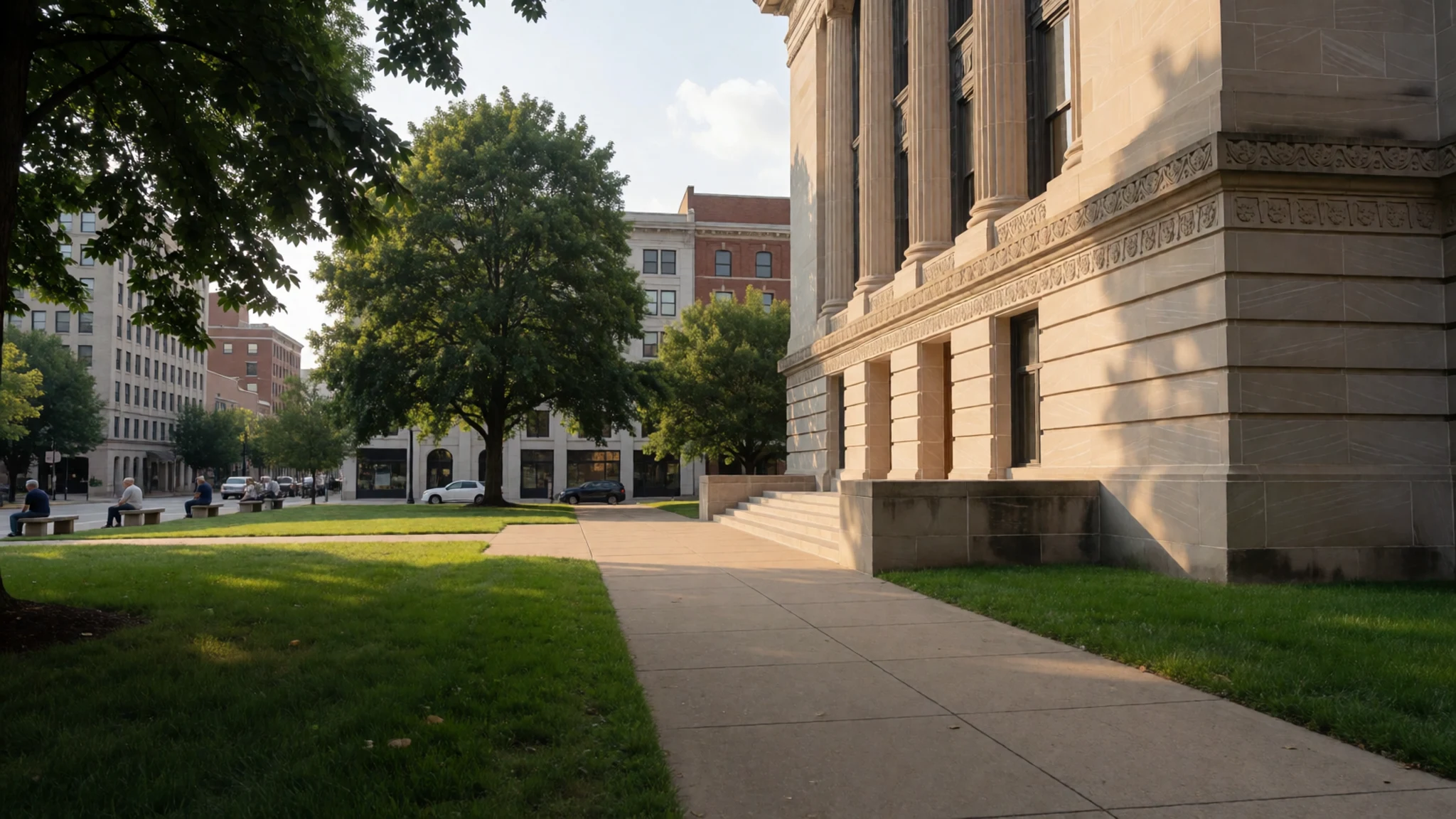
Culture
Music is central to Asheville's public life. Live performance drives much of the tourist economy, and the city supports a dense network of clubs and listening rooms. Its outdoor tradition runs deep: the Bele Chere festival and the Lexington Avenue Arts & Fun Festival fill the downtown streets in season, and locals speak fondly of events that have been running for decades. Shindig on the Green is the most informal of these. On Saturday nights through July and August it takes place on City/County Plaza, with local bluegrass bands on stage and dance teams keeping time. It traditionally starts around sundown, and the best music often happens afterwards, when informal jam sessions spring up under the trees near the County Courthouse.
Asheville also has a claim on the history of the folk festival. The folklorist Bascom Lunsford began the Mountain Dance & Folk Festival in the years before the Second World War, and it is often credited as the first event to carry the name. That history explains why old-time and bluegrass traditions still feel close to the surface here.
When you join a jam, stay on the edge until someone invites you in, keep your own conversation quiet, and ask before photographing the musicians.
What to wear
Asheville's traditional dress is closer to mountain working life than to any formal costume. Appalachian households made their own cloth from homespun cotton and wool, and pieced quilts, often in geometric patterns, are the textile tradition visitors are most likely to see in local museums and craft shops. Cherokee dress and craft in the region draws on beadwork, ribbon work and baskets woven from river cane, and some artists still work in these forms today.
Day to day, people dress for the outdoors and for the weather. Flannel, fleece, work boots and well-worn denim are common on the street, and the mix of hikers, musicians and craft-beer crowds gives the downtown a relaxed, eclectic look. Evenings at the theatre or a formal dinner call for a little more polish, but few places expect jackets.
Visitors should pack layers, since mountain mornings and evenings can be cool even in summer and rain can arrive quickly. Sturdy walking shoes with good grip suit the hills and wet pavements, and a light waterproof jacket is worth carrying. At religious buildings, cover shoulders and knees, and for the formal tours at Biltmore, smart-casual clothing is a sensible choice.
What to eat
- Vegetarian plates — Downtown restaurants and cafés across the city centre
Asheville has long been known for vegetarian cooking, and the city's kitchens treat plant-based food with real care. Look for grain bowls, bean stews, wood-fired vegetables and imaginative salads rather than afterthought options. The choice is strongest in the downtown restaurants and cafés.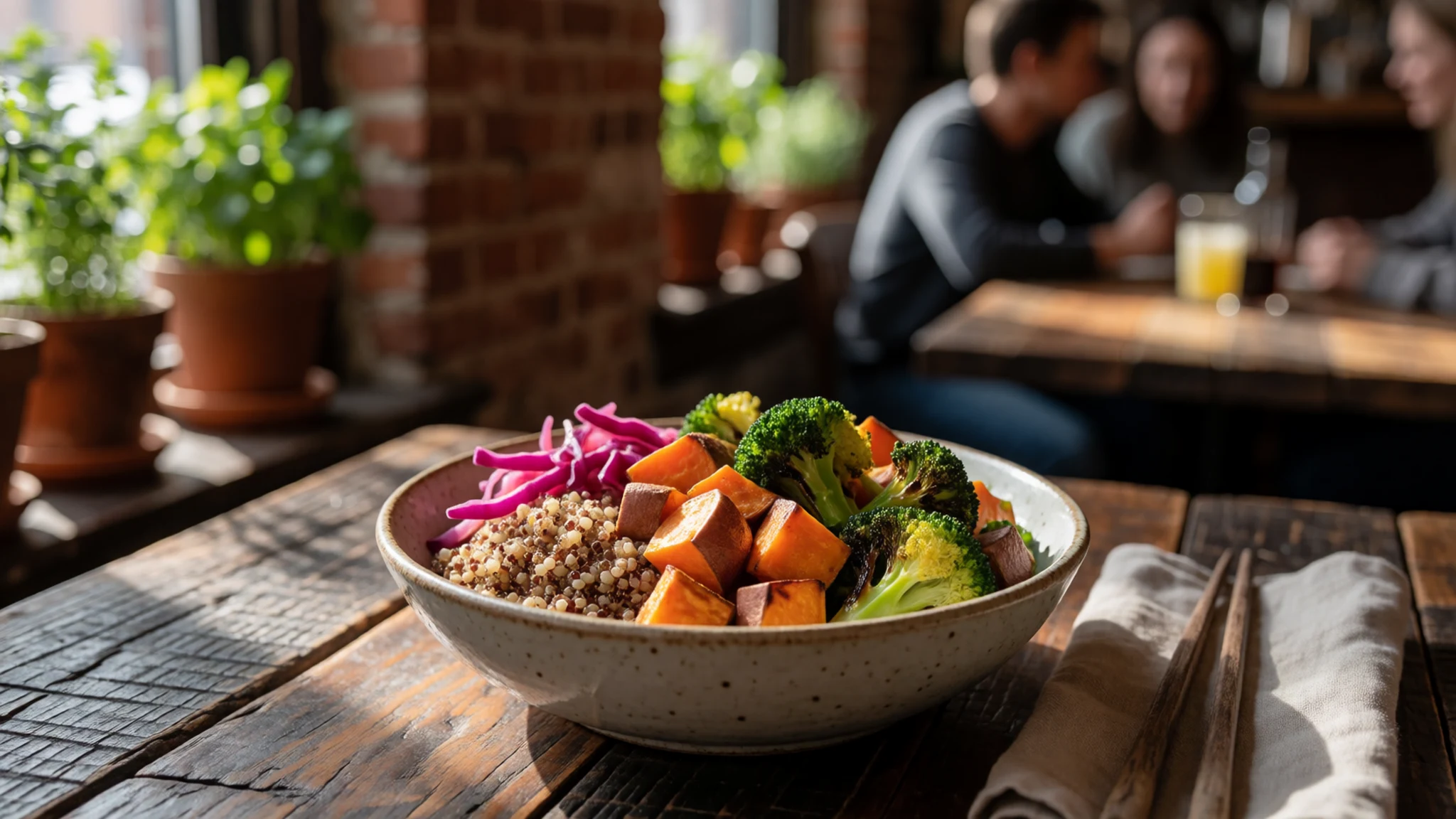
- Sushi and Japanese small plates — Sushi bars and Japanese restaurants downtown
Sushi bars and Japanese kitchens are well represented downtown, with traditional sushi, grilled skewers and simple soups. The fish is best ordered from a counter where the chef explains the day's selection. Small plates let you try several dishes in one sitting.
- Farm-to-table seasonal plates — Restaurants that name local farms on their menus
Kitchens built around regional produce change their menus with the seasons, so a spring plate may be asparagus and a late-summer one tomatoes and corn. Ask about sourcing, and a good kitchen will know the farm by name. Menus are shorter than average but more carefully planned. - Mexican and Mexican-Caribbean dishes — Casual Mexican kitchens and upscale Mexican restaurants
Fresh Mexican and Mexican-Caribbean cooking is easy to find here, from made-from-scratch tortillas to upscale plates built on bright salsas. Reservations are worth making at the more formal places, while casual counters suit a quick lunch. - Indian curries and tandoor dishes — Indian restaurants in the city centre
Asheville has a well-regarded Indian restaurant scene, with dishes ranging from tandoor-cooked breads and kebabs to slow-cooked curries and vegetarian dal. Many places keep a bar, so a glass of beer or wine pairs well with a shared meal. - New-American daily menus — Small dining rooms with a written daily menu
Small dining rooms that write the menu each day tend to cook around whatever is freshest. Expect a short list of new American dishes, often with a vegetable-led starter, a fish or meat main and a seasonal dessert. The menu changes, so the best dish may not be there on your next visit.
Plan it
Best time. April to May for mild weather and spring blossom, and September to October for mountain autumn colour. July and August are warm and humid in the valley, and winter can bring snow and icy roads higher up.
How long. 2–3
Getting there. Fly into Greenville-Spartanburg, Charlotte or Knoxville, since these airports are sometimes cheaper than flying direct to Asheville. The closest Amtrak stops are in Greenville or Spartanburg, South Carolina, and the last leg is a drive, often on the interstates that meet at the city and then into the mountains.
Budget. mid
Tips
- Book the Biltmore and any timed attractions ahead, and check the official site for tickets and current hours
- Visit the downtown galleries in the morning, before weekend crowds build
- Carry some cash for small vendors and street performers, though cards are accepted at most restaurants
- Check road and trail access after Hurricane Helene, since some routes and buildings are still under repair
- Bring water and layers, because mountain weather changes quickly
Etiquette
- Ask before photographing people, especially musicians during a jam session
- Tip table service generously, as is customary in the United States
- Keep noise low on residential streets late at night
Nearby
Sources
- Wikidata Q648501 (CC0)
- Wikipedia: Asheville, North Carolina (rev 1380353318) (CC BY-SA 4.0)
- Wikivoyage: Asheville (rev 5393888) (CC BY-SA 4.0)
- Aerial view of downtown Asheville (Quintin Soloviev) (CC BY 4.0)
- Front of Biltmore Estate (24dupontchevy) (CC BY-SA 4.0)
- Asheville City Hall (Warren LeMay) (CC0 1.0)
- Asheville during the 1916 flood (unknown author) (Public domain)
- Asheville Masonic Temple / Scottish Rite Cathedral (Warren LeMay) (CC0 1.0)
- Devastation in Asheville after Hurricane Helene (Bill McMannis) (CC BY 2.5)
- Aerial view of Asheville (Antony-22) (CC BY-SA 4.0)
- All Souls Cathedral, Asheville (Ladyvet27) (CC BY-SA 4.0)


