Antofagasta
Antofagasta, Chile
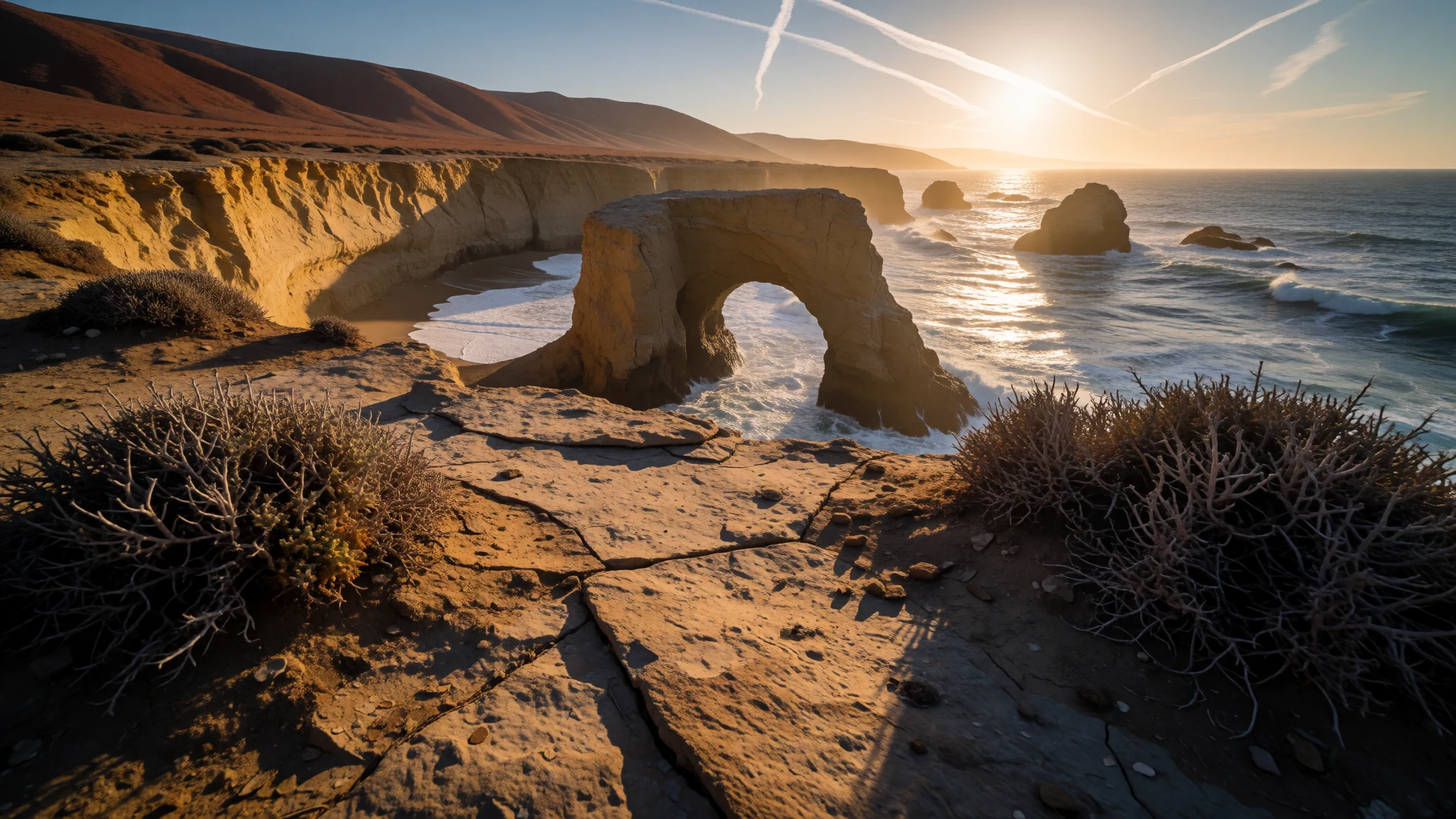
Antofagasta is a working desert port where copper money, Pacific sunsets and the Atacama's strange monuments sit within an easy drive.
The place
Antofagasta is a port city on the Pacific coast of northern Chile, wedged between the ocean and a bare, rust-coloured coastal range, at an elevation of about 40 metres. It lies roughly 1,100 kilometres north of Santiago and has some 348,500 residents. Rain is rare, so the landscape is stone, sand and sea, with a morning sea mist that usually lifts by midday.
The city exists because of what lies inland. Copper is the economic engine, and lithium has joined it in recent years. Cranes, ore trucks and industrial yards shape the waterfront and the northern avenues, which gives the place a practical, working character rather than a resort feel.
The centre is compact. A pedestrian street links two squares: Plaza Sotomayor, with its market and small eateries, and Plaza Colón, where a clock tower copies London's Big Ben. A long seafront promenade runs along a string of artificial beaches, and two large malls on the coast supply cinemas and cafés.
Honestly, Antofagasta works better as a base than as a destination. Many travellers pass through on the way to Calama or San Pedro de Atacama. Those who linger a day or two get good sunsets, plain seafood, a rock arch up the coast, and a clear view of how northern Chile earns its living.
Its story
Antofagasta was founded in 1868 on a stretch of desert coast that both Chile and Bolivia treated as theirs. A boundary treaty in 1866 had tried to settle the matter, and in the same year two men, José Santos Ossa and Francisco Puelma, won a concession from the Bolivian government to work nitrate land inland. Their Chilean miners found rich saltpetre at Salar del Carmen, and a company was formed to exploit it.
A port had to follow, because saltpetre was worth little unless it could be shipped. Workers' camps, a railway and a harbour grew out of that need, and the settlement became the gateway for the Atacama's mineral wealth. In 1873 a Chilean company, the Compañía de Salitres y Ferrocarril de Antofagasta, signed a contract with Bolivia that lifted taxes on its mining for a fixed period, but Bolivia's congress never ratified it.
Tension built. Bolivia had signed a secret defensive pact with Peru that same year, and Chile later cited it as a reason for war. On 14 February 1879 Chilean forces took Antofagasta, which opened the War of the Pacific. Bolivia lost its coastline, and in 1904 a treaty of peace and friendship formally recognised Chilean sovereignty over the territory.
Copper later became the dominant activity, and the city grew around services for the mines. That origin still colours local pride and Bolivian memory alike.
What to see
- Plaza Colón — City centre
Plaza Colón is the formal heart of Antofagasta, a palm-shaded square with a clock tower modelled on Big Ben and a cathedral beside it. Old photographs show the same space used for parades and, once, for drilling soldiers. A pedestrian street links it to Plaza Sotomayor and its market, which makes for an easy first walk.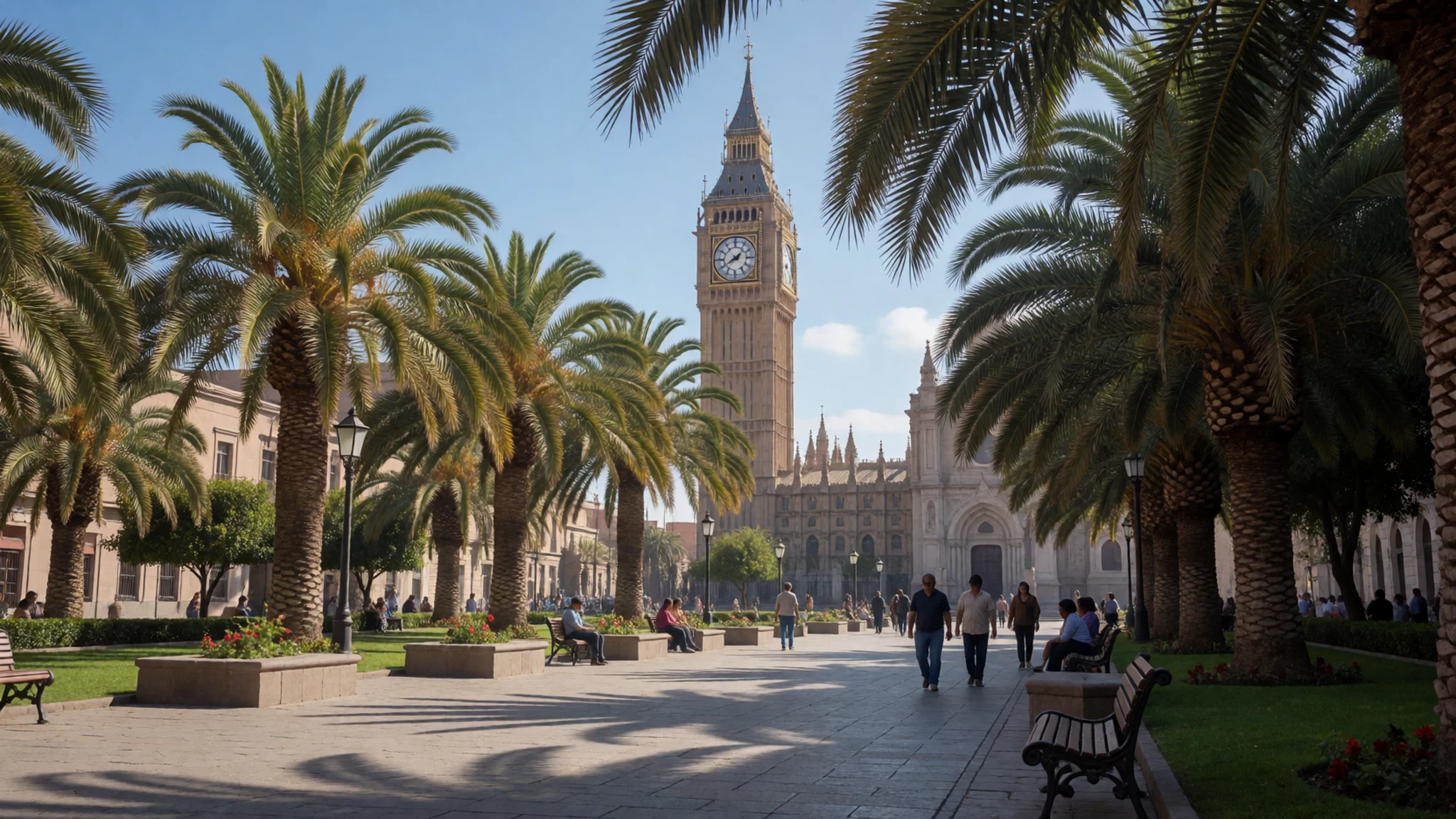
- La Portada — Coast north of the city
La Portada is a natural arch of yellowish rock standing in the sea off a wild cliff coast north of Antofagasta, protected as a natural monument. The coastal road that serves the airport also leads to it. Morning or late afternoon gives softer light, and visitors should keep well back from the cliff edge, where swell and wind can be strong.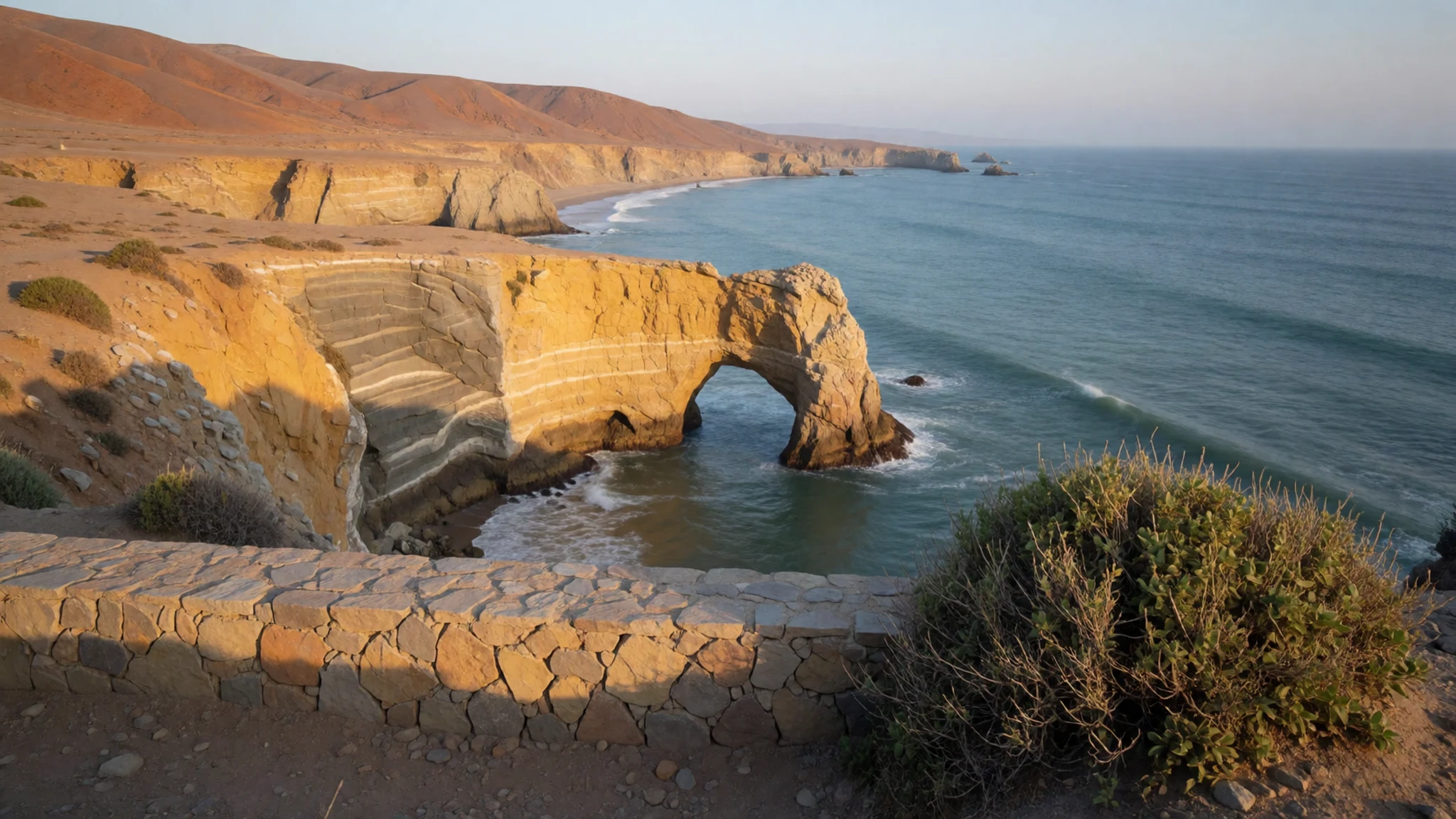
- Ruinas de Huanchaca — Southern edge of the city
The Ruinas de Huanchaca, on the southern side of the city, are the remains of an old iron foundry. They are a reminder that this coast has been worked for metal and nitrate for generations. The site suits people who like industrial heritage more than casual sightseers; check the municipality's website for current access before going.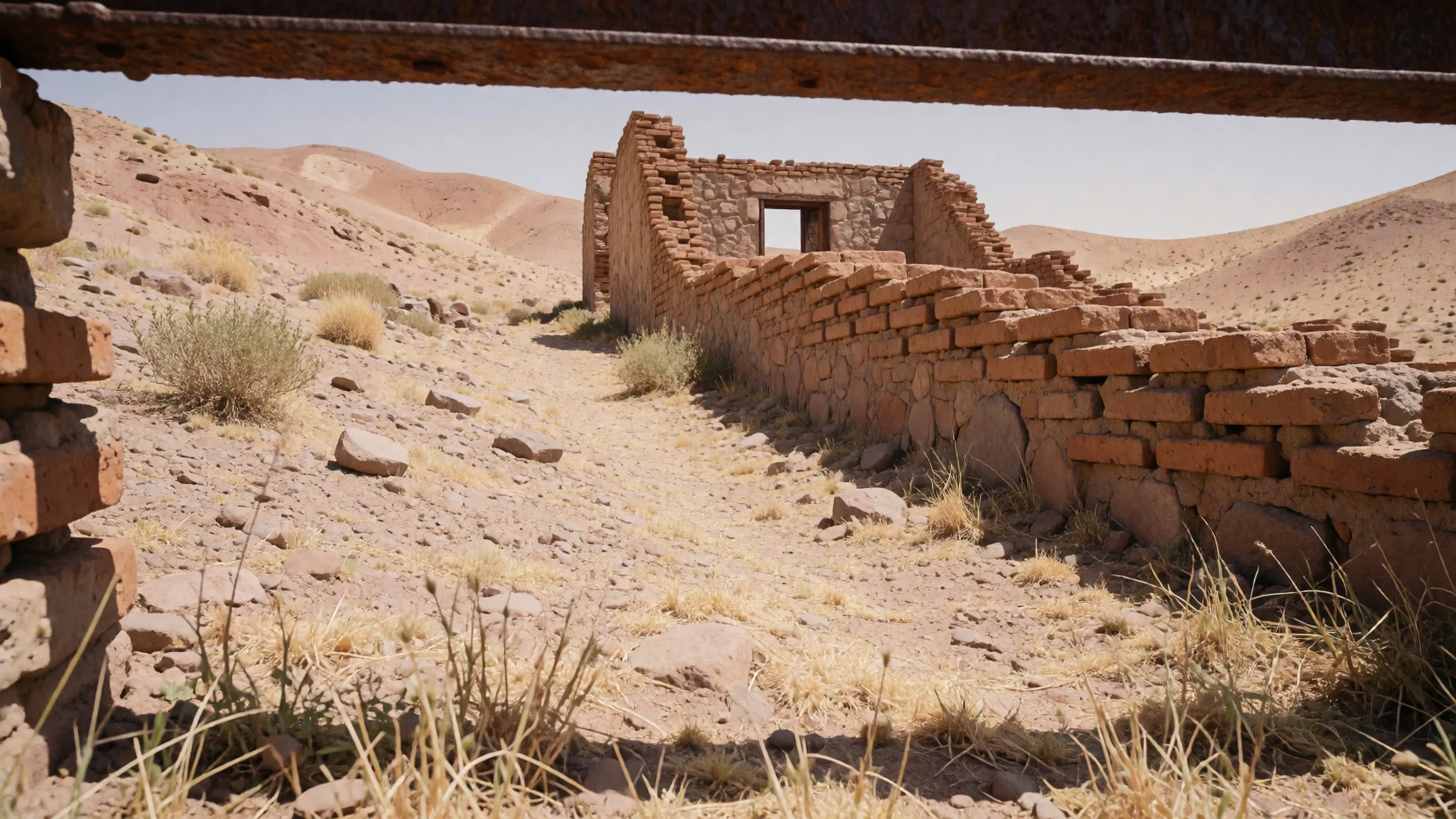
- Mano del Desierto — Atacama Desert, inland from the city
The Mano del Desierto is a sculpture of a giant hand rising out of bare sand, far inland from the coast. It is a drive of an hour or more, easiest by hire car or on a tour. There is no shade and little around it, so bring water, sun protection and a camera.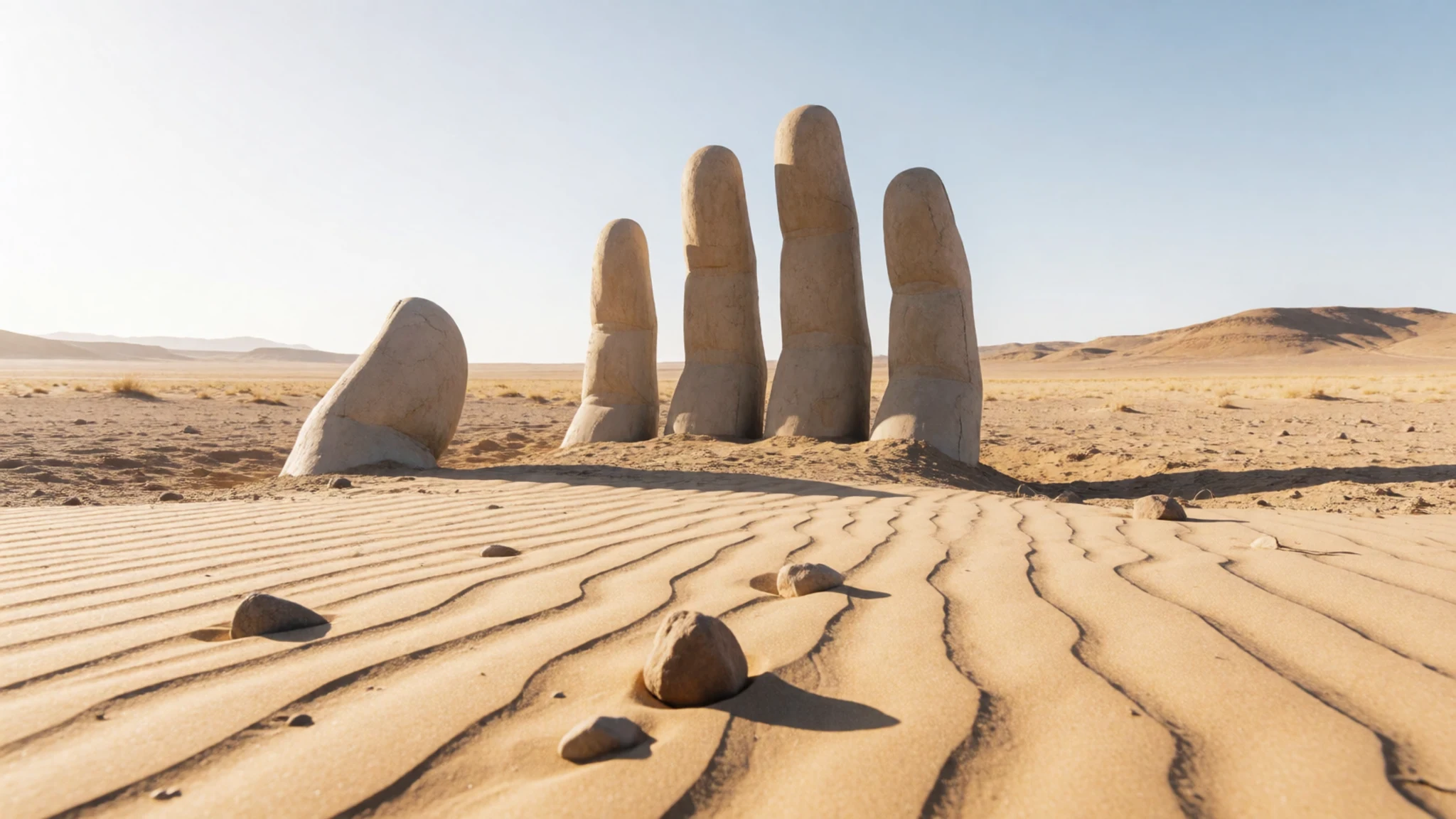
- Fishermen's harbour and seafront — Harbour and southern seafront
At the fishermen's harbour, sea lions, pelicans and smaller birds gather to feed on fish waste, a noisy and slightly smelly spectacle that is free to watch. From there the seafront walk heads south, and its western horizon makes it the city's favourite spot for sunset. Balneario Municipal is the usual beach stop.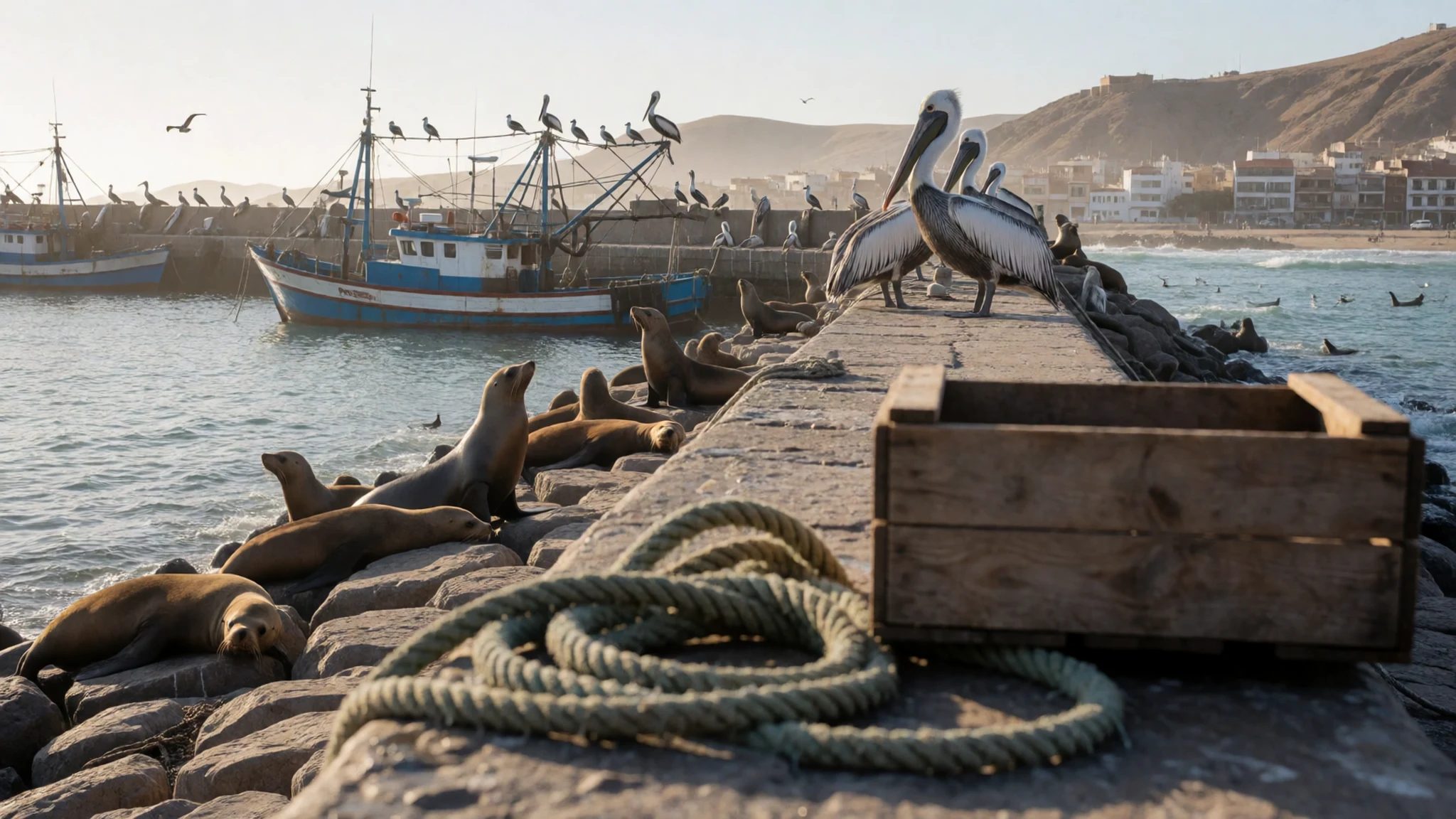
Culture
Antofagasta's culture is shaped by mining, migration and the sea. Families came from across Chile and beyond to work in the nitrate fields, the port and later the copper mines, and that mix shows in speech, surnames and food. Shift work gives the city an unusual rhythm, with workers heading out before dawn and cafés busy at odd hours.
Civic life gathers in the squares. Plaza Colón is where parades, concerts and families come together, while Plaza Sotomayor is the market side of town, with small lunch counters packed at midday. Along the seafront, people walk, jog and fish in the evenings, and sunset is a quiet local ritual.
History is close to the surface. The coast was claimed by Bolivia before Chilean forces took the city in 1879, and the War of the Pacific remains a sensitive subject, especially with Bolivian visitors. Football, regional pride and the desert landscape fill most everyday conversation instead.
Greet shopkeepers and drivers with a quick "buenos días" before asking for anything, and avoid joking about the War of the Pacific or Bolivia's lost coastline.
What to wear
Antofagasta has no single city costume, but the Andean communities of the interior, Aymara and Atacameño among them, keep a textile tradition that reaches the coast. Alpaca, llama and sheep wool is woven into ponchos, belts and aguayo carrying cloths in bold stripes, and knitted chullo hats with ear flaps are common. These are worn mostly at village festivals, in rural areas and for dance costumes, not on city streets.
Day to day, Antofagasta dresses plainly and for the weather: jeans, T-shirts, fleeces and trainers. Mining and port workers wear high-visibility jackets, hard hats and work boots, and the uniforms are as much a part of the street scene as any local dress. On Sundays and at family occasions, people dress a little smarter, but rarely formally.
For visitors, light layers work best. Days are sunny and dry, so bring a hat, sunglasses and strong sunscreen, but the sea breeze and desert nights can feel cool, so pack a windproof jacket or fleece. Shorts and swimwear are fine on the beaches, though most people cover up in town. Shoulders and knees should be covered in churches. Closed, grippy shoes suit rocky coast paths and cliffs, and sandals are enough for the promenade.
What to eat
- Completo — Street stalls and snack counters around the pedestrian centre
Chile's favourite fast food is a hot dog piled with mashed avocado, chopped tomato and plenty of mayonnaise, served in a soft bun. It is cheap, filling and eaten standing up or on the go, and it makes a sensible quick lunch between sights.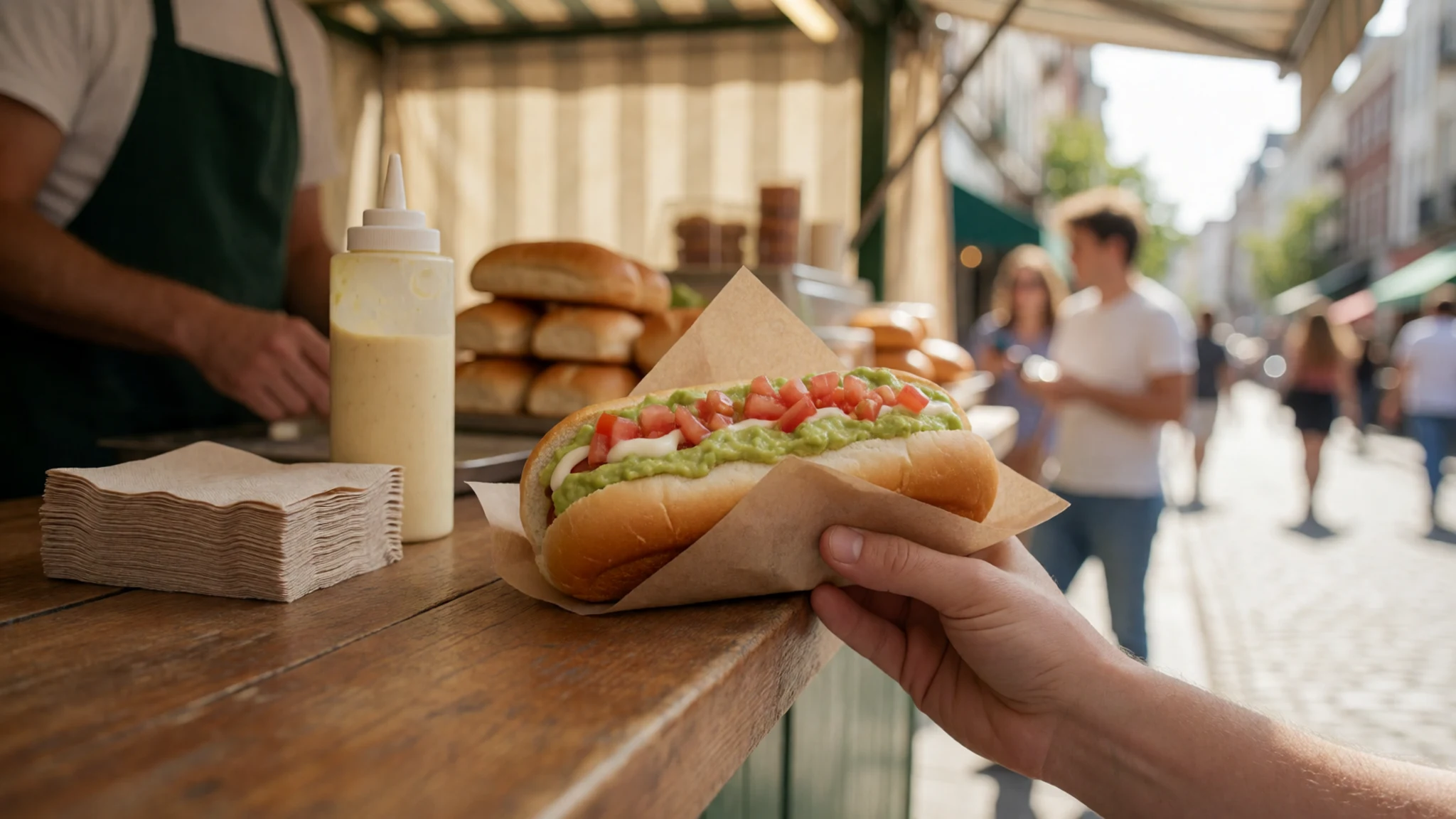
- Ceviche — Seafood restaurants near the fishermen's harbour and along the seafront
Raw white fish cured in lime or lemon juice with onion, coriander and chilli, a dish shared across the Pacific coast of South America. Freshness is everything, so order it where fishing boats supply the kitchen and the fish turns over quickly.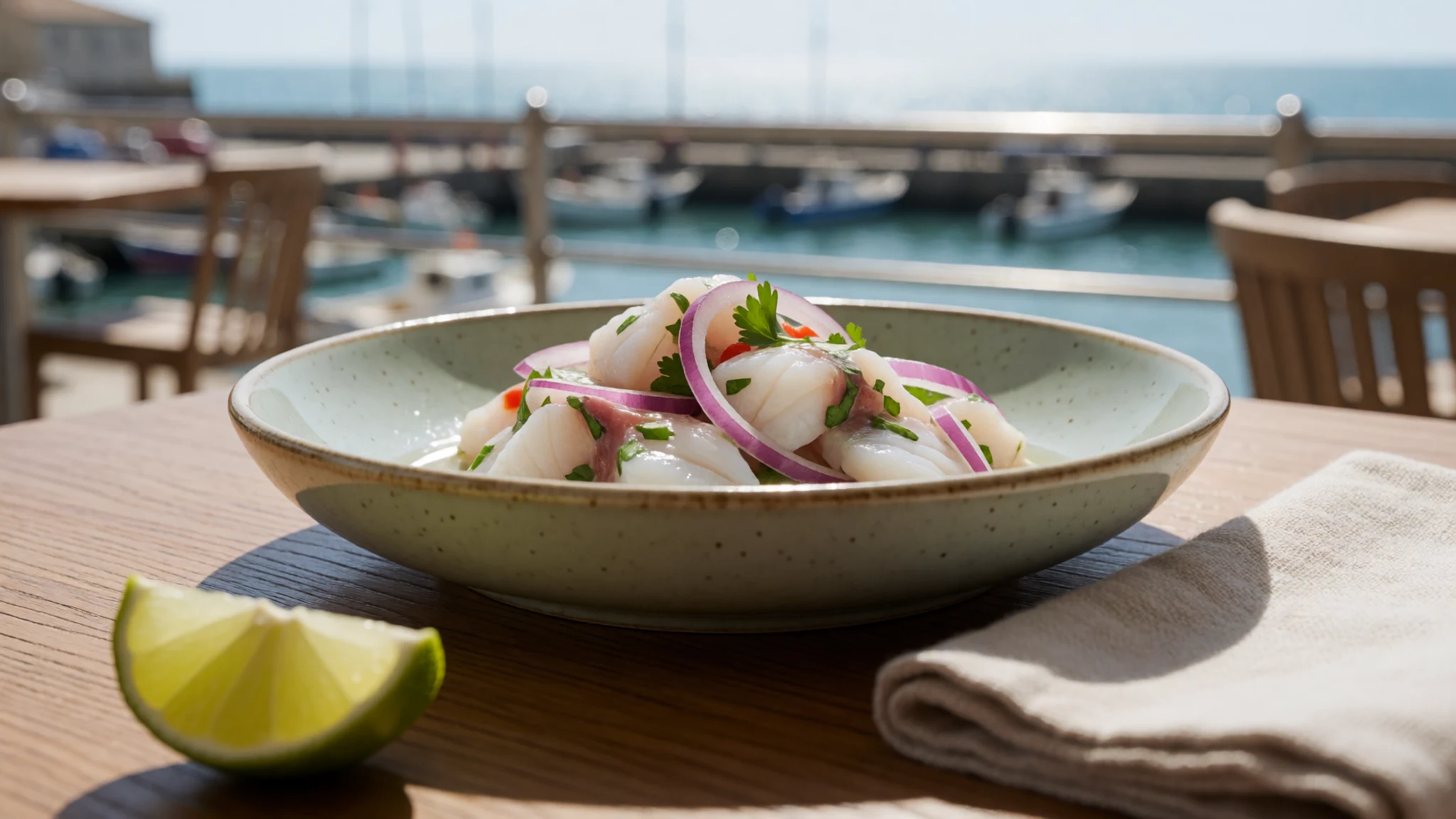
- Machas a la parmesana — Seafood restaurants along the seafront and in the centre
Razor clams, a coastal favourite, are topped with grated Parmesan and a splash of white wine, then grilled until golden. They arrive in their shells, rich and slightly smoky, and are usually eaten as a starter with lemon and a cold drink. - Empanadas — Bakeries and corner snack counters across the centre
Baked or fried pastry turnovers filled with minced beef, onion and egg, or with cheese or seafood. A baked empanada de pino is the classic Chilean version. They make a cheap, portable snack for a beach afternoon or a bus journey. - Almuerzo del día — The small restaurants in the market by Plaza Sotomayor
The set lunch is the everyday meal of working Antofagasta: a soup or salad, a main of meat, fish or chicken with rice or potatoes, and sometimes dessert. The tiny restaurants in the market hall are where it is cooked fast and in volume.
Plan it
Best time. December to March, when the coast is sunniest and the artificial beaches are at their best. The desert is dry all year, so there is no rainy season to avoid, though mornings can be misty and evenings cool.
How long. 1–2
Getting there. Andrés Sabella Gálvez International Airport takes flights from Santiago, La Serena, Concepción and Lima, with a taxi or transfer for the last leg into the city. Long-distance buses run from Calama, San Pedro de Atacama, Iquique, Arica, Copiapó, La Serena and Santiago, and the Panamerican Highway links the city to the rest of Chile.
Budget. mid
Tips
- Watch your bags at the bus terminals when loading and leaving, as pickpockets work there
- Park only in guarded car parks; the free supermarket ones are not secure
- Carry a card plus some cash for market lunches and small cafés
- Bring water, a hat and sunscreen, especially for La Portada and the Mano del Desierto
- The streets inland of the bus terminals can feel rough after dark, so take a taxi at night
- Check the municipality's website, https://www.municipalidadantofagasta.cl/, for current access to sites such as Huanchaca
Etiquette
- Greet staff with a short "buenos días" or "buenas tardes" before ordering
- Keep clear of cliff edges at La Portada and follow any posted signs
- Ask before photographing workers or anyone's family
Nearby
Sources
- Wikidata Q3612 (CC0)
- Wikipedia: Antofagasta (rev 1381568146) (CC BY-SA 4.0)
- Wikivoyage: Antofagasta (rev 5424208) (CC BY-SA 4.0)
- Photo: Antofagasta, Mejillones (Public domain)
- Photo: Plaza Colón, Antofagasta (Francisco Martínez) (CC BY-SA 2.5)
- Photo: Plano General del Reyno de Chile (Andrés Baleato, 1793) (Public domain)
- Photo: Chilean army in Antofagasta (Public domain)
- Photo: Postcard of Plaza Colón (Carlos Brandt) (Public domain)
- Photo: Docks at Antofagasta (Bureau of Public Roads) (Public domain)
- Photo: Tropic of Capricorn milestone (Marcos Escalier) (CC BY-SA 2.0)
- Photo: La Portada Natural Monument (Marcos Escalier) (CC BY-SA 2.0)


