Antananarivo
Antananarivo, Madagascar
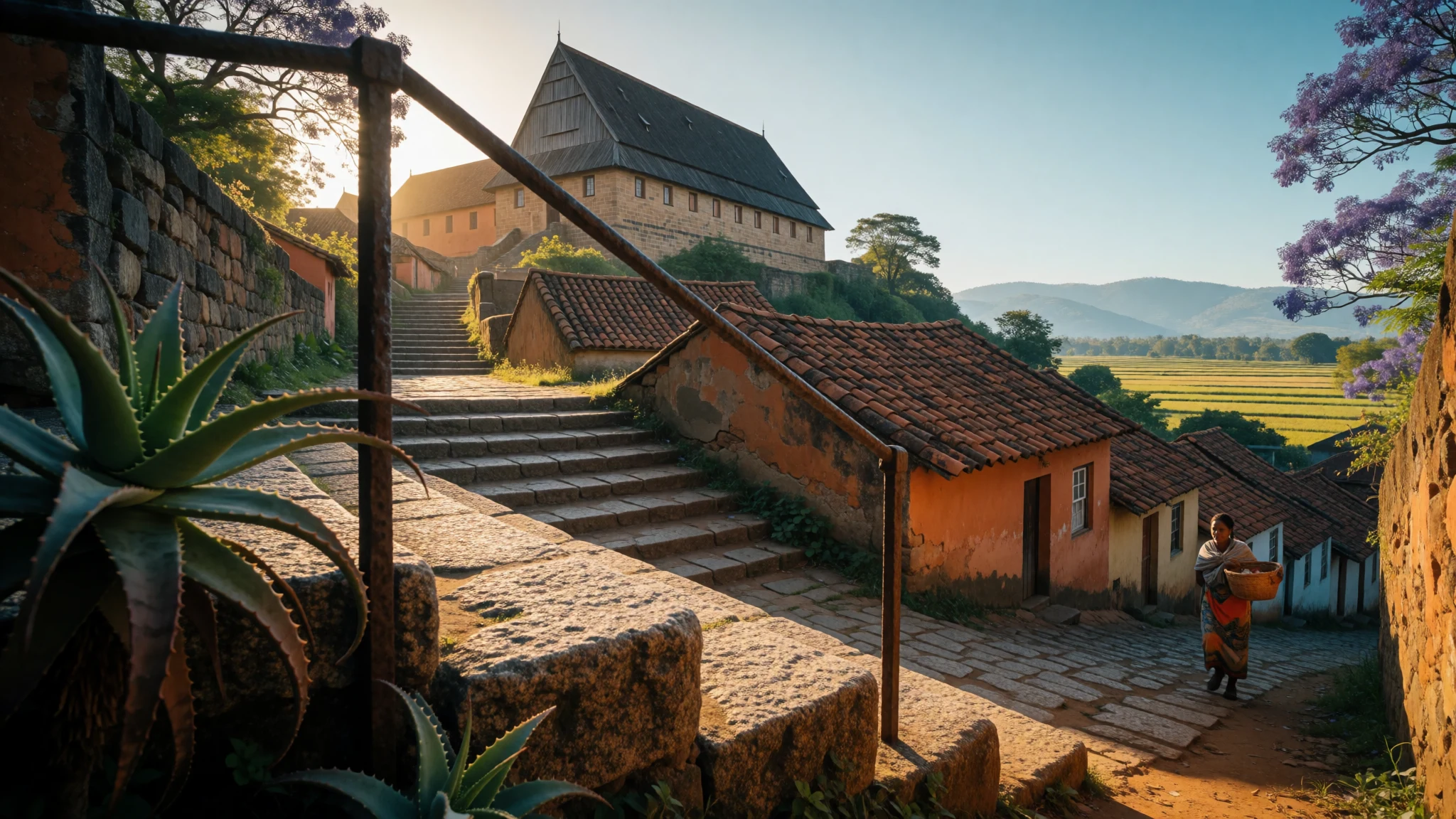
Antananarivo is a steep highland capital where royal hilltop history, working rice paddies and everyday Malagasy life sit within a short ride of each other.
The place
Antananarivo, usually shortened to Tana, is the capital and largest city of Madagascar, home to about 1.3 million people, with a much bigger sprawl of settlement around it. It sits at 1,276 m on a ridge of hills in the middle of the island, so the air is cooler and thinner than most visitors expect from a tropical country. The old town climbs the ridge in tiers. The Rova, the former royal compound, caps the summit, and steep lanes, stairways and old houses tumble down towards the lower town, where markets, banks and the railway station sit. Beyond that, the flat ground is rice paddies, still farmed, which gives the capital the odd look of a city hemmed in by fields. The presidency, parliament and most national institutions are based here, and the city has more universities, galleries and nightclubs than anywhere else on the island. People from all of Madagascar's ethnic groups live in Tana, alongside Chinese, Indian and European communities, though the historic core belongs to the Merina, the highland people who ruled from this hill. Some honest warnings: traffic is heavy, pavements are uneven, and the gradients make walking tiring. Noise, fumes and crowding in the lower town can wear a visitor down. Most travellers pass through on the way to the national parks, but two or three days here repay the effort, particularly for the views, the history and the food.
Its story
Antananarivo grew from a fortified hilltop. The Vazimba people lived on Analamanga hill until Andrianjaka, a Merina ruler, drove them out and chose the summit for his rova, a walled royal compound. Accounts differ on the exact date, but the founding is traditionally placed around 1625. Over the following generations the compound swelled to take in royal palaces and the tombs of Merina rulers, while houses spread down the slopes beneath it. A growing capital needed feeding, and the early kings organised the work. Subjects owed labour to the crown, and they built a network of dikes and irrigated paddy fields across the plain below. The largest of those fields, the Betsimitatatra, is still planted with rice, so the city's relationship with its farmland is centuries old. Later, King Andriamasinavalona gave the town the name it carries now. He laid out Andohalo, an open square beyond the town gate, as the stage where each ruler spoke to the public, and he named many places in the city after spots in the nearby village of Antananarivokely. The Rova stayed the heart of the kingdom of Imerina. A fire in 1995 badly damaged it, and the compound still carries the marks. The hill dominates the skyline all the same, and the paddies below remain quiet evidence of how the city fed itself.
What to see
- The Rova — Summit of the old town
The Rova is the hilltop royal compound of the Merina kings and still the city's landmark. Palaces and a royal chapel stand within its walls, though the fire of 1995 left the site badly damaged and the state of repairs varies, so check locally before going. The views over roofs and paddies justify the climb; a taxi saves the legs.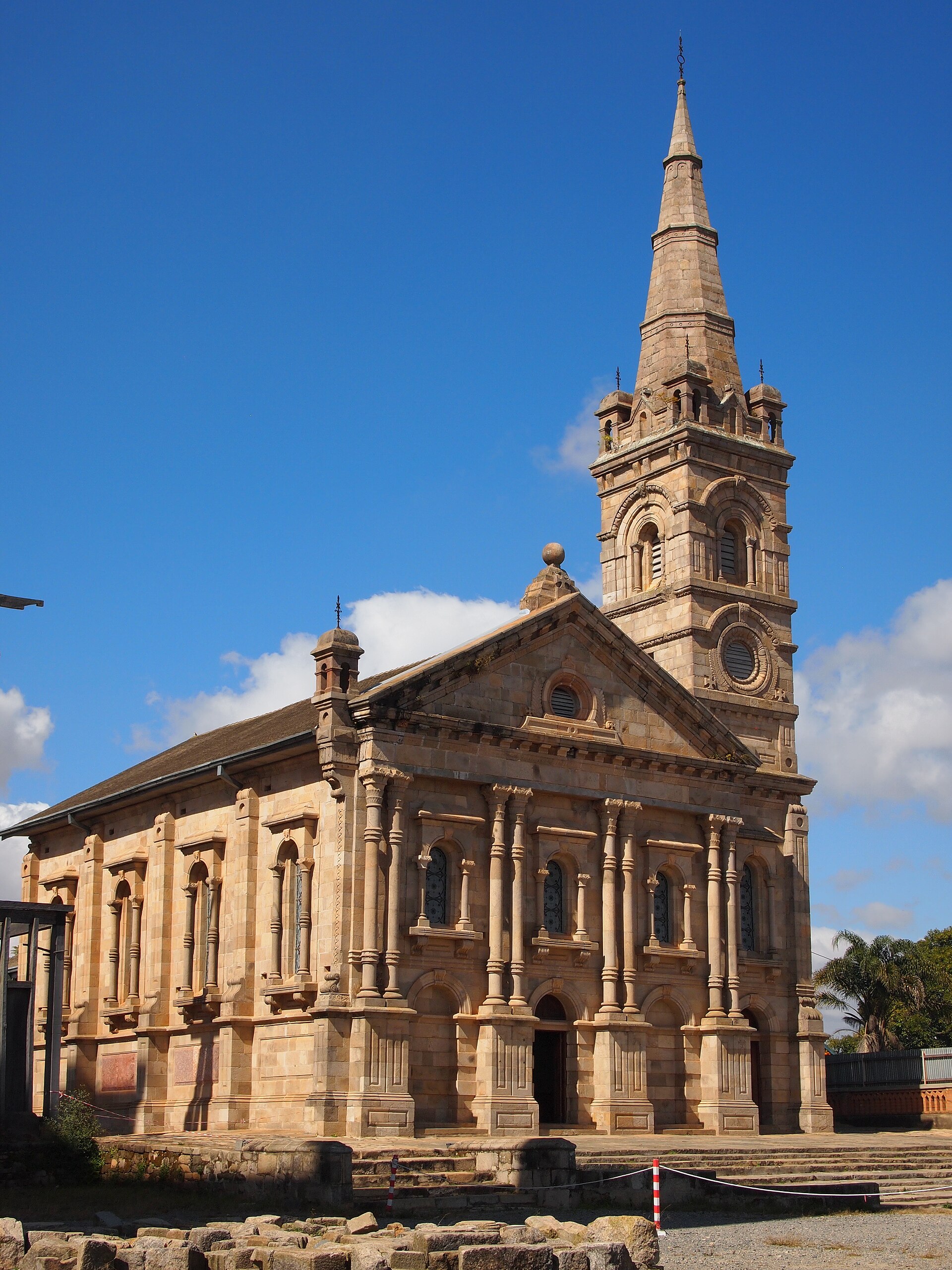
- Prime Minister's Palace — Upper town, near the Rova
The Prime Minister's Palace, close to the Rova, housed the prime minister under the last queens and now works as a museum. Its collection includes treasures rescued from the Rova fire, among them the red jacket of Radama I. It is the quickest way to picture what life at the royal court looked like. - Andohalo square — Upper town, outside the old town gate
Andohalo is the open square outside the old town gate where Merina sovereigns delivered their speeches and announcements. Today it is a quiet, slightly worn space on the ridge, more interesting for what happened there than for what stands there. It pairs well with a slow walk through the lanes of the upper town. - Lake Anosy — Central, lower town
Lake Anosy lies in the lower, central part of the city, with trees and paths around the water. It is a calm place to rest tired legs after the hills. Jacarandas colour the streets purple when they bloom, usually late in the year, and mornings and late afternoons are the pleasant times to wander.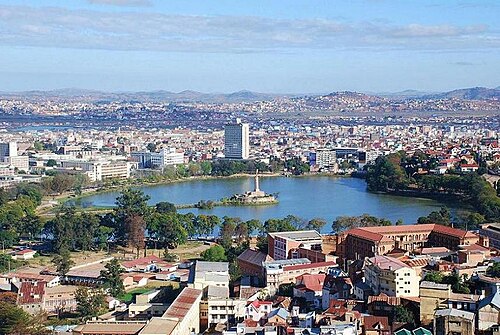
- Lemurs' Park — West of the city centre
Lemurs' Park was set up by a French-Japanese charity and houses mainly lemurs rescued from illegal captivity or smuggling attempts. Some animals are being prepared for release into the wild. It is an easy way to meet lemurs on a short city stay, and a visit supports the conservation work. Check arrangements locally before setting out.
Culture
Antananarivo is the centre of Merina culture, and many local customs revolve around ancestors. The best known is the famadihana, a reburial ceremony practised by Merina and Betsileo families across the highlands. Some years after a death, the family opens its tomb, brings out the remains wrapped in a lamba, rewraps them in fresh silk and returns them, with music, dancing and a shared meal for relatives and neighbours. It is joyful rather than sombre, and costly enough that many families save for years to hold one. Tombs sit among the fields and neighbourhoods around the city, so the dead are very much part of the landscape. The royal past is just as present: the Rova dominates the skyline, and the old squares and gates are tied to the kings who once spoke from them. Language matters too. Malagasy is the everyday tongue, while French is widely used in shops, offices and on menus, so a few words of greeting in either go a long way. Fady, local taboos that differ between families and places, shape what counts as polite, and asking a host is always wise. Hospitality is generous and conversation is unhurried. If you are invited to a famadihana or find yourself near a family tomb, ask your host about dress and photography first, and never photograph people or the ceremony without permission.
What to wear
Traditional dress in Antananarivo centres on the lamba, a rectangular wrap cloth worn over the shoulders or around the body by women and men. Everyday versions are cotton, while finer ones are silk, the cloth also used to wrap the dead at a famadihana. Raffia and straw are woven into hats and baskets that turn up in markets across the highlands. Formal lamba are worn at weddings, funerals, family ceremonies and church. In daily life Tana dresses much like other French-influenced cities: jeans, shirts, dresses and school uniforms, often with a lamba or shawl thrown over the shoulders against the cool air. Office workers favour smart-casual clothes, and looking neat matters. Visitors should plan for altitude rather than beach heat. Layers work best, because mornings and evenings can be chilly in the cooler months while the midday sun is strong, and a light waterproof earns its place in the wet season. Sturdy shoes with grip are important on steep, uneven and sometimes slippery stairways and cobbles. Cover shoulders and knees for churches, tombs and family ceremonies, and leave flashy jewellery and visible cameras at the hotel when heading into crowded markets or out after dark.
What to eat
- Romazava — Simple Malagasy eateries across the city
Romazava is a brothy stew of zebu beef and leafy greens, often flavoured with ginger and tomato, and served over rice. It is everyday home cooking, light and savoury, and a good first order at any plain Malagasy eatery in Antananarivo. - Grilled zebu — Small grill restaurants around the Rova hill
Zebu, the humped local cattle, is cooked over charcoal and served with rice and a spicy relish on the side. Small grill places near the Rova hill specialise in it. Portions are generous, and the meat is leaner and chewier than most visitors expect. - Ravitoto — Local eateries and family-run lunch spots
Ravitoto is made from pounded cassava leaves, slow-cooked with pork and often coconut milk, then eaten with rice. The flavour is earthy and rich. It is a highland favourite and turns up at family-run lunch spots throughout the city. - Vary amin'anana — Everyday eateries and market food stalls
Vary amin'anana is rice cooked soft with leafy greens, closer to a comforting broth than a dry plate. It is a gentle, inexpensive meal, good after a long journey, and easy to find at market food stalls and everyday eateries. - Mofo gasy — Street vendors in the morning, near markets and bus stops
Mofo gasy are small rice-flour cakes baked in hot moulds, slightly sweet and crisp at the edges. Street vendors sell them in the morning, often beside a bus stop or market, and they go well with a cup of coffee or sweet tea. - Koba — Roadside stalls and stations
Koba is a dense sweet made from ground peanuts, rice flour and sugar, steamed in leaves. It is sold at roadside stalls and around transport stops, and travels well, which makes it a handy snack for long taxi-brousse rides out of Tana.
Plan it
Best time. May to October is the cooler, drier season in the highlands and the easiest for walking, with jacarandas flowering late in the year. The wet season brings heavy afternoon downpours and muddier, slipperier streets, so allow extra time and pack waterproofs.
How long. 2–3
Getting there. Most visitors arrive by air at Antananarivo's international airport, then travel by taxi or private transfer to the centre; the trip takes about half an hour in the late evening and early morning, and often more than an hour when roads are congested. Taxi-brousse shared vans are the cheapest option but take two seats if you have a bag. Overnight transit passengers may prefer a hotel near the airport.
Budget. low
Tips
- Carry cash in small notes and use the ATMs in the airport's international terminal; exchange windows there are open around the clock
- Drink only bottled water, as the tap water is not safe, and carry a bottle with you on hot, steep walks
- Allow generous time for traffic, especially on the airport road and in the lower town at rush hour
- Do the Rova and the upper town in the morning, when the light is clearer and the climb is cooler
- Keep phones and bags out of sight in crowded markets and avoid walking alone after dark
Etiquette
- Greet people before asking for anything, in Malagasy or French
- Ask permission before photographing people, tombs or ceremonies
- Dress modestly at churches, tombs and family events, and follow your host's lead on local taboos
Nearby
Sources
- Wikidata Q3915 (CC0)
- Wikipedia: Antananarivo (rev 1375911652) (CC BY-SA 4.0)
- Wikivoyage: Antananarivo (rev 5424191) (CC BY-SA 4.0)
- Photo: Lake Anosy, Central Antananarivo (Sascha Grabow) (CC BY 3.0)
- Photo: Jacarandas blooming in Antananarivo (Salym Fayad) (CC BY-SA 2.0)
- Photo: Royal chapel exterior, Rova of Antananarivo (Lemurbaby) (CC BY 3.0)
- Photo: Denkmal für den Präsidenten Philibert Tsiranana (Z thomas) (CC BY-SA 4.0)
- Photo: Mausolée d'Andrainarivo (Domoina RATSARA) (CC BY-SA 4.0)
- Photo: Bahnhof in Antananarivo (Z thomas) (CC BY-SA 4.0)
- Photo: Presidential office in Antananarivo (Lemurbaby) (CC BY 3.0)
- Photo: Antananarivo old city gate (Lemurbaby) (CC BY 3.0)


