Ahu Tongariki
Ahu Tongariki, Chile
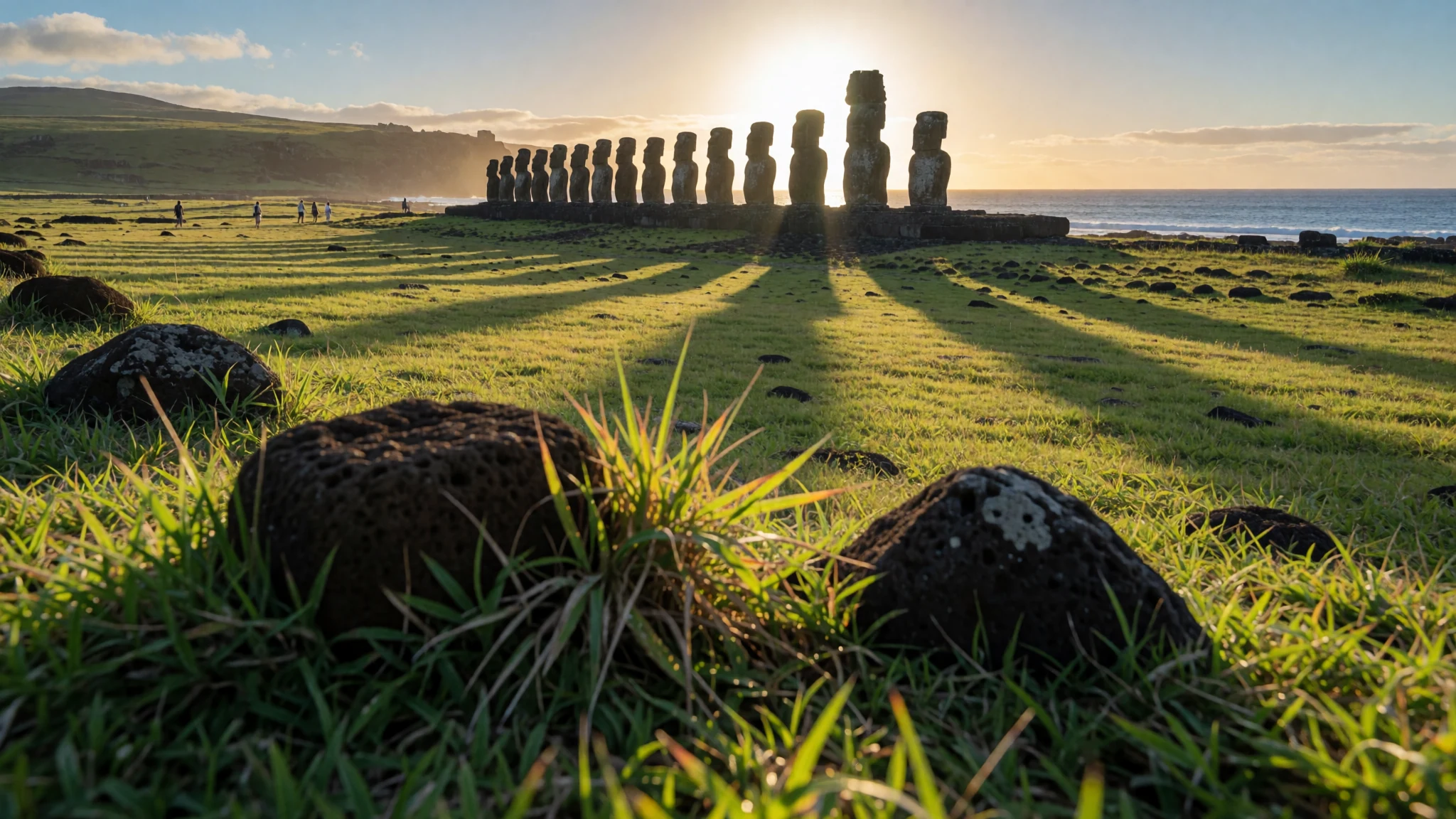
Ahu Tongariki is the largest ahu on Easter Island, and its fifteen restored moai make it the island's most striking coastal site.
The place
Ahu Tongariki sits on the southern coast of Easter Island, known locally as Rapa Nui, in the Hotu-iti part of Rapa Nui National Park. It is the largest ahu on the island, a stone platform built to carry statues, and today it holds fifteen moai, the carved figures most people picture when they think of the island. The site lies about a kilometre from Rano Raraku, the volcanic crater where the statues were cut, and from Poike, one of the three extinct volcanoes that together form Rapa Nui.
The scale becomes clear quickly. The statues stand in a long line along the stone base, their heads and shoulders rising well above the grass. One of them weighs eighty-six tonnes, and it is the heaviest of the moai ever set upright on the island. That figure makes the later restoration feel more remarkable.
The setting is wide and open. Wind comes straight off the Pacific, the grass stays short, and the light shifts fast as clouds pass over the plain. Tours tend to arrive in groups, so the quietest moments usually come early in the morning or near the end of the afternoon, when the low sun brings out the carved faces and the ocean turns from grey to gold.
Its story
Ahu Tongariki was once the principal centre of the Hotu-iti clan, one of the groups forming the eastern side of the Rapa Nui people, and it carried real political weight. Like many ahu on the island, its moai were pulled down during the civil wars that divided Rapa Nui communities. For generations the platform lay scattered with fallen figures.
The next major disruption came in 1960. An earthquake off the coast of Chile produced a tsunami that crossed the Pacific, reached Rapa Nui, and swept the ahu inland, shifting stones and statues across the ground. Nature finished what conflict had begun, and the site was left in disarray.
Restoration began in the 1990s under a multidisciplinary team led by archaeologists Claudio Cristino and Patricia Vargas Casanova. The five-year project rested on an official agreement between the Chilean government, the University of Chile and the Japan-based crane manufacturer Tadano, whose machinery helped lift the heavy statues back onto their base. The row of fifteen moai standing today is the outcome of that work.
The statues themselves were cut from volcanic tuff at Rano Raraku, a consolidated ash deposit that is easier to shape than basalt. Teams then moved them across the plain to the coast, a journey that tells as much about the island's organisation as about the carvers' skill.
What to see
- Ahu Tongariki platform and moai — Hotu-iti area, southern coast, Rapa Nui National Park
The main attraction is the ahu itself, a long stone platform on the southern coast of the island where fifteen restored moai stand in a line. The statues face inland, away from the sea, and their scale is best appreciated from the grass in front of them. Walk the length of the platform slowly, because the spacing and heights vary between figures.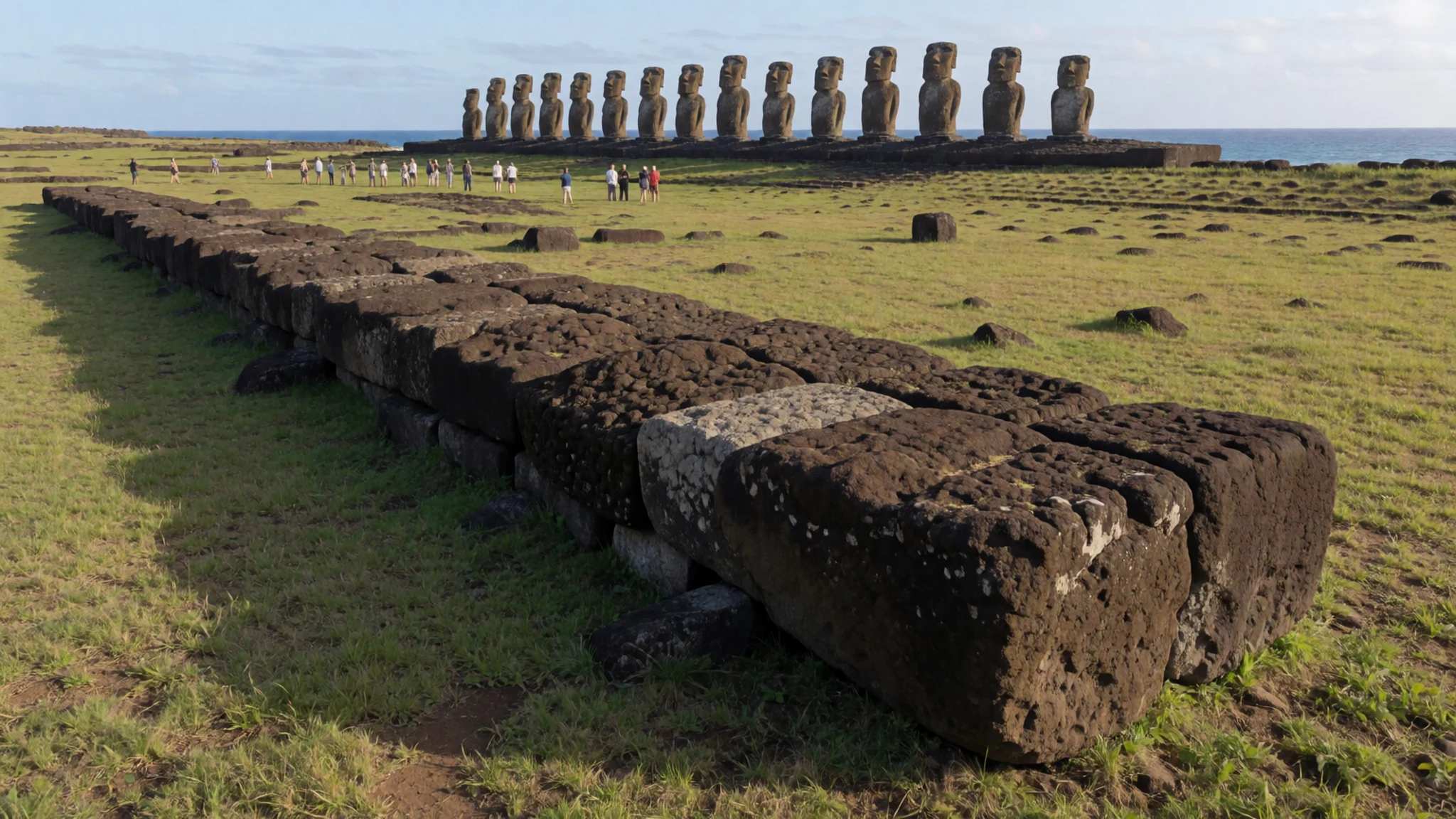
- Rano Raraku quarry — Rapa Nui National Park, near Ahu Tongariki
This extinct volcanic crater is where most of the moai were carved, and hundreds of unfinished statues still lie on its slopes and in the surrounding ground. Some are half-emerged from the earth, others lean at angles where they were abandoned. The walk around the rim takes time, so allow a few hours and wear sturdy shoes for the uneven footing.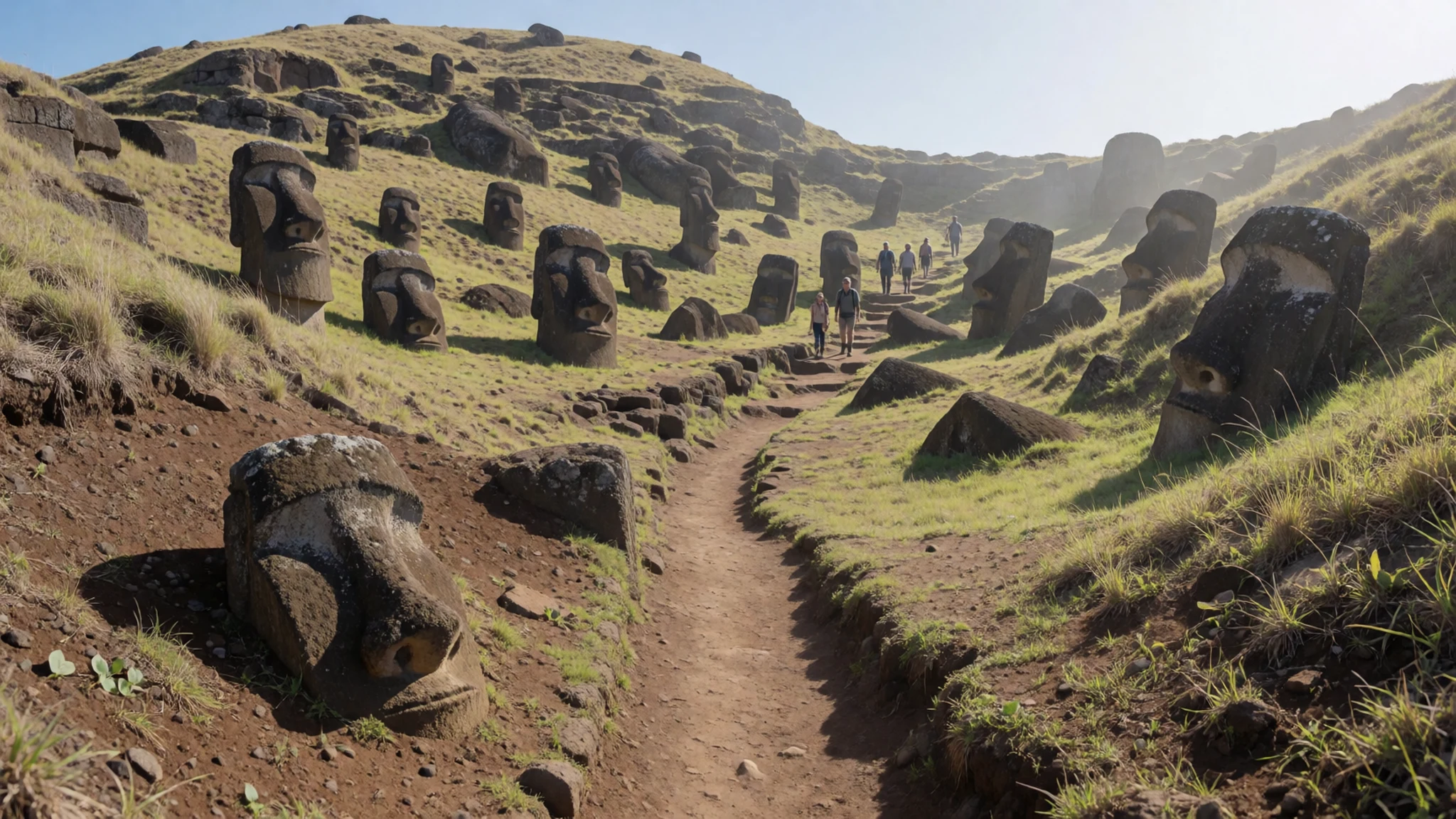
- Poike peninsula — Eastern end of the island, within the national park
Poike is one of the three extinct volcanoes that shape the island, and its eastern side is quieter than the main sites. The land here is wide, grassy and open, with views back over the coast. Few visitors reach this part of the park, so it suits a slower walk or a horse ride arranged locally.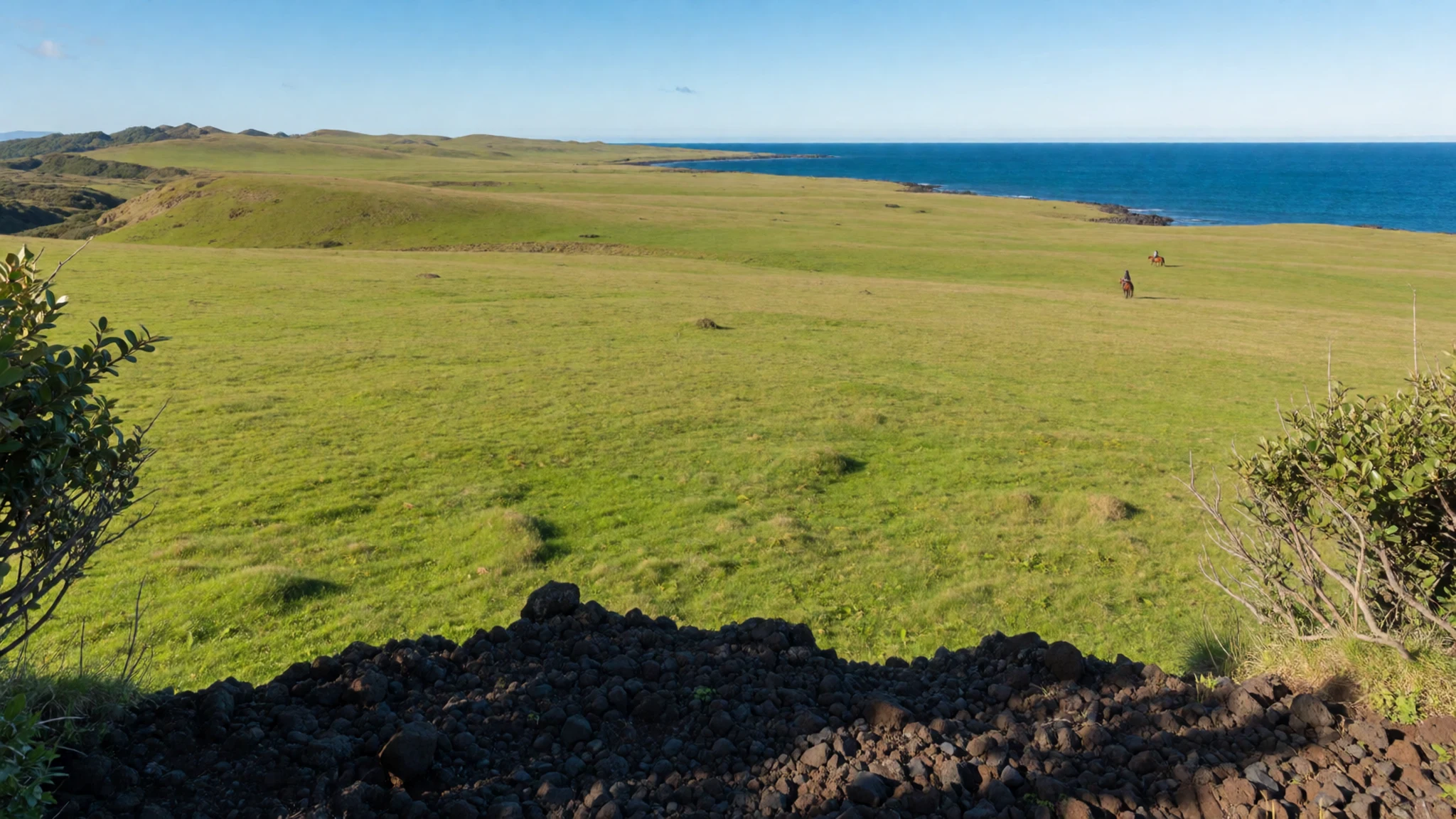
- Ahu Akivi — Inland, Hotu-iti side of the island
A small group of seven moai on an inland ridge, Ahu Akivi is notable for facing the sea rather than the inland direction used by most statues on the island. The site is simple and open, with little shade, so bring water and a hat. It works well as a short stop between larger sites.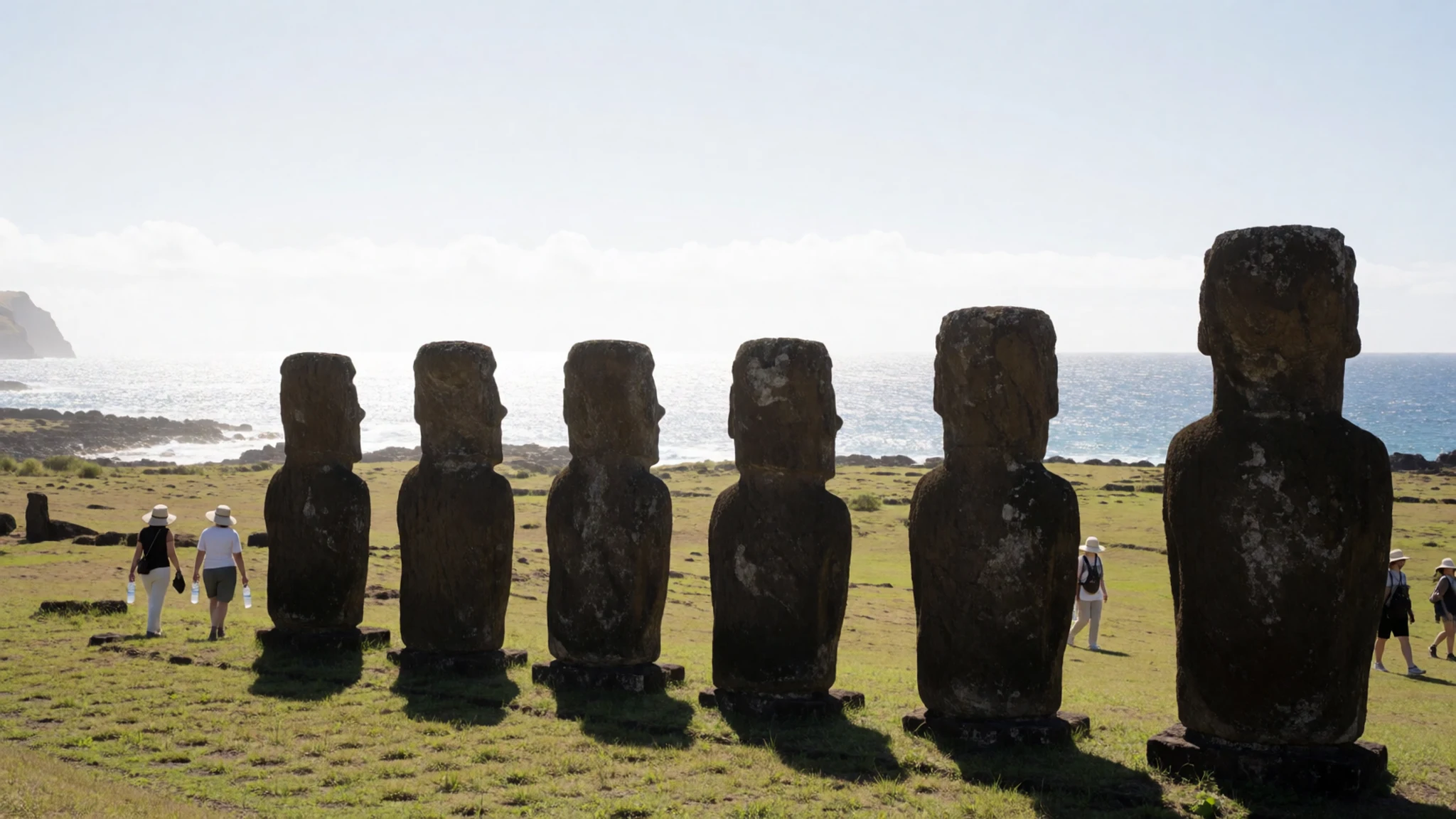
- Hanga Roa, the island town — Western coast of the island, the island's main settlement
Hanga Roa is the only real town on Easter Island and the base for most visitors. Its streets are low-rise, with guesthouses, small restaurants, craft stalls and a seafront that catches the evening light. Most tours depart from here, so it is a practical place to arrange transport, buy supplies and plan the next day.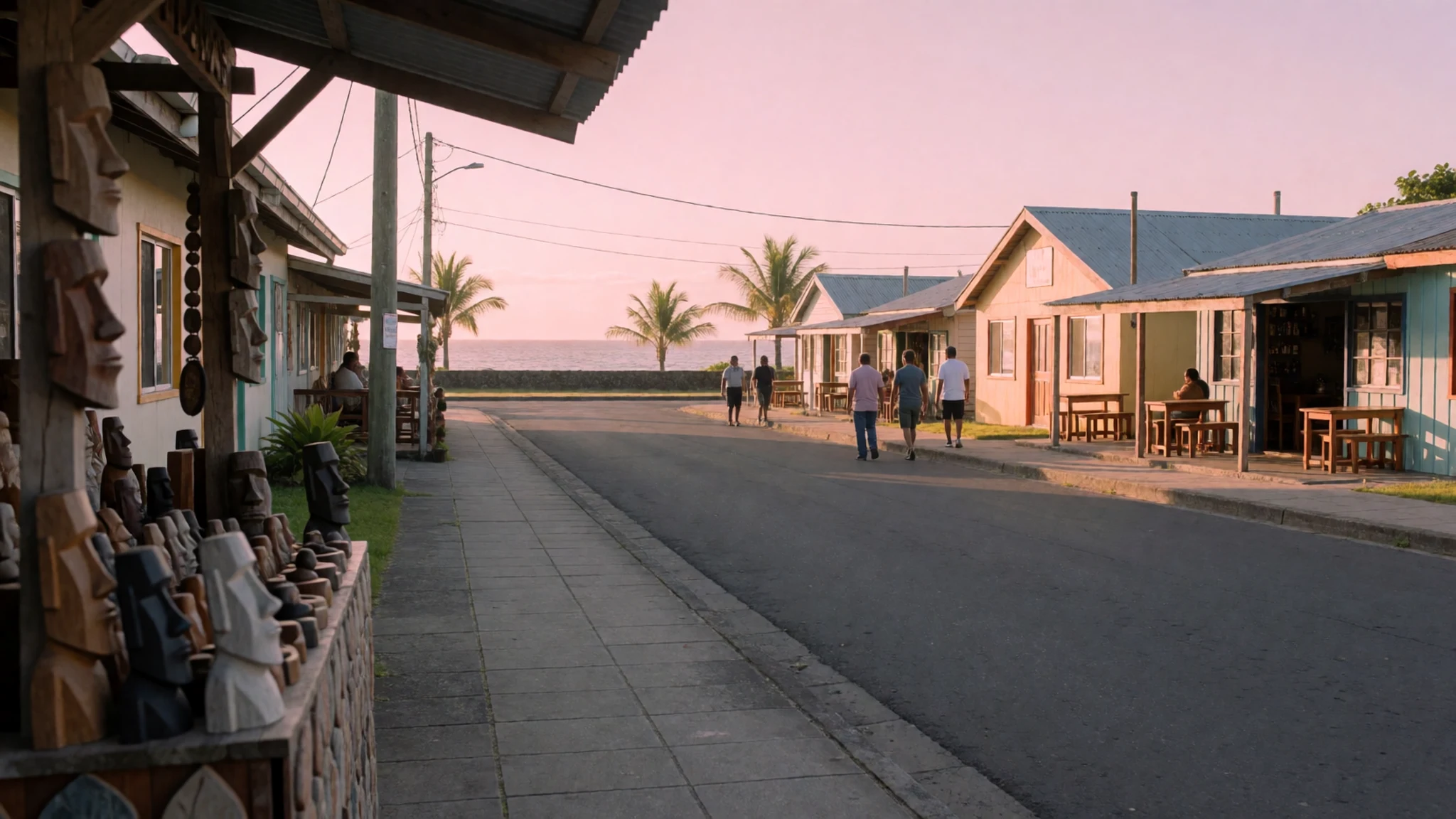
Culture
Ahu Tongariki is a sacred and funerary site rather than a backdrop for photographs, and the Rapa Nui people regard the moai as ancestors who watch over their land. Many families still hold strong ties to the ancestral sites, and local guides often explain the stories attached to each statue with real care. The island's history is recent in living memory, and the sensitivity around heritage is strong. Restoration is ongoing across the island, so the grounds remain a working archaeological landscape. Visitors are expected to keep to paths and avoid climbing on the stone platform or touching the statues. Traditional knowledge is shared through guides and cultural programmes, so listening to them adds depth to the visit. Modest clothing suits the village churches and community spaces in Hanga Roa. Please stay off the platform, keep your hands off the moai, and step back once you have finished photographing so others can see.
What to wear
At Ahu Tongariki and across Rapa Nui, traditional dress drew on local materials. Before European contact, clothing was made from plant fibres and bark cloth, decorated with feathers, shell and bone for ceremonies. Garlands made from local flowers and leaves were worn as adornment, and body paint appeared in dance and festival settings. These traditions are still visible in performance, most notably during the Tapati festival, when dancers wear feathered headdresses and painted designs.
Daily dress today is much like anywhere else in Chile. Locals wear jeans, t-shirts, shorts and practical footwear, and the wider community dresses for church and school in neat, modest clothing. Festival clothing and craft jewellery carved from bone, wood and stone are sold in Hanga Roa, and many people wear these pieces with ordinary clothes.
For a visit to Ahu Tongariki, dress for wind and strong sun. Light long sleeves, a wide-brimmed hat and sunglasses help, and sunscreen is essential because the plain offers little shade. Closed shoes with good grip suit the grass, the stony paths and the loose ground around the quarry. In the village, cover shoulders and knees for church or community events.
What to eat
- Umu-cooked meats and vegetables — Family gatherings and community events in Hanga Roa
The umu is an earth oven: food is wrapped in leaves and cooked slowly on hot stones in a pit. Chicken, pork and fish are cooked with sweet potato, taro and other root vegetables, giving a smoky, tender meal. It is usually shared at family gatherings and at events in Hanga Roa, so ask locally when one is planned.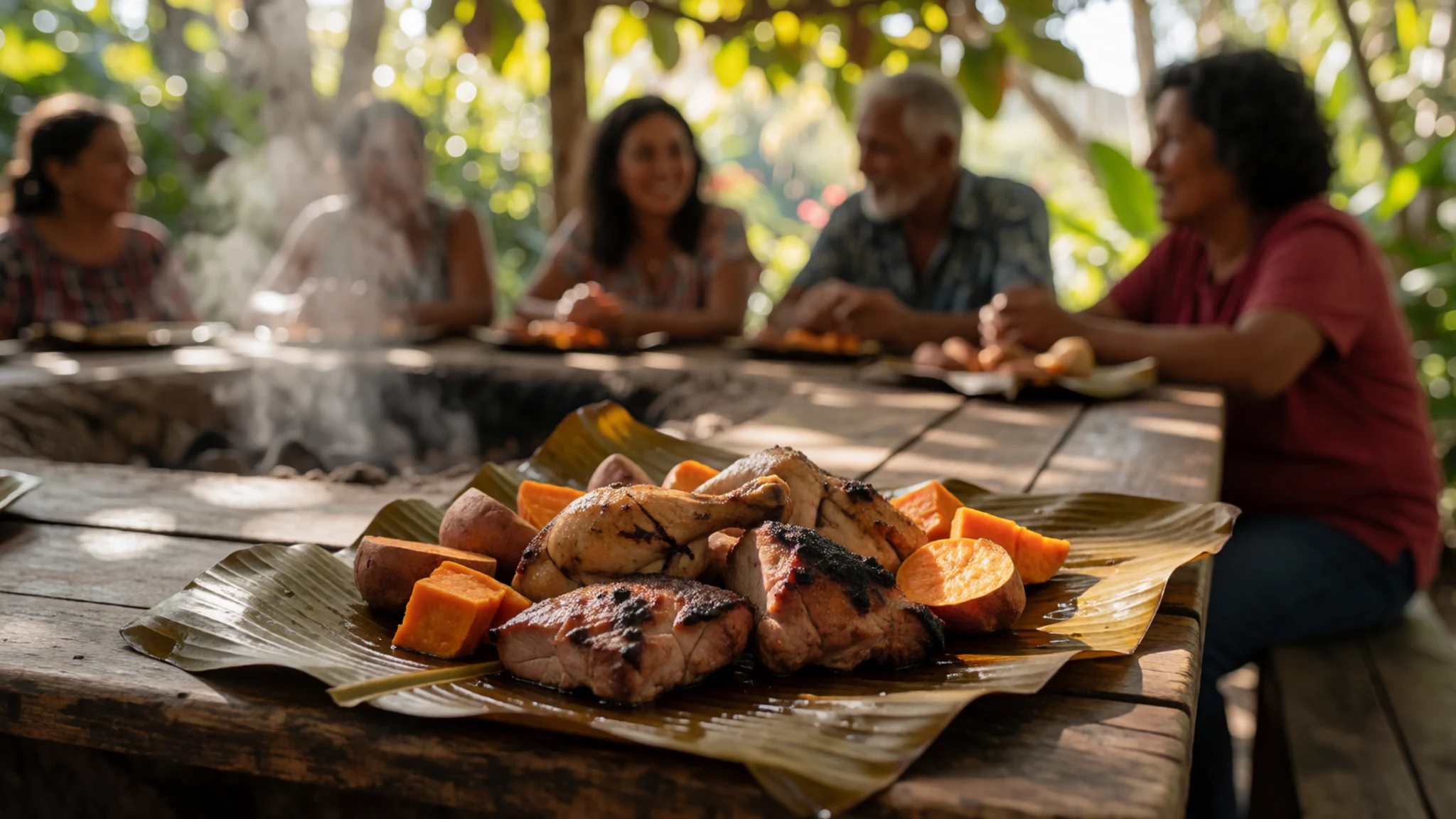
- Fresh tuna, raw with lime — Seafront eateries and small cafes along the Hanga Roa waterfront
Tuna and other fish from the surrounding Pacific appear in simple raw preparations, often marinated in citrus with onion and chilli. The dish reflects the island's reliance on the sea and the influence of mainland Chilean cooking. Eat it while the fish is fresh, which usually means the same day it was landed.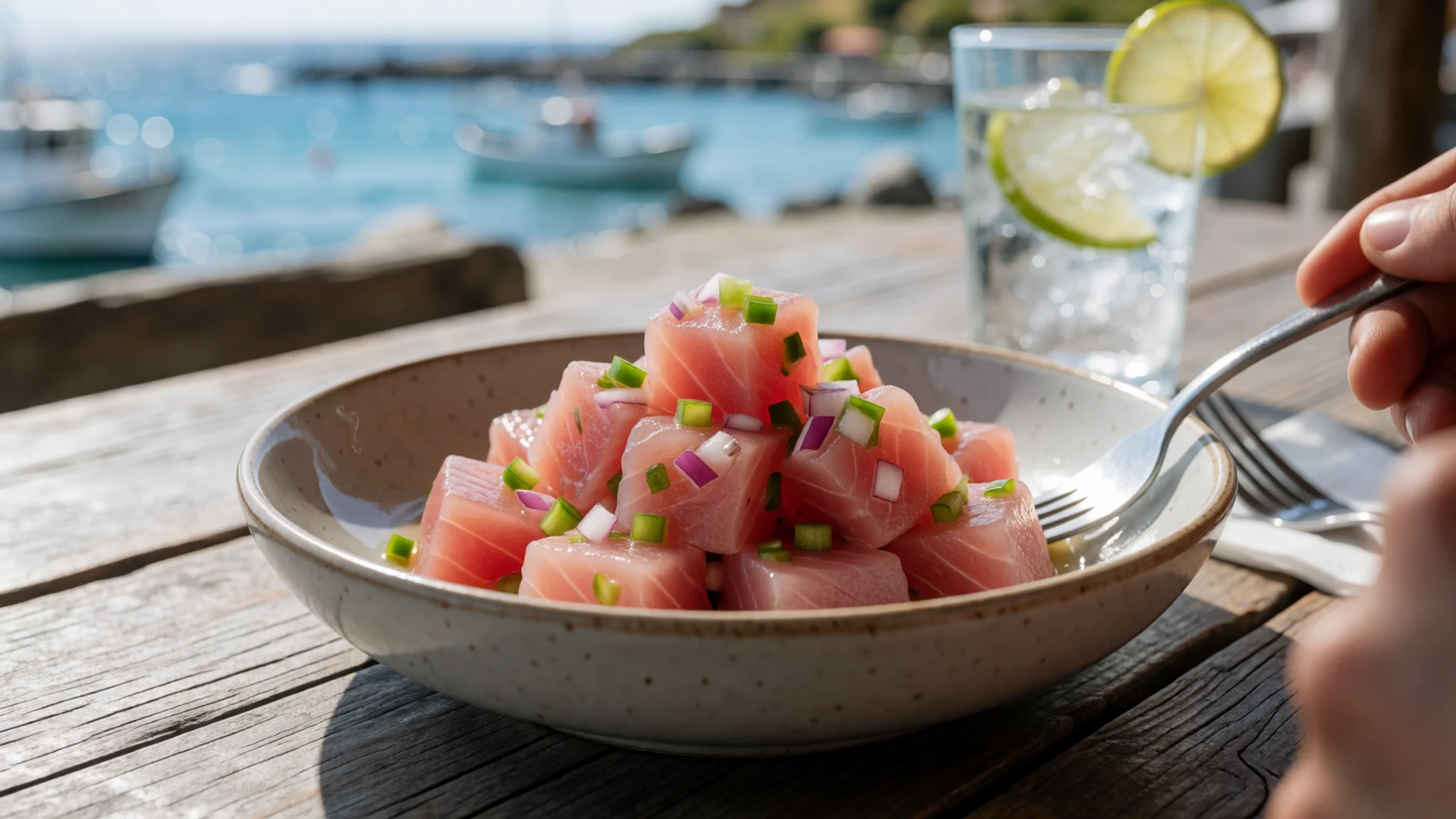
- Empanadas — Bakeries and small takeaway counters in Hanga Roa
These baked or fried pastries, filled with beef, onion, egg and olives, are a common Chilean snack and turn up across the island. They make a practical lunch between sites and are easy to carry on a day out. Bakeries in town usually sell them fresh in the morning.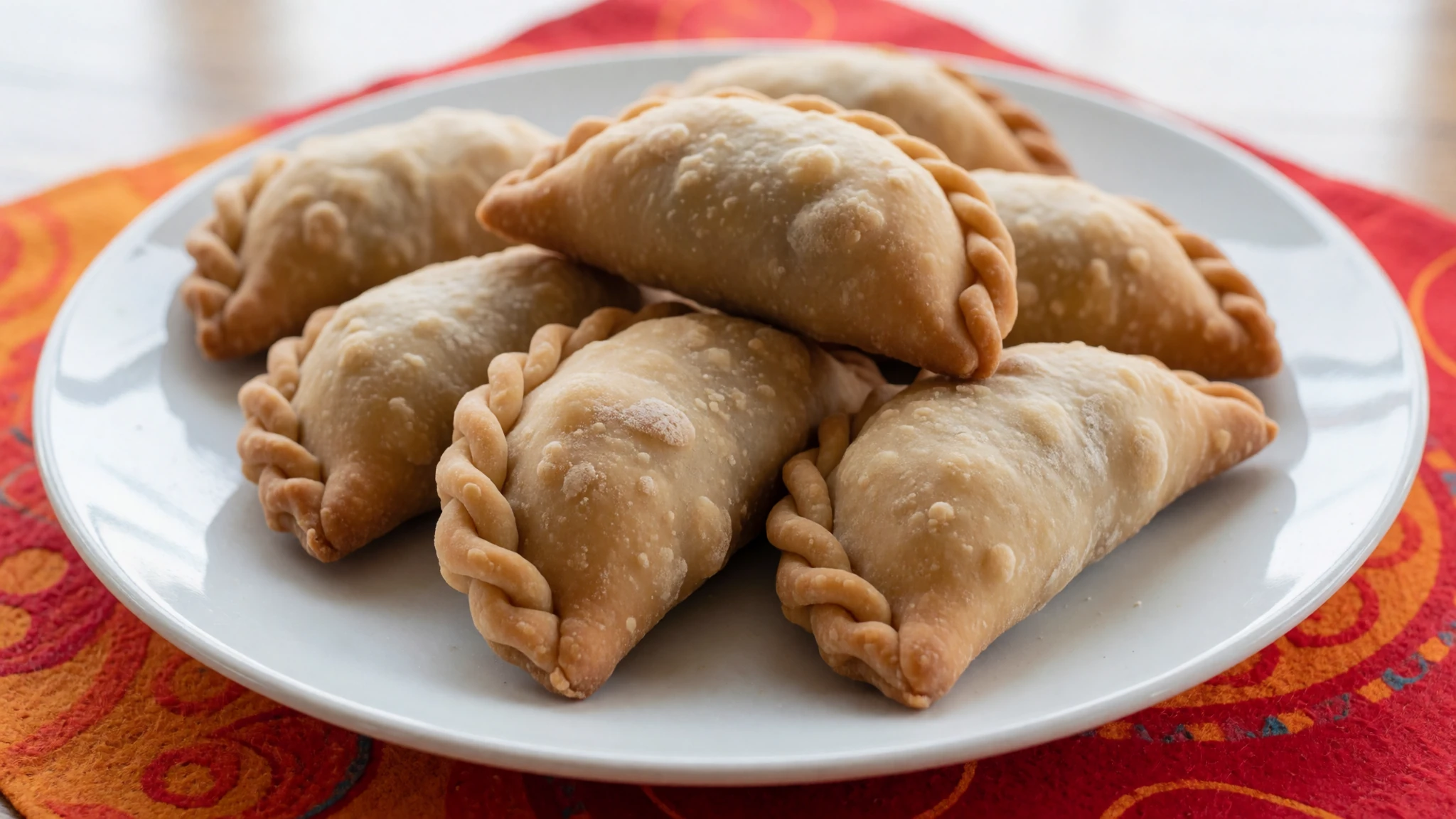
- Poke, a banana or pumpkin pudding — The Hanga Roa market and family-run eateries
Poke is a traditional sweet pudding made from grated banana or pumpkin, mixed with coconut or sugar and baked. It is a simple dessert with a dense, sweet texture and a home-cooked taste. It appears at family meals and is often sold at local food stalls.
Plan it
Best time. November to March is the warmer, drier stretch, with the most settled weather for walking the quarry and the coast. The cooler winter months from June to August bring more wind and rain, which can make the open plain feel colder.
How long. 2–3
Getting there. Fly into Mataveri International Airport at Hanga Roa, served by flights from mainland Chile. Ahu Tongariki is a drive across the island from the town, usually arranged by car hire or a guided tour.
Budget. high
Tips
- Book flights and accommodation early, since seats and rooms are limited on the island
- Go early or late in the day for quieter light and fewer tour groups
- Carry cash for small purchases and check card acceptance before you travel
- Bring water, sun protection and layers for wind on the open coast
- Check the official park information for entry arrangements before you go
Etiquette
- Stay off the stone platform and keep clear of the moai
- Do not climb or sit on the statues, even for a photograph
Nearby
Sources
- Wikidata Q3448354 (CC0)
- Wikipedia, Ahu Tongariki (rev 1319099657) (CC BY-SA 4.0)
- Wikivoyage, Easter Island (CC BY-SA 4.0)
- Easter Island Ahu (2006), Honey Hooper (CC BY 2.5)
- Ahu Tongariki from south west (2013), Bjørn Christian Tørrissen (CC BY 3.0)
- Ahu Tongariki (2013), Bjørn Christian Tørrissen (CC BY 3.0)
- Ahu Tongariki and Traveling Moai, Bjørn Christian Tørrissen (CC BY 3.0)
- Los 15 Moais, Gallardoval (CC BY 3.0)
- 12 Moais, Chaparroandrea (CC BY 3.0)
- 15 Moais en Tongariki (panoramio 1), Jorge Manriquez P. (CC BY 3.0)
- 15 Moais en Tongariki (panoramio), Jorge Manriquez P. (CC BY 3.0)


