Žilina
Žilina, Slovakia
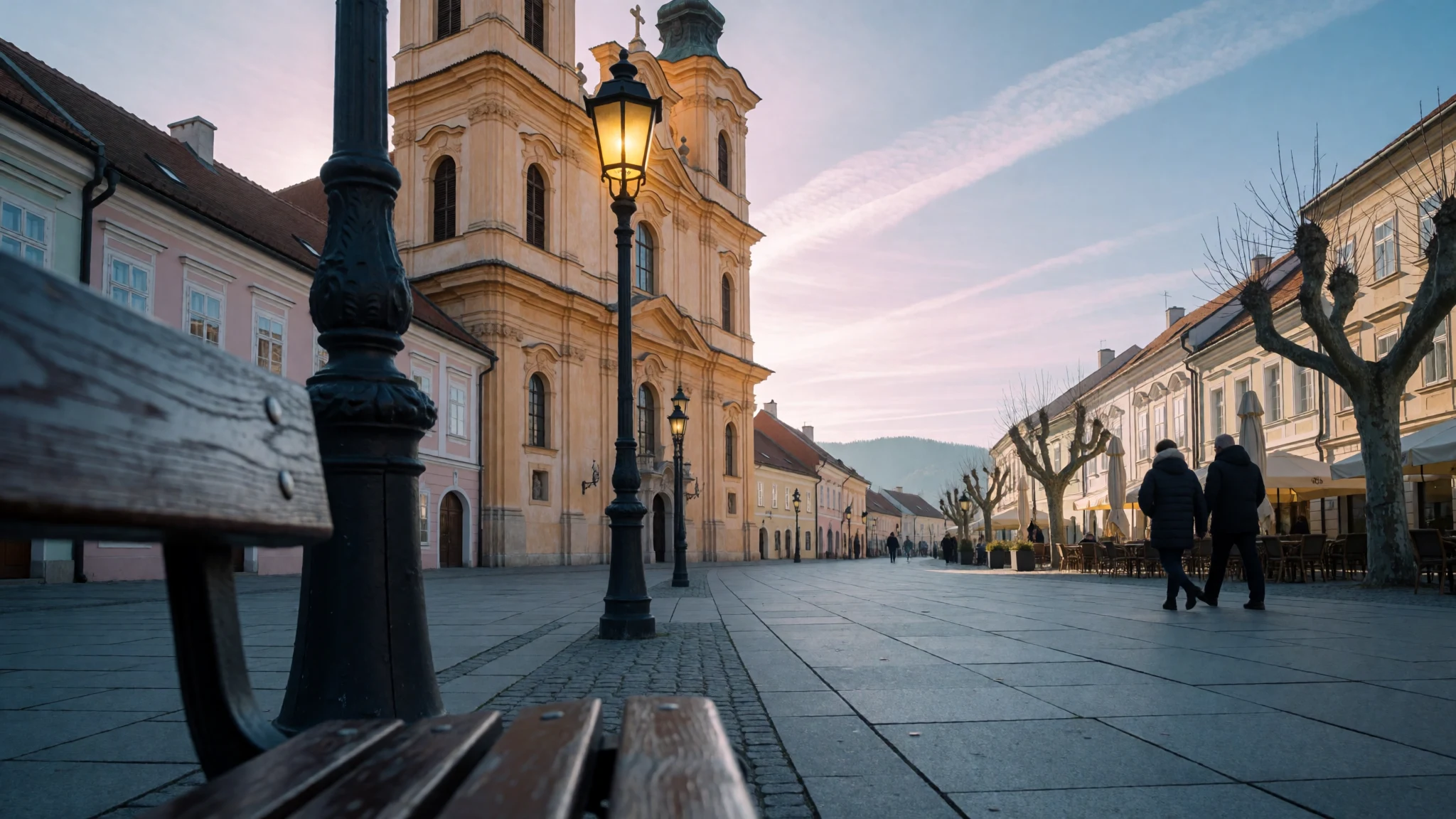
Žilina is a working Slovak rail town with a lively old centre, three rivers and mountains close by, and it makes a calm base for the Malá Fatra.
The place
Žilina sits in north-western Slovakia, close to both the Czech and Polish borders, in a basin where three rivers meet: the Váh, the Kysuca and the Rajčanka. Mountains close the horizon on every side, among them the Malá Fatra, the Súľov Rocks, the Javorníky and the Kysuce hills. The city stands about 345 metres above sea level and is home to roughly 80,000 people, which makes it a regional capital rather than a tourist town. It is the seat of both a region and a district, and it earns its living: factories, offices, and a railway junction through which much of Slovakia passes. That shapes the experience. Mornings bring commuters across the main square, lunchtime fills the cheaper local eateries, and evenings are quiet outside the cafés. The centre is compact and flat, and most sights lie within a short walk of the main station. Further out, industrial districts hide older monuments, among them a medieval church now surrounded by works. Anyone expecting a polished heritage set piece will be mildly disappointed; anyone wanting a real Slovak town with good transport and hiking at its edge will be content. Nearby protected landscapes, including Malá Fatra National Park, give the city its weekend purpose, and the Váh gives it a long green corridor towards the rest of the country.
Its story
Žilina's story begins long before its name appears in writing. Stone Age people lived in the basin, and Slavic settlers arrived in the early medieval period. Wikidata gives 1069 as the founding year, while the first written mention comes from 1208, when the district was recorded as terra de Selinan. For centuries it lay inside the Kingdom of Hungary, a status that lasted until 1918. Its medieval importance came from its position where rivers and trade routes met. In 1321 King Charles I granted it the rank of free royal town, giving the burghers privileges and a measure of self-government. A later royal charter balanced the town council between Slavic and German residents, an unusual arrangement that hints at a mixed population of merchants and craftsmen. Not all of the past was gentle: in 1431 Hussite armies burned the town, and rebuilding took time. By the seventeenth century Žilina was known for manufacturing, trade and teaching, and the Baroque period left its mark in churches, monasteries and Budatín Castle. Later the town sat within Austria–Hungary, then Czechoslovakia, and finally independent Slovakia, with industrial growth and the railway defining the most recent chapter. The result is a town whose layers are easy to read once a visitor knows where to look.
What to see
- Mariánske námestie — Old centre
The main square is the natural starting point, a broad pedestrian space where locals cross on errands and café tables spill out in warm weather. Churches, shops and eateries ring it, and the station is a few minutes' walk away, so it works as both orientation and a first coffee stop.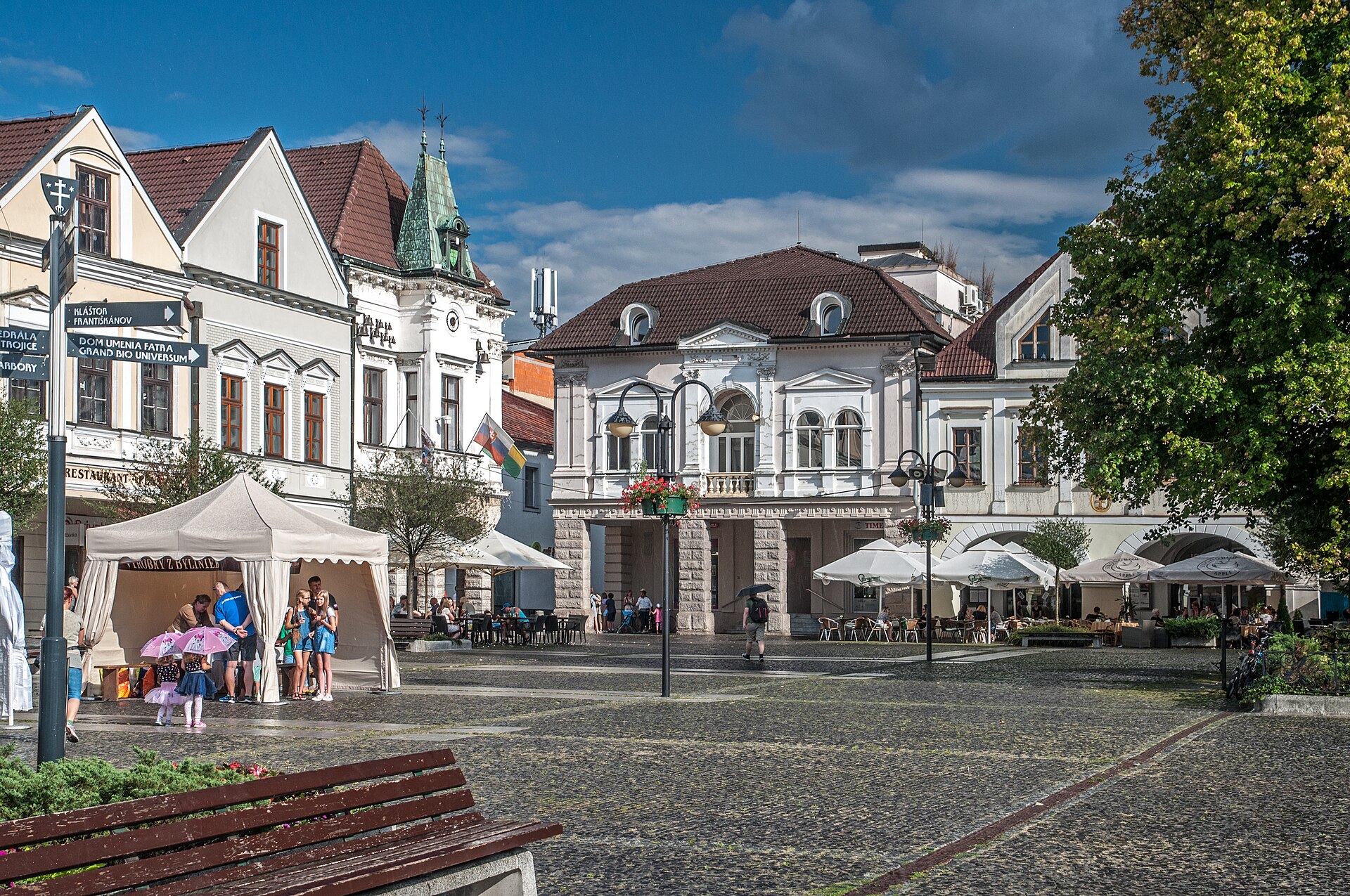
- Holy Trinity Cathedral — Old centre
A Roman Catholic church with medieval roots and now the seat of the bishop of the Žilina diocese. Locals simply call it the Parish Church, Farský kostol. Go for the interior and its place in the town's long religious life; it is an active church, so visits fit around services.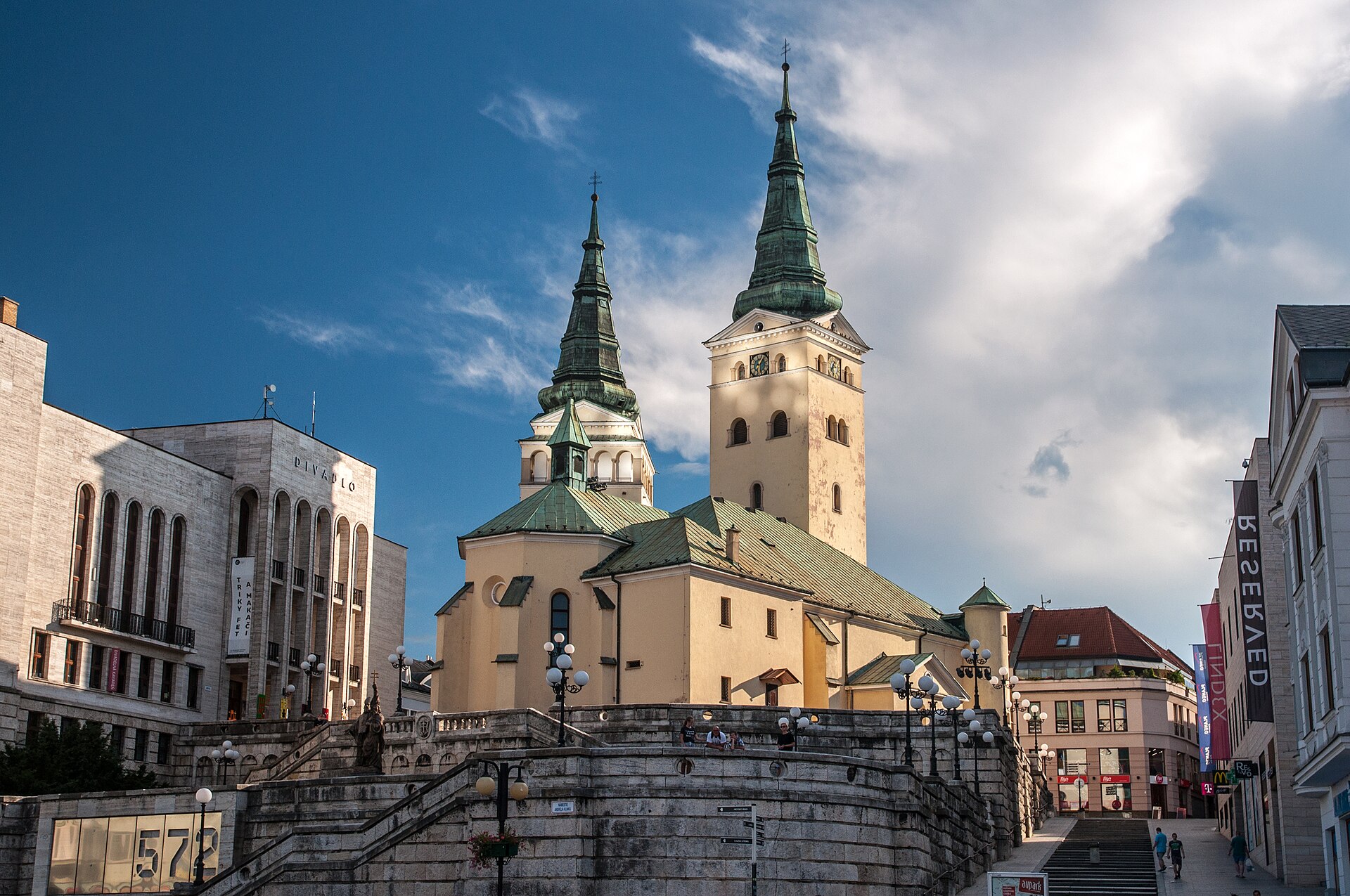
- Church of the Conversion of St Paul — Mariánske námestie
Standing on the main square, this Baroque church is known to residents as Sirotár, the Orphans' Church. Its renovated façade gives the square a strong vertical accent. It is easy to combine with a coffee break, since nothing else on the square needs more than a short walk.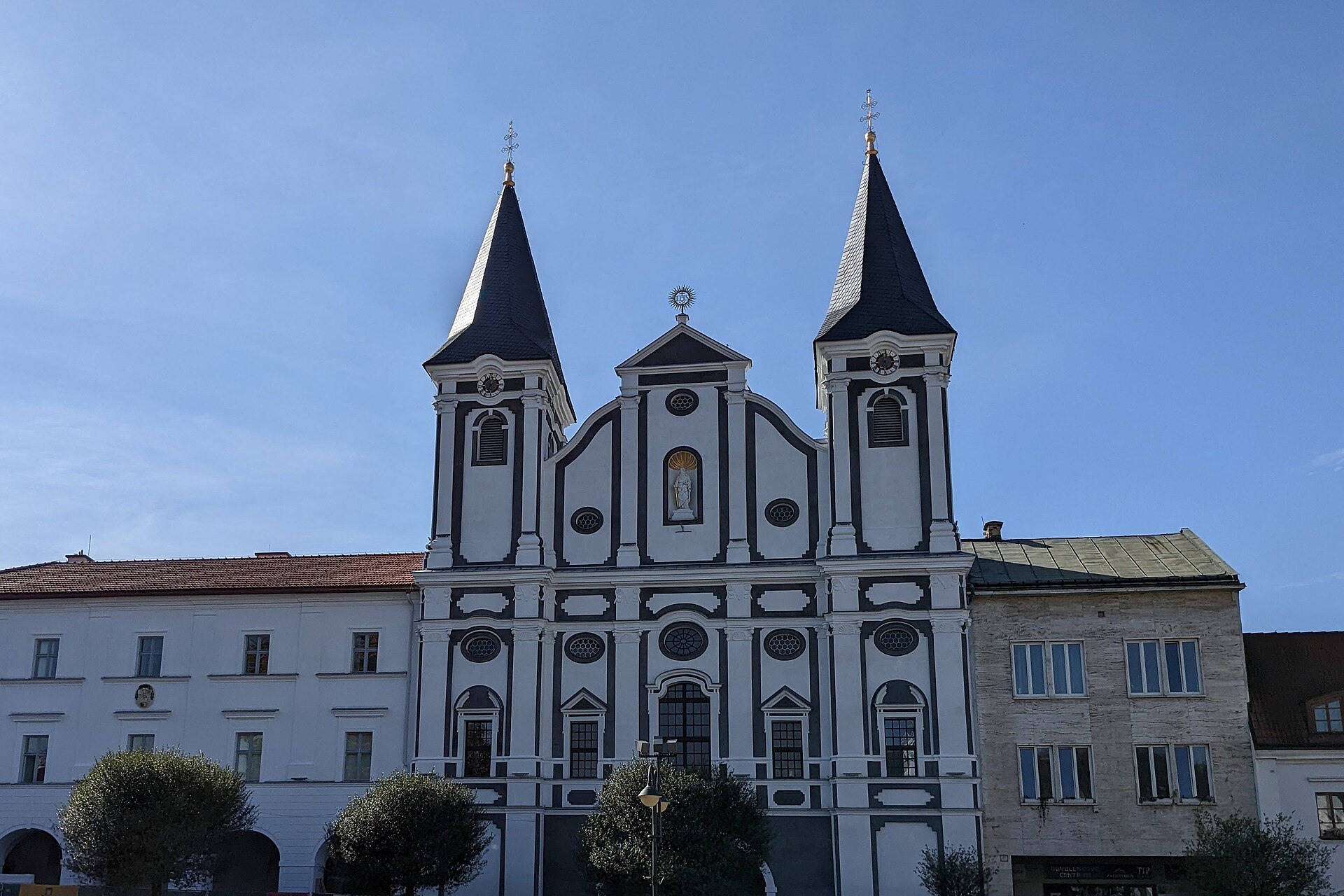
- Church of St Stephen the King — Industrial district
Listed as the town's oldest architectural monument, this medieval church now stands in an industrial area, which makes it an odd and rather memorable sight. Trolleybuses to the Závodská stop reach it from the centre. Expect a quiet corner rather than a polished attraction.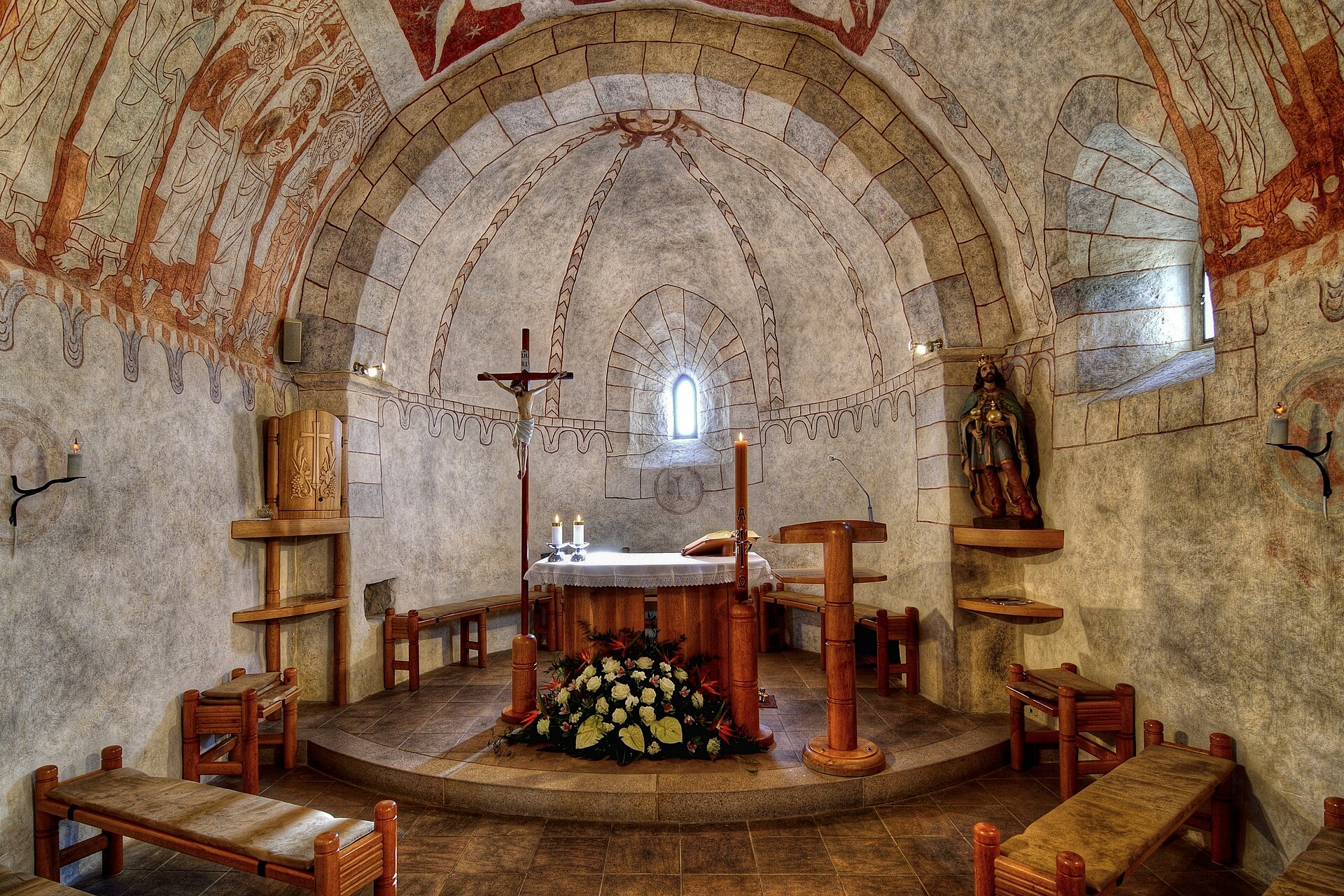
- Budatín Castle — Budatín, river edge
This Baroque-era castle on the edge of town houses the Považie Museum, which also runs several other sites in the surrounding valley. It suits a half-day outing with a look at regional history, and the setting near the rivers adds a greener contrast to the city streets.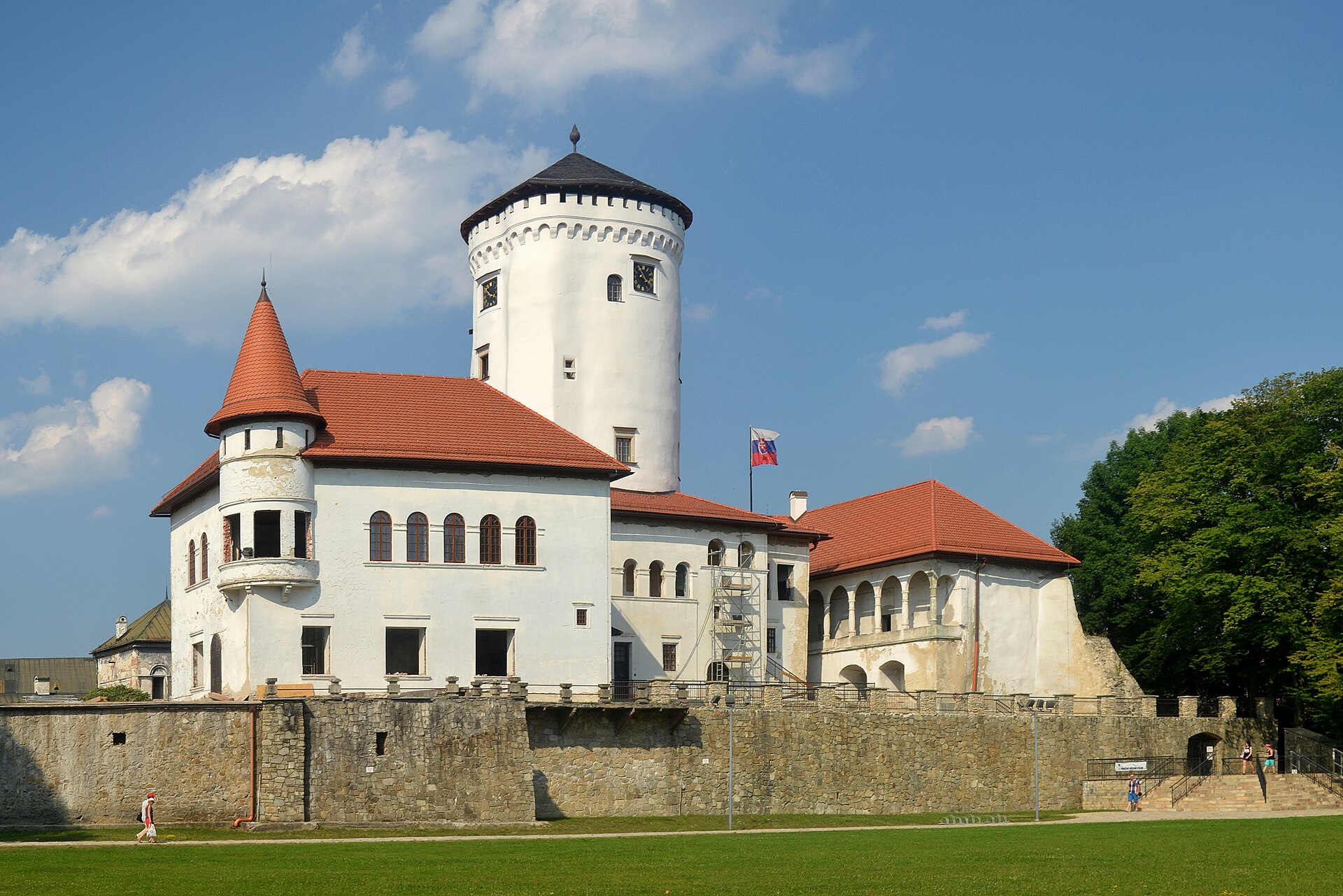
- Evangelical Church of the Augsburg Confession — Near the old centre
Built in the interwar years by the Slovak architect Milan Michal Harminc, this Protestant church is a useful counterpoint to the Catholic Baroque around it. The plainer, more modern lines say something about the town's mixed religious history and the main Protestant denomination in Slovakia.
Culture
Žilina has a cultural life larger than its size suggests, much of it indoors and aimed at residents rather than tourists. The City Theatre and the Puppet Theatre keep regular programmes, the Slovak Sinfonietta gives orchestral concerts, and the Rosenfeld Palace works as the city's cultural centre. The Považie Gallery shows contemporary art, while the Považie Museum, based at Budatín Castle, looks after regional history and also runs sites in the surrounding valley, including an open-air museum at Čičmany. The Museum of Jewish Culture and the New Synagogue recall the community that once shaped the town. A former railway site in Záriečie now serves as a cultural centre called Stanica, a sign of the city's rail heritage. The town has carried several names over the centuries: Zsolna in Hungarian, Sillein in German and Żylina in Polish, reflecting the mixed population that lived here. Religion is part of daily life, with Catholic and Protestant churches both active in the centre. Most Slovaks are quiet and polite in public, and greetings in shops and lifts are usual. When visiting a church, dress modestly, keep your voice low, and do not photograph worshippers or walk about during a service.
What to wear
Traditional Slovak dress, the kroj, varies from valley to valley, and the Žilina area belongs to the northern, upland tradition. It was made from home-woven linen and hemp, wool for skirts and trousers, and sheepskin for vests and coats, with embroidery, ribbons and lace in local patterns. Nearby Čičmany is the best-known example, famed for red geometric designs on white. Today the kroj appears at folk festivals, weddings, church holidays and school performances, not on ordinary streets. What people wear now is plain and practical: jeans, dark jackets, trainers, and technical outdoor layers, since hikers and cyclists pass through on their way to the Malá Fatra. Office workers tend to dress neatly, and evenings out are casual rather than formal. Visitors should plan for a continental climate with warm summers and cold winters. Layers and a light waterproof are useful in most seasons, and a warm coat, hat and gloves in winter. Comfortable, grippy shoes suit the paved centre and are essential for trails in the hills. For churches, cover shoulders and knees; a light scarf or shirt in the bag solves it quickly.
What to eat
- Bryndzové halušky — Traditional Slovak-style eateries near the main square
Small potato dumplings tossed in soft sheep's cheese and topped with crisp bacon. It is the dish most Slovaks name first, hearty and salty, and a good test of a kitchen's seriousness about local food. - Kapustnica — Local lunch restaurants in the old centre
A sour cabbage soup, often with sausage or smoked meat, that tastes of winter and is a staple in the cold months. It is filling enough to be a full meal with bread, and recipes vary between families. - Vyprážaný rezeň — Everyday restaurants around the centre
A breaded, fried cutlet of pork or chicken, served with potatoes and a simple salad or vegetables. It shows the Central European kinship with schnitzel and is a reliable, unfussy choice for lunch. - Pirohy — Traditional restaurants and daily lunch menus
Filled dumplings, most often with potato and cheese or sweetened cheese, boiled and served with onion, cream or fried bacon. They are home cooking at its simplest and often appear on short lunch menus. - Denné menu — Popular eateries in the old centre at midday
The daily lunch menu is a local habit, usually a soup followed by a main dish chosen from a short list. It is where residents eat on weekdays, and a good way to try several Slovak dishes cheaply; check the posted board.
Plan it
Best time. May–June and September–October for walking weather and clear views of the surrounding mountains. July and August are warm and good for hiking, while winter is cold and suits skiing in the hills rather than city sightseeing.
How long. 1–2
Getting there. Žilina's own airport handles only private and charter flights, so most visitors fly to Bratislava, Poprad (seasonal), Brno or Katowice, then continue by train or bus. Trains from Bratislava run roughly every hour or so; from Prague allow around five to six hours. The main station is a few minutes' walk from the main square.
Budget. low
Tips
- Use Žilina as a base for day trips into the Malá Fatra and nearby valleys, and check the mountain forecast before setting out.
- Check train and bus timetables on the national operator and private carrier sites, as services vary by day.
- Carry some cash for small eateries and kiosks, though cards are common in the centre.
- Take a trolleybus to reach St Stephen's church; it stands outside the walkable core.
- For city information and events, see the official site at https://zilina.sk/en/.
Etiquette
- Greet staff in shops and eateries before ordering.
- Dress modestly and stay quiet inside churches, especially during services.
- Ask before photographing people, particularly at religious sites.
Nearby
Sources
- Wikidata Q25797 (CC0)
- Wikipedia: Žilina (rev 1378533679) (CC BY-SA 4.0)
- Wikivoyage: Žilina (rev 5423432) (CC BY-SA 4.0)
- Mariánske námestie Zilina, Sebastian Mierzwa (CC BY-SA 4.0)
- Katedrála Najsvätejšej Trojice Zilina, Sebastian Mierzwa (CC BY-SA 4.0)
- Kostol sv. Štefana Kráľa v Žiline, TomMa (CC BY-SA 4.0)
- Old town hall of Zilina, Krzysztof Golik (CC BY-SA 4.0)
- Church of the Conversion of Saint Paul in Žilina, Vegetator (CC BY-SA 4.0)
- Budatín hrad, Pudelek (CC BY-SA 4.0)
- Mirage shopping center in Žilina, Elenyyy (CC BY-SA 4.0)
- Žilina - Námestie A. Hlinku, Pudelek (CC BY-SA 1.0)


