Zaporizhzhia
Zaporizhzhia, Ukraine
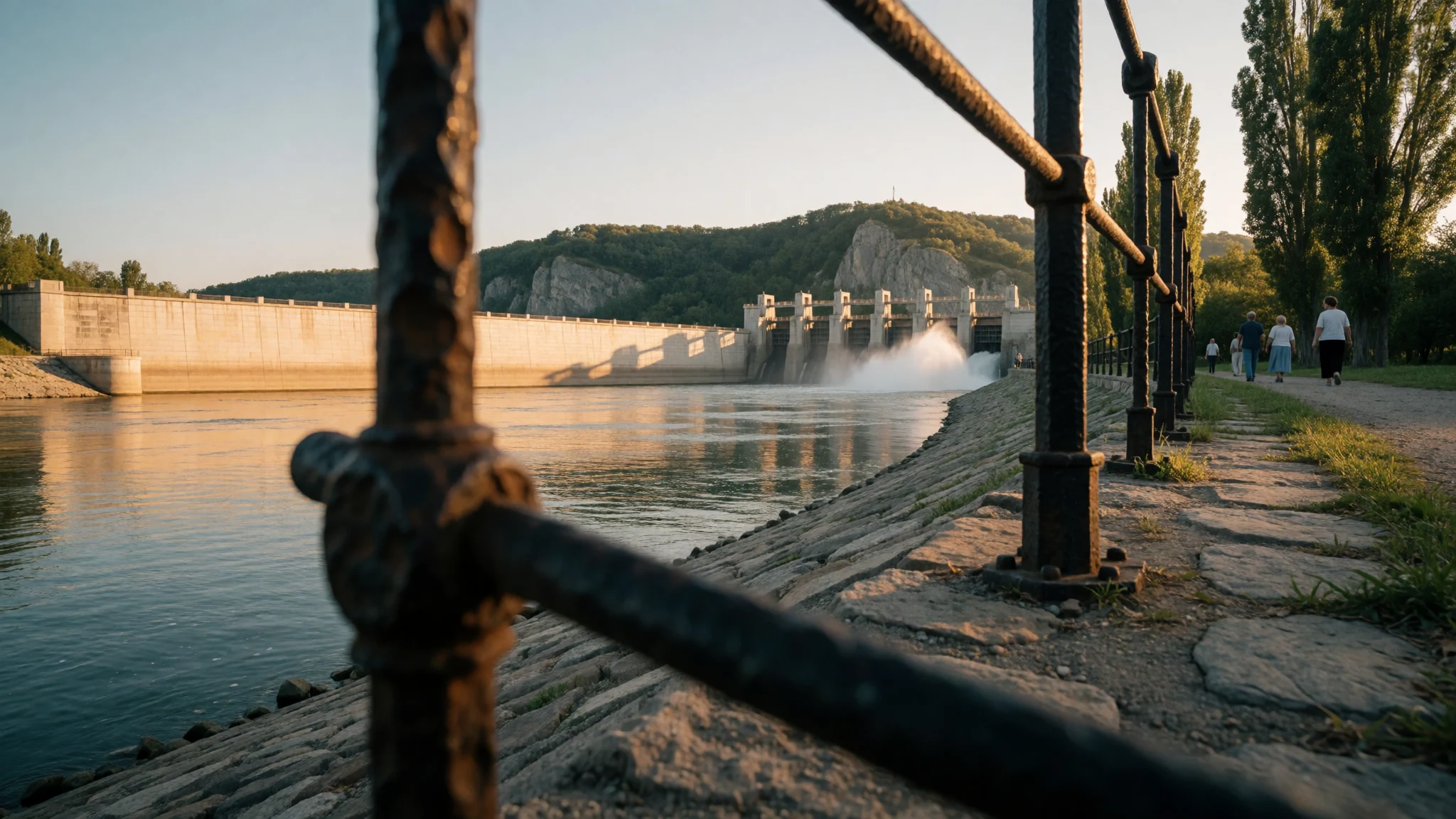
A Dnieper river city built around a rocky island, a vast dam and Cossack memory, where any visit now depends on the war.
The place
Zaporizhzhia sits in south-eastern Ukraine on the Dnieper, a city of about 710,000 people at 86 m above sea level. The river does the organising here. It splits the built-up area into two banks, and in the middle lies Khortytsia, a long, narrow island, with the broad New Dnieper on one side and the much slimmer Old Dnieper on the other. Much of the city's character comes from that geography and from what was built to use it. Heavy industry grew along the water: steel, aluminium, aircraft engines, cars and transformers for electricity substations. The long avenues still carry the scale of planned Soviet-era districts, with wide pavements, big squares and rows of apartment blocks. Older layers show in the theatre on Soborny Avenue, in housing from the 1930s, and in the bridges across the old channel. Residents use the river for walking, fishing and sitting out on warm evenings, and the island is where people go to escape the concrete. Summers are hot and dry, winters cold and grey, so late spring and early autumn suit walking best. An honest picture must also include the war. Ukraine's airspace is closed to civil flights, the region has suffered air raids and fighting, and a trip depends on current conditions and official government advice rather than on the usual travel calendar. The city's official site, https://zp.gov.ua, carries local notices.
Its story
Zaporizhzhia began as a fortress. In 1770 the Russian Empire raised Oleksandrivska Fortress here as one link in the Dnieper Defence Line, a chain of strongholds meant to shield its southern lands from Crimean Tatar raids. After the Treaty of Küçük Kaynarca in 1775 the frontier moved far to the south, and the fort lost its purpose. It shrank into a quiet rural town and kept the name Aleksandrovsk, or Oleksandrivsk in Ukrainian, until 1921. The modern name means roughly 'beyond the rapids' and points to the Cossack world of the lower Dnieper, which is why the island of Khortytsia carries so much meaning for Ukrainians. The big change came with the railway. A bridge at Kichkas, the first rail crossing of the Dnieper, opened at the start of the 20th century, and factories followed. After the Russian Revolution the city became a major industrial centre, helped by cheap labour and by coal, iron ore and manganese within reach. Metallurgy, engineering, aluminium and chemicals grew up beside a huge hydroelectric dam on the river, which was the largest in Europe when it was completed. Cars and aircraft engines joined the list later. The result is a place where Cossack legend, imperial frontier history and Soviet industrial ambition sit in the same few kilometres of riverbank, and where the war has added another, much heavier chapter.
What to see
- Khortytsia Island — Dnieper, between the two channels
Khortytsia is the green heart of Zaporizhzhia, a long island in the Dnieper with granite cliffs, open steppe and woodland. It is tied to Cossack history, and the reconstructed Zaporozhian Sich complex shows how that world is remembered. Allow a full morning, wear sturdy shoes, and check the official site before going.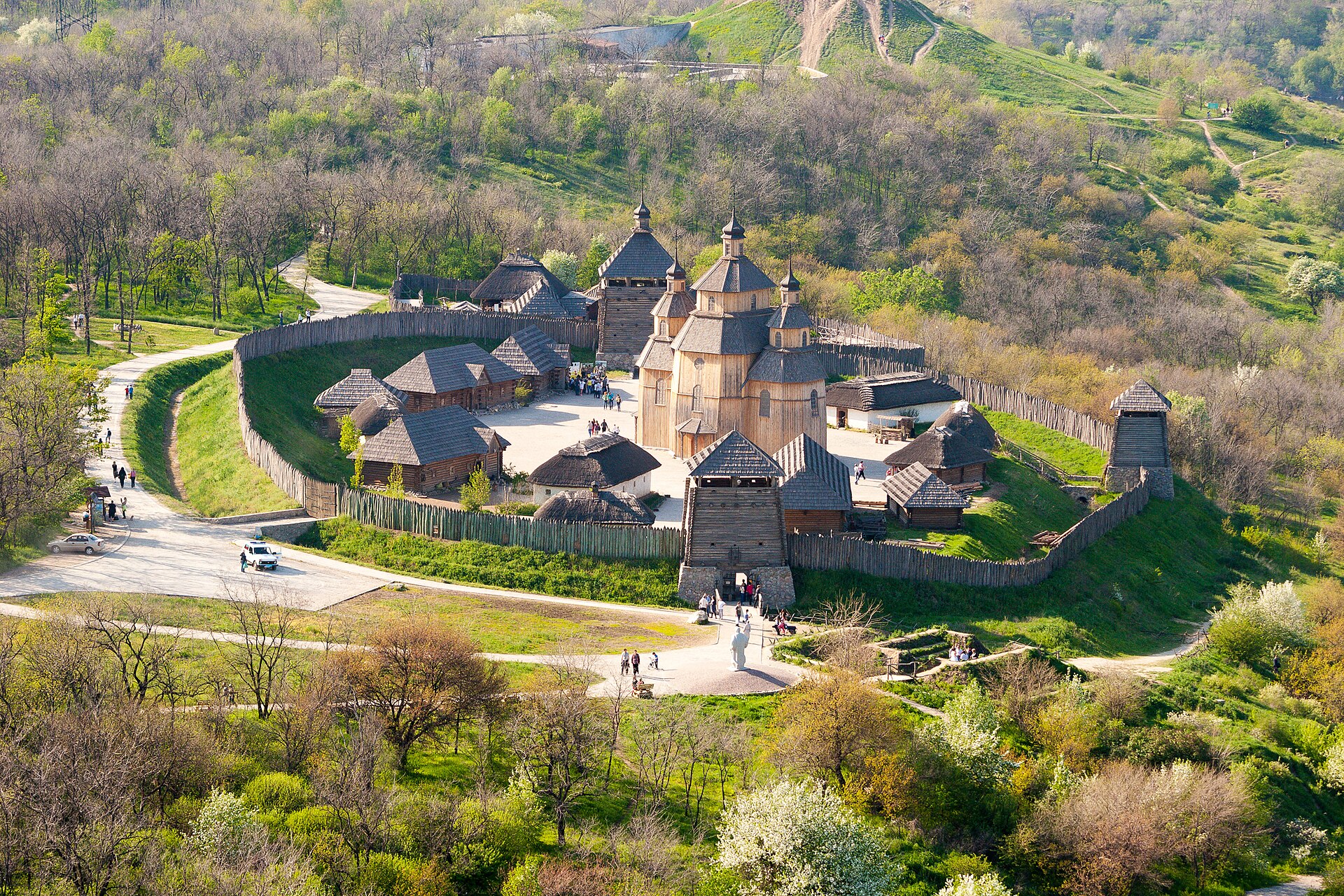
- Dniproges Dam — Dnieper, at the end of the main avenue
The Dniproges dam and power station crosses the river at the end of the main avenue and was the largest dam in Europe when built. A park nearby gives views of the concrete wall, the water and Khortytsia beyond. Access to the structure itself is controlled, so treat the viewpoints as the main sight.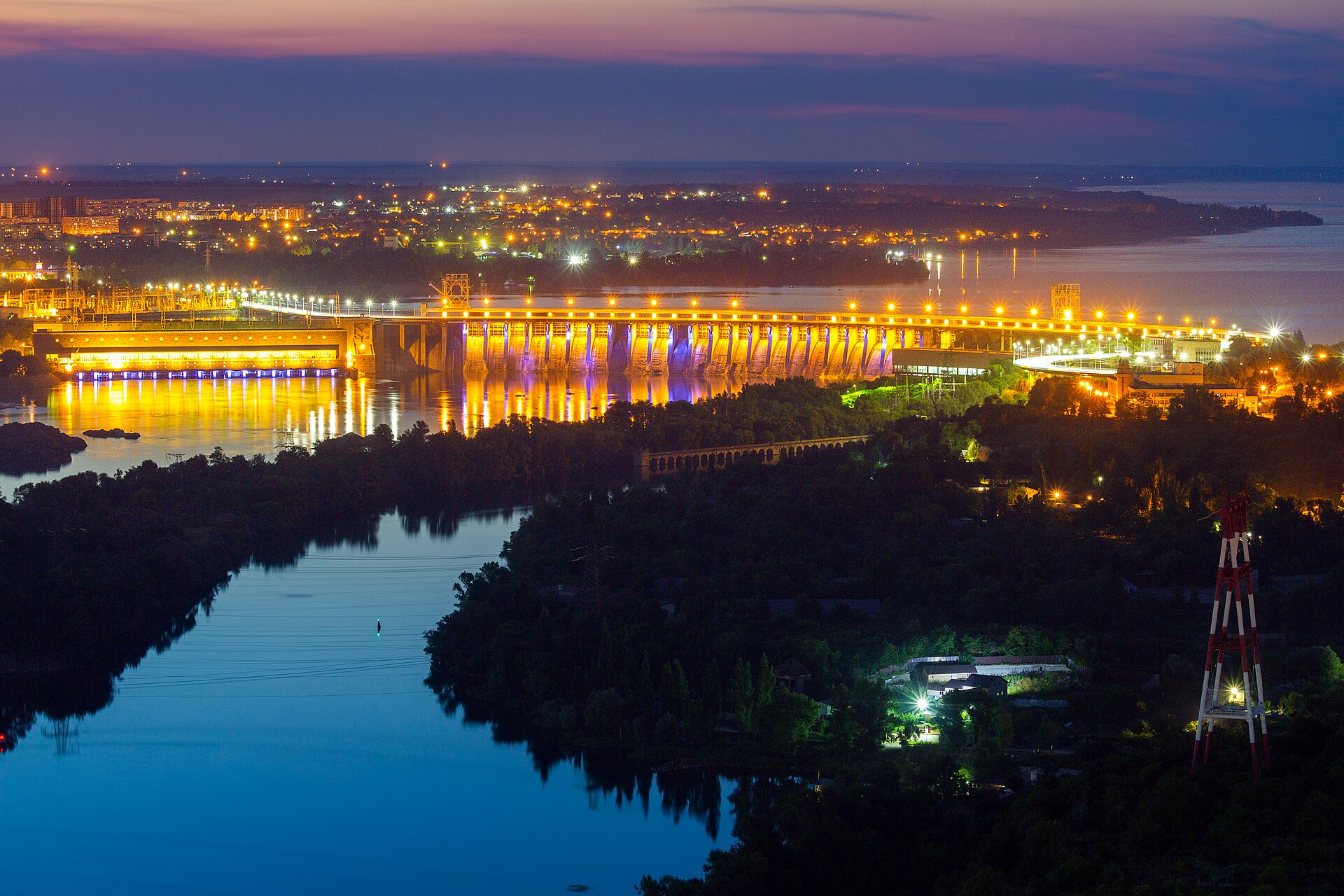
- Preobrazhensky Bridges — Old Dnieper channel
These bridges cross the Old Dnieper and give a good sense of how the river divides the city. Walking across at the end of the day, with the island behind and the light on the water, is a quiet way to read the layout. Photograph the scene, not people nearby.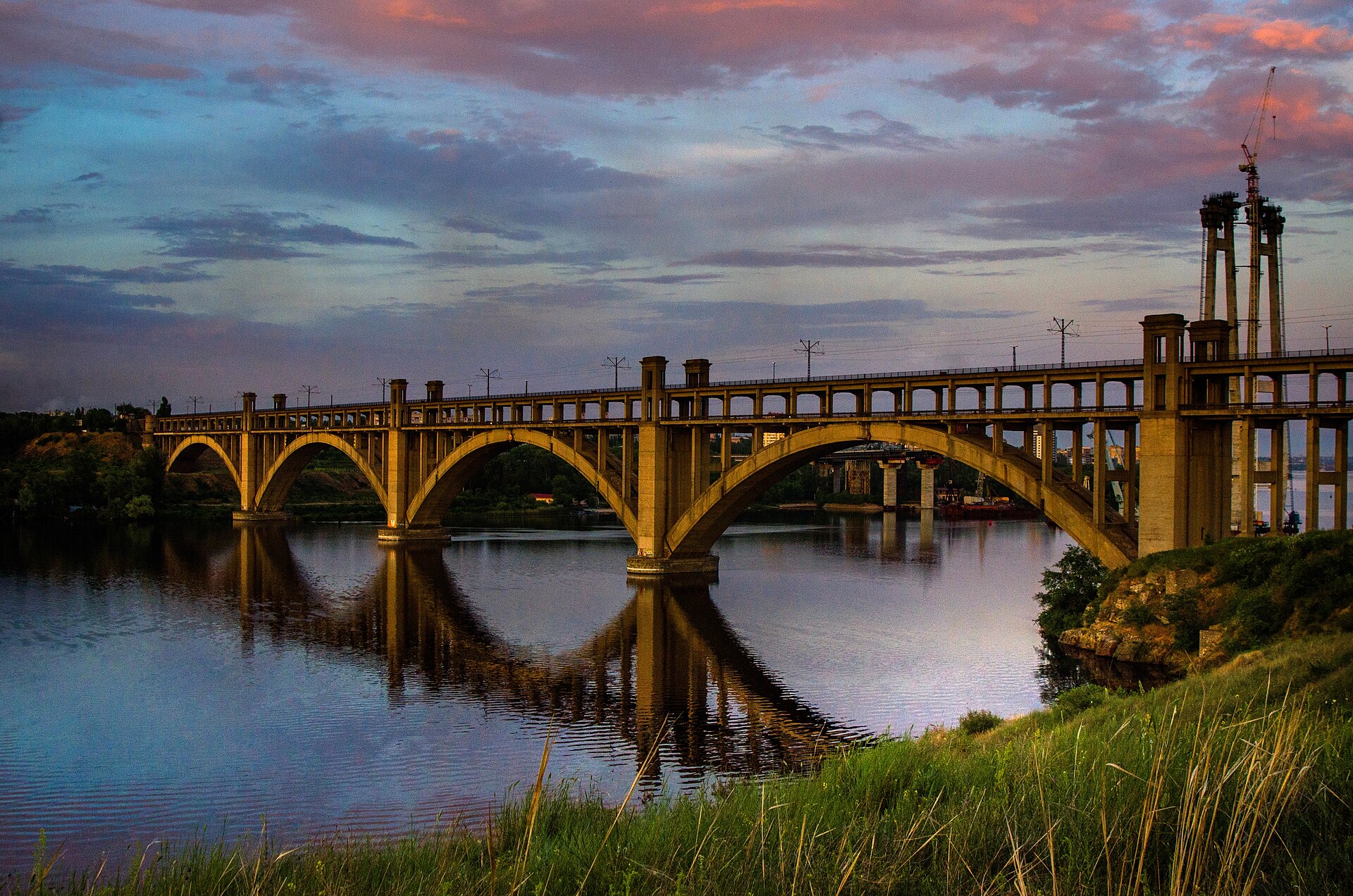
- Magara Drama Theatre — Soborny Avenue, city centre
The regional music and drama theatre on Soborny Avenue is a handsome public building from the city's planned period and one of the main stages in town. Even if a performance is not in your plans, the façade and the surrounding avenue show the confident civic taste of the era.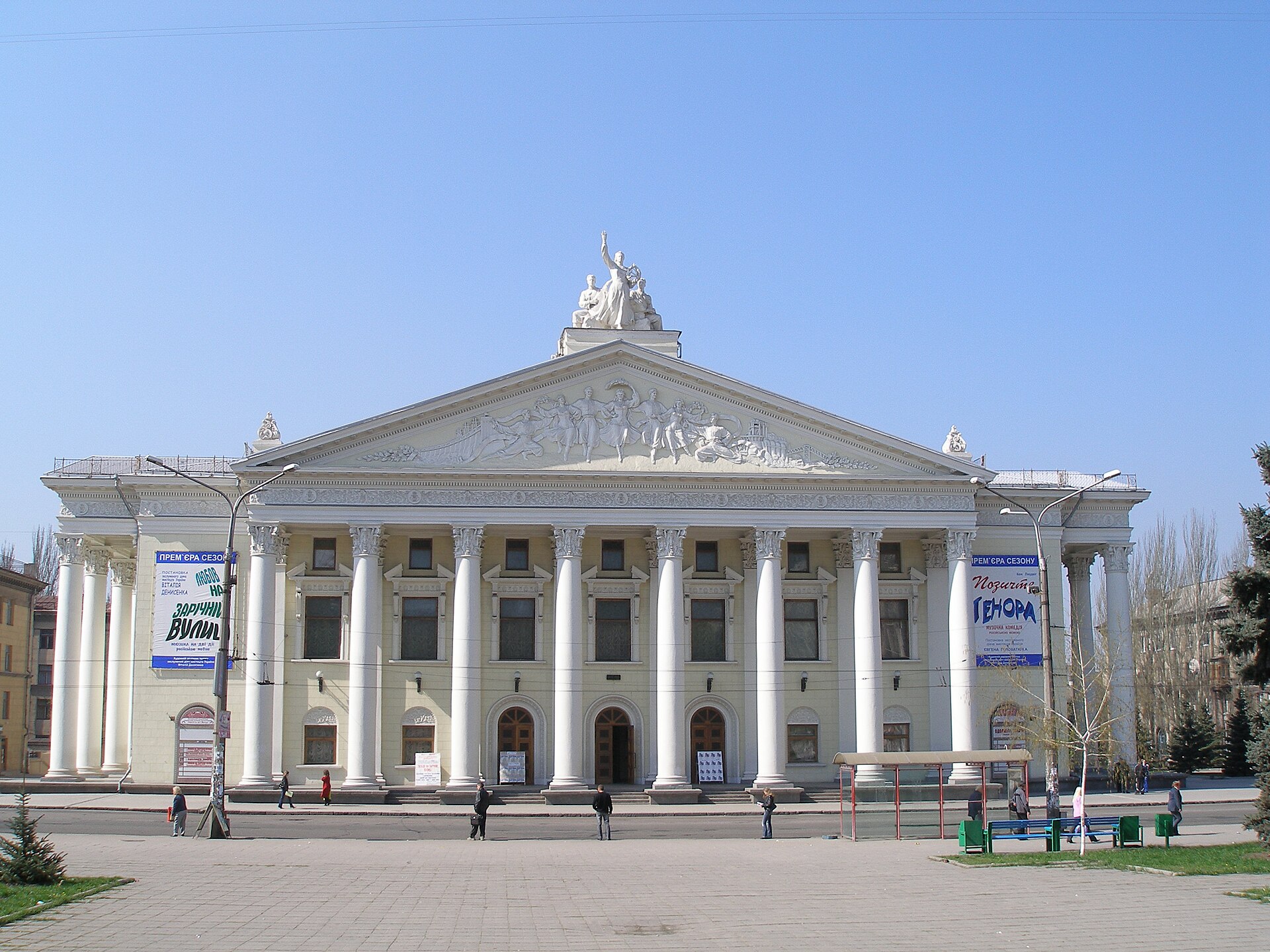
- Bohuslayev's Technics Museum — Eastern part of the city
Also called the Motor Sich Museum, this collection reflects the city's engineering identity. It holds Soviet-built aircraft, motorcycles from the 1930s to the 1980s and an open-air display of military equipment. It suits anyone curious about how industry shaped Zaporizhzhia. Check the museum's current opening status before travelling. - Popov Palace Museum — South of the city
Out of town, this estate was built in the 1890s in a neo-Gothic style, with a main house, towers, a chapel, a coach house, an iron fence and a landscaped park. It feels unexpectedly English in places. Confirm that it is open and reachable before planning the trip.
Culture
Zaporizhzhia has a culture shaped by two things: Cossack heritage and a long industrial working life. The Cossack side appears in museums devoted to the history of the Zaporozhian Cossacks, in a theatre of horse riding that stages Cossack performances, and in martial-arts competitions held in the city. The working-city side shows in the regional art museum, the aviation museum, the libraries and a lively set of theatres, among them the Magara Academic Drama Theatre and a municipal theatre lab. Amateur folk music groups and small galleries fill in the rest. A good place to meet local makers is the open-air exhibition and sale run by the city's artists' association, Kolorit, near the Fountain of Life on Mayakovskoho Square. Painters, carvers, embroiderers and bead workers show their work there, and visitors can watch classes and ask for advice. Language is a live subject in a country at war. Many residents speak both Ukrainian and Russian, and while English is spoken by some younger people and in a few businesses, a few words of Ukrainian are noticed and welcomed. Conversation about the war is personal, since almost everyone has a relative or friend affected. Listen more than you ask. Do not photograph military sites, checkpoints, damage or air-defence activity, and always ask permission before photographing people.
What to wear
Zaporizhzhia's traditional dress belongs to the wider Ukrainian tradition, and the Cossack steppe adds its own look. The vyshyvanka is the best-known piece, a shirt or blouse of linen or cotton with embroidered collar, cuffs and chest. Men's Cossack costume has traditionally included wide trousers, a sash and a tall fur hat, and women have worn embroidered blouses with wool skirts, bright sashes and flower wreaths for festivals. These are worn at holidays, weddings, folk events and on national days, and vyshyvanky have become a common sign of national pride that people also wear to the office or school. Everyday clothing in the city is practical and fairly plain. Jeans, trainers, jackets and simple dresses are normal, with smart clothes for the theatre and for church. Winters are cold, so coats, hats and boots are standard. Visitors should dress for the weather and for walking: light breathable layers in summer, with sun protection and a hat, and a proper insulated coat, gloves and waterproof boots in winter. Comfortable, closed shoes with grip suit the rocky paths of Khortytsia. For churches, cover shoulders and knees, and women may be asked to cover their heads. Avoid military-style clothing or camouflage, which can draw unwanted attention in a country at war, and choose muted colours.
What to eat
- Borshch — Canteen-style eateries and home-cooking restaurants
The beetroot soup of Ukrainian homes, usually with cabbage, potato and sometimes meat, served with sour cream and garlic bread. It is a standard order in almost any canteen-style eatery, and each cook's version differs a little. - Varenyky — Family-run eateries across the city centre
Boiled dumplings stuffed with potato, cabbage, cheese or cherries, usually served with sour cream or fried onion. They are plain, filling and cheap, and they work as a main course or a dessert depending on the filling. - Deruny — Canteens and cafés on the main avenue
Crisp potato pancakes, fried until golden and eaten with sour cream or mushrooms. They are a simple comfort food from the Ukrainian kitchen, and a good choice for a quick lunch when the weather turns cold. - Kulish — Restaurants that specialise in Cossack-style food
A thick millet stew with potato, onion and sometimes meat or lard, long linked with Cossack camp cooking. It is hearty rather than refined, and it suits the story of the steppe and the river island. - Dnieper fish dishes — Riverside eateries and the central market
As a river city, Zaporizhzhia serves freshwater fish fried, baked or in a clear fish soup. Ask what is local that day and how it is cooked. Choose busy places with a quick turnover, particularly in hot summer weather.
Plan it
Best time. May–June and September, when days are warm enough for the river and the island without the full heat of high summer. July and August can be hot and dry; winters are cold and grey. Any visit also depends on the security situation, not just the weather.
How long. 2–3
Getting there. Ukraine's airspace is closed to civil aviation because of the war, so travel is overland. The usual route is the train from Kyiv, about 10 hours, with one daily departure and several night trains. Trains from Kharkiv arrive at Zaporizhzhia-1 station. Marshrutky (minibuses) also run from outside Kyiv's train station and from neighbouring cities. Book tickets through the official rail booking service.
Budget. low
Tips
- Check your government's travel advice and current local conditions before booking anything, and have a plan for air-raid alerts
- Book train tickets ahead, particularly for night services, using the official booking service
- Carry some cash as well as a card for small shops and markets, and keep a charged phone and power bank
- Start outdoor sights on Khortytsia early, as there is little shade in summer
- Check the city's official site, https://zp.gov.ua, and each museum's own channels for opening status
Etiquette
- Follow air-raid alerts and shelter instructions immediately
- Do not photograph military sites, checkpoints or damage
- Learn a few words of Ukrainian; greeting people in it is appreciated
Nearby
Sources
- Wikidata Q157835 (CC0)
- Wikipedia: Zaporizhzhia (rev 1381293915) (CC BY-SA 4.0)
- Wikivoyage: Zaporizhzhia (rev 5300904) (CC BY-SA 4.0)
- Photo 01 — Alexey Tolmachov (CC BY-SA 4.0)
- Photo 02 — Alexey Tolmachov (CC BY-SA 4.0)
- Photo 03 — Alexey Tolmachov (CC BY-SA 4.0)
- Photo 04 — Анатолий Мережко (CC BY-SA 4.0)
- Photo 05 — Anatoliy Volkov (CC BY-SA 4.0)
- Photo 06 — Alexey Tolmachov (CC BY-SA 4.0)
- Photo 07 — Anatoliy Volkov (CC BY-SA 4.0)
- Photo 08 — Alexey Tolmachov (CC BY-SA 4.0)


