Zakynthos
Zakynthos, Greece
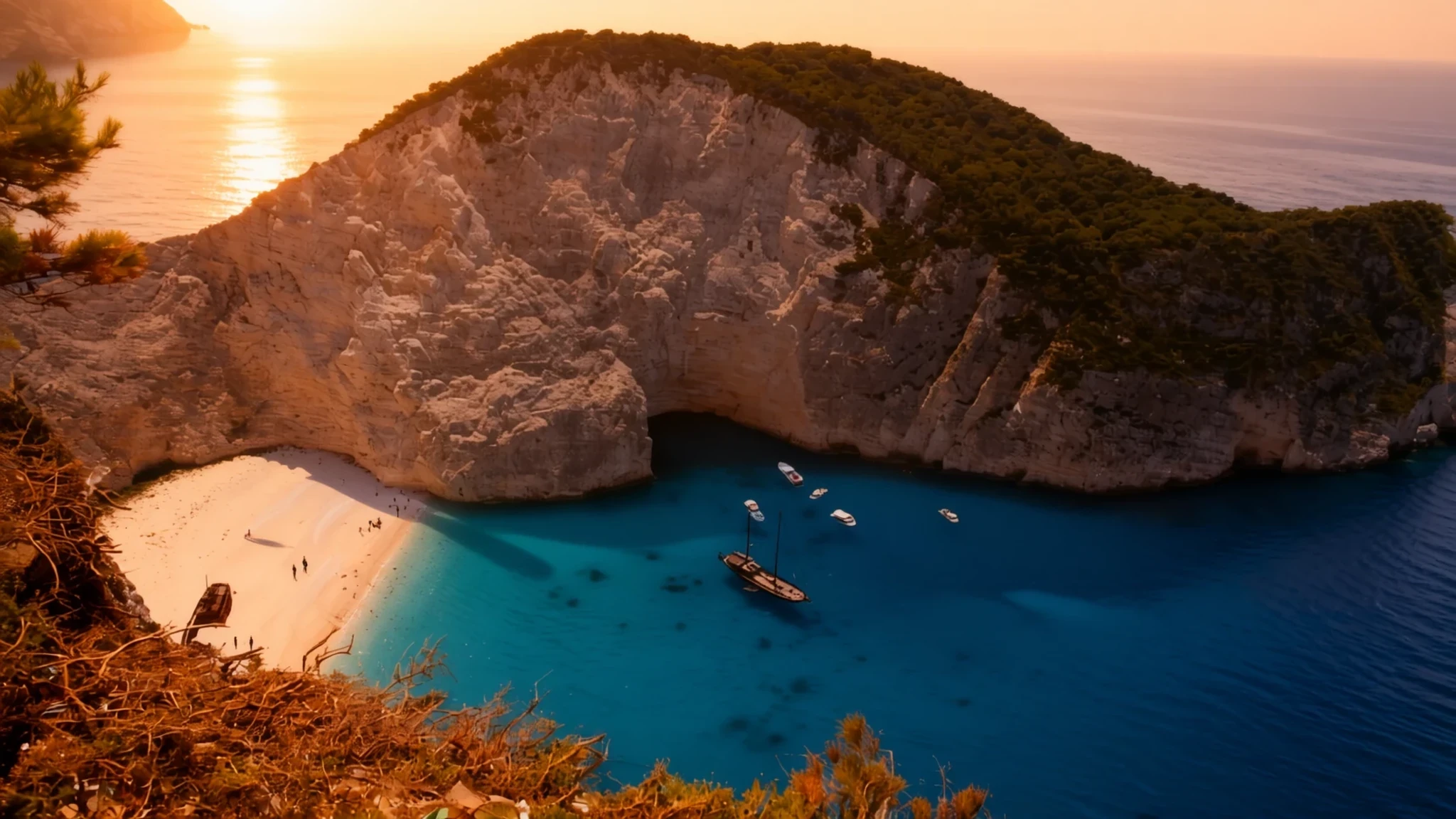
Zakynthos suits a beach holiday with real Greek village life, but go in May, June or September to avoid the August crowds.
The place
Zakynthos, also called Zante, is a Greek island in the Ionian Sea, lying off the western coast of the Peloponnese. Its nickname, Fiore di Levante or Flower of the East, came from the Venetians, who held the island for centuries, and their influence shows in its literature as much as in its towns. Today the island has about 41,000 people, most living in the main town or in villages spread across the middle and west.
The shape is easy to picture once you see a map: a narrow arrowhead pointing north-west. The western half is a mountainous plateau, and the south-west coast is lined with steep cliffs. The highest point, Vrachionas, rises to 758 m, so the interior feels very different from the beaches. Olive groves, vineyards and thyme-covered hillsides fill much of the land, and roadside stalls sell honey, olive oil and wine made nearby.
Most visitors arrive by air at the airport in the south, close to the resorts of Laganas and Kalamaki, and that end of the island is the busiest. The north and the quieter villages reward anyone willing to hire a car or take a bus. Ferries run from Zakynthos Town to Kyllini on the mainland, so the island slots easily into a wider Greek trip.
Expect hot summers, heavy company in August and a slower pace once the day-trip boats head back in the evening. Mornings are the best time for swimming and for walking the cliff roads before the heat builds.
Its story
Zakynthos appears early in Greek literature. Homer names it in the Iliad and the Odyssey, and in the Odyssey a group of its nobles are among the suitors crowding the household of Odysseus on Ithaca. In Homer's account the first settler was a son of King Dardanos of Arcadia, and the island took his name. Before that, it was known as Hyrie.
Legend passes the island from hand to hand. It is said to have been conquered by King Arkesios of Kefalonia and later by Odysseus himself. The island also appears in the Catalogue of Ships, the list of contingents that sailed to the Trojan War. Historians read that list as a rough picture of early Greek politics, though how accurate it is remains debated.
Later writers add detail. Pausanias says the acropolis was called Psophis after the man who founded the settlement, and Stephanus of Byzantium confirms that the colony took the founder's name.
In the fifth century BC the island mattered to the wider Greek wars. The Athenian commander Tolmides made an alliance with it during the First Peloponnesian War, and the Spartans later attacked it with a sizeable force of heavy infantry under their admiral Cnemus.
The Venetians ruled from 1484 until 1797, and that long period shaped the island's character. Its writers and painters came into closer contact with Western trends than those on many other Greek islands. The Heptanese School of literature grew out of this, producing lyrical and satirical poetry in the Romantic spirit of the time. Its most famous figure, Dionysios Solomos, wrote the words of the Greek national anthem, and his name still stands over the town.
What to see
- Blue Caves — North-west coast
The Blue Caves sit on the north-west coast, and most people reach them by boat from the water. Erosion has carved natural arches and hollows out of the rock here. They are known for the intense blue of the water in the deepest hollows, which glows on a calm day. Boat trips are the usual way in, so go early when the sea is flat and the crowds are thinner.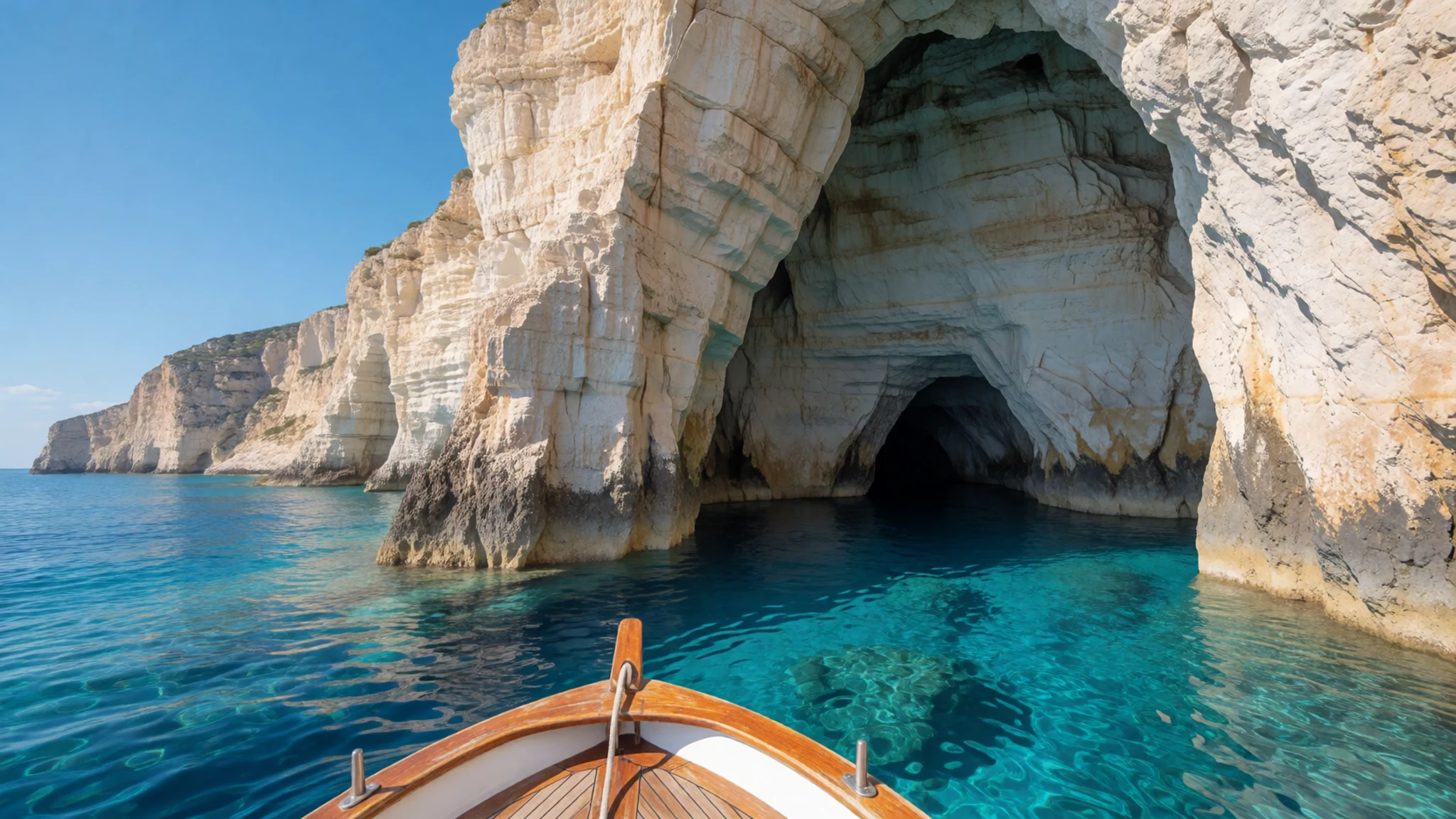
- Cape Skinari — Northern tip
Cape Skinari is the northern tip of the island, and from its headland you can see calm water on one side and wind-whipped sea on the other. It is a good place for a slow walk and a long look at the coast. Some ruins here date from the great earthquake of 1953, which still shapes parts of the island's northern villages.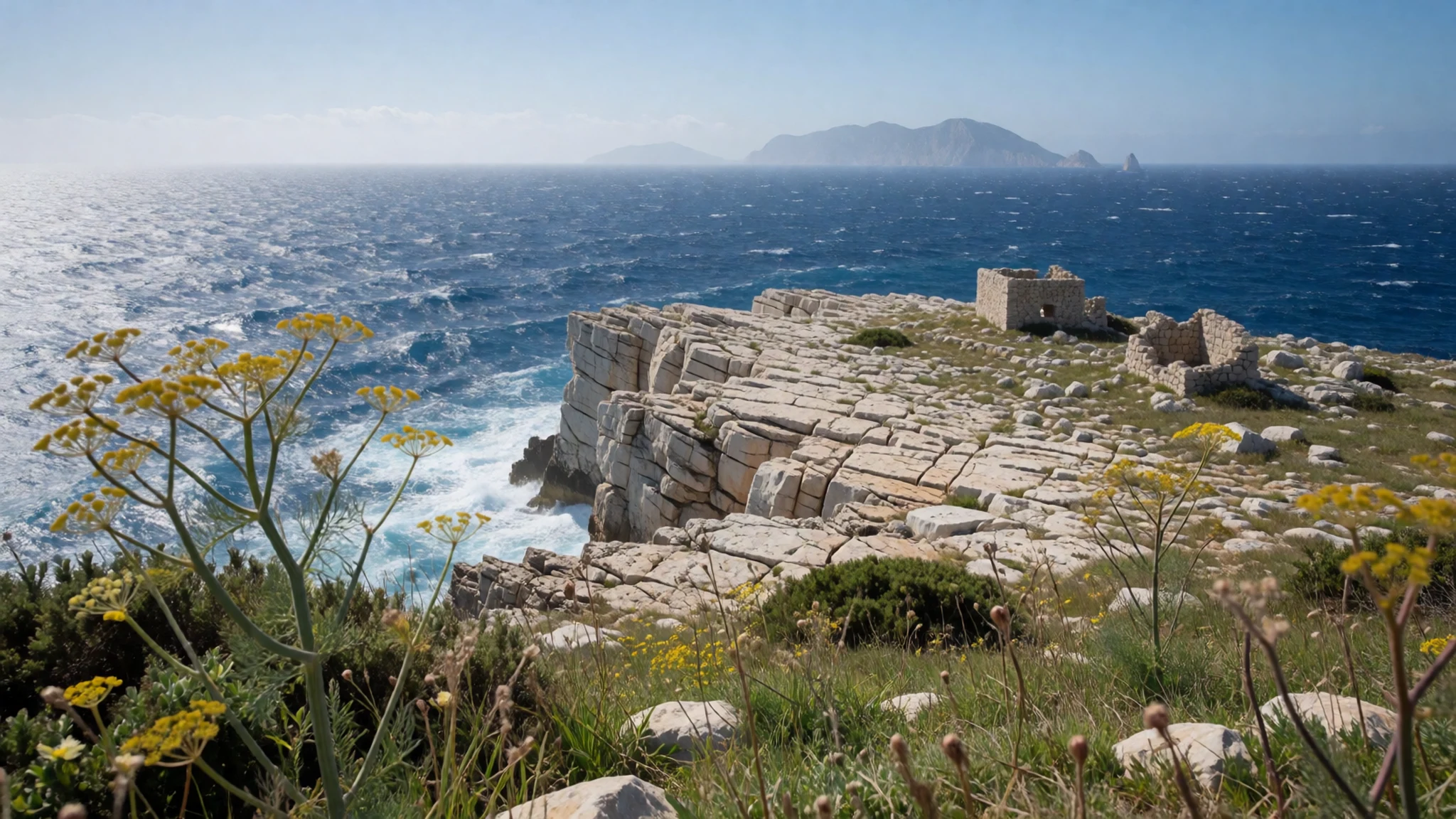
- Dionysios Solomos Museum — Zakynthos Town
This museum in Zakynthos Town is dedicated to Dionysios Solomos, the national poet of Greece. It makes sense if you want context for the island's literary and political history. The displays cover his life and work, and the square outside, where his statue stands, is a pleasant place to sit. Check the official site for current opening times before you go.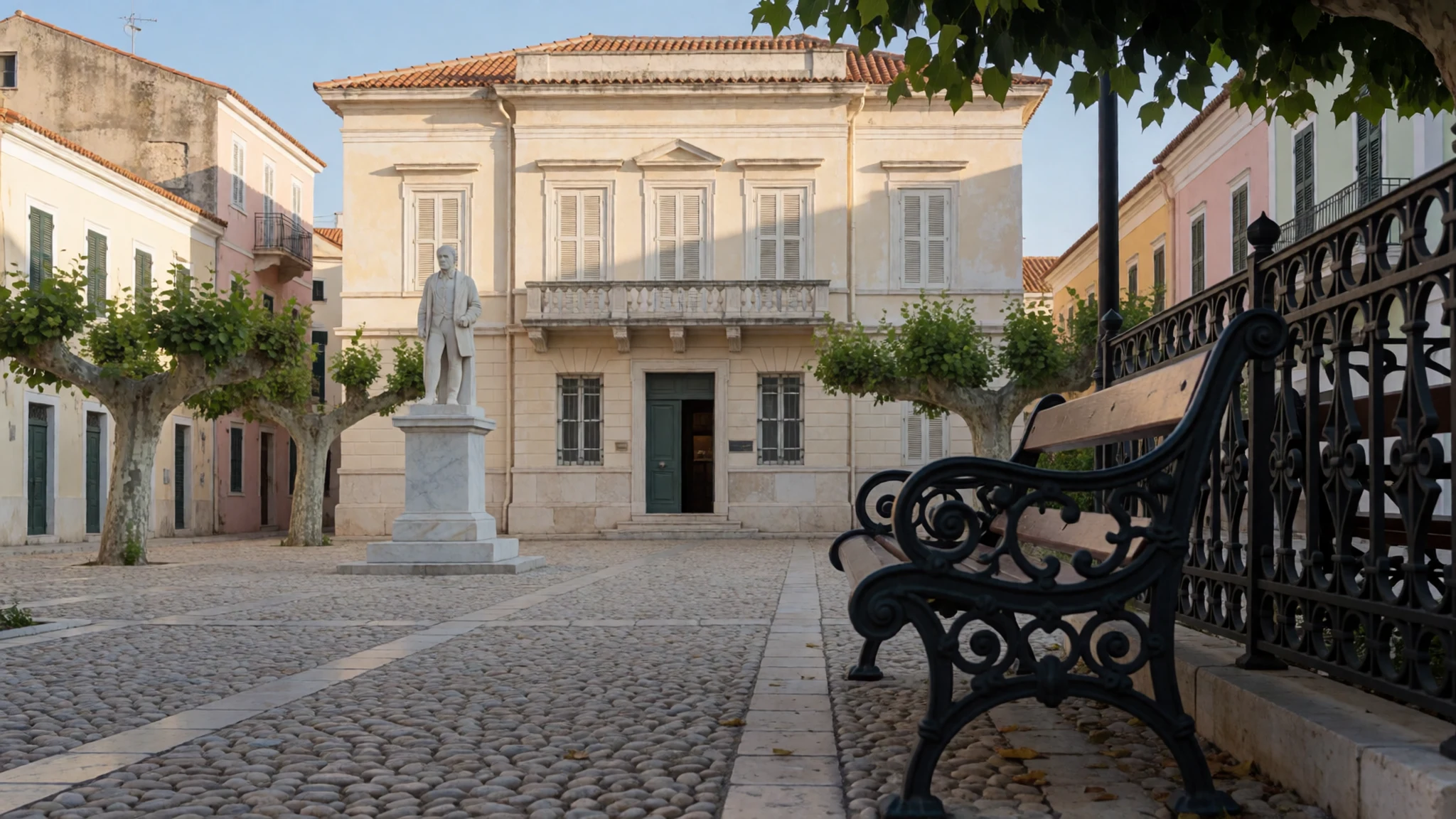
- Shipwreck on Navagio Beach — North-west coast
The shipwreck on Navagio Beach is a rusting freighter that lost its engines in 1981 and drifted into a small bay with pale cliffs around it. The beach is reachable by boat, and the viewpoint above it is busy at midday. Go early in the morning or late in the afternoon for quieter views and softer light for photographs.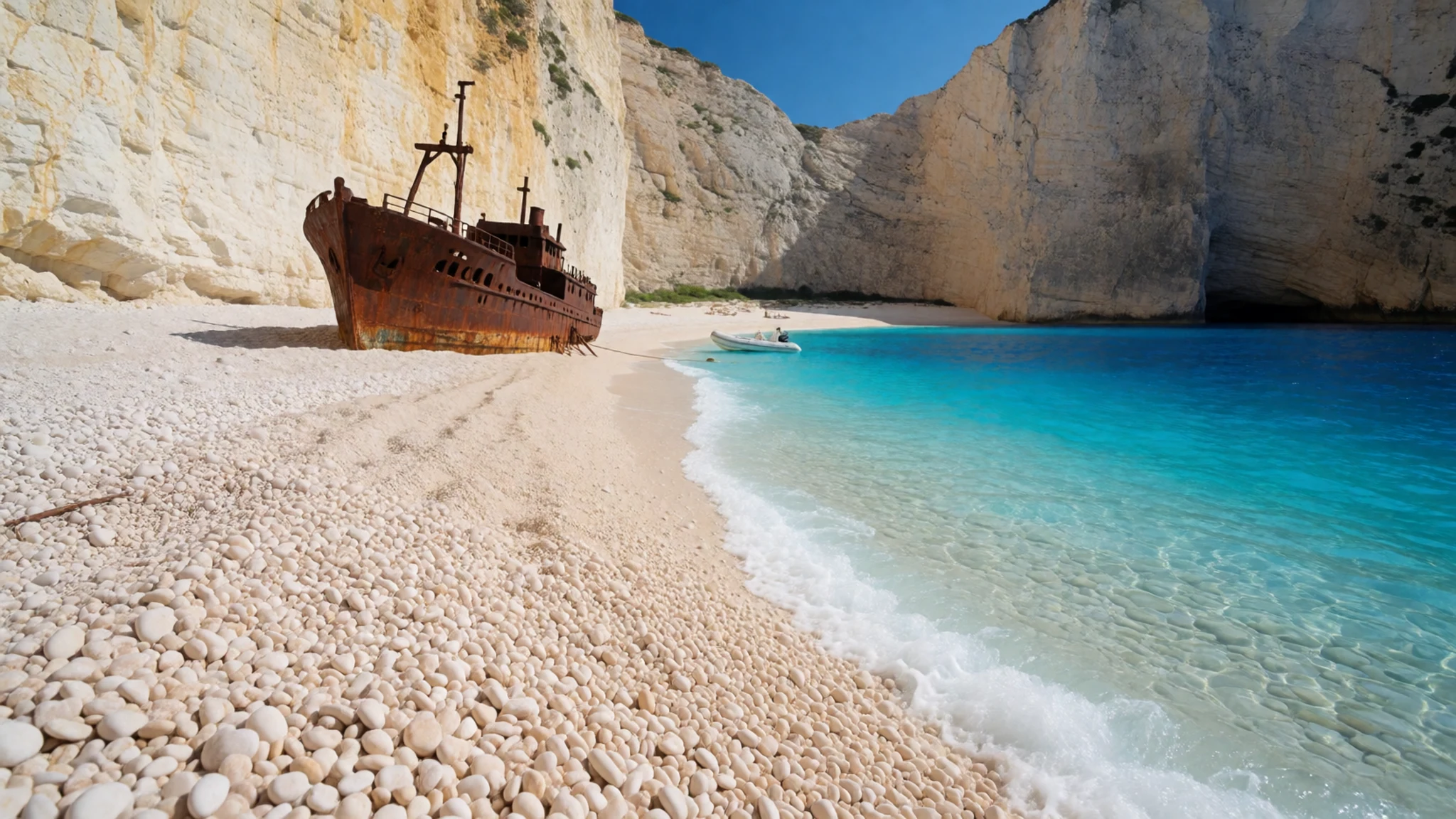
- Mount Skopos ruins — Inland, Mount Skopos
Below the summit of Mount Skopos stand the ruins of the church and monastery of Panagia Skopiotissa. The site is quiet and reached on foot or by car on the island's inland roads. It rewards a visit for the walls themselves and the wide views over the island. Wear sturdy shoes, carry water, and treat the ruins as a place of worship.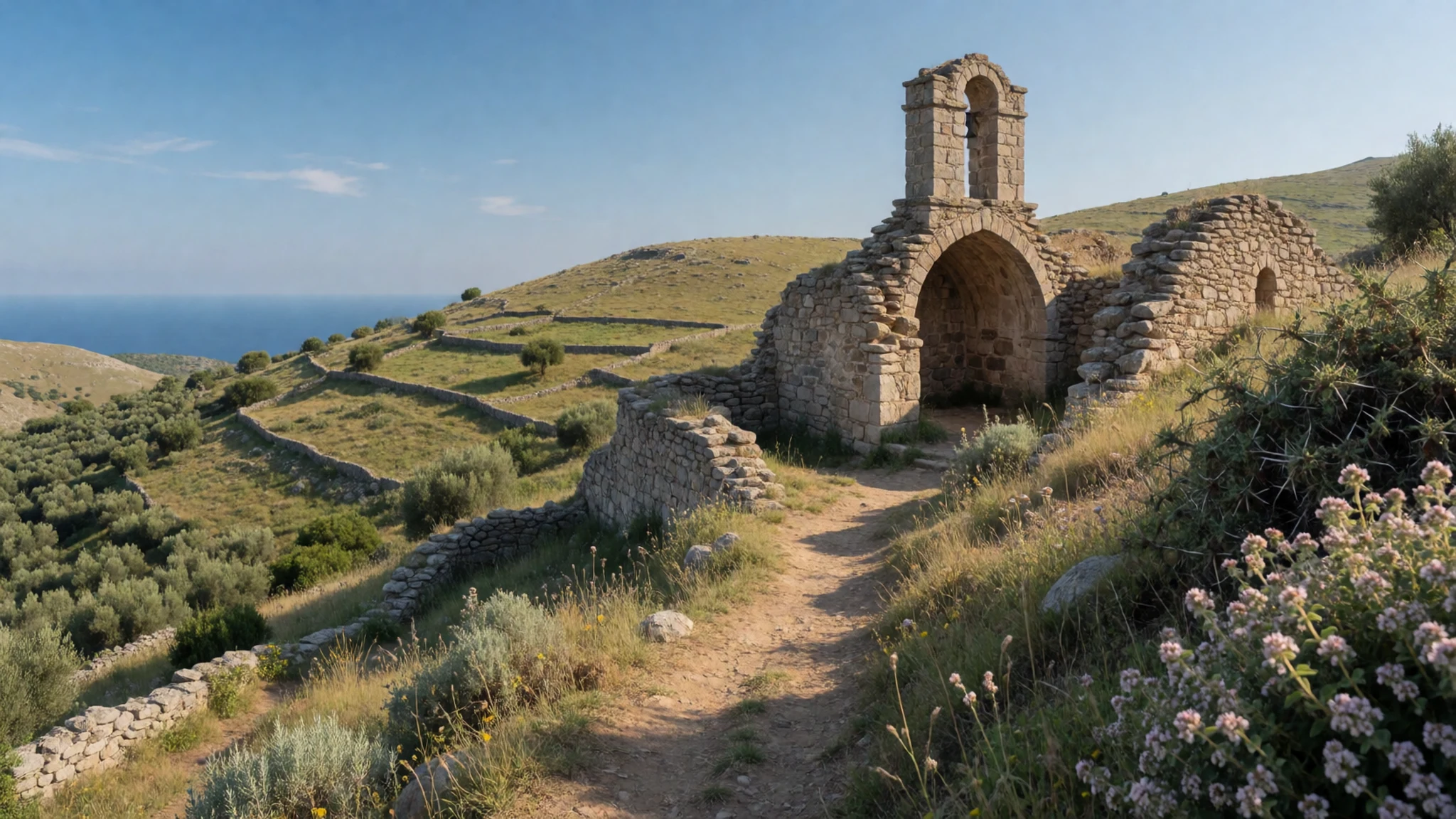
Culture
Zakynthos spent centuries under the Venetian Republic, and that contact with Western art and ideas set it apart from many other Greek-speaking places. The island's early writing includes the Rimada, a verse romance about Alexander the Great that dates from the sixteenth century. Other writers of the period included a historical novelist, a humanist, a theologian and a satirist, all working in the shadow of Venetian rule.
In the late eighteenth century the Heptanese School flourished here, with poets writing lyrical and satirical verse in the Romantic style. The school also helped lay the groundwork for modern Greek theatre. Dionysios Solomos, its most celebrated name, is still remembered as the national poet, and his statue in the town is a quiet focus for visitors.
Local life is still rooted in the village, the family table and the church calendar. Religious festivals and name days bring people out in the evenings, and the island's hospitality is warm but not theatrical. Greek Orthodox churches and monasteries expect visitors to dress modestly, so cover your shoulders and knees and keep your voice low inside.
What to wear
Zakynthos shares the dress traditions of the wider Ionian islands. Festival costume, where it survives, is worn for feast days, weddings and folk dancing rather than for everyday life, and it usually uses cotton and wool woven in the home, with embroidered borders and dark, deep colours. Older women in the villages may still wear dark dresses and headscarves for church, though this is more common in the countryside than in the towns.
What people wear now is simple and practical. In summer you will see linen trousers, cotton dresses, sandals and sun hats in the towns, and swimwear on the beaches, though most people change before walking into the centre. Greeks tend to dress with a little more care than the summer resort crowd suggests, so a clean shirt for dinner feels right.
For a visit, dress for the heat and the terrain. Light cotton or linen, a hat and sunglasses are essential from late spring onwards. Wear closed shoes with good grip for the cliff paths and the rocky approaches to the coves, and bring a light layer for the evening breeze on the coast. For churches, monasteries and sites like the Mount Skopos ruins, cover shoulders and knees, and do not wear beachwear.
What to eat
- Stifado — Family-run tavernas in the villages and in Zakynthos Town
Stifado is a slow-cooked stew of meat with small onions, red wine and warm spices, usually served in a clay dish. It is a classic of traditional Greek cooking and shows up on the menus of family-run tavernas that still cook from home recipes. Ask whether it is made that day, since the best versions are often the ones that have simmered longest.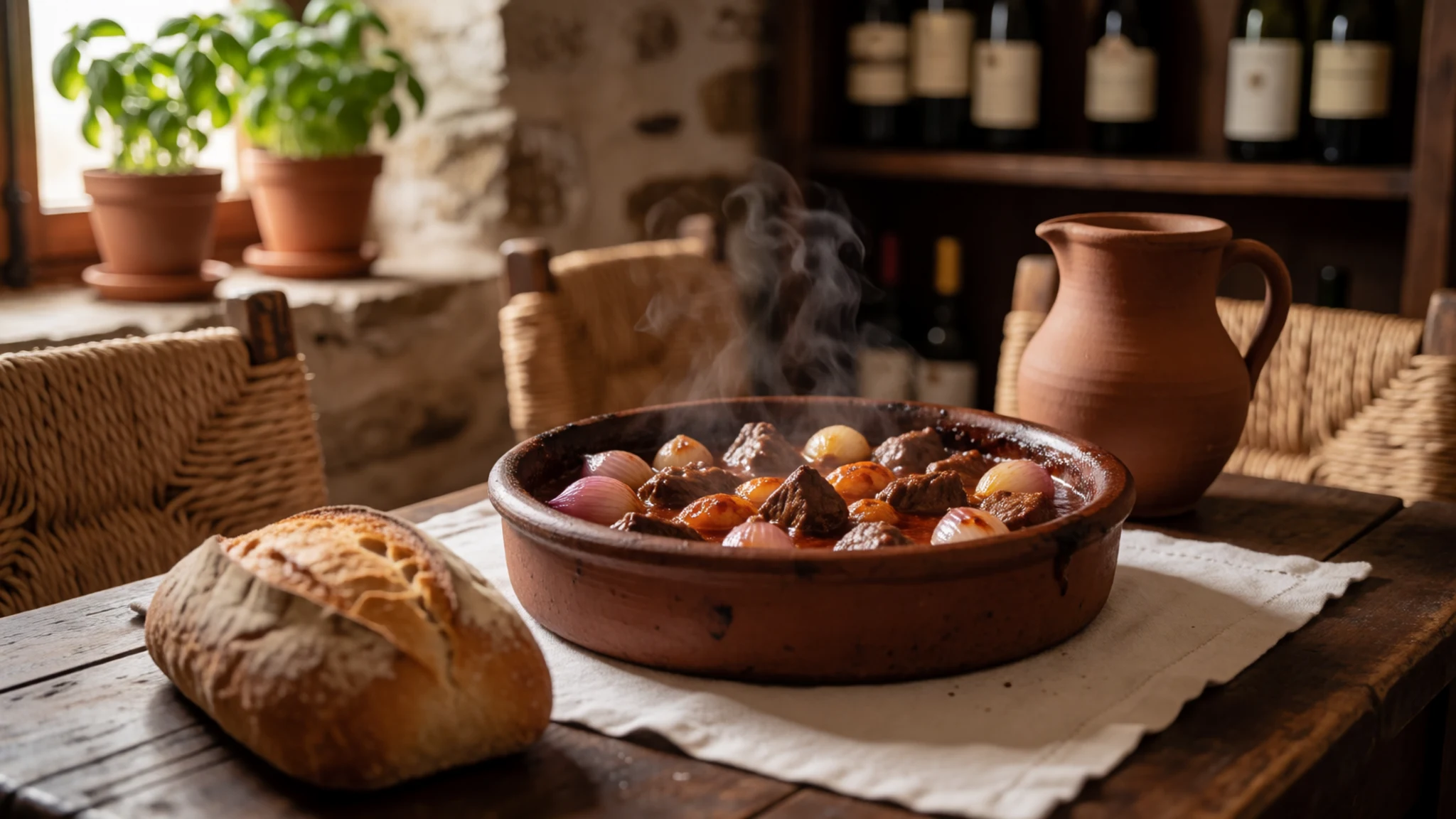
- Briam — Tavernas serving daily dishes, especially in the villages
Briam is a baked dish of courgettes, aubergine, potatoes and tomatoes cooked slowly in olive oil until soft and sweet. It is a good choice for vegetarians and a useful way to taste the island's produce. Look for it at tavernas that cook daily dishes in the kitchen rather than from freezers.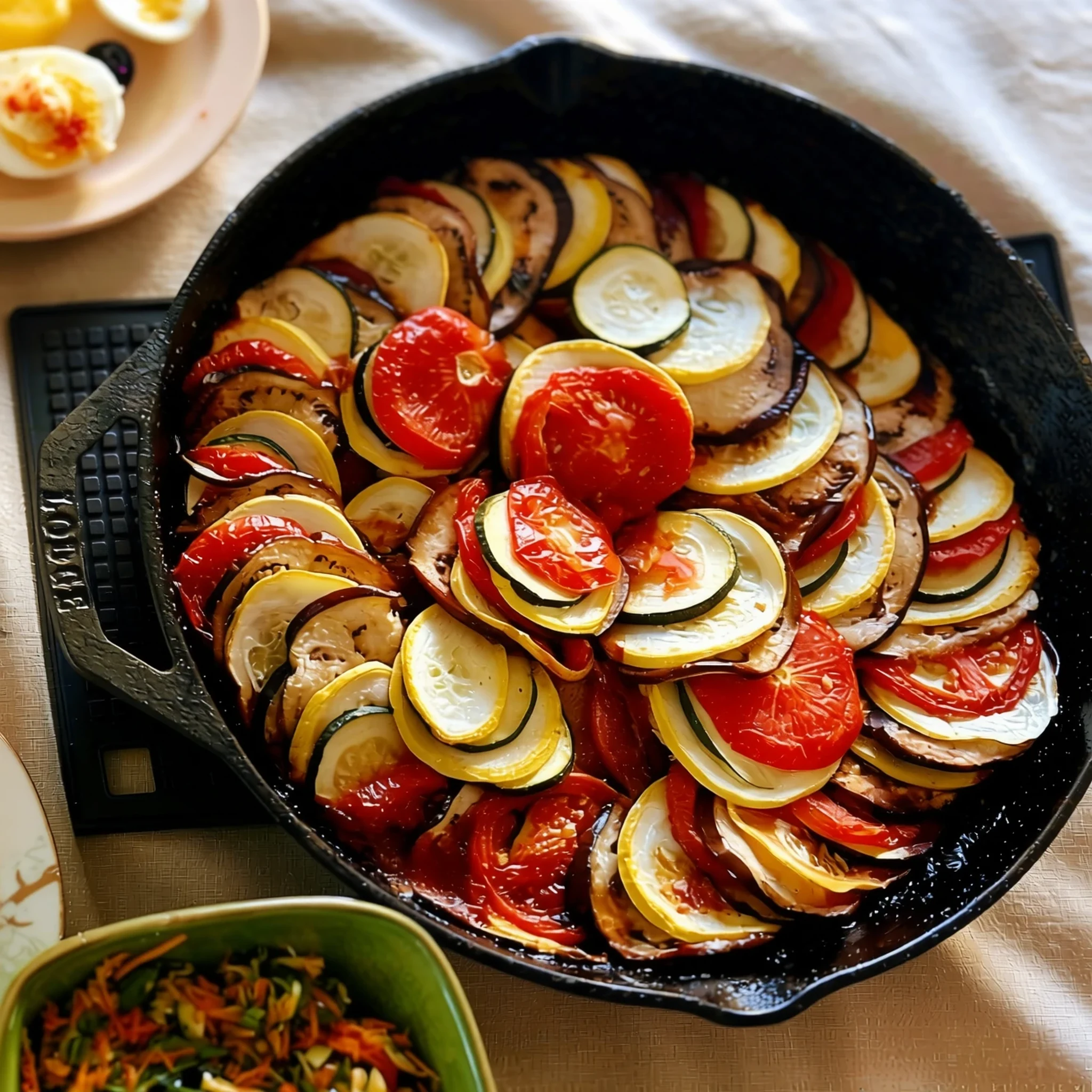
- Baklava — Local bakeries and the dessert counter of village tavernas
Baklava is layers of thin pastry filled with chopped nuts and sweetened with syrup or honey. Many bakeries and tavernas on the island make their own, and the best pieces are fresh and not overly sticky. It makes a good end to a long lunch, especially with a small coffee.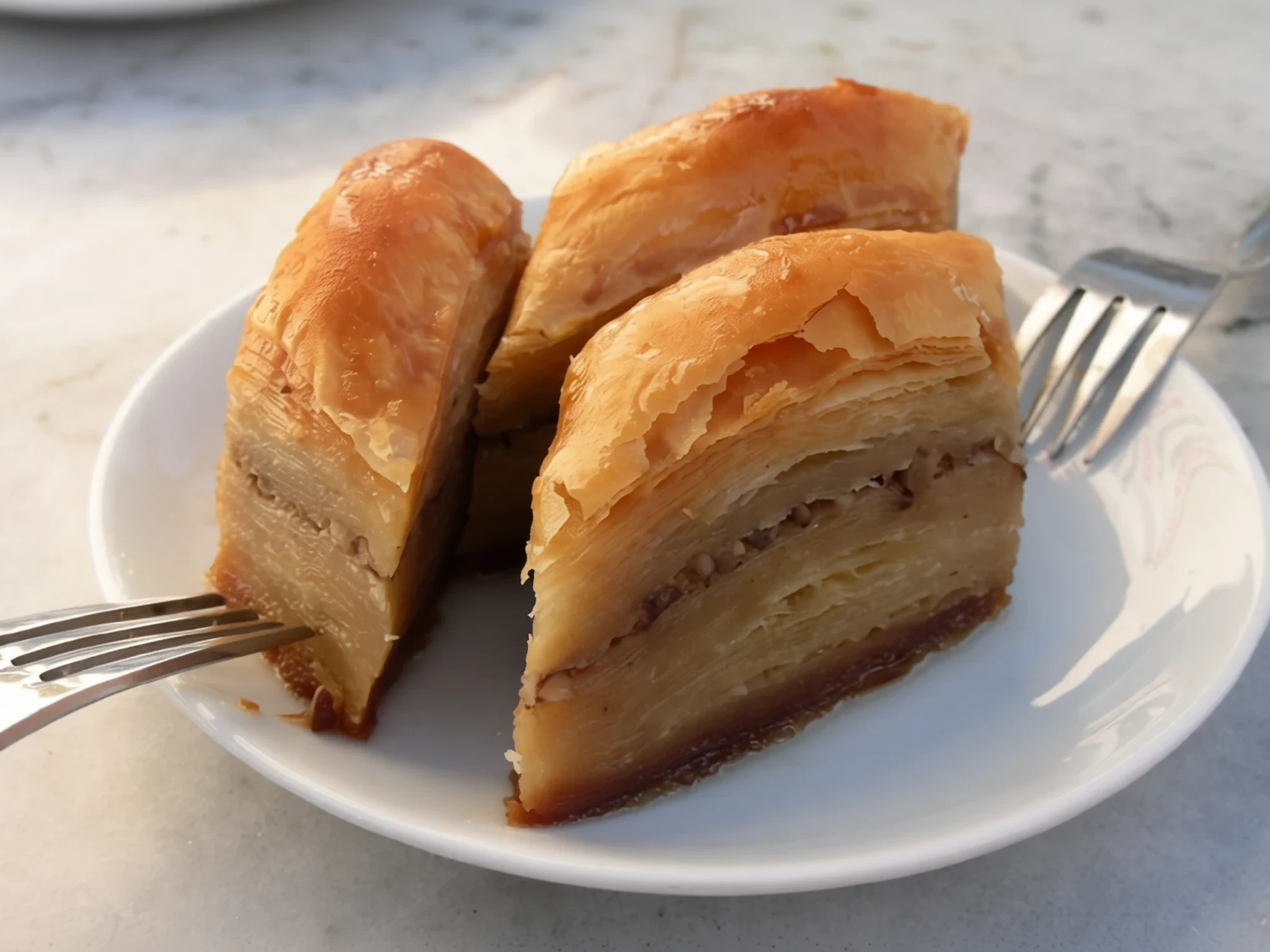
- Thyme honey — Roadside stalls and village shops
Thyme honey is one of the island's traditional products, with a strong, herbal flavour. It is sold by roadside stalls and in village shops, often in small glass jars. Buy it from a stall where the seller can tell you where the hives are, and taste it before you buy. - Local wine and currants — Village shops and roadside stalls
Wine and currants are both produced on the island, and small producers sell bottles directly from the villages. Currants appear in cakes, sauces and pilafs and make a good gift to take home. Ask at a village shop or a roadside stall, where the bottles are often unlabelled and the price is agreed on the spot.
Plan it
Best time. May, June and September to October, when the sea is warm and the island is busy but not packed. The charter season runs from May to October, so August is the peak and can be hot and crowded in the south.
How long. 3–4
Getting there. Zakynthos International Airport (ZTH) in the south, near Laganas and Kalamaki, with charter flights mainly from northern Europe in season and domestic flights to Athens. There is no public bus from the airport to town, so take a taxi. Ferries run from Zakynthos Town to Kyllini on the mainland.
Budget. mid
Tips
- Book flights and car hire early for high season, as charter capacity fills quickly
- Arrive at the airport early, since queues are long and the airport closes at night
- Start beach and boat days early to avoid midday heat and crowds at the Blue Caves and Navagio
- Carry cash for village shops and roadside stalls, and buy water before you head inland
- Take care near the bus station, where dogs can be about
Etiquette
- Keep to marked paths and viewpoints, and do not disturb loggerhead turtle nesting beaches
- Dress modestly for churches and monasteries, covering shoulders and knees
- Greet shopkeepers and taverna owners before you ask for anything
Nearby
Sources
- Wikidata Q144880 (CC0)
- Wikipedia: Zakynthos (rev 1378338167) (CC BY-SA 4.0)
- Wikivoyage: Zakynthos (rev 5388718) (CC BY-SA 4.0)
- Zakyntos city view, Σαλαμούρας Σπύρος (CC BY 3.0)
- Zakintos panorama, Mich973 (CC BY 3.0)
- Locator map, Zakynthos municipality, Waldviertler (CC BY-SA 4.0)
- Dionysios Solomos statue, Maesi64 (CC0 1.0)
- Zakynthos satellite picture, NASA (Public domain)
- Loggerhead turtle, Dionysisa303 (CC BY-SA 4.0)
- Navagio beach, kallerna (CC BY-SA 4.0)
- Panagia Skopiotissa ruins, Maesi64 (CC0 1.0)


