Windsor Castle
Windsor Castle, United Kingdom
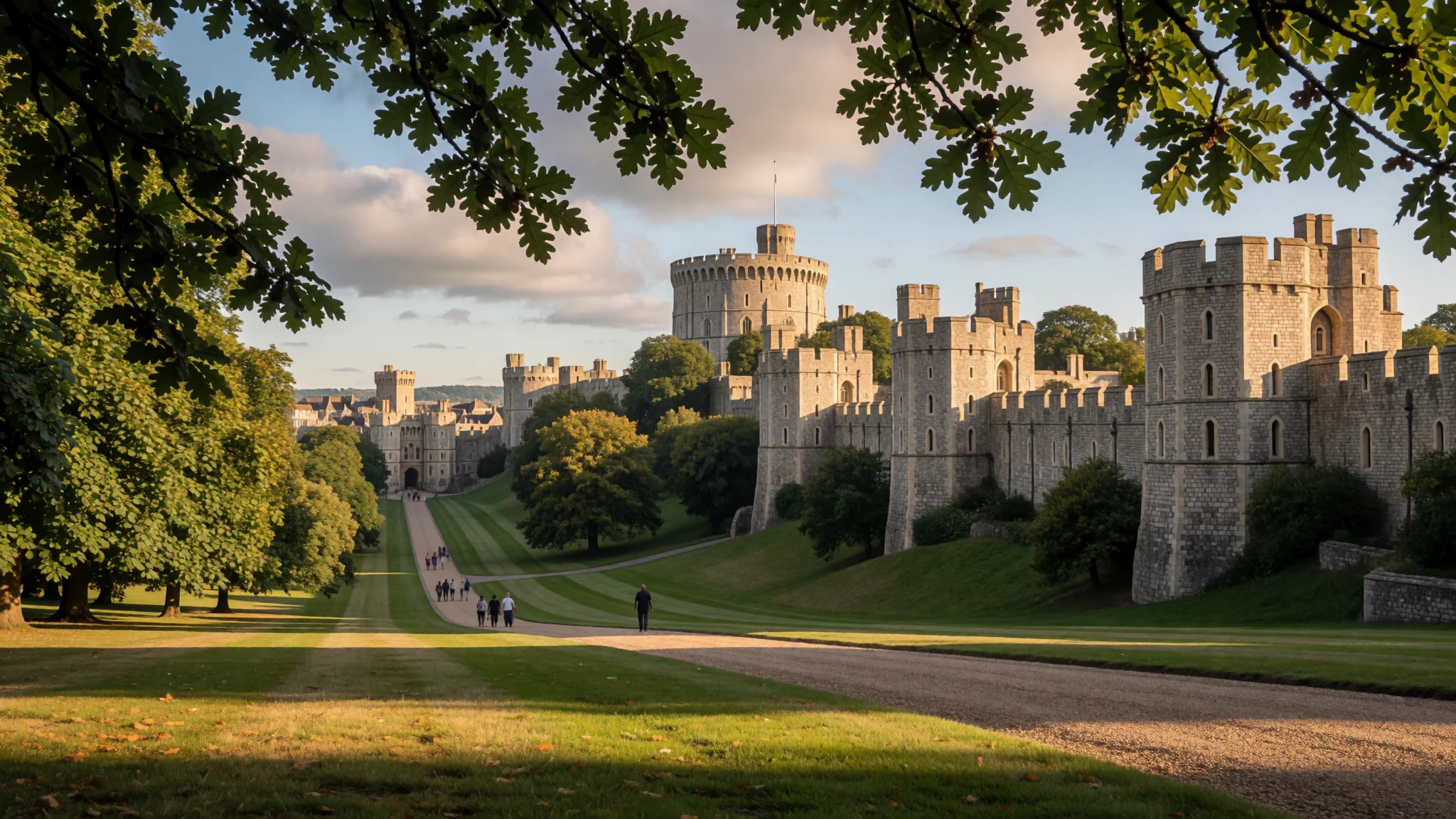
A working royal palace on a Thames bluff, where Norman earthworks, a Gothic chapel and Georgian state rooms share one walled enclosure.
The place
Windsor Castle sits on a chalk bluff above the River Thames in Berkshire, about 40 km west of central London, with the small town of Windsor packed tight against its walls. The facts record puts the site at 180 m above sea level, and that rise is what makes the silhouette: a long line of pale stone, towers and battlements visible from the railway, the river bridge and the avenue of the Long Walk. The castle was founded around 1070 and is still a working royal residence, so it is a palace, an office, a place of worship and a visitor attraction all at once. Three wards make up the plan. The Upper Ward holds the state apartments and private royal quarters around a broad quadrangle. The Middle Ward is dominated by the Round Tower, which crowns the old Norman mound. The Lower Ward is home to St George's Chapel and the lodgings of the people who serve it. The architecture is layered rather than single-period: earthworks, medieval stonework, Gothic vaulting and grand Georgian rooms all sit inside one enclosure. Expect airport-style security, long queues at the gate in school holidays and summer, and the occasional aircraft overhead, since Heathrow is close. Some rooms close at short notice when the court is in residence or a state occasion is under way, so the official site matters more here than at most castles. It works well as a day trip from London, though the riverside and the park deserve extra time.
Its story
Windsor Castle began as part of William the Conqueror's plan to hold London after the Norman conquest of 1066. He ringed the capital with timber castles, each roughly a day's march from the next, so that reinforcements could reach any of them quickly. Windsor earned its place in that ring twice over: the Thames was a main medieval route towards London, and Windsor Forest was a royal hunting ground already used by Saxon kings. The first castle was wooden, a keep on a man-made mound with a small enclosure, set on a chalk bluff about 30 m above the river. More enclosures followed to the east and west, giving the castle the long, three-part shape it still has. At first the kings did not live here; the early Norman rulers preferred an older palace at Old Windsor, a short distance away. That changed with Henry I, and monarchs have used the castle ever since. Stone gradually replaced timber, and the walls were tested in a long siege during the First Barons' War, which the castle survived. Henry III then added a comfortable royal palace inside the walls, and Edward III rebuilt it on a far grander scale, an enormously costly project even by the standards of a wealthy medieval court. Later centuries added the Gothic chapel and the Georgian state rooms, so the castle reads today as a continuous record rather than a single period piece.
What to see
- The Round Tower — Middle Ward
The Round Tower rises from the old Norman mound in the Middle Ward and gives the castle its recognisable outline from the river and the railway. Access to the top has varied over time, so check the official site. A flag flying from the tower indicates that the monarch is staying at the castle.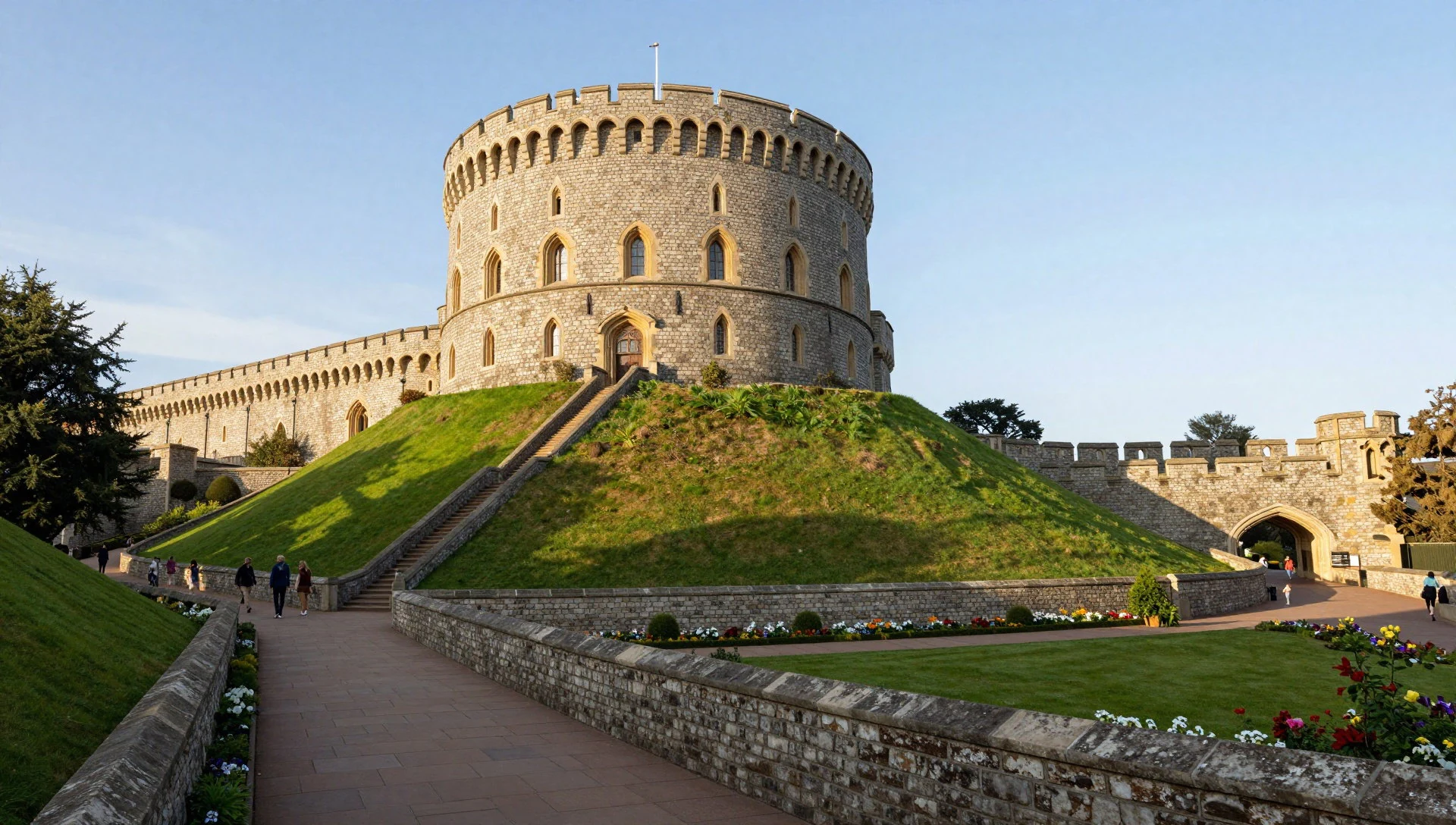
- The State Apartments — Upper Ward
The State Apartments in the Upper Ward are the formal rooms used for official hospitality, filled with paintings, tapestries, armour and gilded furniture. The Crimson Drawing Room is one of the Georgian-era spaces in the sequence. Opening depends on royal business and events, so book through the official site and expect busy rooms in summer.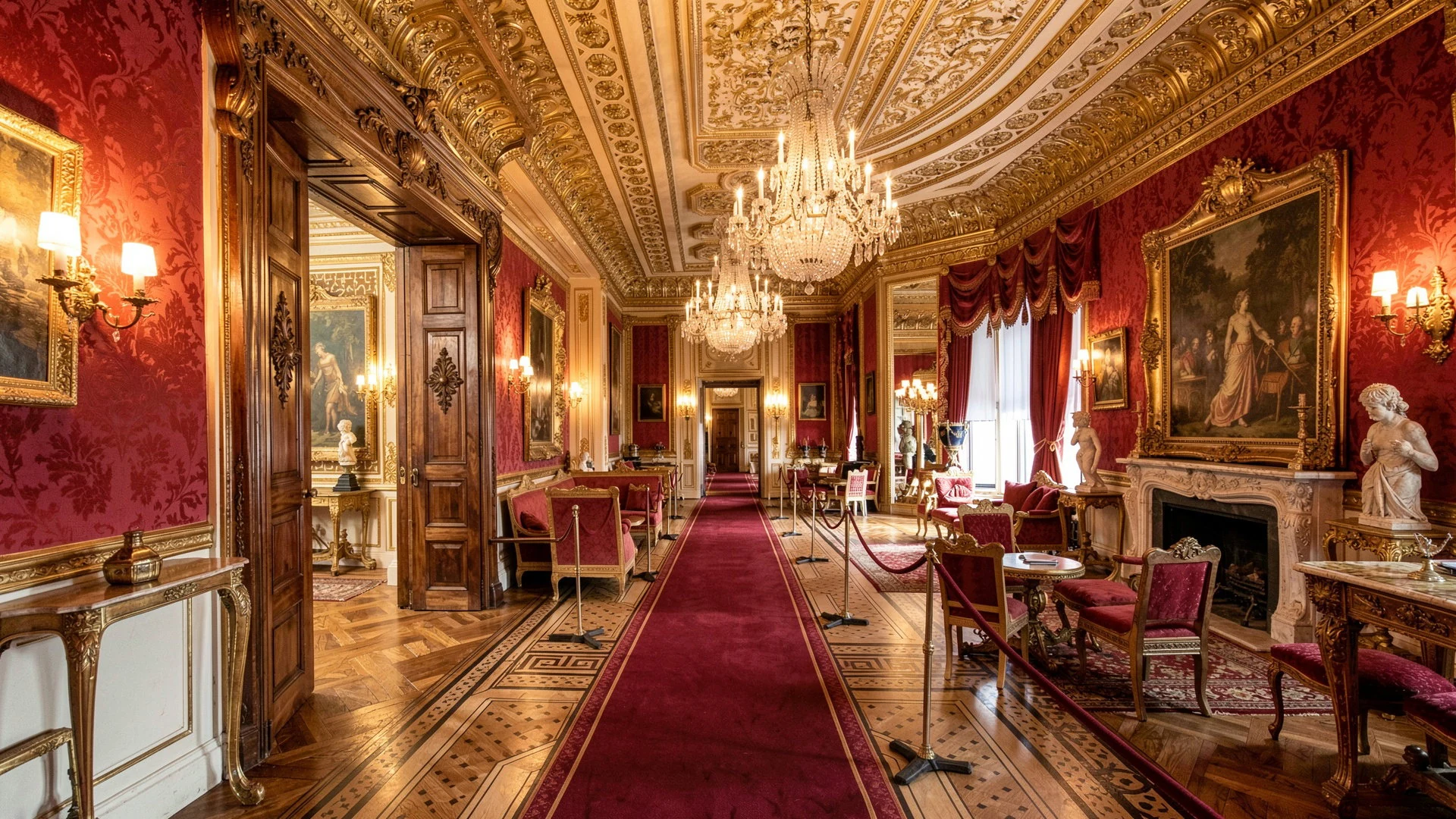
- St George's Chapel — Lower Ward
St George's Chapel in the Lower Ward is a late medieval church in the Perpendicular Gothic style, with a lofty vaulted nave and carved choir stalls. It is a working church, home to the Order of the Garter and the setting for royal weddings and funerals. Visiting times shift around services, so check ahead.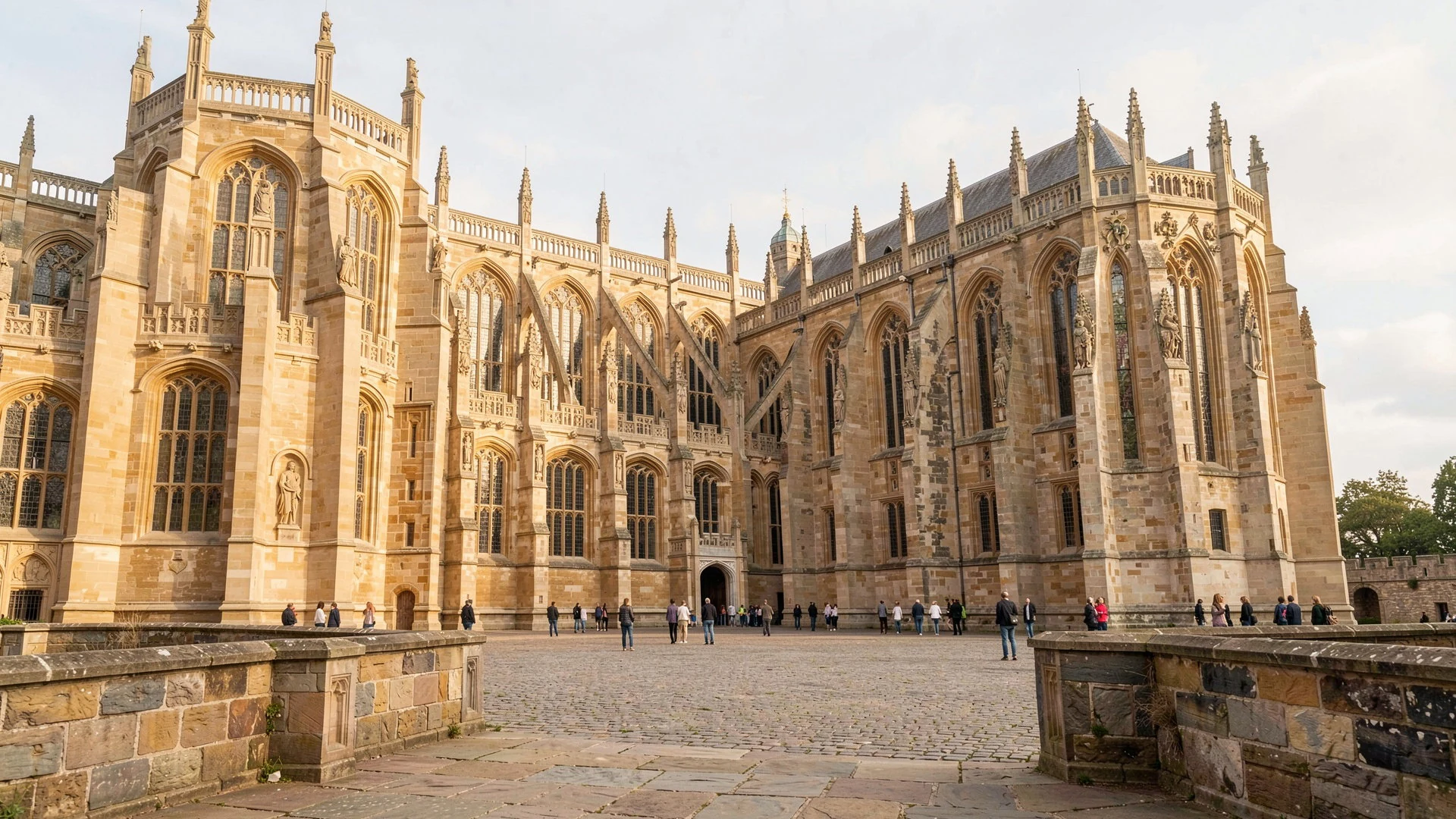
- The Horseshoe Cloister — Lower Ward
The Horseshoe Cloister is a curved range of timber-framed houses beside St George's Chapel, built for those who served the chapel. It is small, quiet and photogenic, and a good contrast with the stone of the state rooms. Most people pass it quickly, so a slower look is rewarded.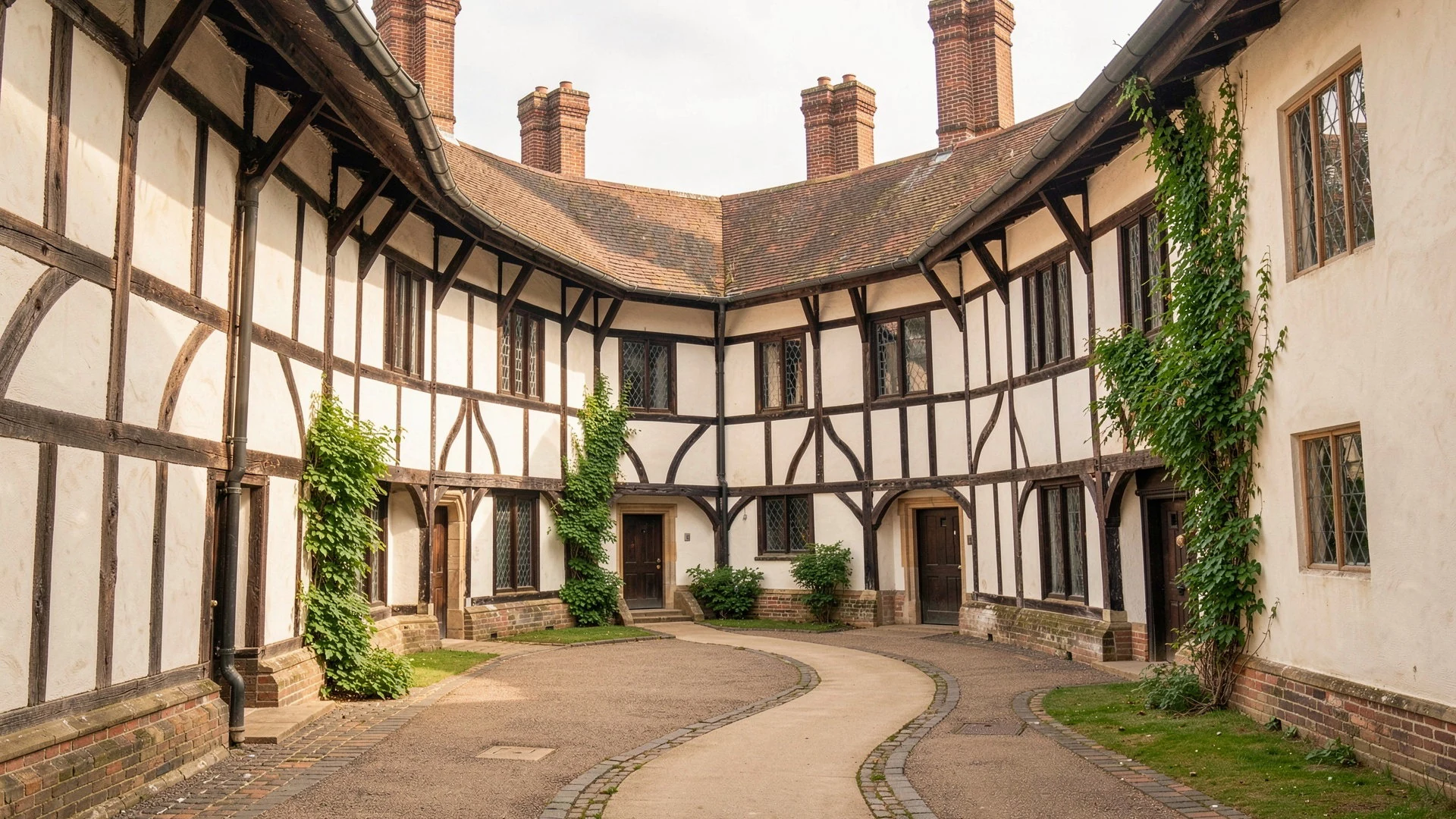
- The Long Walk — South of the castle, towards Windsor Great Park
The Long Walk is a straight, tree-lined avenue running from the castle's southern side into Windsor Great Park. Walking it gives the classic view back towards the walls, especially in late afternoon light. It is open parkland and a good place to escape the crowds of the castle itself.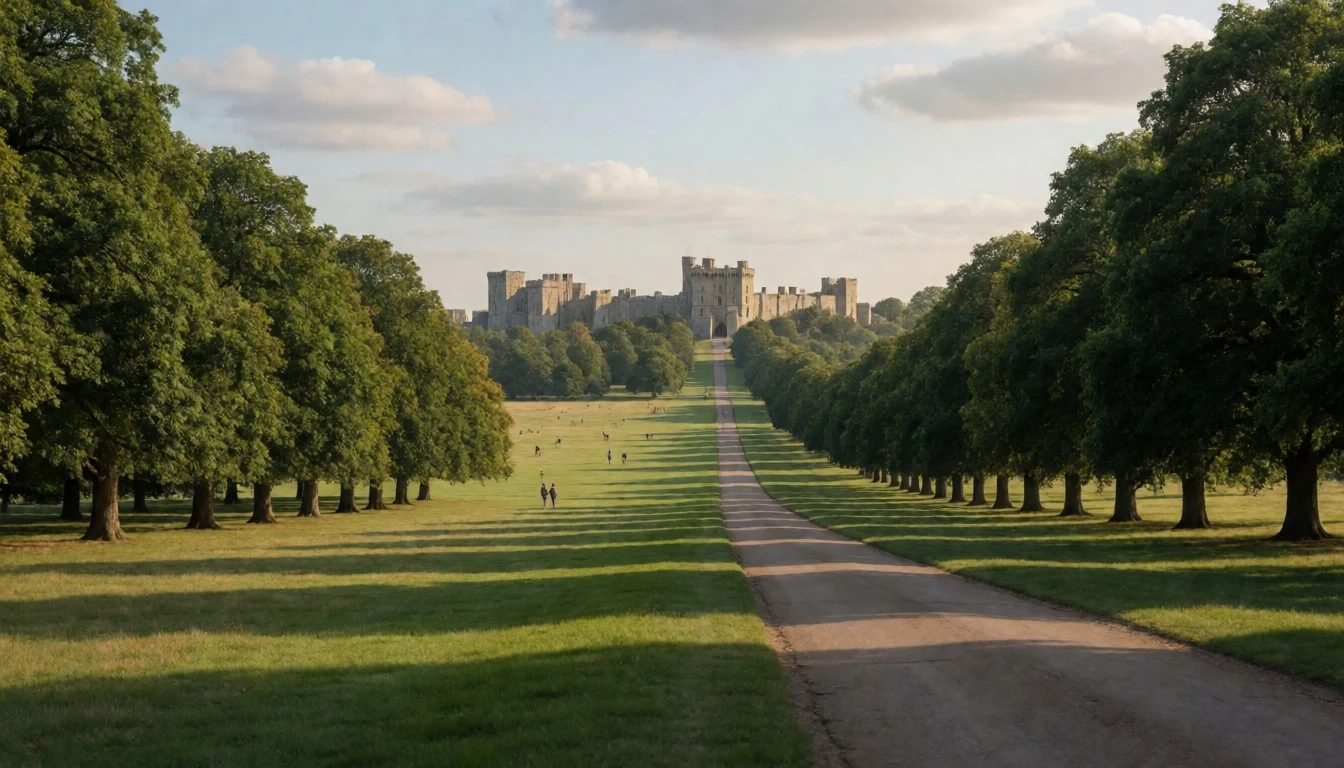
Culture
Windsor Castle is a place where ceremony is ordinary life rather than a show laid on for visitors. The royal family uses it as a home and as a venue for state occasions, so the building follows a calendar of arrivals, banquets and services that visitors have to fit around. The Royal Standard flying from the Round Tower signals that the monarch is in residence. Guard duty is a visible tradition: soldiers in scarlet tunics and tall bearskin caps march up from the town for the Changing the Guard, usually with a military band, on days announced by the official site. St George's Chapel keeps up the rhythm of the Church of England, including choral evensong and the annual Order of the Garter service, when knights process in velvet robes through the Lower Ward. The town carries the same mix of pageantry and routine. Across the river, Eton College schoolboys in black tailcoats are part of the scenery, and Windsor's shops, pubs and tea rooms trade on the royal connection with a certain dry humour. Local opinion on the monarchy ranges from devoted to indifferent, and most residents are too used to crowds to be impressed by them. Staff are courteous, firm about queues and security, and unamused by anyone who tries to bend either. Visitors should keep voices low and phones away in St George's Chapel, a working church, and follow staff instructions on where photography is not allowed.
What to wear
Windsor Castle has no single folk costume, but ceremonial dress is the nearest thing to a local tradition. The Foot Guards wear scarlet wool tunics and black bearskin caps for the Changing the Guard, with heavy greatcoats in cold weather. Knights of the Garter wear dark blue velvet mantles and plumed hats at their annual service, and Eton schoolboys still wear black tailcoats and white collar bands in term time. Everyday dress in Windsor is plain and practical: jeans, trainers, waterproof jackets and, among older residents, the occasional waxed country jacket or tweed cap. Smarter clothes appear for weddings, race days at nearby Ascot and Sunday chapel services. Visitors need comfortable shoes first, since the wards are cobbled or gravelled, the approach from the town is a climb, and a day of queues and corridors adds up. Layers matter in a climate that can turn from sun to rain within an hour, and a light waterproof is sensible in any season. There is no strict dress code for the grounds, but covered shoulders and knees are respectful in St George's Chapel, and a small bag speeds up the security check.
What to eat
- Sunday roast — Traditional pubs in the town centre and by the river
Roast beef or lamb with Yorkshire pudding, roast potatoes, vegetables and gravy, served from midday into the afternoon. Windsor's old pubs on the streets below the castle walls and along the river are the natural places, and booking ahead on summer Sundays is wise.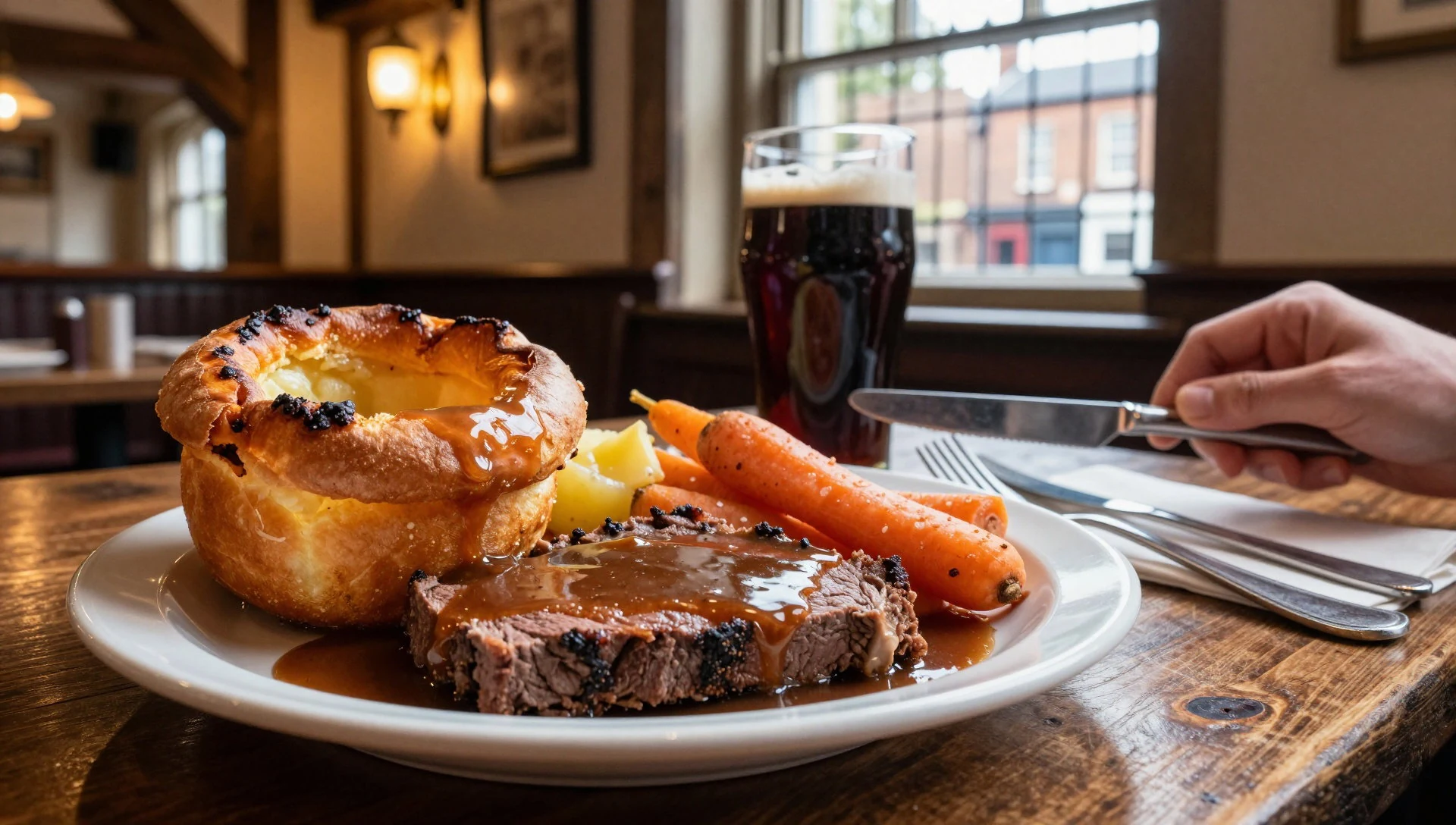
- Fish and chips — Chip shops in Windsor town centre
Battered white fish with thick chips, salt and vinegar, often with mushy peas. Chip shops in the town centre do takeaways that can be eaten on a bench by the river, though the gulls here are bold and attentive.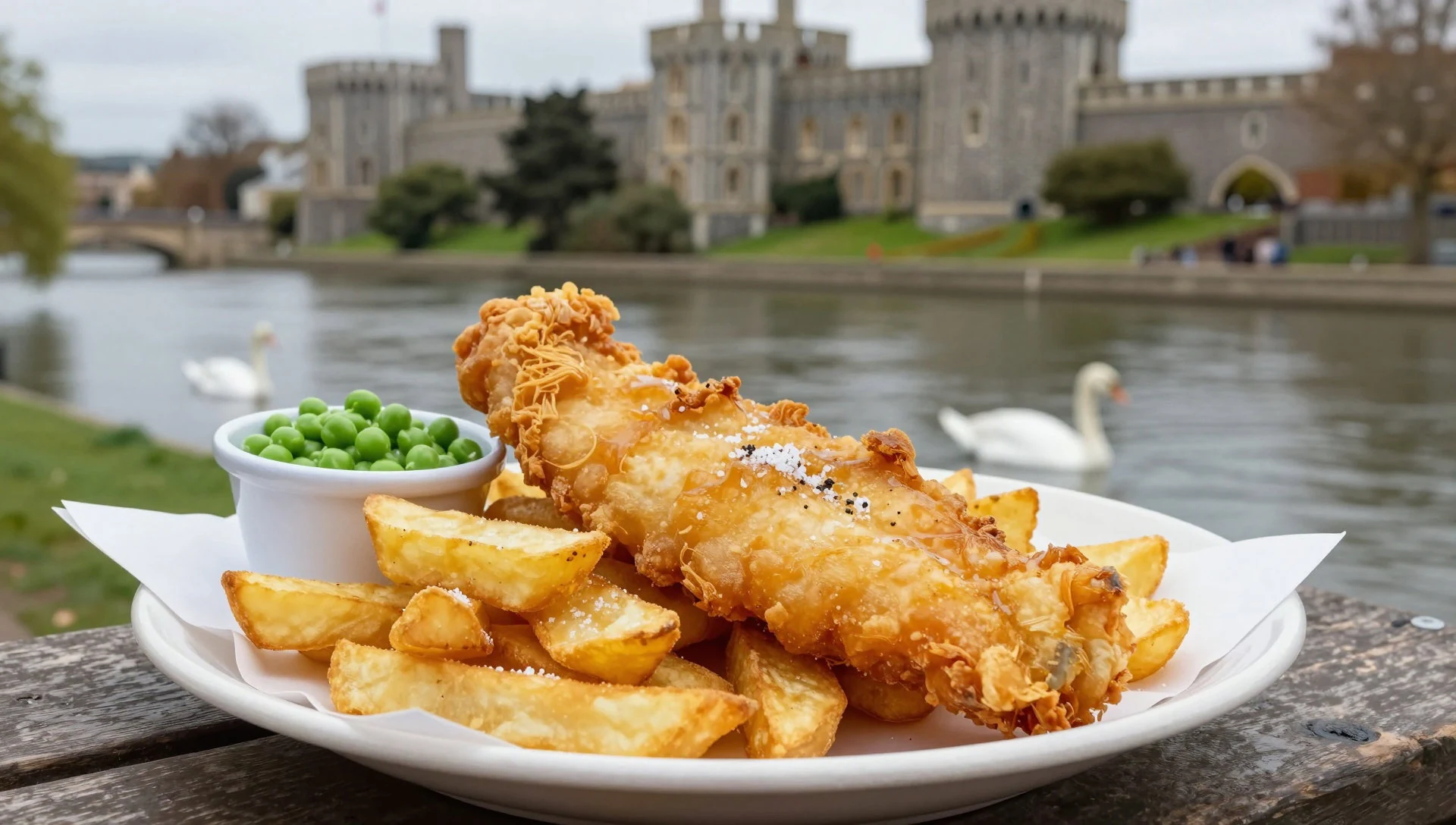
- Afternoon tea — Tea rooms near the castle approach
Finger sandwiches, scones with clotted cream and jam, and small cakes with a pot of tea. Tea rooms around the castle approach and in the town serve it; whether jam or cream goes first is a regional argument best left alone. - Ploughman's lunch — Riverside and country pubs around Windsor
English cheese, crusty bread, pickle, apple and salad, a classic pub lunch that suits a walk. Country pubs along the Thames and around Windsor Great Park serve it, usually with a pint of local ale or cider. - Full English breakfast — Cafés on the streets below the castle
Eggs, bacon, sausage, grilled tomato, mushrooms and toast, with tea or coffee. Cafés in the town centre serve it early, which helps before a morning queue at the castle gate.
Plan it
Best time. April–June and September–October for warm weather, long daylight and smaller crowds than high summer. July and August are the busiest months and school holidays pack the queues; winter is cold, damp and quiet, with short days. State rooms can close for royal business in any season.
How long. 1–2
Getting there. London Heathrow is the nearest airport, with buses to Windsor and the Elizabeth line towards Slough, where a short branch line runs to Windsor & Eton Central. Trains from London Paddington (change at Slough) and London Waterloo also reach Windsor; the castle is a short uphill walk from either station.
Budget. mid
Tips
- Book tickets in advance and check opening and closures on the official site, https://www.rct.uk/visit/windsorcastle
- Arrive at opening time or later in the afternoon to avoid the longest queues
- Carry a light waterproof, as much of the visit is outdoors and exposed to wind and rain
- Travel light, because bag checks at security can slow the queue
- Allow time for the Long Walk and the riverside, which are quieter than the castle
Etiquette
- Keep voices low in St George's Chapel and follow staff directions on photography
- Stand well back from the marching guards and never touch or crowd soldiers
- Queue patiently and cooperate with security staff
Nearby
Sources
- Wikidata Q42646 (CC0)
- Wikipedia: Windsor Castle (rev 1382693305) (CC BY-SA 4.0)
- Wikivoyage: Berkshire (rev 5111425) (CC BY-SA 4.0)
- Windsor Castle at sunset, Diliff (CC BY 3.0)
- Plan of Windsor Castle, Bluewave (Public domain)
- Upper Ward Quadrangle (corrected), Diliff (CC BY 3.0)
- Upper Ward Quadrangle panorama, Diliff (CC BY 3.0)
- Crimson Drawing Room, Empirically Grounded (CC BY 2.5)
- Windsor Lower Ward, Petr.noha (CC BY 3.0)
- Horseshoe Cloister, Immanuel Giel (Public domain)
- Aerial view of Windsor Castle, Cmglee (CC BY-SA 4.0)


