Wangdue Phodrang
Wangdue Phodrang, Bhutan
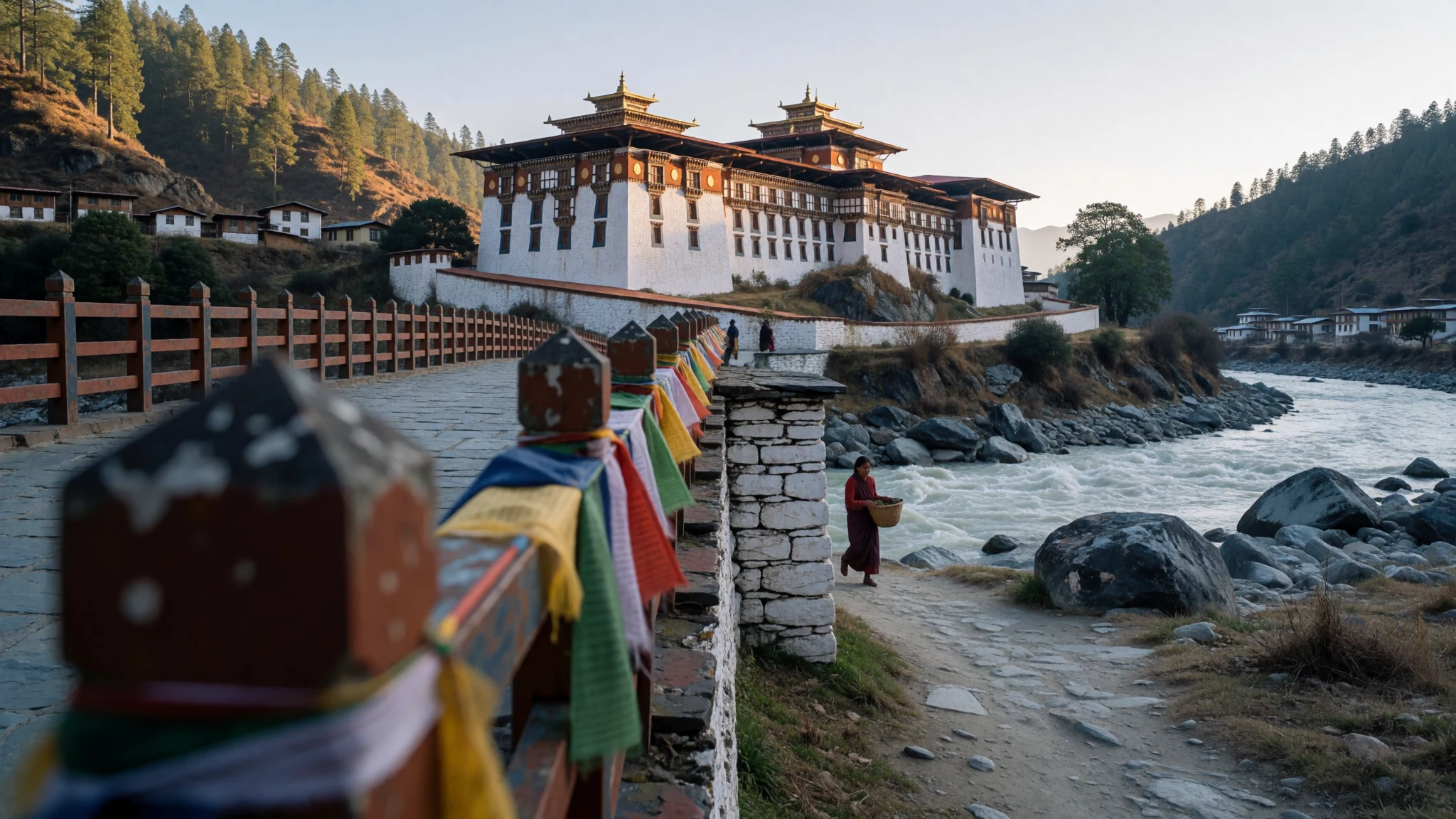
A river-side Bhutanese dzong town where monastery life, a rebuilt fortress and a slow road stop make a gentler alternative to the busier western valleys.
The place
Wangdue Phodrang is a small town in central Bhutan, home to 6,714 people and standing at 1,273 m above sea level. It is the administrative seat of the district that shares its name, and it sits where the Puna Tsang Chhu, also called the Sankosh, runs beneath a spur crowned by a fortress-monastery. Most visitors know it as a stop on the road between the western valleys around Thimphu and Paro and the central districts further east, and many pass through in little more than a meal. Those who stay longer find a town of short streets, a bridge, a few shops and eateries, and a skyline controlled by the dzong.
The altitude is lower than in the capital, so the climate is milder. It is classed as dry-winter humid subtropical: winters are dry and clear, summers are warm and wet, and monsoon rain turns the slopes bright green while making roads slower and landslides more likely. Across the river lies Rubesa, a rural gewog (a group of villages) facing the dzong, where farming rather than tourism sets the rhythm.
The town belongs to a country that regulates tourism closely. Bhutan is a Vajrayana Buddhist state that measures progress through Gross National Happiness, and visitors from most countries need a visa and pay a daily development fee, while Indian citizens are treated differently. Wangdue Phodrang is not a place for a checklist. It rewards early walks along the river, a long look at the dzong from the bridge, and time spent watching ordinary working life go by.
Its story
Wangdue Phodrang takes its name from the dzong that has stood above the river since 1638, and the dzong in turn is tied to the figure who unified Bhutan, Ngawang Namgyal, the first Zhabdrung Rinpoche. According to the tradition, he was looking for a site where a fortress could block raiders approaching from the south. Reaching this spur above the river, he came upon a boy called Wangdi playing at the water's edge, and he took the meeting as an omen. The fortress became Wangdi's Palace, which is the meaning of Wangdue Phodrang.
Dzongs of this kind were more than defensive works. Each one combined a monastery with the offices of local government, so monks and civil servants shared the same walls, and in many districts they still do. Bhutanese builders are said to have raised such fortresses without cement, nails or written plans, relying on rammed earth, stone, timber and a master builder's memory of proportion.
The dzong at Wangdue Phodrang has not had a calm history. A fire damaged it badly in recent years, and photographs from the reconstruction show scaffolding, fresh timber and craftsmen working on traditional joinery. That rebuilding is part of the story now: the fortress that visitors see is both an old foundation and a recent act of community effort. The town below grew as a place to serve it, and the river crossing remained the reason the site mattered, as it had when the boy was playing there.
What to see
- Wangdue Phodrang Dzong — Spur above the Puna Tsang Chhu, town centre
The dzong is the reason for the town, a long whitewashed fortress on a spur between two rivers. Seen from the road and bridge, its walls and gold-trimmed roofs fill the skyline. Access to inner courtyards has varied since the fire, so ask a guide or check locally before planning a visit.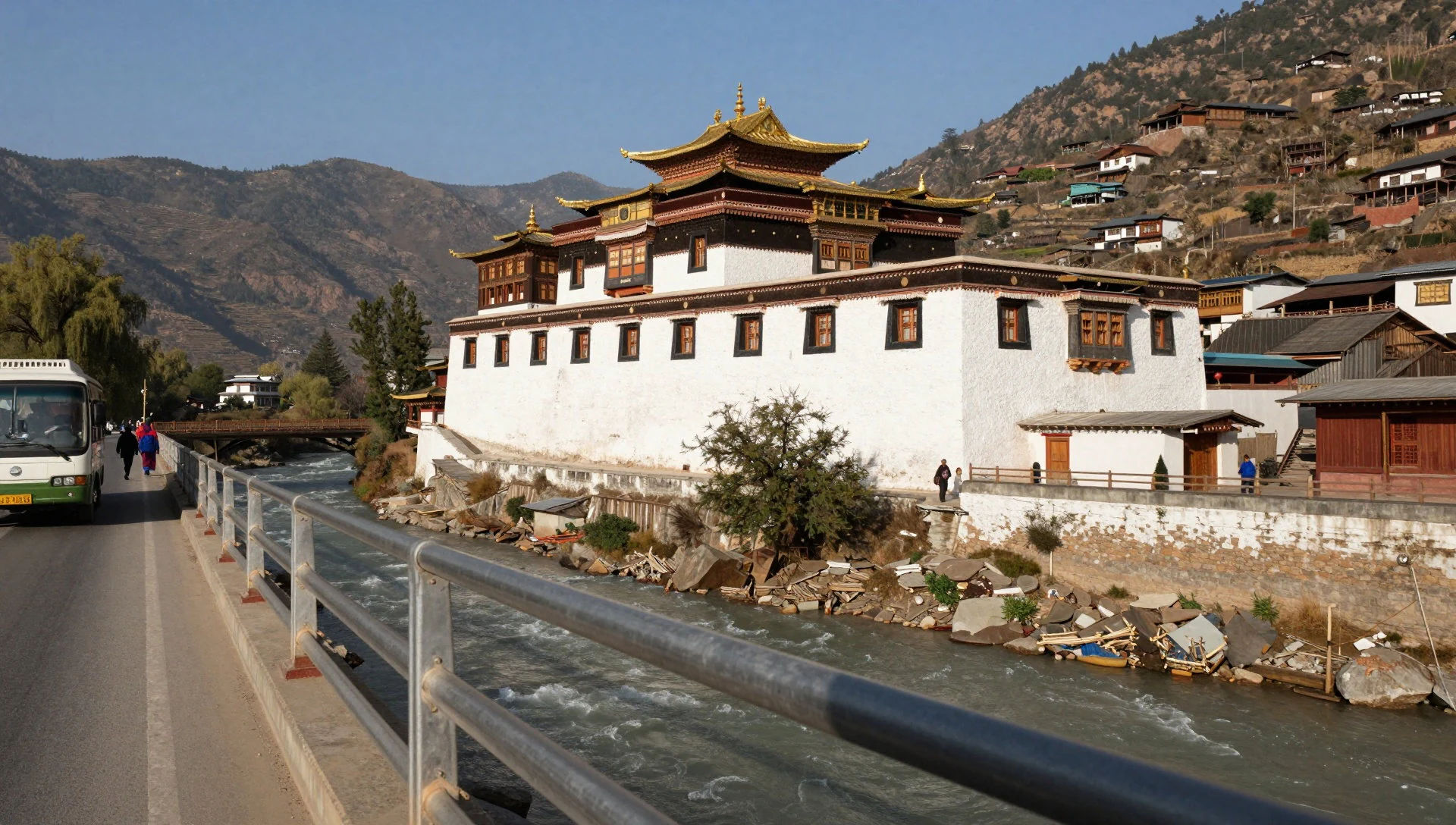
- The dzong from across the valley — Rubesa side of the river
A wide view of the dzong from the opposite bank shows how it sits on its spur and why the Zhabdrung chose it for guarding the river. Early morning light is softest, and mist often lifts off the water. The Rubesa side makes a quiet vantage point for photographs.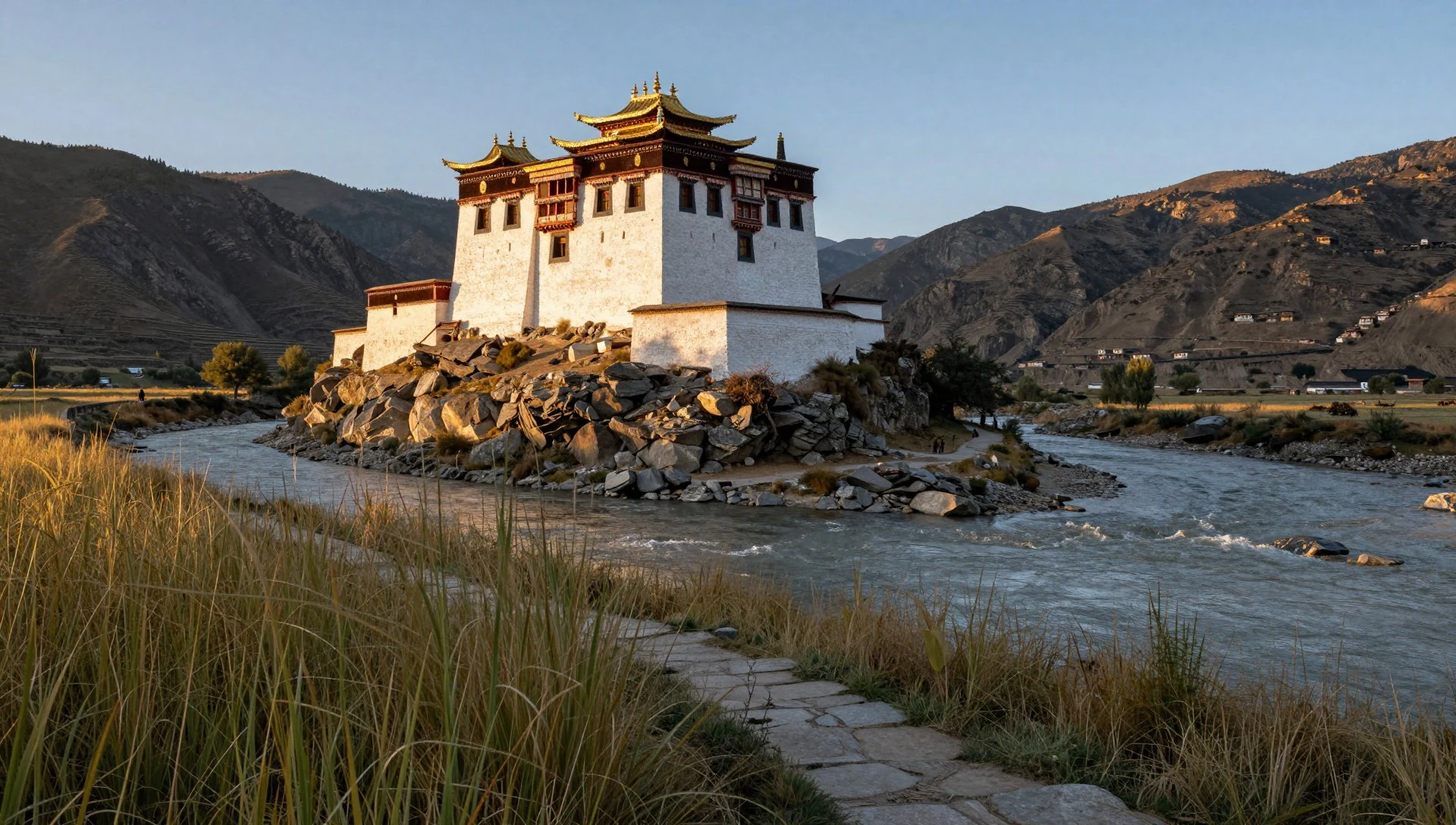
- Novices of the dzong — Inside the dzong precinct
The dzong is still a working monastery, and young monks in maroon robes cross its courtyards between lessons and prayers. Watching them from a respectful distance gives a better sense of the place than any building detail. Ask before photographing individuals, and never block the doorways.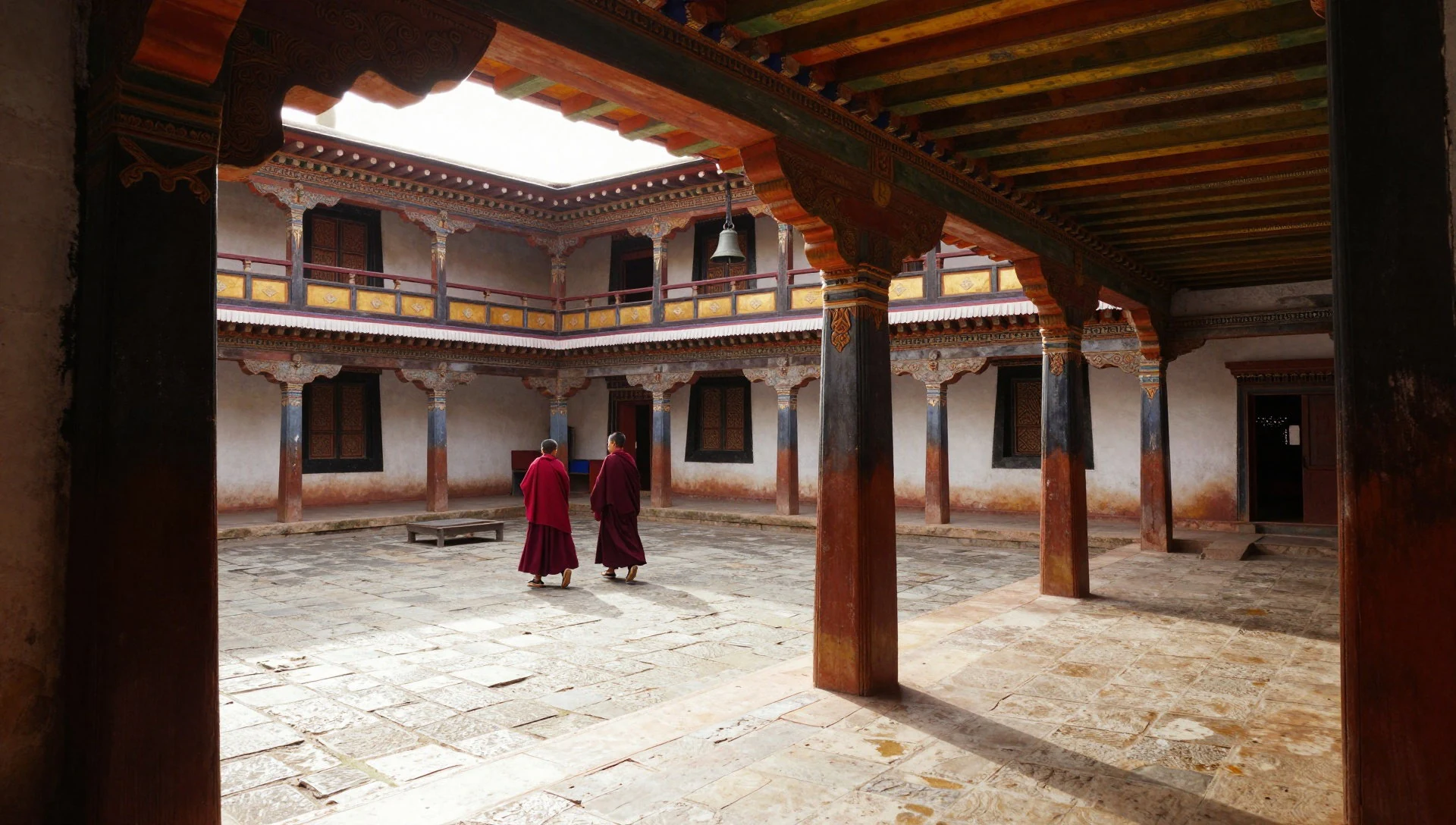
- Reconstruction work on the dzong — Dzong walls and approach road
After the fire, carpenters and masons began rebuilding in the traditional way, with carved timber, painted beams and stone footings. The work is a lesson in how Bhutanese craft is passed on. From outside the walls, the scaffolding and new roofline show how much skill goes into a single fortress.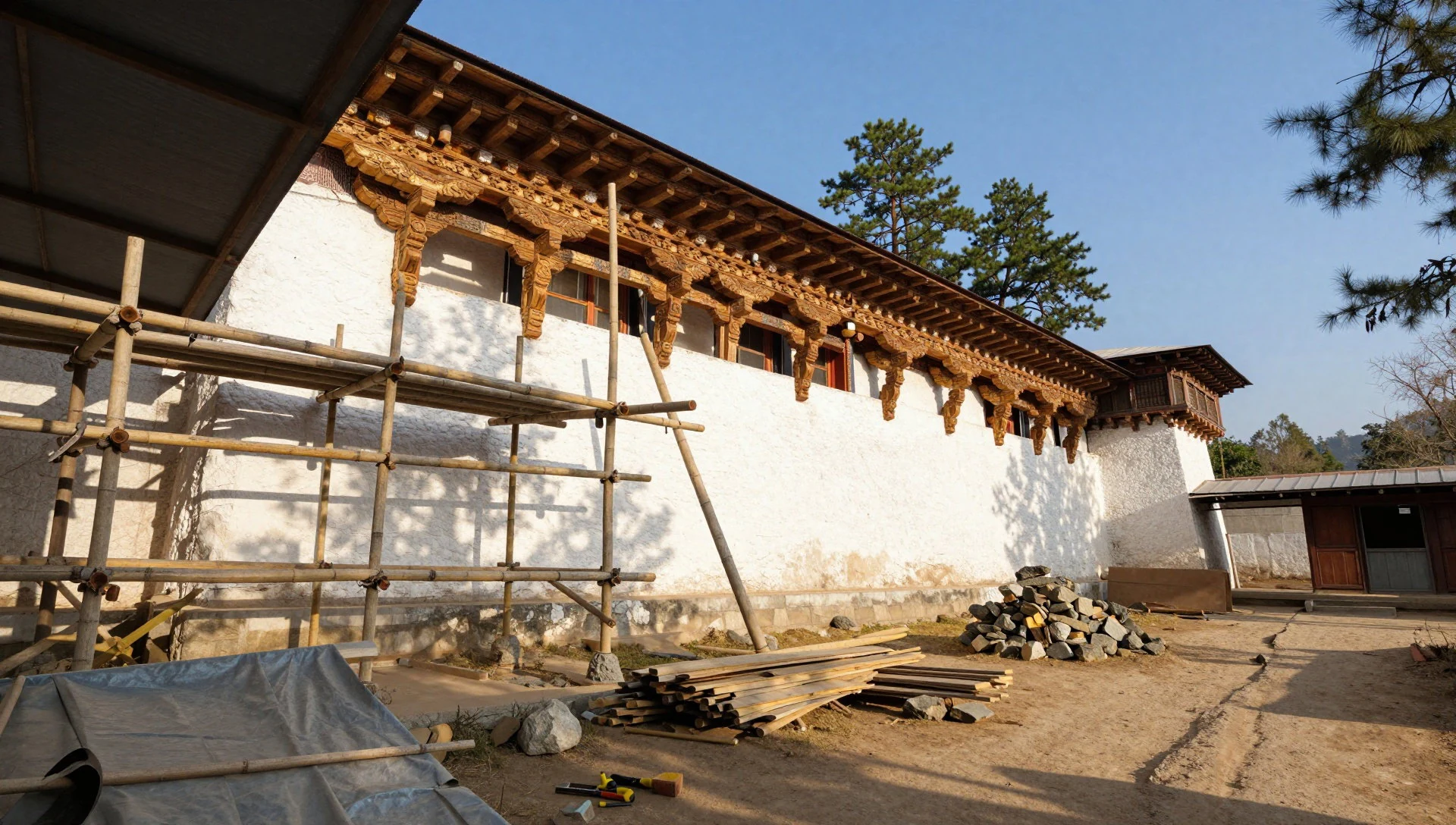
- The town bridge and river crossing — Puna Tsang Chhu crossing, below the dzong
The bridge over the Puna Tsang Chhu is the practical heart of the town, carrying trucks, buses and walkers beneath the dzong. Stand mid-span for the view up the valley. The river runs fast and cold in the monsoon, and its roar sets the sound of the town.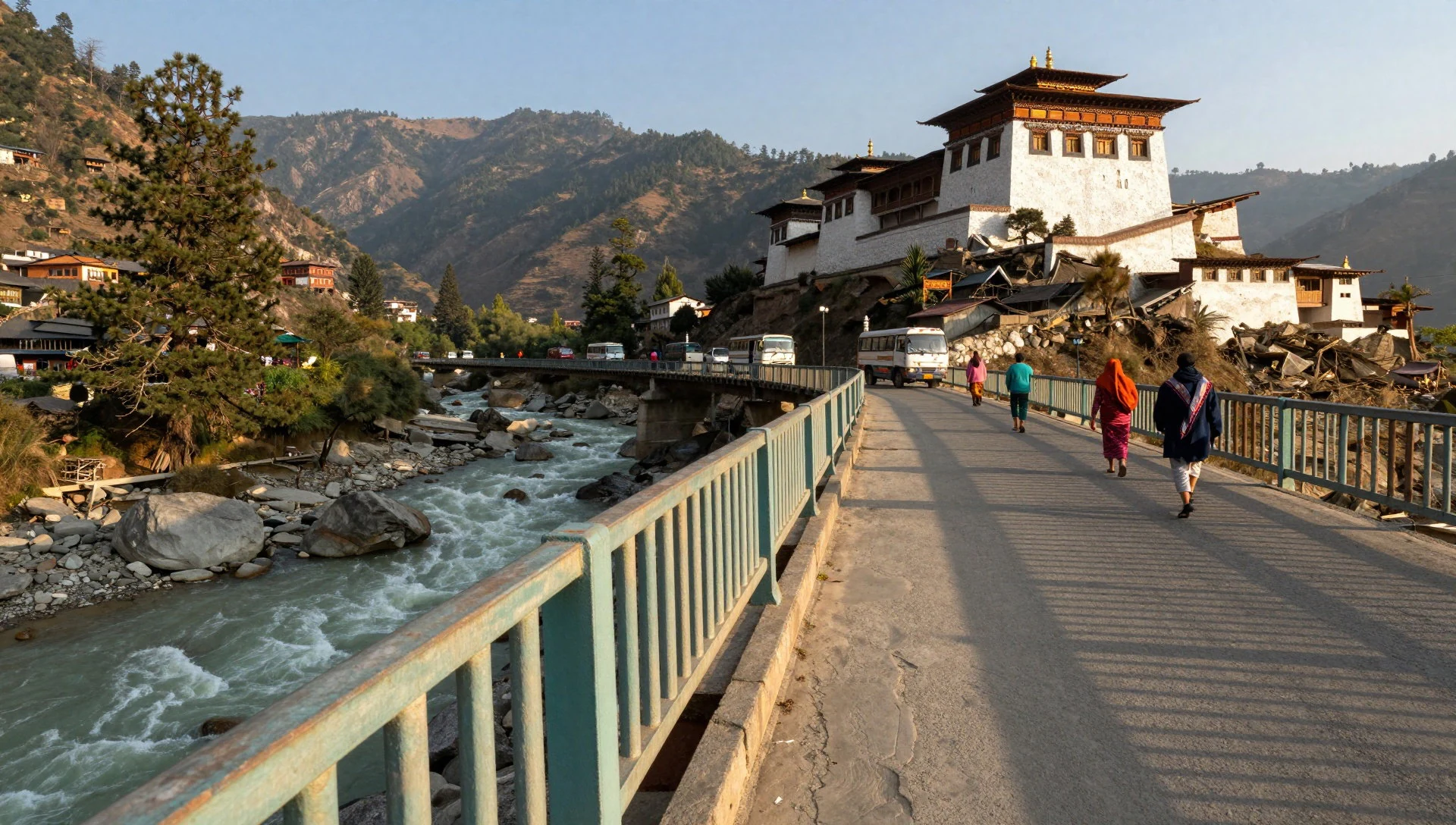
Culture
Wangdue Phodrang follows the same cultural pattern as the rest of western and central Bhutan, where Vajrayana Buddhism shapes the calendar, the architecture and daily manners. The dzong is both a place of worship and a government office, so religion and administration feel closely linked. Most people in the town speak Dzongkha, the national language, and the Ngalop culture of the west has close ties to Tibetan traditions.
Respect is a strong value here. Bhutanese society is hierarchical, so elders and officials are addressed with care, and the king and royal family are held in genuine regard; casual criticism of them lands badly. Religion is practised freely, though trying to convert people is illegal, so visitors should ask about belief rather than argue for their own.
Sacred objects are part of the landscape. Mani stones, stupas and prayer wheels appear along roads, bridges and paths, and there are customary ways to treat them. They are passed with the right side nearest, and prayer wheels are turned clockwise. Archery is the national sport, and matches with songs, dances and friendly teasing take place in villages, usually at weekends, though a visitor should treat them as local events rather than performances.
Walk clockwise around stupas and mani walls, keep your right side towards them, never sit on them, and dress and speak quietly when entering the dzong.
What to wear
Traditional dress in Wangdue Phodrang is the national dress of Bhutan. Men wear the gho, a knee-length robe tied at the waist with a belt called a kera, with long socks and leather shoes. Women wear the kira, an ankle-length wrapped dress fastened with brooches and a belt, usually over a blouse and often with a short jacket. Both are woven from cotton, wool or silk, and patterned fabrics from handloom weavers are prized. Formal occasions and visits to a dzong call for the gho and kira, and men often add a ceremonial scarf in a colour that shows rank or occasion.
Everyday wear is more mixed. Many office workers, officials and schoolchildren wear national dress as a uniform, while shop workers, farmers and young people often choose jeans, fleeces and trainers. Rubber boots appear during the monsoon, and warm layers are common in winter mornings.
Visitors should dress for a mild, changeable climate and for respect. Cotton or light wool layers suit most of the year, with a rain jacket for summer and a warm fleece for dry winters. Shoulders and knees should be covered at the dzong and any temple, and hats should come off indoors. Shoes with grip are better than sandals for slippery paths, stone steps and riverside walking, and they should be easy to remove at doors.
What to eat
- Ema datshi — Local eateries along the main road and near the bus stop
Chillies cooked in a cheese sauce, widely treated as the national dish. The heat is real, and the cheese softens it only slightly. It is served with rice at almost every ordinary eatery and in home kitchens along the main road.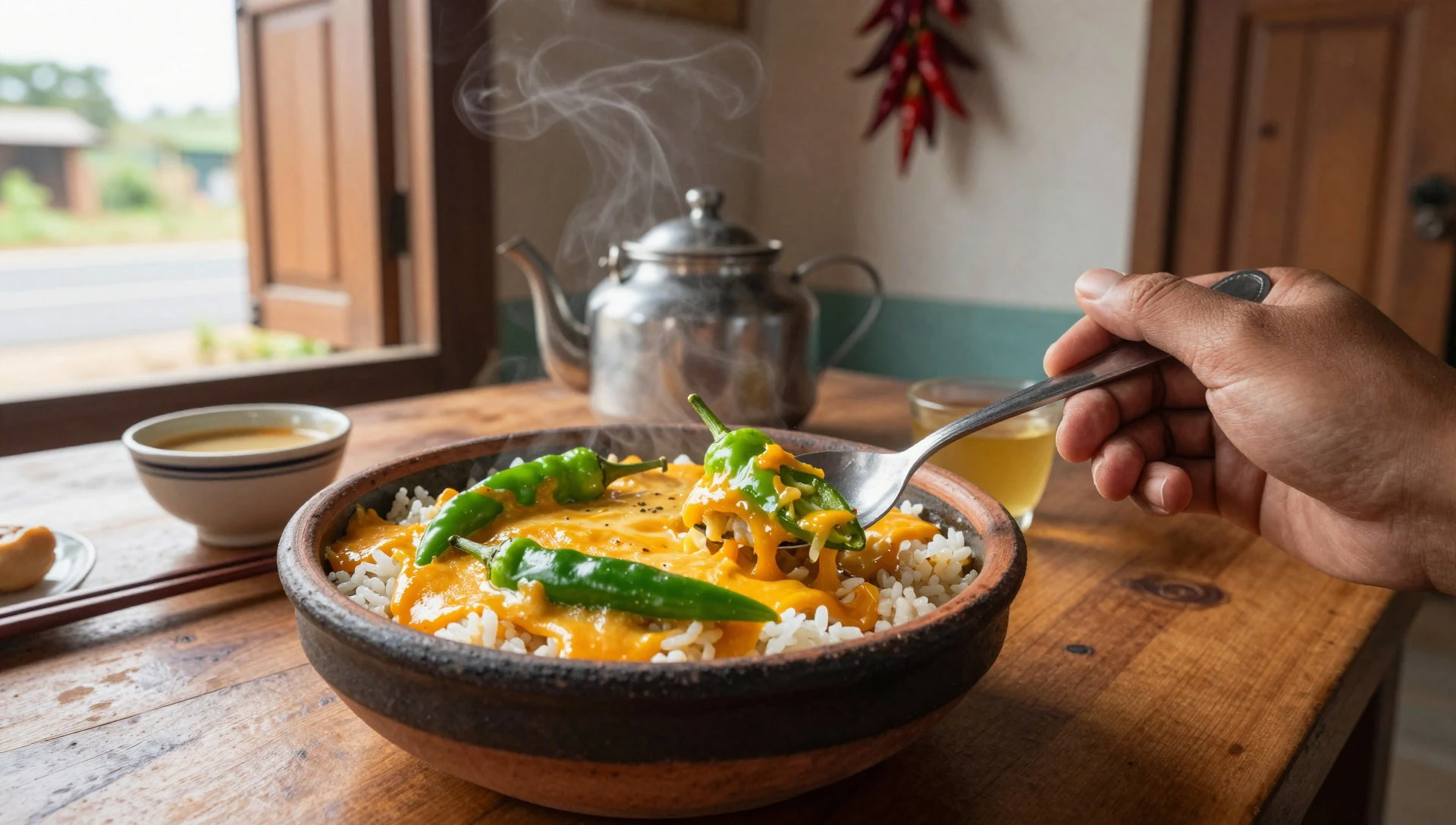
- Red rice — Most local eateries and farmhouse meals
Traditional Bhutanese rice with a nutty flavour and a pink tint, served as the base of a meal. White rice is now common too, so ask for red if you want the local grain. It suits the strong side dishes well.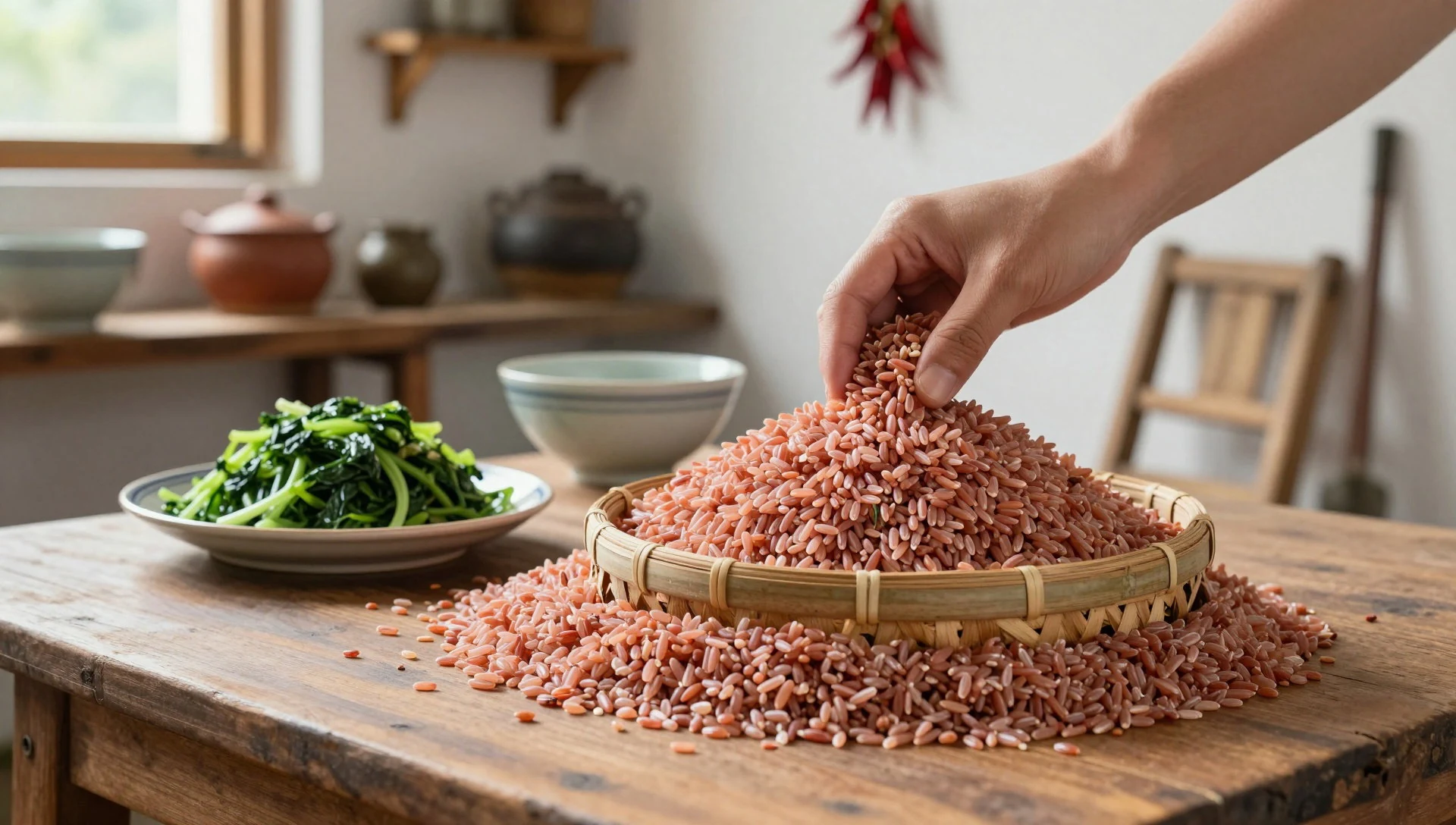
- Pork or beef with chilli — Family-run eateries in town
Meat is usually cooked with chillies, radish or greens, producing rich and peppery dishes. Pork and beef are the meats most often eaten, and chicken also appears. Portions arrive in shared bowls beside rice. - Seasonal vegetable dishes — Vegetable stalls and eateries near the market
Spinach, pumpkin, turnips, radishes, tomatoes, onions and green beans all appear in simple curries or stir-fries. Some are cooked with cheese, others with chilli alone. They suit vegetarians, though it is worth checking whether stock or meat has been used. - Butter tea and milk tea — Roadside tea stops and village homes
Salted butter tea is a warming drink that many visitors find an acquired taste, while sweet milk tea is easier to start with. Both are offered as a welcome in homes and at roadside tea stops, and a refill is polite to accept.
Plan it
Best time. March–April and October–November are the most comfortable months, with clear skies and pleasant temperatures before and after the wet season. Summer brings monsoon rain, heavy cloud and slippery roads, while the dry winter is cool, sunny and quiet.
How long. 1–2
Getting there. Most international visitors fly into Paro, then travel by road through Thimphu to Wangdue Phodrang; allow several hours and ask your operator or driver for the current route and road conditions. Indian citizens enter on separate terms, and most other nationalities need a visa.
Budget. high
Tips
- Check current visa rules, fees and permits with the official Bhutan tourism authority before booking, as policies change
- Plan driving for daylight hours, as mountain roads can be slow and landslides occur in the monsoon
- Visit the dzong area in the morning, when light is soft and courtyards are quieter
- Carry some cash for small shops and tea stops, as cards are less reliable outside larger towns
- Bring layers, as temperatures change quickly between sunny afternoons and cool mornings
Etiquette
- Remove hats and keep shoulders and knees covered at the dzong and any temple
- Walk clockwise around stupas, mani walls and prayer wheels, and never sit on them
- Ask before photographing monks, novices or local people
Nearby
Sources
- Wikidata Q1715095 (CC0)
- Wikipedia: Wangdue Phodrang (rev 1378265586) (CC BY-SA 4.0)
- Wikivoyage: Bhutan (rev 5394486) (CC BY-SA 4.0)
- Photo: Wangdue Phodrang Dzong, William L. Devanney (via Technopilgrim) (CC BY 3.0)
- Photo: The paradise of Wangdi phodrang Bhutan, Kuenzang tobgay1999 (CC BY-SA 4.0)
- Photo: Novices in Wangdue Phodrang Dzong, Hannah cartwright (CC BY 3.0)
- Photo: Reconstruction after fire, Benjamin Goetzinger (CC BY-SA 4.0)
- Photo: Wangdue Phodrang bridge, Doctor 17 (CC BY-SA 4.0)
- Photo: River crossing at Wangdue Phodrang, David Broad (CC BY 3.0)


