Vyborg Castle
Vyborg Castle, Russia
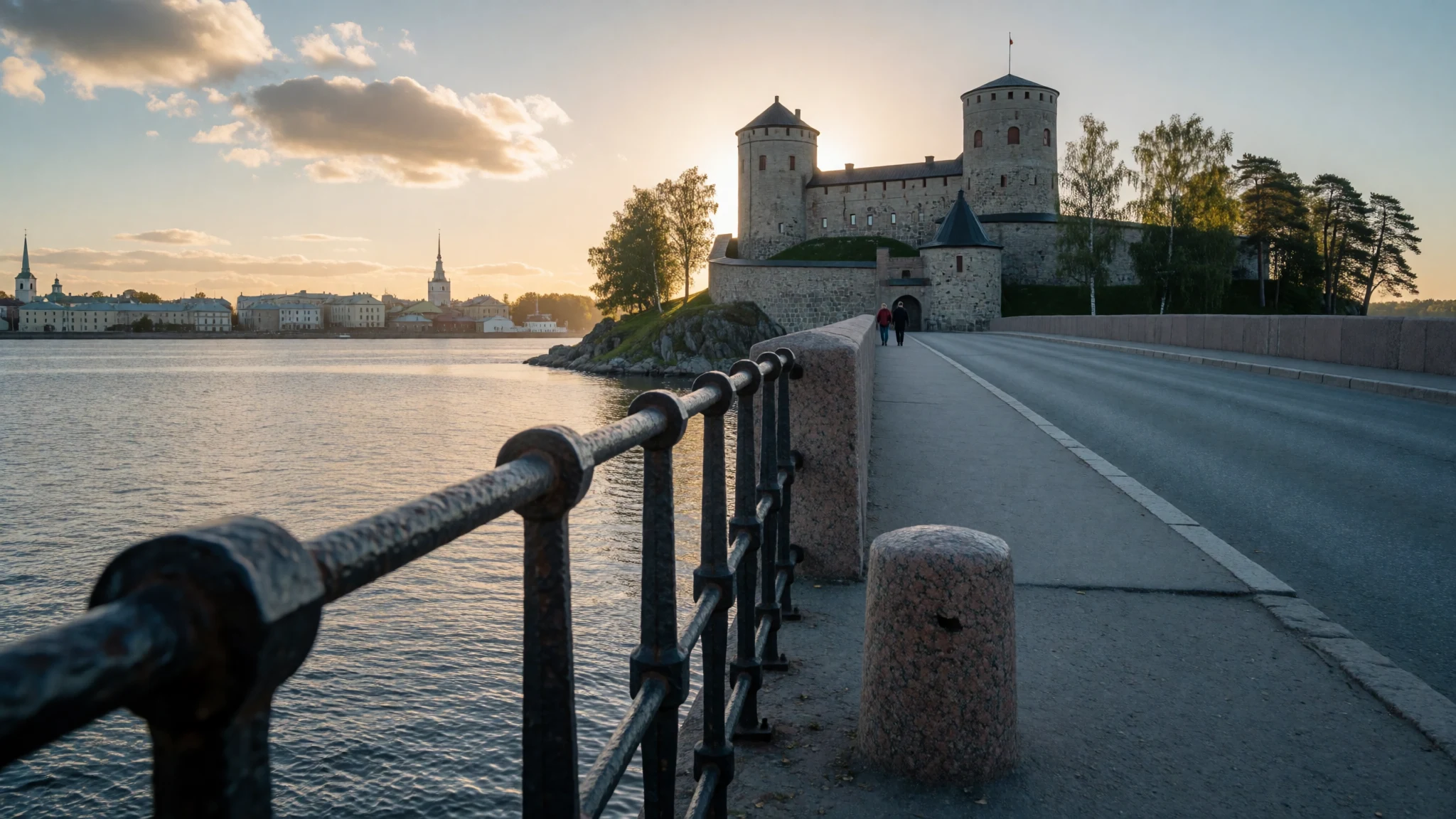
Vyborg Castle is a medieval Swedish fortress on its own island, with a regional museum inside and a layered old town beside it.
The place
Vyborg Castle stands on a small rocky islet in the harbour of Vyborg, a town on a bay of the Gulf of Finland in north-west Russia, not far from the Finnish frontier. The Swedes raised it in the Middle Ages, and the town grew up around its walls rather than the other way round. For centuries it was the Swedish crown's eastern stronghold in Karelia, the first obstacle for anyone advancing from Russian lands, and in late medieval times only Stockholm itself counted for more militarily. Today the buildings house the Vyborg Regional Museum, so the fortress is somewhere to walk through exhibitions as well as to look at from the shore.
The setting explains the castle. Vyborg lies where a navigable river route leads inland towards lakes and, with a portage, towards the waters that flow into Lake Ladoga, and the bay held trading sites long before any Swede arrived. The castle was placed to command all of that. The town later became a commercial port at the mouth of the Saimaa Canal, with a famously mixed population: Finns, Swedes, Germans, Russians, Romani, Tatars and Jews all left a mark on its streets before the Second World War.
That war ended the old community. Its people were evacuated, and the town was resettled with citizens of the Soviet Union. What visitors find now is a quiet, slightly worn small town of medieval towers, older stone houses and Soviet blocks, with the castle tower rising over the water. A half-day suits the island itself, and a few more hours cover the old streets and the market square nearby.
Its story
Vyborg Castle's story begins before the Swedes. Excavations have found traces of a Karelian fortress on the site: a sand breastwork with timber posts, burnt building remains, and a bent sword dated to the twelfth century, all in the area now called Smith's Courtyard. Archaeologists suggest the Karelian fort may have had a wooden tower. Local people had traded around the bay for a long time, and the place belonged to the Novgorod sphere.
In 1293 the Swede Torkel Knutsson, Lord High Constable of the kingdom, ordered a new fortress built during what is counted as the Third Swedish Crusade against Karelia. It was one episode in the long Swedish–Novgorodian wars. His choice of site was practical: whoever held it controlled the bay and the river route inland, which links lakes and, by portage, the rivers draining towards Lake Ladoga. A castle here meant a grip on the trade.
Afterwards the fortress passed through many hands. Swedish rulers broke up the huge Finnish castle fiefs into smaller provinces, nobles governed from the island, and a later painting shows Karl Knutsson Bonde leaving for a royal election in Stockholm. Peter the Great captured it in the eighteenth century. In the nineteenth century it served as a prison, and in the Second World War it changed between Soviet and Finnish control several times. Each owner left additions, which is why the complex reads as layers rather than a single build.
What to see
- Vyborg Castle and its island — Castle Island
The castle sits on its own island, reached by the Castle Bridge from the old town. The main tower dominates the skyline, and the museum inside covers the town's layered past. Allow a good half-day, and walk the island's outer edge for views back across the water to the Stone City.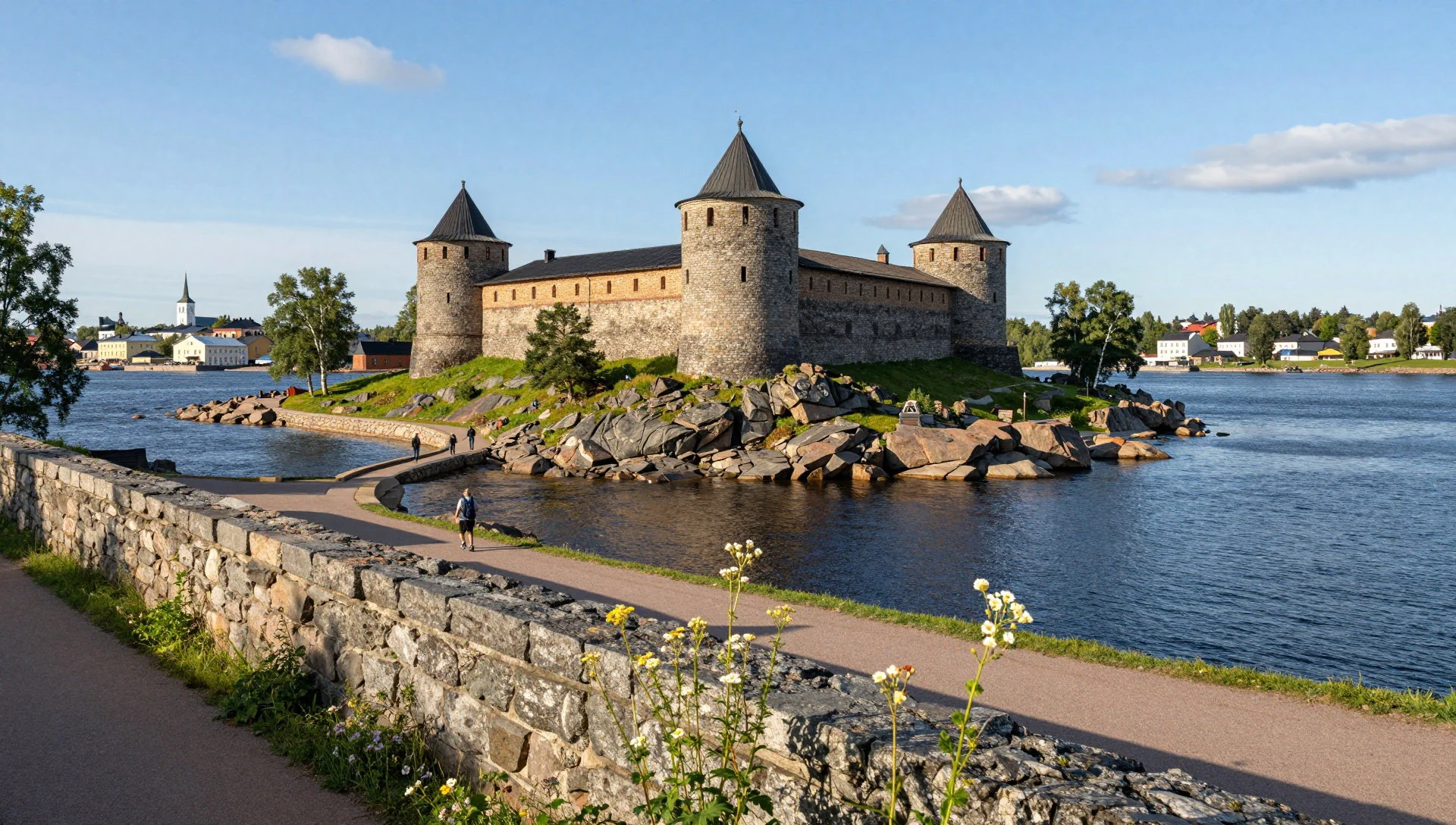
- Market Square and the Round Tower — Old town quay
Market Square lies at the end of the quay by the Salakka-Lakhti Inlet, with the market hall known as Rynok beside it. The squat sixteenth-century Round Tower stands next to it and holds a Russian restaurant. It is a lively first stop for anyone arriving by train and walking towards the water.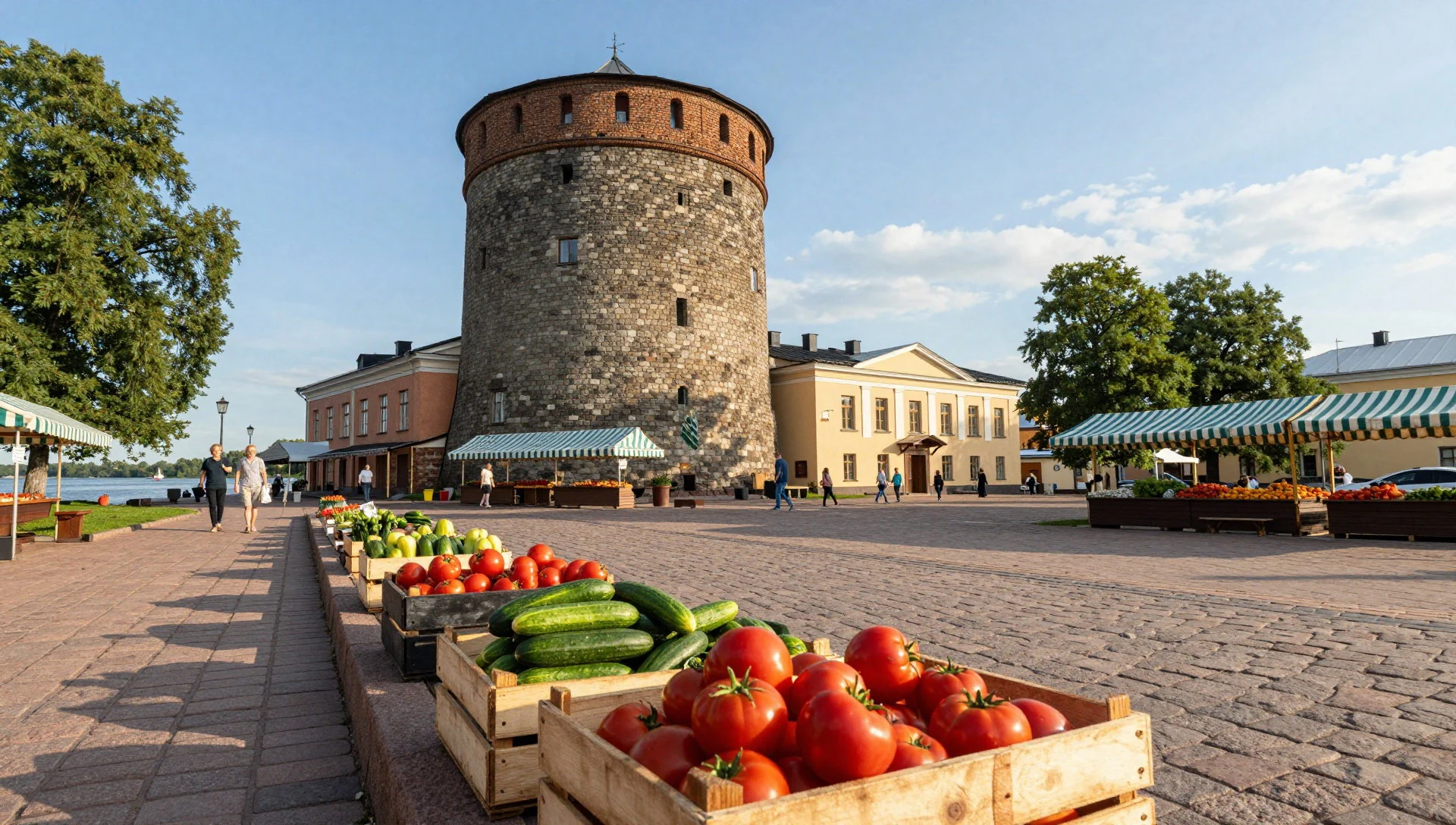
- Peter and Paul Cathedral — Park beside the old town
The Lutheran Peter and Paul Cathedral stands in a park a short walk past the Round Tower. It recalls the Finnish and Swedish congregations who once filled the town. Opening depends on the season and on services, so check locally before planning around going inside.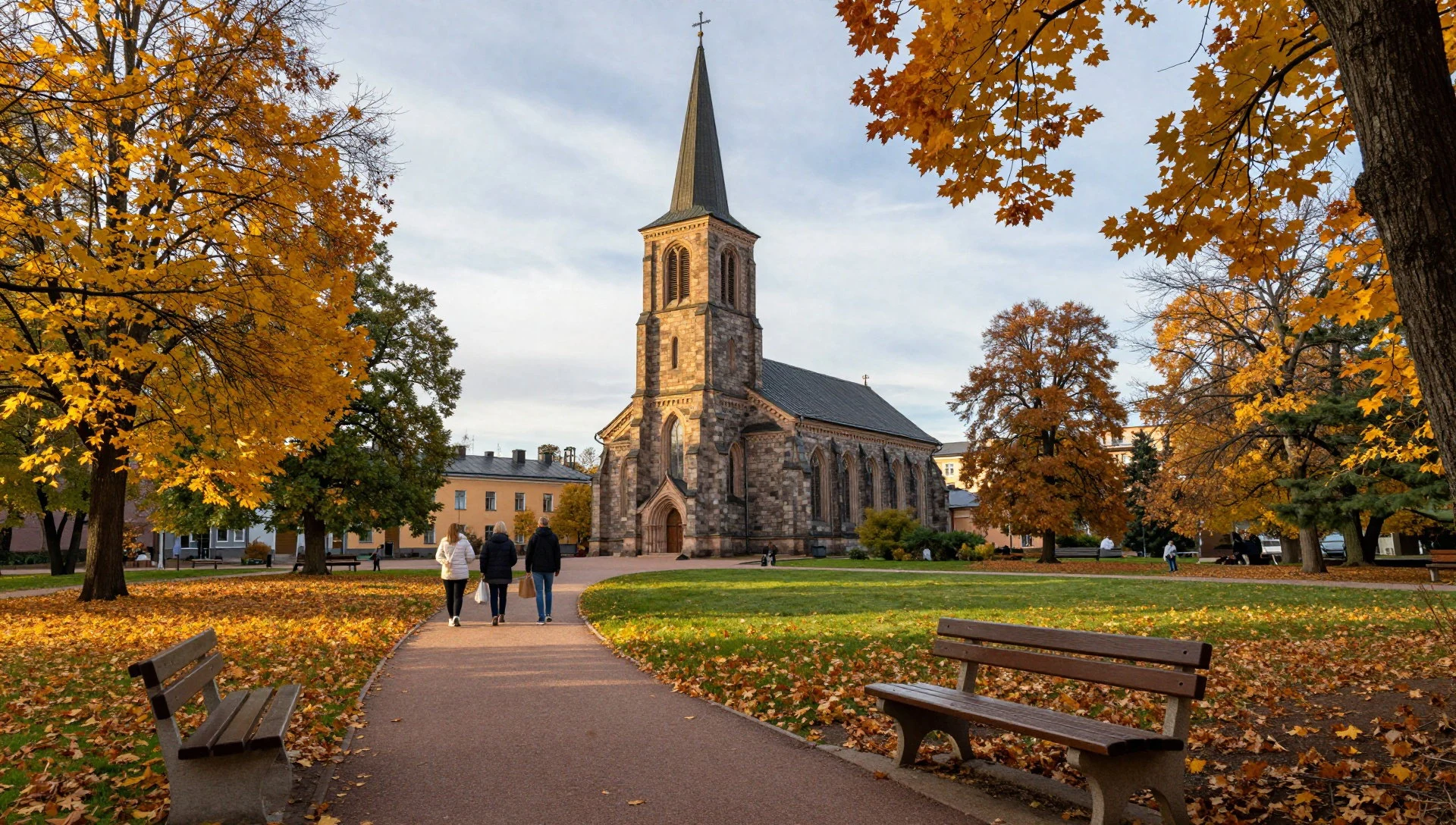
- Transfiguration Cathedral — Old town
Across the street from the park, the blue-painted Transfiguration Cathedral is a bright contrast to the grey stone around it. It rewards a short stop on a walking circuit of the old town. Inside, voices are kept low and shoulders covered, as in any working Orthodox church.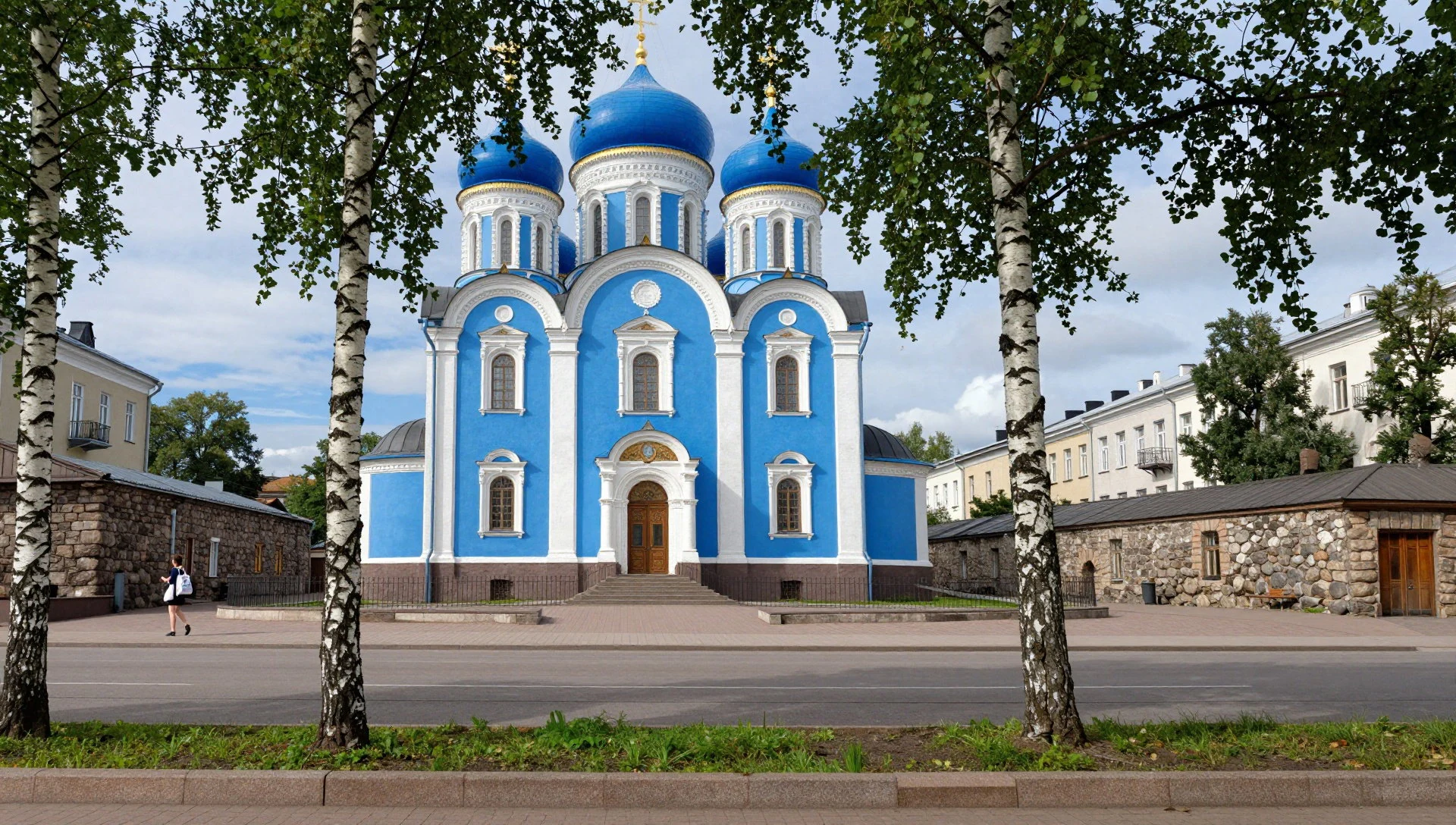
- Council House Tower and the old wall — Stone City
Further up Vyborgskaya Ulitsa, the Council House Tower stands beside surviving stretches of the old city wall. The walk on to the Clock Tower, tucked between apartment blocks, is the plainest part of the Stone City circuit, but it shows how medieval fragments sit among ordinary modern housing.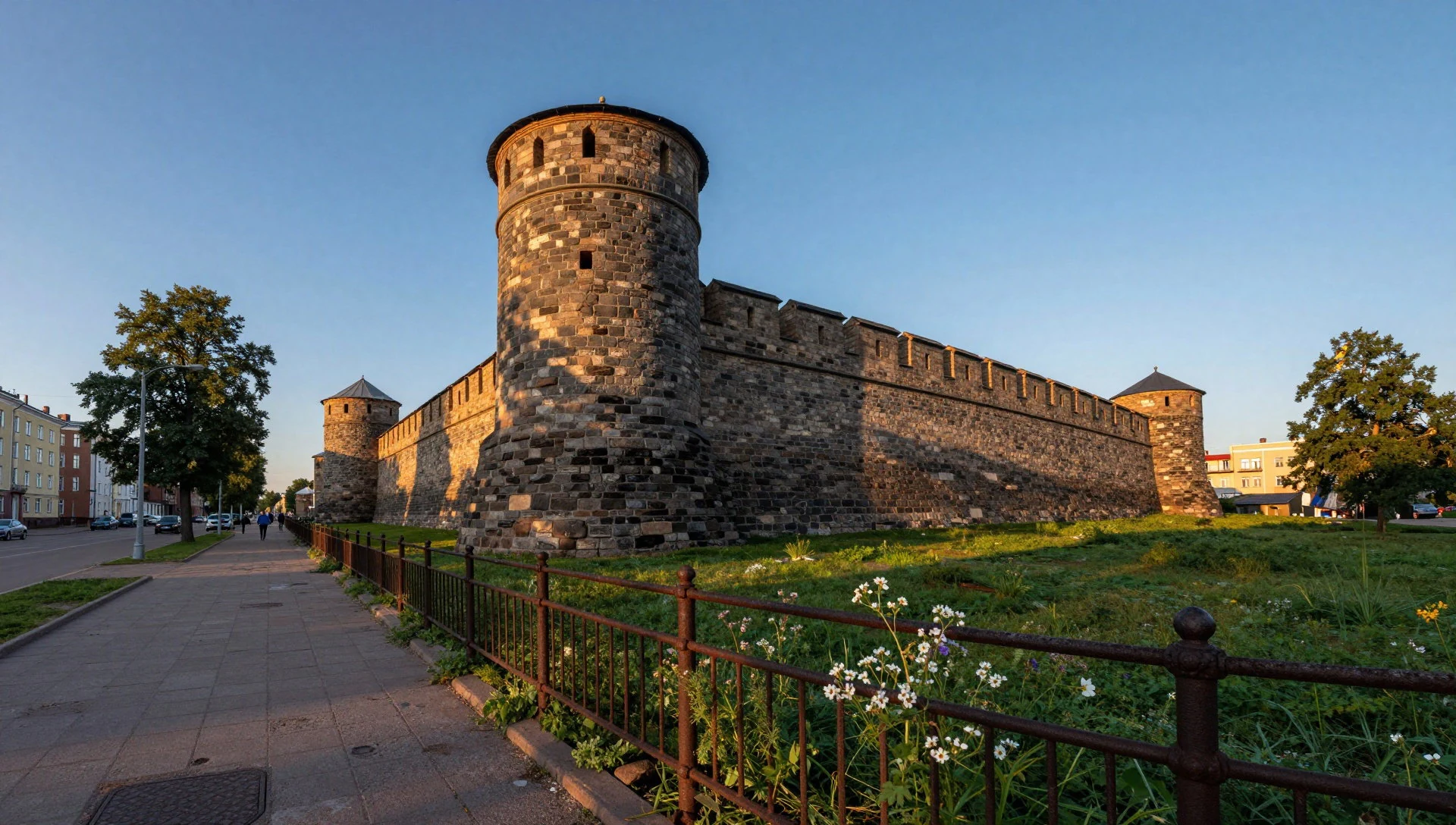
- Gorodskoy Beach — Bay shore
Gorodskoy Beach is a town beach on the bay, within walking distance of the castle island. In summer it is where locals sit by the water; outside the warm months it is simply a quiet shoreline walk with a view across the harbour, useful for a rest between sights.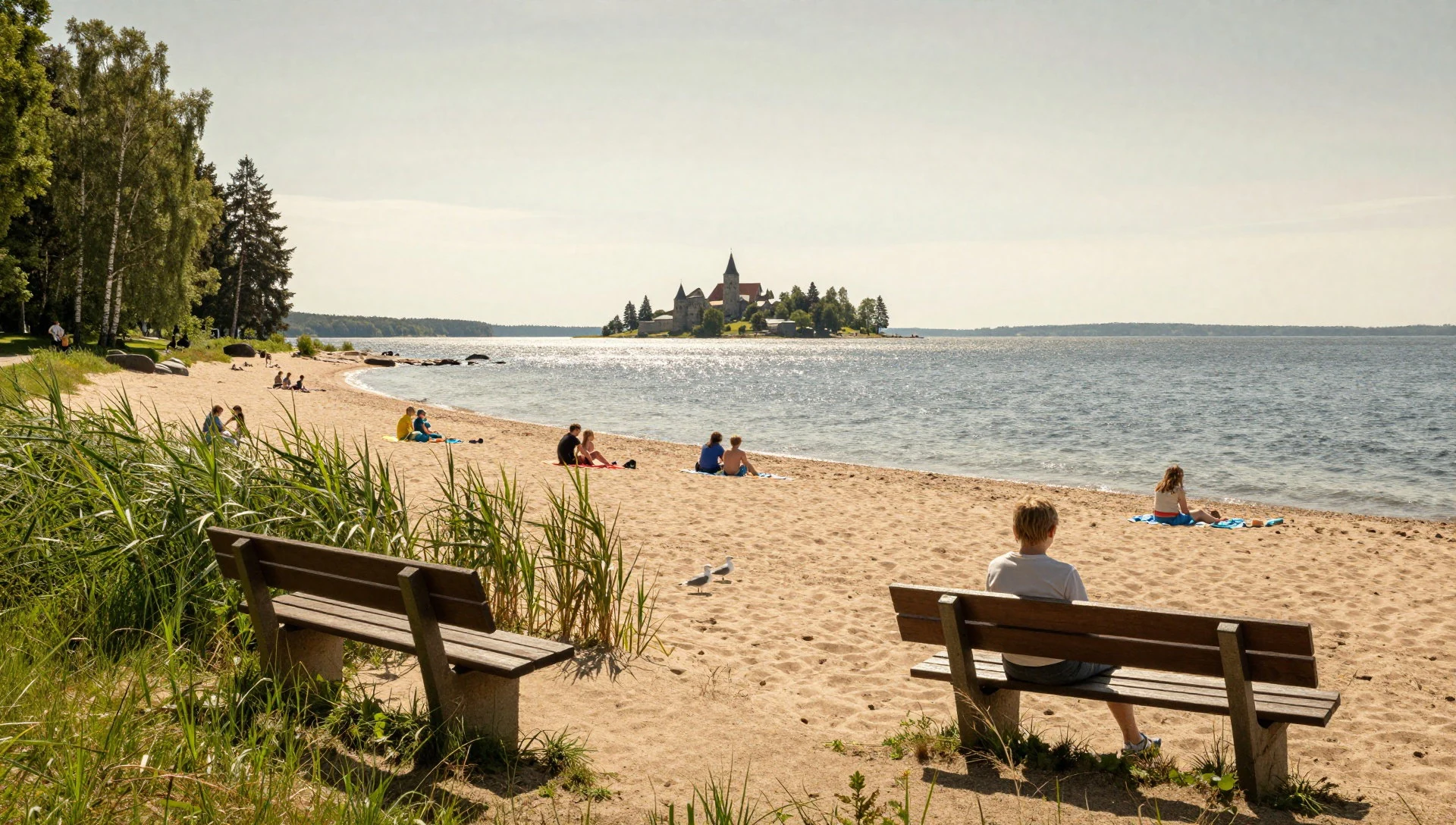
Culture
Vyborg Castle belongs to a town that has had three names and several owners: Viborg to the Swedes, Viipuri to the Finns, Vyborg to the Russians. That layering is the real culture of the place. Before the Second World War the town was a trading port with an international feel, and Finns, Swedes, Germans, Russians, Romani, Tatars and Jews lived side by side. The Stone City still carries that mixed character, from the Lutheran Peter and Paul Cathedral to the blue Transfiguration Cathedral.
The war broke that continuity. The earlier residents were evacuated and the town was resettled by Soviet citizens, so everyday life is now Russian, with Finnish and Swedish traces left in the architecture and the museum displays rather than in the street language.
The castle works as both monument and regional museum, and the town keeps an unhurried feel, with café life along the quay and a weekend crowd of day-trippers. Conversations about borders and the war can be sensitive, so listening comes before opinions.
In either cathedral, keep your voice low, cover your shoulders and ask before photographing worshippers or anyone at a service.
What to wear
Vyborg Castle sits in the old Karelian borderland, where traditional dress was largely homespun: linen shirts and wool skirts or sarafan-style dresses for women, embroidered aprons and headcloths, and wool coats for men. Linen and wool were the staples, with embroidery in red and white or darker tones on collars and cuffs. This costume is worn today mainly at folk festivals, weddings and performances by local ensembles, not on the street.
What people actually wear in Vyborg now is practical and plain: dark jackets, jeans, trainers or boots, and hats and scarves for much of the year. The town is a small, working place rather than a fashion city, and smart casual is about the most that appears in a restaurant. Weekend visitors from St Petersburg dress for walking.
A visitor should dress for wind off the bay and for uneven stone. Layers are sensible in every season, with a windproof jacket for the exposed castle island. Comfortable shoes with a good grip matter on cobbled streets and the castle bridge. Waterproofs help in the wetter months, and warm hats and gloves in winter. In the cathedrals, women may want a scarf for hair or shoulders and men should remove hats; shorts and sleeveless tops are better kept for the beach.
What to eat
- Solyanka — Rustic restaurants in the Stone City
Solyanka is a thick, sour-and-salty soup of mixed meats or fish, pickled cucumber, olives and lemon, usually finished with sour cream. The rustic restaurants in the old Stone City make a good version, and it suits a cold, windy day on the castle island.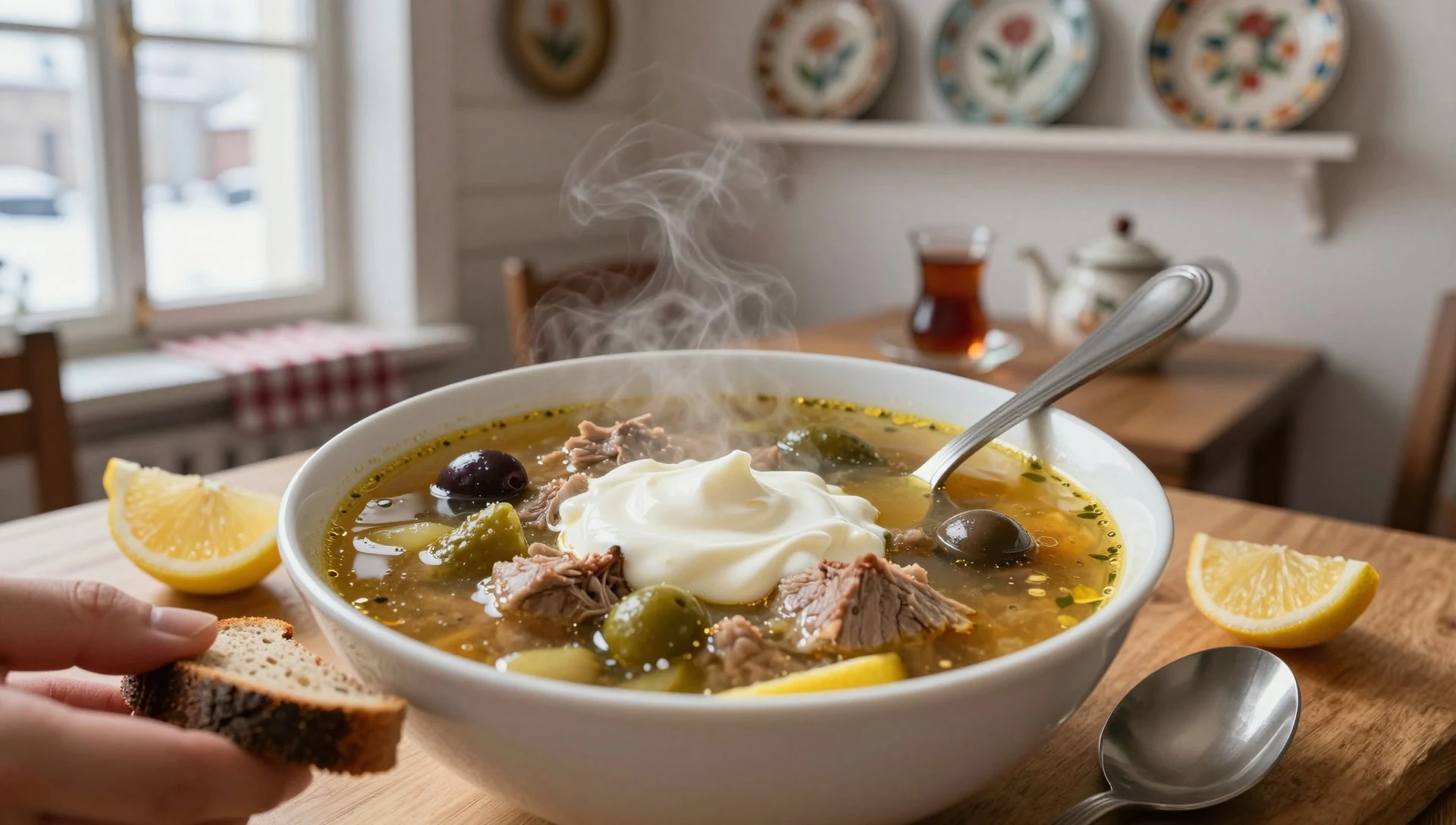
- Chicken Kiev — Traditional Russian restaurants near the old town centre
Chicken Kiev is a breaded chicken fillet wrapped around garlic butter that runs out when the crust is cut. Traditional Russian restaurants near the old town centre serve it with potatoes or buckwheat; it is a safe, filling choice after a morning of walking.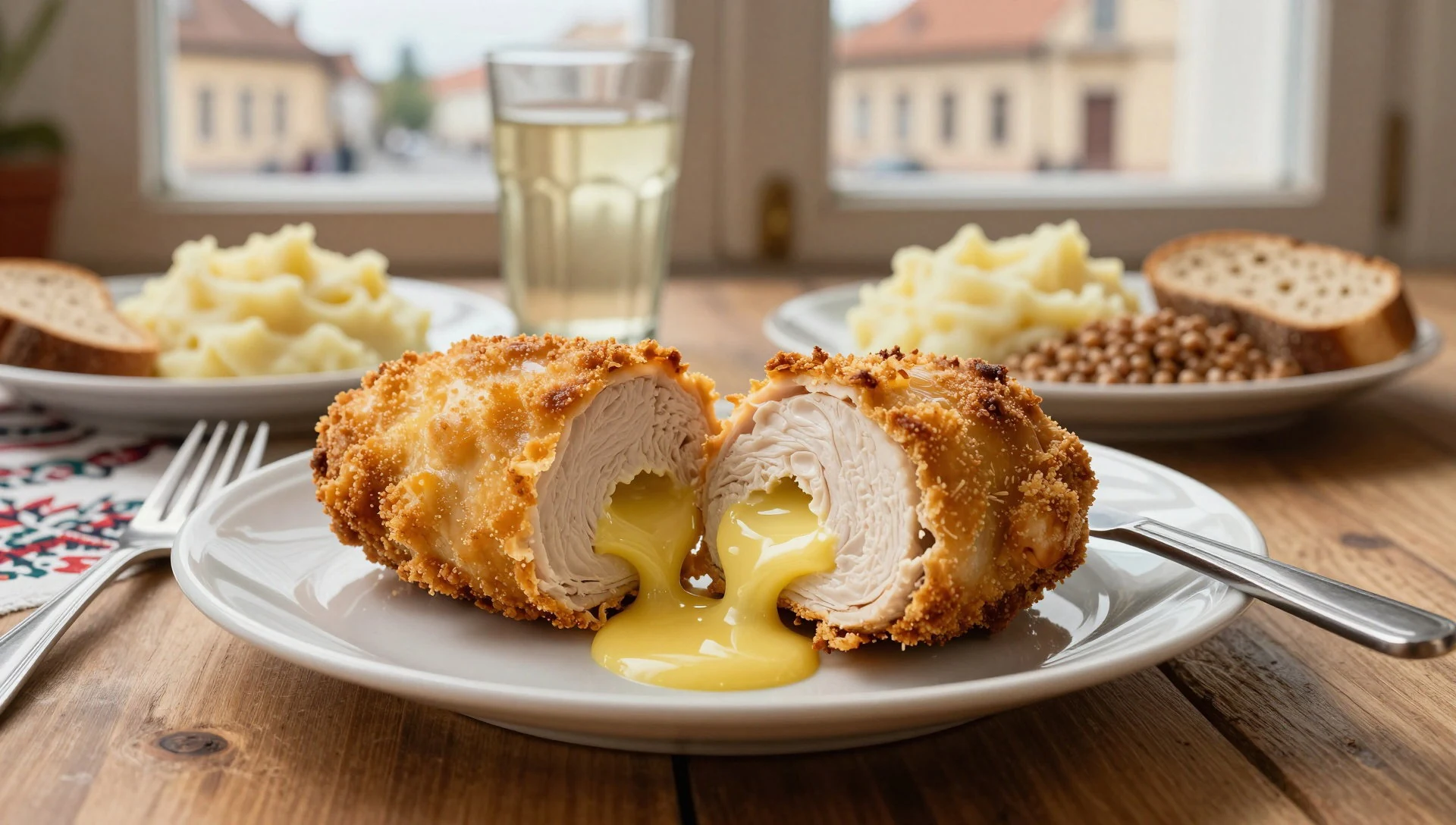
- Pelmeni — Ordinary cafés and canteen-style eateries
Pelmeni are small dumplings of minced meat in thin dough, boiled and served with sour cream, butter or vinegar. They appear on the menus of ordinary cafés and canteen-style eateries across the town, and make a simple, warming lunch between the cathedral and the castle. - Karelian pies — Bakeries and the market hall by the quay
Karelian pies (karjalanpiirakka in Finnish) are thin rye shells pinched around rice porridge or mashed potato, often brushed with butter. They belong to the wider Karelian region that Vyborg once anchored; look in bakeries and around the market hall near the quay. - Ukha — Eateries in the old town and by the harbour
Ukha is a clear fish soup with potatoes, herbs and bay leaf, a staple of Russian home cooking. Menus in the old town and by the harbour often list a version, usually made with white fish; ask what the catch is, as it varies by season.
Plan it
Best time. June to September, when days are long and the walk between the castle island and the old town is pleasant. Winters are cold and dark, and the island is exposed to wind off the bay, though snow can look striking.
How long. 1
Getting there. Fly to Saint Petersburg, then take an express train from Finlyandsky station to Vyborg (a little over an hour; slower suburban elektrichka trains take about twice as long), or a weekend bus excursion from Gostinyy Dvor. From Vyborg station, walk down Leningradskiy Prospekt to the embankment and on to the Castle Bridge. Finland's border with Russia is closed and international trains are suspended, so check current entry rules and the Russian railways' website for timetables.
Budget. mid
Tips
- Check current entry rules, visa requirements and your government's travel advice before booking anything, as conditions have changed.
- Check the museum's official site for opening hours and ticket prices; none are given here.
- Start early from Saint Petersburg to fit the castle and the old town into one day, and buy train tickets at the station windows well before departure to avoid queues.
- Bring a windproof layer and carry some cash as well as a card for small cafés and the market.
Etiquette
- Cover your shoulders and keep quiet inside the cathedrals, and ask before photographing worshippers.
- Follow museum signs about photography and restricted areas in the castle.
- Avoid starting political arguments about the border or the war.
Nearby
Sources
- Wikidata Q2272243 (CC0)
- Wikipedia: Vyborg Castle (rev 1364999829) (CC BY-SA 4.0)
- Wikivoyage: Vyborg (rev 5425520) (CC BY-SA 4.0)
- Photo: Vyborg Castle views, A.Savin (CC BY-SA 2.0)
- Photo: Vyborg Castle, Ludvig14 (CC BY-SA 4.0)
- Photo: Karl Knutson Bonde Leaving Vyborg Castle for the Royal Election in Stockholm, Severin Falkman (Public domain)
- Photo: Vyborg Castle views, A.Savin (CC BY-SA 2.5)
- Photo: The castle-fortress, GAlexandrova (CC BY-SA 4.0)
- Photo: Vyborg Castle, 1293: Castle Island, Александровы АГ (CC BY-SA 4.0)
- Photo: Vyborg Castle, 1293: Castle Island, Александровы АГ (CC BY-SA 4.0)
- Photo: Выборгский замок-крепость, Александровы АГ (CC BY-SA 4.0)


