Vlorë
Vlorë, Albania
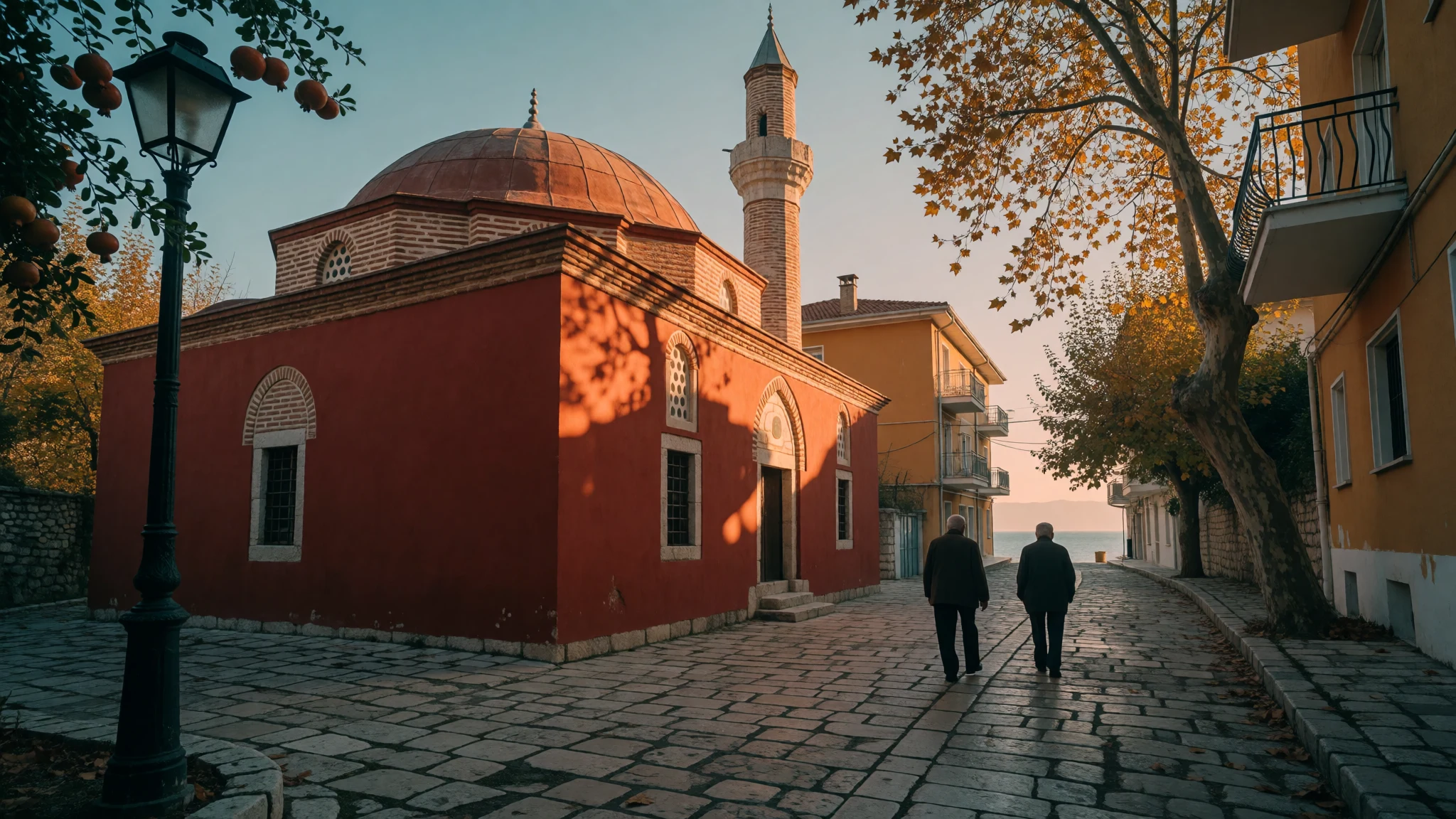
Vlorë is a working Albanian port on a broad bay, where Ottoman mosques, independence history and the start of the riviera meet.
The place
Vlorë sits at the head of a wide bay in south-western Albania, at the point where the Adriatic narrows towards the Ionian Sea and the foothills of the Ceraunian Mountains run almost down to the waterfront. It is a port city of about 66,000 people and the seat of its county, and it behaves like a real town first and a resort second. The climate is Mediterranean, shaped by the mountains behind and the sea in front, so summers are long, dry and hot while winters are mild and wetter.
The centre is flat and easy to cover on foot: a seafront promenade, shopping streets, a few Ottoman-era and twentieth-century landmarks, and a marina that fills with families on summer evenings. Older layers lie underneath. Remains from late antiquity turn up in the middle of town, and a partly submerged ancient port lies a short way north-west at Triport.
Beyond the built-up edge, the landscape does much of the talking. Pine-covered slopes rise behind the apartment blocks, a castle hill stands to the south-east, and the road south climbs over the Llogara pass towards the beaches of the Albanian riviera. Vlorë is therefore both a destination and a hinge, a place people stop for a day or two before heading on to the coast or the hills.
Expect crowded pavements and busy cafés in July and August, calmer streets in the shoulder months, and the familiar Albanian mix of new construction, cranes and old houses. Most local people speak the Lab dialect of southern Albanian, and the city feels closely tied to the wider region of Labëria around it.
Its story
Vlorë's story begins well before the modern town. Illyrian communities lived around the bay long before cities existed here, and Greek colonists later settled the coast. At Triport, north-west of today's centre, a large fortified harbour town thrived for centuries and is now partly under water. The name Aulon, from which Vlorë takes its own, shows up in written sources from the Roman period, and archaeologists believe life gradually shifted from Triport to the site of the present city.
After Rome came a long sequence of rulers: Byzantium, a brief spell of Slavic control, Byzantium again, then the Despotate of Epirus and a local principality known as Valona. Ottoman rule followed and shaped the town's mosques and streets. A short Venetian interlude near the end of the seventeenth century was followed by the return of the Ottomans, who held Vlorë until the early twentieth century.
That is the moment Vlorë is remembered for. Albania's founding figures gathered here and signed the declaration of independence in a nineteenth-century building, now a museum. The decades after were turbulent: Italian forces occupied the area towards the end of the First World War, Albania became a republic and then a kingdom, and after the Second World War it entered a long socialist period that ended in the early 1990s. Today Vlorë is a market-minded port and a base for the southern coast.
What to see
- Museum of Independence — Southern city centre
Housed in a nineteenth-century building, this museum marks the place where Albania's founders signed the declaration of independence. It is small and best treated as a short, focused stop. Check the municipality's official site for opening arrangements, and read the labels slowly, because the political story behind the room is the real draw.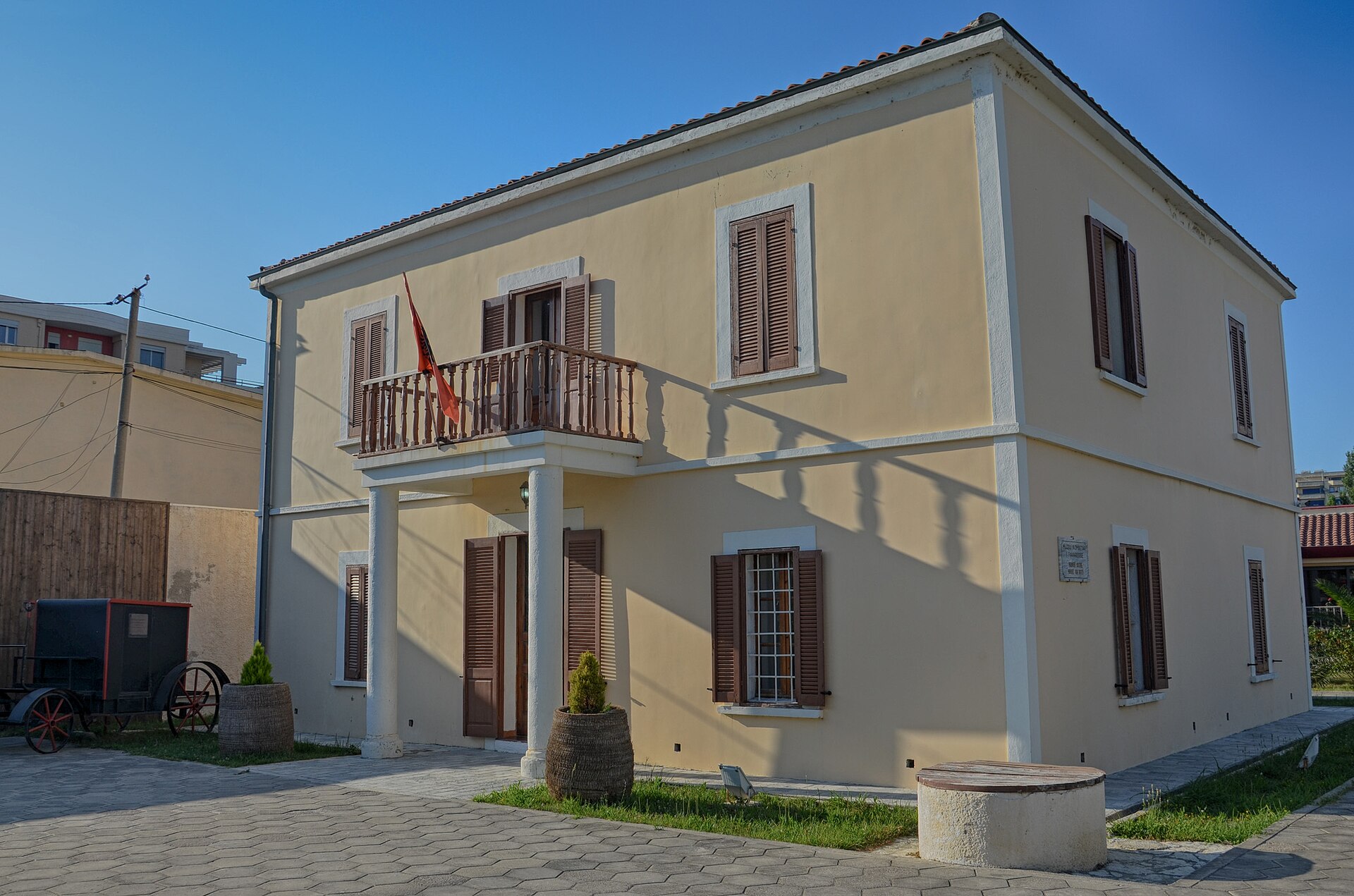
- Flag Square and Independence Monument — Central Vlorë
A large socialist-realist monument commemorates independence from the Ottoman Empire, set in a broad civic square. The sculpture is heavy and theatrical, and worth seeing for its style as much as its message. Late afternoon light is kind, and the square is a useful orientation point for the rest of the centre. - Muradie Mosque — Old centre
An Ottoman-era mosque in the old part of the city, with a restrained stone exterior and a quiet courtyard feel despite the traffic nearby. It is an active place of worship, so visits fit around prayer. Admire it from outside if the doors are closed, and ask politely before stepping in.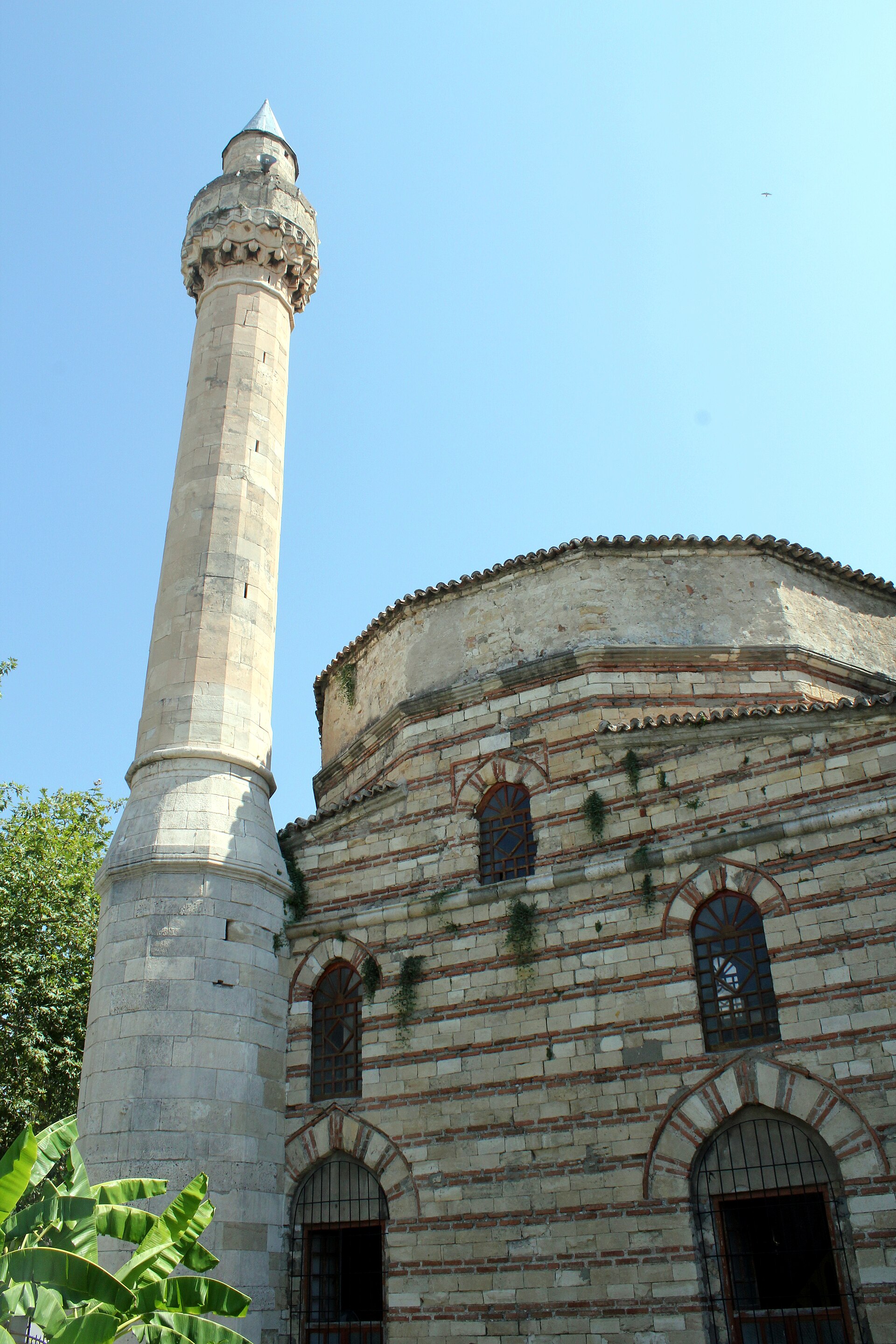
- Kanina Castle — Kanina, south-east of the centre
A fortress on a hill above the city, with walls rebuilt in Byzantine times and views over the bay and the plain. The climb is steady and exposed, so go early or late in summer and carry water. Sturdy shoes help on the uneven stones, and the small village below has simple places for a coffee. - Monastery of Saint Mary — Northern lagoon area
A small monastery on an island reached by a long wooden walkway across shallow water, north of the city. The setting is the attraction: reeds, birds and a flat horizon rather than grand architecture. Allow time for the drive and the walk, and dress modestly if you plan to go inside.
Culture
Vlorë belongs to Labëria, the southern coastal and mountain region of Albania with its own dialect, songs and sense of identity. Labëria is known for polyphonic singing, in which several voices hold separate lines at once, and it is still heard at weddings, festivals and village gatherings in the hills around the city. In town itself, the culture is more everyday: long coffees, evening walks along the seafront, and noisy family tables.
The city is also tied to the founding story of modern Albania. The independence monument, the museum in the former assembly building and the flags that appear on national days all point to a place that sees itself as the country's starting point. Locals are proud of this, and a visitor who shows interest in the history is usually met with warmth and a few opinions.
Religion is mixed and relaxed. Mosques such as Muradie stand beside Christian churches and monasteries, and most people practise lightly. Hospitality matters: being offered coffee, raki or a plate of fruit is common, and refusing everything outright can feel curt, so accept a little and say thanks. Evenings run late, especially in summer, when the promenade and marina are the social centre of the city.
At mosques and monasteries, dress modestly with shoulders and knees covered, remove your shoes where others have done so, and ask before photographing anyone at prayer.
What to wear
Traditional dress in Vlorë and wider Labëria draws on the southern Albanian repertoire: wool and felt for men, including the white felt cap known as the qeleshe and, in some areas, the pleated fustanella, and embroidered waistcoats, aprons and sashes for women, often in wool, linen or cotton with metallic thread. These costumes now appear mainly at folk festivals, weddings, dance and singing groups, and on national days, rather than in daily life.
Everyday clothing in the city is modern and fairly smart. Young people dress much as they would in Italy or Greece, with fitted jeans, trainers and fashionable sunglasses, and people tend to dress up for the evening walk along the seafront. Older residents favour practical, conservative layers, and in summer linen and light cotton are common. Beachwear stays at the beach.
Visitors should plan for heat and sun in summer: light, breathable cotton or linen, a hat, sunglasses and sun cream. Bring a light jacket for cooler evenings and a waterproof layer for winter and autumn rain. Comfortable closed shoes are better than flip-flops for the castle hill and uneven pavements, and sandals with grip suit the wooden walkway to the monastery. For mosques and monasteries, carry a scarf or shawl to cover shoulders, and wear trousers or a long skirt that covers the knees. Smart casual is fine in restaurants.
What to eat
- Grilled fish and seafood — Marina and seafront restaurants, and beach restaurants a short drive out of town
The bay supplies much of the menu, usually grilled whole with olive oil, lemon and salt, or served as a mixed seafood plate. Prices vary with the catch, so ask before ordering by weight. Evenings are lively and pleasantly breezy in summer. - Meat soup — Small traditional taverns in the central streets
A hearty, inexpensive soup of slow-cooked meat and broth, a staple of traditional Albanian eateries. It makes a filling lunch and suits cooler months especially well. Bread arrives alongside, and portions are generous. - Byrek — Bakeries and byrek counters around the centre, particularly in the morning
Flaky pastry filled with cheese, spinach or minced meat, baked in large trays and sold by the slice. It is the standard quick breakfast or snack, and is best eaten warm with plain yoghurt or a glass of ayran. - Sufllaqe — Street counters and small grill places near the port area
Grilled meat wrapped in flatbread with salad, sauce and chips, a cheap street staple similar to a gyros wrap. It is quick, filling and a reliable late-evening option after a long day on the coast. - Tavë kosi — Traditional restaurants serving home-style Albanian cooking
Baked lamb or chicken beneath a custard-like layer of yoghurt and egg, often counted among Albania's national dishes. It is rich, gently tangy and served bubbling from the oven. Look for it on traditional menus.
Plan it
Best time. May–June and September–October. The Mediterranean climate gives warm sea and long days in late spring and early autumn without the full heat and crowds of July and August; winters are mild but wetter.
How long. 2–3
Getting there. Fly into Tirana International Airport, then take a minibus or drive south to Vlorë; check the operator's website for current timetables and booking. Corfu with a ferry from Sarandë is an alternative from the south. By road from Tirana, the route runs via Durrës, Fier and Lushnje.
Budget. mid
Tips
- Book accommodation early for July and August, when the seafront fills up
- Climb Kanina Castle early in the morning or late in the afternoon to avoid the heat
- Carry some cash for small eateries, taxis and village cafés, as not every place takes cards
- Bring water and sun protection for the coast and castle hill
- Check the official city website, vlora.gov.al, for museum opening arrangements before you go
Etiquette
- Dress modestly at mosques and monasteries and remove shoes where others do
- Ask before photographing people, especially worshippers
- Accept a small offering of coffee or a drink as a courtesy
Nearby
Sources
- Wikidata Q159610 (CC0)
- Wikipedia: Vlorë (rev 1384477511) (CC BY-SA 4.0)
- Wikivoyage: Vlorë (rev 5421591) (CC BY-SA 4.0)
- Old Town Vlorë, Albania, December 2022 - Plaza and Christmas Tree, Sharon Hahn Darlin (CC BY 2.5)
- The City of Vlora at Night (Albania), Vlorari (CC BY-SA 4.0)
- Old town of Vlora: the Justin Godart street, Albinfo (CC BY 4.0)
- Muradie Mosque, Arianit (CC BY-SA 4.0)
- The Independence Museum in Vlorë, Pasztilla aka Attila Terbócs (CC BY-SA 4.0)
- Panoramic photo of Lungomare area in Vlorë, Leeturtle (CC BY-SA 4.0)
- Albanian riviera, Bay of Vlore, Landsat 8 (Public domain)
- Map of the Coast of Southern Albania (CC BY 4.0)


