Vladivostok
Vladivostok, Russia
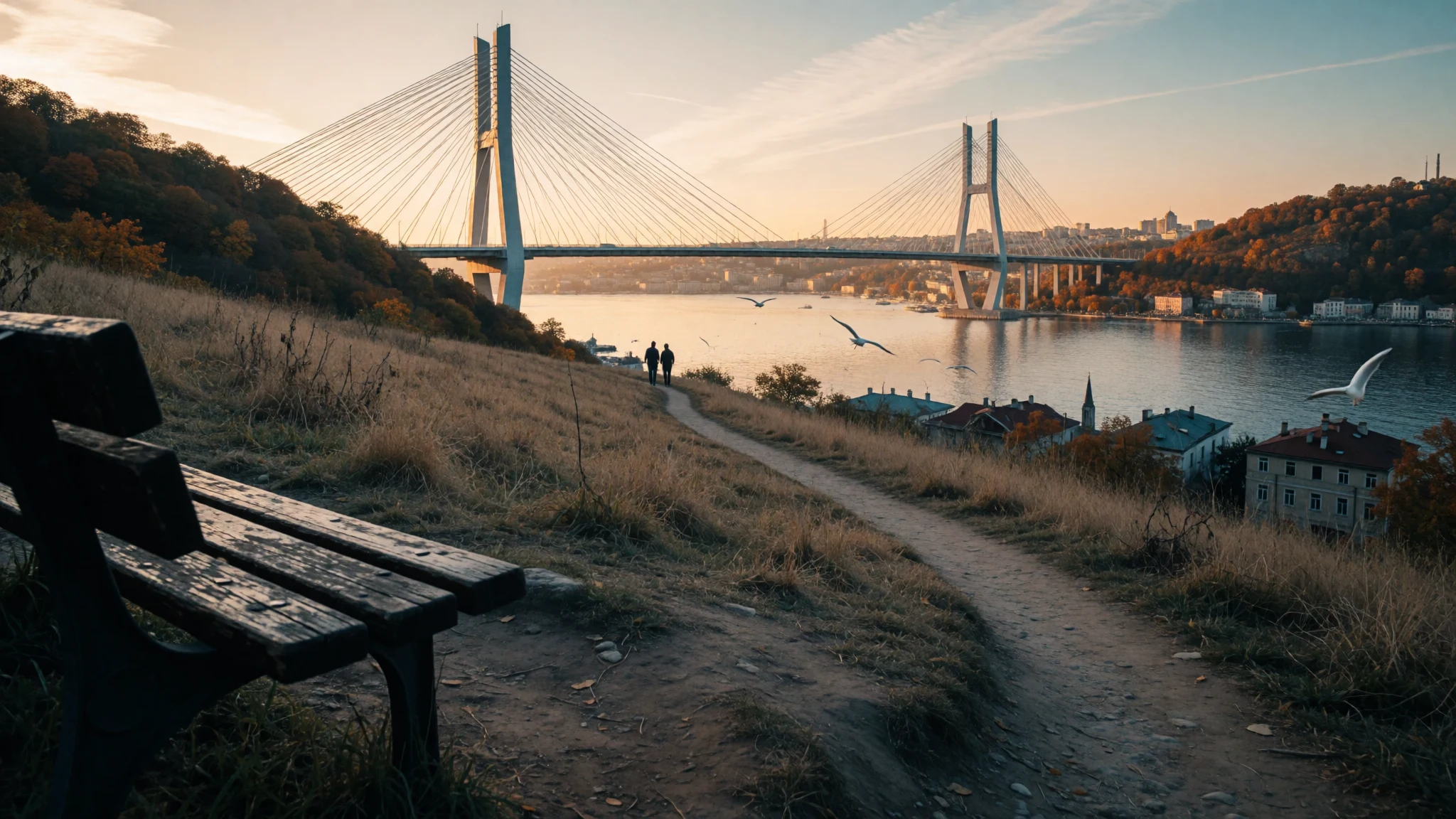
A steep, salt-aired naval port at the end of the Trans-Siberian line, where Russia, Korea and China meet on the Pacific.
The place
Vladivostok is a Pacific port in Russia's far south-east, home to about 590,000 people and built on hills that fold around the Golden Horn Bay. The waterfront sits only 12 m above sea level, yet the streets climb steeply behind it, so most views end in water: warships, cargo cranes, ferries and a cable-stayed bridge across the bay. The city is the administrative centre of Primorsky Krai and the seat of the Far Eastern Federal District, so government offices, the navy, a large university and the shipping trade all cluster here. In feel, and in distance, it is closer to Seoul, Beijing and Tokyo than to Moscow, and both the Chinese and North Korean borders are within a day's drive. Russian signs share the streets with Korean and Chinese-run shops and eateries. The old centre is compact enough to walk: the railway station at the end of the Trans-Siberian line and the ferry port beside it sit close together, and the main square and harbour promenade are a short walk away. Across the water on Russky Island lies a modern university campus. The climate follows the monsoon. Summers are warm, humid and rainy, peaking in July and August; autumn is usually clearer and drier; winters are long, cold and windy off the sea. Pavements are steep and kerbs uneven, so the hills tire the legs. Foreign visitors need a Russian visa or other permission to enter, and the rules should be checked well before booking.
Its story
Vladivostok dates its founding to 1860, when Russia set up a small military post on a shore that had belonged to Qing China only a short time before. The land changed hands through the treaties of Aigun, Tientsin and Peking, agreed while China was occupied with the Taiping Rebellion. Some Chinese historians point to an earlier settlement here, called Yongmingcheng, but the modern city begins with the Russians. Russia had been searching for a Pacific stronghold for decades. Okhotsk, Ayan, Petropavlovsk-Kamchatsky and Nikolaevsk-on-Amur had each served for a time and each fell short, because none combined a sheltered harbour with access to busy sea routes. The Golden Horn Bay did. The name, built from Russian words meaning to rule the east, appeared in newspapers in 1859 for the bay itself and was applied to the settlement afterwards. The navy later moved its main Pacific base here, and merchants, labourers and clerks followed from many places. Large Asian communities grew up alongside the Russian one, and the port became ethnically mixed well before the First World War. The railway then tied the harbour to Moscow and made the city the eastern end of a continent-wide line. In the Soviet period Vladivostok was a closed naval base, kept off limits to foreigners for decades. Since reopening it has recast itself as Russia's gateway to Asia, with new bridges, a university campus on the island and a steady stream of Asian trade.
What to see
- Ploschad Bortsov Revolutsy — City centre
Ploschad Bortsov Revolutsy is the central square of Vladivostok and a fair place to sit and watch local life. Two large statues form a memorial to those who fought for Soviet power in the Far East. Benches and cafés surround it, and the harbour is a short walk downhill.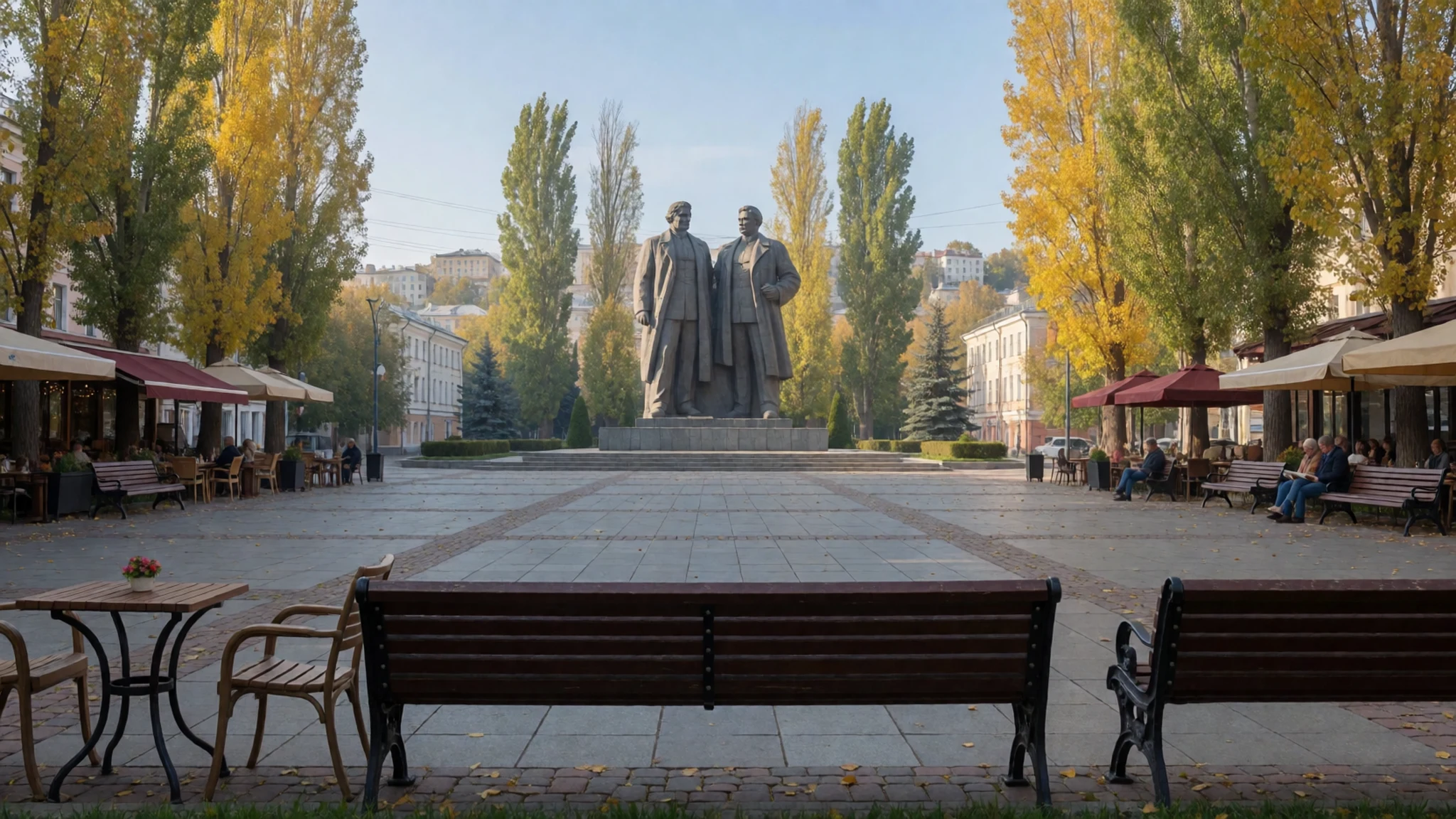
- Sportivnaya Harbour — Waterfront, below the main square
Sportivnaya Harbour, a short walk from the main square, is the city's yacht marina and summer promenade. There is a small beach, and although swimming is officially banned, locals paddle in anyway between the moored boats. Warm evenings are the liveliest time, with families and joggers along the front.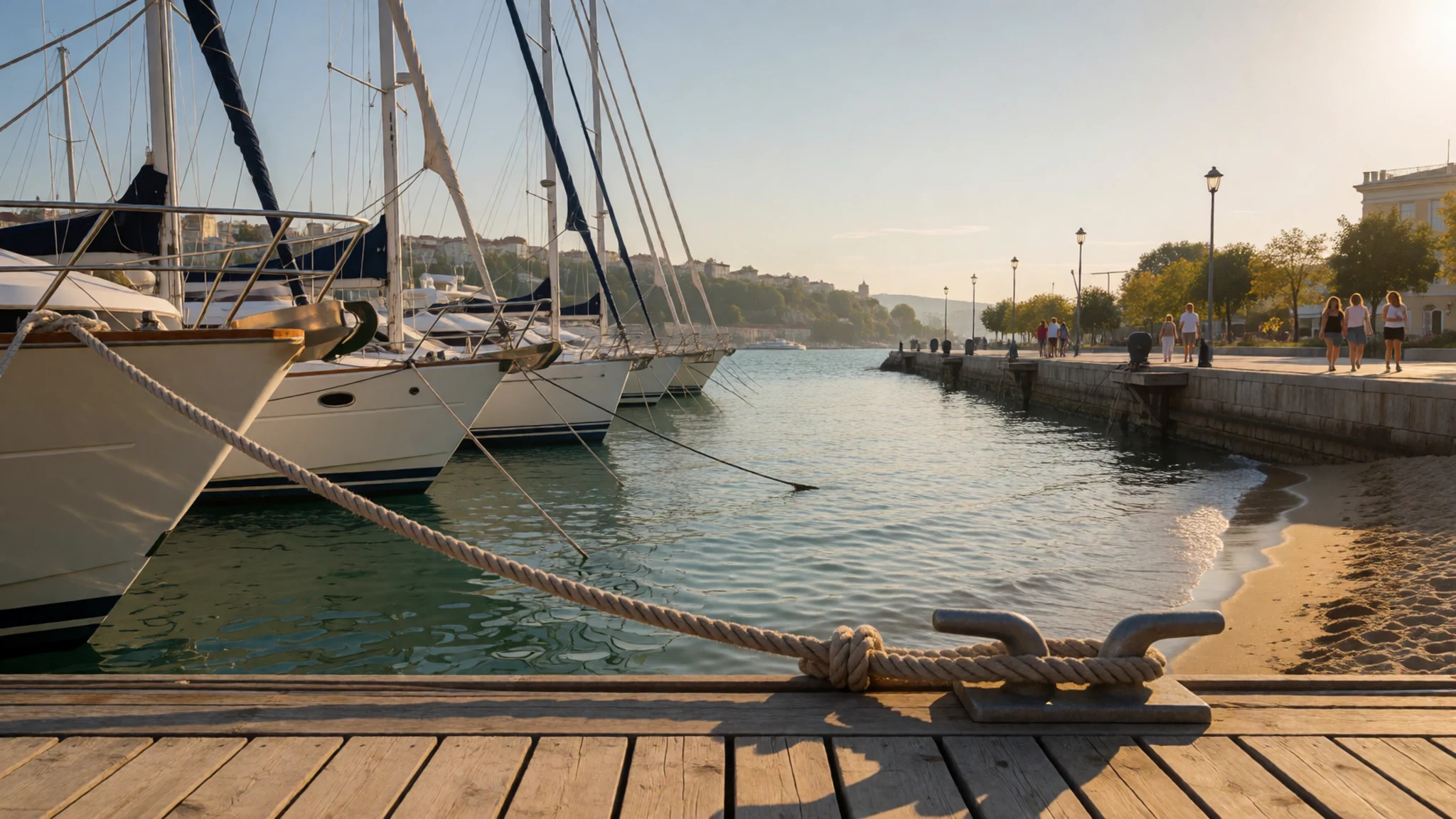
- Arsenyev Regional History Museum — City centre
The Arsenyev Regional History Museum in Vladivostok is named for an explorer of the region and leans heavily on natural history: local wildlife and the wild country of the Far East. A few Soviet-era curiosities and a display on Yul Brynner, the film star born in the city, add variety. The main building looks good lit at night.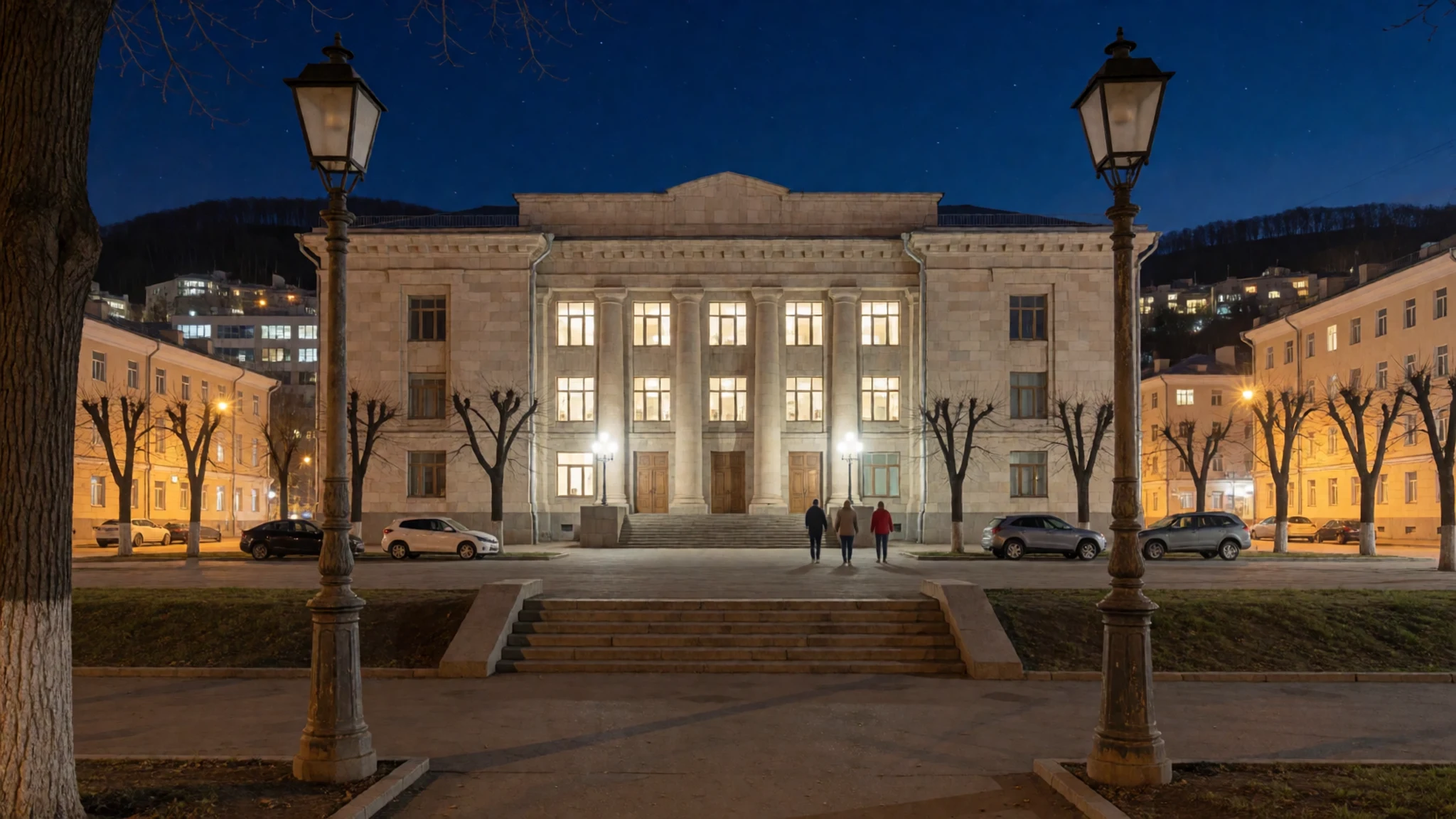
- Museum Vladivostok Fortress — Coastal heights above the sea
Museum Vladivostok Fortress stands in old coastal defences above the water, part of a ring of works that once protected the naval port from attack by sea. Walking the ramparts gives a feel for the city's military past, along with wide views over the strait. Wear sturdy shoes, as the ground is uneven.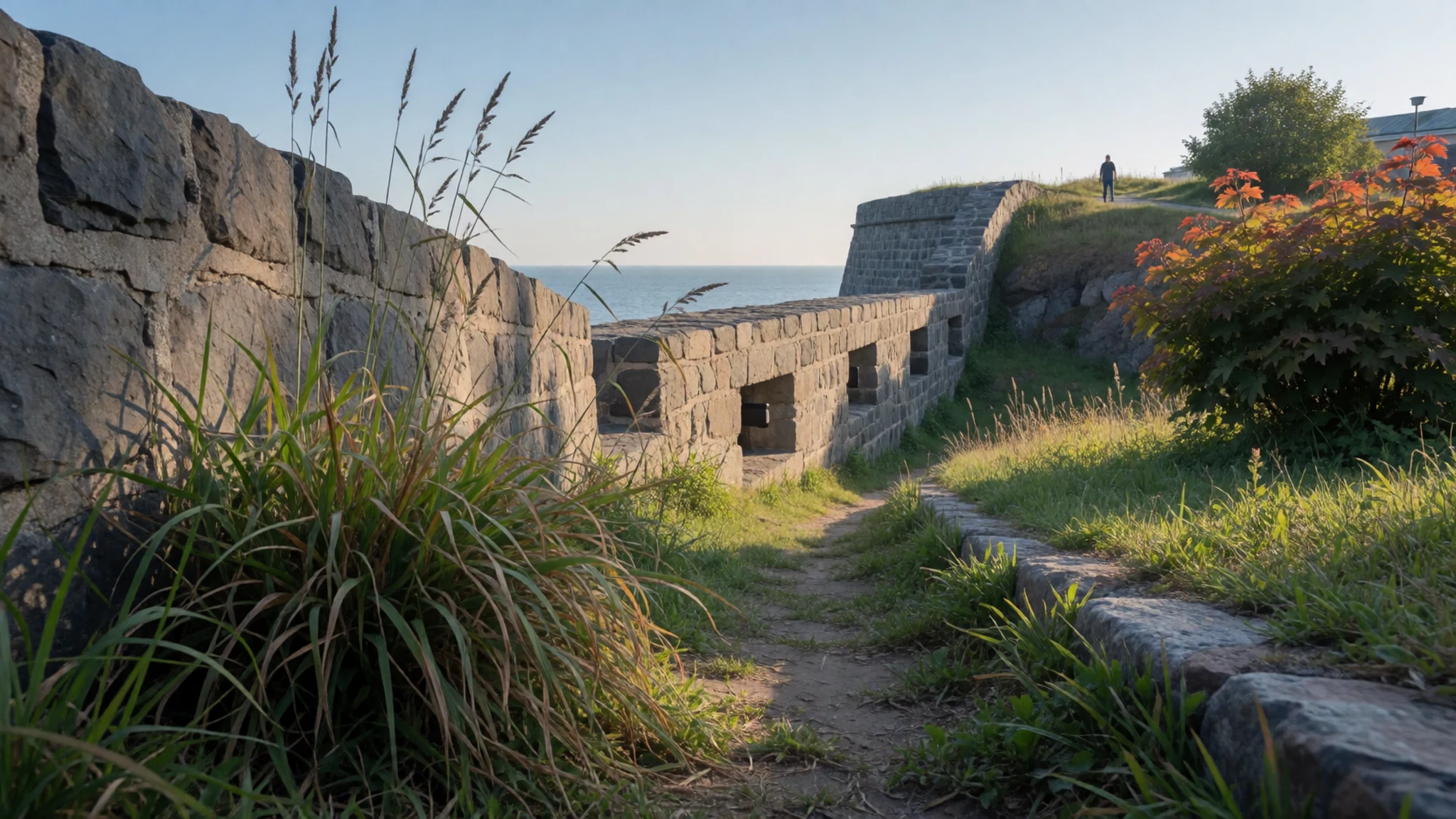
- Golden Bridge and the Golden Horn Bay — Alekseevskaya hill and the bay shore
The Golden Bridge spans the Golden Horn Bay and is best seen from the hills above it, such as Alekseevskaya hill, where the bay, the bridge, ships and rooftops fall into one view. Late afternoon light is kind, and autumn air is usually clearer than the humid, rainy summer.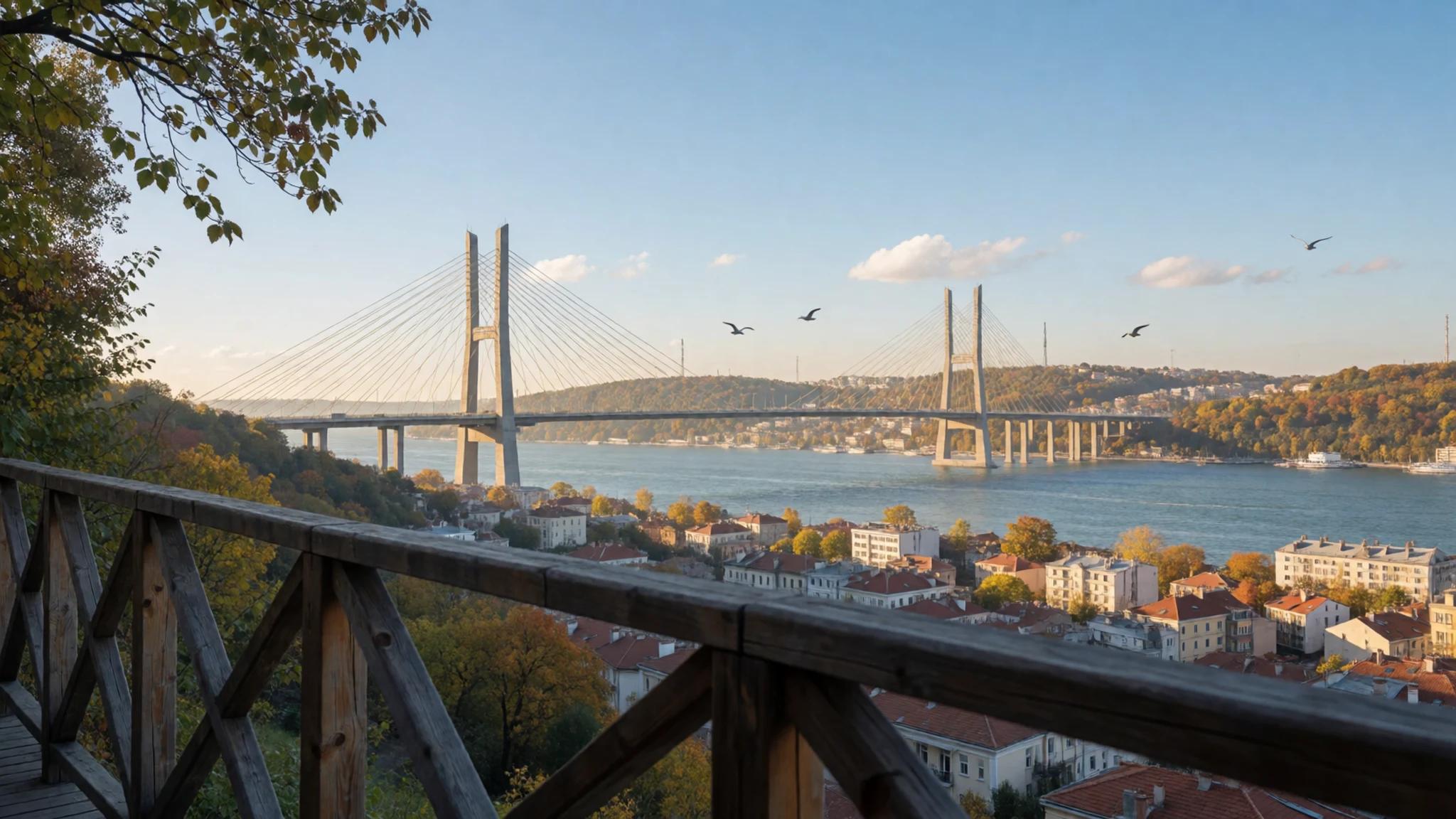
- Vladivostok railway station — Station district, beside the ferry port
Vladivostok railway station is the eastern end of the Trans-Siberian main line, where many long journeys across Russia finish. The building is worth a look even for those not travelling, and the ferry port stands right beside it, which shows how rail and sea meet in this city.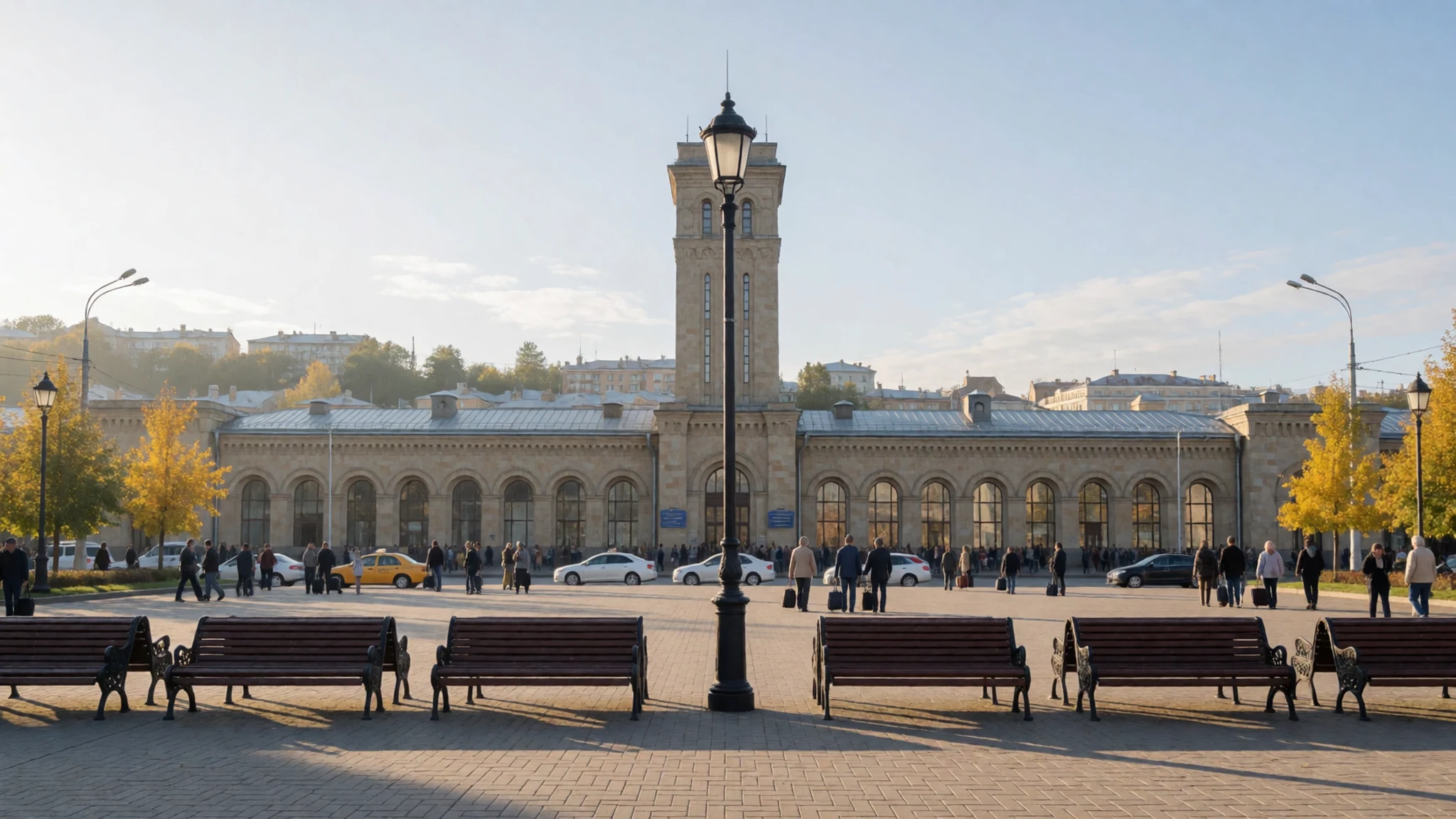
Culture
Vladivostok's culture comes from its position as a naval port at the edge of Russia, where Russian, Korean, Chinese and Soviet-era habits sit side by side. The art scene grew from the middle of the twentieth century, when the House of Artists gave local painters and sculptors exhibition halls and a state art gallery for the region was set up. Later came contemporary spaces, among them Artetage, the Arka gallery, which has shown work at international fairs, and the non-commercial Roytau. Beyond the galleries, the city's character shows in its Soviet memorials, its naval heritage and its cafés, where coffee culture and Korean and Japanese food have taken firm hold. Students from the Far Eastern Federal University add a young crowd to the evenings. People can seem reserved at first, in the Russian manner, but are generally helpful when approached, and a few words of Russian are warmly received. The sea shapes daily life: weekends bring people out to the promenades, beaches and islands, and shipping and fishing remain central to local livelihoods. Take care when photographing warships, naval installations or uniformed personnel, and keep your voice low and stay off the statues at war memorials.
What to wear
Vladivostok's traditional dress draws on several traditions. Russian folk costume includes the sarafan, a sleeveless dress worn over a linen blouse, the kokoshnik headdress and wool shawls printed with flowers; today these appear mostly at folk festivals and on stage. Winter dress was always practical: felt boots called valenki and fur hats with ear flaps. The region's Indigenous peoples, such as the Nanai, historically made garments from fish skin and decorated them with swirling embroidery, and Korean residents may wear the hanbok, a short jacket and wrapped skirt in silk or cotton, on holidays. Everyday dress in the city is modern and fairly smart, influenced by Seoul and Tokyo as much as by Moscow: neat coats, trainers, down jackets in winter and a fondness for outdoor labels. Young people dress casually by day and tend to dress up a little for evenings out. Visitors should pack by season. Winter needs a windproof down coat, thermal layers, a hat, gloves and boots with grip for ice. Summer needs light, breathable layers and a rain jacket for monsoon showers. Shoes with good soles matter all year because of the hills and uneven pavements. Orthodox churches expect covered shoulders and knees, and a scarf over the hair is appreciated from women, though visitors are not pressed to wear one.
What to eat
- Kamchatka crab — Seafood restaurants and fish stalls around the harbour
Crab legs are the Far East's showpiece: sweet, firm meat served boiled with butter or tossed into salads. Look for them at seafood restaurants and fish stalls near the harbour, and ask how the price is calculated, as crab is usually sold by weight.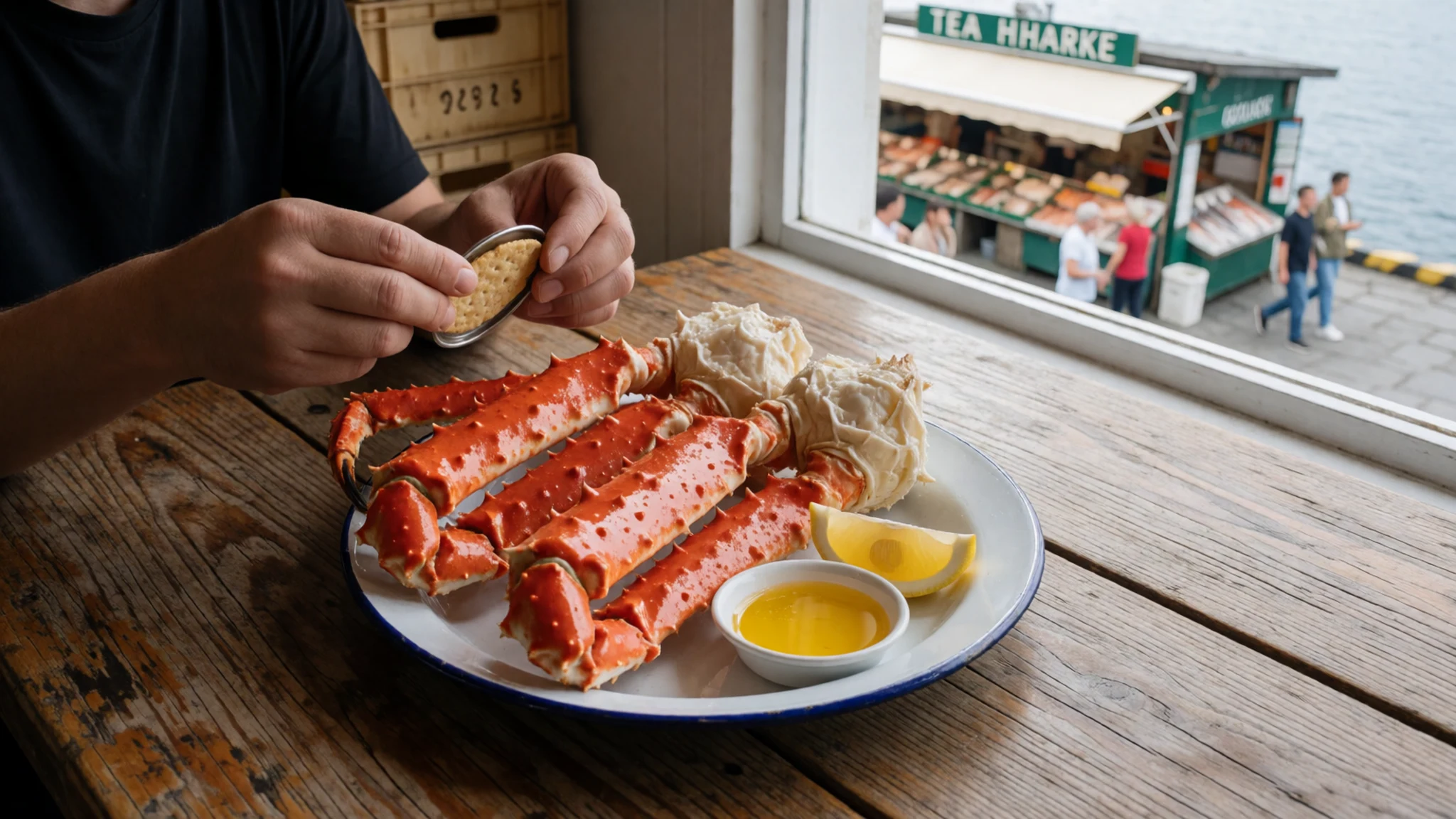
- Pelmeni — Self-service canteens (stolovaya) and cafés in the centre
Small meat dumplings, boiled and served with sour cream, butter or vinegar. They are a cheap, filling comfort dish in cold weather and easy to find in canteens and cafés across the centre, often alongside soups and salads.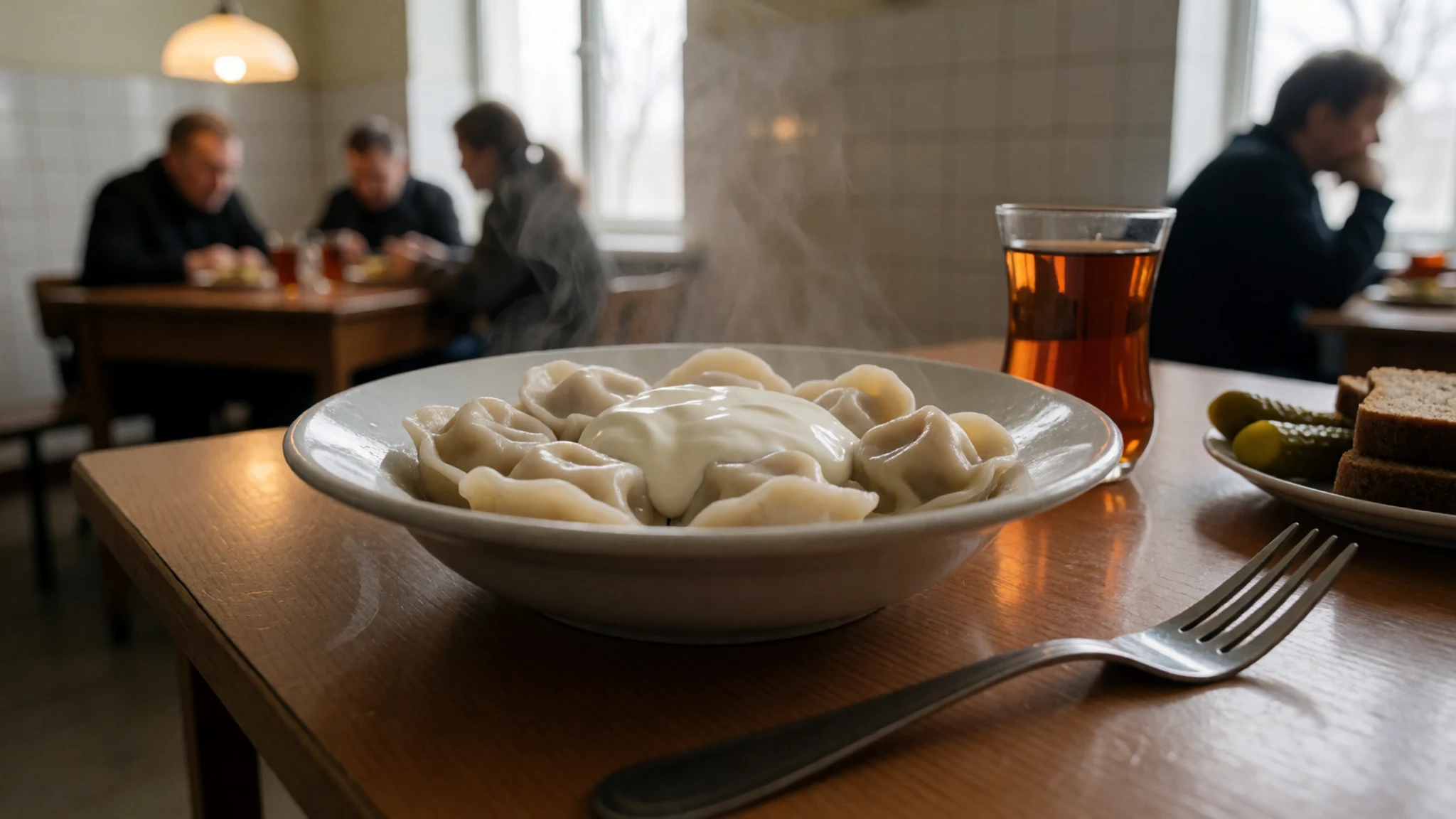
- Bibimbap — Korean and pan-Asian restaurants in the centre
A Korean rice bowl topped with vegetables, egg and chilli paste, mixed at the table. Korean cooking is part of the city's food life, and pan-Asian restaurants near the centre serve it alongside soju and other Korean dishes. - Sushi and rolls — Pan-Asian restaurants and sushi counters across the centre
Japanese-style sushi and rolls are everywhere, using fish from Pacific waters, a reminder of the city's place on the Sea of Japan. Quality varies, so busy places with fast turnover are the safer choice. - Red caviar on blini — Market stalls and traditional Russian restaurants
Salmon roe from the Pacific, spooned onto thin pancakes or buttered bread. It is salty and bursts in the mouth. Buy from reputable market sellers or restaurants, and check that jars are sealed and kept chilled.
Plan it
Best time. September–October for clearer days and autumn colour, drier than midsummer; May for fresh spring weather. June to August is warm and humid, with July and August the hottest and wettest months. Winter is long, cold and windy, and suits only those who want snow and few other visitors.
How long. 2–3
Getting there. Fly to Vladivostok's airport, then take the rail link or a taxi into the centre. The Trans-Siberian main line runs from Moscow, about six days of travel, and ends at the central station; tickets sell out, so book early through the operator. Ferry routes to Japan and Korea run today and arrive at the port beside the station, so check current service.
Budget. mid
Tips
- Check Russian visa and entry rules well before booking, as they change.
- Book Trans-Siberian tickets well ahead; they sell out.
- Foreign bank cards often do not work in Russia, so check payment options and carry some cash.
- Bring a rain jacket in summer for showers, and expect steep walks.
- Do hill viewpoints early and keep the harbour promenade for the evening.
Etiquette
- Take care when photographing warships, military sites or uniformed personnel.
- Cover shoulders and knees in Orthodox churches and remove hats indoors.
- Remove outdoor shoes when invited into a private home.
Nearby
Sources
- Wikidata Q959 (CC0)
- Wikipedia: Vladivostok (rev 1384461248) (CC BY-SA 4.0)
- Wikivoyage: Vladivostok (rev 5421586) (CC BY-SA 4.0)
- Photo: Владивосток: вход в бухту Золотой Рог (Vyacheslav Bukharov) (CC BY-SA 4.0)
- Photo: Золотой мост во Владивостоке (Vyacheslav Bukharov) (CC BY-SA 4.0)
- Photo: Vladivostok. GUM Department Store (Alexxx1979) (CC BY-SA 4.0)
- Photo: Главное здание Музея Арсеньева (Slavagallery) (CC BY-SA 4.0)
- Photo: Кампус Дальневосточного федерального университета (Vyacheslav Bukharov, cropped by Siktira) (CC BY 4.0)
- Photo: Вокзал железнодорожной станции Владивосток-Город (Vyacheslav Bukharov) (CC BY-SA 4.0)
- Photo: Map of Vladivostok area, USSR (Army Map Service) (Public domain)
- Photo: Tactical Pilotage Chart Series (Defense Mapping Agency) (Public domain)


