Victoria
Victoria, Canada
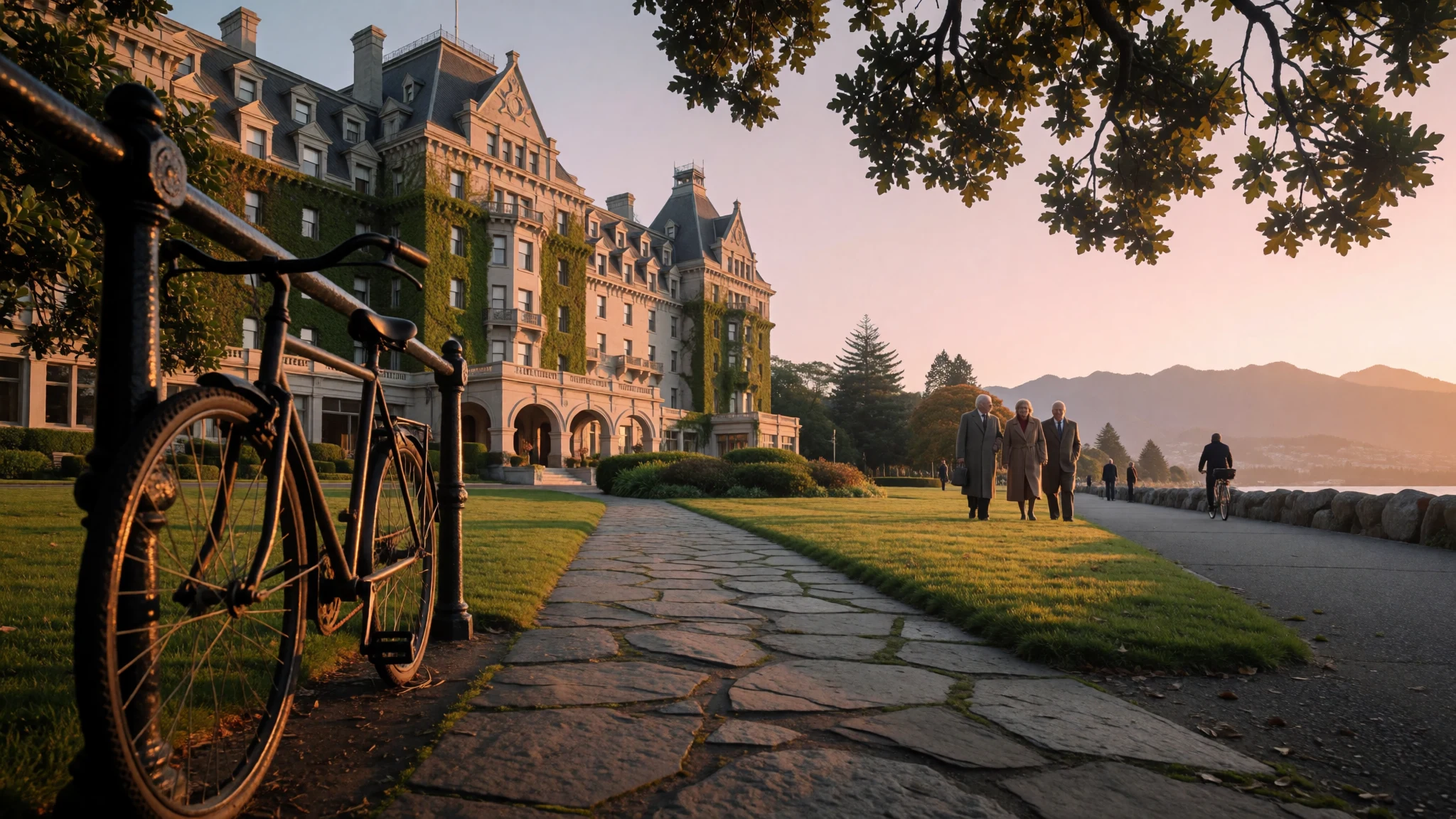
Victoria is a compact island capital where colonial-era buildings, a working harbour and a mild Pacific climate make a relaxed few days.
The place
Victoria sits on the southern tip of Vancouver Island, facing the Pacific coast of Canada, and serves as the capital of British Columbia. Within the city limits live 91,867 people, so it feels more like a large town than a big city, though the wider metropolitan area is considerably bigger. Most of the centre is flat and low, at about 23 metres above sea level, which makes it easy to cover on foot or by bicycle. The Inner Harbour is the hub: ferries, seaplanes and small boats come and go beside the Parliament Buildings and the Empress, a grand waterfront landmark, and the main streets fan out behind them. Vancouver, the province's largest city, lies across the water on the mainland and cannot be reached from Victoria by road without a ferry, so the place has the slightly detached air of an island town. Seattle, in the United States, is also close across the Strait of Juan de Fuca, and passenger ferries and floatplanes link the two. British settlers shaped much of what stands today, and the city kept an unusual number of its historic buildings, which is why brick and stone façades from the colonial era still line the downtown streets. Beyond them lie parks, a working fishing harbour, residential neighbourhoods of heritage houses and a long shoreline of rocky coves. Summer brings the crowds, especially around the harbour; the quieter months trade sunshine for mild, damp weather.
Its story
Victoria's story starts well before the city's formal founding in 1862, tracing back to the establishment of Fort Victoria in 1843. For a very long time the land around the harbour belonged to Coast Salish peoples, including the Lekwungen and the W̱SÁNEĆ (Saanich), who fished, gathered and settled along these shores. European ships arrived in the late eighteenth century, first Spanish expeditions and then British ones, among them the voyages of Juan Pérez and James Cook. Spanish sailors soon looked into the neighbouring harbour at Esquimalt. The decisive step came when the Hudson's Bay Company, worried that its main post on the Columbia River might fall under American control as the border question grew heated, sent James Douglas to build a new trading fort on the southern tip of the island. That fort became the seed of the town. It was named for Queen Victoria and grew quickly into a colonial capital, a naval and shipping centre, and later the provincial seat of government. The Parliament Buildings and the Empress, both products of that confident imperial period, still define the harbour front. The city also drew migrants from China, whose lanes and shops formed a Chinatown that ranks among the oldest in North America. The Indigenous history did not end with the arrival of settlers, and today local nations remain part of the region's civic and cultural life, which visitors will notice in public art, place names and museum programmes.
What to see
- British Columbia Parliament Buildings — Inner Harbour
The provincial legislature stands on the Inner Harbour in a mix of neo-Baroque and Romanesque Revival styles, topped with a dome and outlined in lights after dark. The stonework is best admired from the lawn across the road. Tours of the interior run on a schedule, so check the official site first.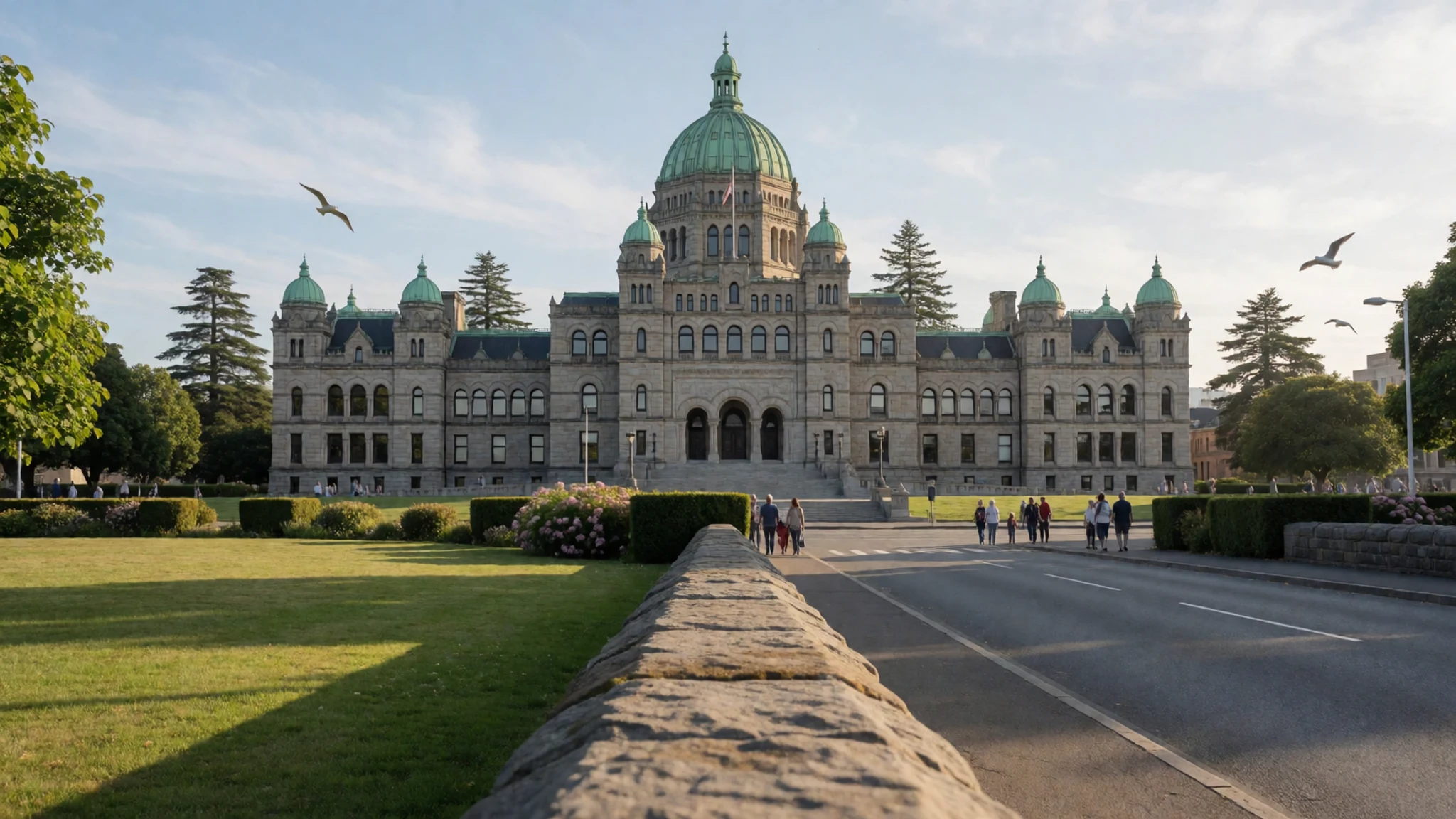
- Inner Harbour and the Empress — Downtown waterfront
The harbour is the city's front room, with buskers, floatplanes, whale-watching boats and the ivy-clad Empress, which opened in 1908 as a railway-era landmark. Mornings are calmest. By midday in summer the causeway is busy, so it suits a short wander rather than a long stay.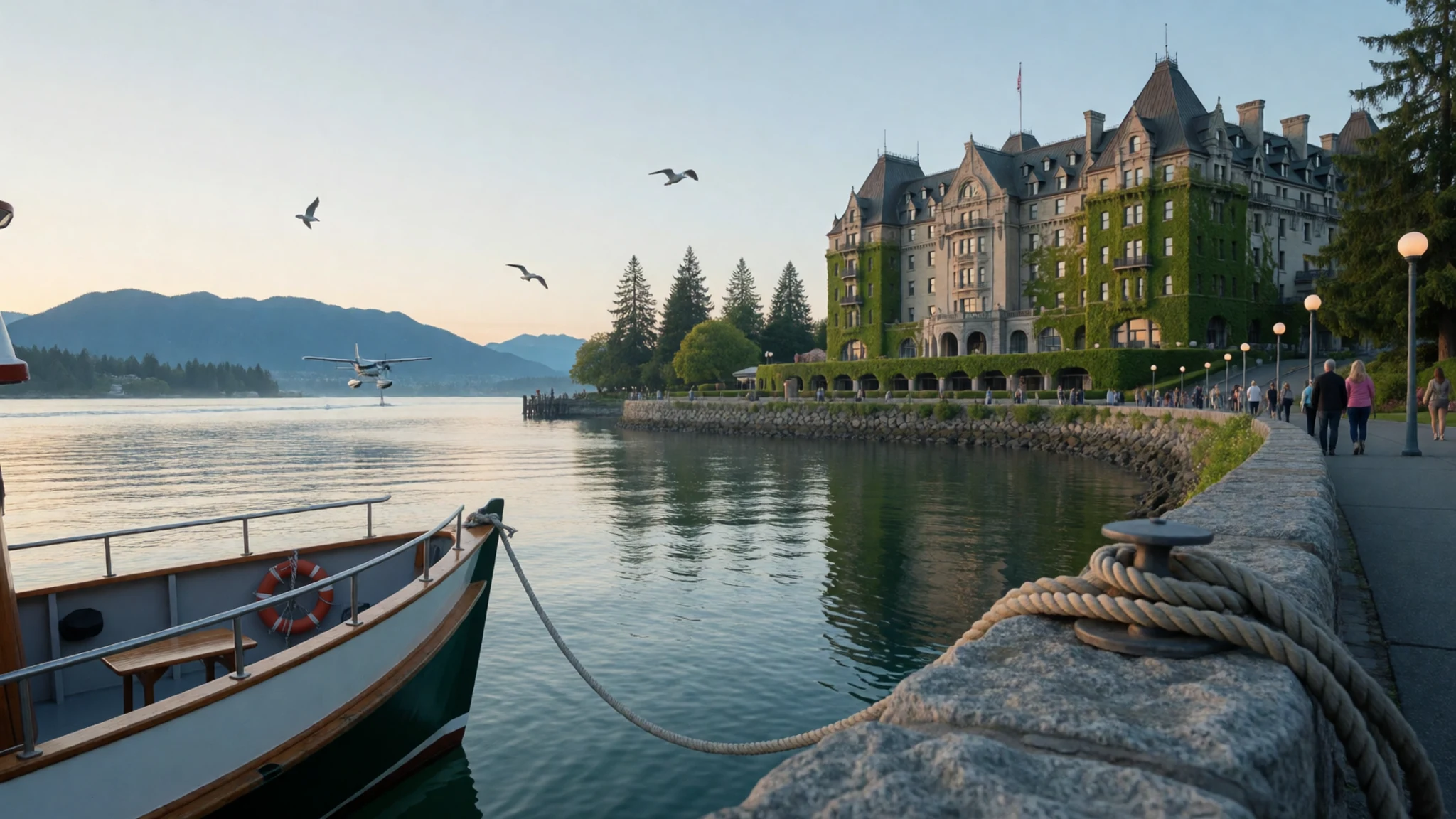
- Chinatown — North of downtown
Victoria's Chinatown is among the oldest in North America, and its narrow lanes once held shops, theatres, schools and temples. Today it is quieter and much smaller, but the brickwork, painted gateway and tucked-away alleys reward a slow walk. Go in the morning, when the shops open and the lanes are empty.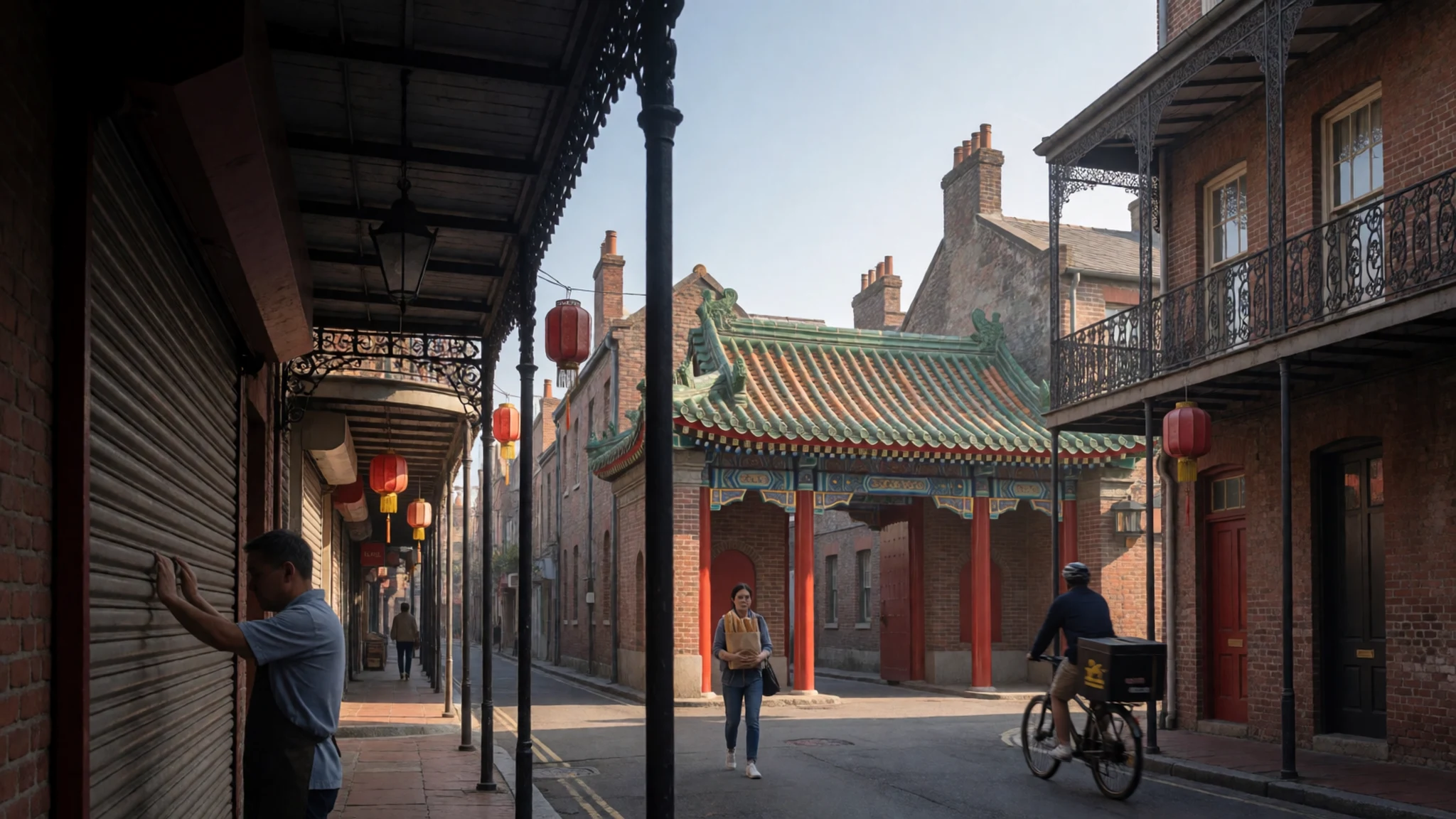
- Beacon Hill Park — James Bay and Fairfield
This large park near downtown has lakes, gardens, playgrounds, sports fields and a stretch of cliff-top path along the Strait. It is the easiest place to see how green and mild the island is, and a good choice for families or for a gentle walk after a morning of museums.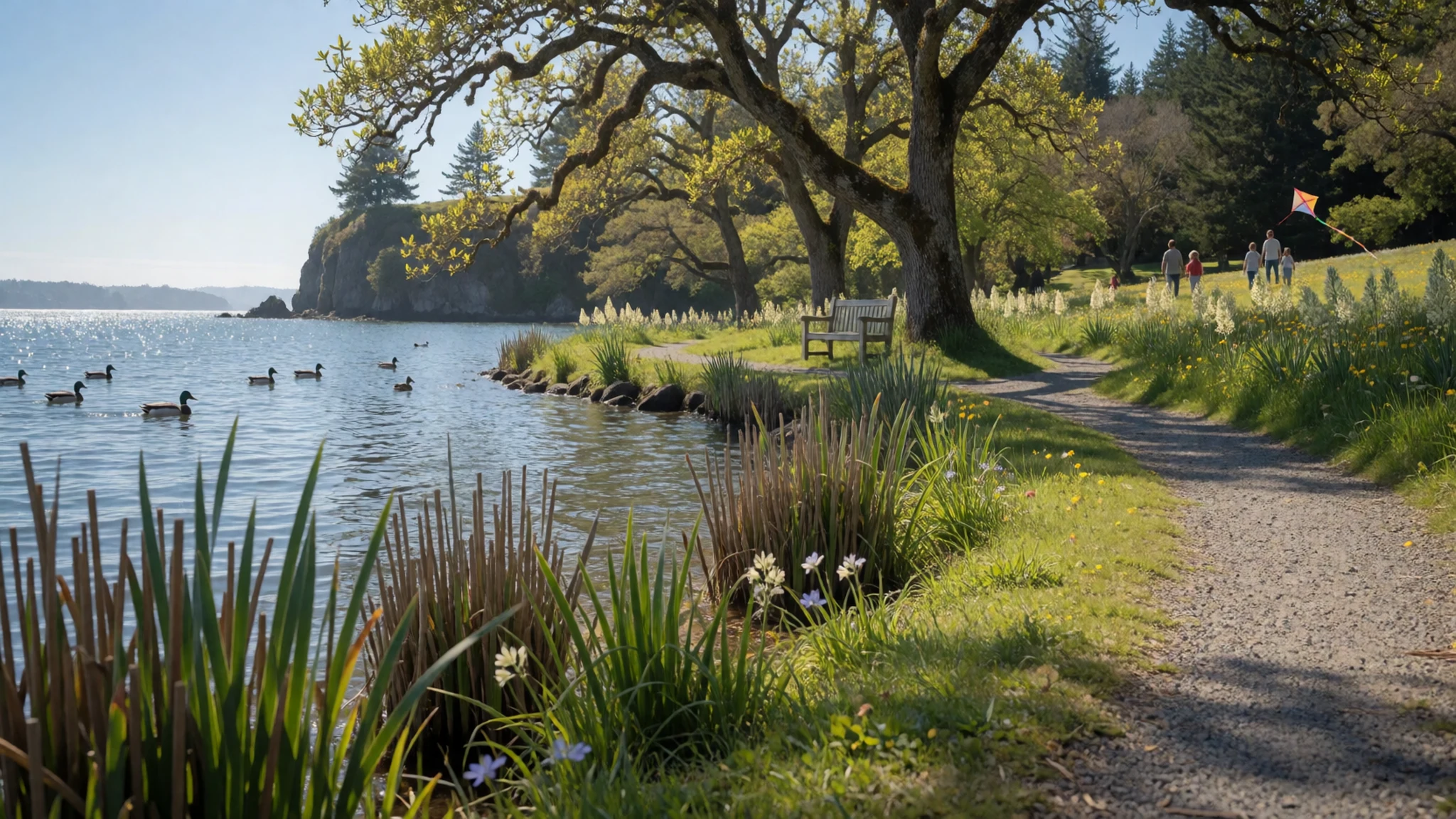
- Emily Carr House — James Bay
The childhood home of the painter and writer Emily Carr is now a heritage museum about her art, her books and her life in the city. It is a modest, domestic-scale visit and works well alongside a walk through the nearby streets of old houses. Opening times change, so check before going.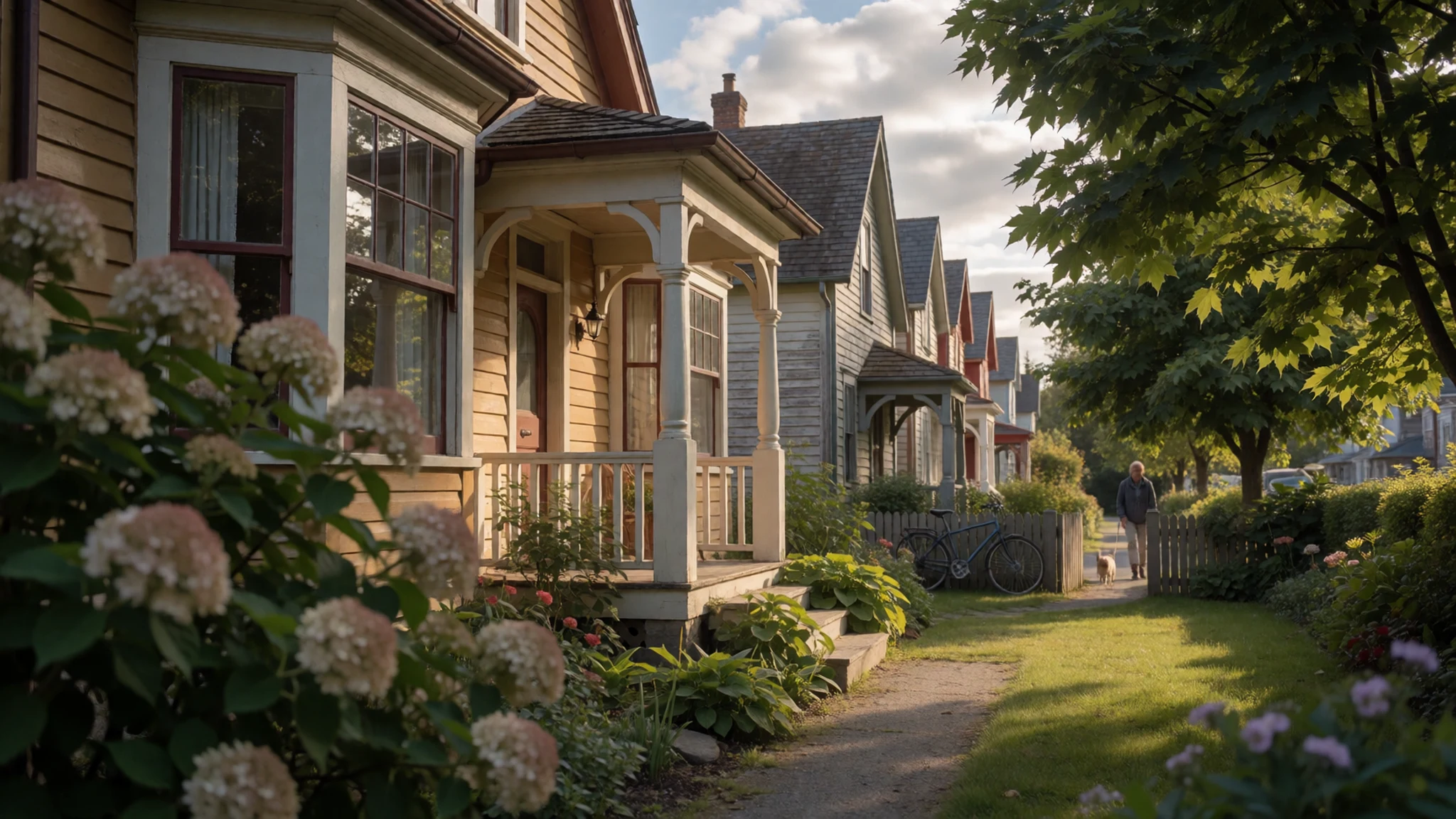
Culture
Victoria has a quietly civic, outdoorsy culture, shaped by its role as a seat of government, a university town and a naval harbour. Its British heritage shows in afternoon tea, in pubs with dark wood and darts, and in gardens kept with real pride. Alongside that, Indigenous art and place names are increasingly visible, and visitors will see Coast Salish carving and design in public spaces and museums. Music has a strong place in the calendar. The Victoria Symphony plays at the Royal Theatre and at the University of Victoria through the season, and on the British Columbia Day weekend it stages Symphony Splash, an outdoor concert on the Inner Harbour with the orchestra playing from a barge. Streets nearby close, tens of thousands of people turn up, and the evening ends with Tchaikovsky's 1812 Overture, cannon fire, bells and fireworks. Outside festival days the pace is unhurried. People queue politely, cyclists have their own lanes, and conversation in cafés and pubs is easy to join. The harbour, the parks and the shoreline are used daily by locals for walking, rowing and paddling, so the city feels lived in rather than staged for visitors. Tipping is customary in Canadian pubs and restaurants, so add a gratuity to the bill unless service has already been included.
What to wear
Victoria has no single formal costume, and the older dress traditions here belong to the Coast Salish peoples, whose weaving is known for wool blankets and patterned textiles, along with cedar bark clothing and hats. These are worn today mainly at ceremonies and cultural events, often with carved or beaded regalia, and they are best seen in museums or at public gatherings rather than on the street. The colonial period left its own mark in the tweed, wool and tartan still sold in downtown shops. Everyday clothing now is practical and casual: waterproof jackets, fleeces, jeans, trainers and walking boots, with a smarter shirt or dress for the theatre, the symphony or afternoon tea. Cyclists wear helmets, as the law requires. For visitors, the weather is the main consideration. Even in summer the evenings off the water can be cool, and rain can arrive in any season, especially from autumn to spring, so layers and a light rain jacket are sensible. Comfortable shoes with good grip suit the harbour walkways, park paths and rocky shoreline. Sun hat and sunglasses are worth packing for July and August. No dress code applies at churches or public buildings, though quiet, tidy clothes are polite when attending a service or a ceremony.
What to eat
- Fish and chips — Harbour-side pubs and takeaway counters near Fisherman's Wharf
Battered white fish with thick chips, malt vinegar and tartare sauce is a staple of the city's British inheritance. Look for it in harbour-side pubs and casual takeaway counters near the water, and eat it outside if the weather allows.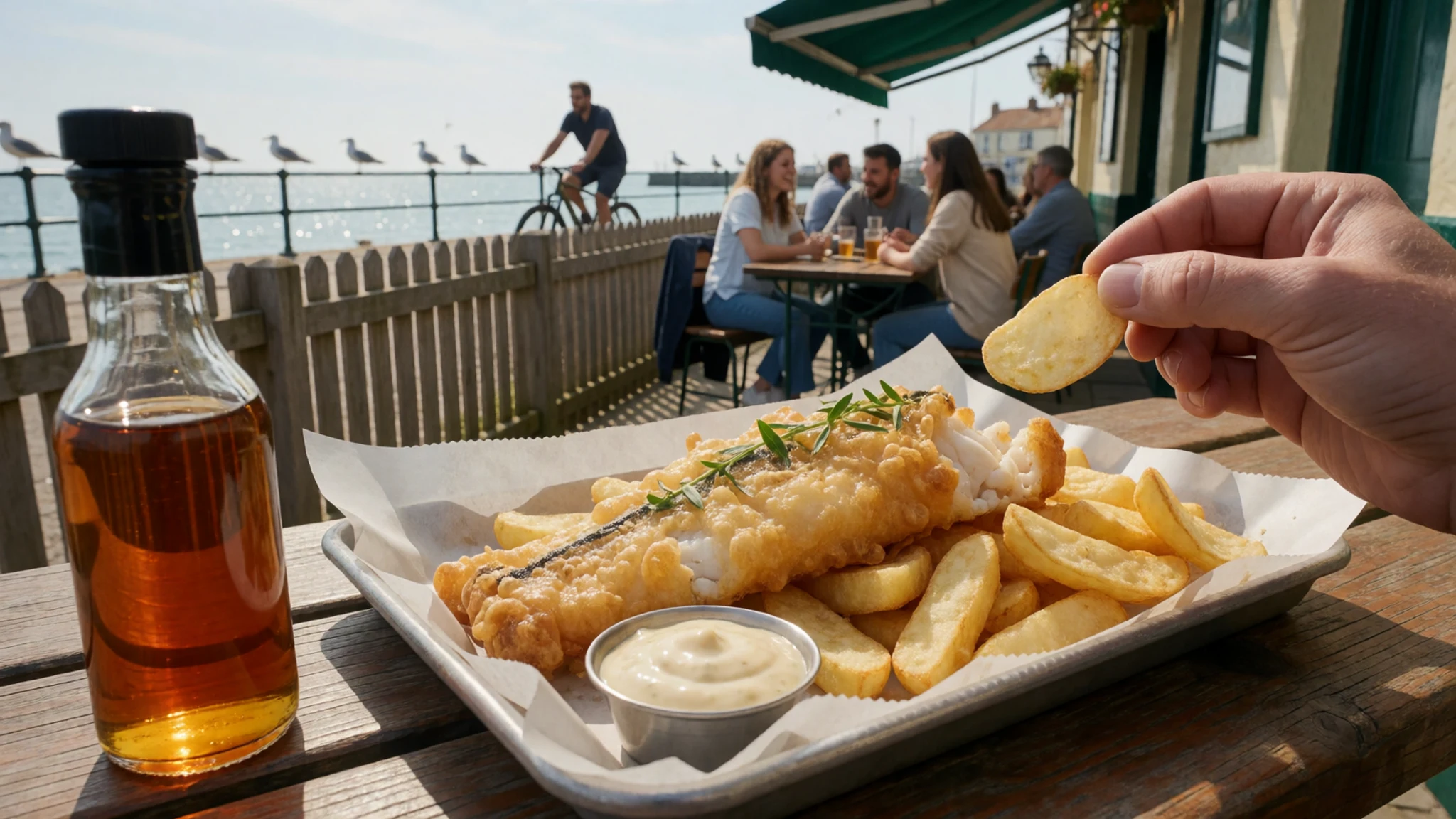
- Pub burger — Neighbourhood pubs in converted heritage houses
A burger or sandwich with chips is the dependable lunch in a city of many pubs. Some occupy old Victorian houses, with fireplaces and a neighbourhood feel, and are good places to drop in without booking.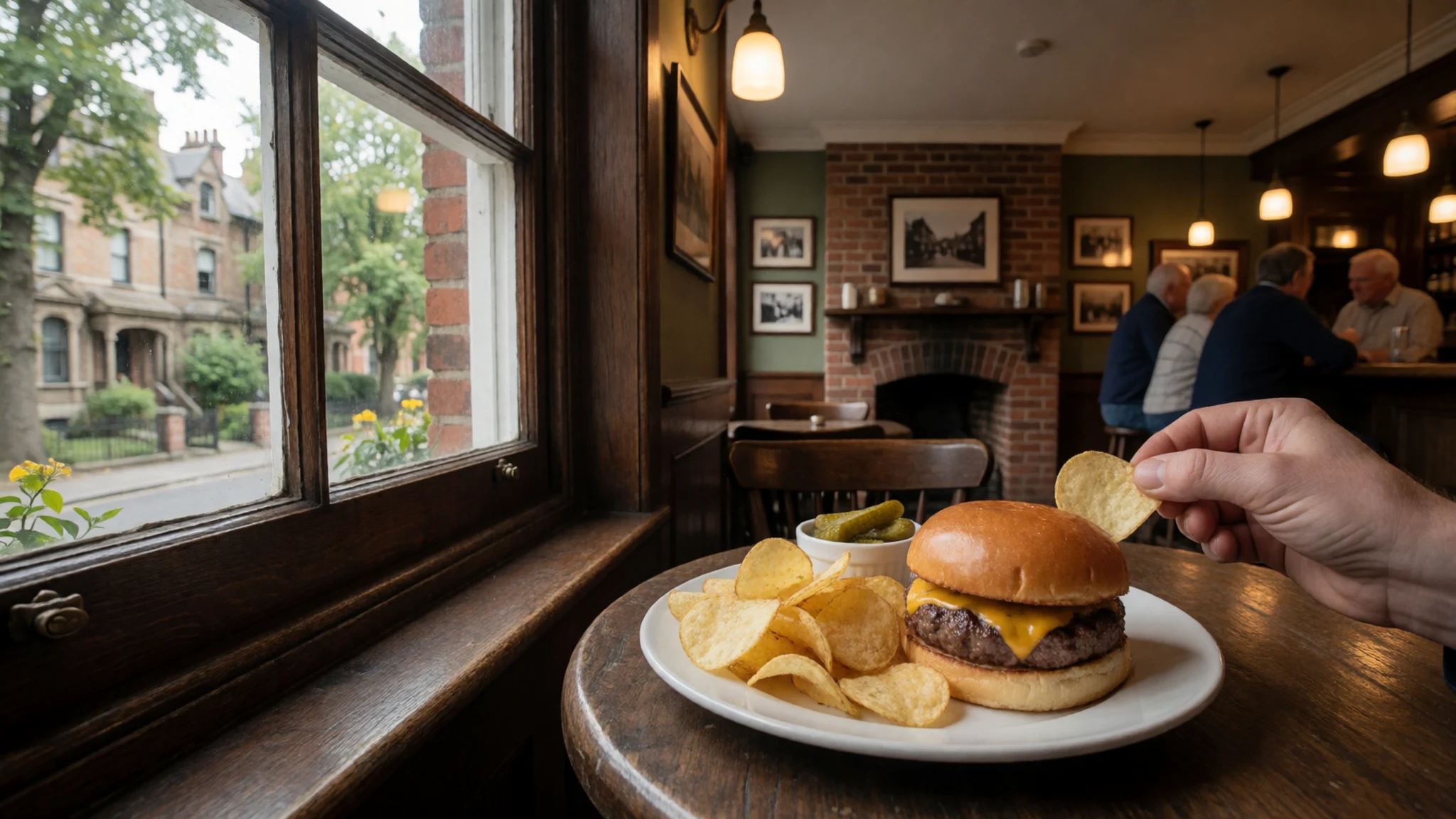
- Craft beer and brewpub lunch — Brewpubs on the harbour edge, a walk from downtown
Victoria has a strong brewing culture, and brewpubs serve their own beers alongside hearty plates of seafood, pies and grilled meat. A short walk from downtown will take you to a few with water views. - Afternoon tea — The grand waterfront landmark on the Inner Harbour and other tea rooms downtown
Tea with scones, clotted cream, jam and small sandwiches is a long-running tradition here, tied to the city's colonial past. Book ahead in summer, and check the official site of the venue for current arrangements. - Dim sum and noodle soups — Chinatown's lanes and the streets around them
Chinatown's eateries serve dumplings, steamed buns and noodle bowls, a reminder of the community that settled here in the nineteenth century. Go for an early lunch, as smaller places can sell out of favourites quickly.
Plan it
Best time. May to June and September for the best balance: days are mild, the summer crowds are thinner and the gardens are at their best. July and August are the warmest and driest but the busiest, while winters are mild and damp rather than snowy.
How long. 2–3
Getting there. The nearest airport is on the Saanich Peninsula near Sidney, a short drive or bus connection from downtown. Ferries from the mainland and from Washington State dock at Swartz Bay or in the Inner Harbour, and BC Transit buses run from Swartz Bay to downtown via McTavish Exchange. Floatplanes and helicopters land right on the Inner Harbour.
Budget. mid
Tips
- Book ferries and floatplanes well ahead in summer and on holiday weekends
- Visit the Inner Harbour early in the morning, before the tour groups arrive
- Carry a light rain jacket even in summer
- Cards are widely accepted, though a little cash helps at small stalls
- Check the official city site at https://www.victoria.ca/ for events and closures
Etiquette
- Tip in pubs and restaurants unless a service charge is already added
- Ask before photographing people, and respect signs in Indigenous cultural spaces
- Wait your turn in queues and keep noise low on residential streets at night
Nearby
Sources
- Wikidata Q2132 (CC0)
- Wikipedia: Victoria, British Columbia (rev 1385012083) (CC BY-SA 4.0)
- Wikivoyage: Victoria (British Columbia) (rev 5421366) (CC BY-SA 4.0)
- Victoria Montage 2020, Allice Hunter (CC BY-SA 4.0)
- British Columbia Parliament Buildings pano, Ryan Bushby (HighInBC) (CC BY 2.5)
- Victoria BC, Canada (Johnson Street), MARELBU (CC BY 3.0)
- Craigdarroch Castle just after sunset, Michal Klajban (CC BY-SA 4.0)
- Christ Church Cathedral (Victoria) pano, unknown author (CC BY 2.5)
- Fairmont Empress, Michal Klajban (CC BY-SA 4.0)
- Fisherman's Wharf, southeast view, DXR (CC BY-SA 4.0)
- Victoria from James' Bay looking up Government Street, Lt. Richard Roche (Public domain)


