Verulamium
Verulamium, United Kingdom
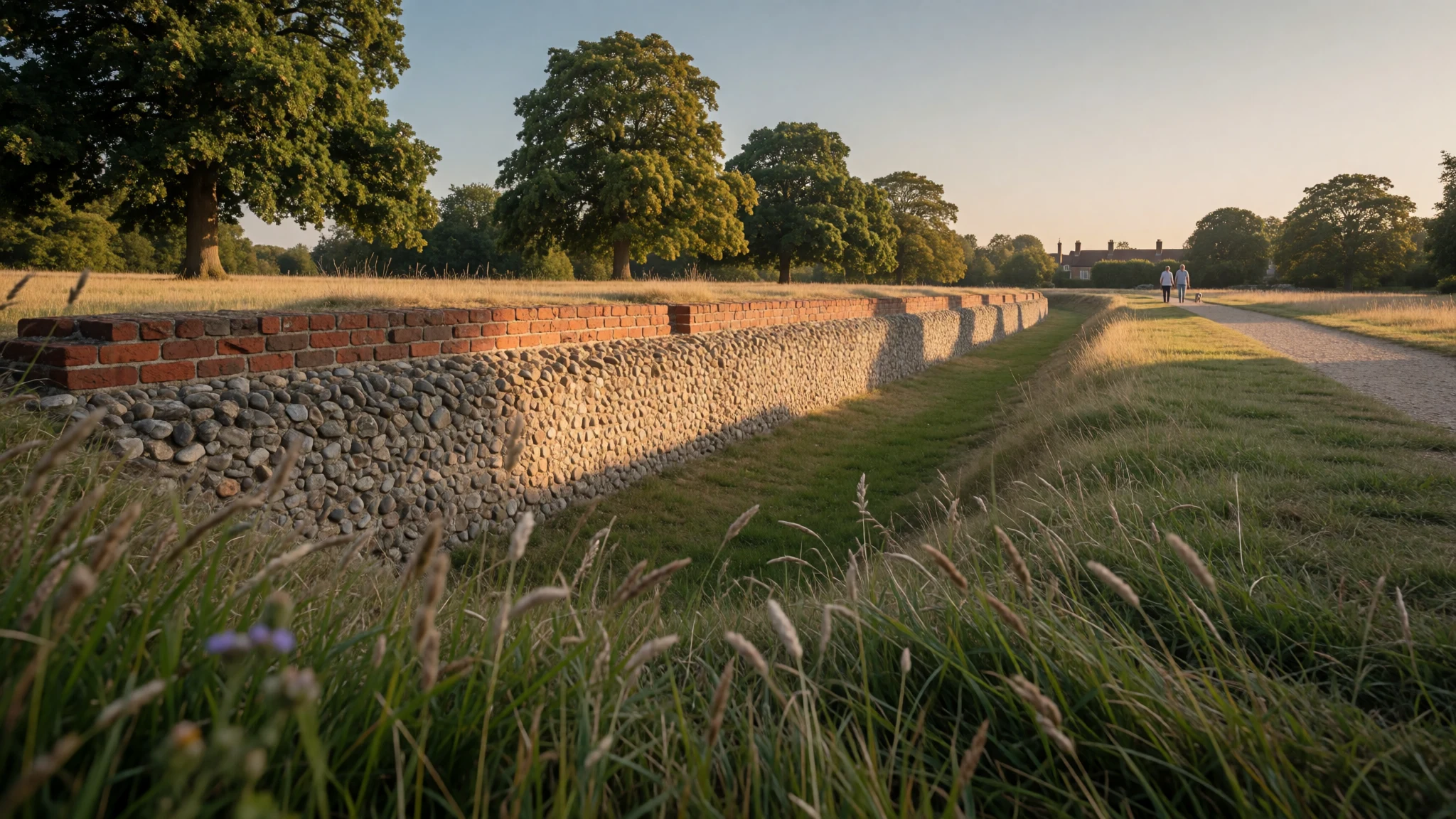
Verulamium is a quiet Roman town beneath a St Albans park, where a theatre, wall, mosaics and a hypocaust make ordinary Roman Britain easy to picture.
The place
Verulamium lies on the south-western edge of St Albans in Hertfordshire, England, in a mix of public park, farmland and a few buildings that sit on top of the old Roman streets. Most of the ancient town has never been excavated. What survives above ground is a patchwork: a stretch of wall at a field edge, a theatre half-hidden in trees, a museum of finds, and a mosaic floor protected under a roof. The rest sleeps under grass, where ground-penetrating radar picks out buildings only as faint smudges. Ploughing on the farmland has scraped at what lies beneath, and pieces of mosaic have turned up on the surface. The parkland half is better protected, and much of the site is a scheduled monument. The Roman road later called Watling Street ran through the town, which was about a day's walk from London; in the medieval period the route was shifted so that trade favoured St Albans, pulling the centre of life uphill to the abbey. The setting is gentle: a river and lake in the park, dog walkers, picnics, and the Anglo-Saxon church of St Michael with its small settlement standing over part of the old town. Nothing here is monumental in the way of Rome or Pompeii. The pleasure is in the quiet, in piecing the town together from walls, floors and a good museum, and in the short walk to the cathedral, which was built partly with stone taken from the Roman ruins.
Its story
Verulamium began as a tribal centre of the Catuvellauni, usually called Verlamion, established by a ruler named Tasciovanus who struck coins there. It is an early place-name in Britain's written record, though its meaning is debated; one reconstruction reads it as something like 'of the broad hand'. After the Roman conquest the settlement was raised to the rank of municipium, which gave its people Latin Rights, a step below the status of a full colonia. It prospered until the rebellion of Boudica of the Iceni, whose followers burned it to the ground. Archaeologists have found a black layer of ash that matches the Roman written account. The town was rebuilt and kept growing, eventually sitting behind a deep ditch and a wall. It had a forum, a basilica and a theatre, and fires in the second and third centuries damaged much of that. Out of this Roman town came the story of Alban, a patrician who sheltered a priest named Amphibalus, was converted by him, and was executed, becoming the first British martyr. In later centuries an abbey and the town of St Albans grew around his shrine, while the old Roman buildings were quarried for stone and the town above them slowly faded into fields.
What to see
- Roman Wall — Southern edge of Verulamium Park
The surviving stretch of Verulamium's defensive wall runs through trees and grass at the edge of the park. It is low, rough flint and brick rather than a towering rampart, but walking along it gives a real sense of how large the enclosed town was and how deep the ditch once ran.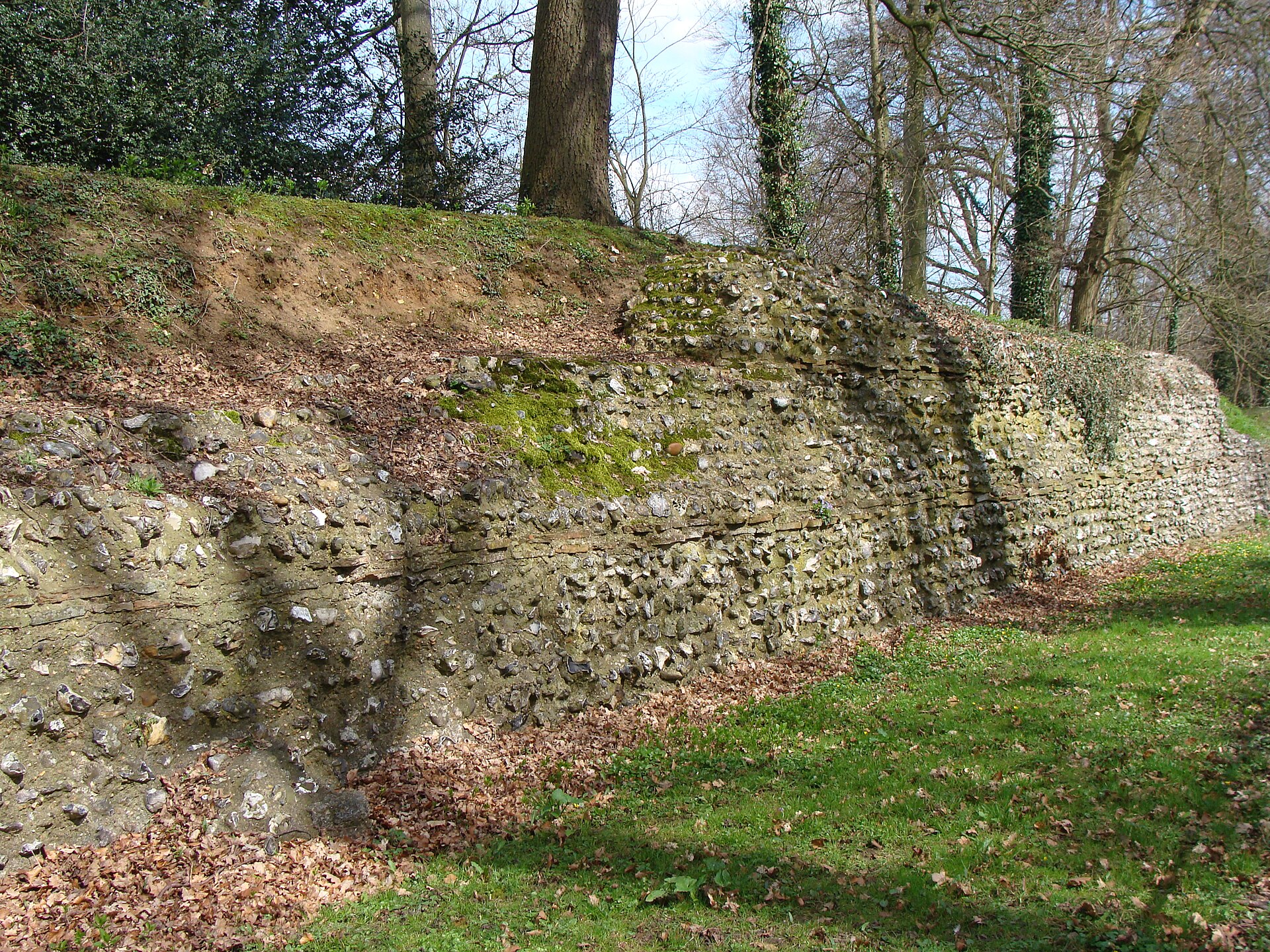
- Roman Theatre of Verulamium — Across the road from Verulamium Museum
A stone theatre, remarkably well preserved, lies across the main road from the museum. Grassy banks mark the seating, and the stage area is excavated. It is a good place to sit and imagine plays and gatherings. A path leads on towards the manor house of Gorhambury; check opening days before going.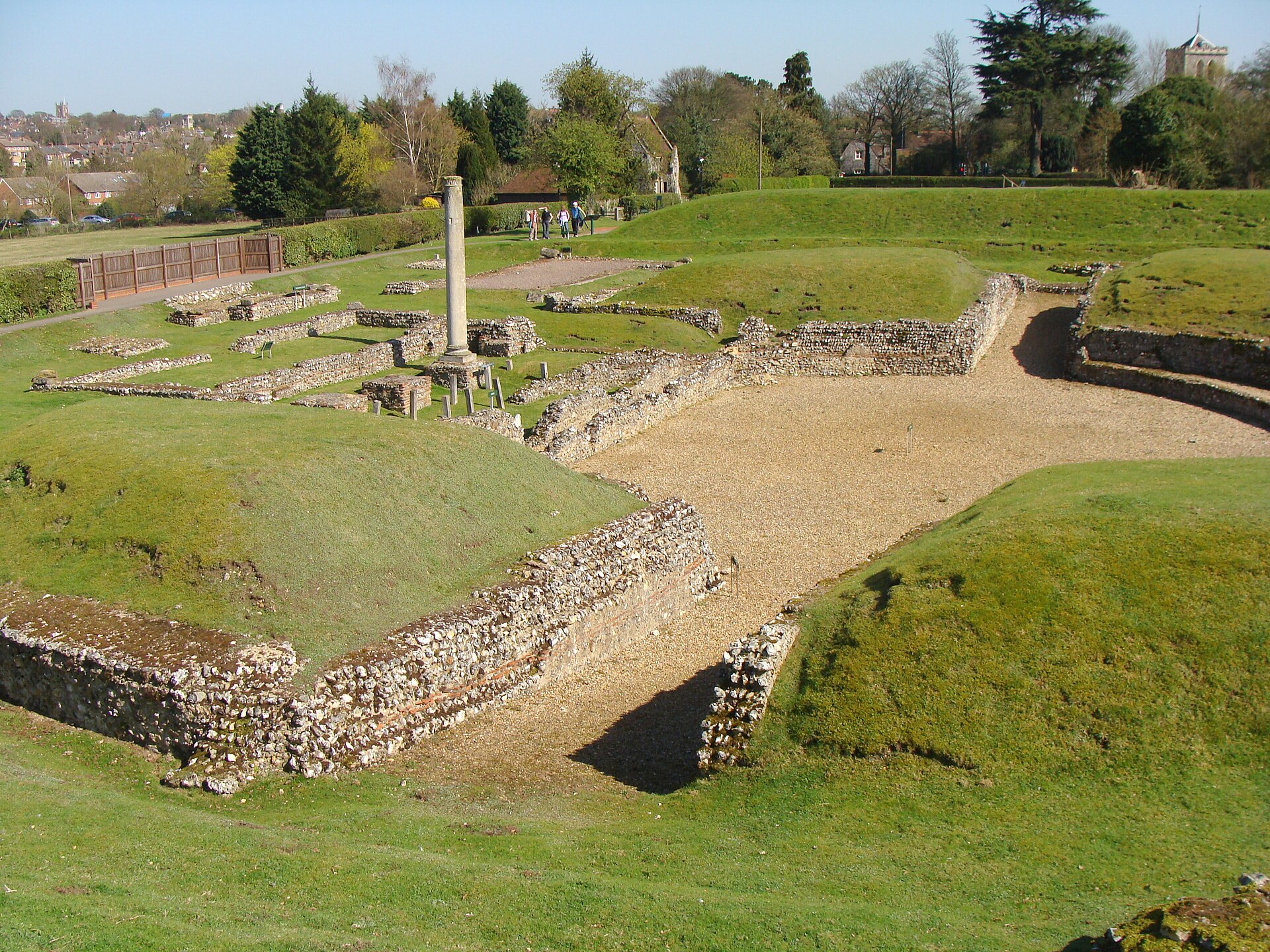
- Verulamium Museum — Edge of Verulamium Park
The museum tells the story of the Roman city through mosaics, painted wall plaster, pottery and everyday objects. Its mosaics and plasters are among the finest found outside the Mediterranean. Start here to understand what the park outside is hiding, then walk the site with the pictures fresh in your mind.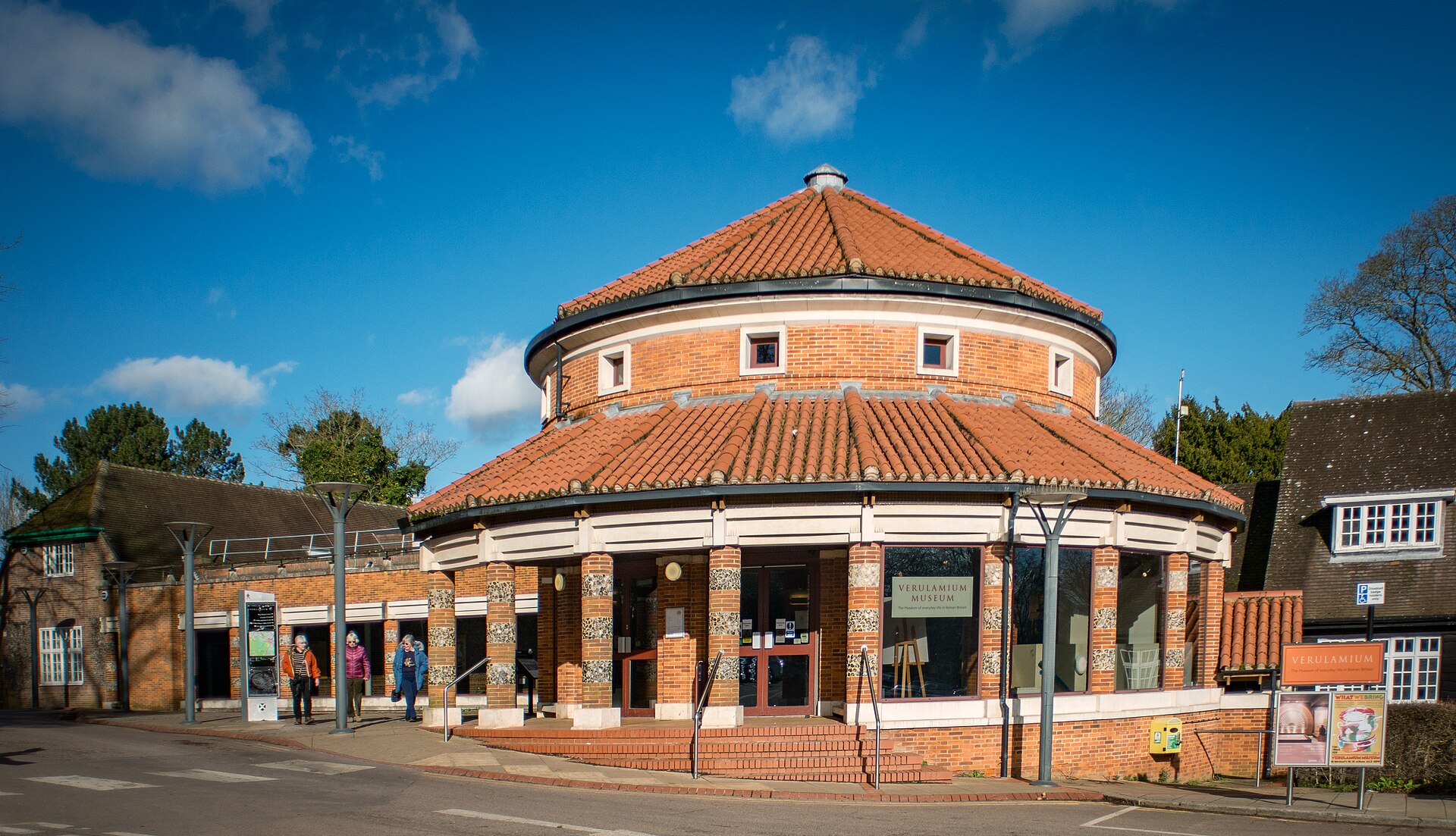
- Hypocaust and mosaic — Verulamium Park
Excavated in the park in the 1930s, this Roman house kept a mosaic floor and a hypocaust, the underfloor heating system of channels and pillars. It sits under a protective building. The approach is a gravel path up a gentle slope, which wheelchair users should be aware of. Check the official site for opening.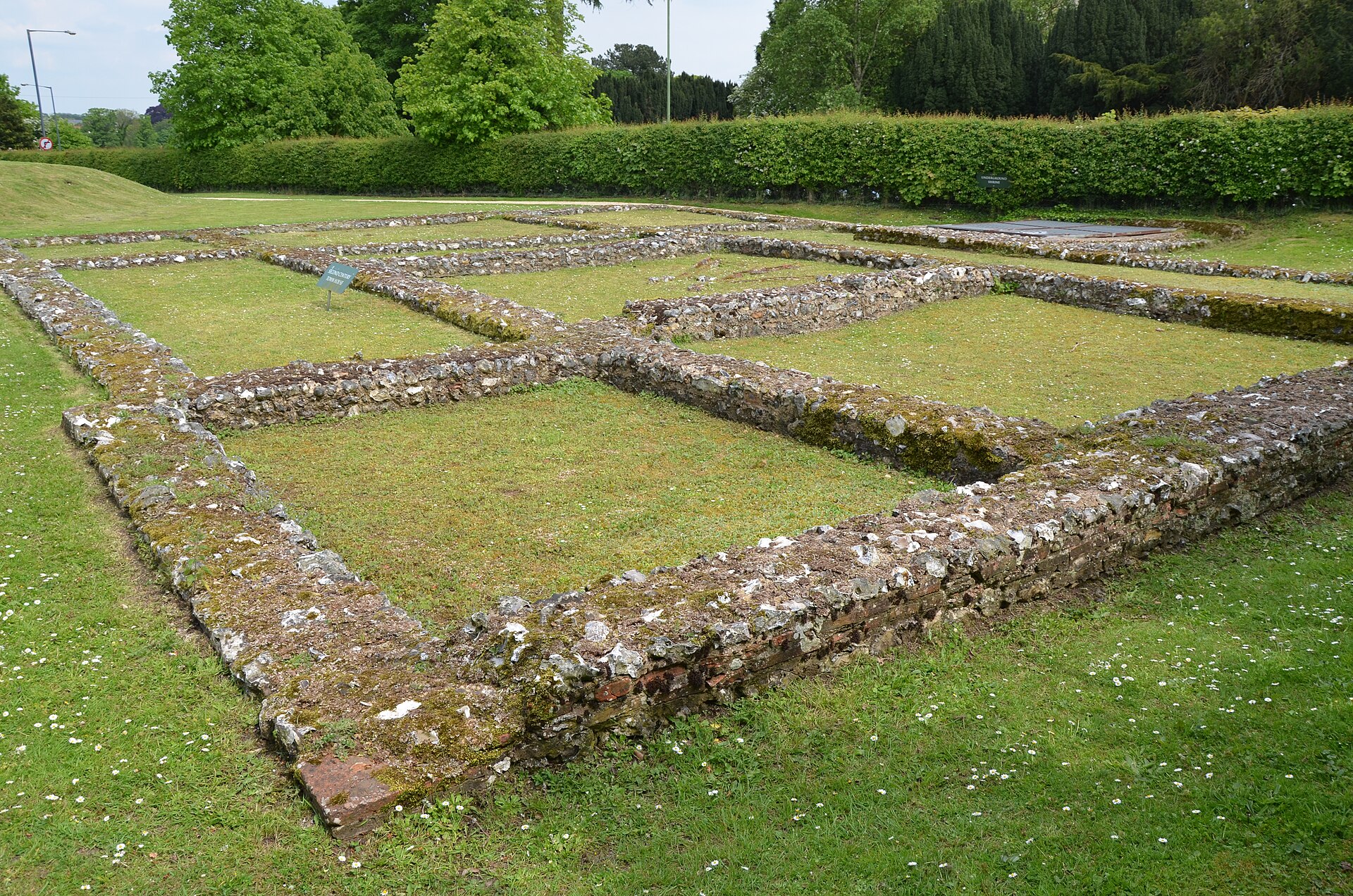
- Cathedral and Abbey Church of St Alban — St Albans city centre
Up the hill in St Albans, the abbey church holds a shrine to Alban, honoured as Britain's first saint. The nave is exceptionally long, and Roman material was reused in its fabric. It makes a natural end to a Verulamium visit, linking the Roman town to the medieval one.
Culture
Verulamium is a place where culture is mostly layered rather than living. The Roman town gave way to a Christian story: Alban's martyrdom turned the site into a place of pilgrimage, and the abbey that followed shaped the identity of St Albans for centuries. Today that identity is lightly worn. Locals use the park for walks, school trips and weekend picnics, and the ruins sit alongside ordinary life rather than behind ticket barriers. The museum and volunteer groups keep the Roman past in public view with talks, family activity days and re-enactment events, so the town feels proud of its history without making a spectacle of it. The cathedral remains a working place of worship with services through the week, and quiet visitors are welcome between them. Pub and cafe culture in St Albans is relaxed, with plenty of places for a pot of tea or a pint after a walk, and people queue politely and keep voices low in churches and museums. The landscape itself is a quiet argument that ordinary towns matter: most of what is known comes not from palaces but from floors, drains and rubbish pits. Please keep to the marked paths around the ruins and the fields, and never climb on the walls or take stones or pottery fragments from the site.
What to wear
Verulamium's traditional dress is Roman, and what survives is a mixture of finds and reconstruction. Ordinary people wore a tunic of wool or linen, often belted, with a woollen cloak against the damp; the toga was formal dress for citizens on official occasions. Women wore a longer tunic with a mantle over it. Brooches called fibulae pinned cloaks and are among the common finds, along with hairpins, rings and leather shoes. Dyes and weaving were local trades, and the museum shows how bright and patterned the painted walls and mosaics could be. Today, nobody in St Albans dresses in anything historic except at re-enactment days, when legionary kit and tunics appear in the park. Everyday clothing is British town casual: jeans, jackets, trainers and a lot of layers, with smart-casual for the cathedral and restaurants. A visitor should plan for changeable English weather. Bring a waterproof jacket in any season, and a warm layer outside summer, because the park is open and breezy. Wear sturdy walking shoes or trainers with grip, since paths can be muddy and the hill up to the hypocaust is gravel. There is no strict dress code at the ruins, though covered shoulders and knees are courteous inside the cathedral.
What to eat
- Fish and chips — Chip shops in the residential streets east of the centre
Battered fish and thick chips, eaten with salt, vinegar and often mushy peas, are the classic British takeaway. St Albans has traditional chip shops outside the centre, handy for a simple meal after a long walk through the park. - Sweet and savoury waffles — The watermill by St Michael's church
A converted watermill beside the river near St Michael's church serves waffles with fillings from fruit and syrup to cheese and ham. It is a pleasant, informal stop either side of the Roman site, and the building is worth a look itself. - Pub lunch — Historic pubs around the cathedral and market area
A Sunday roast or a plain pie with mash and gravy is the sensible choice on a cold day. St Albans has long-established pubs serving real ale and hearty plates, and many have gardens for warmer months. - Curry — Indian restaurants in the town centre, some in old civic buildings
Indian restaurants in St Albans offer familiar curries, tandoori dishes and breads, and a few have won local awards. Britain's long love of curry makes it an easy, filling dinner, with plenty of vegetarian choices. - Stone-baked pizza — Restaurants on the main streets of the city centre
Chain pizza restaurants and smaller local ones serve thin, stone-baked pizzas, a reliable option for families and groups. Alongside them are French and Japanese restaurants, so the range is wide even if little here is a destination in itself.
Plan it
Best time. April–June and September for mild, drier weather, green parkland and long daylight. July can be warm and busier with families. Winter is cold, damp and short on daylight, though the museum and cathedral stay open.
How long. 1–2
Getting there. London is the usual gateway, with Heathrow and Luton the closest major airports; St Albans is reached by train from central London or by road from the M25 and M1. The ruins are then a short, signposted walk or local bus from the city centre.
Budget. mid
Tips
- Start at the museum to make sense of the park, then walk the wall, theatre and hypocaust
- Check the English Heritage website at https://www.english-heritage.org.uk/visit/places/roman-wall-of-st-albans/ for opening details
- Bring a waterproof, as the site is outdoors and weather turns quickly
- Weekends and school holidays bring families, so go on a weekday morning for quiet
- Combine with the cathedral and the town's market and cafes for a full day
Etiquette
- Stay on marked paths and do not climb or sit on the ancient walls
- Keep voices low and phones quiet in the cathedral
- Never remove stones, tile or pottery fragments from the site
Nearby
Sources
- Wikidata Q19861 (CC0)
- Wikipedia: Verulamium (CC BY-SA 4.0)
- Wikivoyage: St Albans (CC BY-SA 4.0)
- Photo: Gary Houston, 20050410-009-verulamium-wall (CC0 1.0)
- Photo: Przemysław Sakrajda, Roman Theatre Verulamium (CC BY 3.0)
- Photo: Dr John Wells, lidar view of Verulamium (CC BY 4.0)
- Photo: Przemysław Sakrajda, Verulamium Roman walls (CC BY 3.0)
- Photo: Bs0u10e01, Verulamium Museum (CC BY 4.0)
- Photo: Carole Raddato, Roman house with hypocaust (CC BY-SA 2.0)
- Photo: Carole Raddato, Forum of Verulamium impression (CC BY-SA 2.0)
- Photo: Carole Raddato, Verulamium impression (CC BY-SA 2.0)


