Usedom
Usedom, Germany
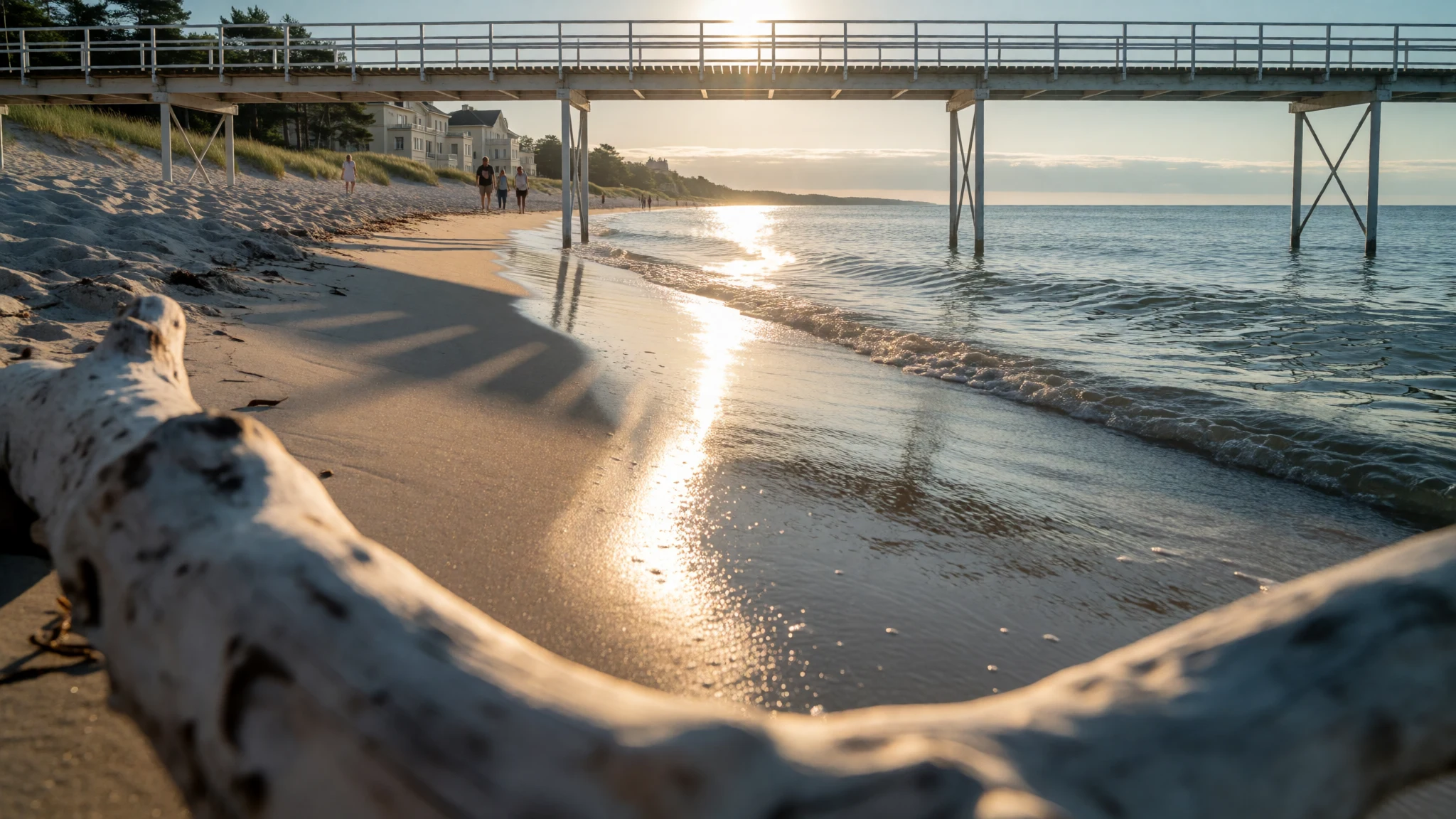
Usedom is a sunny Baltic island shared by Germany and Poland, with long sandy beaches, grand seaside resorts and a border you can cross on foot.
The place
Usedom is a Baltic Sea island in Pomerania, split between Germany and Poland. About four-fifths of it belongs to the German state of Mecklenburg-Vorpommern, while the eastern end, including the island's biggest town, Świnoujście, sits in Poland's West Pomeranian region. The island covers 445 square kilometres, and about 76,500 people live on it, more of them on the Polish side than the German.
Water defines the map. The open Baltic and Pomeranian Bay lie to the north, the Peenestrom channel separates the island from the mainland, and the Strait of Świna divides it from the neighbouring island of Wolin. Reference sources credit Usedom with about 1,906 hours of sunshine a year, which explains the nickname Sonneninsel in German and Wyspa Słońca in Polish: Sun Island. Berliners have long treated it as their nearest seaside, and one British newspaper reported it being called the capital's bathtub.
The resorts are strung along the coast. Zinnowitz lies in the north-west, the three Kaiserbad towns of Ahlbeck, Heringsdorf and Bansin sit in the middle, and Świnoujście closes the chain at the Polish end. Their villas and piers date from the nineteenth-century boom in sea bathing. Away from the shore the island is quieter, with lakes, reedy inlets and small villages linked by cycle routes. Wikidata records a highest elevation of 69 metres, so this is gentle, flat country.
The sea stays cool even in high summer, and July and August weekends fill the beaches and the coastal roads. Spring and early autumn are calmer, though the water is then too cold for most people.
Its story
Usedom has been inhabited since the Stone Age, and its past is layered. Slavic communities settled here in the early medieval centuries, and trading places such as Menzlin, along with the half-legendary Vineta or Jomsborg, grew up around the island's waters. Earthworks of a Slavic refuge fort still survive near the Nepperminer See.
In the twelfth century the Danes destroyed the town of Uznam, and the island passed under the Polish ruler Bolesław III as part of the Duchy of Pomerania. Bishop Otto of Bamberg led the mission that brought Christianity, and Duke Wartislaw I accepted baptism in 1128. Church orders then gathered most of the land. Premonstratensian monks founded an abbey at Grobe in 1155 and moved it to Pudagla in 1309, while a Cistercian convent took root at Krummin. After the Reformation the Pomeranian dukes took the estates into their own hands.
War reached the island in 1630, when Swedish troops under Gustavus Adolphus landed at Peenemünde during the Thirty Years' War. When the last duke died in 1637 the duchy came to an end, and the island's fortunes passed to other powers.
The seaside era arrived much later. From the nineteenth century, fishing villages turned into resorts, first for German and international nobility and then for everyone else, which left the villas, promenades and piers that define the coast today. Peenemünde carries a darker military legacy, and ammunition dumped in the sea is the reason phosphorus can still wash up on its shores.
What to see
- Ahlbeck and the border walk — Ahlbeck
Ahlbeck is the easternmost of the Kaiserbad towns, and a seafront path leads from it towards Poland. The German–Polish border here is a marker on an ordinary path rather than a barrier, so strolling from one country to the other and on to Świnoujście is a pleasant half-day. Carry ID in case of checks.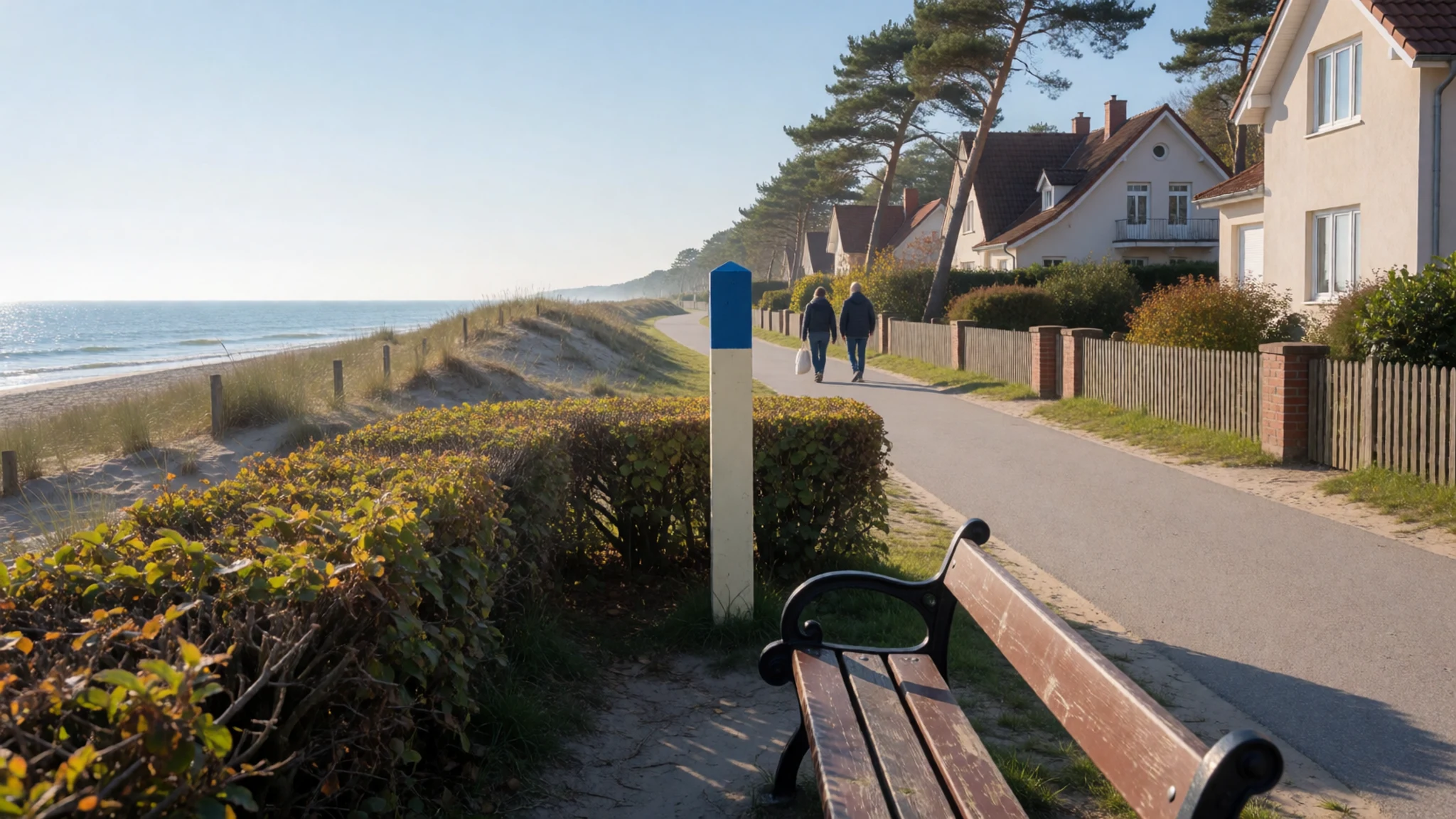
- Zinnowitz pier and beach — Zinnowitz
Zinnowitz, in the north-west, has a broad clean beach with a pier running out into the Baltic. It suits a slow day of walking the sand and the seafront, with cafés close at hand. Summer weekends bring crowds, so arriving in the morning gives the beach a calmer feel.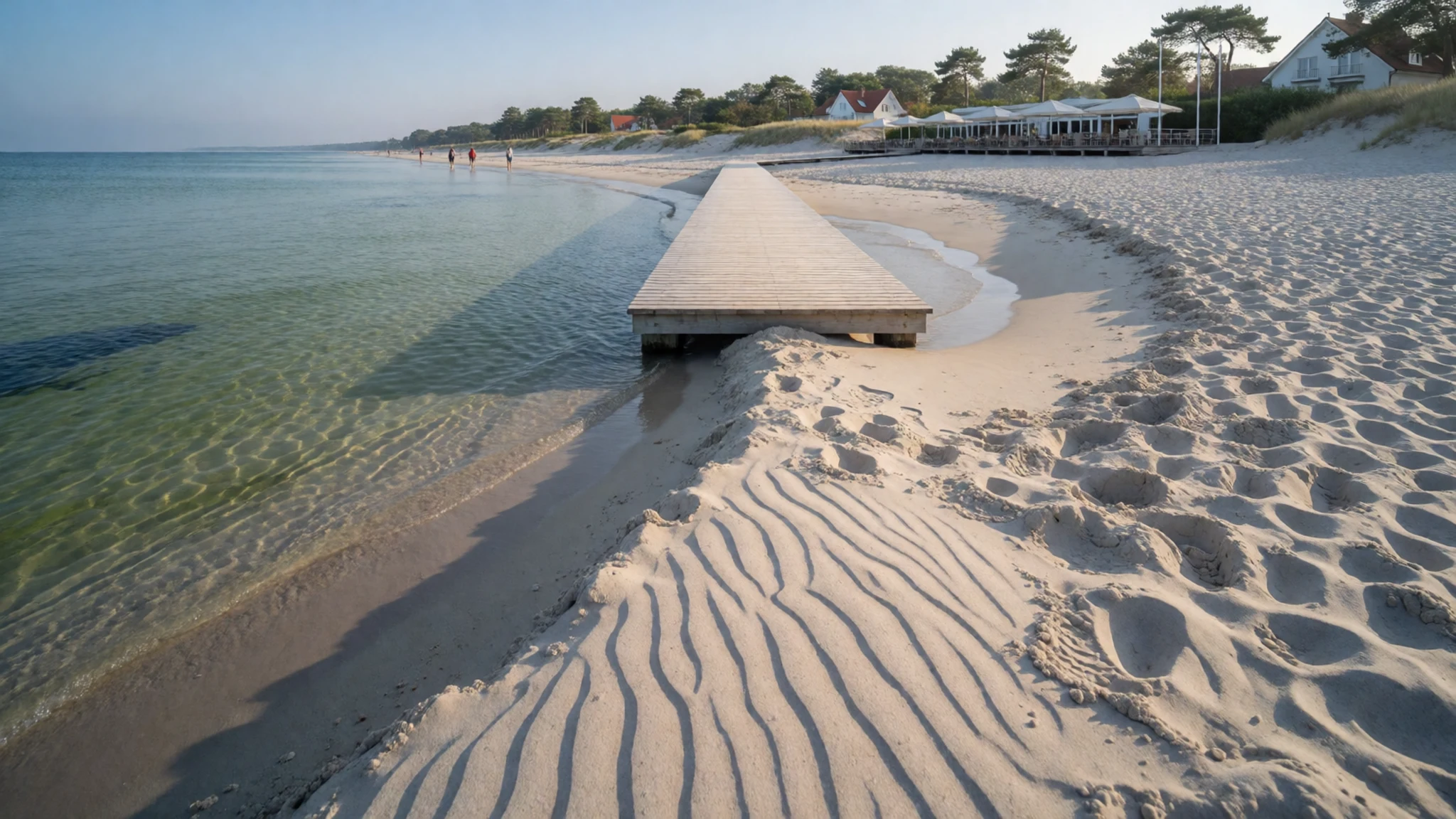
- Świnoujście spa park — Świnoujście
Świnoujście, the island's largest town, has a spa park laid out in the early nineteenth century and reworked since. Paths, mature trees and the sea close by make it an easy stop between the beach and the harbour. The Polish side feels more like a working port town than a villa resort.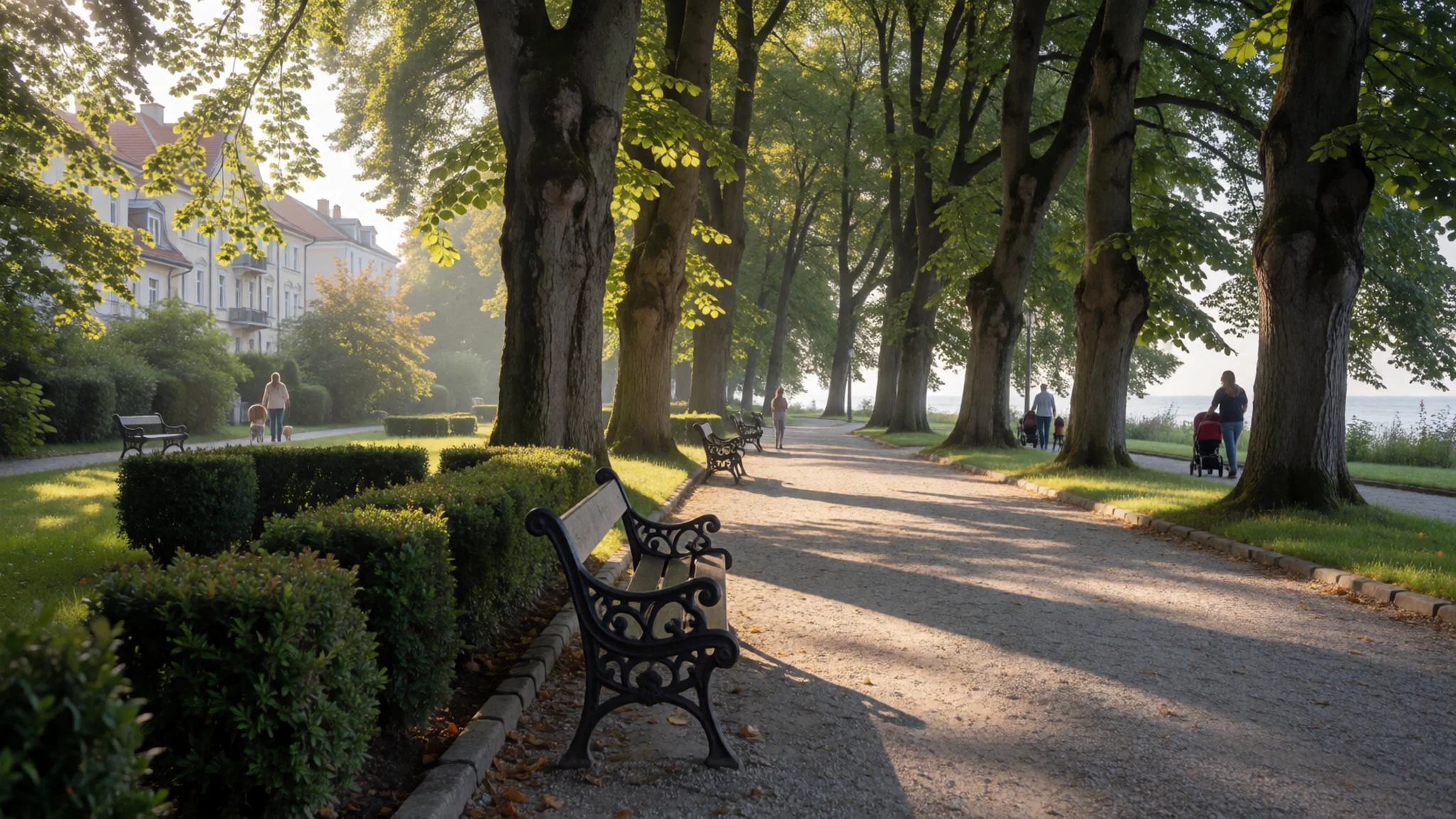
- St Peter's Church, Benz — Benz
St Peter's Church in Benz, a village inland from the beaches, drew the painter Lyonel Feininger, who spent summers on Usedom in the early twentieth century and returned to the building in his work. It is a small stop for art lovers, best combined with a cycle ride through the villages.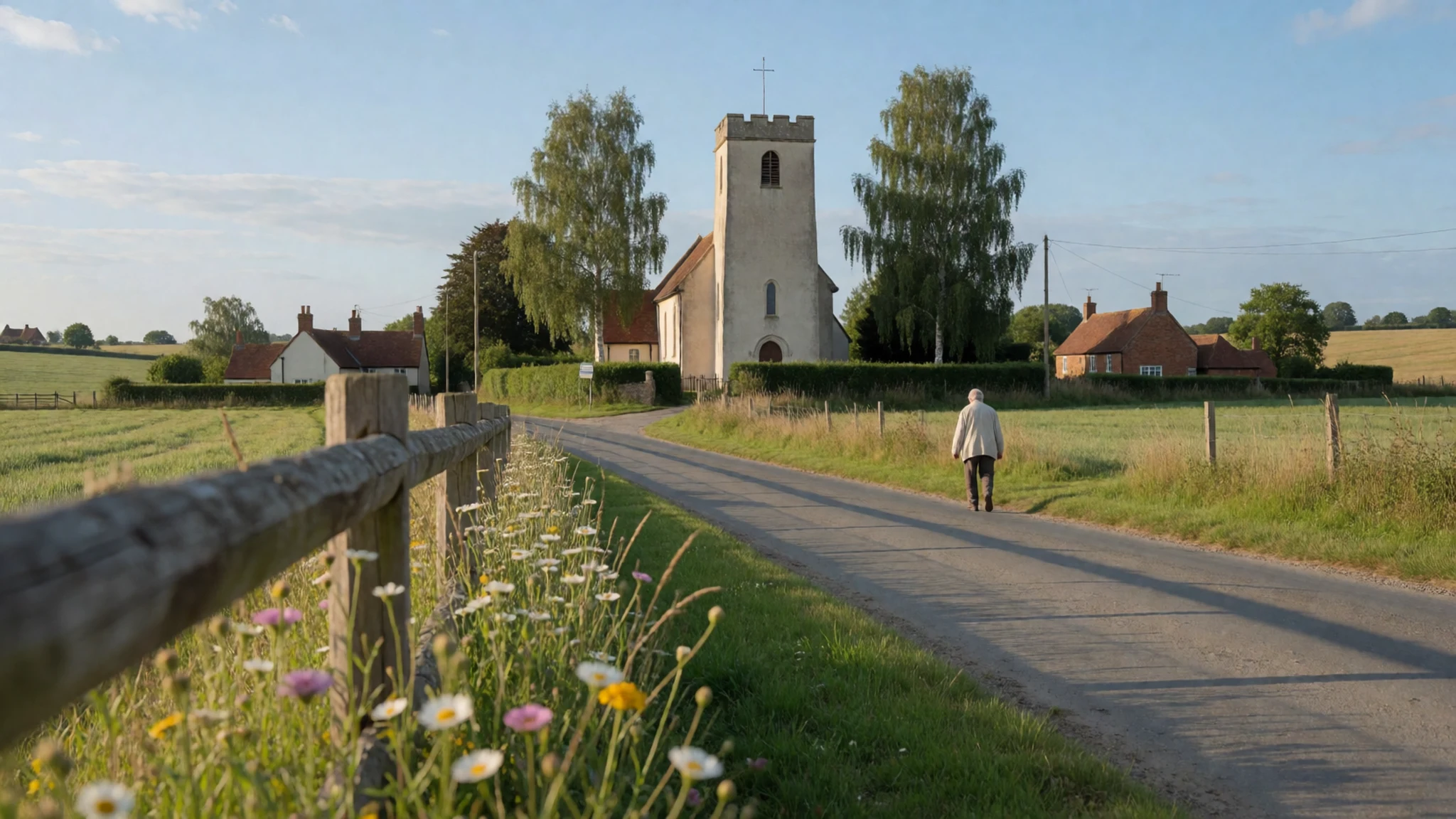
- Slavic fort at the Nepperminer See — Neppermin
Near the Nepperminer See, grassy ramparts mark what remains of a Slavic refuge fort built on low, wet ground. There is little beyond earthworks and a lake view, but it gives a sense of the island before the resorts, when Slavic communities lived here. It lies off the main coastal strip, so bring a map.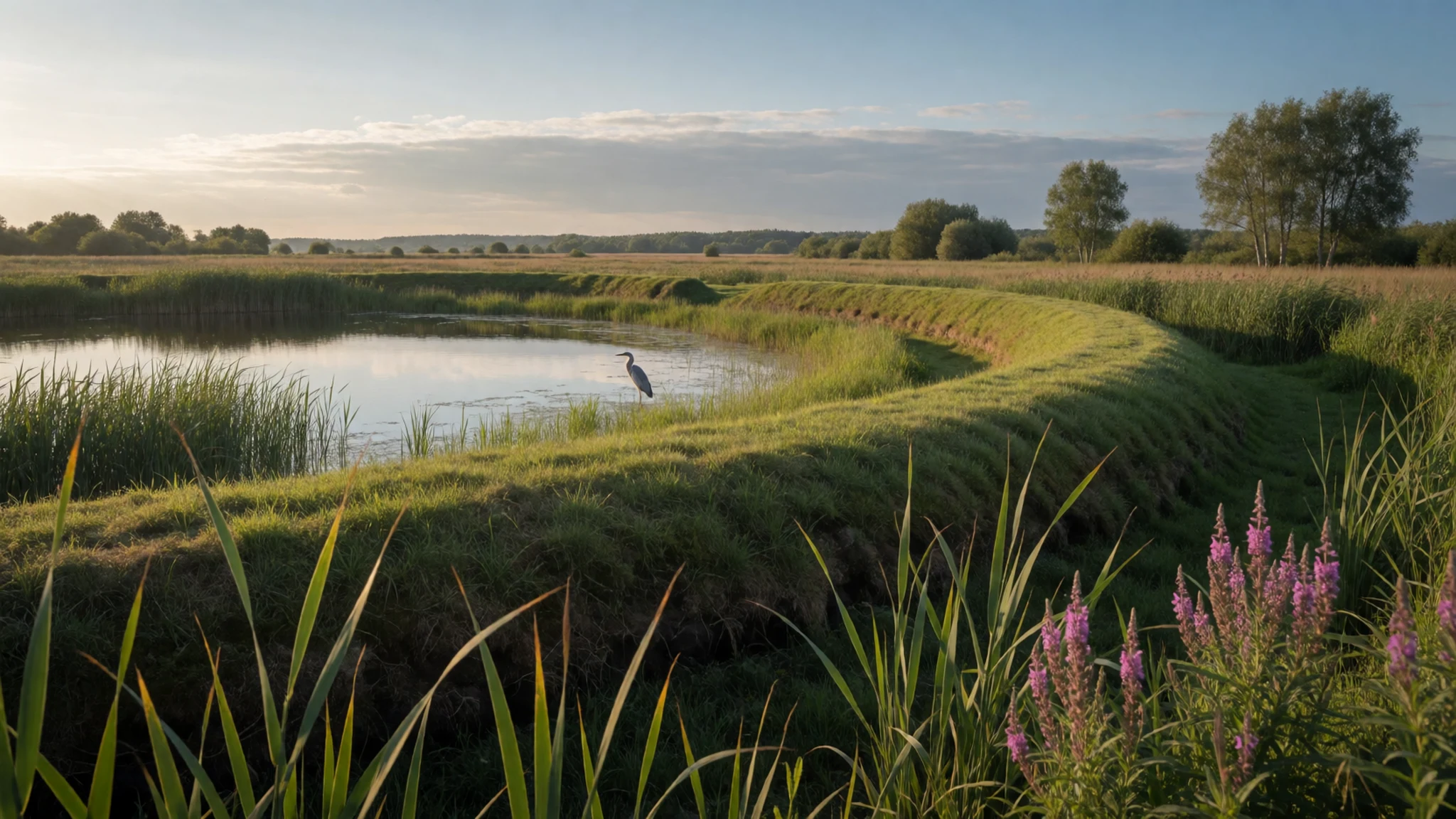
Culture
Usedom's culture is a borderland blend, shaped by German and Polish history and by a long habit of going to the sea for health and leisure. The Kaiserbad towns of Ahlbeck, Heringsdorf and Bansin built their identity on that habit in the nineteenth century, and their villas, bathing pavilions and promenades still set the tone. The German side prides itself on sun, sea air and spa traditions, while the Polish side, centred on Świnoujście, keeps a harbour-town character with its ferries, port and fortifications.
The island has also attracted artists. Lyonel Feininger, the German-American painter, spent summers here early in the twentieth century, and St Peter's Church in Benz appears in his work. Today art is a quiet presence, found in small galleries and village studios rather than big institutions.
Beach life has its own customs. Strandkörbe, the hooded wicker beach chairs hired by the day on German beaches, are part of the scene, and some stretches of the German coast are set aside for naturists, a long-standing tradition in the region. The sea itself is a working one, with seafood a mainstay of the local table and nautical decoration common in guesthouses and eateries on both sides of the border.
Visitors move easily between the two countries, but each side has its own language, currency habits and rhythms, and a few words of German or Polish go down well.
On the beach, check the signs before pointing a camera along the shore, since naturist sections are marked and photographing people there is not acceptable, and never pocket amber-like lumps until you are sure they are not phosphorus.
What to wear
Usedom has no single costume that defines it. The wider Pomeranian region has its own folk dress, built from wool and linen with embroidered detail, but on the island it appears mainly at festivals, in museums and in heritage events rather than on the street. The more visible textile tradition is practical coastal clothing: knitted jumpers, oilskins and windproof jackets that grew out of fishing and sailing life.
What people wear now is relaxed seaside dress. Locals and holidaymakers favour shorts, linen shirts, trainers and sandals in summer, with cycling kit common because bikes are a main way of moving between villages. In the Kaiserbad resorts, evenings call for a tidy casual look, such as a shirt or light dress, rather than beachwear, and few places expect anything formal. Naturist stretches of beach are accepted on the German side, so swimwear is not always the norm there.
Visitors should plan for changeable weather. Sun is plentiful, but a sea breeze can turn cool quickly, so a windproof layer, a hat and sunscreen all earn their place. Sandals or light shoes suit the sand and promenades, while trainers help on cycle paths and forest tracks. Covered shoulders and knees are polite when stepping into a village church such as the one at Benz. Waterproof footwear is useful after rain.
If you swim, remember the Baltic stays cool even in summer.
What to eat
- Smoked fish (Räucherfisch) — Harbour smokehouses and beach kiosks
Herring, eel, salmon and other fish smoked over wood are a staple of the Baltic coast. Buy a portion warm from a smokehouse or kiosk and eat it by the water, usually with bread. Quality is highest where the fish is smoked on the premises.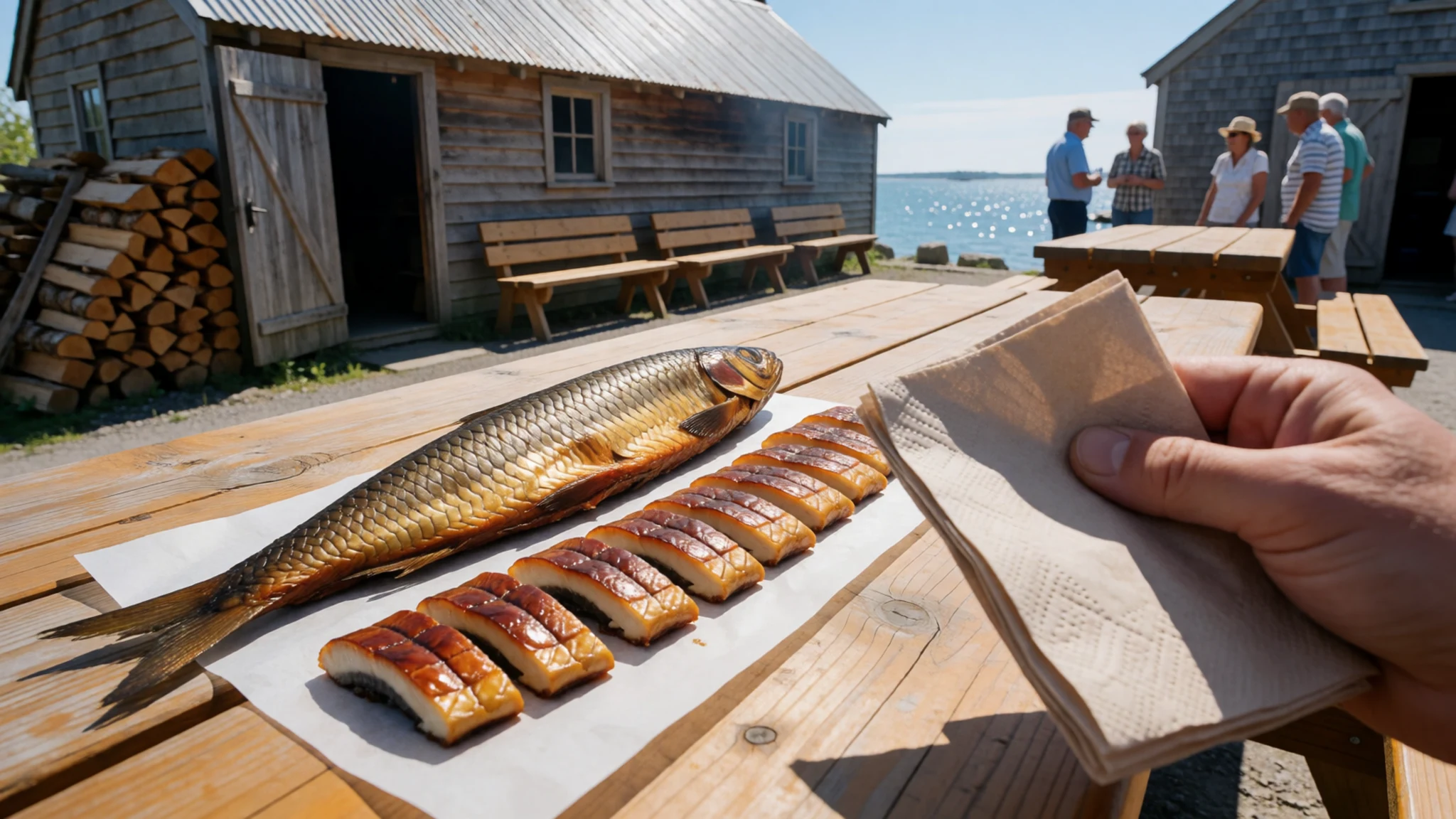
- Fischbrötchen — Fish stalls by harbours and piers
A fish roll is the island's quick lunch: a soft bread roll filled with pickled herring, smoked fish or fried fillet, with onion and a sauce. It is cheap, portable and best eaten on the pier or seafront promenade.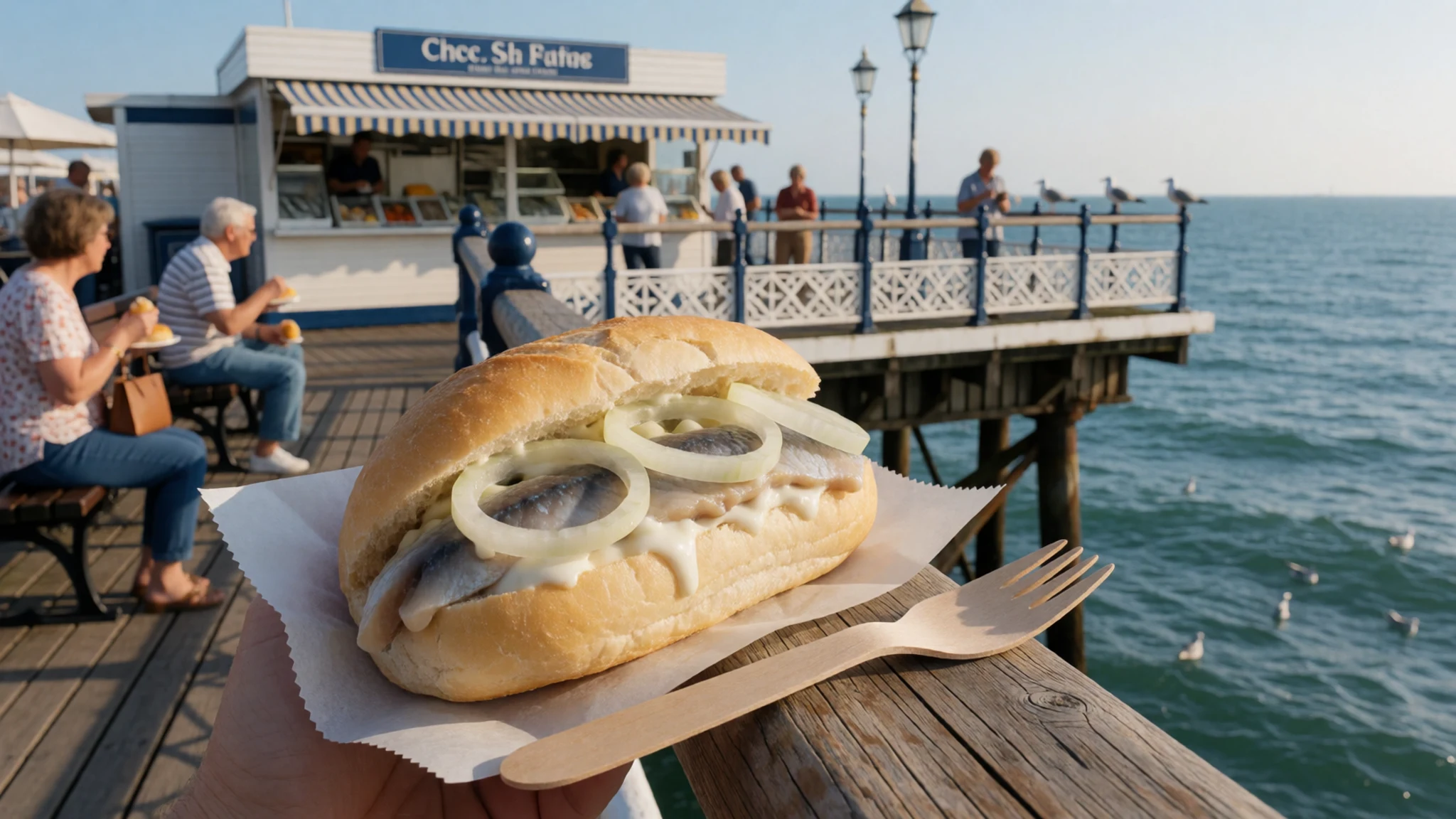
- Zander from the lagoon — Restaurants in Wolgast, Zinnowitz and Kaiserbad towns
Zander, a freshwater predator fish common in the brackish lagoons and channels around the island, is served pan-fried or baked, often with potatoes and a butter or cream sauce. Menus usually say when it is local, so ask. - Sea buckthorn (Sanddorn) treats — Village shops, farm stalls and seaside cafés
Sea buckthorn, a bright orange coastal berry, appears as juice, jam, liqueur and ice cream along the Baltic. Its sharp, slightly tart taste suits cold sea air, and small jars make an easy edible souvenir. - Pierogi in Świnoujście — Cafés and bars near the Świnoujście promenade
On the Polish side, pierogi, filled dumplings with cheese, potato, meat or fruit, are a familiar order in cafés and cheaper eateries. They give a quick taste of Polish home cooking, and a different mood from the German coast a few kilometres away.
Plan it
Best time. June to September for warm, sunny beach weather, with July and August the busiest and most expensive months. May and early autumn are calmer and good for cycling, though the sea is cold. Winter is quiet, with some seasonal places closed.
How long. 2–4
Getting there. The Usedomer Bäderbahn runs from Stralsund via Wolgast along the island to Świnoujście. By road, bridges at Wolgast (B111) and the southern route (B110) connect the island to the mainland. Heringsdorf airport has seasonal flights, with a bus to the beaches.
Budget. mid
Tips
- Book accommodation early for July and August, when the island is at its fullest
- Use the island railway and a bicycle rather than a car, as coastal roads and car parks fill up on summer weekends
- Carry ID if you plan to cross between the German and Polish sides, and some cash for small Polish stalls
- Check the official site, https://usedom.de/, for events, seasonal services and opening times
- Bring a windproof layer even on sunny days, since the sea breeze cools quickly
Etiquette
- Keep to marked paths in dunes and nature areas so the vegetation is not damaged
- Do not photograph people on naturist beaches
- Put any suspected amber in a container away from your body, and use sand, not water, on burning phosphorus
Nearby
Sources
- Wikidata Q3255 (CC0)
- Wikipedia: Usedom (rev 1364340525) (CC BY-SA 4.0)
- Wikivoyage: Usedom (rev 5420909) (CC BY-SA 4.0)
- Photo: KAP (Kite Aerial Photography) — Zeppelubil / Th. Haft (CC BY 3.0)
- Photo: Map of the Baltic Sea with Usedom highlighted — NormanEinstein (CC BY 3.0)
- Photo: Map of Usedom Island — Alexrk2 (CC BY 3.0)
- Photo: Grenze Deutschland - Polen bei Ahlbeck — Löwe 48 (CC BY 3.0)
- Photo: Slavic refuge fort at the Nepperminer See — Klaus D. Peter (CC BY 3.0 de)
- Photo: Zinnowitz beach and pier — Hairo Baj (CC BY-SA 4.0)
- Photo: Świnoujście spa park — sebdok (CC BY-SA 3.0 pl)
- Photo: Port Wojenny Świnoujście — Kapitel (CC BY-SA 4.0)


