Tumpak Sewu
Tumpak Sewu, Indonesia
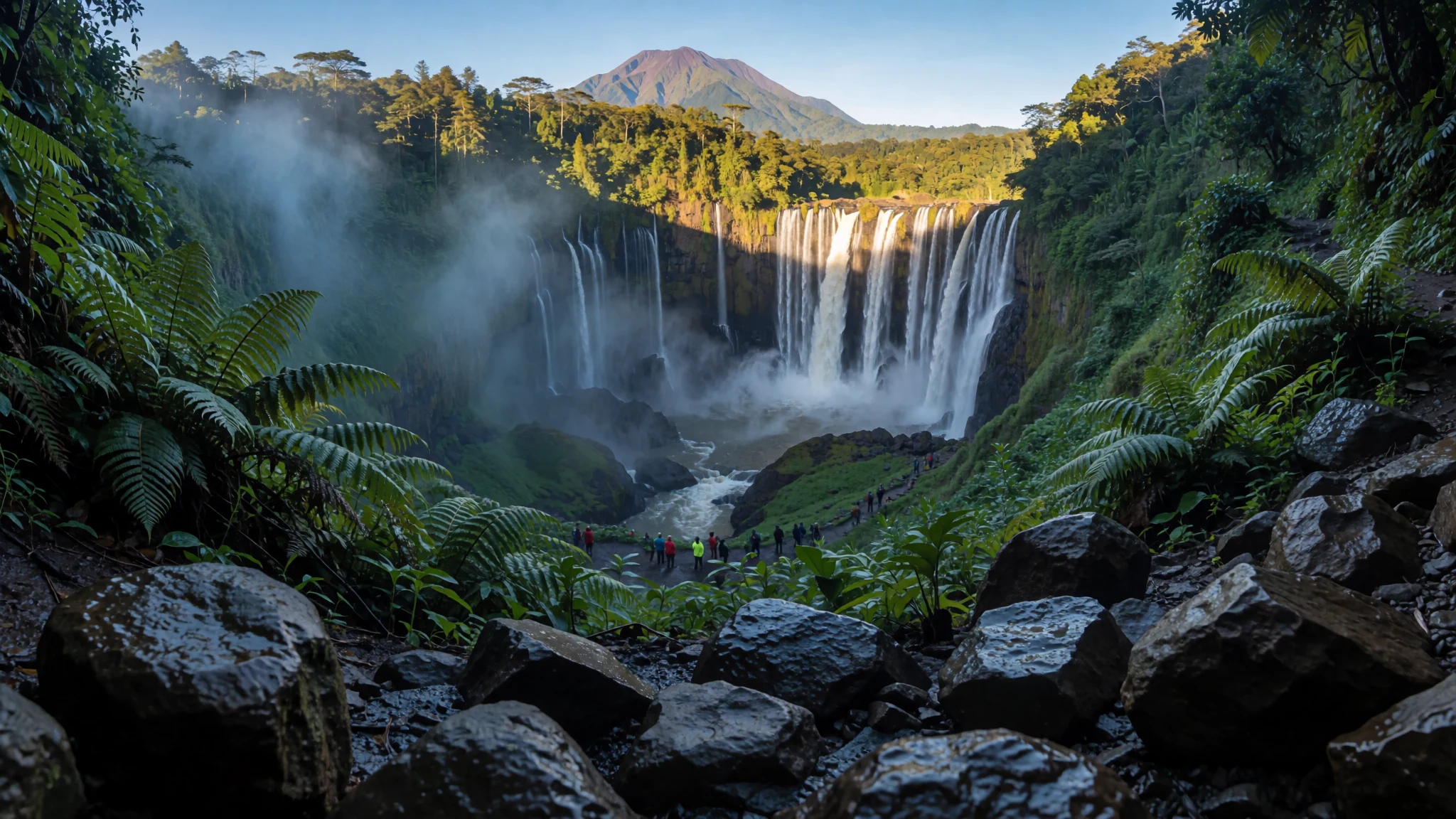
A tiered curtain of water in a volcanic box canyon, best reached on a weekday if you want room to look around.
The place
Tumpak Sewu sits in the volcanic highlands of East Java, where the Glidik River runs down from the slopes of Semeru, the highest mountain on Java and an active volcano. The name is usually translated as a thousand waterfalls in Javanese, and the label fits the scene: several separate streams spill over the rim of a semi-circular box canyon, so from the bottom the wall looks like one cliff broken into many falls. Locals also call it Coban Sewu, and both names turn up in travel listings. The falls lie between two regencies, Lumajang and Malang, which is why maps and guides sometimes give one and sometimes the other. Water is the reason the place looks the way it does. The Glidik feeds the cascade steadily, and the falls are described as never running dry, although the flow varies with the season. Paths and steps have been built around the main canyon, which makes the descent far easier than it once was, but the walk in or out is still physically demanding and takes about an hour, so allow time for rests. The land around is farmland and forest, and the mountain shapes the weather, so cloud can gather quickly. Crowds arrive mostly at weekends, when the viewing spots fill and the path becomes slow going.
Its story
The falls took their name from what people saw rather than from a founder or a legend. Several channels drop over the edge of a half-circle of rock, and from a distance the eye counts them as a thousand separate waterfalls, which is how the Javanese phrase came to stand for the whole site. The water comes from the Glidik River, which rises on the flanks of Semeru, so the story of the falls is tied to the mountain above it. For a long time the canyon was reached on foot by people who knew the route, and the trip down was rough. That changed as visitors grew in number. Local authorities and builders put in walkways and steps around the main box canyon, and the site became a regular destination for day trips. The change brought benefits in access and safety, along with the familiar pressures of a popular place: weekend crowds, litter on the lower paths and a steady flow of people wanting the same photograph from the same spot. Recent visitors describe a place that is still wild in its setting, but managed and busy in its peak hours. Understanding that mix explains much of what you will see on a visit.
What to see
- The main tiered falls — Pronojiwo district, Lumajang regency
The principal cascade drops in several steps across the back of the box canyon, with water striking a series of ledges before it reaches the pool. Photographers usually aim for the view from the upper side, where the full width of the falls shows at once. The light is best in the morning, before cloud builds around the mountain.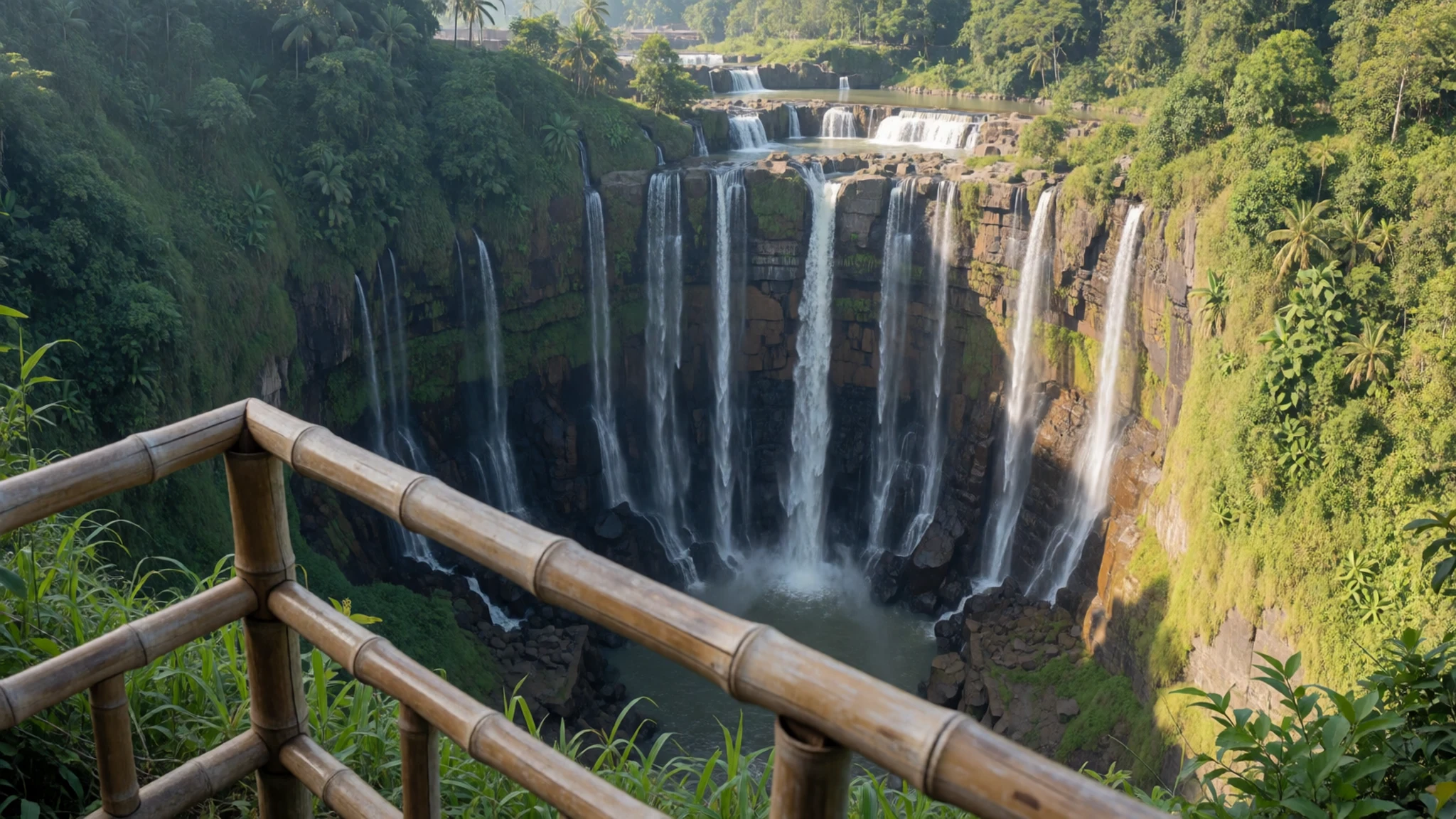
- The box canyon walk — Entrance path, Pronojiwo district
The route into the canyon is the main physical challenge, with steps, slippery stretches and a steep return. Allow time for rests, and wear shoes that grip wet stone. The canyon walls rise high on three sides, which is why the falls seem to sit inside a cupped hand of rock.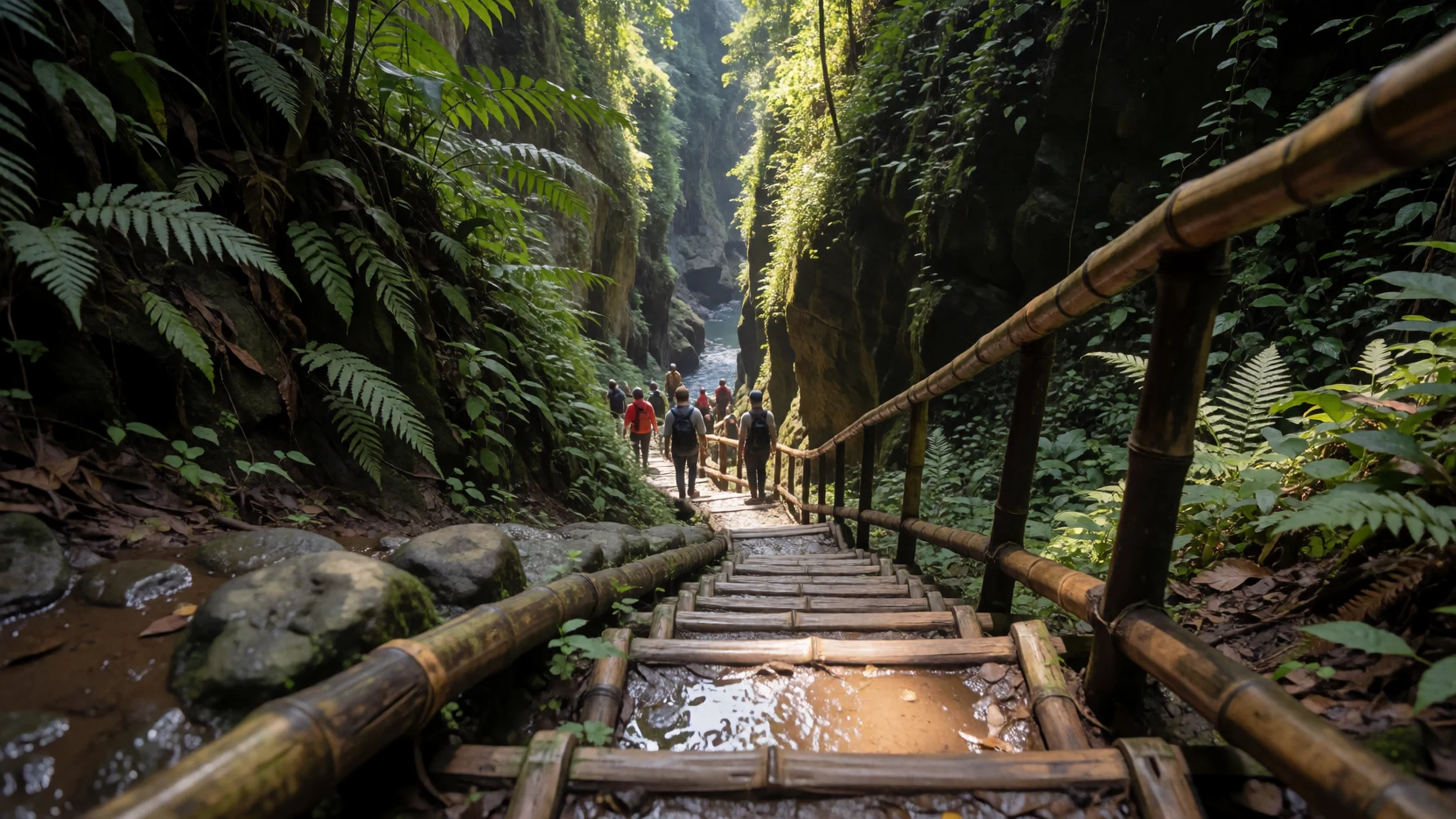
- Mist and rainbow at the falls — Pronojiwo district, Lumajang regency
Spray from the falls often hangs in the air, and on sunny moments it forms a rainbow across the lower pool. The effect is strongest in the middle of the day when the sun is high. Keep camera lenses dry, since the mist settles on everything near the base.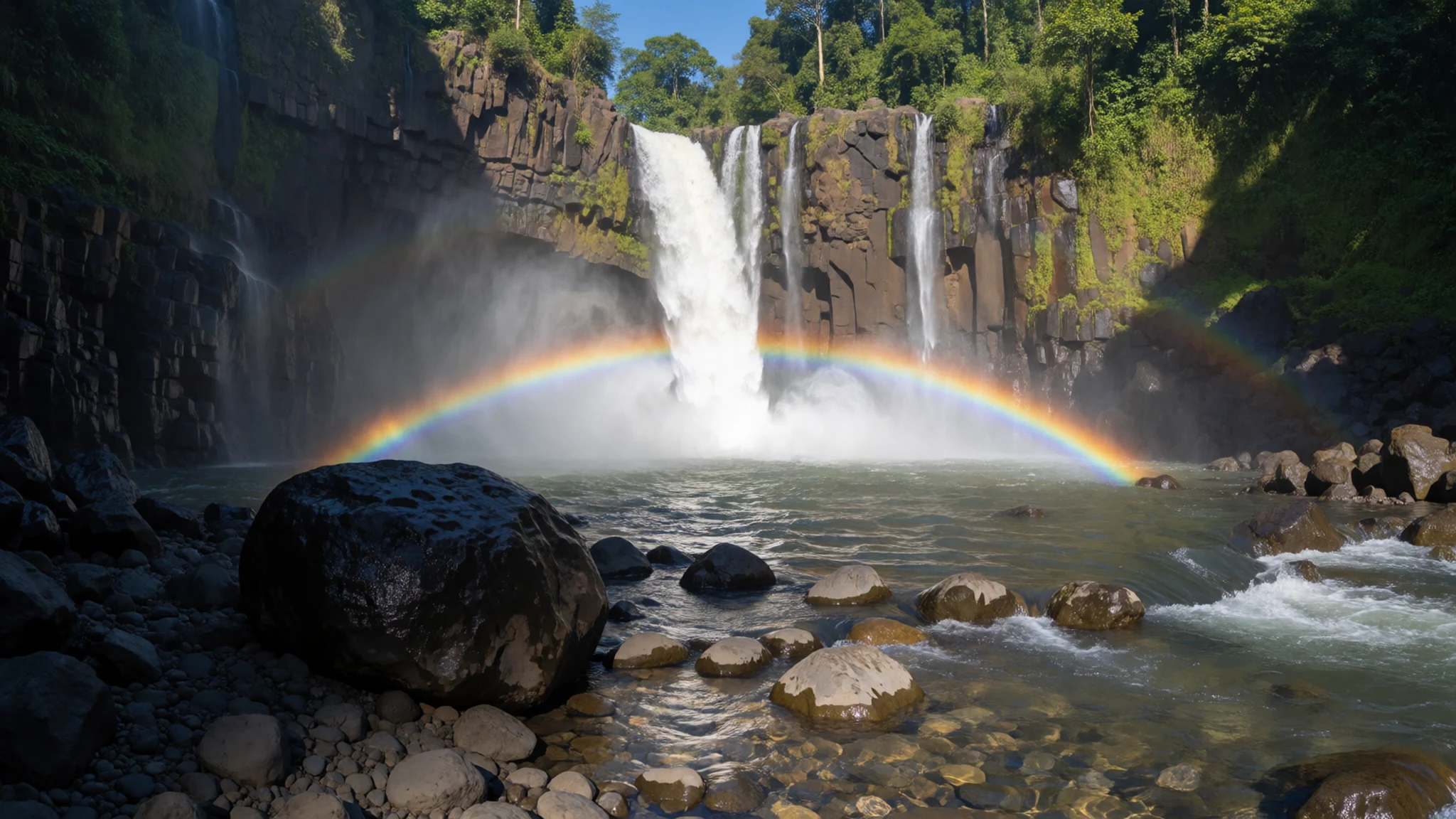
- Semeru behind the falls — Foot of Semeru, Lumajang regency
The volcano rises above the valley and gives the site its character. On clear mornings its slopes are visible from the lip of the canyon, though cloud often covers the summit. Treat the mountain with respect, follow local guidance and check conditions before any trek beyond the falls.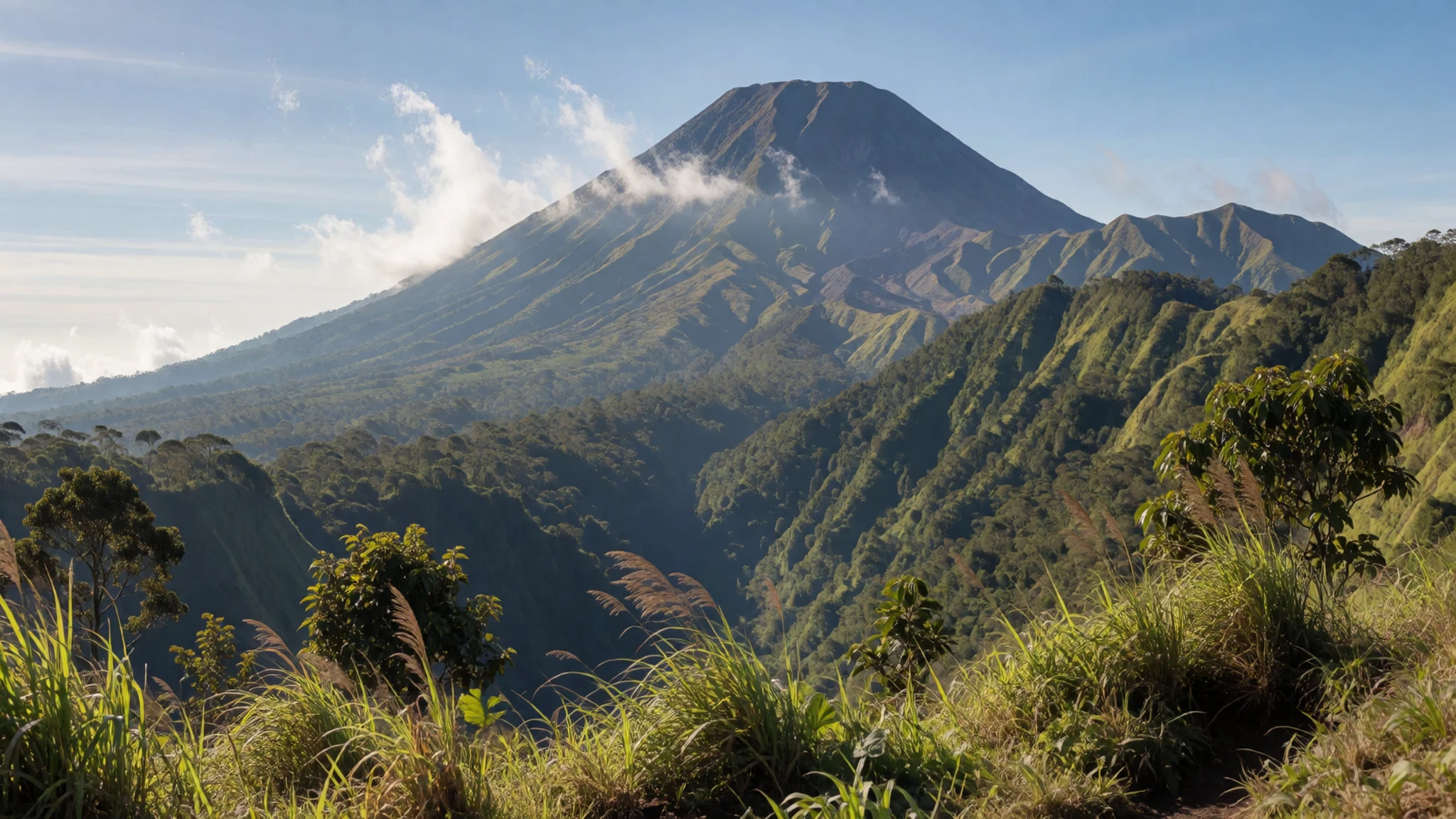
- Coban Sewu viewpoint — Ampelgading district, Malang regency
Coban Sewu is the other name most travellers meet for the same waterfall, and it appears in Malang-side descriptions. The view from the Malang side shows the tiers and the rock amphitheatre from a different angle, which makes it worth comparing with the Lumajang side if your schedule allows.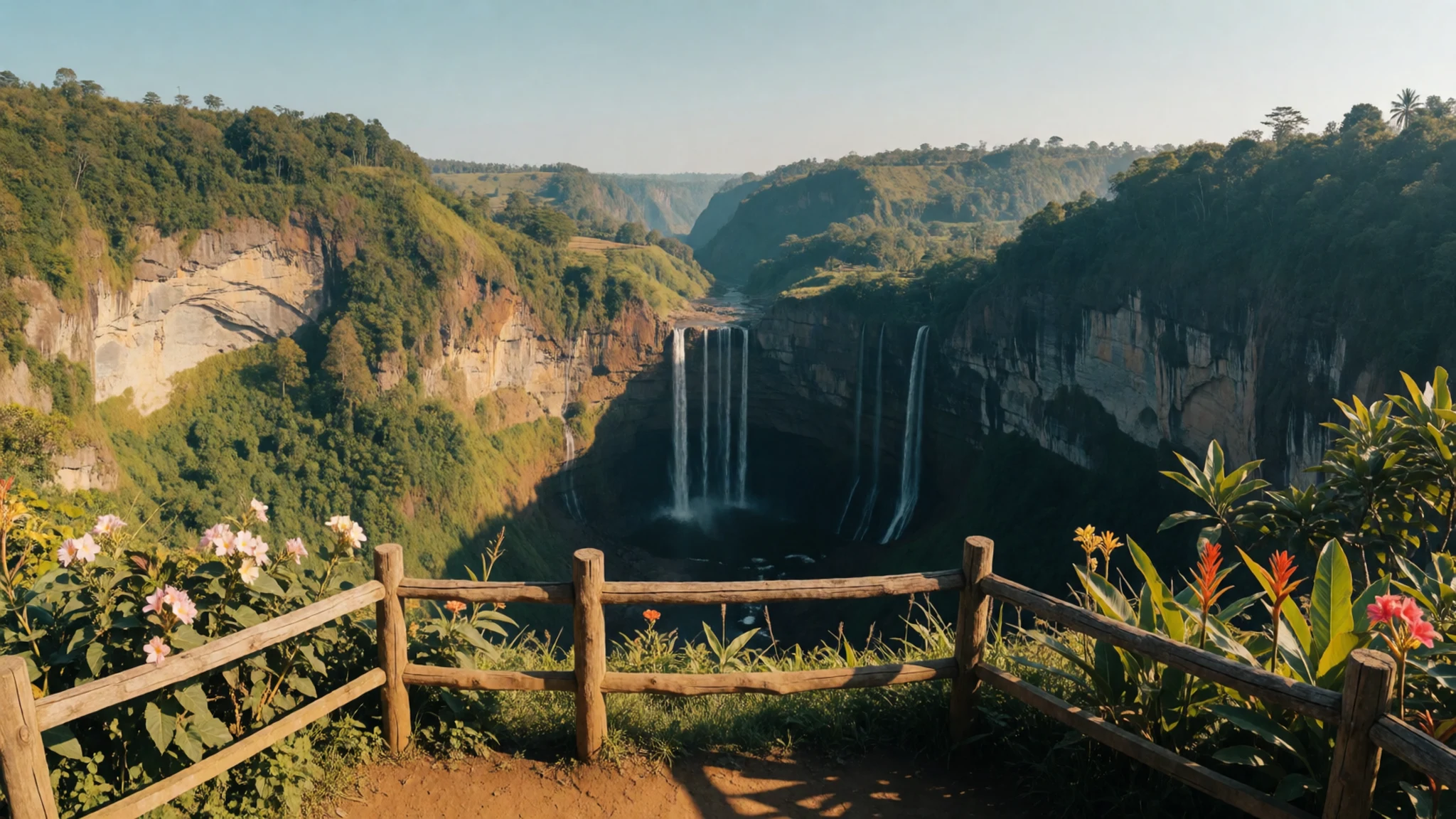
Culture
East Java is mostly Muslim, and the falls are a day-trip site where families, students and couples spend weekends, so the mood is relaxed but never rowdy. Dress modestly away from the water, and keep shoulders and knees covered in villages and warungs on the way. Greetings are warm, and a polite smile goes further than a long conversation in a language you do not speak. Locals and guides often help with the steep sections, and a small tip for that help is welcome, though no fixed rate applies. Photographing people is generally fine when they are relaxed, but ask first, especially with families or anyone who looks uneasy in front of a lens. Weekend crowds can make the path feel crowded, so give way on narrow steps and do not stop in the middle of a passage. Take your rubbish back up with you rather than leaving it on the rocks or in the spray, because litter on the lower paths is one of the things that most spoils the place for the next visitor.
What to wear
Tumpak Sewu has no dress of its own in the brief, so its traditional textiles come from the wider East Javanese world. Batik is the cloth most visitors will recognise, with dyed and waxed designs printed on cotton or silk and worn as sarongs, shirts and ceremonial pieces. For formal occasions, women often wear the kebaya, a fitted blouse usually worn with a batik skirt, while men may wear a batik shirt. In everyday life, people in towns wear loose cotton, shirts and trousers, and many women cover their hair and arms out of habit and faith. For a visit to the falls, dress for a wet, steep walk rather than for a photograph. Quick-dry trousers or light long trousers protect your legs from brush and sun, and a long-sleeved shirt in a breathable fabric keeps spray and sun off your arms. Bring a lightweight rain layer, since cloud can roll in from the mountain, and wear shoes with proper grip, because the stone steps are slick when wet. Sandals are a poor choice on the descent. A plain, modest outfit suits the villages and warungs you pass on the way.
What to eat
- Nasi gandul — Pati, Central Java, at a local warung or morning eatery
Nasi gandul is a Pati speciality: rice served in a beef broth, often on a banana leaf plate. The broth is rich and mildly spiced, with the meat and rice soaking it up. It is a breakfast or lunch dish, and the brief places it in Pati in Central Java, not at the falls.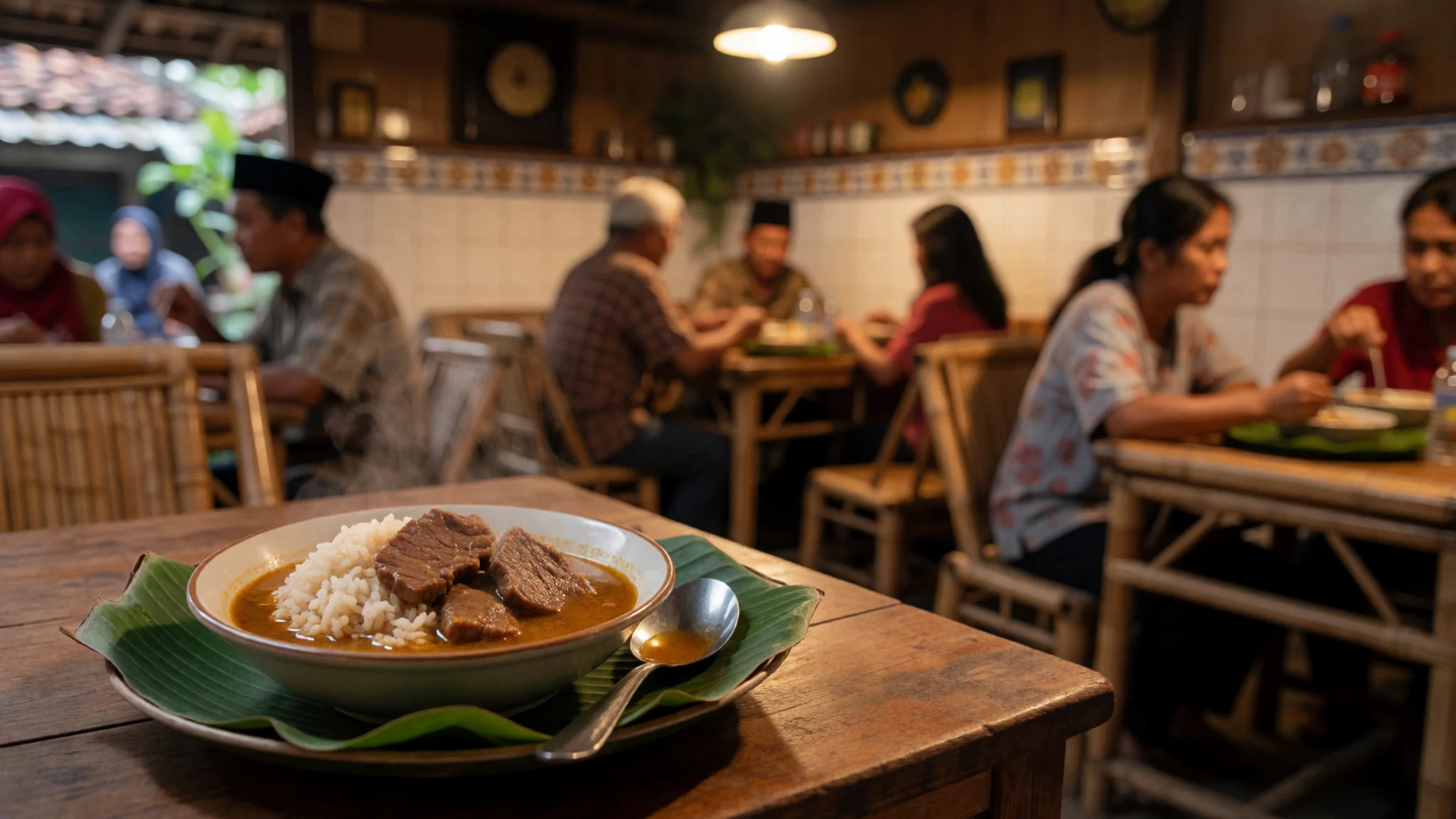
- Soto kemiri — Pati town, at a morning warung
Soto kemiri is a soup seasoned with candlenut, which gives the broth a soft, nutty body. It is a clear, comforting dish that suits a cool morning. Pati is the reference point here, so expect to find it in town warungs rather than on the trail to the falls.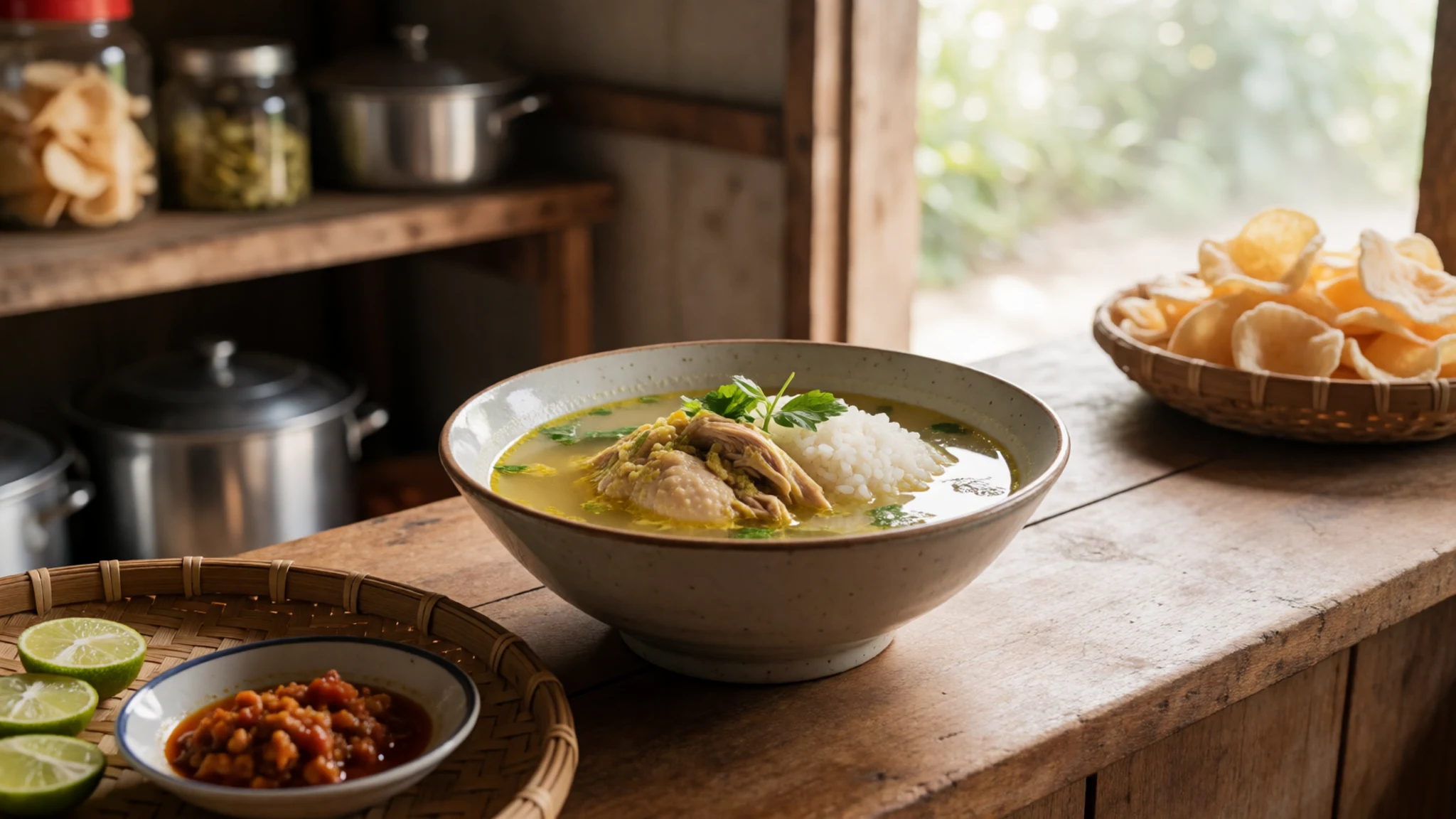
- Sego tewel — Pati, at a family-run rice eatery in the town centre
Sego tewel is rice cooked with tewel, young jackfruit, in a coconut milk gravy. The jackfruit takes on the flavour of the sauce and becomes tender and savoury. It is a vegetarian-friendly dish that appears on many local menus and is worth ordering as a side. - Petis kambing Runting — Runting, Pati, at a roadside soup stall
Petis kambing Runting is a thick goat soup from the Runting area of Pati, with a rich, spiced broth built around a shrimp-paste-style seasoning. It is a hearty, filling bowl. Go early in the day, because the best of it can sell out at lunch.
Plan it
Best time. Rain is heaviest from December to March, while July to September is the driest and most comfortable stretch, with cooler highs and nights, and October to December is the hottest. Cloud and rain can gather around Semeru in any month, so pick a dry spell where you can and keep a rain layer ready.
How long. 1–2
Getting there. Reach the Lumajang or Malang area by road or rail from a regional airport, then take a local vehicle to the trailhead. Check transport options before you travel.
Budget. low
Tips
- Go on a weekday if you can, since the falls are busiest at weekends
- Start early to beat the crowds and any afternoon cloud around the mountain
- Allow about an hour to walk in or out, and build in rests
- Wear shoes with grip for wet stone steps
- Carry cash for small stalls, parking and local guides
Etiquette
- Give way on narrow steps and keep moving along busy stretches
- Ask before photographing people, especially families
- Take all rubbish back up with you
Nearby
Sources
- Wikidata Q26246069 (CC0)
- Wikipedia: Tumpak Sewu Waterfall (rev 1362227872) (CC BY-SA 4.0)
- Wikivoyage: Pati (rev 5214567) (CC BY-SA 4.0)
- Air Terjun Tumpak Sewu, photo by Lutfi adn (CC BY-SA 4.0)
- Air rerjun Tumpak Sewu, photo by Irsam24 (CC BY-SA 4.0)
- Air terjun kabut pelangi, photo by Moh. Aripin (CC BY-SA 4.0)
- Coban Sewu Waterfall, photo by Ivu Fajar Samsumar (CC BY-SA 4.0)
- CobanSewu Waterfall, photo by Avrian Priyono (CC BY-SA 4.0)
- DSF9076, photo by Syselpunk (CC BY-SA 4.0)
- Gang masuk tumpak sewu, photo by Rendika Iswandi (CC BY-SA 4.0)
- Tumpak sewu waterfall, photo by Muhyiddin (CC BY-SA 4.0)


